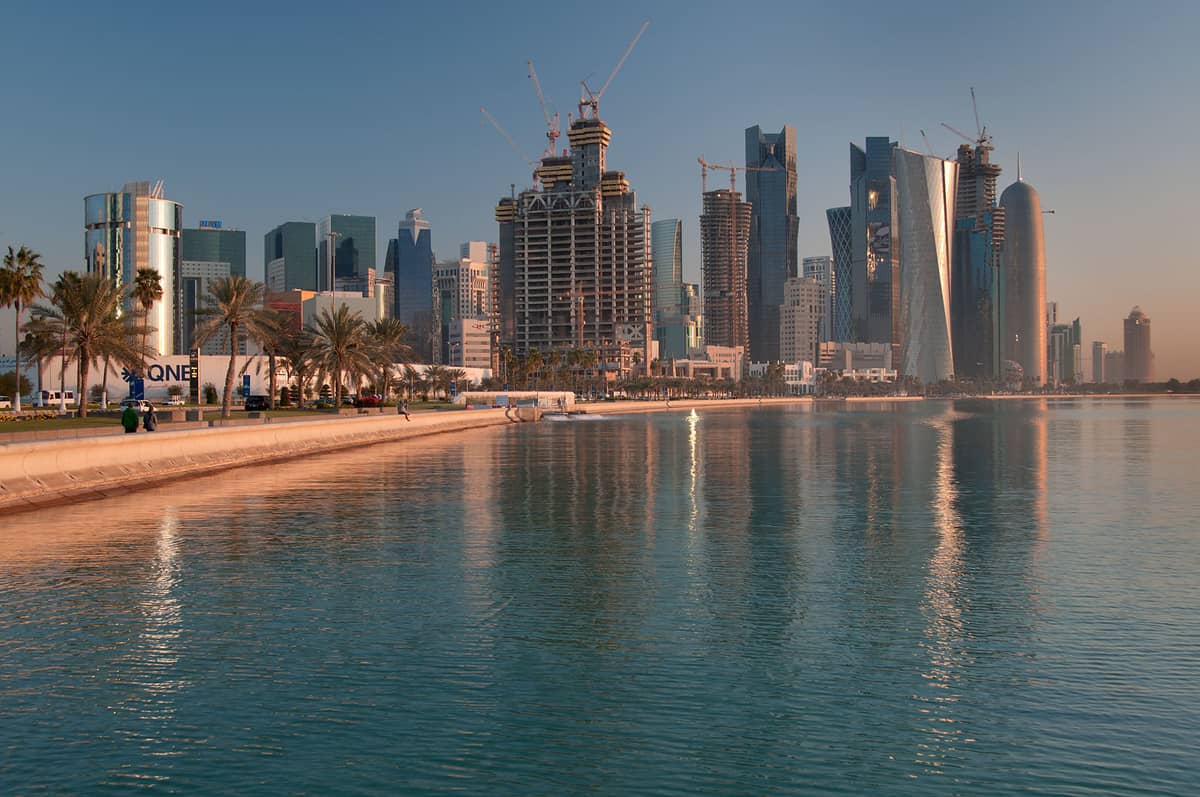
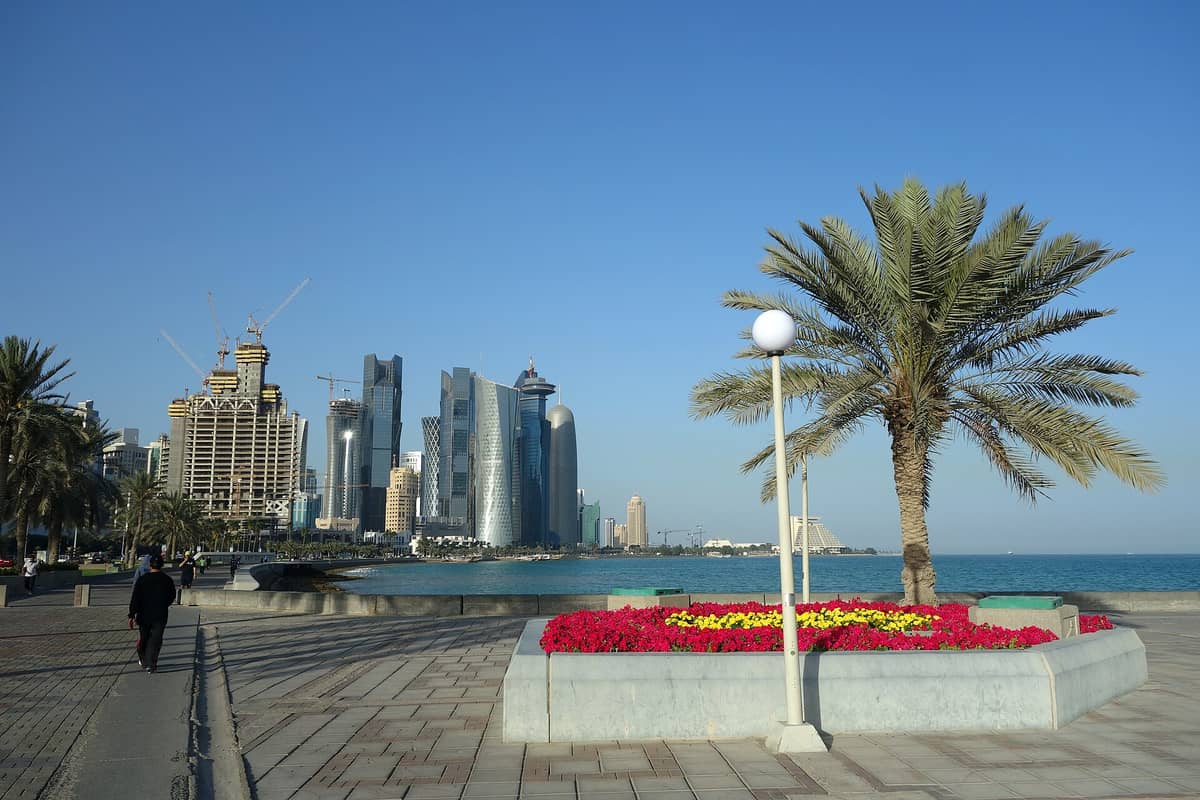
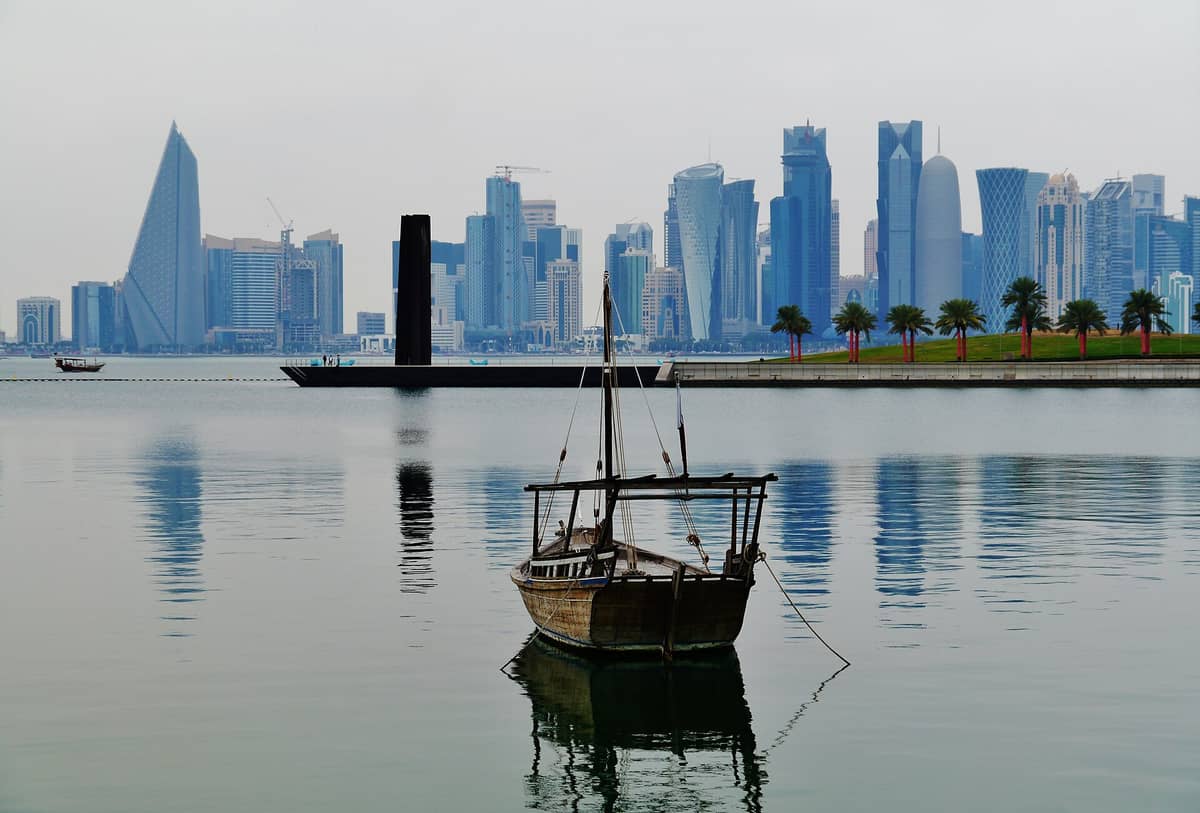
The Doha Corniche is a 7-kilometre waterfront promenade curving along Doha Bay, connecting the historic museum district and Souq Waqif at its southern end to the glass towers of West Bay in the north. It serves as both the city's civic spine and its most photogenic public space, where traditional dhows float in the foreground against one of the Gulf's most dramatic skylines.
The Doha Corniche is where Qatar's past and present face each other across a crescent of water. On one side, the Arabian Gulf and the low silhouette of wooden dhows; on the other, some of the most recognisable skyscrapers in the Middle East. Few cities offer a single walk that covers this much ground, historically and architecturally, in under two hours.
Orientation: Where the Corniche Sits in Doha
The Doha Corniche follows the inner arc of Doha Bay along Corniche Street, running roughly 7 kilometres from the Sheraton Grand Doha at the northern end, in the Al Dafna district, south toward Doha Port and the museum quarter near Al Khulaifat. Think of it as the city's east-facing waterfront edge: the Gulf is to your left as you walk south, and the urban grid of Doha fans out to your right.
West Bay occupies the northern portion of this stretch. It is Doha's primary financial and hotel district, a compact cluster of high-rise towers that rises directly behind the Sheraton end of the promenade. The two areas function as one continuous zone for visitors: you walk the Corniche promenade, and you look up at West Bay. The boundary between them is essentially the point where the pedestrian path begins to pull away from the commercial tower blocks.
To the south, the Corniche connects naturally into the Souq Waqif area and the museum district, anchored by the Museum of Islamic Art on its own peninsula. To the north, the promenade passes Sheraton Park and eventually links toward Katara Cultural Village and, further still, The Pearl-Qatar. The entire coastal strip from the museum district to The Pearl is walkable in concept but too long for a single outing; most visitors focus on the central Corniche arc and West Bay as a single half-day or evening.
ℹ️ Good to know
Corniche Street is a busy multi-lane road running parallel to the promenade. Always use designated pedestrian crossings and underpasses when moving between the waterfront path and the city side. Do not attempt to cross at random points.
Character & Atmosphere
Early mornings on the Corniche belong to residents. By 6am, joggers and cyclists are already on the dedicated path, the air still carrying the overnight cool from the Gulf. The light is flat and silvery, the skyline behind West Bay catching the first pale wash of sunrise from the east. Street cleaners are finishing their rounds, and the promenade smells faintly of salt and the particular mineral freshness that comes off the bay before the heat takes hold.
By mid-morning the mood shifts. Tour groups arrive, cameras out, positioning themselves for the standard shot: dhow harbour in the foreground, glittering towers behind. The path widens at several points into open plazas with benches and shade structures, and families begin to spread out. During the winter months, roughly November through March, the midday hours are genuinely pleasant and the Corniche fills steadily through the afternoon. In summer, from May through September, the midday temperature regularly climbs past 40°C and the waterfront empties of everyone except people moving between air-conditioned spaces.
After sunset is when the Corniche reveals its best self. The towers of West Bay illuminate in stages, their glass faces reflecting amber and white across the bay. The promenade fills again: Qatari families in the evenings, expatriate workers on their days off, tourists who have wisely saved their walk for after dark. The air is warmer than you expect but far more tolerable, and the whole arc of the bay glows. Street food vendors and juice carts set up near the central stretch, and the low hum of the city replaces the harsher daytime traffic noise.
West Bay, by contrast, follows office rhythms. It is primarily a business district: weekday mornings are purposeful and corporate, the ground floors of towers cycling through suited professionals. Evenings on the West Bay side are quieter than the Corniche, with hotel lobbies and in-building restaurants doing most of the activity. It is not a neighbourhood you wander for atmosphere the way you might the Corniche itself.
What to See & Do
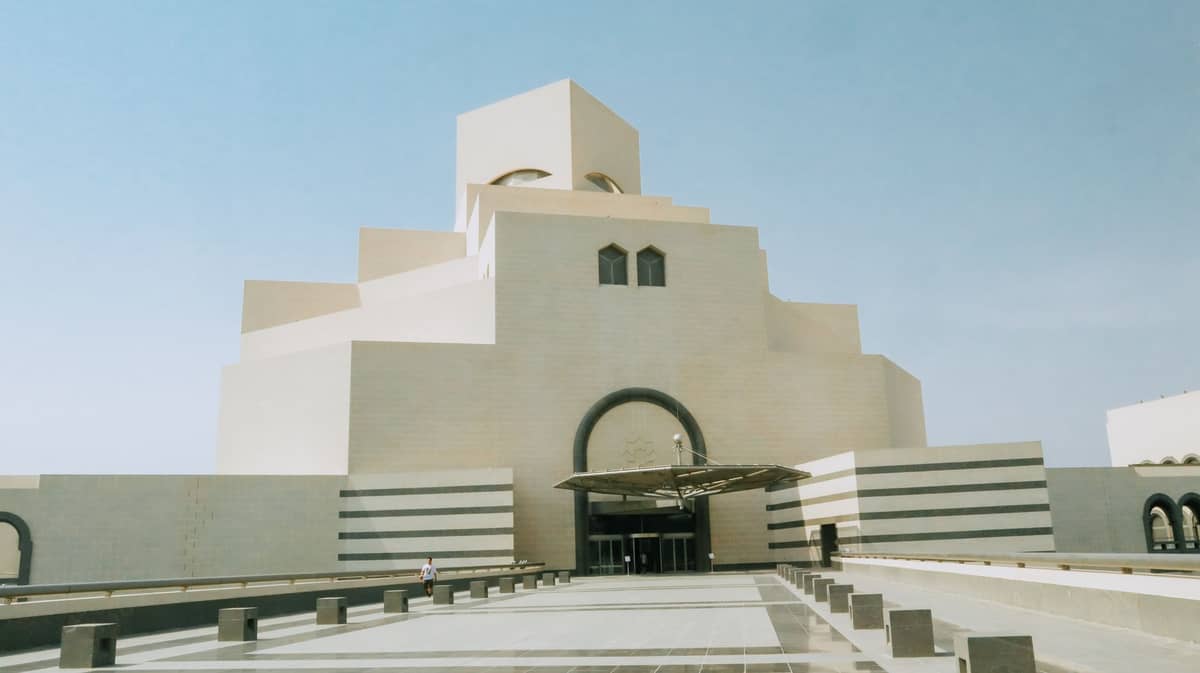
The single most important cultural institution in this area is the Museum of Islamic Art, which sits on its own landscaped peninsula at the southern end of the Corniche. The I.M. Pei-designed building is one of the most architecturally significant museums in the region, and the collection inside, spanning 1,400 years of Islamic civilisation, is genuinely world-class. The approach from the Corniche path, with the white stone facade rising over the water, is one of the better arrivals in Doha.
Directly adjacent to the museum is MIA Park, a well-maintained public green space with lawns, palm-lined paths, and direct waterfront access. It is one of the most reliably pleasant spots in the city for a late afternoon walk, and it connects physically to the main Corniche promenade. Nearby, Richard Serra's steel sculpture 7 stands in the park — a different work from his desert installation East-West/West-East, which sits west of the city in Brouq Nature Reserve.
The Doha Corniche Promenade itself is an attraction: the full 7-kilometre walk passes through parks, past the dhow harbour, alongside historic buildings and modern plazas. The dhow harbour, where wooden boats are moored in traditional fashion, is one of the most photographed spots in Qatar. A few operators run boat rides around Doha Bay from the harbour area, giving you a reverse view of the skyline from the water.
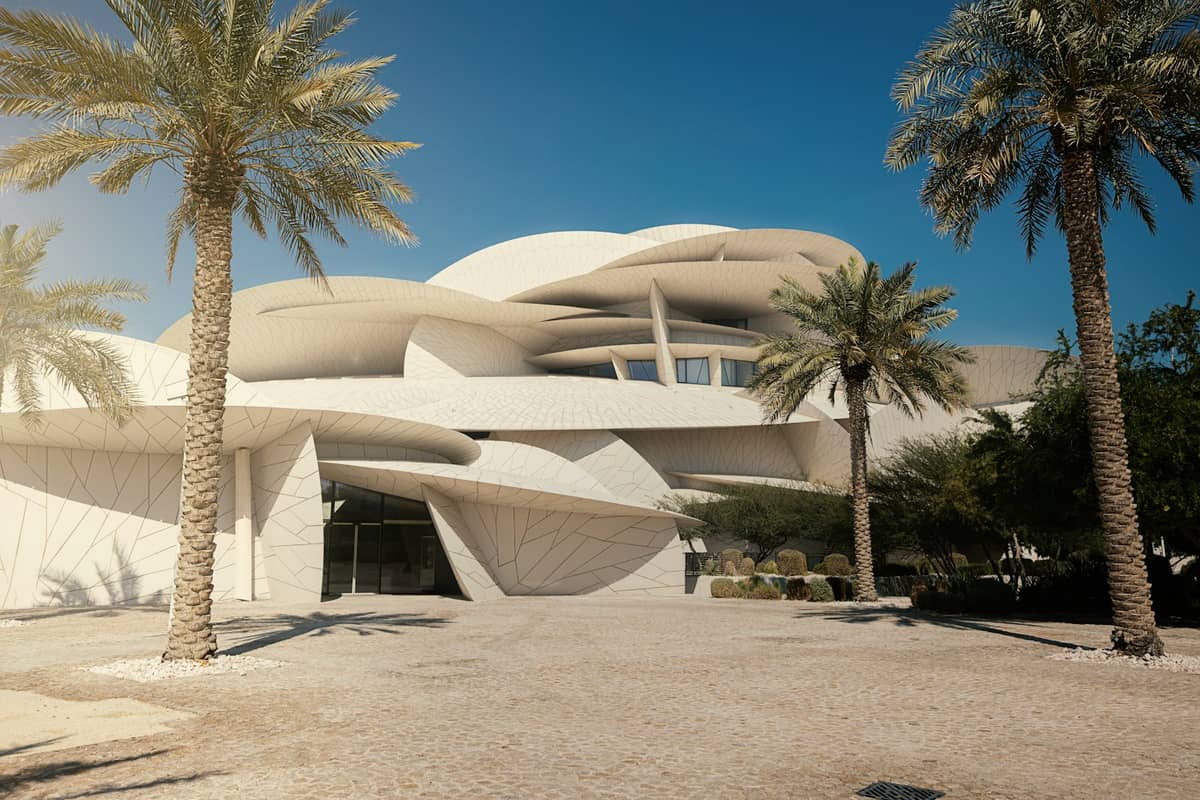
At the southern end of the promenade, the National Museum of Qatar is housed in a dramatic structure of interlocking disc shapes, designed by Jean Nouvel to evoke a desert rose crystal. It covers Qatar's natural and cultural history from pre-Islamic times to the present. The building alone warrants a detour, even if you do not go inside.
Walk the full Corniche promenade in the evening for the best light and most active atmosphere
Visit the Museum of Islamic Art for the architecture as much as the collection
Photograph the dhow harbour from the promenade path with the West Bay skyline behind
Explore MIA Park for a quieter, shaded alternative to the main waterfront path
Look for the Richard Serra sculpture in the MIA grounds, one of Qatar's most significant public artworks
💡 Local tip
For the definitive Doha skyline photograph, position yourself along the central Corniche stretch in the last 30 minutes before sunset. The towers catch the light directly and the dhows in the foreground create depth. After dark, the illuminated skyline reflected on the water is equally striking.
Eating & Drinking
The Corniche itself is not primarily a dining destination. The promenade has juice carts and small snack vendors, particularly in the evenings, but formal restaurants are set back from the waterfront or located in the hotels and towers of West Bay. This is a neighbourhood where you eat well inside buildings rather than on the street.
West Bay's hotel strip contains several of Doha's higher-end dining options. The major international hotel brands along this stretch run signature restaurants catering to business travellers and well-heeled tourists, covering everything from pan-Asian to contemporary European to regional Arabic cuisine. Price points here are high by regional standards: expect to pay significantly more per head than you would in Souq Waqif or Msheireb.
For more varied and budget-conscious eating, the southern end of the Corniche transitions naturally into the Souq Waqif area, where dozens of restaurants serve Qatari, Levantine, Indian, and Pakistani food at prices that make the hotel dining options look excessive. A 15-20 minute walk or a short taxi ride from the central Corniche puts you in the middle of Doha's most concentrated restaurant district.
The Museum of Islamic Art has a well-regarded in-house café with bay views. It is one of the better options on the southern Corniche for a proper coffee or a light lunch without committing to a hotel restaurant. The outdoor terrace, when the temperature allows, is a genuinely good spot.
Alcohol is available in hotel bars and licensed restaurants within West Bay, as it is across the hotel sector in Doha generally. The promenade itself and public park areas are entirely dry. Qatar does not permit alcohol consumption in public spaces, and this applies to all outdoor areas of the Corniche.
Getting There & Around
The Doha Metro is the most straightforward way to reach the Corniche and West Bay. The Red Line runs directly through both areas, with several stations covering different stretches of the waterfront. The Corniche station gives access to the central promenade. West Bay stations, including West Bay Qatar Energy and DECC, serve the northern business district. Al Bidda station sits near the southern end of the promenade, close to the museum district.
From Hamad International Airport, the Red Line metro connects directly to the Corniche area without changing trains, making this a logical first stop for arriving visitors. The journey takes roughly 25-35 minutes from the airport terminal. For full transit planning details, getting around Doha covers metro fares, Karwa bus routes, and taxi options across the city.
Within the Corniche itself, walking is the primary mode of movement. The dedicated pedestrian and cycling path runs the full length of the promenade on the waterfront side. For cycling, bikes can be rented from designated points along the Corniche path. Karwa taxis and ride-hailing apps cover the West Bay side and can drop you at various points along Corniche Street, though traffic on the main road can slow journey times during morning and evening peaks.
Walking from the northern end near the Sheraton to the Museum of Islamic Art at the southern end takes approximately 60-75 minutes at a leisurely pace, more if you stop at parks or viewpoints.
⚠️ What to skip
During summer months (June to September), walking the full Corniche in daylight is not advisable. Temperatures regularly exceed 40°C and shade is limited on the exposed waterfront path. Save outdoor walks for after sunset, when the temperature drops to a more manageable range and the atmosphere is significantly better anyway.
Where to Stay
West Bay is one of Doha's primary hotel districts, concentrated with five-star and luxury properties that cater to business travellers, conference delegates, and visitors who want the skyline address. The major international brands are well represented, and proximity to the Corniche is a genuine asset: you can walk to the waterfront promenade in minutes, and the metro stations make the rest of the city straightforward to reach.
For travellers who want a wide range of accommodation options at different price points, the West Bay and Corniche area skews expensive. Budget and mid-range hotels are more common in other parts of central Doha. The where to stay in Doha guide covers the full spread of neighbourhoods and price ranges, which is worth reading before committing to West Bay if cost is a factor.
For families and leisure travellers, the Corniche-facing hotels offer a specific advantage: the promenade is directly accessible, the museum district is within walking distance, and Souq Waqif is a short ride away. Business travellers benefit from the district's financial hub status and the density of meeting facilities within the towers. Solo travellers on tighter budgets will likely find better value staying near Msheireb or the Souq Waqif area and taking the metro to the Corniche when they want to visit.
For a different kind of stay within reach of the Corniche, The Pearl-Qatar sits just north of West Bay and offers apartment-style accommodation in a marina setting, which suits longer stays or those who want more space. It is roughly 15-20 minutes from the central Corniche by taxi.
Practical Notes for Visitors
The Corniche and West Bay are among the most tourist-friendly zones in Doha. English is widely understood in hotels, museums, and restaurants. Dress codes on the promenade and in public parks are relaxed by Qatari standards but visitors should avoid excessively revealing clothing. Museum dress codes apply at the MIA and National Museum. For a broader picture of what to expect, the Doha first-timer guide covers cultural norms, safety, and practicalities across the city.
Photography is generally welcomed along the promenade and in public spaces. The MIA and National Museum have their own photography policies inside the buildings. For tips on getting the best shots of the skyline, the dhow harbour, and the wider waterfront, the Doha photography guide is a useful reference with location-specific advice.
The best time of year to visit the Corniche is between November and March, when daytime temperatures sit in the low to mid-20s°C and the outdoor promenade is genuinely comfortable at any hour. For a fuller picture of seasonal conditions across Doha, see the best time to visit Doha.
TL;DR
The Doha Corniche is the city's central public promenade, running 7km along Doha Bay with the Museum of Islamic Art, National Museum, dhow harbour, and MIA Park all along or adjacent to the path.
West Bay, directly behind the northern Corniche, is Doha's main business and luxury hotel district: architecturally dramatic, transit-connected, but primarily corporate in character.
Best visited in the evening or during the November-March cool season; summer midday heat makes outdoor walking impractical.
Well-served by the Doha Metro Red Line, with multiple stations covering different sections of the waterfront corridor.
Ideal for: first-time visitors to Doha, architecture and museum enthusiasts, photographers, and anyone who wants to understand the city's scale and layout in a single walk. Less suited to travellers seeking local neighbourhood character or budget dining.
Two full days is genuinely enough to cover Doha's best sights — if you plan smart. This itinerary routes you through the Museum of Islamic Art, Souq Waqif, the National Museum of Qatar, Katara Cultural Village, and the Corniche using the metro and short taxi rides, with honest advice on timing, heat, and what to skip.
Qatar's coastline stretches far beyond its skyline. This guide covers the best beaches in Doha and across Qatar, from calm urban shores perfect for families to wild dune-backed stretches only reachable by 4WD. Whether you want a free afternoon by the sea or a full resort day-pass experience, here is where to go.
Doha has become a serious museum city. From a landmark of Islamic art to a converted fire station showing cutting-edge contemporary work, these are the museums that make Doha worth visiting for culture alone.
Doha's extreme desert climate makes timing your visit critical. This guide breaks down every season honestly, covering temperatures, humidity, hotel prices, and the events calendar so you can pick the right window for your trip.
Doha is unusually rich in visual drama. Between the glittering West Bay skyline reflected across the bay, dhow boats bobbing in the foreground, and architecturally ambitious stadiums rising from the desert, the city rewards anyone who knows where to look. This guide covers the best viewpoints in Doha, from free waterfront promenades to photogenic canal districts and iconic landmark angles.
Doha rewards exploration beyond its skyline. Whether you want towering sand dunes, a UNESCO World Heritage fort, mangrove kayaking, or a quieter coastal town, Qatar packs a surprising range of day-trip experiences into a small country. This guide covers the best escapes within reach of the capital.
Hamad International Airport is one of the world's major transit hubs, and a Doha airport layover can be far more than a waiting game. This guide covers visa rules, sleep options, lounge access, and how to squeeze the best of the city into a short stopover.
Doha's waterfront is best explored from the water. Whether you want a traditional dhow cruise past the West Bay skyline, a kayak through coastal mangroves, or a catamaran ride to a private island, this guide covers every boat ride and water experience worth booking in Qatar's capital.
Doha is a surprisingly compelling destination for couples, blending waterfront promenades, heritage markets, world-class museums, and desert escapes into a genuinely romantic itinerary. This guide covers the best experiences for couples in Qatar's capital, with honest takes on what's worth your time and what to skip.
Qatar's desert safari scene centers on the Sealine dunes and the UNESCO-listed Tentative Site of Khor Al Adaid Inland Sea, just 60-75 minutes from Doha. This guide covers tour types, honest price breakdowns, the best time to go, and what the brochures don't tell you.
Falconry sits at the heart of Qatari identity, and Doha makes it surprisingly accessible to visitors. From the Falcon Souq at Souq Waqif to the world-class falcon hospital and the annual S'hail exhibition at Katara, this guide covers everything you need to experience Qatar's most distinctive cultural tradition.
Doha rewards first-timers who arrive prepared. This guide covers the essentials: how to get from the airport, which neighborhoods to prioritize, what the climate actually feels like, and the cultural norms that matter most. No fluff, just practical knowledge.
The Doha Fish Market at Old Doha Port is one of the city's most authentic local experiences. This guide covers opening hours, what species to look for, how to negotiate, how to get there, and what to do with your catch once you have it.
Winter is Doha's golden season, with mild temperatures, clear skies, and a packed events calendar. This guide covers everything you need to know about visiting Doha from November through March, from what to pack to when to book.
Doha has quietly become one of the world's most compelling destinations for Islamic art and architecture. This guide covers the essential museums, mosques, historic forts, and cultural districts where centuries of Islamic heritage come alive.
Qatar criminalizes same-sex sexual activity, and Doha has no LGBTQ+ venues or legal protections. This guide gives LGBTQ+ travelers an honest, practical breakdown of the legal situation, safety considerations, and what visiting the city actually looks like in practice.
Doha's after-dark scene is more diverse than most visitors expect. From rooftop hotel bars in West Bay to stargazing desert safaris at the Inland Sea, this guide covers everything you need to know about Doha nightlife, including alcohol rules, the best venues by district, and evening alternatives for non-drinkers.
Qatar's capital has a reputation for luxury, but Doha on a budget is genuinely achievable. Free museums, a QAR 6 metro day cap, and no-cost attractions like the Corniche make it possible to see the city without spending a fortune. Here's how to do it smartly.
Doha rewards photographers at every turn, from I.M. Pei's waterfront masterpiece to golden-tiled mosques and shipping-container stadiums. This guide covers the city's 20 most photogenic locations, with advice on the best times to shoot and what to look for at each spot.
Doha is one of the safest cities in the Middle East, with low crime rates and well-monitored public spaces. But safety here is as much about understanding local laws as it is about personal security. This guide covers everything from terrorism advisories and alcohol rules to dress codes, transport safety, and seasonal health risks.
Planning a trip to Doha, Qatar? This guide breaks down exactly who needs a visa, how to get one, what documents to carry, and the common mistakes that trip up first-time visitors at the border.
Doha is a genuinely family-friendly city, with options spanning free waterfront parks, world-class children's museums, indoor adventure parks, and beach day trips. This guide breaks down the best activities by budget, age group, and season so you can plan a practical, stress-free trip with kids.
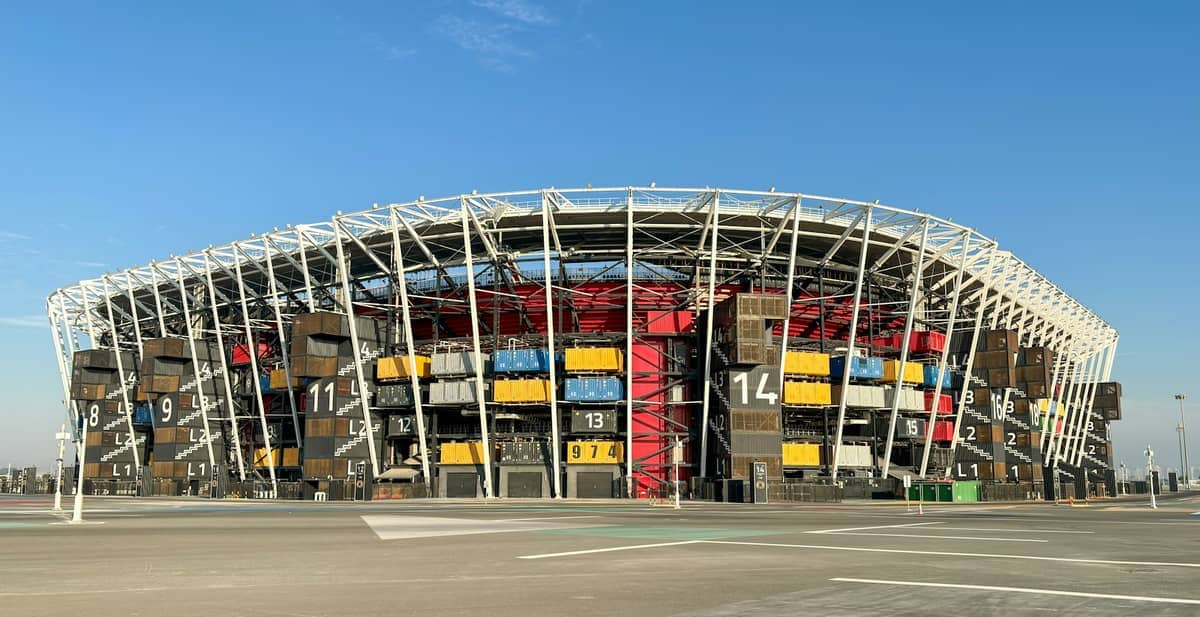
Qatar's 2022 FIFA World Cup left behind eight architecturally extraordinary stadiums scattered across Doha and its surroundings. This guide covers every venue, how to visit each one, and what to see nearby to make the most of your trip.
Doha is far more affordable than its gleaming skyline suggests. From the 7-kilometre Corniche promenade to free heritage museums and public beaches, this guide covers the best free things to do in Doha — for first-timers and residents alike.
Doha is surprisingly easy to navigate if you know which transport option suits your route. This guide covers the Doha Metro, Karwa taxis, public buses, and airport transfers, with current fares, operating hours, and honest advice on what works and what doesn't.
Doha divides opinion. Some travelers find a world-class city of museums, architecture, and Gulf culture. Others leave underwhelmed. This guide breaks down exactly what Doha offers, what it doesn't, and who should make the trip.
Doha has quietly become one of the world's most ambitious luxury destinations. This guide covers the best 5 star hotels, high-end dining, designer shopping, and cultural experiences, with honest advice on what lives up to the price tag and what doesn't.
Doha delivers one of the Gulf's most complete shopping experiences, from air-conditioned mega-malls with international luxury brands to the spice-scented alleys of Souq Waqif where bargaining is still the norm. This guide covers every major venue, realistic prices, opening hours, seasonal quirks, and the souvenirs actually worth buying.
From the Museum of Islamic Art to the Inland Sea desert, Doha packs serious variety into a compact city. This guide covers the top things to do in Doha with real admission prices, opening hours, seasonal tips, and honest takes on what's worth your time.
Doha's food scene goes far deeper than shawarma and hummus. This guide covers the essential Qatari dishes every visitor should try, from the national dish machboos to the street-side sweet luqaimat, with honest price breakdowns and the best places to eat them.
Doha's food scene spans centuries-old Arab hospitality traditions and some of the most international dining in the Gulf. This guide covers the best areas to eat, what to order, how much to spend, and when to go — with practical details on hours, booking, and seasonal dining patterns.
Doha's neighbourhoods are more distinct than most Gulf cities. This guide breaks down the five key areas to stay, who each suits best, what you'll actually pay, and how to time your booking around weather and events.