Museum of Islamic Art (MIA): Doha's Most Architecturally Striking Museum
The Museum of Islamic Art sits on a purpose-built island off Doha's Corniche, housing one of the world's most comprehensive collections of Islamic art across 1,400 years. Designed by I.M. Pei and reopened in 2022 with a full rehang, it rewards both casual visitors and serious art travelers.
Quick Facts
- Location
- MIA Park, Doha Corniche, Doha, Qatar
- Getting There
- Gold Line: National Museum or Souq Waqif stations (10–20 min walk along the Corniche)
- Time Needed
- 2–3 hours for the collection; add 30–45 min for the park and waterfront
- Cost
- QAR 50 for non-resident adults; free for Qatar/GCC residents, children 16 and under. Verify current pricing at mia.org.qa
- Best for
- Art lovers, architecture enthusiasts, families, cultural travelers
- Official website
- mia.org.qa/en
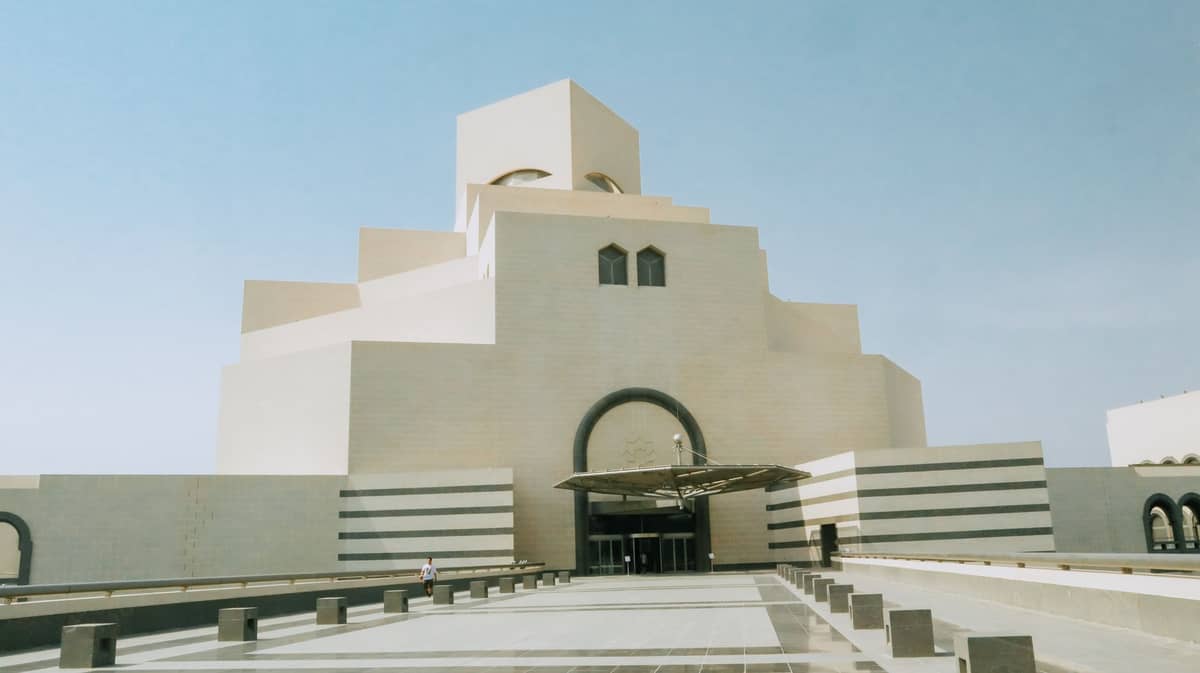
What the Museum of Islamic Art Actually Is
The Museum of Islamic Art, known locally as MIA, is Qatar's flagship cultural institution and one of the most significant repositories of Islamic art anywhere in the world. Opened in 2008 as one of the first projects of Qatar Museums, it houses a collection spanning 1,400 years and three continents, from 7th-century Arabia through the Ottoman Empire and into medieval Spain and Central Asia. After a major re-hang and reinterpretation, MIA reopened on 5 October 2022 with a significantly refreshed approach to how the collection is displayed and interpreted.
The building itself is as much a reason to visit as the collection inside. Pritzker Prize-winning architect I.M. Pei came out of retirement to design it, reportedly spending months studying Islamic architecture across Egypt, Tunisia, and elsewhere before settling on a geometric, fortress-like form that references traditional Islamic design without directly copying any single building. It sits on a man-made island off the Corniche, with nothing but water on three sides, which means every exterior photograph captures sky and Gulf rather than surrounding city.
💡 Local tip
Wednesday is the one day MIA is closed. On Thursdays the museum stays open until 21:00 and may offer guided tours of the permanent collection — check the latest schedule on the official site for times and languages.
The Building: Understanding What I.M. Pei Built
Most visitors encounter the building first from the Corniche promenade, where it reads as a stepped, pale stone mass rising from the water. Up close, the geometry becomes more intricate: the facade uses intersecting geometric forms derived from the muqarnas and mashrabiyya patterns found in classical Islamic architecture, abstracted into something that feels simultaneously ancient and modern. The stone is a warm limestone that shifts from cream in midday sun to deep amber at golden hour.
Inside, the central atrium is the architectural climax. A soaring octagonal skylight floods the space with natural light that traces across the floor as the day progresses. In the morning, the light arrives sharp and direct; by mid-afternoon it softens and scatters. The atrium's five-story void, framed by geometric balconies, is one of the genuinely impressive interior spaces in the Gulf region. It is worth pausing here before entering any gallery, partly to orient yourself and partly because the proportions reward attention.
For travelers interested in how this fits into Doha's broader architectural story, the MIA sits at the southern end of the Doha Corniche promenade, with the West Bay skyline visible to the north. The contrast between the museum's deliberate, meditative geometry and the glass towers behind it says something about the city's dual identity.
The Collection: What You Will Actually See
The permanent collection is organized thematically and chronologically across the museum's five floors, covering manuscripts, ceramics, metalwork, textiles, jewelry, and carved ivory and wood. The range is genuinely broad: a 9th-century Abbasid luster-glazed ceramic bowl from Iraq, 14th-century Mamluk metalwork from Egypt, Mughal daggers with jade handles, Ottoman embroidered textiles, and illuminated Quranic manuscripts with scripts so precise they appear mechanical. The 2022 rehang added more interpretive context and rearranged some thematic groupings to make connections across geographies more legible.
Highlight rooms include the metalwork gallery, where the low lighting and reflective surfaces create an almost theatrical atmosphere, and the manuscript room, where the preservation conditions mean the air noticeably cools and quiets. The ceramics galleries are the most accessible for visitors unfamiliar with the subject: the glazes and forms are immediately beautiful without requiring specialist knowledge.
If Islamic art and culture are a specific interest during your time in Doha, MIA pairs naturally with the National Museum of Qatar, which focuses on Qatari and Gulf history and is a 15-minute walk north along the Corniche. Together they make a full cultural day. For a deeper reading guide to the subject before or after your visit, the Doha Islamic art guide covers key themes and context.
How the Experience Changes by Time of Day
MIA opens at 9:00 most days (13:30 on Fridays), and the first hour is noticeably quieter than late morning or early afternoon. The atrium skylight delivers its most dramatic effect in the morning, when direct sunlight enters at a low angle and creates distinct shadows across the geometric ceiling. If photography is a priority, arrive at opening.
From around 10:30 to 13:00, school groups and guided tours are most common. The noise level in the atrium rises substantially during these hours, though individual galleries remain relatively calm. Early afternoon, between 13:00 and 15:00, is the lightest period for crowds on most days. Fridays are an exception: the museum does not open until 13:30, which means the first visitors arrive in a rush and the early afternoon can be busier than usual.
Thursday evening, when the museum stays open until 21:00, offers an experience that is qualitatively different from daytime. The atrium lighting shifts to artificial warm tones, the temperature drops outside, and visitor numbers thin significantly after 19:00. The waterfront view from the museum cafe, looking north toward the illuminated West Bay towers reflected in the Gulf, is at its best after dark.
ℹ️ Good to know
MIA Park, the waterfront green space surrounding the museum, is open 24 hours a day. Even if you visit the museum during the day, the park at dusk or after dark — with the building lit up and the Corniche crowd thinning — is worth 20 minutes of your time.
Getting There and Practical Logistics
The most straightforward public transit approach is the Doha Metro Gold Line to either the National Museum or Souq Waqif station, followed by a 15 to 20-minute walk south along the Corniche waterfront. The walk itself is pleasant, particularly in the cooler months between November and March, when daytime temperatures sit in the low to mid-20s Celsius. In summer, when temperatures routinely exceed 40°C, the same walk in direct sun is genuinely unpleasant and a taxi or rideshare directly to the entrance makes far more sense.
Taxis and app-based rideshares can drop visitors at the museum entrance road. On-site parking is available for those driving. For more detail on moving around the city, the getting around Doha guide covers metro routes, taxi options, and practical transport advice.
The museum is wheelchair accessible, with step-free public areas and elevator access throughout. For visitors who want structured orientation, occasional guided tours are a practical starting point, especially for those less familiar with Islamic art history. Check the official site closer to your visit to confirm tour schedules and languages, as these can change.
⚠️ What to skip
Admission prices have been reported inconsistently across travel sources. Current guides and official announcements cite QAR 50 for non-resident adults; older sources sometimes quote QAR 100. Qatar and GCC residents and children 16 and under enter free. Verify at mia.org.qa or at the ticket desk before paying.
Food, the Cafe, and the Park
MIA has dining options inside the building, including a cafe with direct waterfront views. The positioning is well thought out: the view north toward the Corniche and the West Bay skyline is one of the cleaner Gulf panoramas in the city, framed by water on three sides. It is a reasonable place for a mid-visit coffee break, though prices reflect the setting.
MIA Park, the landscaped grounds around the museum, functions as a public space entirely independent of museum entry. Families use it for picnics, and in cooler months it is one of the more comfortable waterfront sitting spots along the Corniche. It connects naturally to the broader MIA Park green space, which is worth factoring into your visit if you are traveling with children or want to decompress after the galleries.
Opening Hours Summary
- Sunday: 9:00–19:00
- Monday: 9:00–19:00
- Tuesday: 9:00–19:00
- Wednesday: Closed
- Thursday: 9:00–21:00
- Friday: 13:30–19:00
- Saturday: 9:00–19:00
- MIA Park: Open 24 hours daily
💡 Local tip
Hours may change during Ramadan and public holidays. Always check mia.org.qa before visiting, particularly if traveling in the spring.
Insider Tips
- Thursday evening after 19:00 is the least crowded window in the museum's weekly schedule. You can move through galleries at your own pace and the atrium feels entirely different under artificial lighting.
- The exterior of the building photographs best from MIA Park itself, looking back toward the museum from the waterfront path, not from the Corniche road. The water reflection and the absence of city background give you the composition Pei intended.
- The free or low-cost guided tours, when available, can cover more interpretive ground in 40 minutes than most people would absorb independently in two hours. Worth timing your visit around if you have flexibility, but always confirm current tour times and languages on the official site.
- If you arrive by the National Museum Metro station, walk south along the Corniche rather than taking a direct route. The approach along the water, with the museum gradually coming into view across the bay, is the intended arrival experience.
- The museum shop stocks scholarly catalogues and art books on Islamic art history that are hard to find outside specialist bookshops. If you have a specific interest in Islamic manuscripts, ceramics, or metalwork, it is worth browsing before you leave.
Who Is Museum of Islamic Art (MIA) For?
- Art and design travelers who want to engage with a world-class Islamic art collection in a serious institutional setting
- Architecture enthusiasts: I.M. Pei's final major commission is reason enough to visit on its own terms
- Families with children, given free admission for under-16s, the adjacent 24-hour park, and accessible gallery layouts
- Photographers: the atrium, the waterfront exterior, and the Thursday evening lighting all offer genuinely distinctive material
- First-time visitors to Doha who want cultural context for the wider Gulf region before exploring the city's souqs and neighborhoods
Nearby Attractions
Other things to see while in Doha Corniche & West Bay:
- Doha Corniche Promenade
The Doha Corniche is the city's defining public space: a sweeping seafront promenade that stretches along Doha Bay, framing the West Bay skyline across the water. Free, open around the clock, and accessible by metro, it rewards visitors differently at dawn, midday, and after dark.
- MIA Park
MIA Park is a free, 24-hour public garden hugging the Museum of Islamic Art on Doha's Corniche. Landscaped lawns, shaded walkways, and an unobstructed view of West Bay's skyline make it one of the most rewarding outdoor spaces in Qatar's capital, whether you arrive at dawn or after dark.
- National Museum of Qatar
Opened in 2019 inside a building shaped like interlocking desert rose crystals, the National Museum of Qatar tells the complete story of the country from its geological origins to the present day. Located at the southern end of the Doha Corniche with its own metro stop, it is one of the most architecturally and intellectually ambitious museums in the Gulf region.
- Stadium 974
Built from 974 shipping containers and designed to be fully dismantled after use, Stadium 974 is one of the most architecturally distinctive structures to emerge from the 2022 FIFA World Cup in Qatar. Positioned along the Ras Abu Aboud waterfront with West Bay's skyline as its backdrop, the stadium is as photogenic as it is conceptually daring.