MIA Park: Doha's Waterfront Garden With the City's Best Skyline View
MIA Park is a free, 24-hour public garden hugging the Museum of Islamic Art on Doha's Corniche. Landscaped lawns, shaded walkways, and an unobstructed view of West Bay's skyline make it one of the most rewarding outdoor spaces in Qatar's capital, whether you arrive at dawn or after dark.
Quick Facts
- Location
- Off Al Corniche Street, Doha Port area, Doha, Qatar
- Getting There
- Souq Waqif Metro Station (Gold Line), approx. 1 km — several bus stops along Al Corniche Street
- Time Needed
- 45 minutes to 2 hours; longer if combining with the Museum of Islamic Art
- Cost
- Free (park access). Museum of Islamic Art entry is separate and ticketed.
- Best for
- Skyline photography, evening strolls, families, picnics, museum-goers
- Official website
- mia.org.qa/en/visit/mia-park
What Is MIA Park?
MIA Park, formally the Museum of Islamic Art Park, is a landscaped public garden on Al Corniche Street, wrapping around the Museum of Islamic Art, the iconic I.M. Pei-designed building that opened in 2008. While the museum requires a ticket, the park itself is entirely free to enter and open around the clock, every day of the year.
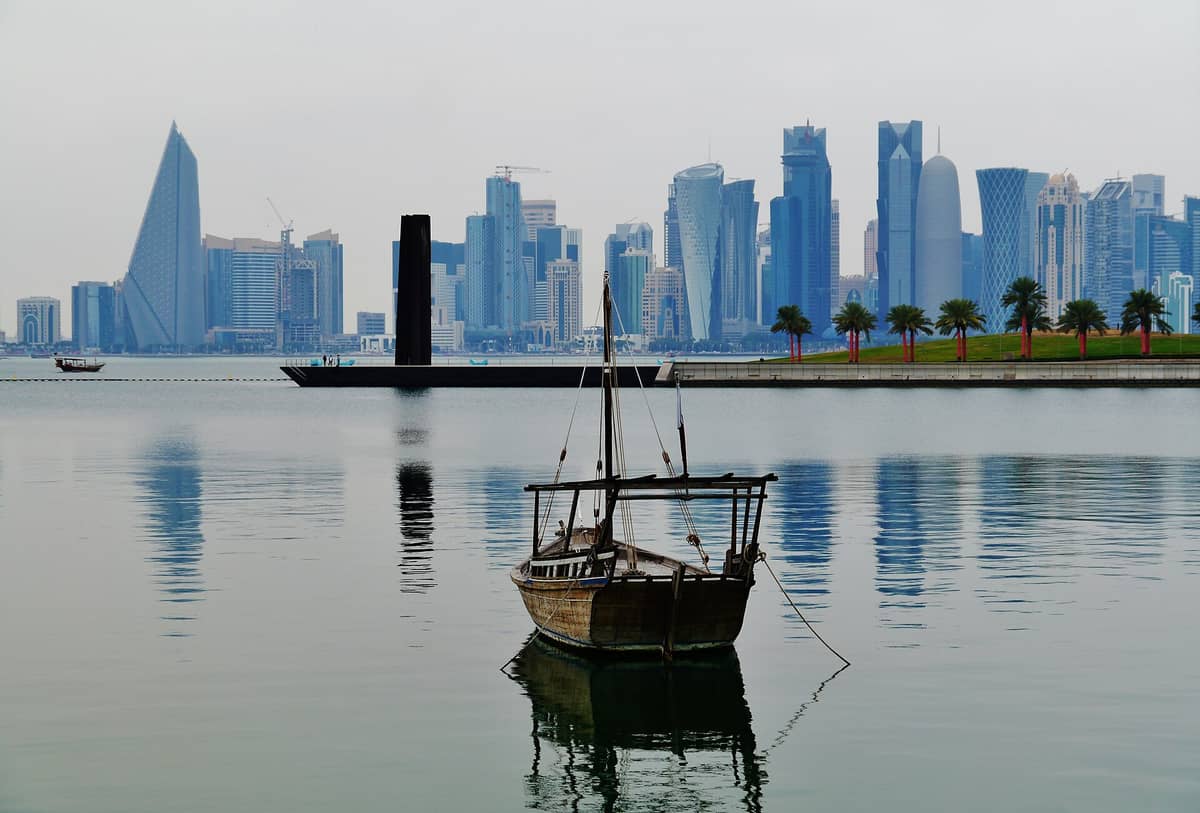
The park's position on its own small peninsula is the key to everything. Because it sits slightly detached from the main Corniche road, the noise of traffic drops away almost immediately once you step inside. What replaces it is the low sound of water, the crunch of gravel underfoot on certain paths, and, in the cooler months, birdsong. The West Bay skyline, with its cluster of glass towers, sits directly across the bay, offering one of the cleanest unobstructed panoramas in the city.
💡 Local tip
MIA Park is open 24 hours a day, 365 days a year, with no entry fee. You never need to time your visit around opening hours, but the experience changes dramatically depending on when you go — more on that below.
The Lay of the Land: What to Expect When You Arrive
The park covers a considerable stretch of waterfront, with manicured lawns, low ornamental planting, and palm-lined paths connecting different zones. The Museum of Islamic Art building anchors the centre, and from its terrace and the lawns immediately around it, you get the full 180-degree bay view. Closer to the Corniche promenade, the park widens into open grass areas where families spread out rugs, children run, and joggers warm up before tackling the longer Corniche walk.
The path network connects MIA Park directly to the Doha Corniche promenade, which stretches north toward West Bay and south toward Souq Waqif. There are benches at regular intervals, and the waterfront edge has a low barrier with views straight out across the bay. On clear days, traditional dhow boats pass close to shore, adding a layer of context that reminds you this stretch of water has been a working harbour for centuries.
If you plan to walk the full promenade after visiting the park, budget extra time. The Doha Corniche promenadeThe promenade runs north toward West Bay and south toward Souq Waqif, and MIA Park marks its southern anchor point — a natural starting spot for the full waterfront walk.
How the Park Changes by Time of Day
Early morning, from around 5:30 to 7:30 a.m. in winter months, is when MIA Park feels most like a local space. Joggers move in focused circuits, men sit quietly on benches looking out at the water, and the light across Doha Bay is soft and pink. The museum building itself is lit from below at night and shifts to a warm stone colour in the early sun. This is the best hour for photography of the museum facade and for a peaceful walk without crowds.
By mid-morning, tour groups begin arriving, and the area around the museum entrance gets noticeably busier. The lawns fill gradually through the afternoon, particularly on weekends (Friday and Saturday in Qatar), when families arrive with picnic supplies and stay for hours. By late afternoon, the park reaches its most social atmosphere, with the smell of street food drifting in from vendors near the Corniche and children taking over the open grass.
After dark, MIA Park transforms. The museum building is dramatically lit, its geometric white-stone mass reflecting in the still water when the bay is calm. The West Bay towers glow across the water. The temperature in winter evenings drops to somewhere comfortable, and the park stays populated well past 10 p.m. This is when the skyline view is at its most photogenic, and when the park takes on an unhurried, almost contemplative quality.
ℹ️ Good to know
Summer visits (June through September) are a different experience. Daytime temperatures can exceed 40°C, and the park is largely deserted during daylight hours. If you visit in summer, go after 8 p.m. when the heat begins to ease slightly and the illuminated skyline view is reward enough.
The Museum of Islamic Art: Context and Connection
You cannot write about MIA Park without acknowledging the building at its centre. The Museum of Islamic Art was designed by architect I.M. Pei, who came out of retirement to take the commission, and opened in 2008. It is one of the most studied examples of contemporary architecture in the Gulf.
Even if you don't go inside, spending time in the park with the building visible gives you a strong sense of what makes it architecturally unusual: the way it sits on its own man-made island within the larger promontory, the way its stark geometry contrasts with the softness of the lawns and water. If you do plan to visit the galleries, the Museum of Islamic Art holds one of the world's most significant collections of Islamic art spanning 1,400 years and three continents — a serious draw in its own right.
MIA Park also sits within a cluster of Doha's cultural landmarks. The National Museum of Qatar is a short walk or taxi ride away, and Souq Waqif lies just north along the Corniche, making this corner of the city one of the most culturally dense areas in the country.
Photography at MIA Park
MIA Park is one of Doha's most photographed outdoor locations, and for good reason. The combination of the museum's geometric facade, the open water, and the West Bay skyline in the background gives you multiple distinct compositions from a single position. The most classic shot is taken from the waterfront promenade edge looking northwest, with the museum building on one side and the towers across the bay on the other.
For skyline photography specifically, the park delivers one of the best unobstructed vantage points in the city. Doha photography guideFor skyline photography specifically, the park delivers one of the best unobstructed vantage points in the city. Golden hour before sunset, when the towers catch warm light and the bay surface reflects the sky, is the peak moment. A wide-angle lens captures both the museum and the skyline in a single frame; a telephoto compresses the towers into a dense cluster.
Night photography rewards a tripod. The museum's lighting is warm and directional, creating strong shadow patterns across its carved geometric surfaces. The reflections on the bay, when wind is low, double the skyline in the frame. Avoid the hours immediately after rain (rare in Doha, but possible between November and March), when sea spray and moisture reduce the clarity of distant lights.
Getting There and Practical Logistics
The nearest metro stations are Souq Waqif and National Museum on the Gold Line, roughly a kilometre from MIA Park. It is walkable, but the pedestrian route between the station and the park is not seamlessly connected. You will cross Al Corniche Street, which is a wide arterial road, and the final stretch to the park entrance requires attention. Bus stops along Al Corniche Street also serve the area, but again, pedestrian crossings and footpath continuity can be inconsistent. Checking current walking routes via Google Maps before you go is worthwhile.
By taxi or ride-hailing app, ask to be dropped at MIA Park or Museum of Islamic Art on Al Corniche Street. The journey from West Bay typically takes 10 to 15 minutes outside peak traffic hours. There are two car parks: one closer to the museum entrance for visitors heading inside, and another along the Corniche promenade accessible to park visitors. Parking fills up quickly on Friday evenings and weekends, so arriving before 4 p.m. on those days helps.
⚠️ What to skip
There are no large food vendors inside the park itself. The museum has a café (check current opening hours at mia.org.qa, as they differ from park hours). For a wider dining choice before or after your visit, Souq Waqif is a 15-minute walk north along the Corniche and has dozens of options.
Who Might Want to Skip MIA Park
Visitors who travel specifically for dense urban or market experiences may find MIA Park a quiet interlude rather than a destination. It is a garden: calm, open, and deliberately unhurried. If you have only a few hours in Doha and prioritise souk shopping or indoor cultural attractions, you might choose to view the park briefly while passing along the Corniche rather than dedicating a dedicated visit.
In summer, between June and September, the park offers little reason to visit during daylight. Heat above 40°C makes sitting on a lawn or walking an exposed promenade genuinely uncomfortable. If your trip falls in summer and your priority is outdoor exploration, the cooler winter months are significantly better suited to getting the most from MIA Park.
Insider Tips
- The park's eastern waterfront edge, away from the main museum entrance, is far less crowded even on busy evenings. Walk past the museum and continue along the water for quieter benches with the same skyline view.
- For the cleanest skyline reflection shots, visit on a weekday evening after 7 p.m. in winter, when the water is calmer and foot traffic is lighter than on weekends.
- If you're combining MIA Park with Souq Waqif, walk north along the Corniche promenade rather than taking a taxi — the 15-minute walk has its own views and gives you a sense of how the waterfront pieces together.
- The museum café, when open, has outdoor seating facing the bay. Even if you don't enter the museum galleries, it's worth checking if the café is accessible from the park side for a coffee with one of Doha's better views.
- Fridays after sunset are the park's peak social moment — a genuinely local scene with families, food, and a relaxed atmosphere that you won't find in hotel lobbies or malls. It's worth experiencing even if you've already visited earlier in the week.
Who Is MIA Park For?
- Photographers after Doha's best skyline and architectural shots
- Families looking for a free, safe, open outdoor space in the city
- First-time visitors who want to orient themselves along the Corniche and understand Doha's waterfront geography
- Evening walkers and joggers wanting a scenic, well-lit route after dark
- Museum-goers combining an outdoor wander with a visit to the Museum of Islamic Art or National Museum of Qatar
Nearby Attractions
Other things to see while in Doha Corniche & West Bay:
- Doha Corniche Promenade
The Doha Corniche is the city's defining public space: a sweeping seafront promenade that stretches along Doha Bay, framing the West Bay skyline across the water. Free, open around the clock, and accessible by metro, it rewards visitors differently at dawn, midday, and after dark.
- Museum of Islamic Art (MIA)
The Museum of Islamic Art sits on a purpose-built island off Doha's Corniche, housing one of the world's most comprehensive collections of Islamic art across 1,400 years. Designed by I.M. Pei and reopened in 2022 with a full rehang, it rewards both casual visitors and serious art travelers.
- National Museum of Qatar
Opened in 2019 inside a building shaped like interlocking desert rose crystals, the National Museum of Qatar tells the complete story of the country from its geological origins to the present day. Located at the southern end of the Doha Corniche with its own metro stop, it is one of the most architecturally and intellectually ambitious museums in the Gulf region.
- Stadium 974
Built from 974 shipping containers and designed to be fully dismantled after use, Stadium 974 is one of the most architecturally distinctive structures to emerge from the 2022 FIFA World Cup in Qatar. Positioned along the Ras Abu Aboud waterfront with West Bay's skyline as its backdrop, the stadium is as photogenic as it is conceptually daring.