Qatar Visa Guide: Entry Requirements for Doha (2026)
Planning a trip to Doha, Qatar? This guide breaks down exactly who needs a visa, how to get one, what documents to carry, and the common mistakes that trip up first-time visitors at the border.

TL;DR
- Citizens of more than 95 countries receive a visa on arrival in Qatar, with no pre-application required.
- GCC nationals (Bahrain, Kuwait, Oman, Saudi Arabia, UAE) enter Qatar with no visa at all. For everyone else, check the Doha first-timer guide to understand what to prepare before you fly.
- Visa on arrival costs around USD 21, grants up to 90 days of stay depending on nationality, and requires a passport valid for at least three months plus a return ticket and compulsory health insurance.
- Some nationalities must apply in advance through the Hayya portal (hayya.qa) rather than obtaining a visa on arrival. Eligibility depends on your passport and residency.
- Visa rules change without long notice. Always verify your specific situation on Qatar's Ministry of Interior portal (portal.moi.gov.qa) before booking flights.
Who Needs a Visa to Enter Qatar?
Qatar has three distinct entry tracks, and which one applies to you depends entirely on your nationality and, in some cases, your country of residence. This is the part most travelers get wrong: assuming that because a friend had one experience, they will too. That is not how Qatar's visa system works.
- No visa required GCC citizens (Bahrain, Kuwait, Oman, Saudi Arabia, UAE) can enter Qatar freely with a valid national ID or passport. No application, no fee, no waiting.
- Visa on arrival (VOA) Nationals of more than 95 countries, including the United States, United Kingdom, EU member states, Australia, Canada, and Japan, are eligible for a visa on arrival at Hamad International Airport and other official entry points. This costs around USD 21 and is issued on the spot.
- Hayya portal application If your nationality does not qualify for VOA, you must apply in advance through the official Hayya platform at hayya.qa. Processing times and document requirements vary, so apply with significant lead time before your trip.
⚠️ What to skip
Do not assume your nationality qualifies for visa on arrival without checking. The eligible country list is maintained by Qatar's Ministry of Interior and is updated periodically. Verify at portal.moi.gov.qa before purchasing your flights.
Visa on Arrival: What to Expect at Hamad International Airport
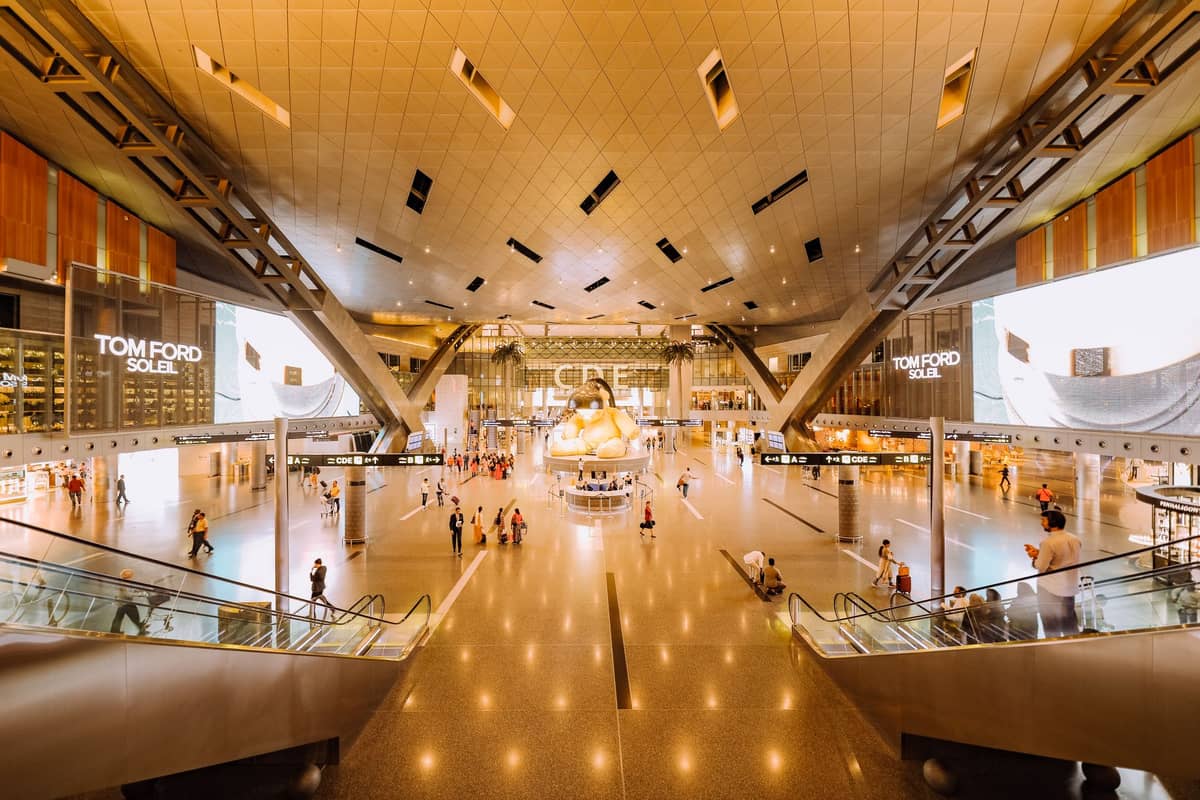
For eligible travelers, the visa on arrival process at Hamad International Airport is generally smooth and fast during off-peak hours. You proceed to the immigration counters, which are clearly signposted in Arabic and English, and the visa is stamped directly into your passport. During peak periods, particularly around major sporting events or school holiday seasons, queues can stretch significantly longer.
- Passport valid for at least three months beyond your intended departure date from Qatar
- Confirmed onward or return ticket
- Compulsory health insurance from a provider registered with Qatar's Ministry of Public Health (required if staying beyond the initial exemption period)
- Proof of accommodation, such as a hotel booking confirmation or host contact details
- Sufficient funds for your stay (immigration officers can ask, though checks are not universal)
The fee at time of writing is approximately USD 21, payable at the airport. The visa has a 90-day validity and permits a stay of up to 90 days for eligible nationalities. This is generous compared with most regional destinations, making Qatar a practical base for longer stays in the Gulf.
💡 Local tip
Health insurance is an important requirement for longer stays, not just a formality. If your existing travel insurance policy does not explicitly cover medical treatment in Qatar, you may need to purchase a compliant policy before or after arrival depending on your visa category. Buy it before you fly to avoid delays at immigration.
Applying Through the Hayya Portal
The Hayya platform (hayya.qa) is Qatar's official digital entry system. Originally established for the 2022 FIFA World Cup, it has continued as an entry and visa management tool for visitors whose nationalities require pre-approval. If you fall into this category, the Hayya portal is your starting point, not the airline counter and not a third-party visa agency.
The application requires standard documentation: passport scans, a recent photograph, travel itinerary, and accommodation confirmation. Some applicants will also need to provide a letter of sponsorship or invitation depending on their nationality. Approval timelines are not guaranteed, so applying at least two to three weeks before travel is the sensible approach. During periods of high demand, processing can take longer.
✨ Pro tip
Third-party visa services offering to process Qatar visas faster are not endorsed by Qatar's Ministry of Interior. Use only hayya.qa or the official embassy of Qatar in your country. Paying a premium to an intermediary adds risk with no guaranteed benefit.
Common Misconceptions About Qatar Entry Requirements
Qatar's relatively open visa policy attracts a lot of travelers, but also a lot of misinformation. Here are the specific points that consistently confuse visitors.
- A hotel booking alone is not enough The Ministry of Interior requires a confirmed return ticket AND health insurance alongside accommodation proof. Arriving with only a hotel booking and assuming the rest is optional can create problems at immigration.
- Residency can change your eligibility In some cases, the country where you legally reside matters as well as your passport nationality. A passport from a country requiring pre-approval may still qualify for VOA if the holder holds residency in a qualifying country. Check both variables.
- Visa on arrival is not the same as visa-free VOA still means you are subject to immigration discretion and document checks. You can be refused entry if documentation is incomplete, regardless of your nationality.
- The Hayya portal is not only for events Post-World Cup, Hayya continues to operate as a standard visa tool. Do not let the sporting-event branding mislead you into thinking it no longer applies to regular tourism.
Practical Entry Tips: Before You Fly to Doha
Doha is accessible year-round, but if you want comfortable temperatures for exploring the city, the November to March window is significantly better than summer. The heat between June and September is genuinely extreme, with daytime highs regularly above 40°C. For more on timing your trip, see the best time to visit Doha guide, which covers climate, crowds, and major events.
Once you land, getting into the city is straightforward. The Doha Metro Red Line connects Hamad International Airport directly to central areas including West Bay and the Corniche. Karwa taxis queue at the arrivals hall. If you prefer an overview of getting around the city before you arrive, the getting around Doha guide covers metro routes, fares, and ride-hailing options in detail.
- Check your nationality's visa category on portal.moi.gov.qa before travel
- Ensure your passport has at least three months validity beyond your planned Qatar departure date
- Arrange compliant health insurance before departure if your stay will exceed the initial exemption period
- Download your return ticket confirmation and hotel booking to your phone for offline access
- Carry the emergency number (999 in Qatar) and the Qatar country dialing code (+974) in your contacts
- Qatar operates on Arabia Standard Time (UTC+3) with no daylight saving, so adjust meeting schedules accordingly
If you are traveling on a tight budget, note that the Doha Metro VOA combination makes Qatar more accessible than many Gulf destinations. The Doha on a budget guide covers where to save money once you are inside the country, including free attractions, affordable dining, and public transport strategies.
Cultural and Practical Norms Every Visitor Should Know

Qatar is a conservative, Islamic country, and Doha enforces public decency standards consistently. This is not a dealbreaker for most visitors, but arriving without awareness of the basics causes unnecessary friction. Dress modestly in public spaces, particularly at Souq Waqif, government buildings, and mosques. Resort and beach areas operate with more flexibility, but covering up outside those specific zones is standard practice.
Arabic is the official language, but English functions effectively in hotels, restaurants, shopping malls, and tourist areas throughout Doha. The currency is the Qatari riyal (QAR), which is pegged to the US dollar. Qatar uses 240V electricity with Type G British-style three-pin plugs, so travelers from North America and parts of Asia will need an adapter. For a broader orientation to Doha before your visit, the Doha safety guide covers health precautions, areas to be aware of, and current official travel advisories.
FAQ
Do US citizens need a visa to visit Qatar?
US citizens qualify for a visa on arrival at Hamad International Airport and other official entry points. The fee is approximately USD 21, and the visa permits a stay of up to 90 days. You still need a passport valid for at least three months, a return ticket, and compliant health insurance. Verify current requirements at portal.moi.gov.qa before travel, as policies can change.
How much does a Qatar visa cost?
For eligible nationalities, the visa on arrival fee is around USD 21 at the time of writing. If you need to apply through the Hayya portal in advance, fees vary depending on visa type and duration. GCC citizens pay nothing, as no visa is required.
Is health insurance required to enter Qatar?
Yes. Qatar's Ministry of Interior lists health insurance from a provider registered with Qatar's Ministry of Public Health as a compulsory entry requirement for visa on arrival, subject to the first-30-days exemption for eligible visitors. This is different from general travel insurance. Check that your policy explicitly covers medical treatment in Qatar, or purchase compliant coverage before you fly.
What is the Hayya portal and do I need to use it?
Hayya (hayya.qa) is Qatar's official online entry management platform. Travelers whose nationalities do not qualify for visa on arrival must apply through Hayya before traveling. Even if you qualify for VOA, the Hayya portal can be used to register entry details in advance. Do not use third-party sites claiming to process Hayya permits.
Can I extend my visa if I want to stay longer in Qatar?
Visa extensions are possible in some circumstances and must be processed through Qatar's Ministry of Interior. The standard visa on arrival permits up to 90 days, which covers most tourism itineraries. If you plan a longer stay, contact the Ministry of Interior or Qatar's official immigration services before your initial visa expires. Overstaying results in fines and can affect future entry eligibility.