First Time in Doha: Everything You Need to Know
Doha rewards first-timers who arrive prepared. This guide covers the essentials: how to get from the airport, which neighborhoods to prioritize, what the climate actually feels like, and the cultural norms that matter most. No fluff, just practical knowledge.
TL;DR
- Fly into Hamad International Airport (DOH) and take the Metro Red Line to the city center for QAR 2, a 20-minute ride. Check the airport layover guide if you have limited time.
- November to March is the most comfortable window for outdoor sightseeing. Summer heat (May–September) often exceeds 40°C and makes extended time outside impractical.
- A number of nationalities can enter Qatar visa-free for up to 90 days, but always verify with official sources before travel as policies update frequently. but always verify with official sources before travel as policies update frequently.
- Doha's key areas for first-timers: Souq Waqif, the Corniche, West Bay, and The Pearl-Qatar. See the full things to do in Doha guide to plan your itinerary.
- Dress modestly in public spaces, especially markets and mosques. English is widely spoken across hotels, malls, and tourist areas.
Doha at a Glance: The Basics
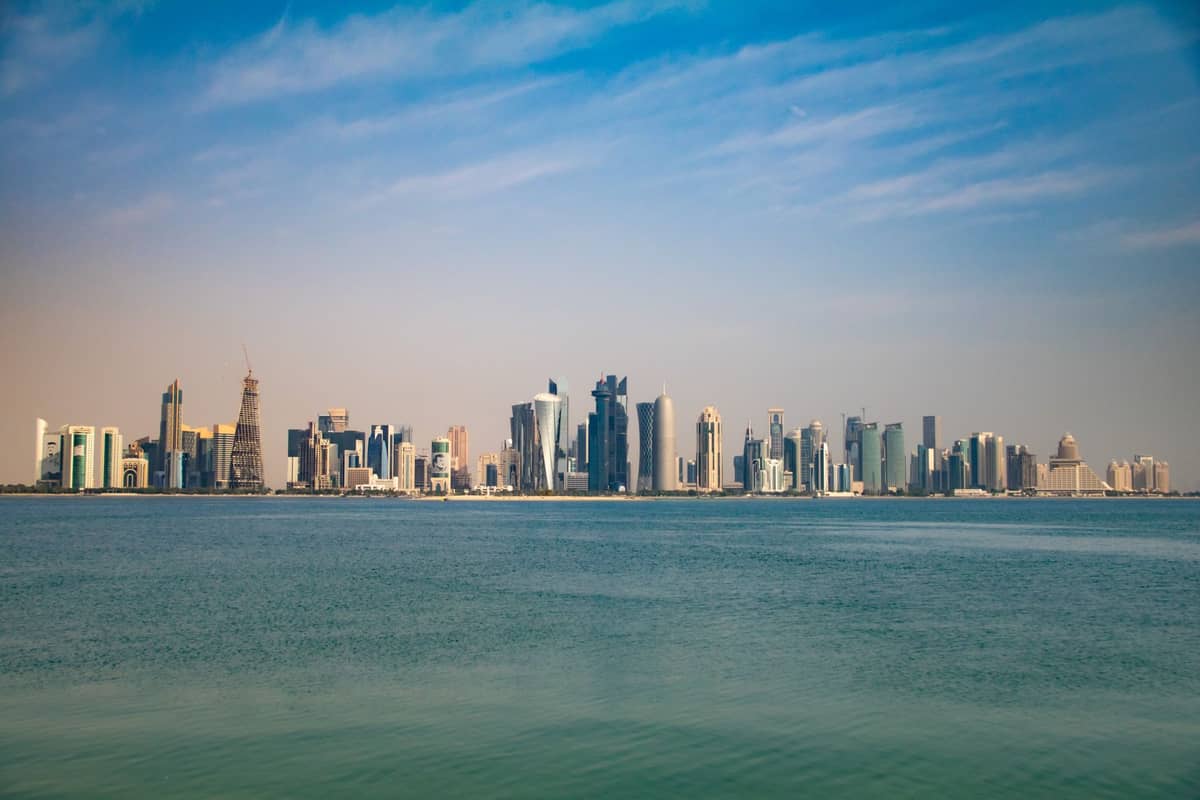
Doha is the capital and largest city of the State of Qatar, situated on the central east coast of the Qatar Peninsula along the Arabian Gulf. The city proper covers 132 km² and has a population of around 1.2 million, though the country as a whole is home to approximately 3 million people. The overwhelming majority of Qatar's population is expatriate, which gives Doha an unusually cosmopolitan character for a Gulf capital.
The official language is Arabic, but English functions as the de facto language of business, tourism, and everyday commerce. Signage throughout the metro, malls, and tourist districts is bilingual. The currency is the Qatari riyal (QAR), The currency is the Qatari riyal (QAR), which has been pegged to the US dollar at approximately QAR 3.64 to $1, making currency calculations straightforward., making currency calculations straightforward. Qatar operates on Arabia Standard Time (UTC+3) year-round, with no daylight saving adjustments.
- Country State of Qatar
- Currency Qatari riyal (QAR), pegged at ~3.64 per USD
- Timezone UTC+3 (Arabia Standard Time), no daylight saving
- Language Arabic (official), English (widely used)
- Emergency number 999 (police, ambulance, fire)
- Country dialing code +974
- Electricity 240V / 50Hz, Type G (British three-pin) plugs
Getting to Doha and From the Airport
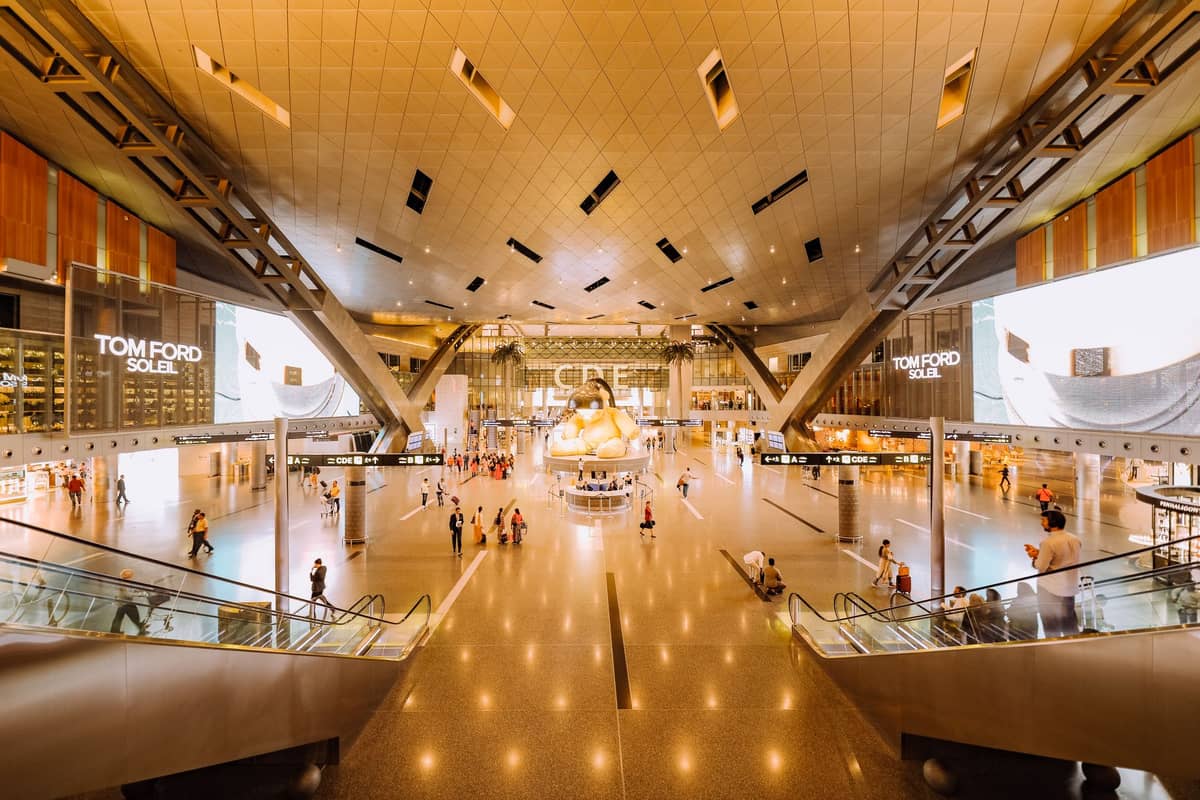
Doha is served exclusively by Hamad International Airport (IATA: DOH), Doha is served exclusively by Hamad International Airport (IATA: DOH), a major transit hub. The terminal is located roughly 10 km southeast of the city center, and you have four realistic options to get downtown. and you have four realistic options to get downtown.
The Metro Red Line is the fastest and cheapest option. A standard single fare is a flat QAR 2 regardless of distance, The Metro Red Line is the fastest and cheapest option. A standard single fare is a flat QAR 2 regardless of distance, and the journey from the airport station to central stops like Msheireb takes around 20 minutes. Trains run every 6–9 minutes and are fully air-conditioned. You'll need a reusable travel card (QAR 10 to purchase, which includes travel credit). If you want more space and comfort, the Goldclub carriage costs QAR 10 per journey. The metro is by far the best deal in the city, and first-time visitors underuse it. See the full for route breakdowns. The metro is by far the best deal in the city, and first-time visitors underuse it. See the full getting around Doha guide for route breakdowns.
Karwa taxis queue at the dedicated taxi pavilion outside Arrivals. They're metered, operated by the state-owned Mowasalat company, and accept cashless payments including Mastercard, Visa, Apple Pay, Google Pay, and NAPS, so you don't need cash the moment you land. Ride-hailing apps including Uber and BadrGo also operate from the airport arrivals area. City buses serve the airport too, using the Karwa Smartcard.
💡 Local tip
Buy a travel card at the metro station inside the airport terminal before you exit. The QAR 10 upfront cost pays for itself on the first trip, and you'll use the card throughout your stay for both metro and bus travel.
When to Visit: Climate and Seasonal Reality
Doha has a hot desert climate (Köppen BWh). That classification is not abstract: Doha has a hot desert climate (Köppen BWh). That classification is not abstract: summer temperatures routinely hit around 40–41°C by July and August, with high humidity adding to the discomfort. From roughly May through September, outdoor sightseeing is genuinely unpleasant for most people, and any activity that isn't indoors needs to be limited to early morning or after sunset., with high humidity adding to the discomfort. From roughly May through September, outdoor sightseeing is genuinely unpleasant for most people, and any activity that isn't indoors needs to be limited to early morning or after sunset.
The comfortable window runs from November to March. January sits around 13–22°C, ideal for walking the Corniche or exploring Souq Waqif without breaking a sweat. March warms quickly, and by April the heat is already noticeable. December and January tend to draw the largest crowds of international visitors. If you're visiting specifically for cooler weather, aim for Doha in winter, which covers events, outdoor markets, and what the city looks like when temperatures are genuinely mild.
Rainfall is minimal: Doha receives around 61–75 mm of rain annually, almost all of it falling between November and April, Rainfall is minimal: Doha receives around 61–75 mm of rain annually, almost all of it falling between November and April, with winter months being the wettest. Summer months are completely dry. Sandstorms (shamal) can occur in spring and occasionally reduce visibility, but they're unpredictable. Check local weather apps before planning desert excursions.
⚠️ What to skip
Visiting during Ramadan changes the experience significantly. Restaurant and café hours shift, daytime eating and drinking in public is restricted for visitors too, and the atmosphere is quieter during the day. That said, Ramadan evenings have a distinct character that some travelers find appealing. Check the Islamic calendar before booking.
Doha's Neighborhoods: Where to Focus Your Time
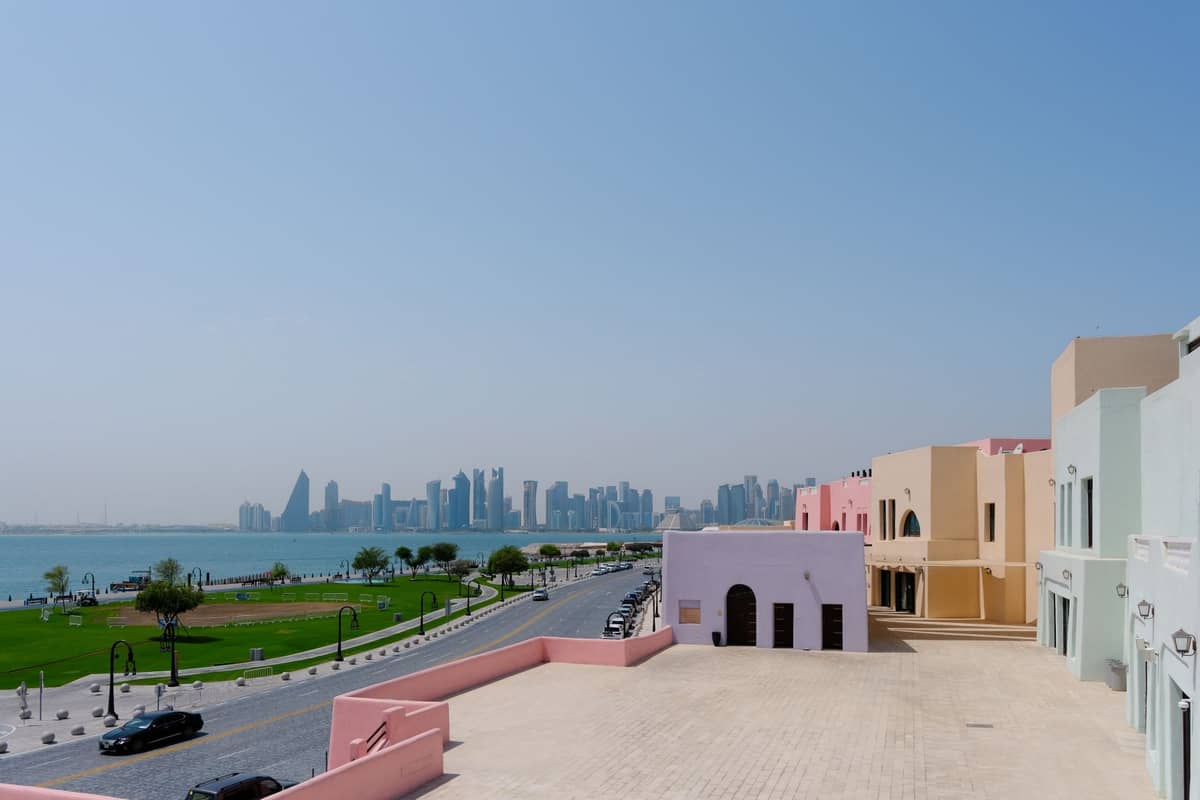
Doha is more spread out than it looks on a map. The urban core is fairly compact, but several key attractions are 20–30 minutes apart by car. Understanding the geography before you arrive saves wasted transit time.
- Souq Waqif Area The historic market district near the Corniche, with restored mud-brick architecture, restaurants, shisha cafes, and the famous falcon souq. This is where most first-timers should start.
- West Bay Doha's central business district, identifiable by its cluster of skyscrapers. Home to major hotels, the convention center, and the northern end of the Corniche waterfront.
- The Corniche A 7 km crescent-shaped promenade along Doha Bay. Best walked early morning or at sunset. The skyline views across the water toward West Bay are the city's defining image.
- Msheireb Downtown Doha A regenerated urban quarter adjacent to Souq Waqif, with modern walkable streets, the Msheireb Museums, and a mix of cafes and cultural spaces. Underrated by first-timers.
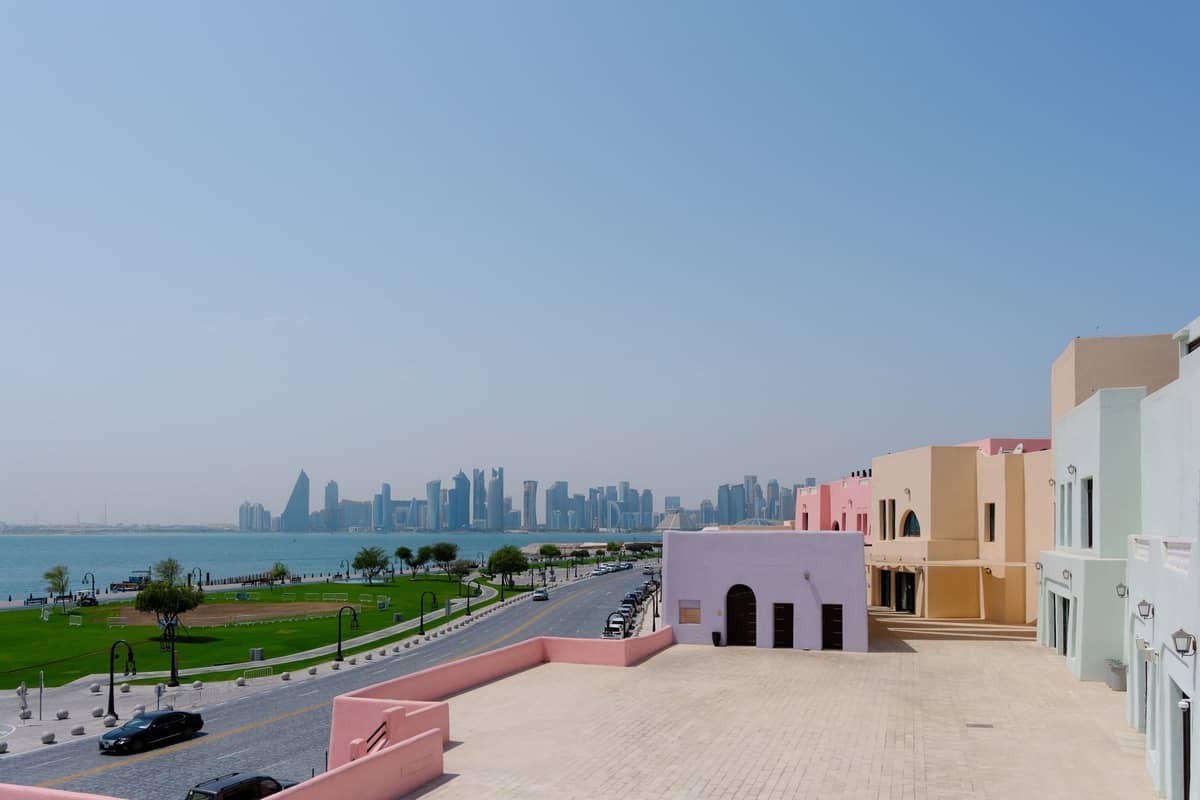
- The Pearl-Qatar A man-made island development off West Bay with marina walkways, upscale dining, and the Qanat Quartier, which mimics Venice's canals. Stylish but less culturally revealing than Souq Waqif.
- Katara Cultural Village A planned cultural district on the northeastern waterfront with a beach, amphitheater, galleries, and restaurants. Good for a half-day, especially if you're interested in local arts programming.
- Education City / Lusail The western education campuses and the new northern district of Lusail are worth a visit for architecture fans, but less essential for short first trips.
If you only have two days, concentrate on the arc from Souq Waqif to the Museum of Islamic Art to the Corniche promenade. That route alone accounts for the most photographed and culturally dense part of the city. For a structured itinerary, the 2 days in Doha guide maps it out hour by hour.
Visas, Entry, and Practical Formalities
A number of nationalities can enter Qatar visa-free for stays of up to 90 days. This includes most European Union passport holders, UK, US, Canadian, and Australian citizens, among others. Conditions typically require confirmed accommodation and an onward ticket, so ensure those are documented. A number of additional nationalities can obtain a visa on arrival at Hamad International Airport.
Because visa policy is updated without much notice, treat any specific list you find online as a starting point, not a guarantee. Always verify your eligibility through Qatar's Ministry of Interior or Qatar Tourism's official portal before booking. If you're planning an extended trip or combining Qatar with other Gulf countries, the Doha visa guide covers the major nationality categories and application routes in detail.
ℹ️ Good to know
Qatar has a stopover program that can allow transit passengers to enter the country for short stays, sometimes including a free or subsidized hotel night. If your connection through DOH is long enough, this is worth investigating through Qatar Airways or official airport resources.
Cultural Norms, Dress, and Daily Life
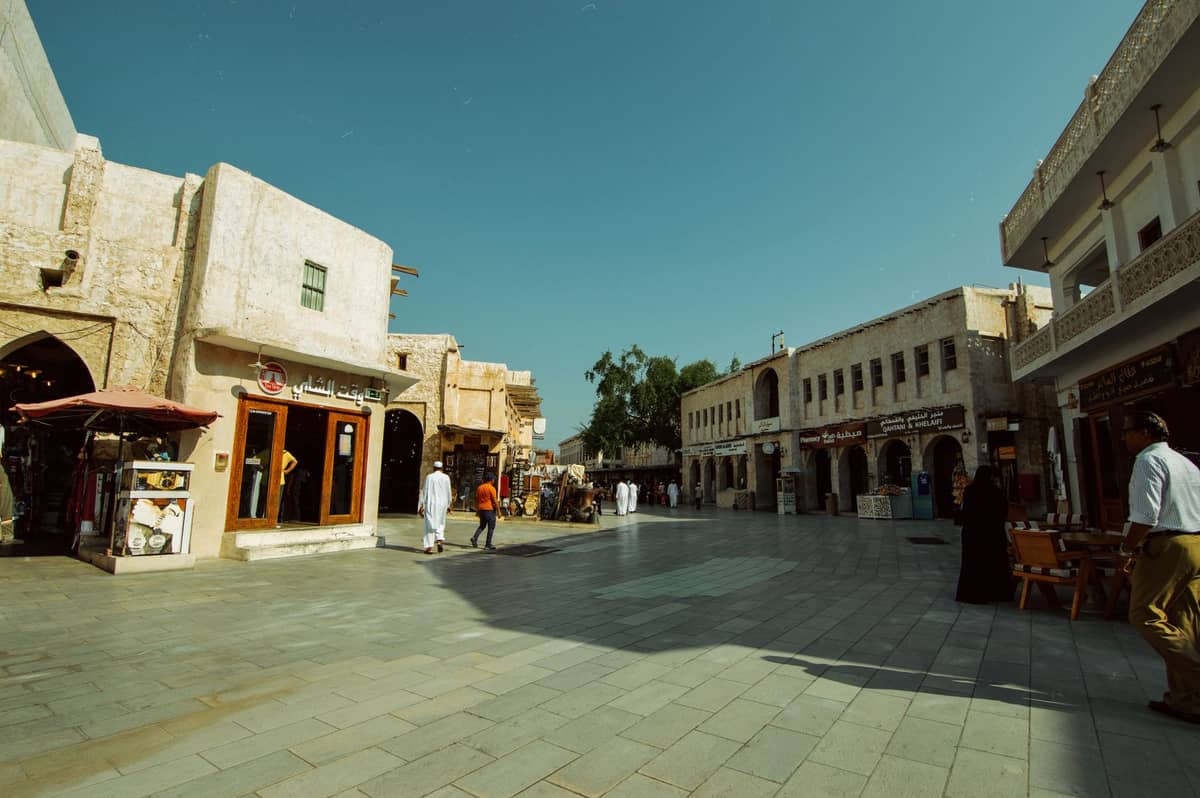
Doha is more relaxed in practice than many first-timers expect, but certain norms require attention. Dress code in public spaces should lean conservative: shoulders and knees covered is the general benchmark, particularly in government buildings, the souq, and mosques. Resort pools, The Pearl, and hotel areas are more permissive, but it's worth dressing appropriately for wherever you're heading rather than assuming everywhere operates the same way.
Alcohol is available in Doha, served at licensed hotel bars and restaurants, but it's not sold at supermarkets or street-level venues. If you're staying at a non-licensed property, options narrow quickly. Public displays of affection are discouraged. Photography of government buildings, military installations, and people without consent can cause issues, so apply common sense in those situations.
Tipping is customary but not legally required. In restaurants, rounding up or leaving 10% is standard if service isn't already included on the bill. Taxi drivers appreciate a round-up. For a full breakdown of safety considerations and cultural guidance, the Doha safety guide covers current official advisories and common sense precautions.
- Tap water in Doha is treated and generally considered safe, but bottled water is cheap and widely available if you prefer it.
- Type G (British three-pin) plugs are standard. Adapters are available at the airport and in most electronics shops.
- The Doha Metro, malls, and most indoor spaces are heavily air-conditioned year-round, sometimes aggressively so. Carry a light layer even in summer.
- Friday is the holy day: some businesses open late (midday or after) and the morning is quieter city-wide.
- Credit and debit cards are accepted almost everywhere, including taxis. Carrying QAR 50–100 in cash is useful for small souq purchases.
What to See: First-Timer Priorities
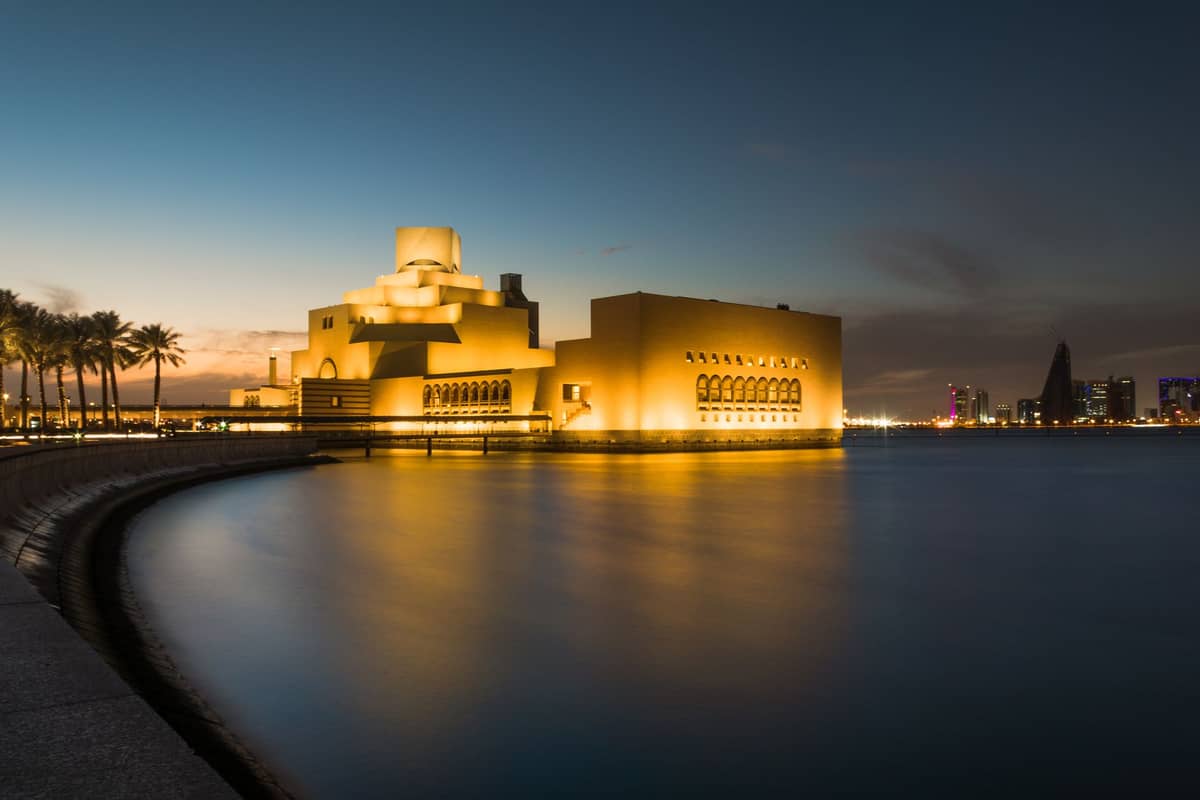
The Museum of Islamic Art is the single most important cultural institution in Doha and arguably one of the best museums in the region. The I.M. Pei-designed building sits on its own promontory at the southern end of the Corniche. Allow at least two hours inside, and walk the adjacent MIA Park for unobstructed views of the West Bay skyline.
The Souq Waqif is essential and lively in the cooler months, but can feel overly touristy midday in peak season. Visit in the early evening for the best atmosphere: the restaurants fill up, the spice stalls are active, and the crowds make it feel genuinely alive. The falcon souq nearby is one of the most distinctive things in Qatar and worth 30 minutes of anyone's time.
For views, the best free option is the Doha Corniche promenade at sunset, when the West Bay towers catch the light across the water. Paid viewpoints at Aspire Tower and observation decks exist but are not the city's strongest offering. If you're traveling with children or have extra time, Doha with kids covers family-appropriate attractions in detail.
FAQ
Is Doha safe for first-time solo travelers?
Doha has consistently low rates of street crime and is considered one of the safer major cities in the Middle East. Petty theft is rare, and solo travelers, including women, generally report feeling comfortable. That said, cultural norms around dress and public behavior apply, and LGBTQ+ travelers should be aware that same-sex relationships are not legally recognized in Qatar. Check current foreign ministry advisories for your country before travel.
How many days do you need in Doha?
Three to four days is enough to cover the major highlights: Souq Waqif, the Museum of Islamic Art, the Corniche, The Pearl, and Katara. A two-day visit is tight but doable if you're focused. Allow a fifth or sixth day if you want to take a desert safari or explore the outskirts. Doha is not a city that demands two weeks.
Do I need cash in Doha, or can I use cards everywhere?
Cards are accepted at virtually all hotels, restaurants, malls, and official taxis. The Doha Metro uses a dedicated smartcard (QAR 10 to buy at station machines). For small vendors in the souq or informal stalls, having QAR 50–100 in cash is useful. ATMs are plentiful throughout the city.
What is the cheapest way to get from Hamad International Airport to downtown Doha?
The Doha Metro Red Line costs QAR 2 for a standard single journey, takes around 20 minutes, and connects directly to central Doha stops. It's the fastest and cheapest option by a significant margin. You'll need a Qatar Rail travel card, which costs QAR 10 to purchase at station machines inside the airport terminal.
Can I drink alcohol in Doha?
Yes, but only at licensed venues: hotel bars, hotel restaurants, and a small number of licensed clubs. Alcohol is not sold in regular supermarkets or convenience stores. If your hotel doesn't have a licensed bar, options for a drink nearby may be limited. The city is not dry, but it is controlled.