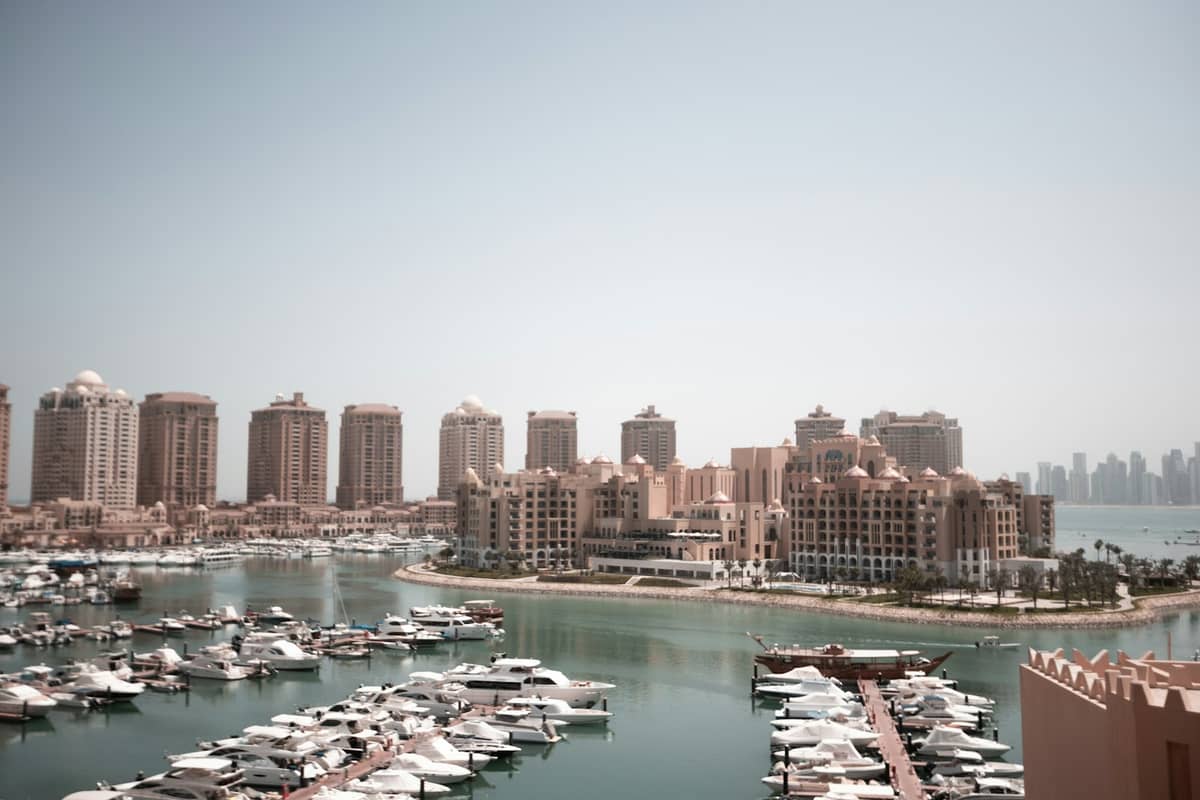
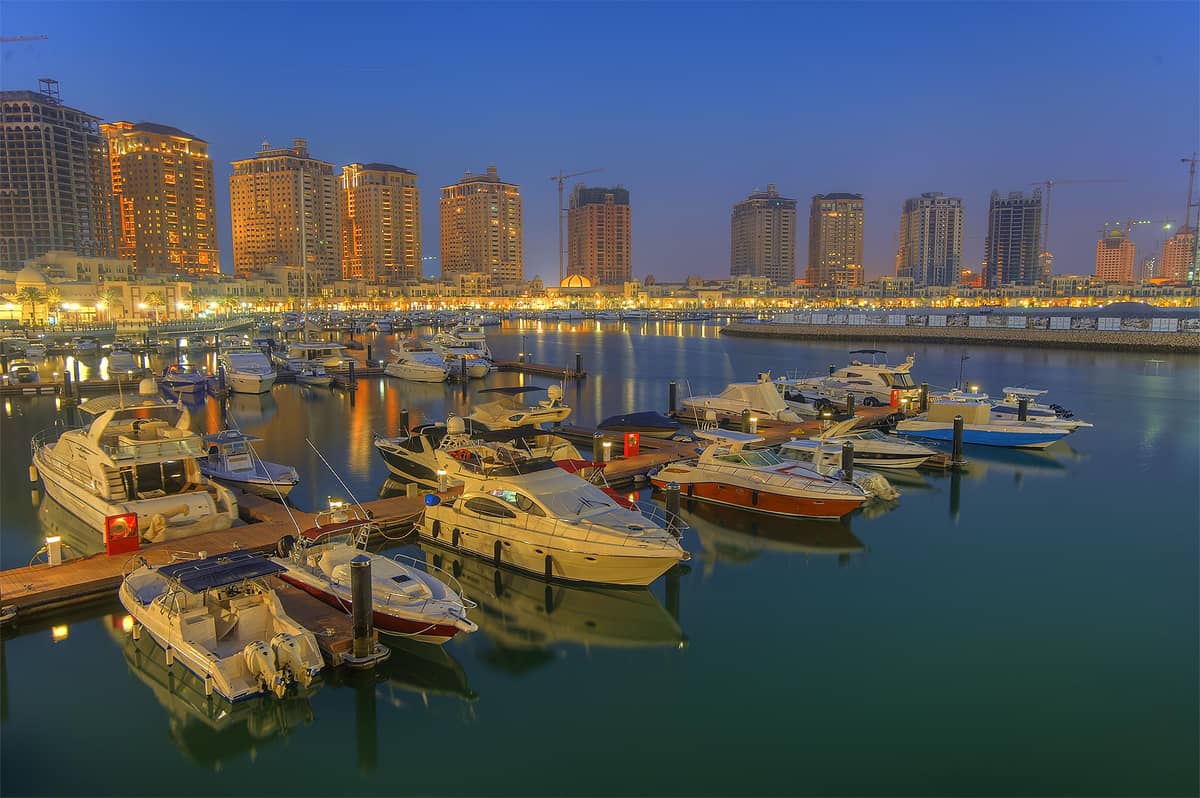
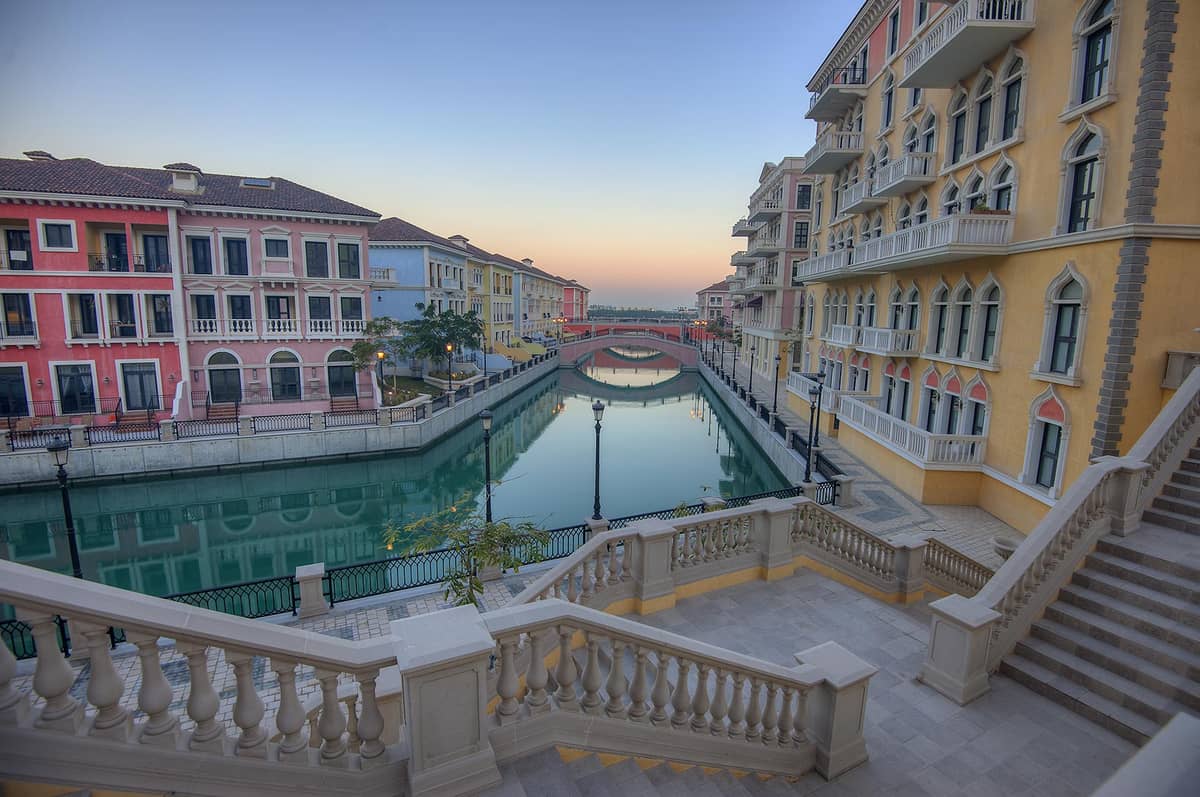
The Pearl-Qatar is a master-planned island off Doha's West Bay coast, built on reclaimed land and divided into distinct precincts ranging from the yacht-lined Porto Arabia marina to the pastel-colored canals of Qanat Quartier. It functions as Doha's most polished residential and leisure destination, where expatriates, tourists, and weekending locals share waterfront promenades lined with international restaurants and designer boutiques.
The Pearl-Qatar is Doha's most ambitious piece of urban engineering: a roughly 4-million-square-meter island built from scratch roughly 350 meters off the West Bay coastline, designed to feel like a Mediterranean resort town transplanted to the Arabian Gulf. It is the kind of place where the architecture references Venice and the French Riviera, the marina fills with private yachts on weekend evenings, and the streets stay walkable and calm even when the rest of the city is gridlocked. For visitors, it offers a distinctive window into how Qatar imagines luxury leisure.
Orientation
The Pearl-Qatar sits in the northeastern quadrant of Doha, connected to the mainland by a causeway road off the coastal highway that also links West Bay to Katara Cultural Village. The island is not far from the city's main business district in terms of straight-line distance, but its island geography gives it an unusually self-contained feel for an urban neighborhood. You cross onto The Pearl and the pace changes perceptibly.
The total development, including surrounding waters, covers roughly 13.9 square kilometers, with about 4 square kilometers of reclaimed land forming the island itself, which is larger than it sounds when you are on foot. The Pearl is organized into named precincts, each with its own character. Porto Arabia is the centerpiece: a large marina ringed by high-rise residential towers and ground-floor retail. Moving inward from the waterfront, Medina Centrale forms the commercial and social core, with open plazas, supermarkets, pharmacies, and the highest concentration of restaurants. Qanat Quartier occupies the eastern end of the island and is visually the most theatrical, with dyed-plaster facades in ochre, coral, and cream overhanging a network of narrow canals crossed by low pedestrian bridges.
Beyond these three main precincts, the island extends into quieter residential zones including Viva Bahriya, Costa Malaz, Floresta Gardens, Abraj Quartier, Giardino Village, and Isola Dana. These areas are primarily apartment and villa communities. The perimeter of the island traces 32 kilometers of new coastline, meaning that even within a single visit you will not exhaust the waterfront on foot. For a wider sense of Doha's geography, The Pearl sits between the glass-tower skyline of West Bay to the south and Katara Cultural Village to the north, the two areas that most visitors use as anchors when navigating Doha's northeastern coast.
Character & Atmosphere
Early mornings on The Pearl are quiet to the point of stillness. The marina at Porto Arabia reflects the residential towers in flat water, and the only real movement comes from workers setting up café terraces and the occasional jogger on the promenade. This is when the Mediterranean design conceit works best: the light on the water, the low-rise facades of Qanat Quartier catching the dawn, the smell of fresh bread from a bakery opening early. It is an environment that has been engineered for pleasantness, and at 7am on a weekday, that engineering shows clearly.
By midday, particularly in the summer months between May and September, the outdoor areas empty out almost entirely. Heat and humidity push temperatures well above 40°C, and the pedestrian promenades that look so inviting in a photograph become genuinely punishing. This is not a neighborhood flaw specific to The Pearl: it is a Doha-wide reality. During summer, life shifts indoors to the mall corridors and air-conditioned restaurant terraces with retractable roofing. The island was designed with this climate in mind, and many of the dining and retail areas are sheltered or enclosed.
Weekend evenings between October and April are the social peak. On Thursday and Friday nights, the Porto Arabia promenade fills with Doha's expatriate community, local families, couples, and tourists who have heard that this is the city's most picturesque waterfront. The marina glitters, the restaurants extend their terraces to the water's edge, and the general atmosphere is relaxed and cosmopolitan. It is not rowdy. The Pearl has no nightclub scene and alcohol is only served in licensed hotel restaurants, so the energy stays dinner-and-a-walk rather than anything louder.
The crowd skews affluent and international. This is Qatar's first area to permit foreign freehold property ownership, and the resident community reflects that: a mix of Western and South Asian professionals, Gulf nationals who weekend on the island, and an increasingly visible tourist presence since Doha's profile rose following the 2022 FIFA World Cup. The Pearl does not feel like the rest of Doha. It feels like a planned luxury enclave because that is exactly what it is. If you are looking for grit, history, or authentic market culture, you will not find it here. Those things exist in abundance at Souq Waqif and Msheireb, both within a short drive.
ℹ️ Good to know
The Pearl-Qatar is primarily a residential community, not a traditional tourist district. It rewards visitors who treat it as a place to walk, eat, and absorb a particular kind of curated Gulf modernity, rather than a destination with headline attractions.
What to See & Do
The most rewarding activity on The Pearl is the simplest one: walking the Porto Arabia marina promenade from one end to the other and back. The walk takes roughly 30 to 40 minutes at a comfortable pace and gives you the full visual sweep of the marina, the residential towers, and the open Gulf beyond. At various points along the promenade, you can look across the water toward the West Bay skyline. For a dedicated waterfront experience closer to central Doha, the Doha Corniche promenade offers a longer and more historically significant walk, but Porto Arabia is quieter and less traffic-adjacent.
Qanat Quartier is worth an hour of your time purely as an architectural spectacle. The canal system is modest in scale, but the combination of painted facades, arched bridges, and the reflection of buildings in the water produces a scene that photographs well and reads as genuinely unusual in the Gulf context. It is explicitly Venetian-inspired and makes no apology for that borrowing. Walk through at dusk when the facade lighting comes on and the cafés spill onto the canal-side steps. Separately, Porto Arabia itself is listed as a specific attraction in Doha travel guides and forms the social and visual heart of any visit to the island.
If you have children in tow, Qanat Quartier appeals to younger visitors through its canal-side character, while the marina area has open spaces suitable for kids to move around freely. For a broader family itinerary in Doha, the island pairs naturally with a visit to the nearby Katara Cultural Village, which is only a few minutes south by car and offers beach access, cultural programming, and the striking Katara amphitheatre.
Walk the Porto Arabia marina promenade at golden hour for the best light and atmosphere
Explore Qanat Quartier on foot, crossing the canal bridges and ducking into the side alleys
Browse the retail strip in Medina Centrale for international boutiques and lifestyle stores
Join the weekend evening crowd along the waterfront for an accurate picture of how Doha's expatriate community socializes
Take a boat tour or arrange a dhow experience for views of The Pearl from the water
💡 Local tip
The Pearl's marina occasionally hosts yacht shows, food festivals, and outdoor events, particularly in the cooler months. Check The Pearl-Qatar's official website or social channels before your visit to see if anything is running during your stay.
Eating & Drinking
The Pearl has one of the highest concentrations of international restaurants in Doha, spread across Porto Arabia's ground-floor retail and the plazas of Medina Centrale. The cuisine range covers Lebanese, Italian, Japanese, Indian, American, and French, with a particular strength in Mediterranean and Middle Eastern options. Price points lean upward: this is not a budget dining neighborhood. Expect to spend between 80 and 200 QAR per person for a sit-down meal at most mid-range spots, and considerably more per person at the finer marina-facing restaurants. For context on the wider Doha food scene, the where to eat in Doha guide provides a city-wide overview.
The terrace seats along Porto Arabia facing the marina are the most coveted spots in the evenings. On busy weekend nights these fill early, particularly between 7pm and 10pm. If you want a marina-view table, arrive before 7pm or book ahead where reservations are accepted. Midweek evenings are noticeably calmer and often offer better service.
Coffee culture is well-represented on The Pearl. There are multiple specialty café options in Medina Centrale and Qanat Quartier, some homegrown Qatari brands alongside international chains. The cafés in Qanat Quartier in particular have invested in their outdoor seating areas and make for a pleasant mid-morning stop. Street food in the traditional sense does not really exist here: The Pearl is all table-service and counter-service restaurants rather than carts or outdoor stalls. For street-level food culture, Souq Waqif is the right destination.
Alcohol is available at licensed hotel restaurants, bars, and a small number of other licensed venues on The Pearl, but not in the general retail dining strip. Several hotels within the island's residential precincts operate their own licensed venues. This is consistent with Qatar-wide regulations, and the distinction matters if you are looking to drink with dinner: check whether a specific restaurant holds a license before you sit down, as the majority of the marina-facing restaurants do not serve alcohol.
⚠️ What to skip
Most restaurants on The Pearl do not serve alcohol. Licensed bars and hotel venues exist on the island but are not always clearly marked. If alcohol with your meal is a priority, confirm in advance before choosing a restaurant.
Getting There & Around
The Pearl has no Doha Metro station within the island itself. The nearest Red Line station is Legtaifiya, which sits between Katara and Qatar University stations on the northern stretch of the line. From Legtaifiya, a dedicated Metrolink shuttle service, route M110, connects to The Pearl and is free for metro passengers. The shuttle runs regularly and deposits passengers at several points including Medina Centrale, from which the main precincts are walkable. Journey time from central Doha via metro and shuttle is typically 30 to 45 minutes depending on connections.
Karwa taxis and ride-hailing apps are the most common way visitors reach The Pearl. The causeway road connecting the island to the mainland runs off the Lusail Expressway near The Pearl Gateway, and most drivers know the address without further explanation. Traffic on the causeway can slow on busy weekend evenings as the single entry and exit road backs up, so factor in an additional 10 to 15 minutes if you are arriving by car on a Thursday or Friday night. For planning your wider transit around Doha, the getting around Doha guide covers metro lines, taxis, and app-based transport in detail.
Within The Pearl, the best way to move between precincts is on foot along the waterfront promenade, though the distances between Qanat Quartier and the far residential precincts can be substantial. The island's internal road system also accommodates taxis and ride-hailing drop-offs at specific addresses. There is no internal shuttle connecting the various precincts: if you want to reach Viva Bahriya or Isola Dana from Porto Arabia, you either walk a significant distance or take a car.
Hamad International Airport is typically 25 to 35 minutes from The Pearl by road, depending on traffic. The Red Line connects the airport to central Doha, from where you can transfer to reach Legtaifiya station, making a metro-plus-shuttle route viable for travellers arriving with manageable luggage. For airport logistics and layover planning, the Doha airport layover guide is a useful starting point.
Where to Stay
The Pearl is primarily a residential island and its hotel supply is more limited than other Doha neighborhoods. Several branded hotels operate within the island's precincts, most positioned to serve the marina and waterfront experience. Staying on The Pearl makes most sense for visitors who want a quieter, more residential atmosphere and plan to use the island as a base for day trips rather than constant city-center access. It suits couples looking for a romantic setting, and longer-stay visitors who prefer apartment-style accommodation, which is available through serviced apartment operators on the island. For a broader comparison of Doha's accommodation zones, the where to stay in Doha guide maps out all the main options from West Bay to Msheireb.
The drawback of staying on The Pearl rather than in West Bay or near the Corniche is transport friction. Every excursion to central Doha's museums, souqs, or the Corniche requires a taxi or a metro-shuttle combination that adds 20 to 40 minutes each way. If your itinerary involves moving across the city frequently, a more central base in West Bay or Msheireb will save you significant time and cost over a multi-day stay.
For visitors interested in Doha's luxury tier, The Pearl delivers on setting: waking to a marina view, walking to breakfast on the promenade, and spending an evening by the water without leaving the island is a coherent and genuinely pleasant experience. The luxury Doha guide covers the wider high-end accommodation landscape if you are comparing options across the city.
Honest Drawbacks
The Pearl is an aspirational project, and like most master-planned luxury developments it has a sanitized quality that some visitors find appealing and others find hollow. The architecture is borrowed from European contexts rather than rooted in Qatari tradition, which means it can feel slightly unmoored from its geography. If you arrive expecting to connect with Doha's culture and history, The Pearl will disappoint. It is a destination for a specific kind of leisure: waterfront walking, restaurant dining, marina-watching.
The summer months effectively close the outdoor experience. Between May and September, temperatures make the promenades uncomfortable to the point of being dangerous during midday hours, and the island's appeal is substantially reduced for anyone not spending most of their time in air-conditioned spaces. Plan a visit to The Pearl for the November-to-April window if you want to use the outdoor areas that define the neighborhood's character.
Weekend traffic and crowds are a genuine inconvenience. The single causeway creates a bottleneck, and both arriving and leaving on Thursday and Friday evenings can involve significant delays. Parking within The Pearl is finite, and the marina area gets genuinely congested. Coming by taxi or metro-shuttle is the practical solution, but it requires accepting the additional journey time built into every outing.
TL;DR
The Pearl-Qatar is Doha's most polished waterfront destination: a man-made island with 32 km of coastline, yacht marinas, Mediterranean-inspired architecture, and a dense concentration of international restaurants.
Best visited between October and April, when the outdoor promenades and canal-side seating of Qanat Quartier are genuinely comfortable and the weekend evening atmosphere is at its most lively.
Getting there requires either a taxi/ride-hailing app or the Doha Metro Red Line to Legtaifiya station followed by the free M110 Metrolink shuttle, typically adding 30–45 minutes from central Doha.
Best suited to couples, design-conscious travelers, and visitors who want a calm, walkable base with good restaurants: not recommended for travelers seeking cultural depth, street-food scenes, or budget accommodation.
Alcohol is only available at licensed hotel venues and a few other licensed outlets on the island; most marina-facing restaurants are dry, so check before you sit down if that matters to your plans.
Two full days is genuinely enough to cover Doha's best sights — if you plan smart. This itinerary routes you through the Museum of Islamic Art, Souq Waqif, the National Museum of Qatar, Katara Cultural Village, and the Corniche using the metro and short taxi rides, with honest advice on timing, heat, and what to skip.
Qatar's coastline stretches far beyond its skyline. This guide covers the best beaches in Doha and across Qatar, from calm urban shores perfect for families to wild dune-backed stretches only reachable by 4WD. Whether you want a free afternoon by the sea or a full resort day-pass experience, here is where to go.
Doha has become a serious museum city. From a landmark of Islamic art to a converted fire station showing cutting-edge contemporary work, these are the museums that make Doha worth visiting for culture alone.
Doha's extreme desert climate makes timing your visit critical. This guide breaks down every season honestly, covering temperatures, humidity, hotel prices, and the events calendar so you can pick the right window for your trip.
Doha is unusually rich in visual drama. Between the glittering West Bay skyline reflected across the bay, dhow boats bobbing in the foreground, and architecturally ambitious stadiums rising from the desert, the city rewards anyone who knows where to look. This guide covers the best viewpoints in Doha, from free waterfront promenades to photogenic canal districts and iconic landmark angles.
Doha rewards exploration beyond its skyline. Whether you want towering sand dunes, a UNESCO World Heritage fort, mangrove kayaking, or a quieter coastal town, Qatar packs a surprising range of day-trip experiences into a small country. This guide covers the best escapes within reach of the capital.
Hamad International Airport is one of the world's major transit hubs, and a Doha airport layover can be far more than a waiting game. This guide covers visa rules, sleep options, lounge access, and how to squeeze the best of the city into a short stopover.
Doha's waterfront is best explored from the water. Whether you want a traditional dhow cruise past the West Bay skyline, a kayak through coastal mangroves, or a catamaran ride to a private island, this guide covers every boat ride and water experience worth booking in Qatar's capital.
Doha is a surprisingly compelling destination for couples, blending waterfront promenades, heritage markets, world-class museums, and desert escapes into a genuinely romantic itinerary. This guide covers the best experiences for couples in Qatar's capital, with honest takes on what's worth your time and what to skip.
Qatar's desert safari scene centers on the Sealine dunes and the UNESCO-listed Tentative Site of Khor Al Adaid Inland Sea, just 60-75 minutes from Doha. This guide covers tour types, honest price breakdowns, the best time to go, and what the brochures don't tell you.
Falconry sits at the heart of Qatari identity, and Doha makes it surprisingly accessible to visitors. From the Falcon Souq at Souq Waqif to the world-class falcon hospital and the annual S'hail exhibition at Katara, this guide covers everything you need to experience Qatar's most distinctive cultural tradition.
Doha rewards first-timers who arrive prepared. This guide covers the essentials: how to get from the airport, which neighborhoods to prioritize, what the climate actually feels like, and the cultural norms that matter most. No fluff, just practical knowledge.
The Doha Fish Market at Old Doha Port is one of the city's most authentic local experiences. This guide covers opening hours, what species to look for, how to negotiate, how to get there, and what to do with your catch once you have it.
Winter is Doha's golden season, with mild temperatures, clear skies, and a packed events calendar. This guide covers everything you need to know about visiting Doha from November through March, from what to pack to when to book.
Doha has quietly become one of the world's most compelling destinations for Islamic art and architecture. This guide covers the essential museums, mosques, historic forts, and cultural districts where centuries of Islamic heritage come alive.
Qatar criminalizes same-sex sexual activity, and Doha has no LGBTQ+ venues or legal protections. This guide gives LGBTQ+ travelers an honest, practical breakdown of the legal situation, safety considerations, and what visiting the city actually looks like in practice.
Doha's after-dark scene is more diverse than most visitors expect. From rooftop hotel bars in West Bay to stargazing desert safaris at the Inland Sea, this guide covers everything you need to know about Doha nightlife, including alcohol rules, the best venues by district, and evening alternatives for non-drinkers.
Qatar's capital has a reputation for luxury, but Doha on a budget is genuinely achievable. Free museums, a QAR 6 metro day cap, and no-cost attractions like the Corniche make it possible to see the city without spending a fortune. Here's how to do it smartly.
Doha rewards photographers at every turn, from I.M. Pei's waterfront masterpiece to golden-tiled mosques and shipping-container stadiums. This guide covers the city's 20 most photogenic locations, with advice on the best times to shoot and what to look for at each spot.
Doha is one of the safest cities in the Middle East, with low crime rates and well-monitored public spaces. But safety here is as much about understanding local laws as it is about personal security. This guide covers everything from terrorism advisories and alcohol rules to dress codes, transport safety, and seasonal health risks.
Planning a trip to Doha, Qatar? This guide breaks down exactly who needs a visa, how to get one, what documents to carry, and the common mistakes that trip up first-time visitors at the border.
Doha is a genuinely family-friendly city, with options spanning free waterfront parks, world-class children's museums, indoor adventure parks, and beach day trips. This guide breaks down the best activities by budget, age group, and season so you can plan a practical, stress-free trip with kids.
Qatar's 2022 FIFA World Cup left behind eight architecturally extraordinary stadiums scattered across Doha and its surroundings. This guide covers every venue, how to visit each one, and what to see nearby to make the most of your trip.
Doha is far more affordable than its gleaming skyline suggests. From the 7-kilometre Corniche promenade to free heritage museums and public beaches, this guide covers the best free things to do in Doha — for first-timers and residents alike.
Doha is surprisingly easy to navigate if you know which transport option suits your route. This guide covers the Doha Metro, Karwa taxis, public buses, and airport transfers, with current fares, operating hours, and honest advice on what works and what doesn't.
Doha divides opinion. Some travelers find a world-class city of museums, architecture, and Gulf culture. Others leave underwhelmed. This guide breaks down exactly what Doha offers, what it doesn't, and who should make the trip.
Doha has quietly become one of the world's most ambitious luxury destinations. This guide covers the best 5 star hotels, high-end dining, designer shopping, and cultural experiences, with honest advice on what lives up to the price tag and what doesn't.
Doha delivers one of the Gulf's most complete shopping experiences, from air-conditioned mega-malls with international luxury brands to the spice-scented alleys of Souq Waqif where bargaining is still the norm. This guide covers every major venue, realistic prices, opening hours, seasonal quirks, and the souvenirs actually worth buying.
From the Museum of Islamic Art to the Inland Sea desert, Doha packs serious variety into a compact city. This guide covers the top things to do in Doha with real admission prices, opening hours, seasonal tips, and honest takes on what's worth your time.
Doha's food scene goes far deeper than shawarma and hummus. This guide covers the essential Qatari dishes every visitor should try, from the national dish machboos to the street-side sweet luqaimat, with honest price breakdowns and the best places to eat them.
Doha's food scene spans centuries-old Arab hospitality traditions and some of the most international dining in the Gulf. This guide covers the best areas to eat, what to order, how much to spend, and when to go — with practical details on hours, booking, and seasonal dining patterns.
Doha's neighbourhoods are more distinct than most Gulf cities. This guide breaks down the five key areas to stay, who each suits best, what you'll actually pay, and how to time your booking around weather and events.