Qanat Quartier: Doha's Venetian-Inspired Canal District on The Pearl
Qanat Quartier is a free-to-explore waterfront precinct on The Pearl-Qatar, designed around pastel-painted buildings, arching bridges, and narrow canals that deliberately echo northern Italian coastal architecture. It works best as a late-afternoon stroll paired with dinner at one of the canal-facing restaurants.
Quick Facts
- Location
- Qanat Quartier, The Pearl-Qatar, Doha, Qatar
- Getting There
- Taxi or ride-hail to The Pearl-Qatar via the main causeway; island-wide water taxis also stop at Qanat Quartier
- Time Needed
- 1–2 hours for a full canal-side walk; longer if dining
- Cost
- Free to enter and explore; costs only apply at restaurants, cafés, and shops
- Best for
- Couples, photographers, architecture enthusiasts, and evening strollers
What Is Qanat Quartier?
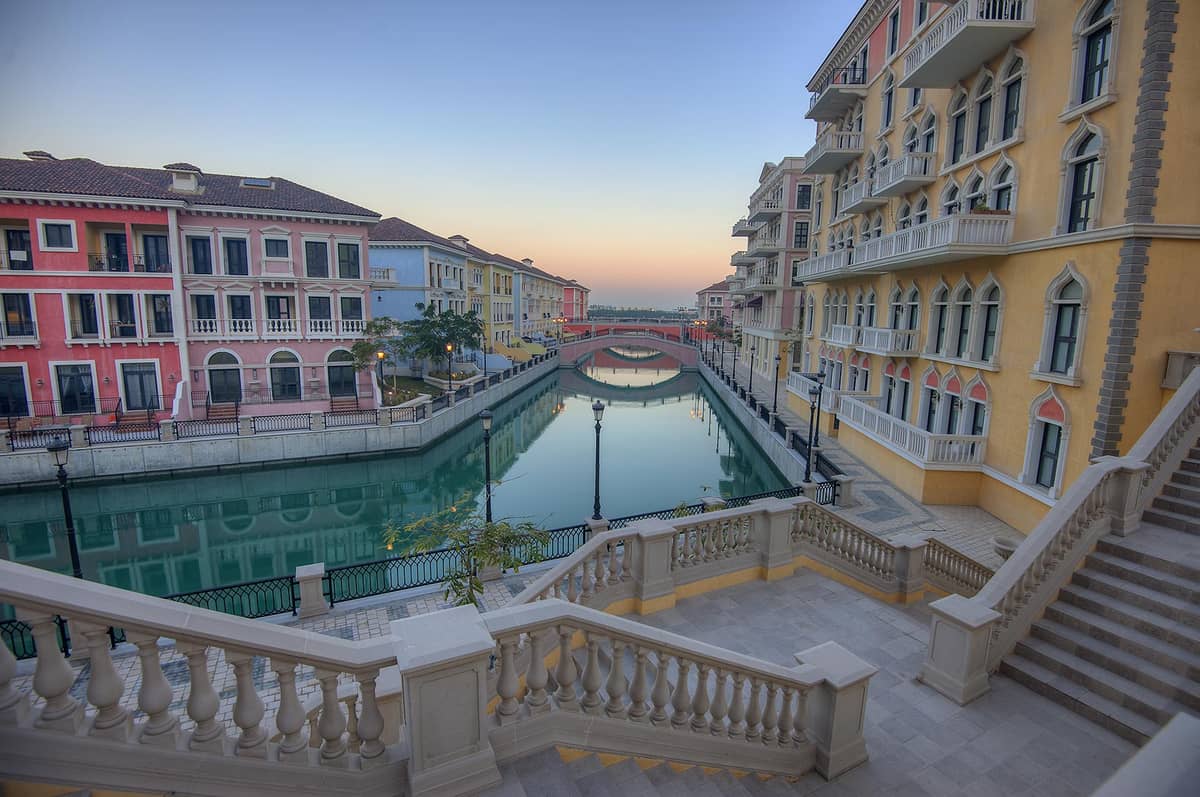
Qanat Quartier is a mixed-use residential and retail precinct occupying one section of The Pearl-Qatar, the large artificial island that sits off the West Bay coastline of Doha. Where other parts of The Pearl lean into sleek marina modernism, Qanat Quartier commits fully to a Mediterranean and Venetian design language: terracotta-toned and pastel-painted facades line narrow waterways, low arched bridges connect promenades on either side of the canals, and ground-floor retail and restaurant space opens directly onto the water's edge.
The concept is deliberately theatrical. Visitors who arrive expecting an ancient quarter with layers of accumulated history will be disappointed, because this is a 21st-century development that wears its European aesthetic as a design choice rather than a historical inheritance. Accepted on those terms, though, it delivers something Doha does not offer elsewhere: a genuinely pleasant, human-scale waterfront that rewards slow walking.
ℹ️ Good to know
Entry is completely free. The district’s public promenades are generally accessible at all hours, though individual venues have their own opening times. No ticket, no registration, no booking required to walk the canals and bridges.
The Architecture and Design in Detail
The buildings at Qanat Quartier are finished in shades of ochre, dusty rose, sage green, and cream, with shuttered windows, decorative ironwork balconies, and terracotta roof detailing. The color palette is consistent enough to feel curated without becoming monotonous, and the scale is kept deliberately low-rise so that the sky remains visible and the proportions feel walkable rather than corporate.
The canals themselves are narrow, ranging from roughly one to a few boat-widths across, and their still water reflects the building facades with enough clarity on calm days to create a mirror effect that photographers will immediately recognize as the composition they came for. Stone-effect bridges punctuate the canals at regular intervals, and the pedestrian promenade runs continuously along both banks, with outdoor seating from various cafés and restaurants extending right to the water's edge.
This kind of ambitious Mediterranean pastiche is not unique to Qatar, but it is rare in the Gulf region, and it sits within a broader context of ambitious island development. The Pearl-Qatar as a whole contains several distinct precincts, each with its own character, and Qanat Quartier is consistently cited as the most photogenic of them.
How the Experience Changes Through the Day
Morning at Qanat Quartier is quiet, almost empty. The residential nature of the area means the early hours feel genuinely calm rather than artificially peaceful. Cafés open around 08:00, and the light at this hour falls softly on the pastel facades without the harsh overexposure that midday sun creates. If you want the canals to yourself for photography, this is the window.
By mid-afternoon, particularly on weekends, families and couples begin to filter through. The outdoor promenades fill with strollers, children leaning over bridges, and groups of visitors doing what everyone does here: photographing the reflections. The canal-side restaurants begin to seat dinner guests from early evening, and the whole district takes on a noticeably warmer quality as ambient lighting kicks in after sunset. This is the most atmospheric hour, when the building lighting and the canal reflections combine to produce the postcard image that draws most visitors.
Late evenings, particularly Thursday and Friday nights (the Qatari weekend), bring noticeably more people and a social energy that contrasts with the near-silence of weekend mornings. The district never becomes loud or difficult to navigate, but the difference in atmosphere between 09:00 and 21:00 on a Friday is significant enough that choosing your visit time deliberately will shape what you get from it.
💡 Local tip
Best light for photography is in the final hour before sunset, when warm tones hit the facades at a low angle and the canal reflections are at their sharpest. Blue hour, roughly 20–30 minutes after sunset, adds artificial lighting to the mix and produces a different but equally strong result.
Climate, Comfort, and When to Go
Doha has a hot desert climate, and Qanat Quartier is an open-air district with no climate control beyond the shade cast by buildings. Between roughly June and September, daytime temperatures regularly reach 40°C or above, and the humidity near the water makes sustained outdoor walking genuinely uncomfortable during afternoon hours. Summer visits are not impossible, but they should be timed to early morning or late evening.
The period from November through March is the most comfortable for outdoor exploration anywhere in Doha, with daytime temperatures typically in the low-to-mid 20s°C. This window aligns with the city's peak tourism season and corresponds to when the canal-side promenades at Qanat Quartier are most enjoyable for extended walking. For broader seasonal guidance, the best time to visit Doha guide covers how weather affects different types of activities across the city.
Getting There and Moving Around
The Pearl-Qatar is connected to central Doha by a dedicated causeway, and the most practical way to reach Qanat Quartier is by taxi, ride-hail app (Uber operates in Doha), or private car. Input 'Qanat Quartier, The Pearl-Qatar' into any standard navigation app and it will locate the area accurately. Dropping off near the main entrance to the canal district puts you within immediate walking distance of the promenades.
A shared water taxi service operates around The Pearl-Qatar, with Qanat Quartier listed among its serviced stops. This is worth considering if you are already exploring other parts of the island, as it adds a small experiential bonus: arriving at the canal district by water rather than on foot changes the first impression considerably.
Within the district, everything is navigable on foot. The promenade paths are paved and flat, making them accessible for pushchairs and most mobility needs, though specific disability infrastructure such as tactile paving or dedicated wheelchair access ramps is not documented in available sources and should be confirmed locally. For an overview of how public transport connects Doha's major districts, the getting around Doha guide has current practical detail.
Eating, Drinking, and Spending Time
The ground-floor retail and dining strip at Qanat Quartier runs along the canal-facing promenades, with cafés, casual restaurants, and a small number of specialty shops. The selection is weighted toward casual international cuisine and café-style venues rather than formal dining, and canal-facing outdoor tables are the obvious draw for most visitors.
Individual venues typically operate from around 08:00 through to 23:00 or midnight, with exact hours varying by operator and day of week. Ramadan significantly affects opening patterns across all Doha venues, including here, so if you are visiting during that period, check individual restaurant hours in advance.
Shopping at Qanat Quartier skews toward boutique and lifestyle rather than large-format retail. For serious shopping options within The Pearl-Qatar, Porto Arabia is the primary commercial hub on the island and sits within easy reach. For larger mall experiences elsewhere in Doha, shopping in Doha covers the full range of options.
Honest Limitations: Who Should Temper Their Expectations
Qanat Quartier is not for everyone, and it is worth being direct about this. Visitors who prioritize authentic cultural experiences rooted in Qatari history will find little here. The Venetian architecture is entirely imported in concept, the district is a modern construction, and the atmosphere during quiet periods can feel slightly inert, as if the scenery is waiting for a crowd that has not yet arrived.
Travelers specifically seeking Qatari architectural identity, traditional markets, or cultural depth would be better served by Souq Waqif or the galleries and museum districts in central Doha. Qanat Quartier is at its best as a complement to other experiences, not as a standalone destination for a half-day visit from across the city.
Budget travelers will also find that while entry is free, the canal-side dining and café options lean toward mid-range pricing. You can absolutely walk the promenades, photograph the bridges, and leave without spending anything, but the experience of sitting canal-side with a drink in the evening is central to what makes the place work, and that comes at a cost.
Insider Tips
- Walk the full length of both canal banks before choosing where to sit. The seating areas vary considerably in their proximity to the water, and some tables are set back far enough that the canal view is largely lost.
- The water surface is calmest in the morning and around sunset. Midday sea breezes can create enough surface ripple to significantly reduce the reflection quality that most visitors come to photograph.
- If you are visiting with children, the low bridges are a reliable point of interest. Most kids will want to cross back and forth several times, and the bridge railings are at a reassuring height.
- Arriving via the internal Pearl-Qatar water taxi rather than by road gives you a water-level first view of the canal facades that is noticeably better than arriving on foot through a car park entrance.
- Thursday evening is the social peak. If you want atmosphere and people-watching, that is the night. If you want the canals mostly to yourself, a weekday morning is the most effective alternative.
Who Is Qanat Quartier For?
- Couples looking for an atmospheric evening walk with canal-side dining
- Photographers targeting architecture and reflection compositions
- Families wanting a flat, safe, and free outdoor area to explore
- Visitors who have already covered central Doha and want a contrasting, quieter waterfront experience
- Anyone combining a Pearl-Qatar visit with Porto Arabia or a broader island exploration
Nearby Attractions
Other things to see while in The Pearl-Qatar:
- Porto Arabia
Porto Arabia is the marina heart of The Pearl-Qatar, a man-made island off Doha's West Bay coastline. With a crescent of waterfront promenades, cafe terraces, and moored yachts, it draws both residents and visitors looking for an easy, scenic evening out in Doha.