Msheireb Museums: Qatar's History Told Through Four Restored Houses
Msheireb Museums bring together four painstakingly restored heritage houses in the heart of Msheireb Downtown Doha, each dedicated to a distinct chapter of Qatar's social, economic, and urban past. Admission is free, the architecture rewards slow exploration, and the content goes deeper than most visitors expect.
Quick Facts
- Location
- Al Arsheef Al Watani Street, Msheireb Downtown Doha, Zone 3, Doha, Qatar
- Getting There
- Walking distance from Souq Waqif; directly accessible via Msheireb Metro Station (Downtown East exit) and the free Msheireb Tram within the district, or by taxi/ride-hailing to Msheireb Downtown Doha
- Time Needed
- 2–3 hours for all four houses; 90 minutes if you focus on two
- Cost
- Free admission; guided tours may be arranged by appointment
- Best for
- History enthusiasts, architecture lovers, travelers wanting cultural depth without a ticket queue
- Official website
- msheirebmuseums.com/en
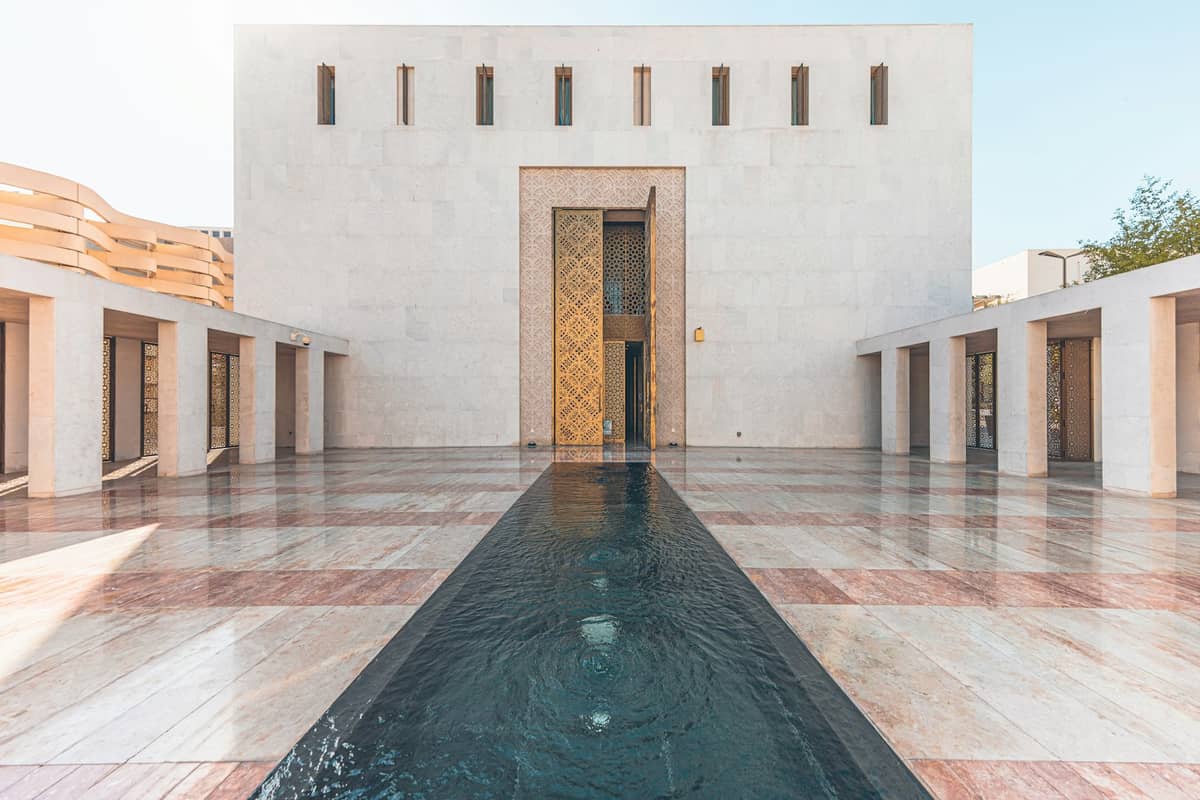
What Msheireb Museums Actually Is
Msheireb Museums is not a single building. It is a complex of four restored heritage houses, each occupying its own structure in what was historically the oldest residential quarter of Doha. The four houses are Bin Jelmood House, Company House, Mohammed Bin Jassim House, and Radwani House. Together they form one of the most substantive historical museum experiences in the city, and the fact that entry is entirely free makes it easy to recommend without hesitation.
The complex sits within Msheireb Downtown Doha, a regenerated mixed-use quarter designed as a walkable urban core adjacent to the old city. The surrounding streets are modern and thoughtfully planned, but the museum houses themselves are rooted in the pre-oil era of Qatar, when this area was the beating centre of daily Doha life. Walking between the four houses, you are moving through the same footprint that Qatari families occupied decades before the skyline took its current shape.
💡 Local tip
Last admission is 30 minutes before closing. If you plan to see all four houses, arrive no later than 2.5 hours before closing time to move through them without feeling rushed.
The Four Houses: What Each One Covers
Bin Jelmood House
This is the most sobering of the four. Bin Jelmood House addresses the history of slavery in Qatar and the broader Gulf region with directness that many museums in this part of the world avoid. The exhibition traces the slave trade routes that passed through the Gulf, the role of pearl diving in that history, and Qatar's formal abolition of slavery in 1952. The curatorial approach is careful and serious, using archival materials, oral histories, and spatial storytelling. It is not comfortable viewing, and it is not meant to be.
Company House
Company House focuses on the arrival of the oil industry in Qatar and the transformative role of the Iraq Petroleum Company, which began operations in the country in the 1930s. The exhibition documents how extraction concessions reshaped the economy, what life looked like for early oil workers, and how the relationship between Qatar's leadership and international oil companies evolved. If you want to understand why modern Doha looks the way it does, this house provides essential context.
Mohammed Bin Jassim House
This house belonged to Sheikh Mohammed Bin Jassim Al Thani, a son of Sheikh Jassim bin Mohammed Al Thani, the founder of the modern Qatari state, and it covers the urban development of Doha with a focus on the transition from a pearl-fishing settlement to a capital city. Architectural models, old photographs, and historical maps chart how the city grew. The house itself, with its courtyard design and traditional wind-tower ventilation elements, is part of the exhibit.
Radwani House
Radwani House is the oldest of the four and functions as a reconstructed domestic interior, giving visitors a sense of what daily life looked like for a Qatari family in the early twentieth century. Rooms are furnished with period items, and the exhibition contextualises social roles, family structure, and household customs. It is the most sensory of the four houses: the proportions of the rooms, the materials underfoot and overhead, and the scale of the courtyard spaces communicate something about the rhythms of life that a flat exhibit panel cannot.
Opening Hours and the Best Time to Visit
Msheireb Museums is open Monday through Thursday from 9:00 AM to 5:00 PM, on Friday from 3:00 PM to 9:00 PM, and on Saturday from 9:00 AM to 5:00 PM. The museums are closed on Sundays. Hours may change during national holidays, so checking the official website before visiting on or near a public holiday is sensible.
The ideal visiting window for most travelers is a weekday morning, roughly 9:30 AM to noon, when the houses are quiet and the air conditioning is doing its job well before any midday heat builds outside. The Friday evening slot, 4:00 PM to 7:00 PM, draws a noticeably different crowd: local families, couples, and residents of Msheireb Downtown making a weekend outing. The atmosphere is warmer and more social, but the houses can feel livelier and occasionally more crowded.
⚠️ What to skip
The museums are closed on Sundays. If your visit to Doha falls on a weekend, note that Friday hours are afternoon-only — plan accordingly and do not arrive in the morning expecting entry.
Getting There and Getting Around the Complex
Msheireb Museums is an easy walk from Souq Waqif, Doha's most visited traditional market. The walk takes roughly 10 to 15 minutes depending on your starting point within the souq, and the route passes through the well-maintained streets of Msheireb Downtown. There is no steep gradient or difficult terrain, but during summer months — May through September — even a short outdoor walk in midday heat requires consideration. Carry water.
Within the Msheireb Downtown Doha district, a tram connects key points. Taxis and ride-hailing services drop directly in front of the complex without difficulty. For visitors using the Doha Metro, the closest practical option is to alight at Msheireb Metro Station and either walk or take the free Msheireb Tram to the Heritage Quarter stop near the museums. The surrounding streets in Msheireb are walkable and shaded in sections.
Parking is available in the Msheireb Downtown area for those arriving by car. The district was designed with pedestrian movement in mind, so navigation on foot between the four houses is straightforward once you have located the main entrance to the museum complex.
What the Visit Actually Feels Like
The experience of moving through all four houses is genuinely layered. Each house has a distinct atmosphere: Bin Jelmood House is dim and contemplative, with deliberate lighting choices that reinforce the weight of the subject. Radwani House feels almost residential by contrast, with light falling into the central courtyard in a way that makes you notice the architectural logic of traditional Gulf design. The smell of old wood and cool stone in the older structures gives them a different quality from the more exhibition-forward spaces.
The outdoor spaces between the houses are pleasant in cooler months, with the low-scale architecture of the restored quarter creating something rare in Doha: a sense of human proportion. In the winter months, November through February, it is comfortable to sit outside in the courtyard spaces and take in the buildings at a relaxed pace. In summer, you will move quickly between air-conditioned interiors.
Visitors who have spent time at the National Museum of Qatar will find Msheireb Museums complementary rather than repetitive. The National Museum covers Qatar's deep geological and cultural history in a sweeping, cinematic format. Msheireb Museums are more intimate, more specific about place, and more willing to address uncomfortable subjects in the country's recent past.
Accessibility and Practical Details
All four houses are wheelchair accessible. Wheelchairs are available on-site for visitor use at no extra charge. Baby-changing facilities are provided in all houses as well. The floor surfaces inside the older restored structures vary, but the main exhibition pathways are designed for mobility access.
Photography inside the houses follows standard museum guidelines: personal photography is generally permitted in non-restricted areas, but verify at the entrance if you plan to photograph specific exhibition elements. For broader photography advice in Doha, the Doha photography guide covers what is allowed and where in the city.
There is no on-site cafe directly within the museum houses, but Msheireb Downtown Doha has multiple dining and coffee options within a short walk. The district has developed into a genuine dining destination, so planning a meal before or after your museum visit is easy.
Who Might Not Get Much From This Visit
Travelers looking for a fast visual payoff — dramatic skyline views, photogenic market stalls, or action-heavy experiences — will find Msheireb Museums a slower, more text-heavy proposition. The exhibitions require engagement and reading. Children under ten or so may find the content and pacing difficult to hold their interest, with the exception of Radwani House, where the domestic reconstruction is more tangible and intuitive. The complex is not a destination for nightlife, shopping, or outdoor recreation.
If your time in Doha is very short and you are working through a first-timer's priorities, the Doha first-timer guide can help you calibrate which attractions fit your schedule. Msheireb Museums rewards travelers with at least two or three days in the city who want historical depth alongside the more photogenic landmarks.
Insider Tips
- Guided tours can be arranged by appointment through the official website or contact details provided there. If you are visiting with a group or want expert curatorial commentary, book in advance rather than hoping for an impromptu walkthrough on arrival.
- Start with Bin Jelmood House while your attention is freshest. It carries the most demanding content and deserves full focus rather than being left until you are already mentally tired from three other houses.
- The Friday evening hours (3:00 PM to 9:00 PM) offer a different social atmosphere and cooler outdoor temperatures in winter months. If you want to combine the museum visit with a walk through Souq Waqif afterward, the Friday evening slot flows naturally into the souq's liveliest evening hours.
- Wheelchairs are available free of charge on-site for visitor use — there is no need to bring your own or pre-book this service separately.
- Msheireb Downtown Doha's tram can be useful for navigating the district if you plan to combine the museums with lunch, coffee, or shopping in the wider Msheireb area before or after your visit.
Who Is Msheireb Museums For?
- History-minded travelers who want to understand Qatar beyond the glittering skyline
- Architecture enthusiasts interested in traditional Gulf courtyard house design and adaptive reuse
- Travelers with limited budgets who want substantive cultural experiences at no cost
- Visitors with two or more days in Doha looking to go deeper than the standard itinerary
- Researchers, journalists, or students with an interest in Gulf social history, the oil industry, or slavery in the Arab world
Nearby Attractions
Other things to see while in Msheireb Downtown Doha:
- Fire Station: Artist in Residence
Fire Station: Artist in Residence is Doha's most active platform for contemporary art production. Housed in a repurposed civil defence building near Al Bidda Park, it combines working artist studios, free public galleries, and an acclaimed residency programme that has shaped Qatar's modern art scene since 2015.