Msheireb Downtown Doha is a 31-hectare regenerated district at the heart of Qatar's capital, where restored heritage houses sit beside energy-efficient towers, boutique hotels, and a pedestrian-friendly street grid. It occupies the former Mushayrib quarter, connecting the old city's souqs to the modern financial district, and serves as one of the most transit-accessible neighborhoods in Doha.
Msheireb Downtown Doha is the city's most deliberate reinvention: a 31-hectare urban quarter built on the bones of the historic Mushayrib neighborhood, designed to function as a walkable, sustainable downtown at a time when most of Doha is still car-dependent. It sits between Souq Waqif and the West Bay towers, making it both a cultural anchor and a practical base for anyone exploring the capital.
Orientation: Where Msheireb Sits in Doha
Msheireb Downtown Doha occupies a roughly rectangular plot in central Doha, bounded by Al Rayyan Road to the north, Jassim Bin Mohammed Street to the east, Msheireb Street to the south, and Al Diwan Street (part of Ring Road A) to the west. Within these borders sits just over 31 hectares of mixed-use development: more than 100 buildings housing residences, offices, hotels, cultural venues, retail, a mosque, a school, and the Msheireb Museums heritage complex.
Its position next to Souq Waqif is genuinely central. To the east, a short walk along Jassim Bin Mohammed Street brings you to Souq Waqif and the Amiri Diwan. To the north, Al Rayyan Road leads toward the Grand Hamad Street financial corridor and, eventually, the towers of West Bay. The Doha Corniche promenade is approximately a 15-minute walk east through Souq Waqif. That proximity to multiple landmarks is what makes Msheireb a logical base for first-time visitors who want to cover a lot of ground without heavy reliance on taxis.
The neighborhood replaced the old Mushayrib quarter, a commercial district that had grown organically since the mid-20th century and gradually declined as Doha's development pushed outward toward the coast and western suburbs. Msheireb Properties, a subsidiary of the Qatar Foundation, acquired and demolished most of that fabric between 2010 and 2016, retaining only a handful of historic houses that now form the museum complex. Understanding this history matters: what you see today is not an organically evolved neighborhood but a planned intervention, which gives it a tidiness and coherence that genuine old-city districts rarely have.
ℹ️ Good to know
Msheireb Metro Station, adjacent to the district's western edge at the junction of Wadi Msheireb Street and Al Diwan Street, is the largest and most strategically important station in Doha's metro network. It is the only station where all three lines—Red, Gold, and Green—intersect.
Character & Atmosphere: What It Feels Like to Walk Through
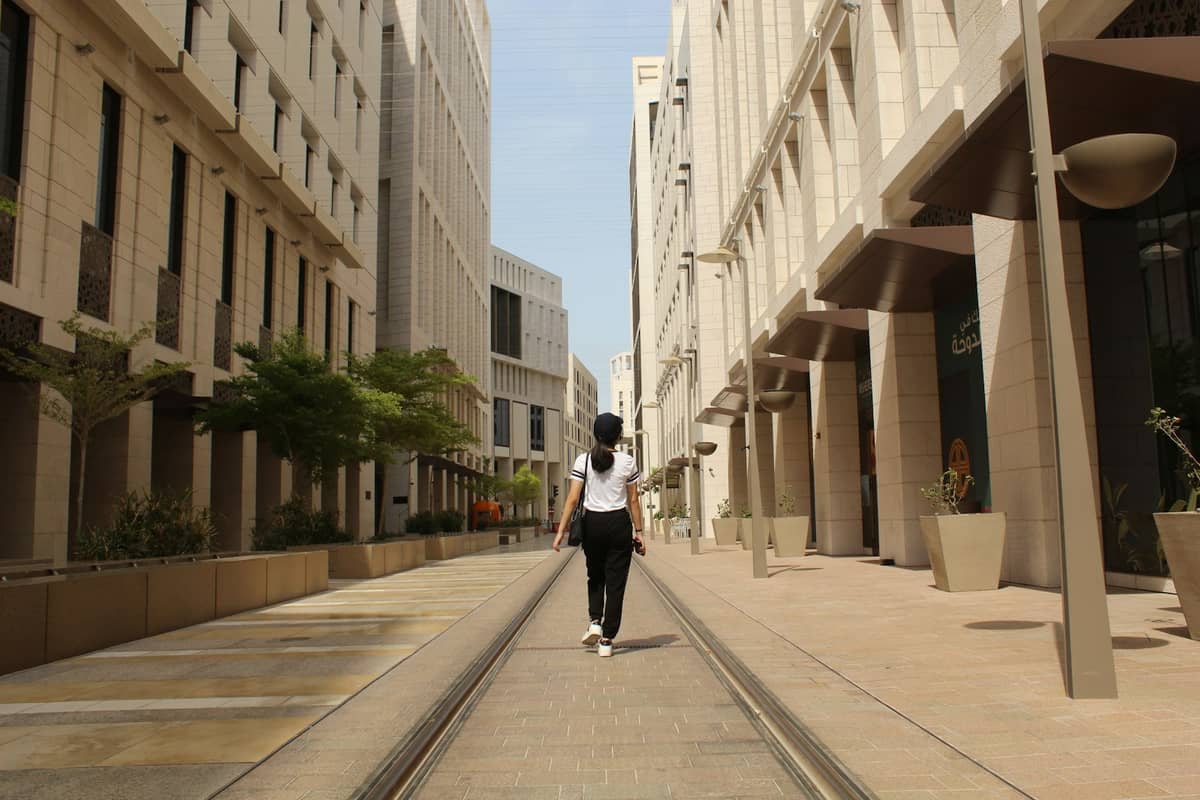
Early mornings in Msheireb are quiet in a way that few parts of Doha manage. The residential towers absorb the city's hum, and the shaded pedestrian lanes between buildings see mostly residents heading to work and hotel guests on their way to the metro. The architecture uses a consistent palette: warm sandstone-colored facades, mashrabiya-style screens on upper floors, and recessed archways that provide genuine shade rather than decorative shade. The design language draws from traditional Qatari courtyard architecture, scaled up to accommodate a 21st-century mixed-use program.
By mid-morning, Barahat Msheireb, the large central plaza at the district's core, becomes the social gathering point. Coffee shop tables spill out, the tram makes its loop, and the open square fills with a mix of office workers, hotel guests, and visitors making their way toward the museums. In winter months, between November and March, this is genuinely pleasant urban space: temperatures in the low-to-mid 20s Celsius, low humidity, and enough pedestrian activity to feel lively without feeling crowded.
Afternoons from May through September are a different story. The district is designed with shading and passive cooling in mind, which helps at street level, but the heat (often above 40°C in July and August) limits outdoor comfort significantly. During those months, the underground retail corridors and air-conditioned interiors become the primary circulation routes. The neighborhood's smart infrastructure includes centralized cooling systems, which means interior spaces are consistently comfortable even in peak summer.
After dark, Msheireb shifts again. The plaza and the lanes around the hotel row take on a quieter, more intimate quality compared to the louder energy of Souq Waqif a few blocks east. Restaurants fill from around 8pm onward, and the architecture is attractively lit, making evening walks through the district genuinely pleasant. It is not a nightlife destination in the conventional sense, but it is a comfortable place to end an evening in Doha.
💡 Local tip
Visit Msheireb between November and March if you want to spend meaningful time outdoors in Barahat Msheireb and explore the pedestrian lanes comfortably. Summer visits are feasible but largely confined to indoor spaces and the tram.
What to See & Do
The district's cultural centerpiece is the Msheireb Museums complex: four restored houses that tell overlapping stories about Qatar's history. Bin Jelmood House focuses on slavery and its abolition, Company House documents the Qatar National Oil Company's formative years and the social changes it triggered, Mohammed Bin Jassim House presents traditional Qatari domestic architecture and urban life, and Radwani House traces the neighborhood's own history from traditional settlement to demolition and regeneration. Together they offer context that few other sites in Doha provide, and they are small enough to cover in two to three hours without museum fatigue.
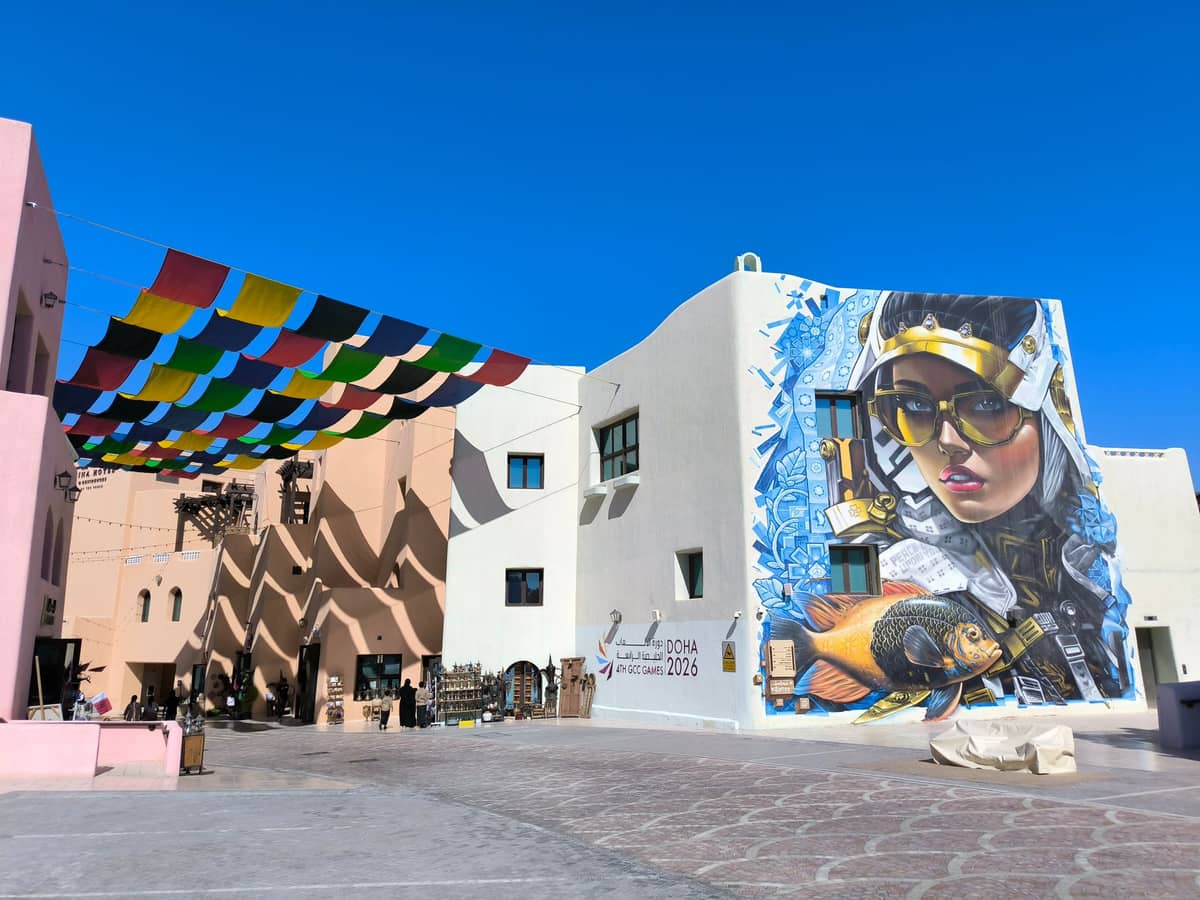
Barahat Msheireb, the central plaza, functions as the district's living room. Events are staged here throughout the year, particularly during Qatar National Day in December and the various cultural festivals that fill the winter calendar. Even on ordinary days, it is worth pausing here to read the spatial logic of the development: the tram stop, the hotel entrances, the retail arcade entries, and the museum approach all converge on this point.
From Msheireb, the Souq Waqif is a genuine walking distance away, roughly 10 to 15 minutes on foot heading east along Msheireb Street. The contrast between the two is instructive: Msheireb is planned, quiet, and contemporary; Souq Waqif is layered, louder, and more visually complex. Most visitors benefit from experiencing both in the same half-day. The Museum of Islamic Art on the Corniche is reachable in around 20 to 25 minutes on foot from Msheireb, or by Gold Line metro toward the National Museum station.
Msheireb Museums: four heritage houses covering Qatari social, economic, and urban history
Barahat Msheireb: the central plaza, best for people-watching and seasonal events
The Msheireb Tram: a loop service connecting the district's main points, useful in summer heat
Retail arcades: a large mix of shops across fashion, lifestyle, and food categories
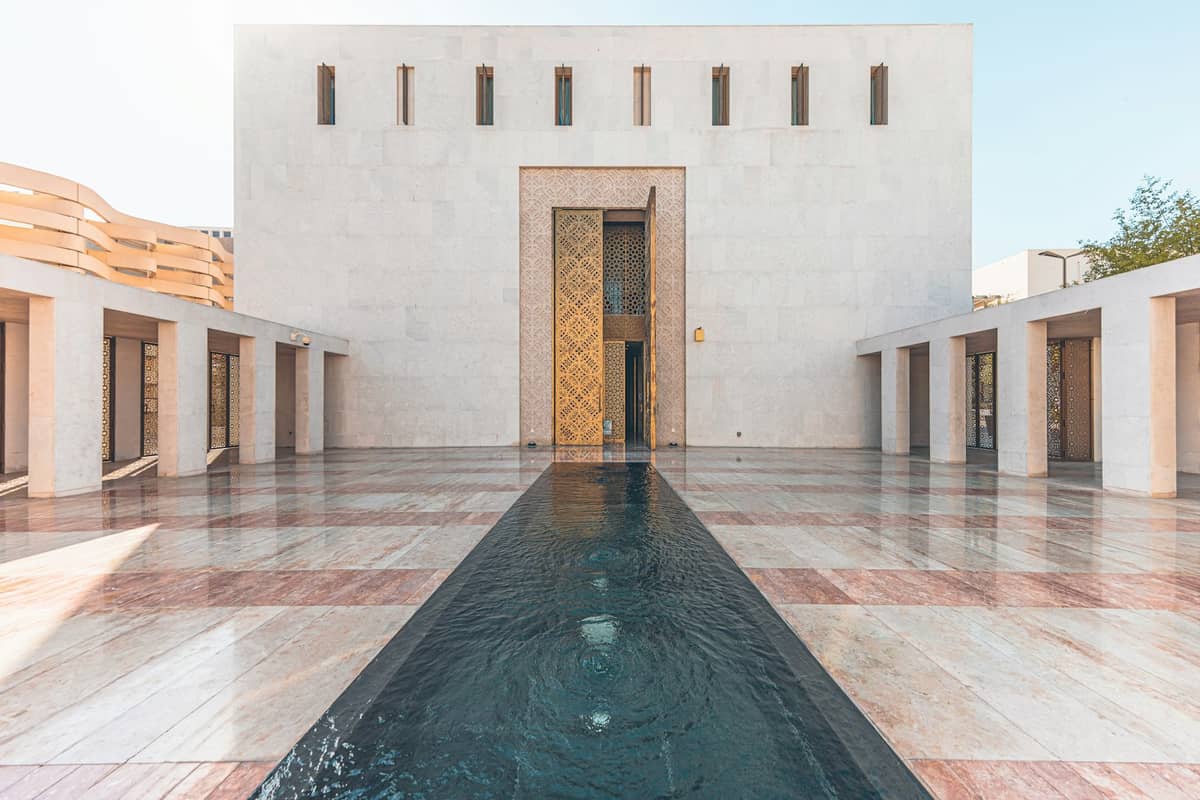
Friday mosque within the district, open to visitors outside of prayer times
Eating & Drinking
The food scene in Msheireb skews toward the mid-range and upscale, reflecting the hotel presence and the professional resident base. The Mandarin Oriental, Park Hyatt, and Al Wadi Hotel MGallery each contain dining outlets ranging from all-day restaurants to specialty concepts. For visitors with a broader appetite for Doha's eating culture, the Doha dining scene extends well beyond this neighborhood, but Msheireb provides a reliable concentration of quality options within walking distance of each other.
The retail and dining arcade running through the district contains a mix of cafe chains, regional restaurant brands, and independent outlets. Coffee culture is well represented: several specialty coffee spots operate in the district, and the indoor-outdoor format suits the Doha habit of lingering over coffee through the late afternoon and into the evening. Qatari and Levantine food options are present alongside international cuisine, so visitors looking to eat locally are not obliged to go elsewhere.
For a broader range of cheaper and more informal eating, Souq Waqif remains the better destination, with everything from Indian and Pakistani canteens to Arabic grills operating at lower price points and in a more atmospheric setting. The street food and local specialties of Doha are more authentically represented there than within Msheireb's planned retail environment. That said, Msheireb earns its place for breakfast options and evening dining when the hotel restaurants come into their own.
⚠️ What to skip
Alcohol is not served in public restaurants in Qatar. Hotel restaurants within licensed properties such as the Mandarin Oriental and Park Hyatt may serve alcohol to guests in designated areas. Confirm current licensing and availability directly with the venue, as regulations are subject to change.
Getting There & Around
Msheireb is the most transit-accessible neighborhood in Doha by a considerable margin. Msheireb Metro Station, on the district's western edge at the intersection of Wadi Msheireb Street and Al Diwan Street, serves all three lines of the Doha Metro: the Red Line (connecting Hamad International Airport to the northwest), the Gold Line (toward Souq Waqif and the National Museum), and the Green Line (linking central Doha with Education City and Al Riffa via Al Bidda). This makes the station the de facto interchange for the entire network and the most logical arrival point for visitors coming from the airport or from any other part of the city.
From Hamad International Airport, the Red Line runs directly to Msheireb Station. Journey time is typically around 20 to 25 minutes, making it one of the faster and more affordable airport connections in the Gulf region. Verify current fare structures with the Doha Metro operator before travel, as pricing is updated periodically. For more detail on navigating the city, the guide to getting around Doha covers metro, taxi, and bus options across the city.
Within the district, the Msheireb Tram provides a loop service connecting the main public spaces, hotel entrances, and the museum complex. It is particularly useful in summer when walking between buildings across exposed plazas is uncomfortable. Exit 5 (Downtown East) from Msheireb Metro Station deposits you directly into the district's eastern pedestrian zone, near Barahat Msheireb. Taxis and ride-hailing apps including Karwa Taxi are readily available at hotel drop-off points for trips to neighborhoods not served by the metro.
On foot, Msheireb's pedestrian priority design makes it genuinely walkable within the district. The lanes between buildings are shaded, the tram routes are signed, and the ground-floor retail creates active street frontage that makes navigation intuitive. Walking to Souq Waqif takes 10 to 15 minutes east along Msheireb Street. The Corniche is around 20 to 25 minutes on foot from the district's eastern edge.
Where to Stay
Msheireb is one of the better-serviced hotel neighborhoods in central Doha, with three named major properties within the district: the Mandarin Oriental Doha, Park Hyatt Doha, and Al Wadi Hotel MGallery, alongside smaller boutique-style accommodations. All four benefit from direct pedestrian access to the metro station, proximity to the museum complex, and the general safety and orderliness of the planned development.
For travelers whose priority is easy access to Doha's main cultural sites without needing a car for every trip, Msheireb is the strongest choice in the city. The metro connections alone justify the location: from Msheireb Station you can reach the airport, the Corniche, the Museum of Islamic Art, and the westward corridor toward Education City all without a taxi. If your focus is on the waterfront experience or the Pearl-Qatar's marina atmosphere, staying closer to West Bay or the Corniche might suit better. The full guide to where to stay in Doha covers all the main neighborhood options with comparative detail.
Budget accommodation is not available within Msheireb Downtown itself. The hotel options sit at the upper-mid to luxury tier, reflecting the positioning of the development as a whole. Travelers on tighter budgets who want the metro access can look at properties along the Red Line closer to the Al Sadd area, which is a short ride away and offers more affordable options.
Is Msheireb Right for You?
Msheireb Downtown Doha is not the most atmospheric or layered neighborhood in Doha. It lacks the centuries of accumulated texture that make Souq Waqif genuinely compelling, and it does not have the waterfront spectacle of the Corniche or the architectural bravado of West Bay. What it offers instead is competent, comfortable, transit-optimized urban living in a city that otherwise demands a car. For first-time visitors who want to minimize logistical friction while staying close to the cultural core, that is a real and meaningful advantage.
The Msheireb Museums are underrated relative to the attention given to the National Museum of Qatar and the Museum of Islamic Art. Bin Jelmood House in particular covers material about the history of slavery in the Gulf that is addressed nowhere else in Doha's public museum infrastructure. If you are spending more than two days in the city and have genuine interest in Qatari history, the museums here warrant a dedicated half-day. Pair that with the short walk to Souq Waqif and you have a full, coherent day in the old city's orbit without needing any transport at all.
Travelers who value spontaneity, visual complexity, and organic street life may find Msheireb feels too managed. The neighborhood's strengths are precisely its weaknesses depending on your temperament: everything is orderly, everything is signed, and the architecture, while thoughtful, reads as designed rather than grown. For a broader picture of whether Doha as a whole suits your travel style, the guide on whether Doha is worth visiting addresses that question directly.
TL;DR
Msheireb Downtown Doha is a 31-hectare planned district in central Doha, built on the site of the historic Mushayrib quarter, blending Qatari heritage architecture with modern sustainable design.
The Msheireb Metro Station at the district's edge is the network's main interchange (Red, Gold, and Green lines), making this the most transit-accessible neighborhood in the city and a strong base for car-free exploration.
The Msheireb Museums complex (four restored heritage houses) is the district's primary cultural draw and one of the most informative history experiences in Doha, covering topics from traditional domestic life to the oil economy and slavery abolition.
Accommodation skews upscale: Mandarin Oriental, Park Hyatt, and Al Wadi MGallery are the main options. Budget travelers should look at nearby neighborhoods along the metro line.
Best suited to: first-time visitors prioritizing transit access and cultural depth, business travelers, and anyone using Doha as a base for day trips across the metro network. Less suited to travelers seeking organic street atmosphere or budget options.
Two full days is genuinely enough to cover Doha's best sights — if you plan smart. This itinerary routes you through the Museum of Islamic Art, Souq Waqif, the National Museum of Qatar, Katara Cultural Village, and the Corniche using the metro and short taxi rides, with honest advice on timing, heat, and what to skip.
Qatar's coastline stretches far beyond its skyline. This guide covers the best beaches in Doha and across Qatar, from calm urban shores perfect for families to wild dune-backed stretches only reachable by 4WD. Whether you want a free afternoon by the sea or a full resort day-pass experience, here is where to go.
Doha has become a serious museum city. From a landmark of Islamic art to a converted fire station showing cutting-edge contemporary work, these are the museums that make Doha worth visiting for culture alone.
Doha's extreme desert climate makes timing your visit critical. This guide breaks down every season honestly, covering temperatures, humidity, hotel prices, and the events calendar so you can pick the right window for your trip.
Doha is unusually rich in visual drama. Between the glittering West Bay skyline reflected across the bay, dhow boats bobbing in the foreground, and architecturally ambitious stadiums rising from the desert, the city rewards anyone who knows where to look. This guide covers the best viewpoints in Doha, from free waterfront promenades to photogenic canal districts and iconic landmark angles.
Doha rewards exploration beyond its skyline. Whether you want towering sand dunes, a UNESCO World Heritage fort, mangrove kayaking, or a quieter coastal town, Qatar packs a surprising range of day-trip experiences into a small country. This guide covers the best escapes within reach of the capital.
Hamad International Airport is one of the world's major transit hubs, and a Doha airport layover can be far more than a waiting game. This guide covers visa rules, sleep options, lounge access, and how to squeeze the best of the city into a short stopover.
Doha's waterfront is best explored from the water. Whether you want a traditional dhow cruise past the West Bay skyline, a kayak through coastal mangroves, or a catamaran ride to a private island, this guide covers every boat ride and water experience worth booking in Qatar's capital.
Doha is a surprisingly compelling destination for couples, blending waterfront promenades, heritage markets, world-class museums, and desert escapes into a genuinely romantic itinerary. This guide covers the best experiences for couples in Qatar's capital, with honest takes on what's worth your time and what to skip.
Qatar's desert safari scene centers on the Sealine dunes and the UNESCO-listed Tentative Site of Khor Al Adaid Inland Sea, just 60-75 minutes from Doha. This guide covers tour types, honest price breakdowns, the best time to go, and what the brochures don't tell you.
Falconry sits at the heart of Qatari identity, and Doha makes it surprisingly accessible to visitors. From the Falcon Souq at Souq Waqif to the world-class falcon hospital and the annual S'hail exhibition at Katara, this guide covers everything you need to experience Qatar's most distinctive cultural tradition.
Doha rewards first-timers who arrive prepared. This guide covers the essentials: how to get from the airport, which neighborhoods to prioritize, what the climate actually feels like, and the cultural norms that matter most. No fluff, just practical knowledge.
The Doha Fish Market at Old Doha Port is one of the city's most authentic local experiences. This guide covers opening hours, what species to look for, how to negotiate, how to get there, and what to do with your catch once you have it.
Winter is Doha's golden season, with mild temperatures, clear skies, and a packed events calendar. This guide covers everything you need to know about visiting Doha from November through March, from what to pack to when to book.
Doha has quietly become one of the world's most compelling destinations for Islamic art and architecture. This guide covers the essential museums, mosques, historic forts, and cultural districts where centuries of Islamic heritage come alive.
Qatar criminalizes same-sex sexual activity, and Doha has no LGBTQ+ venues or legal protections. This guide gives LGBTQ+ travelers an honest, practical breakdown of the legal situation, safety considerations, and what visiting the city actually looks like in practice.
Doha's after-dark scene is more diverse than most visitors expect. From rooftop hotel bars in West Bay to stargazing desert safaris at the Inland Sea, this guide covers everything you need to know about Doha nightlife, including alcohol rules, the best venues by district, and evening alternatives for non-drinkers.
Qatar's capital has a reputation for luxury, but Doha on a budget is genuinely achievable. Free museums, a QAR 6 metro day cap, and no-cost attractions like the Corniche make it possible to see the city without spending a fortune. Here's how to do it smartly.
Doha rewards photographers at every turn, from I.M. Pei's waterfront masterpiece to golden-tiled mosques and shipping-container stadiums. This guide covers the city's 20 most photogenic locations, with advice on the best times to shoot and what to look for at each spot.
Doha is one of the safest cities in the Middle East, with low crime rates and well-monitored public spaces. But safety here is as much about understanding local laws as it is about personal security. This guide covers everything from terrorism advisories and alcohol rules to dress codes, transport safety, and seasonal health risks.
Planning a trip to Doha, Qatar? This guide breaks down exactly who needs a visa, how to get one, what documents to carry, and the common mistakes that trip up first-time visitors at the border.
Doha is a genuinely family-friendly city, with options spanning free waterfront parks, world-class children's museums, indoor adventure parks, and beach day trips. This guide breaks down the best activities by budget, age group, and season so you can plan a practical, stress-free trip with kids.
Qatar's 2022 FIFA World Cup left behind eight architecturally extraordinary stadiums scattered across Doha and its surroundings. This guide covers every venue, how to visit each one, and what to see nearby to make the most of your trip.
Doha is far more affordable than its gleaming skyline suggests. From the 7-kilometre Corniche promenade to free heritage museums and public beaches, this guide covers the best free things to do in Doha — for first-timers and residents alike.
Doha is surprisingly easy to navigate if you know which transport option suits your route. This guide covers the Doha Metro, Karwa taxis, public buses, and airport transfers, with current fares, operating hours, and honest advice on what works and what doesn't.
Doha divides opinion. Some travelers find a world-class city of museums, architecture, and Gulf culture. Others leave underwhelmed. This guide breaks down exactly what Doha offers, what it doesn't, and who should make the trip.
Doha has quietly become one of the world's most ambitious luxury destinations. This guide covers the best 5 star hotels, high-end dining, designer shopping, and cultural experiences, with honest advice on what lives up to the price tag and what doesn't.
Doha delivers one of the Gulf's most complete shopping experiences, from air-conditioned mega-malls with international luxury brands to the spice-scented alleys of Souq Waqif where bargaining is still the norm. This guide covers every major venue, realistic prices, opening hours, seasonal quirks, and the souvenirs actually worth buying.
From the Museum of Islamic Art to the Inland Sea desert, Doha packs serious variety into a compact city. This guide covers the top things to do in Doha with real admission prices, opening hours, seasonal tips, and honest takes on what's worth your time.
Doha's food scene goes far deeper than shawarma and hummus. This guide covers the essential Qatari dishes every visitor should try, from the national dish machboos to the street-side sweet luqaimat, with honest price breakdowns and the best places to eat them.
Doha's food scene spans centuries-old Arab hospitality traditions and some of the most international dining in the Gulf. This guide covers the best areas to eat, what to order, how much to spend, and when to go — with practical details on hours, booking, and seasonal dining patterns.
Doha's neighbourhoods are more distinct than most Gulf cities. This guide breaks down the five key areas to stay, who each suits best, what you'll actually pay, and how to time your booking around weather and events.