Katara Beach: Doha's Gulf Shoreline Inside a Cultural Village
Katara Beach stretches along the Arabian Gulf within Katara Cultural Village, sitting between West Bay and The Pearl-Qatar. With paid entry, separate beach sections, water sports, and opening hours that extend into the evening, it offers a structured and relatively uncrowded alternative to resort beaches in Doha. With paid entry, separate beach sections, water sports, and opening hours that extend well into the evening, it offers a structured and relatively uncrowded alternative to resort beaches in Doha.
Quick Facts
- Location
- Katara Cultural Village, between West Bay and The Pearl-Qatar, Doha
- Getting There
- Katara station (Red Line, Doha Metro), then a short walk or local shuttle into the village
- Time Needed
- 2 to 4 hours; longer if combining with Katara Cultural Village attractions
- Cost
- QAR 10 per adult; children under 15, seniors 60+, people with disabilities, caregivers, and domestic workers enter free. Fees vary by day, time, and activity — verify before visiting.
- Best for
- Families, budget-conscious visitors, evening beach walks, culture-and-coast combinations
- Official website
- www.katara.net
What Katara Beach Actually Is
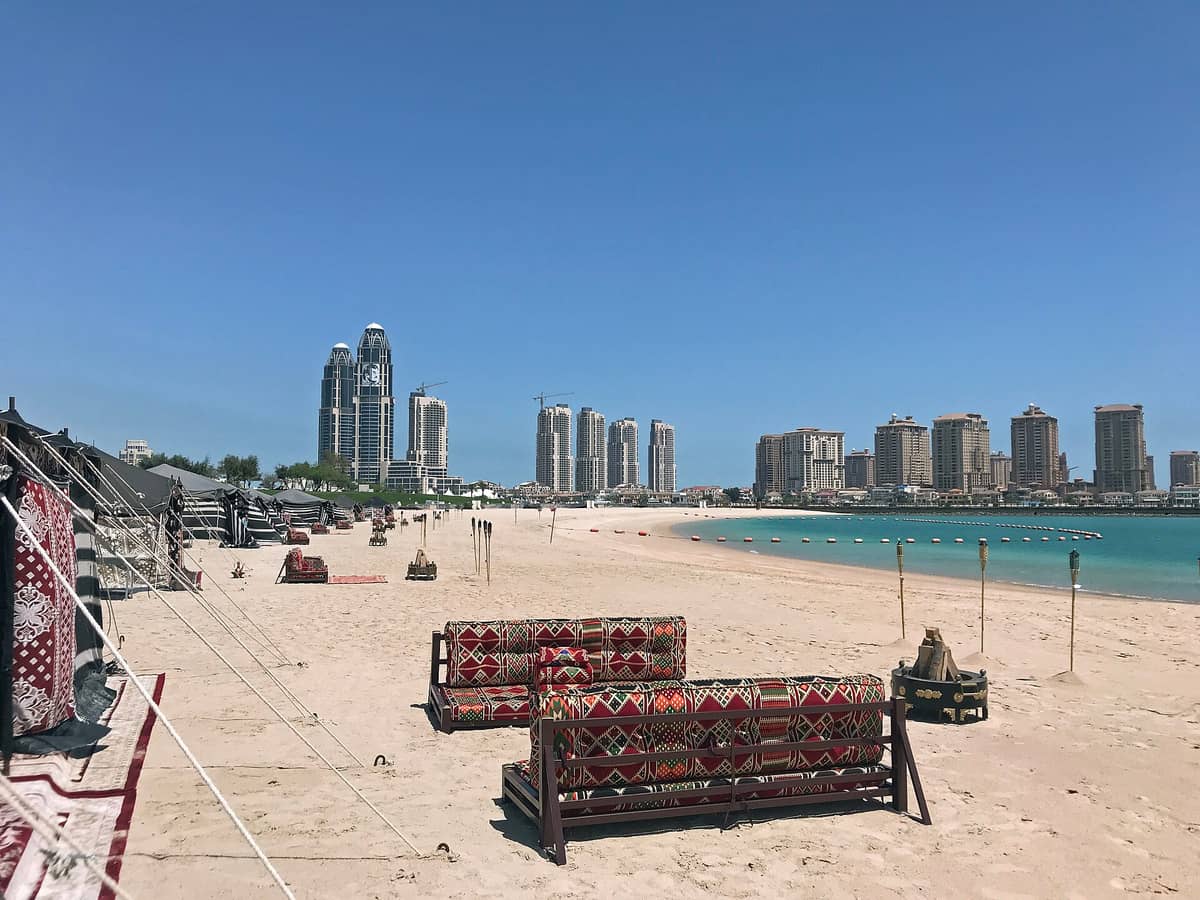
Katara Beach is a public beach running along the eastern waterfront of Katara Cultural Village, one of Doha's principal cultural districts. The beach sits on the Arabian Gulf coast roughly midway between the West Bay financial district and The Pearl-Qatar artificial island, placing it in an unusually convenient position for visitors staying in either area.
Unlike hotel beaches, which are typically reserved for guests, Katara Beach charges a modest entry fee and opens its gates to anyone. Unlike hotel beaches, which are typically reserved for guests, Katara Beach charges a modest entry fee and is open to visitors. That makes it one of Doha's more accessible stretches of Gulf coastline. The tradeoff is a structured environment: separate sections for families and men, a dress code requiring modest swimwear, and a ticketed entry system that changes by day of week and time of day.
The beach forms part of Katara Cultural Village, a planned cultural district that opened around 2010 on Doha's northeastern waterfront. The village was designed as a venue for theatre, concerts, exhibitions, and public events, and the beach is integrated into that broader framework rather than operating as a standalone attraction.
ℹ️ Good to know
Opening hours and entry fees at Katara Beach shift seasonally and for events. The figures in this guide reflect information current as of 2025-2026, but always check directly with Katara or a local source before you visit, especially around Ramadan or public holidays.
The Beach by Time of Day
During summer months (roughly May through September), daytime heat in Doha regularly exceeds 40°C, and the beach reflects this reality. Midday and early afternoon see very thin crowds, not because the beach is unappealing but because spending time outdoors in direct Gulf sun at that temperature is genuinely uncomfortable. Water sports and swimming are typically available from around 15:30 until sunset, which aligns with when temperatures become manageable.
The evening hours are where Katara Beach earns its local following. After sunset, temperatures drop, the lighting along the Katara promenade creates a warm atmosphere, and families spread out along the shore. The sound shifts too: food vendors, children, the distant call to prayer from the Katara Golden Mosque. This is when the beach feels most alive and most distinctly Qatari.
Between November and March, Doha's climate becomes genuinely pleasant, with daytime highs typically in the low to mid-20s Celsius. This is when the beach works at any hour. Morning visits in the cooler months offer calm water, soft light, and almost nobody around. Weekend afternoons draw the largest crowds regardless of season, so plan accordingly if you want space.
💡 Local tip
For the best combination of light and temperature, visit on a weekday morning between November and March. You will have long stretches of the beach largely to yourself, and the Gulf water is at its calmest and clearest in the early hours.
Entry, Fees, and Beach Sections
Standard adult entry is QAR 10, with chair and umbrella rental available at QAR 5 each. Children under 15, seniors aged 60 and above, people with disabilities, caregivers, and domestic workers typically enter free, with one accompanying caregiver also admitted without charge where applicable. Weekend daytime entry can be higher, so the day and time of your visit genuinely affects the cost.
The beach is divided into separate sections: a family area and a section for men. Entrances are in the Katara Cultural Village beach area. The family section is larger and better equipped. If you are visiting as a mixed group, the family entrance is the one you want.
Modest swimwear is enforced. Brief swimwear such as Speedos is not permitted for men. This is consistently noted across multiple sources and should be treated as a firm rule rather than a guideline. Visitors who are uncertain should err on the side of conservative beachwear.
What You Can Do at the Beach
The primary activity is simply being at the beach: swimming in the Gulf, sitting on the sand, or walking along the shore. Water sports are available from the late afternoon until sunset during summer, and for longer windows in winter. Specific activities and operators vary by season.
What makes Katara Beach distinct from a standalone beach is the surrounding cultural village. After your time on the sand, you can walk directly into Katara's amphitheatre precinct, browse galleries, or visit the Katara Golden Mosque, whose gilded dome is visible from the shoreline. Restaurants and cafes within the village mean you can extend a beach visit into a full afternoon and evening without moving the car.
The beach also sits within easy reach of other waterfront attractions. The Dhow Harbour is a short drive south, and the marina districts of Porto Arabia are accessible to the north. Visitors who want a broader coastal day can string these together without crossing the city.
Getting There and Getting Around
The most straightforward approach is by car or taxi. Katara Cultural Village has parking, and ride-hailing apps operate freely in Doha. From central Doha or West Bay, journey times are typically short, under 15 minutes in normal traffic, though the area can back up during evening peak hours and on weekends.
The Doha Metro Red Line serves a Katara station, from which the cultural village and beach are reachable on foot or by local shuttle. If you are combining a visit to The Pearl-Qatar with a stop at Katara Beach, the Metro is a practical way to link the two without dealing with parking at each location.
⚠️ What to skip
Accessibility for wheelchair users is not well documented in current public guides. Beach access from the Katara promenade is generally on level ground, but whether beach wheelchairs or accessible boardwalks are available should be confirmed directly with Katara before your visit.
Photography and Practical Details
The beach photographs well in the hour before sunset, when the Gulf light turns golden and the Katara Cultural Village architecture provides a backdrop that is unlike any other beach in Doha. The Golden Mosque dome behind the shoreline is a distinctive compositional element. Early morning in winter offers flat, soft light and empty frames.
Respect local norms around photography. Photographing other beachgoers, particularly women, without clear consent is inappropriate and likely to cause friction. The architecture and landscape of the village are photographable without issue.
For photography tips across Doha more broadly, the Doha photography guide covers the best light conditions, locations, and cultural considerations in detail.
Bring sunscreen rated SPF 50 or higher, even in winter. The Gulf sun reflects off the water and is more intense than many visitors anticipate. Hydration is essential year-round. Most visitors find that renting an umbrella for QAR 5 is worth it regardless of cloud cover.
Honest Assessment: Who This Beach Is and Is Not For
Katara Beach is not a beach that competes on the merits of the sand or water alone. The sand is pleasant but not exceptional, and the swimming area, while calm, is modest in size. What the beach offers is context: a Gulf shoreline integrated into one of Doha's most interesting cultural precincts, with a low entry price and a schedule that extends into the evening.
Visitors looking for a resort experience with loungers, swim-up bars, and full-day facilities will find more of that at hotel beaches along the Corniche or at Banana Island Resort. Katara Beach suits people who want an authentic public beach experience in Doha at minimal cost, and who are happy to follow a conservative dress code.
Visitors who are uncomfortable with gender-separated beach sections or strict modesty rules will find the environment restrictive. That is not a criticism of the beach itself, but it is relevant information for planning your visit. Families traveling with children generally find Katara Beach well-suited to their needs: the entry price is low, the setting is safe, and the surrounding village provides plenty of non-beach activity.
Insider Tips
- The fee structure changes significantly between weekdays and weekends. If your schedule allows, a weekday visit in the cooler months gives you lower entry costs and noticeably fewer crowds.
- Combine your beach visit with an evening stroll through Katara Cultural Village before or after sunset. The amphitheatre area and the mosque are lit beautifully at night, and restaurants stay open late.
- Arrive from the Katara Gate 3 or Gate 5 side if you are heading to the family beach section. The signage inside the village for the beach is present but can be confusing on first visit.
- The QAR 5 umbrella rental is worth taking even on overcast days. Gulf UV levels remain high even under cloud cover, and the shade makes an afternoon visit considerably more comfortable.
- Katara regularly hosts cultural events, concerts, and festivals that can draw large crowds to the village and affect beach access. Check the Katara events calendar before visiting on a weekend, as it can shift the experience significantly either way.
Who Is Katara Beach For?
- Families with children looking for a low-cost, safe beach outing in central Doha
- Budget travelers who want Gulf beach access without a hotel reservation
- Evening visitors who want to combine a beach walk with Katara's cultural precinct after dark
- Photographers targeting the sunset light over the Gulf with a distinctly Qatari architectural backdrop
- First-time visitors to Doha who want to understand how the city combines cultural heritage with modern public space
Nearby Attractions
Other things to see while in Katara Cultural Village:
- Katara Amphitheatre
Built on classical Greek theatre principles and finished with Islamic architectural detail, Katara Amphitheatre is Doha's most visually distinctive open-air performance space. Free to walk through any time, it becomes a serious concert and festival venue when the sun goes down.
- Katara Golden Mosque
The Katara Golden Mosque is one of the most photographed structures in Doha, its gold-tiled exterior catching the Gulf light in a way that stops visitors mid-stride. Set within Katara Cultural Village between West Bay and The Pearl-Qatar, it serves as both an active place of worship and a remarkable piece of contemporary Islamic architecture. Entry to the grounds and exterior is free, and the surrounding plaza is one of the more atmospheric corners of the entire cultural district.