Education City is Doha's ambitious academic and cultural district in Al Rayyan Municipality, home to branch campuses of global universities, the Qatar National Library, Mathaf Arab Museum of Modern Art, and one of the 2022 World Cup stadiums. Spread across 12 square kilometres of landscaped grounds west of central Doha, it offers a quieter, greener side of the city that rewards curious visitors.
Education City is unlike anywhere else in Doha: a vast, planned campus district where world-ranked universities, cutting-edge museums, and manicured parks sit side by side in Al Rayyan Municipality. It is simultaneously a living academic community and one of the most accessible cultural destinations in Qatar, connected to central Doha by the Green Line metro in under twenty minutes.
Orientation
Education City occupies roughly 12 square kilometres in Al Rayyan Municipality, on Doha's western urban edge. The district is loosely anchored by Al Luqta Street to the north and Al Gharrafa Street to the south, with the campuses spreading across what was, not long ago, open desert. It sits about 12 to 15 kilometres west of the Corniche and the traditional city centre, which puts it firmly in Doha's suburban belt rather than the downtown core.
Three Doha Metro Green Line stations serve the district: Education City station at the heart of the campus zone, Qatar National Library station slightly to the north, and Al Shaqab station toward the southern perimeter near the equestrian facilities. Between these three stops, almost every major attraction in the district is reachable on foot or via the free internal shuttle that circulates through the campuses. Think of the metro line as the spine and the shuttle as the capillary network.
To the east, Education City transitions gradually into the residential suburbs of Al Gharrafa and Al Waab. To the west, it borders open land that eventually leads toward the desert interior. The district has little natural relationship with the sea, making it feel quite different from coastal neighborhoods like The Pearl-Qatar or the Corniche. If you are planning a multi-neighborhood day, it pairs well with a morning at Msheireb Downtown Doha and an afternoon out west in Education City.
Character & Atmosphere
Education City does not feel like a conventional neighborhood. There are no corner shops, no street vendors calling out prices, no traffic-clogged intersections lined with competing signage. What you get instead is something rare in Doha: space. Wide pedestrian paths cut between low-rise academic buildings and contemporary architecture, flanked by grass that actually stays green. In a city built largely around the car, this is a place where walking makes sense.
Early mornings during the academic year are quiet in a productive way. Students move between lecture halls, the Qatar National Library opens its doors to a mix of researchers and curious visitors, and the cafes inside the campus buildings start filling with Arabic coffee and laptop screens. The light in the morning is soft and long, catching the angular geometry of the newer buildings and the dome of the Education City Mosque, known locally as the Minaretein for its distinctive twin minarets.
By mid-afternoon in summer, the heat empties the outdoor areas almost completely. Anyone who has stood in 40-degree sun on Education City's open plazas in July understands why the internal shuttle exists. In the cooler months between November and March, though, the parks and outdoor spaces genuinely come alive. Families spread out in Oxygen Park, joggers circle the green spaces, and the campus takes on the feel of a well-funded university town in a mild climate.
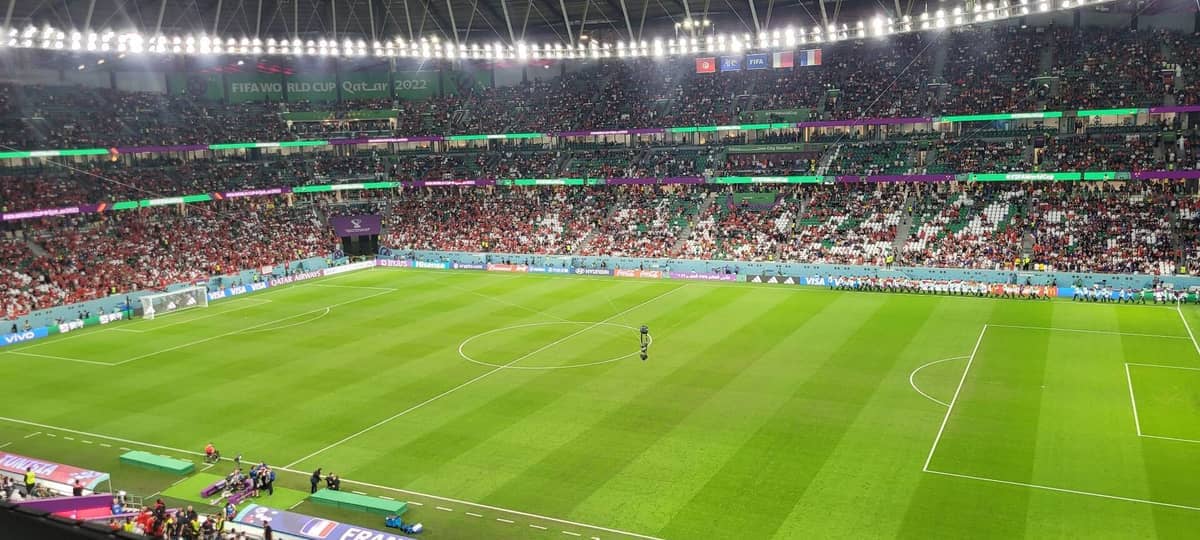
On match days, when the Education City Stadium hosts football or other events, the atmosphere shifts considerably. What is normally a calm, academic environment absorbs crowds, food stalls appear near the stadium perimeter, and the Green Line metro gets noticeably busier. The contrast is striking: the same paths that feel contemplative on a Tuesday morning can feel like festival grounds on a Friday evening.
ℹ️ Good to know
Education City operates on an academic calendar, meaning the district is noticeably quieter during summer months (June to August) when many university students leave Doha. Museums and public attractions remain open, but the general energy of the place is lower outside term time.
What to See & Do
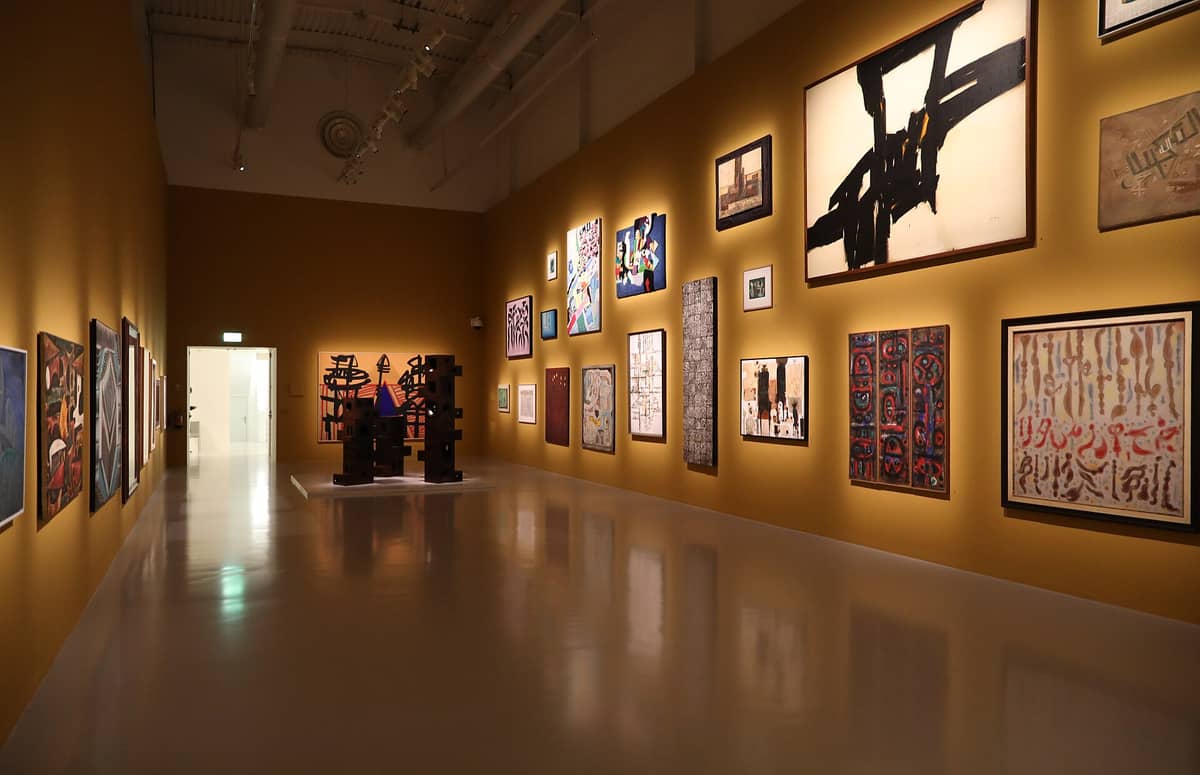
The anchor cultural institution here is Mathaf: Arab Museum of Modern Art, which holds one of the most significant collections of modern Arab art in the world. The permanent collection spans works from the mid-20th century to the present, covering movements across the Arab world that rarely get the international attention they deserve. Temporary exhibitions regularly bring in international contemporary work, making this a serious destination for anyone interested in art beyond the Western canon.
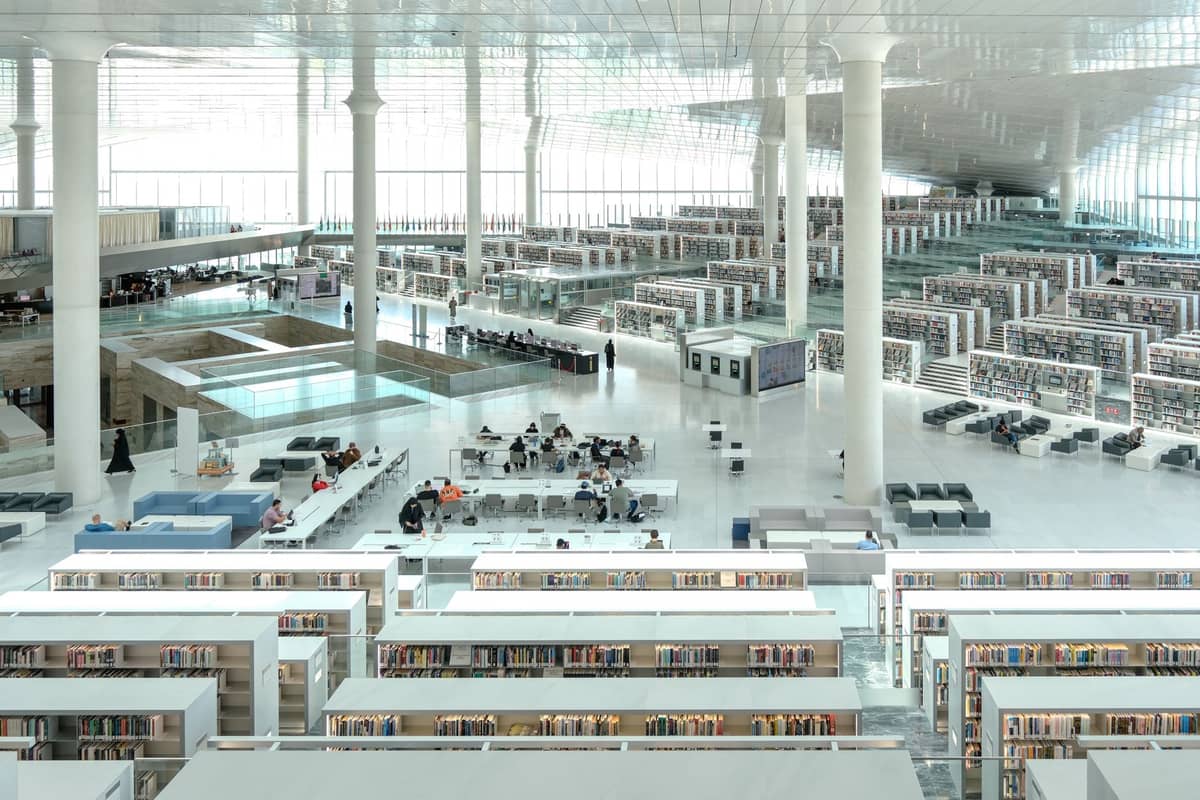
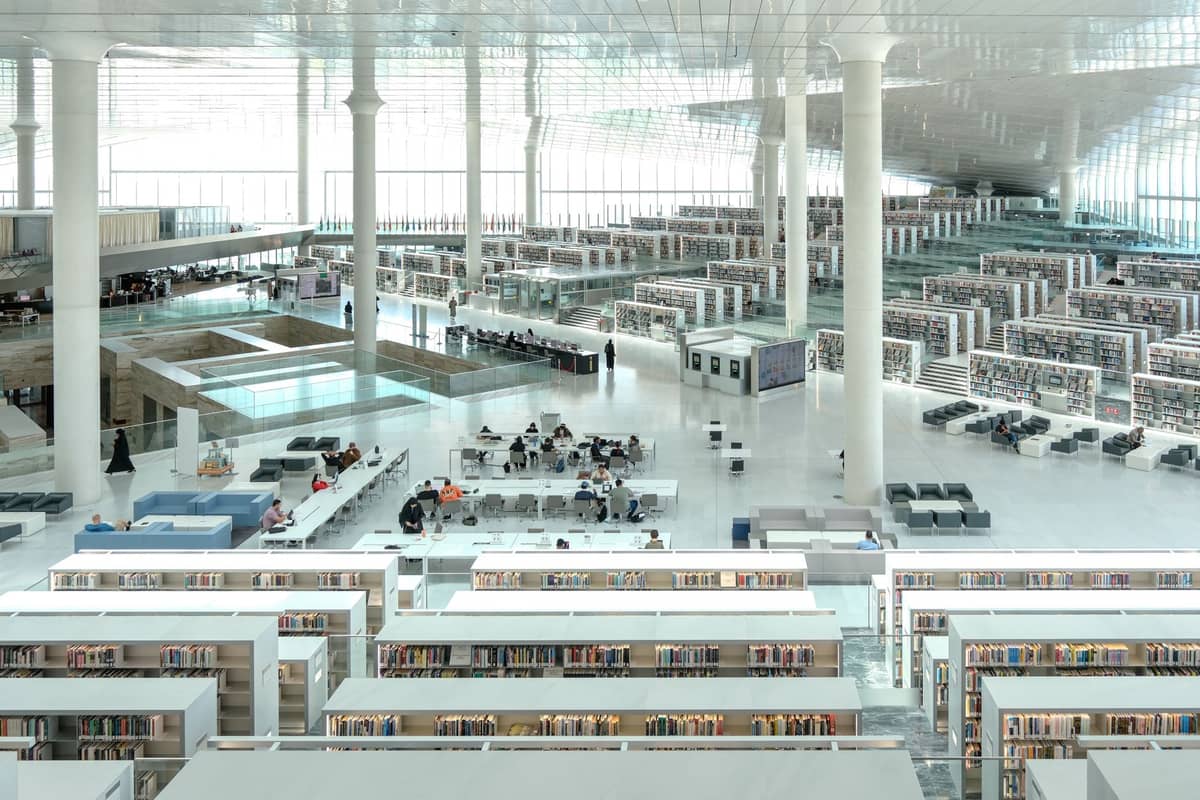
The Qatar National Library is worth visiting even if you have no particular interest in books. The building, designed by Rem Koolhaas and OMA, is a remarkable piece of architecture: a folded landscape of terraced shelves that rise from the floor to the ceiling in a continuous surface. The Heritage Library collection within it holds rare manuscripts and historical documents from across the Islamic world. Visitors are welcome, and the reading spaces are genuinely pleasant to spend time in.
The Education City Stadium was one of the eight venues used during the 2022 FIFA World Cup, and its diamond-patterned facade has become one of the more photographed structures in the district. The stadium continues to host domestic league matches and international events; check the Qatar Stars League and other sporting calendars for current fixtures. On non-match days, the exterior is accessible for photography and the surrounding plaza is walkable.
Oxygen Park is the main green lung of the district, a landscaped open space designed for walking, cycling, and recreation. It connects several of the campus areas and provides the kind of low-intensity outdoor experience that is hard to find elsewhere in Doha's built environment. The Al-Mujadilah Center and Mosque for Women and the Education City Mosque (Minaretein) are both architecturally distinctive and open to visitors at appropriate times; the Minaretein mosque in particular is considered one of the more elegant pieces of contemporary Islamic architecture in Qatar.
Mathaf: Arab Museum of Modern Art - permanent and temporary exhibitions of Arab art
Qatar National Library - Rem Koolhaas-designed building with Heritage Library collection
Education City Stadium - 2022 World Cup venue, ongoing sports events
Oxygen Park - landscaped walking and cycling space
Education City Mosque (Minaretein) - contemporary Islamic architecture
Al Shaqab - equestrian centre with shows and breeding programme
Qatar Science & Technology Park - innovation hub, occasional public events
The Gallery at VCUarts Qatar - rotating student and professional art exhibitions
💡 Local tip
The Gallery at VCUarts Qatar and the Fire Station artist residency (closer to the city centre) both showcase emerging Qatari and regional art. If contemporary art is your focus, combining both in one trip gives a much fuller picture of Doha's creative scene than either can alone.
Eating & Drinking
The food scene in Education City is functional rather than destination-worthy. Most dining options are embedded within the university buildings and serve the student and faculty population: cafeterias, fast-casual chains, and campus coffee shops. These are perfectly fine for a lunch break between visits, but you are unlikely to travel here specifically for a meal.
The Qatar National Library building has a cafe inside that draws both students and outside visitors, making it one of the more pleasant spots for coffee in the district. The atmosphere is calm, the architecture is spectacular, and you can extend a library visit into a two-hour break without feeling rushed. Several of the university buildings also have food courts open to the public during daytime hours, though hours vary and it is worth checking before making a specific trip.
For a more substantial dining experience, most visitors head to the surrounding Al Waab or Al Gharrafa areas after finishing in Education City, or make the metro journey back toward the city centre. The Souq Waqif area is about 20 minutes by metro and offers an entirely different food environment: open-air restaurants, grilled meats, Qatari staples, and shisha cafes spread across a historic market district.
Alcohol is not available in Education City. This is a dry campus environment consistent with the academic and cultural nature of the district, and with Doha's general pattern of restricting alcohol to licensed hotels and specific venues. If you are looking for the kind of evening that involves drinks, this is not the right neighbourhood.
Getting There & Around
The Doha Metro Green Line is the most straightforward way to reach Education City from the city centre. From Msheireb station, which connects the Red, Green, and Gold lines in central Doha, the journey to Education City station takes roughly 15 to 20 minutes. The Green Line runs at regular intervals throughout the day; check the Doha Metro app or official timetables for current frequency schedules. See the full guide to getting around Doha for metro tips, fares, and card options.
Within Education City, distances between attractions are significant enough that walking in summer is uncomfortable. A free internal shuttle service circulates through the district, connecting the metro stations to the main campus buildings and attractions. The shuttle is the intended way to move around once you arrive, and it runs on a fixed loop that covers all the major landmarks. Timetables are available through the Qatar Foundation and Education City websites.
Ride-hailing apps including Uber and local services operate in Doha and will drop off and pick up within Education City without difficulty. This is a reasonable option if you are arriving from a hotel in West Bay or The Pearl and prefer not to navigate the metro interchange at Msheireb. Karwa taxis are available throughout the city and can be flagged or booked by app; they queue at Hamad International Airport and at major hotels.
Driving into Education City is possible and some visitors prefer it for flexibility. Parking is available at several points across the campus zone. However, the internal layout of the campus is not immediately intuitive for first-time visitors, and the metro plus shuttle combination is genuinely efficient enough that a car does not add much practical advantage.
⚠️ What to skip
Do not underestimate the distances between attractions within Education City. Mathaf, the Qatar National Library, Education City Stadium, and Al Shaqab are all spread across a 12 square kilometre area. Walking between them in summer heat is not practical. Use the free shuttle or build transit time into your itinerary.
Where to Stay
Education City has no hotel accommodation within its campus boundary. The district is designed as a place to visit and study, not to sleep. Visitors planning extended time in the area will need to base themselves elsewhere in Doha and commute in by metro or taxi.
For travellers prioritising easy access to Education City, hotels in the Al Waab or Al Rayyan corridor reduce transit time. That said, most visitors to Doha base themselves closer to the waterfront in West Bay, near Souq Waqif, or at The Pearl, and treat Education City as a half-day excursion. The metro connection is reliable enough that staying centrally and making the trip out west works well. For help choosing where to base yourself, the where to stay in Doha guide covers the main accommodation zones across the city in detail.
Practical Tips for Visiting
Education City is a good fit for the kind of traveller who wants depth alongside Doha's more obvious attractions. If you have already done the Museum of Islamic Art and the National Museum of Qatar, a half-day at Mathaf and the Qatar National Library gives you a genuinely different cultural angle. These institutions are serious, well-resourced, and less crowded than the headline museums on the Corniche.
The best time to visit Education City is between November and March, when outdoor movement between attractions is comfortable. During Doha's winter months, the parks and outdoor plazas are genuinely pleasant, and the light in the late afternoon falls well across the campus architecture. If you are interested in photography, the Minaretein mosque and the Education City Stadium facade both photograph well in golden hour light. The Doha photography guide has more detail on timing and locations across the city.
Dress code norms here are consistent with Qatar broadly: modest clothing is appropriate, particularly around the mosques and academic buildings. The campus environment is international and relatively relaxed compared to more traditional parts of Doha, but covering shoulders and knees remains the sensible baseline for public areas.
For families, Oxygen Park and the open green spaces within Education City work well for younger children, especially in cooler months. The Qatar National Library has family-friendly areas and is designed to be accessible to all ages. For a full family-friendly day combining Education City with other activities, the guide to Doha with kids covers the best child-oriented experiences across the city.
TL;DR
Education City is a 12 sq km campus district in Al Rayyan Municipality, about 15 km west of central Doha, served by three Green Line metro stations.
Best suited to travellers with an interest in architecture, contemporary art, Islamic culture, or academic environments rather than those seeking traditional souq or beach experiences.
Key attractions: Mathaf Arab Museum of Modern Art, Qatar National Library (OMA-designed), Education City Stadium (2022 World Cup venue), Oxygen Park, and the Minaretein Mosque.
No hotels or significant restaurant scene within the district; plan to commute in for the day from a central Doha base and eat before you arrive or after you leave.
Visit between November and March for comfortable outdoor temperatures; avoid solo outdoor exploration in summer heat and use the free internal campus shuttle to get between attractions.
Two full days is genuinely enough to cover Doha's best sights — if you plan smart. This itinerary routes you through the Museum of Islamic Art, Souq Waqif, the National Museum of Qatar, Katara Cultural Village, and the Corniche using the metro and short taxi rides, with honest advice on timing, heat, and what to skip.
Qatar's coastline stretches far beyond its skyline. This guide covers the best beaches in Doha and across Qatar, from calm urban shores perfect for families to wild dune-backed stretches only reachable by 4WD. Whether you want a free afternoon by the sea or a full resort day-pass experience, here is where to go.
Doha has become a serious museum city. From a landmark of Islamic art to a converted fire station showing cutting-edge contemporary work, these are the museums that make Doha worth visiting for culture alone.
Doha's extreme desert climate makes timing your visit critical. This guide breaks down every season honestly, covering temperatures, humidity, hotel prices, and the events calendar so you can pick the right window for your trip.
Doha is unusually rich in visual drama. Between the glittering West Bay skyline reflected across the bay, dhow boats bobbing in the foreground, and architecturally ambitious stadiums rising from the desert, the city rewards anyone who knows where to look. This guide covers the best viewpoints in Doha, from free waterfront promenades to photogenic canal districts and iconic landmark angles.
Doha rewards exploration beyond its skyline. Whether you want towering sand dunes, a UNESCO World Heritage fort, mangrove kayaking, or a quieter coastal town, Qatar packs a surprising range of day-trip experiences into a small country. This guide covers the best escapes within reach of the capital.
Hamad International Airport is one of the world's major transit hubs, and a Doha airport layover can be far more than a waiting game. This guide covers visa rules, sleep options, lounge access, and how to squeeze the best of the city into a short stopover.
Doha's waterfront is best explored from the water. Whether you want a traditional dhow cruise past the West Bay skyline, a kayak through coastal mangroves, or a catamaran ride to a private island, this guide covers every boat ride and water experience worth booking in Qatar's capital.
Doha is a surprisingly compelling destination for couples, blending waterfront promenades, heritage markets, world-class museums, and desert escapes into a genuinely romantic itinerary. This guide covers the best experiences for couples in Qatar's capital, with honest takes on what's worth your time and what to skip.
Qatar's desert safari scene centers on the Sealine dunes and the UNESCO-listed Tentative Site of Khor Al Adaid Inland Sea, just 60-75 minutes from Doha. This guide covers tour types, honest price breakdowns, the best time to go, and what the brochures don't tell you.
Falconry sits at the heart of Qatari identity, and Doha makes it surprisingly accessible to visitors. From the Falcon Souq at Souq Waqif to the world-class falcon hospital and the annual S'hail exhibition at Katara, this guide covers everything you need to experience Qatar's most distinctive cultural tradition.
Doha rewards first-timers who arrive prepared. This guide covers the essentials: how to get from the airport, which neighborhoods to prioritize, what the climate actually feels like, and the cultural norms that matter most. No fluff, just practical knowledge.
The Doha Fish Market at Old Doha Port is one of the city's most authentic local experiences. This guide covers opening hours, what species to look for, how to negotiate, how to get there, and what to do with your catch once you have it.
Winter is Doha's golden season, with mild temperatures, clear skies, and a packed events calendar. This guide covers everything you need to know about visiting Doha from November through March, from what to pack to when to book.
Doha has quietly become one of the world's most compelling destinations for Islamic art and architecture. This guide covers the essential museums, mosques, historic forts, and cultural districts where centuries of Islamic heritage come alive.
Qatar criminalizes same-sex sexual activity, and Doha has no LGBTQ+ venues or legal protections. This guide gives LGBTQ+ travelers an honest, practical breakdown of the legal situation, safety considerations, and what visiting the city actually looks like in practice.
Doha's after-dark scene is more diverse than most visitors expect. From rooftop hotel bars in West Bay to stargazing desert safaris at the Inland Sea, this guide covers everything you need to know about Doha nightlife, including alcohol rules, the best venues by district, and evening alternatives for non-drinkers.
Qatar's capital has a reputation for luxury, but Doha on a budget is genuinely achievable. Free museums, a QAR 6 metro day cap, and no-cost attractions like the Corniche make it possible to see the city without spending a fortune. Here's how to do it smartly.
Doha rewards photographers at every turn, from I.M. Pei's waterfront masterpiece to golden-tiled mosques and shipping-container stadiums. This guide covers the city's 20 most photogenic locations, with advice on the best times to shoot and what to look for at each spot.
Doha is one of the safest cities in the Middle East, with low crime rates and well-monitored public spaces. But safety here is as much about understanding local laws as it is about personal security. This guide covers everything from terrorism advisories and alcohol rules to dress codes, transport safety, and seasonal health risks.
Planning a trip to Doha, Qatar? This guide breaks down exactly who needs a visa, how to get one, what documents to carry, and the common mistakes that trip up first-time visitors at the border.
Doha is a genuinely family-friendly city, with options spanning free waterfront parks, world-class children's museums, indoor adventure parks, and beach day trips. This guide breaks down the best activities by budget, age group, and season so you can plan a practical, stress-free trip with kids.
Qatar's 2022 FIFA World Cup left behind eight architecturally extraordinary stadiums scattered across Doha and its surroundings. This guide covers every venue, how to visit each one, and what to see nearby to make the most of your trip.
Doha is far more affordable than its gleaming skyline suggests. From the 7-kilometre Corniche promenade to free heritage museums and public beaches, this guide covers the best free things to do in Doha — for first-timers and residents alike.
Doha is surprisingly easy to navigate if you know which transport option suits your route. This guide covers the Doha Metro, Karwa taxis, public buses, and airport transfers, with current fares, operating hours, and honest advice on what works and what doesn't.
Doha divides opinion. Some travelers find a world-class city of museums, architecture, and Gulf culture. Others leave underwhelmed. This guide breaks down exactly what Doha offers, what it doesn't, and who should make the trip.
Doha has quietly become one of the world's most ambitious luxury destinations. This guide covers the best 5 star hotels, high-end dining, designer shopping, and cultural experiences, with honest advice on what lives up to the price tag and what doesn't.
Doha delivers one of the Gulf's most complete shopping experiences, from air-conditioned mega-malls with international luxury brands to the spice-scented alleys of Souq Waqif where bargaining is still the norm. This guide covers every major venue, realistic prices, opening hours, seasonal quirks, and the souvenirs actually worth buying.
From the Museum of Islamic Art to the Inland Sea desert, Doha packs serious variety into a compact city. This guide covers the top things to do in Doha with real admission prices, opening hours, seasonal tips, and honest takes on what's worth your time.
Doha's food scene goes far deeper than shawarma and hummus. This guide covers the essential Qatari dishes every visitor should try, from the national dish machboos to the street-side sweet luqaimat, with honest price breakdowns and the best places to eat them.
Doha's food scene spans centuries-old Arab hospitality traditions and some of the most international dining in the Gulf. This guide covers the best areas to eat, what to order, how much to spend, and when to go — with practical details on hours, booking, and seasonal dining patterns.
Doha's neighbourhoods are more distinct than most Gulf cities. This guide breaks down the five key areas to stay, who each suits best, what you'll actually pay, and how to time your booking around weather and events.