Education City Stadium: Qatar's Diamond on the Desert
Education City Stadium is one of the most architecturally distinctive venues from the FIFA World Cup Qatar 2022, its faceted facade designed to evoke a cut diamond catching the Gulf sun. Located within Qatar Foundation's sprawling Education City campus in Al Rayyan, it continues to host regional football tournaments and community events, making it worth a visit well beyond its World Cup legacy.
Quick Facts
- Location
- Education City, Al Rayyan, Qatar
- Getting There
- Doha Metro Green Line – Education City Station
- Time Needed
- 1–2 hours for the exterior and campus walk; longer on event days
- Cost
- Access policies for the campus and stadium exterior may vary; event tickets are priced per match or event.
- Best for
- Architecture enthusiasts, football fans, World Cup history seekers, families
- Official website
- educationcity.qa/venue/education-city-stadium
What Is Education City Stadium?
Education City Stadium was inaugurated on 15 June 2020, making it one of the newer additions to Qatar's network of purpose-built football venues. It sits inside Qatar Foundation's Education City campus in Al Rayyan, a district that functions as a kind of academic city-within-a-city, housing international university branches, research centers, and cultural facilities spread across several square kilometers west of central Doha.
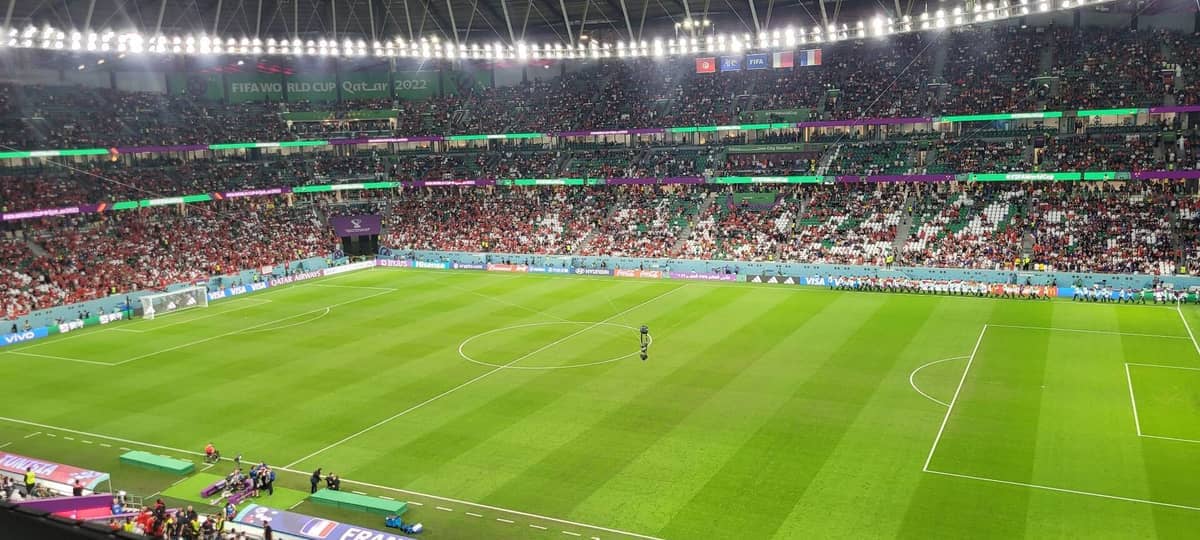
During the FIFA World Cup Qatar 2022, the stadium held up to 44,667 spectators and hosted group-stage and round-of-16 matches. Since then, its capacity has been reduced to approximately 25,000 seats for long-term university and community use, a legacy model aligned with Qatar's post-World Cup plan to right-size venues for realistic domestic demand. The stadium also hosted the FIFA Arab Cup, and continues to appear on the fixture list for regional tournaments. For anyone tracking all of Doha's World Cup venues, Education City is one of the most rewarding to visit simply for its design.
💡 Local tip
The stadium venue is listed as open daily around the clock, but interior stadium entry is only possible during scheduled events. Check the Education City website or the Qatar Football Association for upcoming fixtures before you visit.
The Architecture: Why the Facade Stops People in Their Tracks
The stadium's exterior is its defining feature and the main reason architecture enthusiasts make the trip out to Al Rayyan. The design, developed by Pattern Design architects in collaboration with local expertise, wraps the building in a geometric lattice of triangular panels that deliberately mimic the facets of a cut diamond. The panels shift tone depending on the angle of light and time of day, moving through shades of white, pale gold, and rose as the sun arcs across the sky.
In the early morning, when the sun is low and the campus is quiet, the facade has a calm, almost monolithic quality. By mid-morning, individual facets begin to catch direct light and the surface becomes visually complex, with each triangle casting a small shadow on its neighbor. At sunset, particularly in the cooler months between November and March, the warm light transforms the exterior into something genuinely striking. This is the best time for photography, and the plaza around the stadium is spacious enough to compose wide shots without obstruction.
The design also draws on geometric patterns found in Islamic art and architecture, a reference that connects the building to Qatar's cultural identity rather than treating it as a generic international venue. Whether that dialogue is legible to every visitor is a fair question, but the precision of the faceting is impressive even without the deeper context.
Visiting the Campus: What You Can Actually Do
Education City itself rewards time beyond the stadium perimeter. The campus contains buildings by some of the world's better-known architecture practices, open green spaces, and pedestrian routes that feel unusually calm by Doha standards. On a non-match day, foot traffic is light, which means you can move around the exterior at your own pace without crowds.
The Education City Tram runs through the campus and provides a useful orientation loop, particularly if you want to cover the broader area without walking in the heat. Al Shaqab, the equestrian and heritage center at the edge of the campus, is worth a look for travelers interested in Qatar's horse-breeding tradition. The wider Education City district also contains the Qatar National Library, a dramatic structural landmark in its own right, open to the public and worth combining with a stadium visit.
On match days, the dynamic changes entirely. Crowds arrive via metro and tram, vendors set up outside the gates, and the plaza activates with the particular energy of a live football event. If you are attending a fixture, the organization is generally efficient: multiple gates handle different sections, and the internal concourses are wide enough to move comfortably.
ℹ️ Good to know
On match days, car parks including Al Shaqab parking are designated for stadium visitors. A free Education City Tram connects the parking area to entrances near the stadium.
Getting There: Metro Is the Smart Choice
The Doha Metro Green Line runs directly to Education City Station, which sits within comfortable walking distance of the stadium. This is the most practical option for most visitors, especially on event days when road access around Al Rayyan can slow considerably. Metro fares are low and paid via the standard metro travel card available from station machines. Journey time from central Doha stations is generally under 30 minutes.
By car or taxi, the stadium is roughly 9–10 km west of central Doha, a journey that can take anywhere from 15 minutes to considerably longer depending on traffic and whether a match is scheduled. App-based rides and Karwa taxis are both viable options on non-match days. For a full picture of moving around the city, the guide to getting around Doha covers metro lines, taxis, and tram options in detail.
Best Time to Visit and Weather Considerations
Qatar's climate is a desert climate, and this shapes any outdoor visit. Between roughly November and March, daytime temperatures often range from the low 20s to around 30°C, making extended time outdoors generally pleasant. This is the window when walking the campus perimeter, photographing the exterior, and spending time on the plaza is comfortable without planning around shade or hydration in the same way you would in summer.
From May through September, midday temperatures regularly exceed 40°C. The stadium exterior is largely exposed, with limited shade in the surrounding plaza. If you visit in summer, aim for early morning (before 9am) or arrive for an evening event when the stadium is lit and temperatures have dropped somewhat. The facade under floodlights at night is visually quite different from its daytime appearance, with the triangular panels casting deep contrasts that amplify the geometric complexity.
Football in Qatar typically follows a season calendar that front-loads fixtures in the cooler months, so major events at Education City Stadium tend to coincide with the most comfortable weather. See the best time to visit Doha for a fuller breakdown of how season affects the city overall.
Photography Tips and Practical Details
The best exterior shots come from the wide plaza on the main approach side, where the full facade is visible without obstruction. A wide-angle lens captures the scale effectively; longer focal lengths isolate individual facet clusters and bring out the texture of the paneling. The geometric pattern also works well for abstract compositions if you move in closer to the outer structure.
Dress codes at the stadium follow standard Qatar norms: conservative clothing is appropriate for public spaces. There are no specific dress requirements beyond what is standard across Doha. Comfortable footwear matters on match days when you may be covering more ground than expected across the campus.
Accessibility: the stadium includes accessible parking close to the venue, with drop-off and pick-up guidance near Education City Metro Station during events. The tram and multiple pedestrian gates are designed to accommodate different mobility needs on match days. The Qatar Foundation Control Room and Security Department handles urgent access requests during events.
⚠️ What to skip
Ticket prices for matches and events are not listed on the stadium's general pages. Pricing varies by event and organizer. Check the Education City website, Qatar Football Association, or the specific tournament's official ticketing platform well in advance.
Honest Assessment: Who Will Get the Most Out of This Visit
Education City Stadium is genuinely worth the trip for anyone with an interest in architecture, infrastructure, or the story of how Qatar built out its World Cup legacy. The building is among the most photogenic of the 2022 venues and the campus setting adds context that a standalone stadium visit elsewhere would lack. Travelers following the broader Doha photography trail will find it a productive stop.
However, if your primary interest is in active sightseeing with a lot to do and see on-site, a non-match day visit can feel thin. The exterior is the attraction; there is no permanent museum, no public interior tour that operates regularly, and no substantial dining or retail cluster immediately adjacent to the stadium. This is a campus, not a tourist precinct, and it reads that way.
Visitors looking for a more concentrated half-day in a single location might find the Museum of Islamic Art or National Museum of Qatar more rewarding as standalone stops. Education City Stadium works best when combined with the Qatar National Library and the broader campus walk, making a morning out of the whole district rather than treating the stadium as a destination in isolation.
Insider Tips
- Visit on a weekday morning in winter months for the quietest conditions and the best photographic light on the diamond facade. By 10am the sun is high enough to activate the surface texture without harsh overhead shadows.
- The Education City Tram is free and provides an easy way to move around the campus. Even if you are only visiting the stadium, a single tram ride gives you a sense of the scale of the Qatar Foundation development and reveals buildings you might miss on foot.
- The Qatar National Library, a short distance away on the campus, is open to the public and architecturally remarkable. Combining it with the stadium visit makes for a coherent half-day that justifies the trip out to Al Rayyan.
- For evening match photography, arrive at least an hour before kick-off. The stadium's exterior lighting comes on before the game starts and the plaza is considerably less crowded in the pre-match hour than immediately before kick-off.
- If you are visiting without a match ticket, check the Education City events calendar. The campus periodically hosts public events, open days, and cultural activities linked to the university community that provide access to parts of the area not normally open to casual visitors.
Who Is Education City Stadium For?
- Architecture and design enthusiasts interested in the geometry of the diamond facade and its Islamic art references
- Football fans and World Cup history followers wanting to see a 2022 venue in its post-tournament life
- Photographers seeking a structurally distinctive subject outside Doha's central sightseeing corridor
- Families looking for a spacious outdoor campus walk with multiple points of interest and easy metro access
- Travelers combining Education City with the Qatar National Library for a design-focused half-day
Nearby Attractions
Other things to see while in Education City:
- Mathaf: Arab Museum of Modern Art
Mathaf: Arab Museum of Modern Art in Education City houses more than 9,000 works tracing over a century of Arab artistic practice. It is the most comprehensive institution of its kind in the world, and for anyone serious about art, it belongs at the top of any Doha itinerary.
- Qatar National Library
Designed by Rem Koolhaas and spanning 42,000 square metres, Qatar National Library is one of the most architecturally significant public buildings in the Gulf. Free to enter and open to all, it holds over one million books and houses a rare Heritage Library collection inside Education City’s academic campus.