Doha Gold Souq: What to Know Before You Visit
The Gold Souq in Doha's Souq Al Najada district is a concentrated strip of over 40 gold and jewelry retailers steps from Souq Waqif. Entry is free, prices track live gold rates, and the atmosphere shifts dramatically between the quiet morning session and the animated evening crowd.
Quick Facts
- Location
- Al Ahmed Street, Souq Al Najada, near Souq Waqif, Doha
- Getting There
- Souq Waqif Metro Station (Gold Line), then a 5-10 min walk
- Time Needed
- 45 minutes to 2 hours depending on whether you browse or buy
- Cost
- Free entry. Gold priced per gram (QAR, tracks daily international rates) plus making charges
- Best for
- Gold buyers, jewelry browsers, cultural shoppers, photography enthusiasts
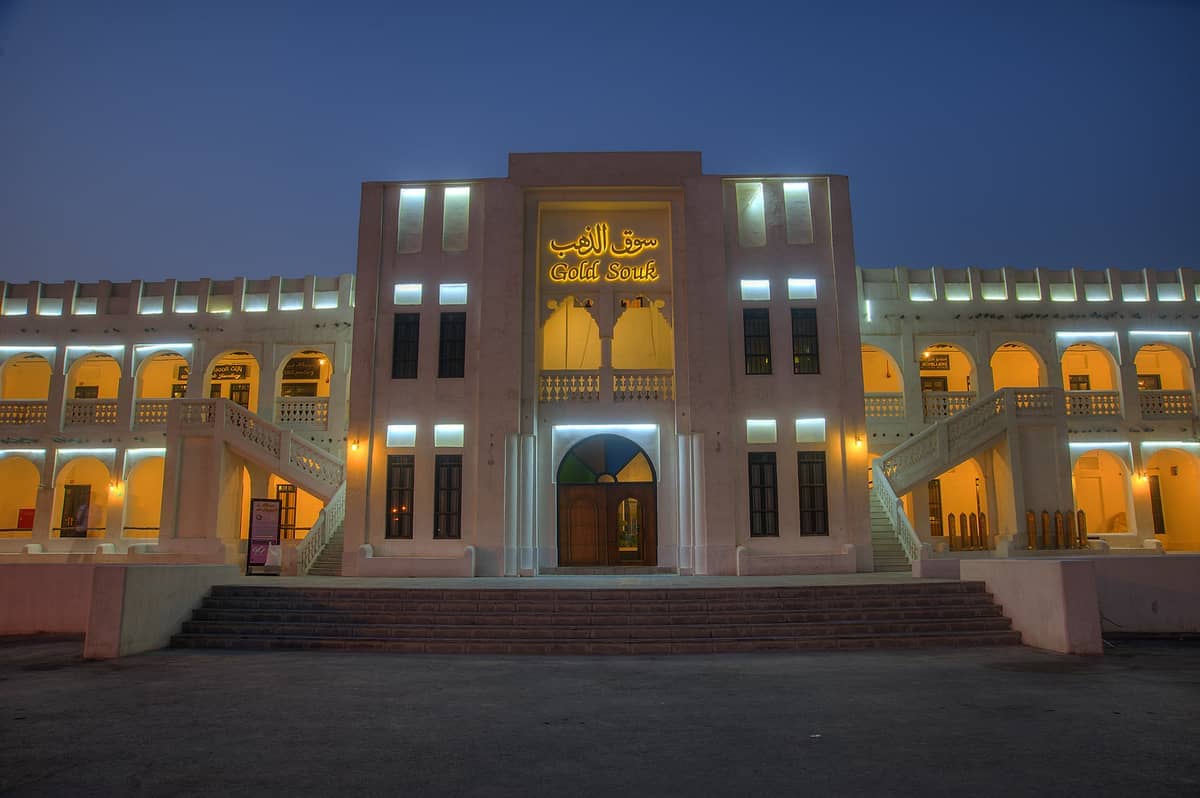
What the Gold Souq Actually Is
The Gold Souq, known in Arabic as Souq al-Dhahab, sits in the Souq Al Najada district of downtown Doha, on Ali Bin Abdullah Street near the Al Najada Doha Hotel. It is not an ancient bazaar that grew organically over centuries. What you find today is a purpose-built concentration of over 40 specialist gold and jewelry retailers housed in a dedicated commercial complex, designed to bring Doha's fine jewelry trade under one roof.
It is worth knowing that an older, smaller gold market still exists near Souq Al Faraj by the Karwa bus station. The Souq Al Najada complex is the newer, larger, and better-organized of the two. Most visitors and travel guides refer to this one when they mention Doha's Gold Souq.
The souq sits in the broader Souq Waqif area, which means it integrates naturally into a half-day itinerary that takes in the restored heritage market, the dhow harbour, and the falcon souq. Walking between all three takes under 15 minutes.
ℹ️ Good to know
Opening hours follow a split-day pattern: 09:00–13:00 and 16:00–22:00 Saturday to Thursday, and 16:00–22:00 on Fridays. Individual shops set their own hours, so times can vary. Expect adjusted hours during Ramadan and public holidays. Confirm locally before planning a morning visit.
What You See Inside
The layout is straightforward: a covered corridor or arcade of shop fronts, each displaying large illuminated cases packed with necklaces, bangles, earrings, rings, and pendants. The dominant materials are 18-carat and 22-carat gold. Yellow gold dominates by a wide margin, reflecting the preferences of South Asian and Arab buyers who make up a significant share of the clientele. Rose gold and white gold pieces appear in the more modern-leaning shops.
Designs range from delicate contemporary chains to ornate traditional bridal sets with heavy filigree work. Several shops specialize in South Asian wedding jewelry, where sets can include matching necklaces, earrings, bangles, and maang tikka. Other retailers focus on simpler everyday pieces or custom work. There is no shortage of choice, but the offering is almost exclusively gold and gemstone jewelry; don't expect silver-dominant shops or fashion jewelry at this price point.
The display windows are dense and deliberately dazzling under strong commercial lighting. If you visit purely to observe rather than buy, the visual effect is genuinely striking, particularly in the evening when the lit cases contrast against the darker surroundings outside.
Morning vs. Evening: How the Experience Changes
The morning session, roughly 09:00 to 13:00, is quieter and more transactional. Shopkeepers are fresh, conversations are unhurried, and you can browse without the pressure of a crowded corridor. This is when serious buyers tend to come: less ambient noise, easier conversation about price, weight, and making charges. The light at this hour is cooler, which makes assessing yellow gold color more accurate than under the warm evening lighting.
The evening session, from 16:00 onwards, is a different atmosphere. Families arrive after the afternoon heat breaks, particularly from around 18:00. The corridor fills with the sound of Arabic, Hindi, Urdu, and Tagalog mixed together. The smell of incense or oud from nearby Souq Waqif drifts across as the evening cools. This is the sociable time to visit if you want to absorb the atmosphere rather than focus purely on a purchase.
Friday evenings draw some of the largest crowds of the week. If you find busy markets uncomfortable, a Thursday morning visit offers the same full range of open shops with a fraction of the foot traffic.
💡 Local tip
Photography tip: The evening lighting inside the souq produces warm, high-contrast images of gold jewelry in lit cases. For detail shots, ask a shopkeeper's permission first. Many are happy to oblige if you express genuine interest. The exterior of the complex at dusk, with nearby Souq Waqif's traditional architecture, makes for a better environmental frame than shooting inside the corridor.
How Gold Pricing Works Here
Gold pricing in Qatar follows international spot rates, converted to Qatari riyals per gram and published on local gold pricing websites. What this means practically is that the base metal price is not negotiable in the same way that a market stall price might be: the gram rate is what it is on that day.
Where negotiation happens is on making charges, which are the labor and craftsmanship fees added on top of the metal price. These vary by shop, design complexity, and how willing the seller is to close a deal. For intricate bridal sets, making charges can be substantial. For simpler chains sold by weight, the spread between shops can be narrower. It pays to compare at two or three shops before committing, particularly for higher-value purchases.
Payment is accepted in Qatari riyals. Most shops accept cash and cards, though cash may give you slightly more room to negotiate on making charges. Always request a receipt that specifies the weight, purity (carat), and itemized price breakdown.
⚠️ What to skip
Gold prices fluctuate daily. Do not rely on any price quoted in a guide or article. Check the current QAR per gram rate before visiting if you plan to buy, so you have a baseline for comparison.
Getting There and Practical Logistics
The most straightforward public transit option is the Doha Metro to Souq Waqif Station on the Gold Line. From the station, the walk to the Gold Souq takes roughly 5 to 10 minutes through the Souq Waqif precinct. The metro is air-conditioned, reliable, and inexpensive, making it the recommended option from most central Doha hotels or from Msheireb interchange.
By bus, several Mowasalat (Karwa) routes serve the Souq Waqif area, including lines 45, 777, 22, 156A, and 136A. Check the current Mowasalat schedule and stop details before traveling, as routes can be adjusted. Taxis and ride-hailing apps are reliable for a direct drop-off at or near the souq entrance, particularly useful if you are coming from a hotel outside the metro network.
Parking in this part of downtown Doha is limited and congested during peak evening hours. If you are driving, allow time to find a space on the perimeter roads and expect to walk from your car. The walk is short, but note that the alleyways within the souq are pedestrian-only.
Accessibility note: The souq passages involve some uneven paving typical of older market-district streets. Wheelchair users and visitors with prams should anticipate occasional surface changes and narrow shop frontages. There is no formal accessibility infrastructure within the shopping corridor itself.
Dressing, Etiquette, and What to Bring
Qatar's public dress norms apply here as they do throughout Doha's traditional market areas. Modest clothing covering shoulders and knees is appropriate and respectful. The market is frequented by local families, so revealing clothing stands out and is generally considered inappropriate. In practical terms, this also means comfortable, loose-fitting clothes are the right choice: the covered arcade can feel warm during peak hours, even with cooling.
Bring any jewelry you want to compare or have appraised: a few shops offer evaluation services. If you intend to make a significant purchase, consider bringing a measuring tape or the exact measurements for a bangle or ring size, as sizing conventions can differ by country. Most shops can size rings while you wait or arrange alterations quickly.
The gold souq pairs well with a stop at the Falcon Souq and the Dhow Harbour, both within easy walking distance. Budget two to three hours for the full Souq Waqif district loop, including the gold souq.
Who This Souq Is and Is Not For
The Gold Souq is genuinely worth a visit for anyone interested in fine jewelry, whether or not you plan to buy. The density of gold on display, the variety of design traditions represented, and the cross-cultural crowd make it an interesting place to spend an hour. For buyers, the pricing structure is transparent and competitive by regional standards, and the quality controls around carat purity are enforced under Qatari trade regulations.
Travelers who come expecting an ancient, atmospheric market in the tradition of Istanbul's Grand Bazaar or Dubai's older Deira Gold Souq may find this one comparatively modest in scale and character. The complex is modern in construction, and the corridor lacks the labyrinthine drama of older souq districts. If atmosphere and heritage architecture are your priorities, the nearby Souq Waqif will satisfy those instincts more fully. The Gold Souq is better understood as a practical, well-organized shopping destination with a genuine local market function, rather than a theatrical heritage experience.
For context on how the Gold Souq fits into Doha's broader retail and cultural landscape, the shopping in Doha guide covers the full range of options from traditional souqs to modern malls.
Insider Tips
- Check the daily QAR gold rate on a local pricing site before you arrive. Knowing the spot price per gram for 18k and 22k gold means you can instantly evaluate whether a quoted price is reasonable, and sellers take better-informed buyers more seriously.
- The midweek morning session (Sunday to Tuesday, 09:00 to 12:00) offers the most relaxed browsing conditions. Shops are fully stocked, staff have more time to explain pieces, and the corridor is rarely crowded.
- For bridal or high-value jewelry, visit two or three shops and get written quotes itemizing gram weight, carat, daily metal rate, and making charges separately. The making charge is where real price differences appear between shops.
- An older, smaller gold market exists near Souq Al Faraj by the Karwa bus station. It is less curated but occasionally has older-style pieces and lower foot traffic if you prefer a quieter setting.
- Ramadan hours differ significantly from standard schedules. During Ramadan, many shops shift to late-night trading and may close for much of the day. If you are visiting Doha during the holy month, confirm current hours directly with the souq before planning your visit.
Who Is Gold Souq For?
- Gold and jewelry buyers looking for competitive per-gram pricing and a wide selection of 18k and 22k pieces
- South Asian and Arab diaspora visitors seeking traditional bridal or occasion jewelry in familiar styles
- Cultural browsers who want to observe a working gold market without any obligation to buy
- Photographers interested in the contrast of illuminated gold cases against a traditional market setting
- Travelers combining a Souq Waqif walking itinerary with multiple stops in the historic downtown district
Nearby Attractions
Other things to see while in Souq Waqif Area:
- Al Bidda Park
At roughly 1.7 square kilometres of lawns, walking paths, and play areas in the heart of Doha, Al Bidda Park is one of the city’s largest and most central green spaces. Free to enter, open until midnight, and positioned right along the Corniche, it earns its place on any itinerary that extends beyond air-conditioned malls and museums.
- Al Koot Fort
Al Koot Fort, also known as Doha Fort, is a compact 20th-century structure with Ottoman roots standing just steps from Souq Waqif. Free to visit, historically significant, and easy to pair with a half-day in the old market district, it offers a rare glimpse into pre-oil Doha.
- Camel Pen at Souq Waqif
Tucked a few minutes' walk from the Falcon Souq inside Souq Waqif, Doha's camel pen offers a rare and grounded encounter with one of Arabia's most iconic animals. Free to visit, generally accessible throughout the day, and genuinely surprising in the middle of a historic market, it rewards travelers who wander beyond the spice stalls.
- Dhow Harbour
Dhow Harbour sits along the Doha Corniche, where rows of traditional wooden vessels have been moored for generations. Free to walk through at any hour, the harbour offers one of the city's most photogenic contrasts: hand-crafted dhows in the foreground, West Bay's glass towers rising across the bay. Short rides and longer sunset cruises are available for those who want to see the skyline from the water.