Al Koot Fort: Doha's Ottoman-Era Landmark at the Heart of Souq Waqif
Al Koot Fort, also known as Doha Fort, is a compact 20th-century structure with Ottoman roots standing just steps from Souq Waqif. Free to visit, historically significant, and easy to pair with a half-day in the old market district, it offers a rare glimpse into pre-oil Doha.
Quick Facts
- Location
- Jasim bin Mohammed Street, Al Jasra, near Souq Waqif, central Doha
- Getting There
- Souq Waqif or Msheireb stations (Doha Metro Gold Line), both within walking distance
- Time Needed
- 20–45 minutes for the exterior; longer if interior access is arranged in advance
- Cost
- Free entry. Interior visits are by appointment only; contact +974 4442 4143 (as listed by Visit Qatar) to arrange access.
- Best for
- History lovers, photographers, and anyone combining a visit with Souq Waqif
What Is Al Koot Fort?
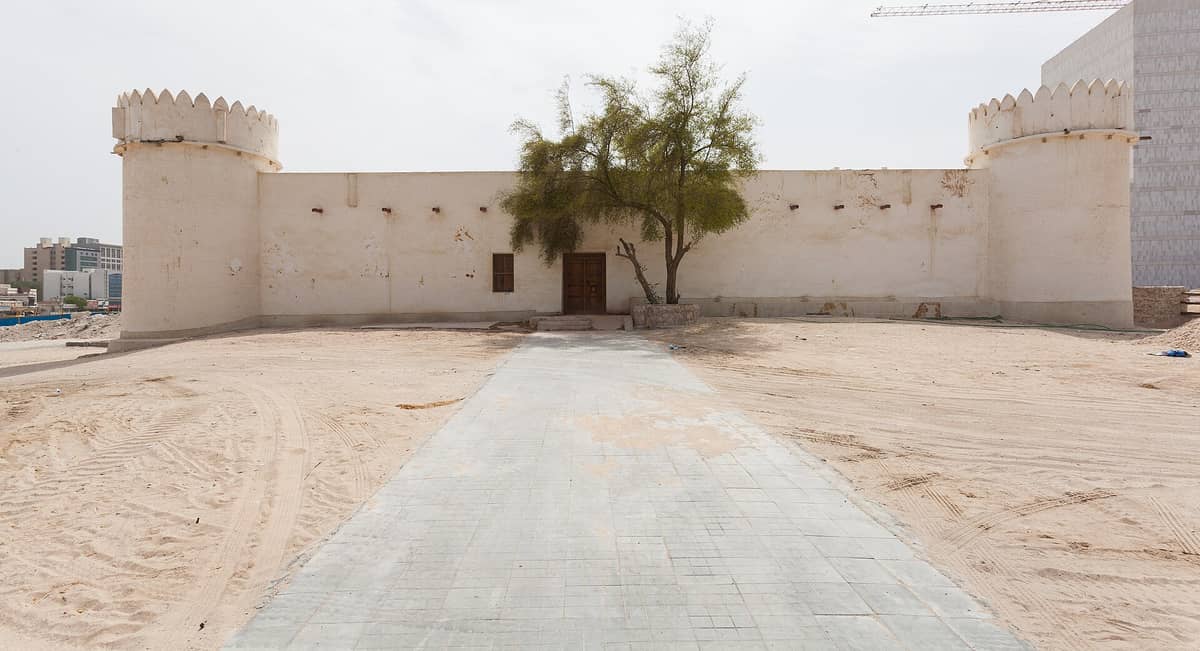
Al Koot Fort, also called Doha Fort, is one of the few surviving pre-oil era structures in Qatar's capital. It stands on Jasim bin Mohammed Street at the southern edge of the Souq Waqif district, a squat, cream-coloured building with crenellated walls and cylindrical corner towers that look slightly out of scale with the surrounding streets. That modest silhouette, however, carries real historical weight.
The site is linked to the late Ottoman period, when the Ottomans maintained a presence here to project authority over the Gulf trading settlement. By the early 20th century the structure had fallen into disrepair, and in 1927 Sheikh Abdullah bin Jassim Al Thani ordered it rebuilt into the fort that stands today. Its primary purpose was to protect Souq Waqif, the commercial heart of Doha, and to serve as a seat of local governance. The fort later functioned as a police station and prison before being designated a heritage site.
ℹ️ Good to know
Interior access is by appointment only. Before visiting, call +974 4442 4143 to arrange an appointment and confirm whether the interior is currently open to the public. The exterior and surrounds are freely accessible throughout the day.
The Architecture Up Close
Al Koot Fort is not a grand fortress. It occupies a relatively compact footprint, and its walls rise to a height that feels approachable rather than imposing. The exterior is rendered in pale plaster with a texture that catches the afternoon light differently than Doha's newer limestone-clad buildings. The corner towers are round, each topped with decorative battlements, and the main gate is framed in carved stone with traditional Arabic geometric detailing.
What makes the building architecturally interesting is exactly its modesty. This is a Qatari interpretation of a Gulf military structure from the early 20th century, not an import or a replica. The proportions and materials reflect what was available and buildable in a small Arabian Gulf settlement in 1927, before the oil economy transformed everything around it. Seen in that context, the fort is more articulate than its size suggests.
The surrounding streets are paved and relatively level, making the exterior circuit easy on foot. A low decorative wall runs along part of the perimeter, and there is open space on at least two sides that allows you to step back and photograph the full structure without obstruction.
How the Experience Changes by Time of Day
Morning visits, roughly between 8:00 and 10:00, offer the cleanest light for photography. The pale plaster walls glow in the low-angle sun, shadows from the corner towers fall crisply across the facade, and the surrounding streets are quiet. The smell of cardamom and wood smoke drifting from the early-opening coffee stalls in nearby Souq Waqif adds a sensory backdrop that is easy to miss later in the day when the crowds arrive.
Midday in summer (roughly May through September) is genuinely uncomfortable. Temperatures regularly exceed 40°C, the fort's whitened walls reflect heat directly back at you, and there is little shade in the open area around the perimeter. If you are visiting during the summer months, aim for early morning or the evening window after 17:00 when the air begins to cool and the fort is lit artificially, which gives the structure a different, slightly theatrical quality.
Evening visits during the cooler months (November through March) are the most pleasant overall. The fort is listed as open until midnight, and by around 19:00 the surrounding lanes fill with people moving between Souq Waqif and the Corniche. The ambient light is warm, lanterns along the souq pathways are lit, and the fort's silhouette against the deep blue sky makes for one of the more photogenic scenes in central Doha.
💡 Local tip
For the best photographs, arrive about 30 minutes before sunset in the cooler months. The warm light hits the southwest-facing wall directly, and crowds are still manageable before the post-dinner rush from Souq Waqif spills onto the surrounding streets.
Combining Al Koot Fort with Souq Waqif
The fort is so close to Souq Waqif that separating the two into different visits makes little sense. Most people encounter Al Koot Fort while walking the southern perimeter of the market, which is itself worth a dedicated half-day. The narrow lanes of the souq smell of frankincense, grilled meat, and the particular dry-dusty warmth of old coral-and-gypsum construction. After the open-air fort exterior, the covered alleys feel deliberately enclosed and cooler.
If you are planning a longer itinerary for the area, the Falcon Souq is a short walk north, and the Dhow Harbour is accessible on foot to the east along the waterfront. Together, these three stops cover the historical and cultural core of old Doha in roughly three to four hours, with minimal doubling back.
For a broader picture of how pre-oil Qatar looked and functioned, the Msheireb Museums in the adjacent Msheireb Downtown Doha district give considerably more historical depth, with restored heritage houses and exhibition galleries covering Qatari domestic life, the British presence in the Gulf, and the story of the oil era. Al Koot Fort and Msheireb Museums together form a logical historical pairing if your interest runs deeper than a passing glance at the exterior.
Practical Walkthrough: Getting There and Around
The fort is straightforward to reach on foot from both the Souq Waqif and Msheireb metro stations on the Doha Metro Gold Line. From Souq Waqif station, the walk takes roughly 5–10 minutes through the market lanes heading southwest. From Msheireb station, head east along Al Wadi Street and the fort appears on your right in around 8–10 minutes.
Taxis and ride-hailing apps (including Karwa Taxi, operated by Mowasalat) will bring you directly to the fort, though drivers may not always know it by name. Giving the Plus Code 7GPJ+M95 on Ukaz Street or asking for Al Koot Fort near Souq Waqif is reliable. Parking in the area is possible but limited, and driving into the Souq Waqif zone during peak evening hours adds significant delay.
The surrounding streets are paved and flat, making the exterior accessible to most mobility levels. Detailed wheelchair accessibility information for the interior is not currently available in official sources. If accessibility is a concern, contact the fort directly before visiting.
⚠️ What to skip
Opening hours listed across sources vary and may be outdated. Some list daily hours from 8:00 to midnight, while others indicate limited access or appointment-only visits. Verify current hours directly with the site (+974 4442 4143) or via Visit Qatar before planning your trip around an interior visit.
Honest Assessment: Is It Worth Your Time?
Al Koot Fort is not a major standalone attraction in the way that the Museum of Islamic Art or the National Museum of Qatar are. It does not have extensive exhibitions, guided tours, or interpretive signage that would justify a dedicated journey across the city. What it offers is something different: a small, genuine piece of pre-oil Doha in a city where so little of that era survived the pace of development.
For anyone already spending time at Souq Waqif, which is covered thoroughly in the Souq Waqif area guide, the fort is an obvious and worthwhile addition. It takes 20 minutes, costs nothing, and gives historical context to the market it once protected. For travellers primarily interested in contemporary architecture, modern art, or beach activities, it is easy to skip without regret.
Photographers will find value in the textured exterior walls, the geometry of the corner towers, and the contrast between the fort's modest scale and the glass towers visible in the distance. History-focused visitors who cannot access the interior may feel the experience is incomplete; in that case, calling ahead to arrange entry is genuinely worth the effort.
Insider Tips
- Call +974 4442 4143 at least a day in advance if you want interior access. Walk-in interior visits are not guaranteed, and official sources indicate the museum is open only by prior appointment.
- The southeast corner of the fort, where the two main walls meet near the gate, gives the best angle for a full-facade photograph without needing a wide-angle lens.
- Visit on a weekday morning during cooler months for the quietest experience. Friday evenings attract the largest crowds from Souq Waqif and the surrounding lanes become difficult to move through quickly.
- The coffee stalls on the Souq Waqif side of the fort open early and serve strong qahwa (Arabic coffee) and dates. Taking a cup and sitting on the low wall near the fort is one of the more pleasant ways to spend 20 minutes in this part of Doha.
- Dress conservatively. The fort is in a traditional market district where shorts and sleeveless tops stand out and attract less hospitality from local vendors and residents nearby.
Who Is Al Koot Fort For?
- History and heritage travellers who want context for the Souq Waqif area
- Photographers looking for textured, pre-modern architecture in central Doha
- First-time visitors to Doha building a walking half-day through the old city core
- Families with older children who are exploring Qatari history beyond museum walls
- Travellers on a tight budget seeking free cultural sights in central Doha
Nearby Attractions
Other things to see while in Souq Waqif Area:
- Al Bidda Park
At roughly 1.7 square kilometres of lawns, walking paths, and play areas in the heart of Doha, Al Bidda Park is one of the city’s largest and most central green spaces. Free to enter, open until midnight, and positioned right along the Corniche, it earns its place on any itinerary that extends beyond air-conditioned malls and museums.
- Camel Pen at Souq Waqif
Tucked a few minutes' walk from the Falcon Souq inside Souq Waqif, Doha's camel pen offers a rare and grounded encounter with one of Arabia's most iconic animals. Free to visit, generally accessible throughout the day, and genuinely surprising in the middle of a historic market, it rewards travelers who wander beyond the spice stalls.
- Dhow Harbour
Dhow Harbour sits along the Doha Corniche, where rows of traditional wooden vessels have been moored for generations. Free to walk through at any hour, the harbour offers one of the city's most photogenic contrasts: hand-crafted dhows in the foreground, West Bay's glass towers rising across the bay. Short rides and longer sunset cruises are available for those who want to see the skyline from the water.
- Falcon Souq
Tucked within the historic lanes of Souq Waqif, the Falcon Souq (Souq Al-Suqoor) is one of the most culturally specific markets in the Gulf. Live birds perch on wooden stands, hooded and patient, while traders discuss bloodlines and breeders negotiate in Arabic. Entry is free, and even a short visit reveals something most Doha itineraries entirely miss.