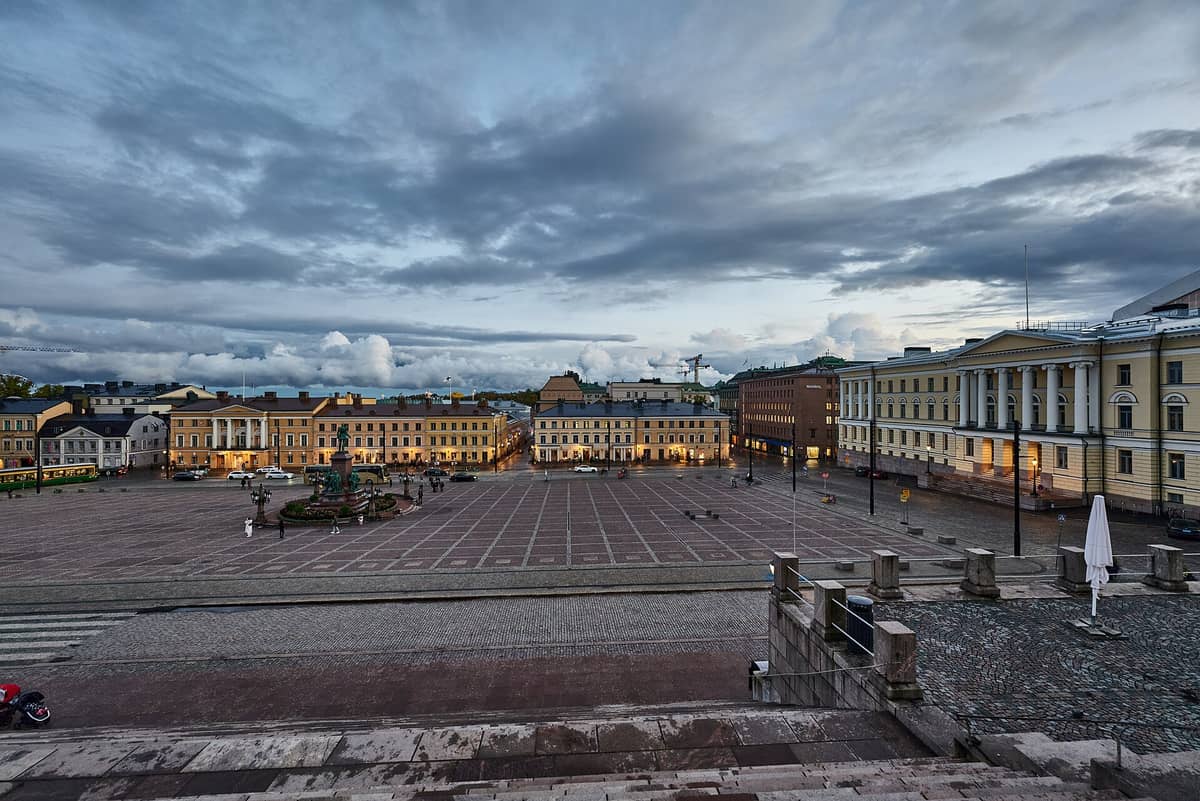
Senate Square and the surrounding Kruununhaka district form the historic and symbolic core of Helsinki, built around Carl Ludvig Engel's neoclassical ensemble of cathedral, government buildings, and university. This is where Finnish civic identity took architectural form, and it remains the most visually coherent and historically significant neighborhood in the capital.
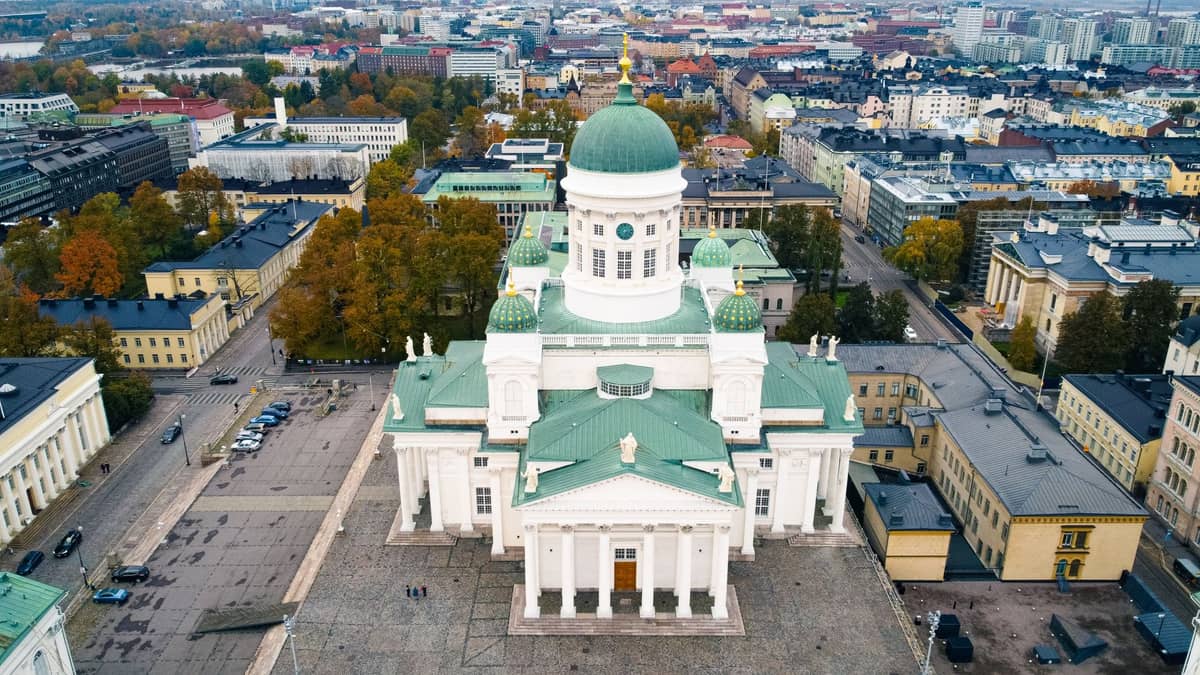
Senate Square is the architectural centerpiece of Helsinki, a sweeping neoclassical plaza framed by the white-domed Helsinki Cathedral, the Government Palace, and the University of Helsinki's main building. The wider Kruununhaka district, which wraps around the square toward the North Harbour, is one of the oldest residential areas in the city, with a quiet, almost scholarly character that contrasts sharply with the tourist activity on the square itself.
Orientation
Kruununhaka is a compact peninsula district in central Helsinki, forming the oldest part of the city's built environment. Its western edge runs along Unioninkatu, a major north-south street that separates it from the retail heart of Keskusta. To the south, the district meets Pohjoisesplanadi and the open waterfront of the Market Square area. The North Harbour (Pohjoissatama) borders it to the east, and the Siltavuorenranta waterfront closes it off to the north.
Senate Square sits roughly in the middle of this area, just a few minutes' walk north of Kauppatori, the Market Square. The distance from the square to Helsinki Central Railway Station is about 700 metres on foot, a walk that takes roughly ten minutes along Unioninkatu or Aleksanterinkatu. This means Kruununhaka is genuinely central without being in the thick of the main shopping streets.
To the west across Unioninkatu lies the broader city centre and, further along, Kamppi and southern Helsinki. To the south, the waterfront esplanade connects quickly to the ferry terminals for Suomenlinna. For a visitor building a mental map of Helsinki, Senate Square is the logical anchor point: everything else radiates outward from here.
Character & Atmosphere
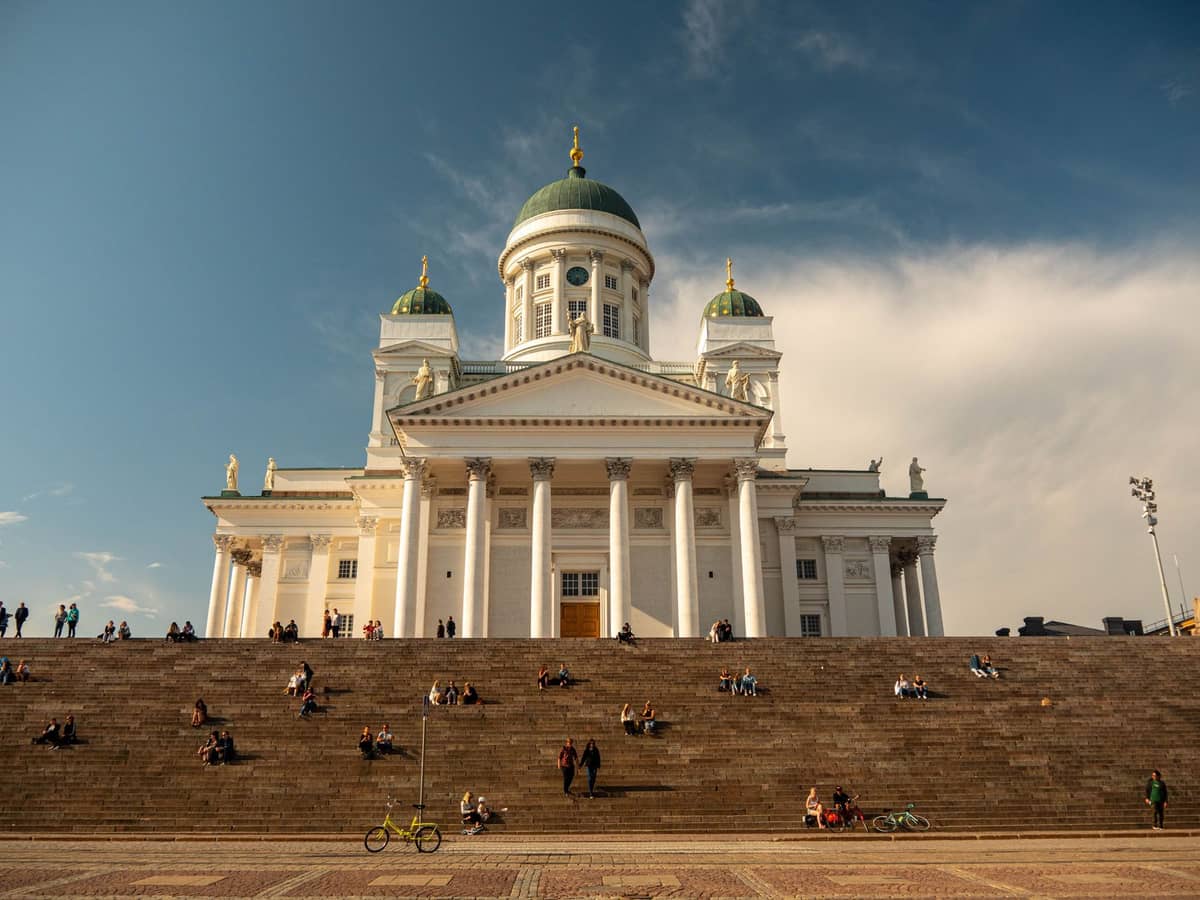
Senate Square itself operates on two distinct rhythms. In the morning, especially on weekdays, the square is relatively quiet. The granite cobblestones catch the low northern light, the cathedral steps are mostly empty, and the handful of people crossing the square are heading to university buildings or government offices. There is a civic seriousness to the place at this hour that the afternoon tourist crowds somewhat obscure.
By late morning and into the afternoon, tour groups arrive, and the square becomes Helsinki's single most-photographed location. The sound shifts to a mix of languages, camera shutters, and the occasional tram bell from the Senaatintori stop nearby. It is worth being clear-eyed about this: Senate Square is not a local neighborhood hangout. It is a monumental public space that Helsinkians cross, not linger in, on a daily basis.
The deeper streets of Kruununhaka tell a different story. Moving north and east from the square along streets like Snellmaninkatu or toward the Siltavuorenranta waterfront, the area becomes genuinely residential. Low-rise stone apartment buildings from the late nineteenth and early twentieth centuries line relatively quiet streets. There are few shops and almost no tourist infrastructure. Residents walk dogs, cycle to the university, and sit on park benches overlooking the harbour. In the evenings, this part of Kruununhaka is calm, almost hushed, in a way that the square itself never quite is.
💡 Local tip
Visit Senate Square early in the morning or at dusk for the best light and the fewest crowds. The cathedral facade and the Alexander II statue are particularly striking when the square is empty.
What to See & Do
The dominant landmark is the Helsinki Cathedral, whose white neoclassical exterior and green copper dome are visible from much of the southern waterfront. The interior is deliberately austere by Scandinavian Lutheran standards, with almost no ornamentation beyond the altar and a handful of statues. It is worth going inside for five minutes simply to understand the architectural logic: the emptiness is the point.
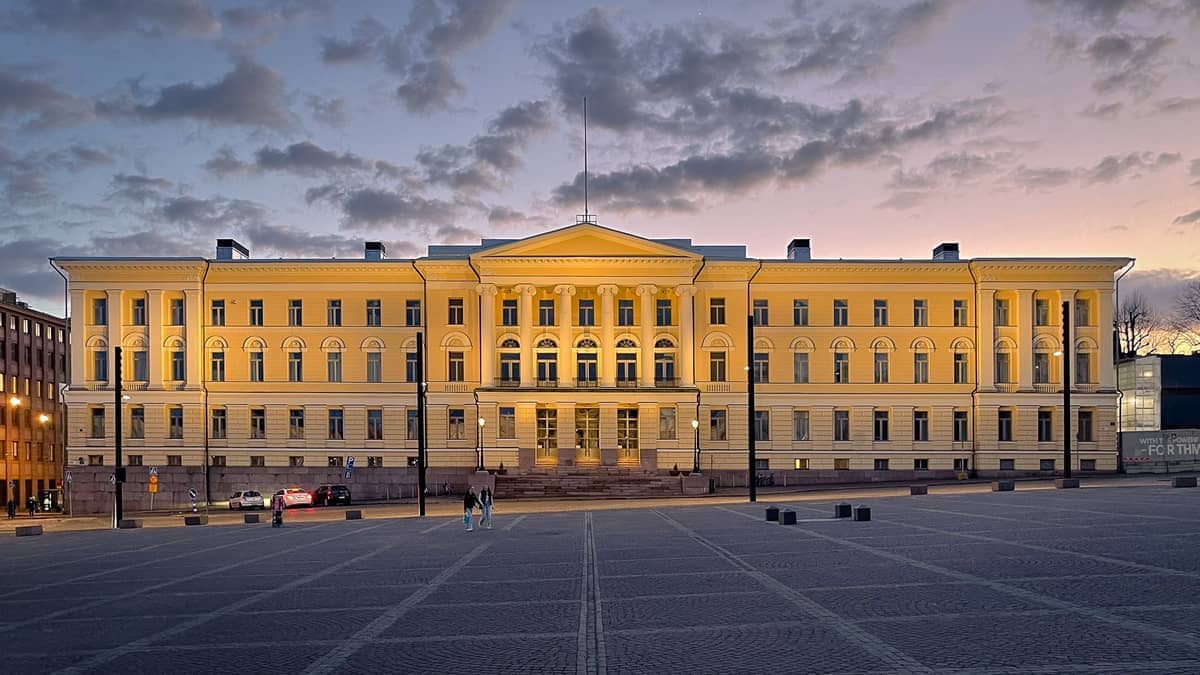
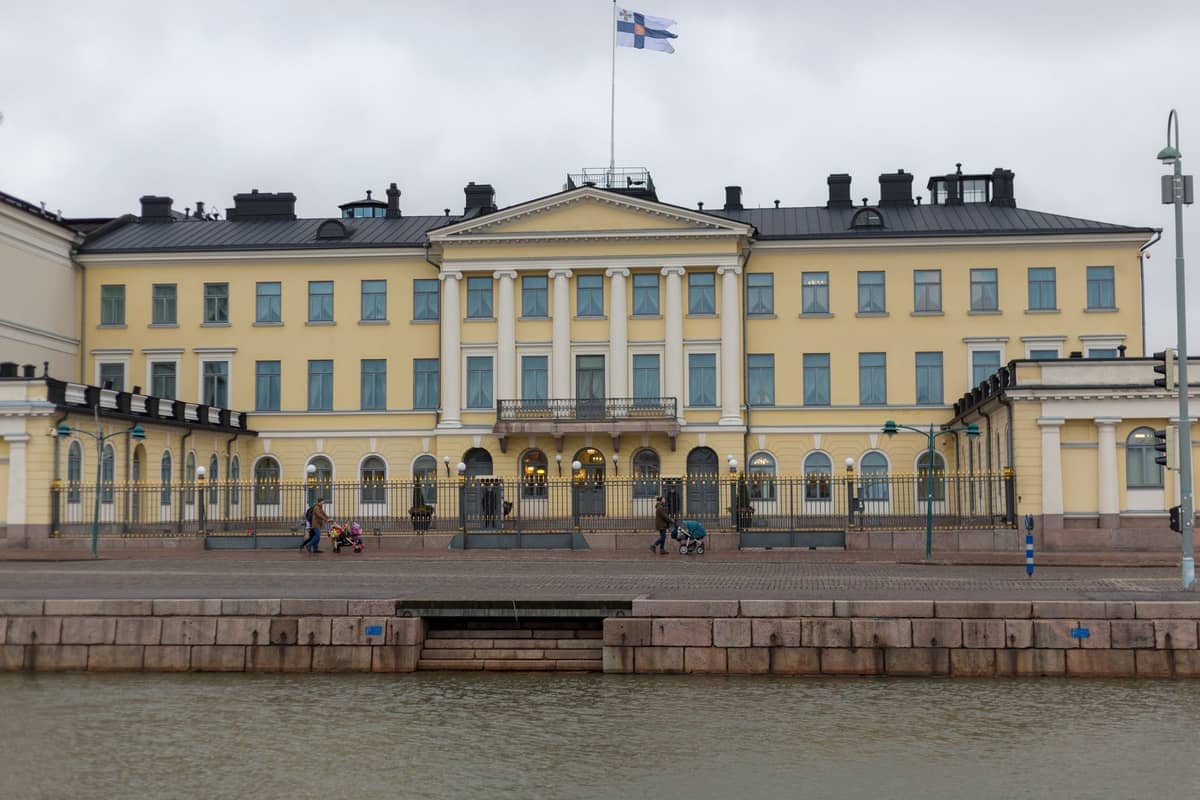
The ensemble surrounding the cathedral was designed by the German-Finnish architect Carl Ludvig Engel in the early nineteenth century when Finland was an autonomous Grand Duchy of the Russian Empire. The Government Palace (formerly the Senate building, which gave the square its name), the University of Helsinki main building, and the University Library all face the square in a controlled composition that reflects the ambitions of the newly established capital. At the centre stands a bronze statue of Tsar Alexander II, a reminder of the political context in which this space was built.
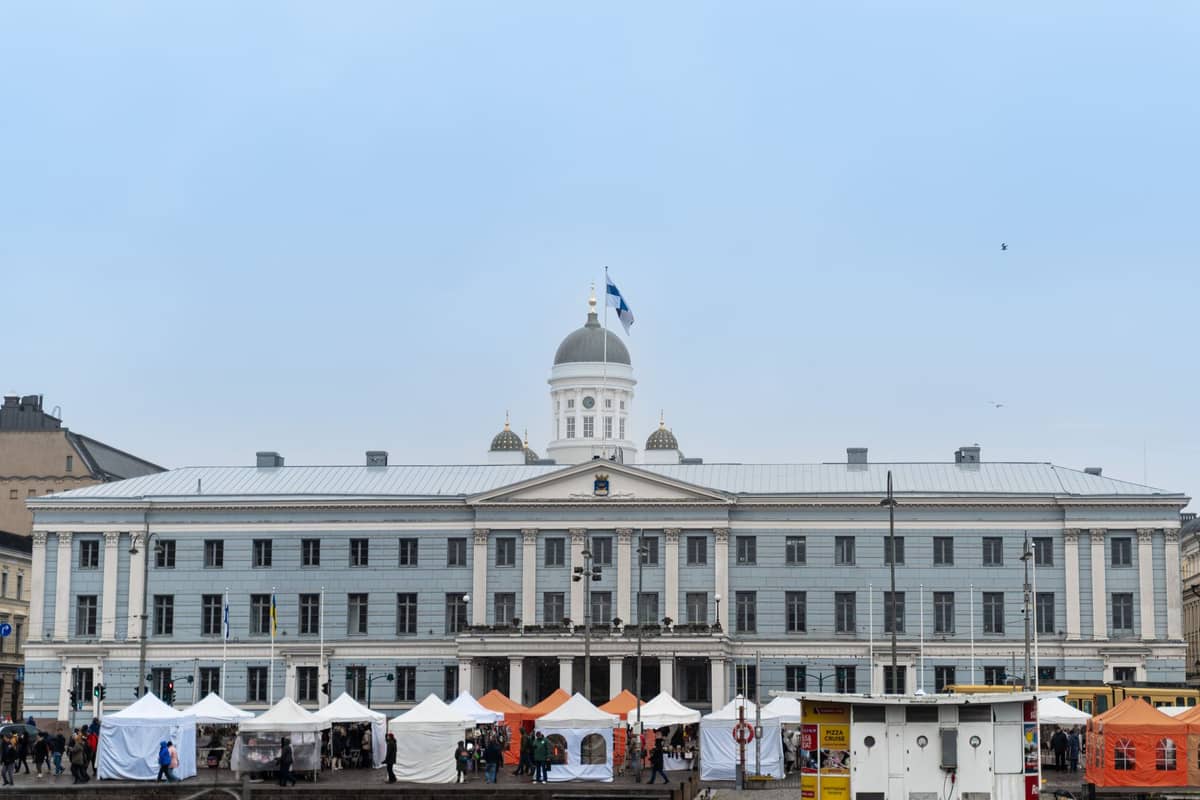
Two minutes' walk south along the waterfront brings you to Senate Square and the broader esplanade area, where the Old Market Hall and the open Kauppatori sit at the edge of the harbour. The Uspenski Cathedral is a short walk east along the waterfront, its red-brick Russian Orthodox exterior and gilt onion domes forming a sharp visual contrast to the Lutheran restraint of the Senate Square ensemble.
Helsinki Cathedral: open daily, with an admission fee for most visitors, worth visiting for the interior as well as the famous steps
Senate Square: the full neoclassical ensemble is best understood by walking its perimeter and noting the relationship between the four main buildings
Uspenski Cathedral: the largest Orthodox church in Northern and Western Europe, a ten-minute walk east along the waterfront
Siltavuorenranta waterfront path: a quiet harbourside walk north of the square, largely free of tourists
Helsinki City Hall: faces the Market Square on Pohjoisesplanadi, used for official receptions and open periodically to the public
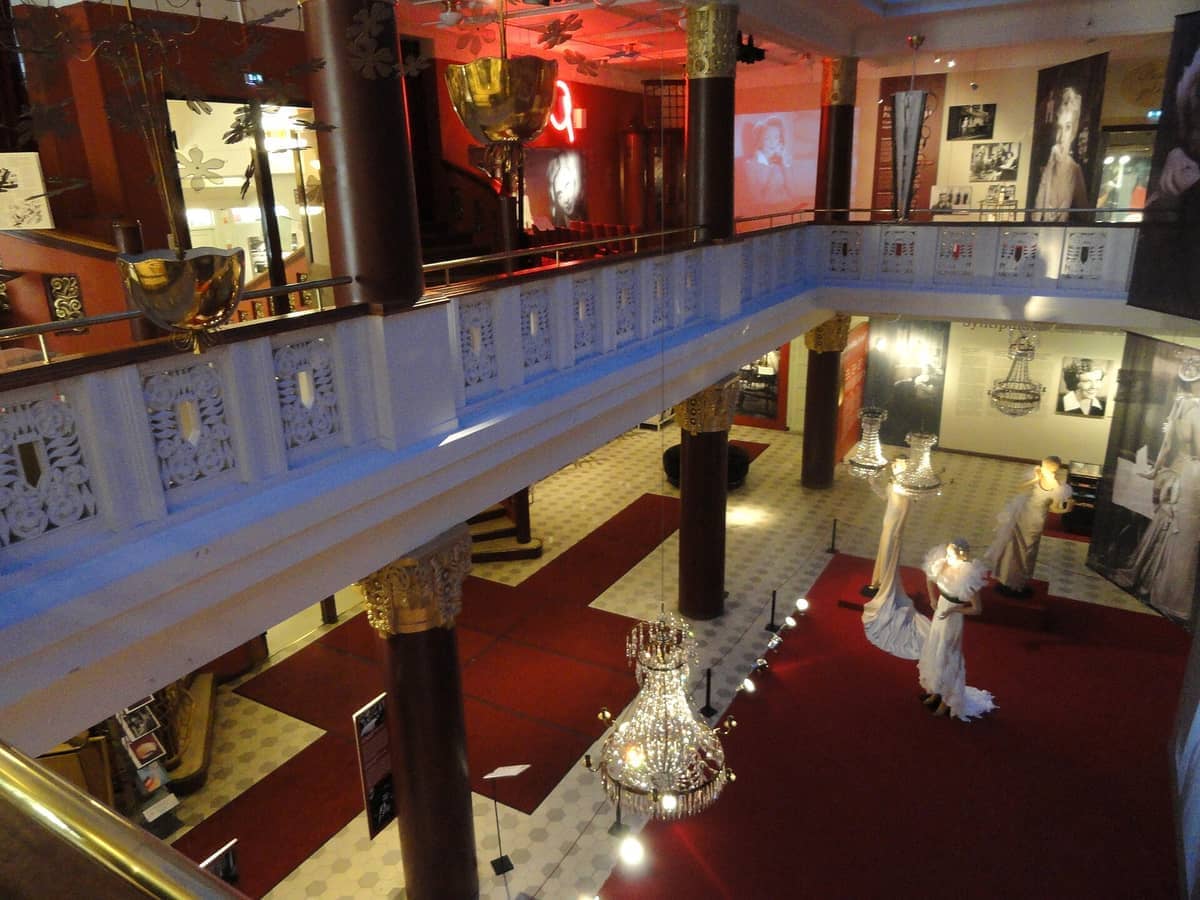
For those interested in Finnish history and the development of Helsinki as a capital city, this neighborhood rewards slow exploration. The Helsinki City Museum is located nearby on Aleksanterinkatu and provides strong contextual background on how the city was planned and built during the imperial period.
Eating & Drinking
This is not a neighborhood defined by its food scene. Senate Square and the immediate surrounding streets are oriented toward civic functions rather than cafes and restaurants, and the eating options reflect that. The best strategy is to use the neighborhood for sightseeing and then move a few minutes in any direction for food.
That said, the area is not without options. The Old Market Hall on Eteläranta, a short walk south, is one of Helsinki's best indoor food markets, with stalls selling Finnish cheeses, smoked fish, reindeer products, and freshly prepared food. It is genuinely used by locals for daily shopping and lunch, not just tourists, which keeps the quality honest. The Helsinki market halls are worth understanding as a food culture: they are the closest thing the city has to a traditional covered market.
A handful of cafes operate around the university buildings, primarily serving students and academic staff. These tend to be functional rather than atmospheric, but they offer reasonable prices and an authentic glimpse of Helsinki's university culture. Along Pohjoisesplanadi heading west toward Esplanadi Park, a wider range of cafes and restaurants opens up, including some of Helsinki's more established lunch spots.
ℹ️ Good to know
Finnish lunch culture runs roughly 11:00 to 14:00, and many restaurants in central Helsinki offer a fixed-price lunch (lounas) that includes a main course, salad buffet, bread, and coffee. This is genuinely the best value eating option in the city centre, and it applies to establishments of all price levels.
For a wider range of evening dining and bar options, the Esplanadi and Market Square area immediately to the southwest has a denser concentration of restaurants. The Finnish food guide covers what to order and where to find local specialties across the city.
Getting There & Around
Senate Square is straightforward to reach from anywhere in central Helsinki. The nearest metro station is Helsingin yliopisto (University of Helsinki), on the M1 and M2 metro lines, about a five-minute walk from the square. From Helsinki Central Railway Station, the walk along Aleksanterinkatu takes around ten minutes through the commercial centre of the city.
Trams serve the area well. The Senaatintori tram stop is directly beside the square, and routes 2, 4, 5, and 7 serve stops through or close by, connecting the neighborhood to the western waterfront, the Design District, and Hakaniemi to the north. The tram network run by HSL (Helsinki Regional Transport Authority) uses a flat-fare zone system for the city centre, and a single ticket covers transfers within the validity window.
The neighborhood is compact enough to explore entirely on foot. Walking from Senate Square to the Uspenski Cathedral takes about eight minutes along the waterfront. Walking to Esplanadi Park takes five minutes south. Ferries to Suomenlinna depart from the Market Square terminal, roughly a ten-minute walk away. For a structured introduction to the area and surrounding streets, Helsinki walking tour routes typically pass through Senate Square as a central waypoint.
💡 Local tip
The Helsinki Card CITY and REGION versions cover unlimited tram, metro, and bus travel on HSL services plus free or discounted entry to many attractions (the digital Helsinki Card does not include public transport). If you are spending two or more days in the city and plan to visit several museums, it is worth calculating whether it saves money. Check the current pricing before purchasing.
Where to Stay
Kruununhaka has limited hotel options compared to the broader city centre. The neighborhood's character, quiet residential streets mixed with major civic institutions, suits it better to apartments and boutique stays than large hotel chains. A few hotels operate near the edges of the district, particularly along Unioninkatu and toward Pohjoisesplanadi, where the neighborhood meets the main commercial spine.
Staying here suits travelers who want to be within walking distance of the main historical sights without being in the middle of the most commercial part of the city centre. It is not ideal for visitors who want a lively immediate environment with bars and restaurants on their doorstep. For a broader overview of accommodation options across central Helsinki, the where to stay in Helsinki guide covers the tradeoffs between different neighborhoods.
⚠️ What to skip
Senate Square itself and the streets immediately around the cathedral can be noisy during summer event seasons. The square hosts outdoor concerts, public gatherings, and Christmas markets, which bring significant foot traffic and amplified sound into what is otherwise a quiet area. Check whether any major events are scheduled during your stay.
Honest Assessment
Senate Square and Kruununhaka represent Helsinki at its most formally impressive and, in places, its most touristy. The architectural ensemble around the cathedral is genuinely significant and worth spending time with, but the square itself is a transit and sightseeing space more than a neighborhood with daily life. The real character of Kruununhaka exists in the quieter streets north and east of the square, where the residential fabric of old Helsinki survives largely intact.
This area works best as part of a broader walk through central Helsinki rather than a destination in its own right for an extended stay. Couple it with the waterfront esplanade to the south, the Uspenski Cathedral to the east, and the Esplanadi Park corridor to the west, and you have a half-day route that covers the historical foundations of the city without requiring any transport at all.
TL;DR
Senate Square is Helsinki's most architecturally coherent public space, built around Carl Ludvig Engel's neoclassical ensemble of cathedral, government palace, and university buildings.
The wider Kruununhaka district is a quiet, historically significant residential neighborhood best explored by walking its harbour-facing streets away from the main tourist circuit.
Food and nightlife options in the immediate area are limited; the Old Market Hall to the south is the strongest nearby eating option.
Transit access is excellent: metro, trams, and walking connections to Helsinki Central Station all converge within a few minutes of the square.
Best suited to travelers with an interest in history and architecture, or anyone using it as a starting point for a walking route through central Helsinki. Not recommended as a primary base for visitors seeking an active evening scene.
Helsinki rewards a focused two-day visit better than almost any other Nordic capital. This itinerary covers the essential landmarks, best neighborhoods, and a few genuinely worthwhile detours — with practical transport details, honest cost breakdowns, and seasonal advice built in.
Helsinki offers more than its compact scale suggests when it comes to museums. From the golden-age canvases at the Ateneum to open-air farmhouses on a forested island, the city's collections span Finnish identity, world-class design, and contemporary art. This guide covers the best museums in Helsinki, with practical advice on what to expect at each.
Helsinki rewards visitors in every season, but the experience varies dramatically. This guide breaks down weather, crowd levels, prices, and what actually happens on the ground across all four seasons, so you can pick the timing that matches your priorities.
Helsinki is compact enough to explore in a couple of days, but the surrounding region rewards further exploration. From the medieval streets of Tallinn across the Gulf of Finland to the wooden old town of Porvoo and the wilderness of Nuuksio National Park, these are the day trips worth building time into your itinerary for.
Finnish food is more than fish and potatoes. This guide covers the essential dishes to try in Helsinki, where to find them, what they cost, and which seasonal specialties are worth planning around.
Helsinki punches well above its weight for free experiences. From permanently free museums and UNESCO World Heritage sites to urban beaches, sweeping architecture, and peaceful island walks, this guide covers the best free things to do in Helsinki across every season.
Helsinki has one of the most logical public transport systems in Northern Europe, built around a zone-based ticketing network that covers buses, trams, metro, commuter trains, and ferries. This guide covers every mode of transport, from landing at Helsinki Airport to island-hopping by ferry, with practical advice on what to use and what to skip.
The Helsinki Card promises free entry to 25+ attractions plus sightseeing tours from €51 for 24 hours. But does it actually save you money? This guide runs the real numbers, explains the three card versions, and tells you exactly when it's worth buying and when it isn't.
Helsinki's Christmas market season runs from late November through December, centered on the atmospheric Tuomaan Markkinat at Senate Square. This guide covers dates, opening hours, what to expect, and how to make the most of your visit in the Finnish winter.
Helsinki offers more than its compact scale suggests when it comes to design. From the combined Architecture and Design Museum to the underground wonder of Amos Rex, plus one of Europe's most concentrated design shopping districts, this guide covers everything you need to experience the city's design culture properly.
Summer transforms Helsinki into one of Northern Europe's most rewarding city destinations. Nearly 19 hours of daylight, major arts festivals, waterfront saunas, and island escapes make June through August the city's peak season. This guide covers everything you need to plan a summer trip, from the reality of the midnight sun to navigating Midsummer closures.
Helsinki in winter is a different city entirely. Snow-dusted streets, just six hours of daylight, and a culture built for cold. This guide covers everything from average temperatures and transport to the best seasonal activities, so you can decide if a winter visit is right for you.
Helsinki is defined by its archipelago. With dozens of islands ranging from a UNESCO World Heritage fortress to tiny sauna islands, knowing which to visit and how to reach them makes the difference between a great trip and a missed opportunity. This guide covers the best islands for every type of visitor.
Helsinki's market halls are the city's most reliable year-round food destinations, offering everything from fresh Finnish fish and game to evening dining and weekend flea markets. This guide covers all three halls — Old Market Hall, Hakaniemi, and Hietalahti — with practical details on what to eat, when to go, and how to get there.
Helsinki's nightlife runs later than most visitors expect, with licensed venues legally permitted to serve alcohol until 04:00 and some clubs closing even later. This guide covers the best neighborhoods, key venues, alcohol laws, and how to get home safely after a long night in the Finnish capital.
Helsinki has a reputation for being expensive, and it partly deserves it. But with the right strategy, you can see the best of Finland's capital without hemorrhaging euros. This guide covers transport costs, free attractions, the Helsinki Card, and practical tips for keeping your daily spend under control.
Sauna is not a wellness trend in Helsinki — it is infrastructure. This guide breaks down the best public saunas in the city by type, price, and experience, with practical advice on booking, etiquette, and what each venue actually delivers.
Helsinki is a surprisingly strong shopping destination. This guide covers the city's best shopping districts, indoor market halls, open-air markets, and the Finnish design brands worth seeking out, with practical hours, seasonal tips, and practical advice on what to skip.
The Helsinki to Tallinn ferry is one of the busiest short sea crossings in Europe, with up to 6 daily sailings per direction, crossing times as short as 2 hours, and fares starting around €15. This guide covers every operator, pricing reality, port logistics, and seasonal tips so you can book smart.
Vappu transforms Helsinki into Finland's largest outdoor celebration every 30 April and 1 May. From the iconic Havis Amanda statue capping ceremony to sprawling picnics in Kaivopuisto Park, this guide covers everything you need to know to experience the festivities like a local.
Helsinki is a city defined by water, sky, and open horizon. Whether you're scanning the harbour from a cathedral terrace or watching the sun set from a rooftop bar, these are the best viewpoints in the city, ranked and organised by type.
This guide walks you through the best self-guided route across central Helsinki, covering Senate Square, the waterfront, Esplanadi Park, Oodi Library, and beyond. Get practical stop-by-stop advice, timing tips, and honest notes on what to skip.
Helsinki's climate swings from dark, snowy winters to long-lit summers with near-19 hours of daylight. This guide breaks down Finland weather month by month, covering temperatures, precipitation, daylight, and exactly what to wear and plan for each season.
Helsinki is one of Northern Europe's most practical cities for families, with a compact layout, excellent public transport, and a strong mix of indoor and outdoor attractions that work across all seasons. This guide covers the best kid-friendly experiences, clear pricing, seasonal logistics, and what to skip.
Helsinki divides opinion. Some travelers leave wondering what the fuss was about; others come back every year. This guide cuts through the noise with specific costs, seasonal realities, and an honest take on what the Finnish capital actually delivers — and where it falls short.
Helsinki packs an extraordinary range of experiences into a compact, walkable city on the Baltic coast. This guide covers the best things to do in Helsinki across culture, nature, food, and nightlife, with practical advice on what's worth your time and what to skip.
Helsinki is compact enough that almost any central neighbourhood works as a base, but the right choice depends on your budget, travel style, and priorities. This guide breaks down the best areas to stay, typical hotel prices by category, and what to watch out for before you book.