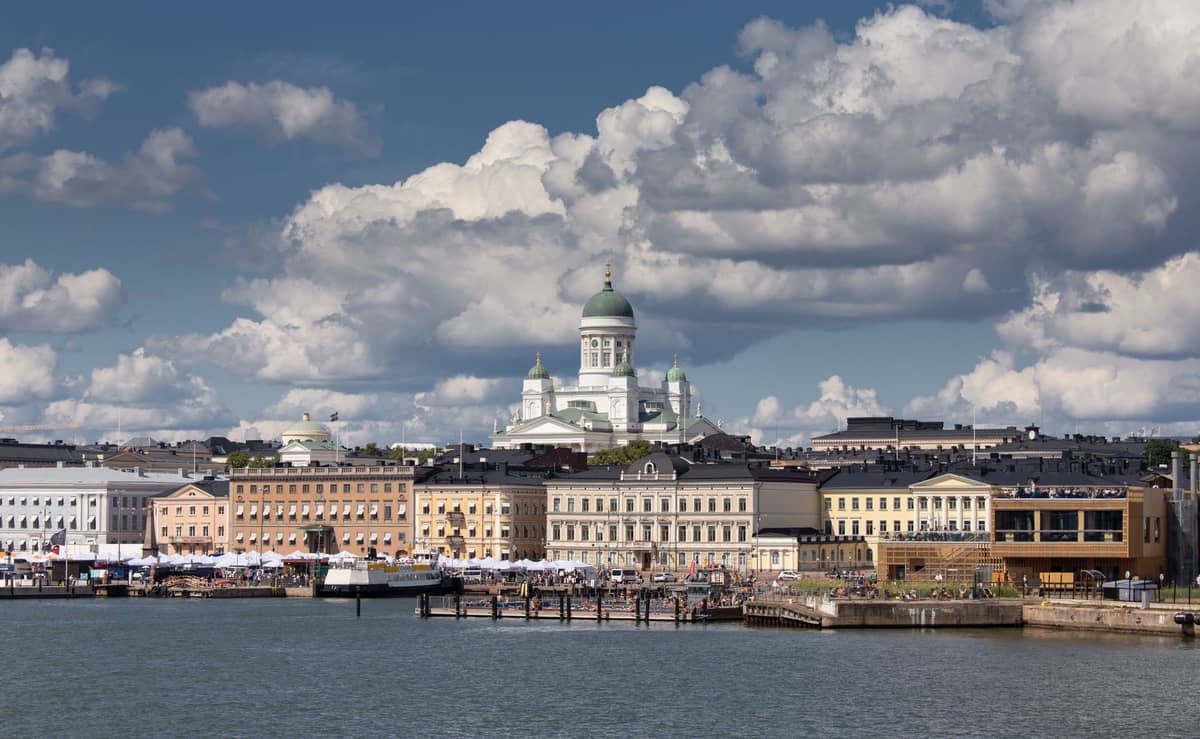
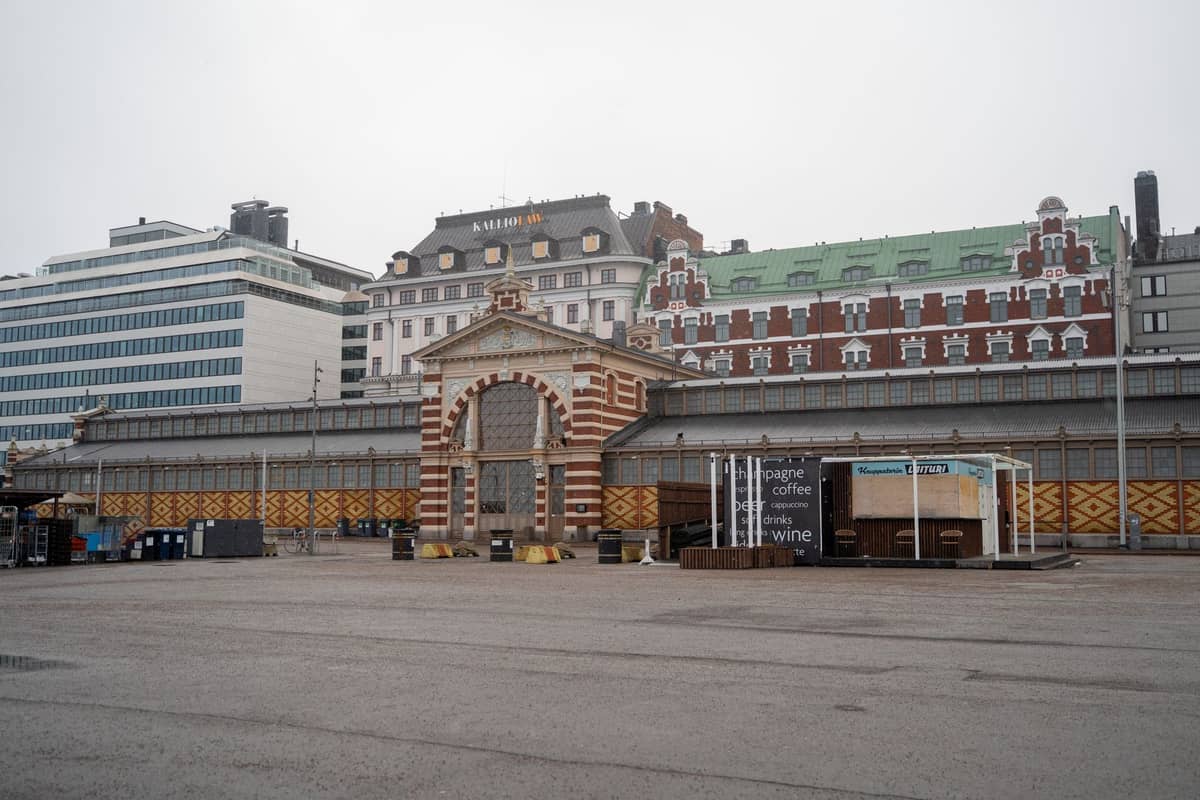
Market Square (Kauppatori) and Esplanadi sit at the waterfront core of Helsinki, where the South Harbour meets the city's most elegant boulevard. This is where grand neoclassical buildings face the sea, open-air vendors sell smoked fish beside ferry terminals, and the long park of Esplanadi draws locals and visitors alike from morning to late evening.
Market Square and Esplanadi form the ceremonial and commercial heart of Helsinki, a place where the city's political architecture, harbour life, and daily routines converge on a single waterfront axis. Few places in Helsinki so efficiently capture what the city is: northern, maritime, and surprisingly unhurried for somewhere so central.
Orientation
Market Square, known in Finnish as Kauppatori, sits at the far eastern end of Esplanadi, where the boulevard meets the South Harbour (Eteläsatama) on the Gulf of Finland. The square's address is along Eteläranta, placing it firmly in the Kaartinkaupunki district, one of Helsinki's oldest planned neighbourhoods. To the east, across the water, the Katajanokka peninsula stretches out with its brick warehouses and the golden onion domes of Uspenski Cathedral. To the west, Esplanadi runs as a tree-lined park boulevard all the way toward Kamppi, flanked on both sides by some of the city's best shops, restaurants, and historic facades.
This area functions as the geographic anchor of central Helsinki. Senate Square sits just a short walk north up Aleksanterinkatu, and the Old Market Hall (Vanha Kauppahalli) stands immediately adjacent to Market Square on the west side of the harbour. The Presidential Palace and Helsinki City Hall face directly onto the square itself, making this simultaneously one of the most politically significant and publicly accessible corners of the Finnish capital.
Understanding how this area relates to the rest of the city is straightforward: everything radiates outward from here. The Esplanadi park is the main east-west axis between the harbour and the commercial centre, while the harbour itself connects to the islands. Ferry routes to Suomenlinna depart from the quay directly beside the market stalls, making Kauppatori both a starting point and a destination in its own right.
Character & Atmosphere
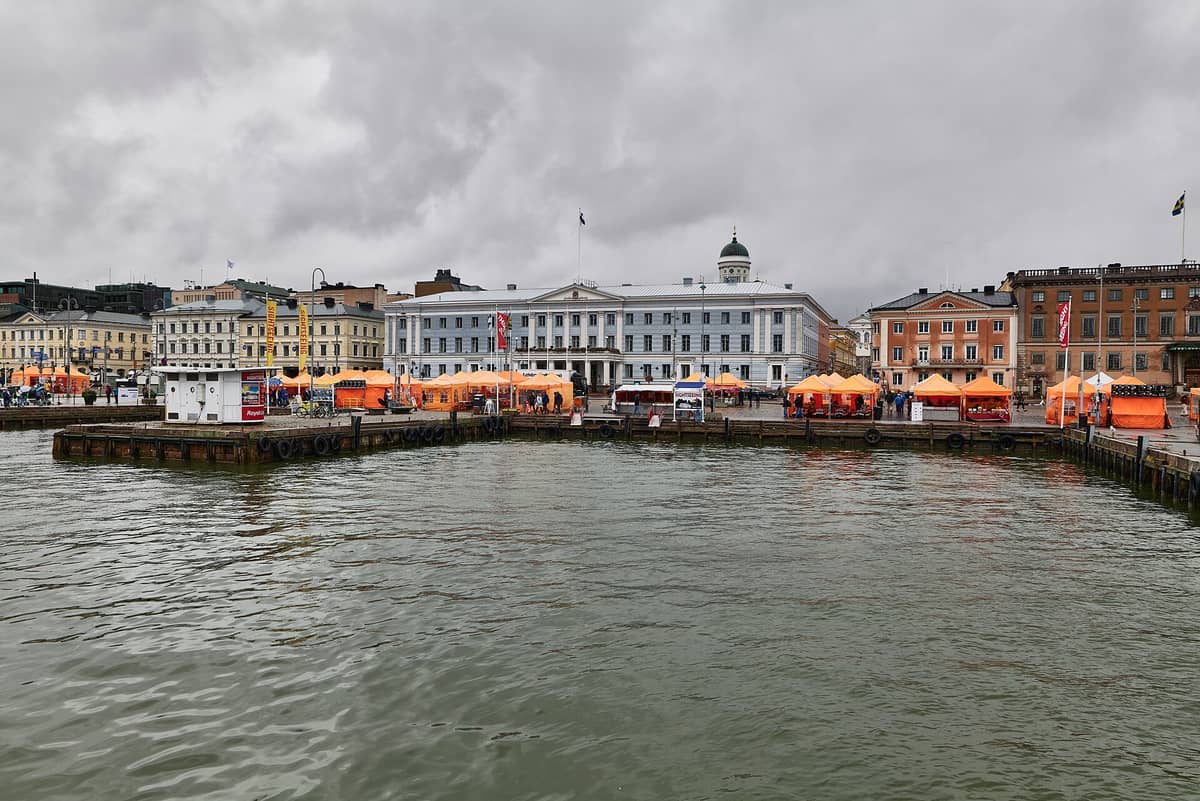
Early mornings at Market Square belong to vendors and the occasional jogger. By around 8am, the orange canvas awnings of the market stalls go up, and the smell of fresh coffee and smoked salmon drifts across the cobblestones. The harbour light at this hour, especially in summer, is genuinely striking: low, golden, reflecting off the water and catching the pale facades of the City Hall and Presidential Palace. The square feels large and open, the kind of space that rewards standing still for a moment.
By mid-morning the area fills noticeably. Tour groups arrive, the Suomenlinna ferry queue forms, and the market stalls do brisk business in fresh produce, handicrafts, and salmon soup served in bread bowls. This is peak tourist territory, and there is no pretending otherwise. The stalls closest to the ferry terminal cater heavily to visitors, with prices reflecting that reality. The experience is still genuine in the sense that Helsinkians do come here, particularly on weekday mornings for the fish and produce, but the afternoon crowds near the harbour are predominantly international.
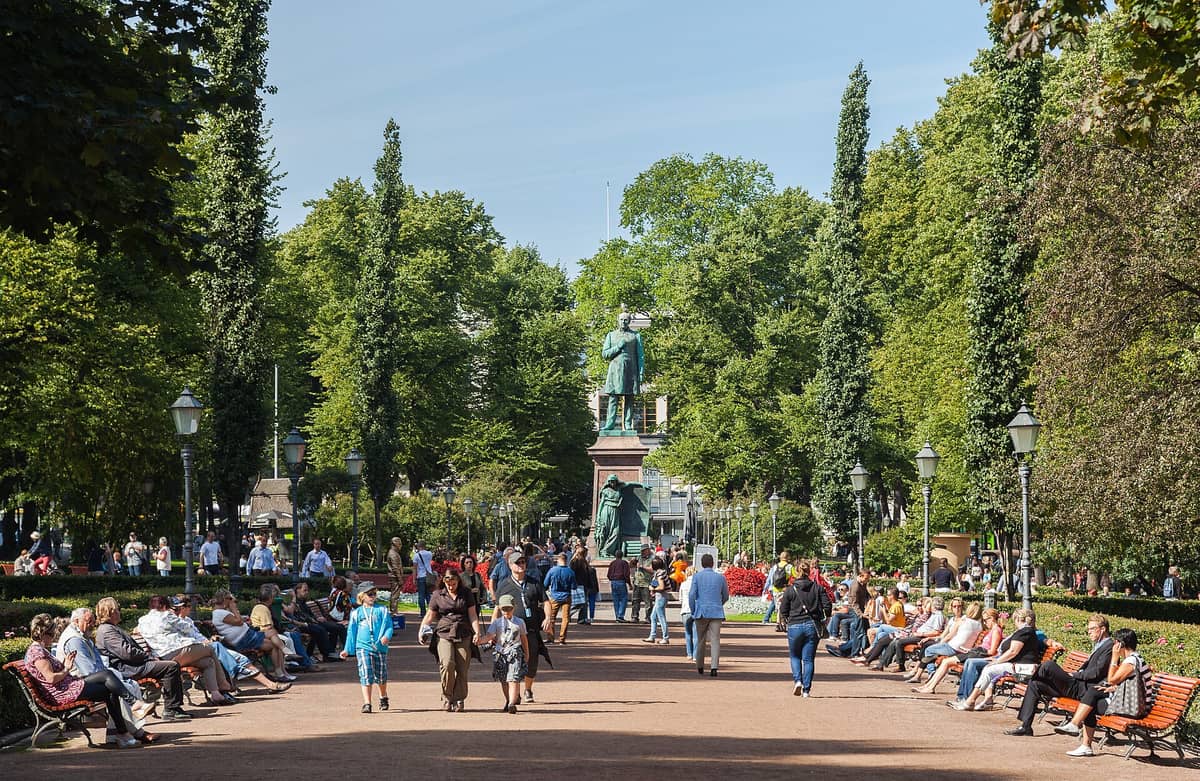
Esplanadi itself operates on a different rhythm. The park's central lawn and gravel paths draw office workers at lunch, families in the afternoon, and couples in the evening. The two sides of the boulevard, Pohjoisesplanadi (North Esplanade) and Eteläesplanadi (South Esplanade), are distinct: the north side carries the heavier traffic and the more prominent shop fronts and restaurants, while the south side is quieter, facing the park directly. In summer, the bandstand in the park hosts free concerts, and the entire area takes on a relaxed, sociable character that persists well into the long Nordic evenings.
After dark, the market square empties quickly once the stalls close. The area around the harbour is well-lit and safe to walk, but the energy shifts toward the bars and restaurants lining Esplanadi and the adjacent streets. This is not a late-night district in the way that Kallio is, but it is pleasant for an evening stroll, particularly in summer when the sky barely darkens.
⚠️ What to skip
Pickpocketing is a documented problem at Market Square. Professional teams operate specifically in tourist-heavy areas including Kauppatori. Keep bags closed and in front of you, especially in crowd situations near the ferry terminal and the market stalls.
What to See & Do
The square itself is worth time even if you buy nothing. The Havis Amanda fountain at its centre, installed in 1908 and depicting a young woman rising from the sea, is one of Helsinki's most recognisable sculptures. It is also the site of a traditional Vappu (May Day) celebration where students crown the statue. The older Keisarinnankivi (Empress Stone), placed here in 1835 to mark a visit by Empress Alexandra, stands nearby. Flanking the square, the Helsinki City Hall and the Presidential Palace present their neoclassical fronts to the harbour, a deliberate architectural statement about the city's identity.
Immediately west of the square is the Old Market Hall (Vanha Kauppahalli), a covered market from 1889 that has been renovated but retains its iron-and-glass structure. Inside you will find fishmongers, delicatessens, bakeries, and small lunch spots that are frequented by local office workers as much as tourists. It is a better choice than the outdoor stalls if you want to eat well without paying premium tourist prices for average food.
Walking west along Esplanadi, the park opens up with mature trees and a central path. At the western end of the park, near Mannerheimintie, the main commercial streets of central Helsinki begin. Along Pohjoisesplanadi, the flagship store of Marimekko and other Finnish design retailers occupy ground-floor spaces. This stretch connects directly to the Helsinki Design District further south, and a short detour up Aleksanterinkatu brings you to Senate Square and the Helsinki Cathedral.
Kauppatori outdoor market: open year-round, busiest May to September
Havis Amanda fountain and Keisarinnankivi monument
Helsinki City Hall and Presidential Palace facades
Old Market Hall (Vanha Kauppahalli): covered food market from 1889
Esplanadi park: bandstand concerts in summer, open lawn, historic statues
Ferry terminal for Suomenlinna and archipelago island routes
Helsinki Baltic Herring Market: held annually each October since 1743
ℹ️ Good to know
The Helsinki Baltic Herring Market (Silakkamarkkinat) takes place every October at Kauppatori and is one of Finland's oldest recurring market events, dating to 1743. Fishing boats moor directly at the quay and sell Baltic herring prepared in dozens of ways. It is worth timing a visit around if you have flexibility.
Eating & Drinking
The outdoor market stalls sell food that ranges from genuinely good to firmly tourist-grade. Salmon soup (lohikeitto) served in a rye bread bowl is the signature dish, and a well-made version from a reputable stall is worth trying. New potatoes with dill and butter are a seasonal staple in summer. Smoked fish, cloudberry jam, and reindeer products appear throughout the market. Prices at the market are not cheap, and portions can be modest, so treat it as a tasting experience rather than a full meal.
For a more substantial and better-value meal, the Old Market Hall is the right choice. The vendors inside offer proper sit-down and counter-service lunches, from fresh fish dishes to open sandwiches and pastries. The quality is generally higher and the atmosphere more relaxed, with locals accounting for a significant share of the lunchtime crowd.
Along Pohjoisesplanadi and the streets immediately north and south, the restaurant density is high. This strip tends toward the mid-range to expensive end, with a concentration of Finnish-Nordic cuisine restaurants, hotel dining rooms, and cafes. The terrace season, when restaurants push tables out onto Esplanadi itself, runs from May through September and transforms the whole boulevard into an extended outdoor dining area on warm afternoons.
For a full picture of what Finnish food looks like beyond the market, the Finnish food guide for Helsinki covers local specialities and where to find them across the city. If you are working with a tighter budget, note that the market and Esplanadi area skews expensive; the Helsinki market halls guide includes more affordable covered market options around the city.
Getting There & Around
Market Square and Esplanadi are at the centre of Helsinki's tram network. Multiple tram lines stop along Esplanadi and the adjacent streets, making this one of the easiest parts of the city to reach from almost any direction. The area is roughly a 15-minute walk south from Helsinki Central Railway Station along Aleksanterinkatu or Mannerheimintie, or about 10 minutes from the Kamppi bus terminal.
Trams are the most efficient way to arrive and depart. Lines connecting to the broader tram network stop on both Pohjoisesplanadi and Eteläesplanadi, and the HSL network is integrated with metro and bus services. Full details on navigating the city by public transport are in the getting around Helsinki guide. If you are considering a multi-day pass that covers trams, ferries, and attractions, the Helsinki Card guide explains what it covers and whether it makes financial sense for your itinerary.
From Helsinki Airport, the ring rail line connects to Helsinki Central Station in approximately 30 minutes, after which it is a short tram ride or a 15-minute walk to Kauppatori. Taxis are available throughout the area. The ferry to Suomenlinna departs from the pier at the eastern end of Market Square, with regular departures throughout the day; the crossing takes about 15 minutes.
💡 Local tip
If you plan to take the Suomenlinna ferry, HSL travelcards and day tickets cover the public ferry fare, which is the same price as a standard single tram or bus journey. A private water taxi is also available but costs significantly more. Check current HSL schedules before you go, as ferry frequency varies by season.
Where to Stay
Staying directly in the Market Square and Esplanadi area puts you within walking distance of the city's main historical and cultural sites. The surrounding streets hold several of Helsinki's most established hotels, ranging from classic grand-hotel properties on Esplanadi to smaller boutique options in Kaartinkaupunki. For a full overview of the city's accommodation zones and which neighbourhoods suit different travel styles, the where to stay in Helsinki guide is the most useful reference.
The practical advantage of this location is walkability: Senate Square, the Design District, Katajanokka, and the Allas Sea Pool are all within 10 to 15 minutes on foot. The main drawback is price. Hotels in this immediate area tend to be at the higher end of Helsinki's already northern-European pricing, and the streets around the harbour can be noisy with tram and tourist activity during peak summer mornings.
For travellers who want the central location without the premium, the streets just north of Esplanadi, around Aleksanterinkatu and the blocks approaching Senate Square, offer a slightly quieter position with equally fast access to the waterfront. Families with children might also consider whether the harbour location is a genuine priority, or whether staying closer to Kamppi or the Design District offers better balance between access and value.
Nearby Attractions Worth Combining
Market Square works well as a starting point for several natural combinations. A short walk east along the harbour brings you to the Uspenski Cathedral on the Katajanokka hillside, the largest Orthodox church in Western Europe and one of Helsinki's most distinctive skyline elements. North up Aleksanterinkatu, Senate Square and the Helsinki Cathedral are a five-minute walk.
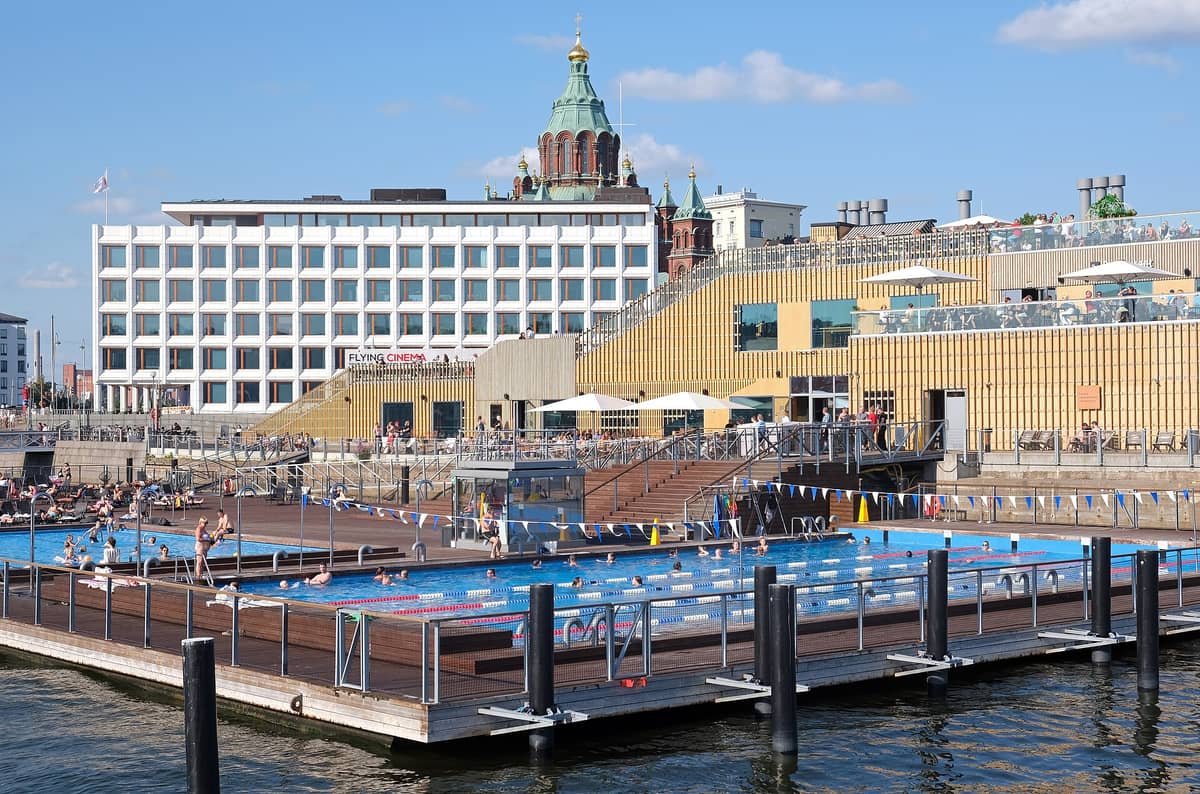
West along the harbour, the Allas Sea Pool sits on the waterfront between Market Square and the passenger ferry terminals, offering outdoor swimming pools, saunas, and a restaurant with harbour views. It is a practical stop to combine with a morning market visit, particularly in summer. The ferry from the Kauppatori pier reaches Suomenlinna in about 15 minutes, and a half-day there is a standard and very worthwhile itinerary addition.
TL;DR
Market Square (Kauppatori) and Esplanadi form Helsinki's waterfront civic centre, combining open-air markets, neoclassical architecture, and the main ferry departure point for the islands.
Best for: first-time visitors to Helsinki, anyone wanting to understand the city's spatial and historical layout, travellers connecting to Suomenlinna or the archipelago.
Honest drawback: this is the most tourist-concentrated area of the city, and prices at the outdoor market stalls reflect that. Go for the experience and the atmosphere, not for the best-value meal in Helsinki.
The Esplanadi park boulevard is genuinely pleasant at any time of year and works as an orientation walk connecting the harbour to the commercial centre.
Stay alert for pickpockets at and around Market Square, particularly near the ferry terminal during peak summer months.
Helsinki rewards a focused two-day visit better than almost any other Nordic capital. This itinerary covers the essential landmarks, best neighborhoods, and a few genuinely worthwhile detours — with practical transport details, honest cost breakdowns, and seasonal advice built in.
Helsinki offers more than its compact scale suggests when it comes to museums. From the golden-age canvases at the Ateneum to open-air farmhouses on a forested island, the city's collections span Finnish identity, world-class design, and contemporary art. This guide covers the best museums in Helsinki, with practical advice on what to expect at each.
Helsinki rewards visitors in every season, but the experience varies dramatically. This guide breaks down weather, crowd levels, prices, and what actually happens on the ground across all four seasons, so you can pick the timing that matches your priorities.
Helsinki is compact enough to explore in a couple of days, but the surrounding region rewards further exploration. From the medieval streets of Tallinn across the Gulf of Finland to the wooden old town of Porvoo and the wilderness of Nuuksio National Park, these are the day trips worth building time into your itinerary for.
Finnish food is more than fish and potatoes. This guide covers the essential dishes to try in Helsinki, where to find them, what they cost, and which seasonal specialties are worth planning around.
Helsinki punches well above its weight for free experiences. From permanently free museums and UNESCO World Heritage sites to urban beaches, sweeping architecture, and peaceful island walks, this guide covers the best free things to do in Helsinki across every season.
Helsinki has one of the most logical public transport systems in Northern Europe, built around a zone-based ticketing network that covers buses, trams, metro, commuter trains, and ferries. This guide covers every mode of transport, from landing at Helsinki Airport to island-hopping by ferry, with practical advice on what to use and what to skip.
The Helsinki Card promises free entry to 25+ attractions plus sightseeing tours from €51 for 24 hours. But does it actually save you money? This guide runs the real numbers, explains the three card versions, and tells you exactly when it's worth buying and when it isn't.
Helsinki's Christmas market season runs from late November through December, centered on the atmospheric Tuomaan Markkinat at Senate Square. This guide covers dates, opening hours, what to expect, and how to make the most of your visit in the Finnish winter.
Helsinki offers more than its compact scale suggests when it comes to design. From the combined Architecture and Design Museum to the underground wonder of Amos Rex, plus one of Europe's most concentrated design shopping districts, this guide covers everything you need to experience the city's design culture properly.
Summer transforms Helsinki into one of Northern Europe's most rewarding city destinations. Nearly 19 hours of daylight, major arts festivals, waterfront saunas, and island escapes make June through August the city's peak season. This guide covers everything you need to plan a summer trip, from the reality of the midnight sun to navigating Midsummer closures.
Helsinki in winter is a different city entirely. Snow-dusted streets, just six hours of daylight, and a culture built for cold. This guide covers everything from average temperatures and transport to the best seasonal activities, so you can decide if a winter visit is right for you.
Helsinki is defined by its archipelago. With dozens of islands ranging from a UNESCO World Heritage fortress to tiny sauna islands, knowing which to visit and how to reach them makes the difference between a great trip and a missed opportunity. This guide covers the best islands for every type of visitor.
Helsinki's market halls are the city's most reliable year-round food destinations, offering everything from fresh Finnish fish and game to evening dining and weekend flea markets. This guide covers all three halls — Old Market Hall, Hakaniemi, and Hietalahti — with practical details on what to eat, when to go, and how to get there.
Helsinki's nightlife runs later than most visitors expect, with licensed venues legally permitted to serve alcohol until 04:00 and some clubs closing even later. This guide covers the best neighborhoods, key venues, alcohol laws, and how to get home safely after a long night in the Finnish capital.
Helsinki has a reputation for being expensive, and it partly deserves it. But with the right strategy, you can see the best of Finland's capital without hemorrhaging euros. This guide covers transport costs, free attractions, the Helsinki Card, and practical tips for keeping your daily spend under control.
Sauna is not a wellness trend in Helsinki — it is infrastructure. This guide breaks down the best public saunas in the city by type, price, and experience, with practical advice on booking, etiquette, and what each venue actually delivers.
Helsinki is a surprisingly strong shopping destination. This guide covers the city's best shopping districts, indoor market halls, open-air markets, and the Finnish design brands worth seeking out, with practical hours, seasonal tips, and practical advice on what to skip.
The Helsinki to Tallinn ferry is one of the busiest short sea crossings in Europe, with up to 6 daily sailings per direction, crossing times as short as 2 hours, and fares starting around €15. This guide covers every operator, pricing reality, port logistics, and seasonal tips so you can book smart.
Vappu transforms Helsinki into Finland's largest outdoor celebration every 30 April and 1 May. From the iconic Havis Amanda statue capping ceremony to sprawling picnics in Kaivopuisto Park, this guide covers everything you need to know to experience the festivities like a local.
Helsinki is a city defined by water, sky, and open horizon. Whether you're scanning the harbour from a cathedral terrace or watching the sun set from a rooftop bar, these are the best viewpoints in the city, ranked and organised by type.
This guide walks you through the best self-guided route across central Helsinki, covering Senate Square, the waterfront, Esplanadi Park, Oodi Library, and beyond. Get practical stop-by-stop advice, timing tips, and honest notes on what to skip.
Helsinki's climate swings from dark, snowy winters to long-lit summers with near-19 hours of daylight. This guide breaks down Finland weather month by month, covering temperatures, precipitation, daylight, and exactly what to wear and plan for each season.
Helsinki is one of Northern Europe's most practical cities for families, with a compact layout, excellent public transport, and a strong mix of indoor and outdoor attractions that work across all seasons. This guide covers the best kid-friendly experiences, clear pricing, seasonal logistics, and what to skip.
Helsinki divides opinion. Some travelers leave wondering what the fuss was about; others come back every year. This guide cuts through the noise with specific costs, seasonal realities, and an honest take on what the Finnish capital actually delivers — and where it falls short.
Helsinki packs an extraordinary range of experiences into a compact, walkable city on the Baltic coast. This guide covers the best things to do in Helsinki across culture, nature, food, and nightlife, with practical advice on what's worth your time and what to skip.
Helsinki is compact enough that almost any central neighbourhood works as a base, but the right choice depends on your budget, travel style, and priorities. This guide breaks down the best areas to stay, typical hotel prices by category, and what to watch out for before you book.