Uspenski Cathedral: Helsinki's Orthodox Landmark Above the Harbor
Completed in 1868 and recognized as the largest Orthodox church in Western Europe, Uspenski Cathedral rises above the Katajanokka peninsula with its thirteen gilded onion domes visible from across Helsinki's harbor. The interior is richly decorated with icons, frescoes, and candlelit chapels that feel worlds apart from the Lutheran civic architecture surrounding it.
Quick Facts
- Location
- Pormestarinrinne 1, Katajanokka, Helsinki
- Getting There
- 10-minute walk from Market Square; tram lines run along the harbor
- Time Needed
- 30–60 minutes
- Cost
- €5 for visitors over 18 (free for visitors under 18; worshippers attending divine services are not charged an admission fee)
- Best for
- Architecture lovers, Orthodox Christian heritage, harbor views, photography
What Makes This Cathedral Worth Your Time
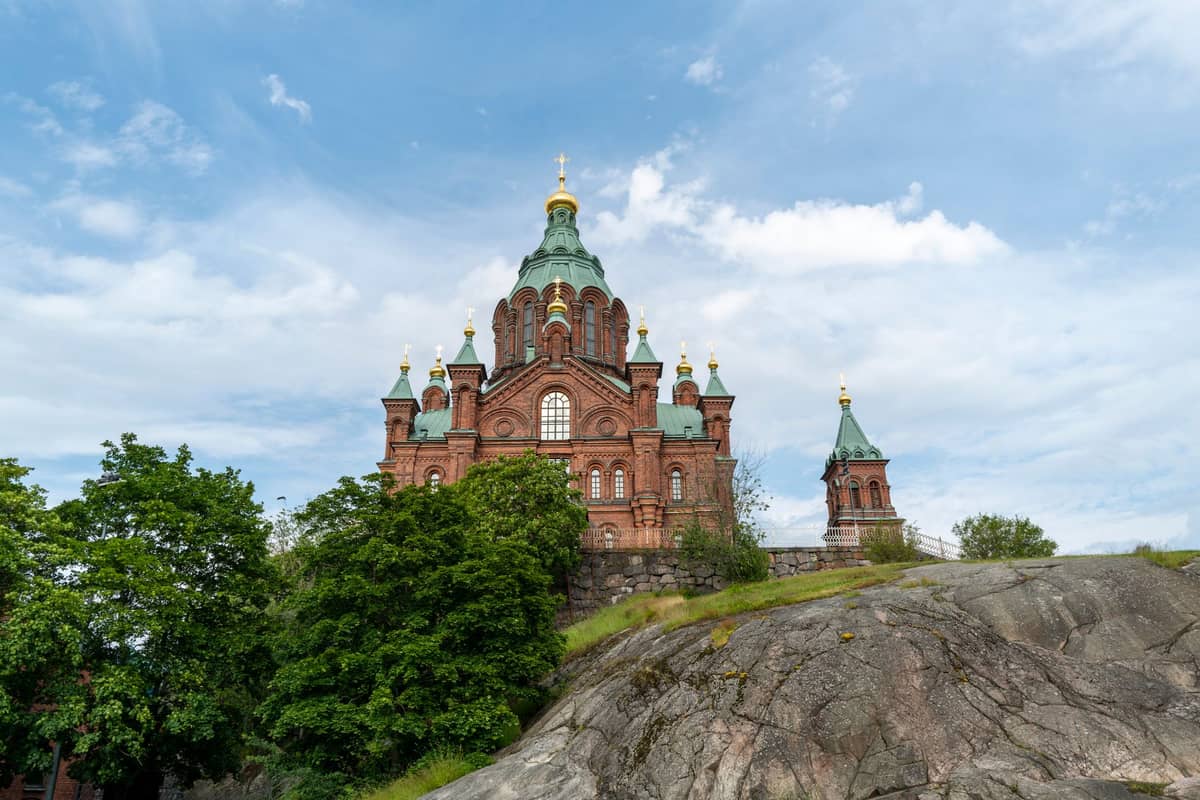
Uspenski Cathedral is one of Helsinki's most visually striking buildings, and one of the few places in the city where you feel the deep historical connection between Finland and the Russian Empire. Perched on a low rocky hill at the tip of the Katajanokka peninsula, the cathedral's thirteen gilded onion domes catch the low northern light in a way that makes them glow bronze in morning and amber at dusk. From the harbor, from the ferry terminal, and from the decks of boats heading to Suomenlinna, this building is one of the defining silhouettes of Helsinki's waterfront.
Inside, the atmosphere shifts immediately. The smell of incense and melted candle wax is present even when no service is being held. The interior follows the Orthodox tradition: no pews, a rich iconostasis separating the nave from the sanctuary, walls covered in frescoes and gilded frames, and icon lamps casting soft light across the floor. For visitors accustomed to Lutheran or Catholic spaces, the layout and sensory experience are noticeably different, and that contrast is part of what makes Uspenski worth visiting.
ℹ️ Good to know
Uspenski Cathedral is an active place of worship, not just a tourist attraction. Photography is generally permitted in the nave, but behave respectfully during services, and lower your voice throughout your visit.
History and Architectural Context
The cathedral was completed in 1868, during the period when Finland was an autonomous Grand Duchy within the Russian Empire. It was designed by Russian architect Alexey Gornostaev, who died before construction was finished; the work continued according to his plans. The building is constructed in the Russian Revival style, using Finnish red brick with elaborate decorative stonework and the distinctive multi-dome silhouette common to major Orthodox cathedrals in Russia.
Uspenski Cathedral is widely recognized as the largest Orthodox church in Western Europe, a fact that reflects both the scale of the Russian Orthodox community in Helsinki during the imperial period and the ambition of the commission itself. The name refers to the Dormition of the Theotokos, known in Russian as Uspenie, and the cathedral serves as the main cathedral of the Orthodox Parish of Helsinki and the Diocese of Helsinki.
Standing at Uspenski and looking west across the harbor, you see the white dome of Helsinki Cathedral on Senate Square less than a kilometer away. The pairing is deliberate in its symbolism: two great cathedrals, two religious traditions, two political powers, facing each other across the water. That juxtaposition tells you more about Finnish history than most guided tours will.
Tickets & tours
Hand-picked options from our booking partner. Prices are indicative; availability and final rates are confirmed when you complete your booking.
Helsinki private and guided walking tour
From 162 €Instant confirmationFree cancellationHelsinki Beautiful Canal Route, archipelago cruise
From 26 €Instant confirmationFree cancellationHelsinki Panorama Sightseeing Bus Tour With Audio Guide
From 35 €Instant confirmationFree cancellationHelsinki Pasila Street art district tour with a local
From 99 €Instant confirmationFree cancellation
Visiting the Interior: What You Will Actually See
The entrance fee of €5 applies to visitors over 18 coming outside divine services and parish-organized events; visitors under 18 are admitted free. Worshippers attending a divine service are not charged an admission fee. A digital guide or virtual brochure is included with paid admission.
The nave is tall and relatively narrow by the standards of Western European cathedrals, which gives the vertical decoration of the iconostasis and frescoed walls an intensified effect. The iconostasis itself is the visual centerpiece: multiple registers of icons in gilded frames, with the Royal Doors at the center. Candle stands are positioned throughout the nave, and visitors are welcome to light candles as is customary in Orthodox tradition.
The upper gallery, if accessible during your visit, provides a closer view of the ceiling frescoes and a different perspective across the nave. The crypt level is generally used for parish purposes. The overall floor area is not enormous by cathedral standards, so thirty minutes is usually sufficient to take in the main elements at a comfortable pace.
💡 Local tip
Women are not required to cover their heads, but the parish requests modest dress in general. Very casual or beach attire is out of place here.
Time of Day and Seasonal Considerations
The cathedral's orientation and hilltop position mean the exterior photographs best in the morning, when light hits the western facade and domes from a low angle. By midday in summer, the light can be harsh and the surrounding area fills with cruise ship visitors and tour groups coming from the Market Square. Arriving at opening time on a weekday gives you a notably calmer experience both outside and in.
In winter, the red brick against snow and a low grey sky creates a dramatically different visual from the summer version. The cathedral is open year-round on a seasonal schedule published by the parish, and the interior is heated. Winter services draw a local congregation, and attending one as a silent observer is a genuinely different experience from the tourist-hour visits in July.
Summer hours (1 May to 31 August) are Tuesday to Friday 10:00 to 18:00, Saturday 10:00 to 15:00, and Sunday 13:00 to 16:00. The cathedral is closed on Mondays. Hours outside the summer period follow a similar pattern but should be confirmed with the parish before visiting, as services and events can affect access.
⚠️ What to skip
The cathedral may close to general visitors during divine services and parish events. Check the Orthodox Parish of Helsinki website before making a special trip, especially on Sundays.
Getting There and Getting Around Katajanokka
Uspenski Cathedral is an easy walk from central Helsinki. From the Market Square on the harbor front, follow the shoreline east for about ten minutes. The hill the cathedral sits on is visible from the square itself. The address is Pormestarinrinne 1. Tram lines running along the harbor provide an alternative for those who prefer not to walk from further afield.
Katajanokka is worth exploring beyond the cathedral itself. The peninsula has a distinct character: a grid of early 20th-century Art Nouveau apartment buildings, a Viking Line ferry terminal at the eastern tip, and the former Helsinki Prison, which has been converted into a hotel. If you are combining the cathedral with the Market Square and the Old Market Hall nearby, budget two to three hours for the whole area.
For wheelchair users, access is via Rahapajankatu to the front-yard parking area. A disabled parking space is on the upper level, reached via the Pormestarinrinne emergency access ramp. A wheelchair stair lift at the western door (Market Square side) provides access to the church hall, with a weight limit of 225 kg and a doorbell for verger assistance. An accessible toilet is available in the crypt via its own stair lift. An induction loop for hearing aid users is installed in the bell tower area.
Photography Tips
The exterior is best captured from the harbor level looking up, particularly from the western approach along the shoreline. A wide-angle lens is useful for the facade and domes together. For the harbor panorama that includes the domes against the water, cross to the Market Square side and look back east from near the ferry piers.
Inside, the low and warm lighting from icon lamps and candles means a high ISO is typically needed without flash. Tripods are not permitted during busy periods. The iconostasis and ceiling frescoes reward a telephoto for detail shots. On overcast days, the interior light is actually more even and easier to work with than on bright summer days when contrast between the windows and shadow areas is high.
If you are building a photography route around Helsinki's waterfront, the view of Uspenski from the water pairs well with views toward Senate Square and the harbor. The Helsinki viewpoints guide covers the best angles across the city for comparison.
Insider Tips
- If you want the exterior to yourself, arrive within the first thirty minutes of opening on a Tuesday or Wednesday morning. Cruise ship groups tend to arrive mid-morning and clear out by early afternoon.
- The hill behind the cathedral offers a quieter panorama of the harbor than the more crowded vantage points near the Market Square. Walk around the building to the eastern side for a view that includes the ferry terminal and the open Gulf of Finland.
- Services at Uspenski follow the Orthodox liturgical calendar, which differs from the Western Gregorian calendar for major feasts like Easter. If you are in Helsinki around Orthodox Easter, the candlelit procession around the exterior is an extraordinary thing to witness.
- The €5 entry fee includes access to a digital guide or virtual brochure that provides background on the iconostasis and individual icons. Download it before you enter so you can reference it while standing in front of the paintings.
- If you are visiting with someone who wants to pray rather than sightsee, inform the verger at the entrance. Those coming to pray may be admitted without the visitor fee.
Who Is Uspenski Cathedral For?
- Architecture and design enthusiasts drawn to Russian Revival style and Orthodox church interiors
- Travelers interested in Finnish history and the legacy of Russian imperial rule
- Photographers working on Helsinki's waterfront and harbor skyline
- Visitors combining a walk through Katajanokka with the Market Square area
- Anyone curious about Orthodox Christianity and willing to engage with an active place of worship