Old Market Hall (Vanha Kauppahalli): Helsinki's Finest Indoor Food Hall
Opened in the late 19th century on Helsinki's South Harbor waterfront, the Old Market Hall (Vanha Kauppahalli) is a beautifully preserved indoor food market where Finnish produce, artisan goods, and café culture converge under one ornate roof. Entry is free, the vendors change with the seasons, and the building alone is worth the detour.
Quick Facts
- Location
- Eteläranta 9, 00130 Helsinki — South Harbor waterfront, next to Market Square
- Getting There
- Tram line 2 (Kauppatori stop); approx. 10-min walk from Helsingin yliopisto metro station
- Time Needed
- 45 minutes to 1.5 hours
- Cost
- Free entry; individual vendor prices in euros
- Best for
- Finnish food lovers, architecture enthusiasts, rainy-day visitors, solo travelers
- Official website
- vanhakauppahalli.fi/en
What the Old Market Hall Actually Is
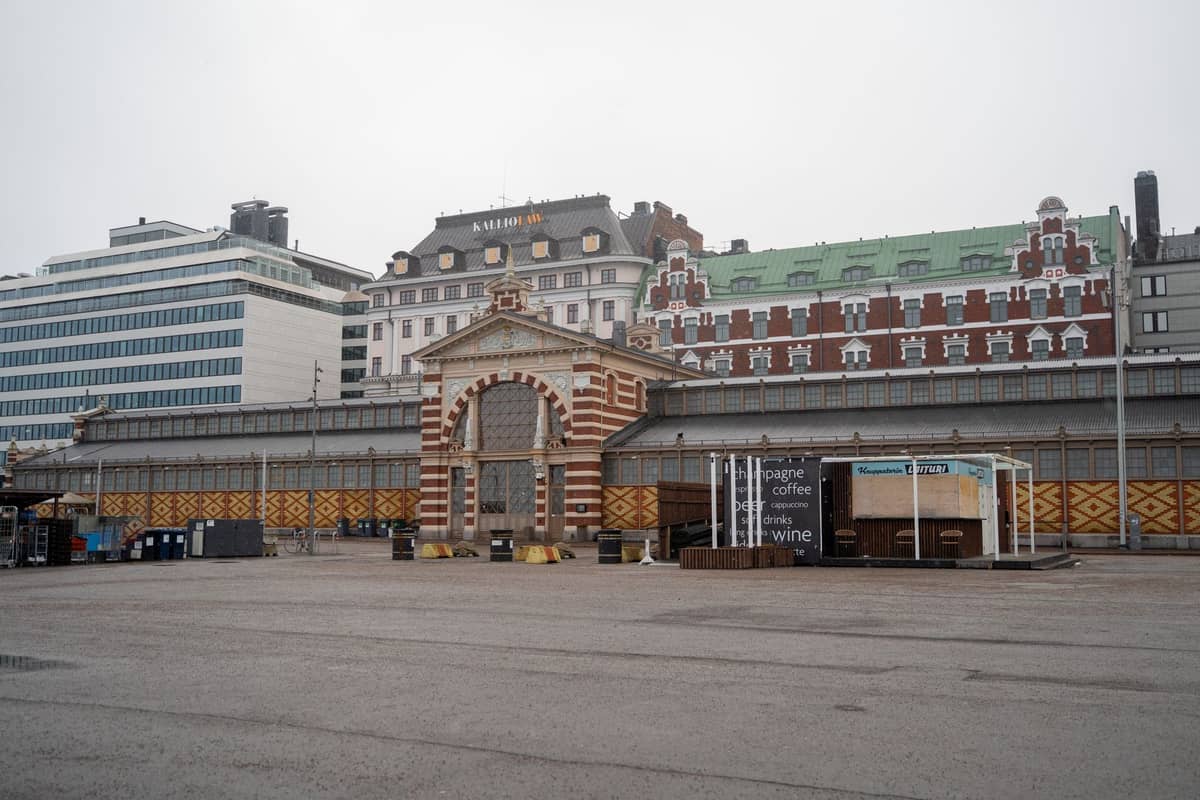
The Old Market Hall, known locally as Vanha kauppahalli, sits on the South Harbor waterfront at Eteläranta 9, directly adjacent to the open-air Market Square (Kauppatori). It is one of the oldest continuously operating market halls in Finland, first opened in 1889, and the building itself — a red-brick Neo-Renaissance structure with arched windows and decorative ironwork — tells that story clearly before you even step inside.
Today the premises are owned by Helsinki City Premises Ltd, a company fully owned by the City of Helsinki. That civic ownership matters: it keeps the hall anchored to its original purpose as a public food market rather than letting it drift into purely tourist-facing territory. The vendors inside sell Finnish fish, reindeer, local cheeses, rye bread, pastries, and specialty foods alongside a handful of cafés where you can sit, eat, and watch the hall fill and empty through the morning.
💡 Local tip
Opening hours are Monday to Saturday 8:00–18:00 and Sunday 10:00–17:00. Different vendors may have slightly different hours, so check vanhakauppahalli.fi, especially around public holidays.
The Building: Architecture Worth Pausing For
From the outside, the hall presents a long, low-slung red-brick facade facing the harbor. The arched windows repeat in a steady rhythm along the length of the building, and the brickwork is detailed enough that it looks more like a civic library than a grocery market. This is deliberate: Helsinki's late-19th-century market halls were built with institutional ambition, meant to signal that the city took food supply — and public hygiene — seriously.
Inside, cast-iron columns support the roof, and natural light filters through the large windows. The floor plan is narrow and elongated, with vendor stalls running along both sides of a central walkway. The scale feels human rather than cavernous: you can see the entire hall from one end, which makes orientation immediate. The original structure has been carefully maintained, and the interiors retain the feel of a working market from another era, even as the vendor mix has evolved.
Photographers will find the morning hours most productive. Before 10:00, low northern light cuts through the west-facing windows at an oblique angle, catching the metalwork and the color of the produce stalls. By midday the hall fills with visitors and the light flattens out. A wide-angle lens or phone in portrait mode works well in the narrow central aisle.
Tickets & tours
Hand-picked options from our booking partner. Prices are indicative; availability and final rates are confirmed when you complete your booking.
Helsinki Beautiful Canal Route, archipelago cruise
From 26 €Instant confirmationFree cancellationHelsinki Panorama Sightseeing Bus Tour With Audio Guide
From 35 €Instant confirmationFree cancellationHelsinki Pasila Street art district tour with a local
From 99 €Instant confirmationFree cancellationSurvival suit floating experience
From 125 €Instant confirmationFree cancellation
How the Hall Changes Through the Day
Arrive before 9:00 on a weekday and the Old Market Hall is still the province of local shoppers: older Helsinkians making their regular round, restaurant buyers inspecting fish, the café counter filling orders for coffee and a korvapuusti (Finnish cinnamon roll). The pace is deliberate. Staff are restocking, and the smell of fresh bread and smoked fish is at its sharpest in the cool morning air before the foot traffic raises the temperature.
Between 10:00 and 13:00, tourist groups arrive, particularly in summer. The central aisle narrows perceptibly with strollers and backpacks, and several stalls pivot to sample-focused selling. This is the liveliest window for people-watching and for trying things — vendors are accustomed to curious visitors and most speak serviceable English. Lunch trade peaks around noon, when the café counters draw lines.
By mid-afternoon the hall quiets again. Some vendors begin consolidating stock ahead of closing, and this is a good time to browse without pressure. If you are visiting primarily for the atmosphere rather than specific purchases, the late-afternoon lull on a weekday gives you space to linger.
What to Eat and Buy
The vendor mix tilts heavily toward Finnish specialties. Fish stalls are central, both literally and metaphorically: smoked salmon, Baltic herring in various marinades, and gravlax cut to order. Reindeer products appear at several stalls, from cured cuts to prepared dishes. Finnish cheeses — particularly from smaller domestic producers — show up alongside more familiar Scandinavian varieties.
For a quick, inexpensive eat, the café counters are the move. Expect Finnish rye open sandwiches, salmon soup during colder months, and proper coffee. For context on where this fits into the wider Helsinki food picture, the Finnish food guide for Helsinki covers the full spectrum from market halls to restaurants and street food.
Artisan and specialty food products make good souvenirs: Finnish berry jams, cloudberry preserves, mustards, and rye crackers travel well and are competitively priced here compared to airport shops. Prices at the Old Market Hall are not budget-level — this is not a place to find cheap groceries — but the quality is genuine and the provenance is usually stated clearly by vendors.
ℹ️ Good to know
Cash and card are both accepted at most stalls, but payment preferences vary by vendor. Having a card with no foreign transaction fees is the most convenient option.
Location and Getting There
The Old Market Hall sits on Eteläranta, the South Harbor waterfront, directly adjacent to the open-air Market Square (Kauppatori). From the city center, tram line 2 stops at Kauppatori, placing you within a two-minute walk. From Helsingin yliopisto metro station, a comfortable walk through Senate Square takes under ten minutes.
The surrounding area rewards a longer visit. Senate Square is five minutes on foot to the north, while the harbor ferries to Suomenlinna Fortress depart from the Market Square pier immediately outside. Combining the Old Market Hall with a morning at the outdoor market and an afternoon ferry to Suomenlinna is a natural full-day itinerary from this end of the city center.
The building is wheelchair accessible, with level entry from Eteläranta and accessible restroom facilities inside. A hall supervisor is present during opening hours and can assist with on-site queries.
Weather, Seasons, and When to Visit
One of the Old Market Hall's practical advantages is that it is entirely indoors. On a cold, wet November day — and Helsinki has many of those — the hall offers genuine warmth, good food, and something to look at. In this sense it is genuinely all-season, unlike most of Helsinki's outdoor attractions.
Summer (June through August) brings the most vendor variety and the longest opening-day energy, particularly on the weekends when the outdoor Market Square is also in full operation. Winter visits are quieter and more local in character. For a broader look at how Helsinki's seasons affect what's worth doing, the best time to visit Helsinki breaks down the trade-offs month by month.
In terms of value per minute, a weekday morning in the off-season may actually be the ideal window: the hall is at its most local, the vendors have time to talk, and the food smells are undiluted by crowds. If you are visiting in summer and want a quieter experience, arriving at opening (8:00 on weekdays) puts you ahead of both tour groups and the late-morning rush.
Honest Assessment: Is It Worth Your Time?
The Old Market Hall is not the largest or most spectacular market in Helsinki. It is also not a secret: it appears on most itineraries and receives a steady flow of visitors year-round. If you are expecting the frenetic energy of a large European covered market, or a sprawling street food scene, you will need to recalibrate. The hall is compact and relatively calm even at its busiest.
What it does offer is architectural authenticity, focused Finnish food provenance, and proximity to everything else along the South Harbor waterfront. It pairs naturally with the Market Square and Esplanadi area and fits easily into a morning rather than demanding a dedicated half-day. For travelers who want to understand Helsinki's relationship with its food culture in a single stop, this hall delivers that clearly and without requiring much effort or expense.
Travelers who actively dislike indoor markets, who are visiting solely for bargain shopping, or who have very limited time and must prioritize major museums or outdoor landmarks may reasonably skip it. The hall is not a replacement for a deeper engagement with Finnish food — it is an introduction to it.
Insider Tips
- Weekday mornings before 9:30 are when the hall operates most like a local market. Vendors are restocking and unhurried, and you can ask questions without competing for attention with tour groups.
- The salmon soup served at the café counters is a reliable, inexpensive lunch — particularly in autumn and winter when it is made with firmer intention. It is one of the most direct ways to eat something genuinely Finnish at low cost in central Helsinki.
- The hall is immediately adjacent to the outdoor Market Square, but the two operate on different rhythms. The outdoor market leans toward tourist trinkets and summer produce; the indoor hall leans toward quality Finnish food products. Use both, but with different expectations.
- If you are buying smoked or cured fish to take home, ask vendors directly about vacuum-sealing options. Several stalls will package fish for travel, which makes airport carry-on feasible in cold months.
- Sunday hours are listed on the official site but have been reported as inconsistent. If a Sunday visit is a priority, call ahead or check the official site the day before rather than assuming.
Who Is Old Market Hall (Vanha Kauppahalli) For?
- Travelers who want a direct, unfussy introduction to Finnish food culture in under an hour
- Architecture and design enthusiasts interested in 19th-century civic market buildings
- Visitors looking for quality Finnish food souvenirs at fairer prices than airport shops
- Rainy-day or winter visitors needing a warm, interesting indoor stop in central Helsinki
- Anyone already at or heading to the Market Square or Suomenlinna ferry pier
Nearby Attractions
Other things to see while in Market Square & Esplanadi:
- Allas Sea Pool
Allas Sea Pool sits on a floating deck in Helsinki's South Harbour, offering a heated pool, a direct-feed Baltic Sea pool, and three saunas with views across the water to the city skyline. Open year-round, it is one of the most distinctive ways to experience Finnish sauna culture without leaving the city centre.
- Esplanadi Park
Esplanade Park (Esplanadinpuisto) is a narrow, tree-lined urban park running through the centre of Helsinki from Erottaja Square to Market Square. Free to enter at any hour, it functions as a public gathering space, a summer concert venue, and one of the city's most natural walking routes down to the waterfront.
- Market Square (Kauppatori)
Kauppatori, Helsinki's open-air Market Square, occupies a prime stretch of the South Harbor waterfront. Free to enter and open daily, it draws locals buying fresh fish at dawn and visitors browsing berry stalls and souvenir tents by midday. The square also serves as the departure point for ferries to nearby islands, making it a natural crossroads rather than a destination in itself.