Suomenlinna Sea Fortress: Helsinki's Island UNESCO World Heritage Site
Suomenlinna Sea Fortress sits on a cluster of islands just 15 minutes by ferry from Helsinki's Market Square. A UNESCO World Heritage Site built in the 18th century under Swedish rule, it combines military history, coastal walking, museums, and year-round island life — all with free access to the fortress grounds.
Quick Facts
- Location
- Suomenlinna islands, 00190 Helsinki — accessible only by water
- Getting There
- HSL public ferry from Market Square (Kauppatori), ~15–20 min crossing. Additional waterbuses in summer (approx. May–Sep).
- Time Needed
- 3–5 hours for a relaxed visit; a full day if exploring all museums and the outer islands
- Cost
- Fortress grounds: free. Ferry: HSL fare (standard public transport ticket). Suomenlinna Museum: check current official prices. Customs Museum: free.
- Best for
- History enthusiasts, photographers, families, walkers, anyone wanting to leave the city without leaving Helsinki
- Official website
- suomenlinna.fi/en
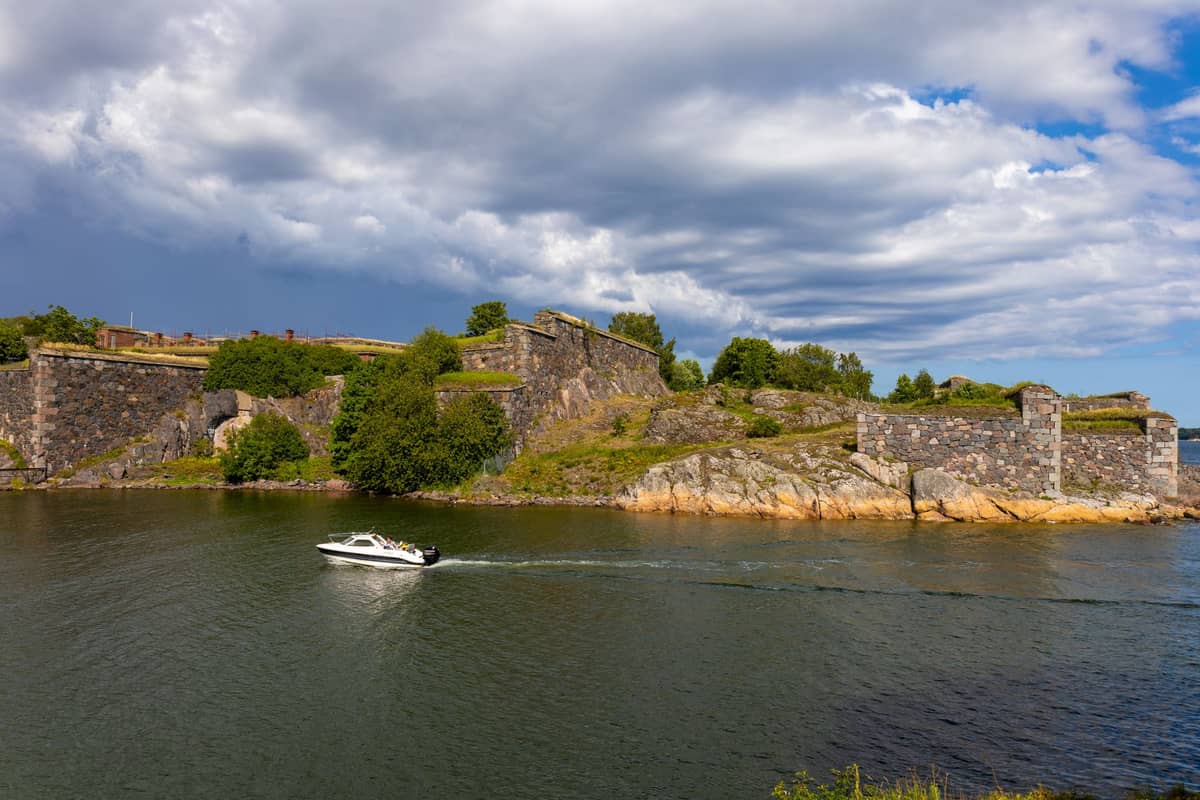
What Suomenlinna Actually Is
Suomenlinna Sea Fortress is not a ruin, a reconstruction, or a theme park. It is a living district of Helsinki — with roughly 800 permanent residents, schools, a brewery, restaurants, and functioning public services — built on and around an 18th-century military fortification complex spread across several interconnected islands. The UNESCO World Heritage designation, awarded in 1991, recognizes the fortress as one of the best-preserved examples of European military architecture from the Age of Sail.
Construction began in 1748 under Swedish rule, when the archipelago was chosen as the site for a major naval base and sea fortress designed to protect the Swedish empire's eastern territories. The original Swedish name, Sveaborg (meaning 'Swedish Fortress'), reflects this origin. Finland passed to Russian control in 1809 after the Finnish War, and the fortress served the Russian empire for over a century before Finnish independence in 1917. The name Suomenlinna ('Fortress of Finland') was adopted in 1918, and the site later transitioned from a Finnish military base to a civilian district under the management of the Finnish state.
That layered history — Swedish, Russian, Finnish military, then civilian — is visible in the architecture as you walk from quay to quay. Cannon emplacements sit beside 18th-century dry docks and 19th-century Russian-era storehouses. For broader context on Helsinki's historical layering, the Helsinki City Museum on the mainland provides useful background before or after your visit.
The Ferry Crossing and First Impressions
The journey begins at Market Square (Kauppatori), where the HSL public ferry departs year-round from the quay opposite the Presidential Palace. The crossing takes 15–20 minutes depending on the vessel and conditions.
The upper deck on the ferry gives the best views: Helsinki's South Harbour recedes slowly, and the fortress walls and low granite shoreline of Iso Mustasaari island come into focus as you approach. On a clear summer morning the light off the water is sharp and the silhouette of the Jetty Barracks — the long, red-brick building that frames the main quay — reads like something from a maritime painting. In winter the crossing feels more elemental: grey water, low sky, the smell of salt and cold air, occasional sea ice in a harsh winter.
💡 Local tip
The HSL public ferry uses standard Helsinki public transport tickets — if you already have a day ticket or a valid zone AB fare loaded on your HSL card, no additional ticket is needed. The private waterbus services operating in summer cost more and are not covered by HSL tickets. Check which vessel is running before boarding if price matters.
Tickets & tours
Hand-picked options from our booking partner. Prices are indicative; availability and final rates are confirmed when you complete your booking.
Helsinki highlights, Fortress Island and floating sauna
From 0 €Instant confirmationFree cancellationHelsinki Beautiful Canal Route, archipelago cruise
From 26 €Instant confirmationFree cancellationHelsinki Panorama Sightseeing Bus Tour With Audio Guide
From 35 €Instant confirmationFree cancellationHelsinki Pasila Street art district tour with a local
From 99 €Instant confirmationFree cancellation
Arriving on the Island: The Main Quay and Visitor Centre
Ferries arrive at Iso Mustasaari, the largest island in the Suomenlinna group. The main quay is immediately flanked by the Jetty Barracks, a long neoclassical building originally constructed in the 19th century under Russian administration, now housing cafes, a restaurant, and the Suomenlinna Visitor Centre. The visitor centre is the logical first stop: staff speak English, maps are free, and the centre displays orientation panels on the fortress layout and history. Summer hours run approximately 10:00–18:00 daily; winter hours are shorter (approximately 10:00–16:00). Check the official site for current hours before visiting, as they adjust seasonally and around public holidays.
Directly behind the Jetty Barracks, the path opens onto Suomenlinna Church, a distinctive ochre-coloured Lutheran church with a square tower that has doubled as a lighthouse since its 1928–29 conversion. The lighthouse function is still active. Standing beside it, you have a clear sense of scale: the fortifications are not dramatic clifftop walls but low, horizontal granite ramparts that blend into the landscape, punctuated by cannon positions overlooking open water.
Walking the Islands: Routes, Ramparts, and What You'll Find
The islands are connected by bridges and marked with colour-coded walking routes. The Blue Route is the main path and covers the most significant historical sites on Iso Mustasaari and Susisaari islands; a full walk of the blue route takes roughly 90 minutes at a comfortable pace, not counting museum stops. The route passes the King's Gate (Kuninkaanportti) on the southern tip of Susisaari island — the original ceremonial entrance to the fortress from the sea, framed by a Swedish baroque arch carved with an inscription and coat of arms. This is the most photographed single structure on the island.
The dry docks near the centre of the island complex are among the most historically significant structures. Hewn directly into the granite bedrock in the 1760s, they were designed to shelter the Swedish navy's warships during the harsh Baltic winters and are still operational today, used by private boatyards. Looking down into the docks, you can see wooden hulls, masts, and the scale of 18th-century shipbuilding up close.
The outermost areas, particularly the western shores of Susisaari and the eastern tip of Kustaanmiekka island, are wilder and less visited. Paths here are rougher — gravel and grass, with exposed granite outcrops leading to the sea. In summer these areas attract locals looking for quiet spots to sit by the water. In late afternoon the light on the open water from the southernmost points is exceptional for photography.
⚠️ What to skip
The terrain across Suomenlinna is genuinely uneven: cobblestones, gravel paths, steep granite steps, and sandy tracks. Visitors with prams should plan carefully — some sections are manageable but others require carrying. Wheelchair users face significant challenges on most routes; the accessible route is not signposted and requires an assistant. Contact the Visitor Centre in advance for current accessibility guidance.
The Museums: What's Worth Your Time
Suomenlinna has five museums in total, covering different periods and themes. The Suomenlinna Museum in the Visitor Centre building is the most comprehensive starting point: it traces the full history of the fortress from Swedish construction through Russian rule to Finnish independence, using scale models and original artefacts. Admission prices should be confirmed on the official site before visiting.
The Toy Museum and the Military Museum's Manege are both smaller and suit families with children. The Customs Museum is free of charge and traces Finland's customs history using objects from smuggling investigations — more engaging than it sounds, and a good option for budget-conscious visitors. The Submarine Vesikko is the standout for military history: Finland's only remaining World War II submarine, built in 1933 and now open for visitors to board and walk through the interior. The narrow confines of the vessel make the conditions of wartime submarine service viscerally clear.
If museums are your primary reason for visiting Helsinki, Suomenlinna pairs well with a day that also includes the Ateneum Art Museum or the Kiasma Museum of Contemporary Art on the mainland.
How the Experience Changes by Season
Summer (June to August) is when Suomenlinna is at full capacity: the ferry runs frequently, cafes and restaurants open their outdoor terraces, the islands fill with picnicking Helsinki residents on weekends, and the evening light can last until 10pm or later near the solstice. Weekend afternoons in July are genuinely crowded near the main quay and King's Gate. If you visit in summer, the first ferry of the morning (around 6am) carries almost no tourists — mostly commuting residents — and the island in the early morning, before the day-trippers arrive, is a different experience entirely.
Spring and autumn offer quieter conditions and dramatic skies. May brings the first real warmth and the arrival of migratory birds; the fortifications and surrounding sea can look spectacular under fast-moving cloud and low-angle light. October turns the sparse island vegetation golden and reduces visitor numbers significantly, though all year-round attractions remain open.
Winter visits are underrated. When the sea freezes — which happens in genuinely cold winters — some visitors walk across the ice to the island from the mainland, though this is not an officially recommended or marked route. The ferry continues to operate through winter. Snow on the granite ramparts and cannon positions produces some of the most atmospheric photographs possible at this site. Dress in serious layers: the wind off the open water is biting, there is almost no shelter on the outer islands, and Helsinki winter temperatures regularly fall below -5°C.
For a full picture of what each season means practically for visiting Helsinki, the best time to visit Helsinki guide breaks down conditions month by month.
Eating, Drinking, and Practical Logistics
Food and drink options on the island are limited compared to the mainland. The Jetty Barracks area has a cafe and a restaurant that operate year-round, and in summer several additional kiosks and food outlets open near the main quay. The Suomenlinna Brewery produces beer on the island and has a tap room open seasonally. That said, prices at island venues are higher than equivalent options in the city, and there are no supermarkets. Bringing a picnic is a practical choice, particularly for families, and there are good spots on the southern and western shores to eat outside in good weather.
The last public ferry back to Helsinki departs late in the evening but schedules vary by season; check the HSL timetable before you visit if you plan to stay into the evening. Missing the last ferry is an avoidable situation — and there are no hotels on the island.
ℹ️ Good to know
Suomenlinna is a functioning residential neighbourhood. The people you see cycling to the ferry early in the morning or walking past with grocery bags are year-round residents. Treat the islands with the same consideration you would any residential area — avoid noise near housing late in the evening and keep to marked paths in sensitive natural zones.
Who Should Reconsider the Trip
Suomenlinna rewards curious walkers, history readers, and anyone who enjoys outdoor exploration without needing constant facilities. It is not the right choice if you have severe mobility limitations, as the terrain is genuinely difficult and most of the most interesting areas are inaccessible without navigating steps, cobblestones, or gravel tracks. It is also a slow visit by design — there are no rides, no packaged entertainment, and no dramatic interiors beyond the museums and submarine. Visitors expecting a compact, walkable highlight reel may find the scale of the islands and the understated quality of the fortifications less immediately satisfying than expected.
If you have already explored Suomenlinna on a previous trip and want a different island experience, the Helsinki islands guide covers other options including Lonna, Vallisaari, and Pihlajasaari.
Insider Tips
- Take the first or second morning ferry on a weekday. The island before 9am is almost entirely locals commuting to work — the silence and quality of light on the fortifications at that hour are worth the early start.
- The King's Gate on the southern tip of Susisaari is the most photogenic structure, but the walk there passes less-visited cannon batteries and overgrown ramparts that most day-trippers skip. Give yourself time to slow down on that section rather than walking straight through.
- The Customs Museum is free and usually quiet even in peak season. It is a genuine museum, not a gift shop — worth 30–40 minutes if you have the time.
- In summer, the waterbus service stops at King's Gate in addition to the main quay — boarding there for the return journey lets you avoid the crowds that gather at the main ferry terminal on weekend afternoons.
- If you visit in winter and the Baltic is frozen, the view of Helsinki from the outer ramparts with sea ice in the foreground is exceptional. Bring more warm clothing than you think you need — there is almost no windbreak on the outer islands.
Who Is Suomenlinna Sea Fortress For?
- History and military architecture enthusiasts who want to spend several hours reading the landscape carefully
- Photographers, especially in early morning light, winter snow, or autumn overcast conditions
- Families with children who can walk comfortably — the submarine and outdoor spaces hold interest across age groups
- Helsinki locals and returning visitors who want to experience the island outside peak tourist season
- Budget travellers: fortress access is free, the Customs Museum is free, and a picnic visit on the HSL ferry costs only the standard zone fare