Helsinki City Museum: The Full Story of a Capital, Free of Charge
The Helsinki City Museum occupies a cluster of restored historic buildings at the edge of Senate Square, offering free admission to anyone curious about how this Baltic capital grew from a small coastal town into Finland's cultural and political centre. It is the only museum in the world dedicated exclusively to Helsinki.
Quick Facts
- Location
- Aleksanterinkatu 16, Senate Square, Kruununhaka, Helsinki
- Getting There
- Tram lines 4 and 7 stop near Senate Square on Aleksanterinkatu. Central Railway Station is a 10-minute walk.
- Time Needed
- 1.5 to 2.5 hours for the main exhibitions; longer if you linger in Children's Town
- Cost
- Free admission for all visitors
- Best for
- History lovers, families with children, rainy-day visits, first-time visitors wanting context before exploring the city
- Official website
- www.helsinginkaupunginmuseo.fi/en
What the Helsinki City Museum Actually Is
The Helsinki City Museum (Finnish: Helsingin kaupunginmuseo) is positioned as something specific and unusual: the only museum in the world focused exclusively on the history and everyday life of Helsinki. The focus is unusually specific. It has no other institution with the same mandate, collection scope, or physical relationship to the city's historic core. It sits at the corner of Senate Square, directly facing Helsinki Cathedral, inside a group of restored stone buildings known as the Tori Quarters.
The museum opened in its current form on 13 May 2016, following a significant renovation and expansion of the historic premises. The result is a coherent cultural space spread across multiple floors and interconnected buildings, mixing permanent exhibitions with rotating displays. Admission has been free since then, which makes it one of the most accessible major museums in the Nordic region.
💡 Local tip
Arrive before noon on weekdays for the quietest experience. By early afternoon, school groups and tour parties tend to fill the ground floor atrium and the Children's Town section.
The Setting: Senate Square and the Tori Quarters
The museum's address, Aleksanterinkatu 16, places it at the western edge of Senate Square, Helsinki's most formally composed urban space. The square dates from the early nineteenth century, when Finnish architect Carl Ludwig Engel designed a neoclassical ensemble of cathedral, government building, university, and city hall around a central plaza. The museum occupies buildings that are part of this same ensemble, meaning the architecture you walk through predates Finnish independence by roughly a century.
Standing outside before you enter, the view across the square gives context that no exhibition panel can fully replace. The pale yellow Helsinki Cathedral rises directly ahead. The Senate building and University face each other symmetrically across the cobblestones. On winter mornings, low light hits the granite facade at a sharp angle and the square is often nearly empty, which is the closest you will get to understanding the original intended grandeur of the space. In summer, the steps of the cathedral fill with people and street performers, and the mood shifts entirely.
The neighborhood surrounding the museum is Kruununhaka, one of Helsinki's oldest residential districts. Its grid of nineteenth-century apartment buildings, narrow streets, and stone churches makes it a natural extension of any museum visit. Allow time to walk east along the waterfront after you leave.
Tickets & tours
Hand-picked options from our booking partner. Prices are indicative; availability and final rates are confirmed when you complete your booking.
Helsinki Beautiful Canal Route, archipelago cruise
From 26 €Instant confirmationFree cancellationHelsinki Panorama Sightseeing Bus Tour With Audio Guide
From 35 €Instant confirmationFree cancellationHelsinki Pasila Street art district tour with a local
From 99 €Instant confirmationFree cancellationArchitecture tour of Helsinki
From 60 €Instant confirmationFree cancellation
Inside the Museum: What the Exhibitions Cover
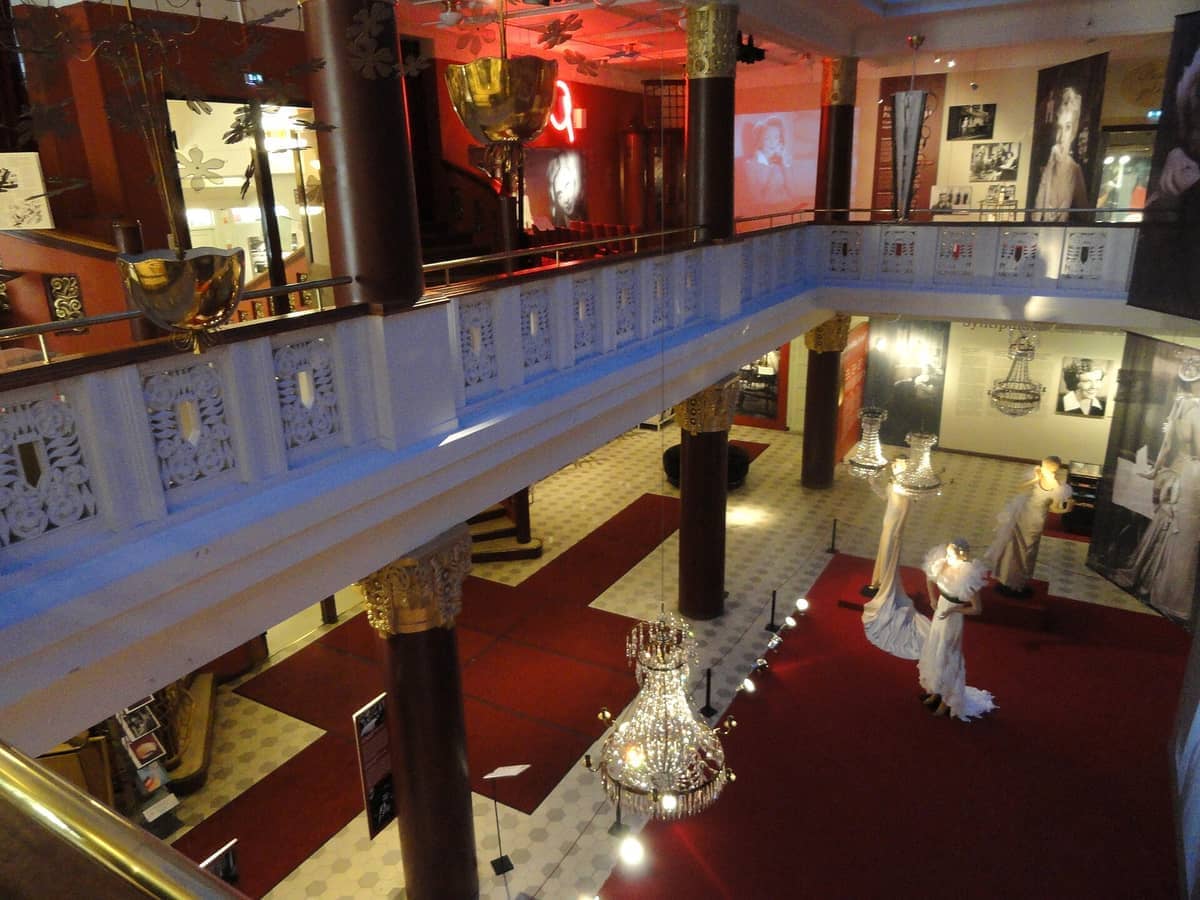
The permanent exhibition moves through Helsinki's history in a way that avoids the usual trap of civic museums: it does not treat the city as a series of important dates. Instead, it builds from everyday objects, personal accounts, photographs, and reconstructed interiors to show what it was like to live here at different moments. The approach works. A reconstructed early twentieth-century street-level shop, complete with original signage and goods, communicates more about daily urban life than a dozen explanatory texts.
Several floors are dedicated to different periods and themes. The lower levels cover Helsinki's origins as a Swedish colonial trading post founded in 1550 and its slow growth into a Finnish administrative capital after Russia took control of the country in 1809. The upper galleries bring the story forward through industrialisation, the civil war of 1918, wartime, reconstruction, and the city's transformation into a modern Nordic capital. Photographs from the late nineteenth and early twentieth centuries are particularly well selected and printed large enough to reward close looking.
Children's Town is a dedicated section designed for younger visitors, with hands-on activities and scaled environments drawn from different periods of Helsinki life. It is genuinely well-executed rather than an afterthought, though it will be crowded on school days and weekend mornings.
ℹ️ Good to know
Standard opening hours are Monday to Friday 11:00 to 19:00, Saturday and Sunday 11:00 to 17:00. Confirm current hours on the official website before visiting, as seasonal variations apply.
How the Experience Changes by Time of Day
Weekday mornings before noon are the calmest. The ground floor cafe is quiet, the exhibition rooms hold only a few visitors, and you can spend as long as you want in front of individual objects without feeling the social pressure to keep moving. The building itself has a certain stillness at this hour, the kind that older stone structures tend to generate.
By early afternoon, particularly Tuesday through Thursday during the school year, the atmosphere changes. Children's Town draws school groups and the sound level rises considerably. The permanent exhibition floors remain manageable, but the entrance area becomes congested. If you are visiting with young children, this is actually the better time to come because the energy matches. If you want a reflective experience, aim for a weekday opening hour or a Sunday before noon.
On summer evenings, the museum stays open until 19:00 on weekdays, and the light through the upper floor windows in late afternoon is particularly good for reading exhibition text and examining photographic prints. The Senate Square outside takes on a warmer tone as the day winds down, and leaving the museum into that setting is one of the more satisfying transitions you can make in central Helsinki.
Practical Walkthrough: Getting There and Moving Around
The museum is reachable on foot from most central Helsinki locations within fifteen minutes. Tram lines running along Aleksanterinkatu stop close to the entrance. From Helsinki Central Railway Station, the walk southeast along Aleksanterinkatu takes about ten minutes and passes through the commercial core of the city centre before opening onto the square.
Inside, the layout is spread across multiple interconnected levels. Elevator access to all exhibition floors is available, with a maximum weight capacity of 300 kg, making wheelchair access possible for many visitors. The main wheelchair-accessible entrance is through the front door at Aleksanterinkatu 16. Note that the Falkman Atelier area and parts of Children's Town have limited wheelchair access due to the historic building constraints. Induction loops are installed at the information desk, in exhibition spaces, and in conference rooms.
There is a museum shop on the ground floor with a reasonable selection of Helsinki-related publications, prints, and design objects. The adjacent cafe is a practical stop before or after the visit. Coat storage is available near the entrance, which matters in winter when heavy outer layers become cumbersome in warm exhibition spaces.
⚠️ What to skip
The cobblestones of Senate Square and the immediate surroundings can be slippery in winter. Wear footwear with grip if visiting between November and March. This applies especially to the approach from the waterfront side.
Context: Why This Museum Matters for Understanding Helsinki
Helsinki is a young capital by European standards. It was not elevated to capital status until 1812, when Tsar Alexander I of Russia designated it the administrative centre of the Grand Duchy of Finland, replacing Turku. The city that visitors see today, with its neoclassical centre, its Art Nouveau apartment buildings in Kruununhaka and Katajanokka, and its postwar modernist architecture, was built almost entirely within the last two centuries. The Helsinki City Museum gives that compressed timeline structure. Visiting it before you walk the city turns observation into comprehension. The Helsinki Cathedral visible from the museum door, for instance, reads differently once you know it was completed in 1852 as an explicit symbol of Russian imperial patronage dressed in Lutheran architectural form.
For travelers doing a longer Helsinki itinerary, the museum pairs naturally with the Ateneum Art Museum and the Design Museum Helsinki to give a rounded sense of Finnish cultural history across different disciplines. None of these require advance booking, all are centrally located, and the City Museum's free admission makes it the logical starting point.
Who Should Consider Skipping It
Visitors with very limited time who have already read extensively about Finnish history and are primarily in Helsinki for outdoor experiences, the waterfront, or day trips may find the museum a slower use of a few hours than alternatives. The exhibitions are text-heavy in places, and some sections assume a baseline interest in urban social history rather than dramatic national narratives. If you are expecting the scale and spectacle of a major national history museum, the tone here is more intimate and municipal.
Travelers focused primarily on contemporary art should note that the museum's scope is historical rather than art-focused. For contemporary work, Kiasma Museum of Contemporary Art is the more relevant destination.
Insider Tips
- The top floor of the museum offers a partial view toward Senate Square through the windows. Position yourself near the glass before descending and look east toward the cathedral and the waterfront beyond. It is a useful orientation point before you walk the area.
- The museum's free admission makes it an excellent option on arrival day, when you may be tired, jet-lagged, or caught in rain. You can spend as little as forty-five minutes walking the ground floor and the main permanent exhibition and leave with a solid mental map of the city's development.
- The summer extended hours (from 10:00 rather than 11:00, Monday to Friday from 1 June to 31 August) mean you can visit before the Senate Square fills with tourists. The square in morning light with few people is a genuinely different experience from the midday crowds.
- Children's Town is staffed with knowledgeable guides on most days. If you are visiting with children, ask at the information desk about guided activities before heading in, as timed programming is sometimes offered that is not prominently advertised.
- The museum sits in the Tori Quarters, and the courtyard between the buildings is worth walking through even if you do not go inside. The stonework and spatial arrangement of the historic market blocks give a sense of pre-industrial Helsinki that the adjacent monumental square does not.
Who Is Helsinki City Museum For?
- First-time visitors to Helsinki who want historical context before exploring the city on foot
- Families with children aged 4 to 12, particularly for the Children's Town section
- Travelers caught in poor weather looking for a substantial, free indoor attraction
- Anyone interested in Nordic urban history, social history, or nineteenth-century city planning
- Budget travelers: the free admission, central location, and proximity to other free attractions make it an efficient stop
Nearby Attractions
Other things to see while in Senate Square & Kruununhaka:
- Ateneum Art Museum
The Ateneum Art Museum holds Finland's largest collection of classical art, from 19th-century Finnish masters to early 20th-century modernism. Located directly opposite Helsinki Central Railway Station, it is one of the most accessible and rewarding museums in the Nordic countries.
- Helsinki Cathedral
Helsinki Cathedral (*Helsingin tuomiokirkko*) is the defining landmark of the Finnish capital, rising above Senate Square on a steep granite staircase that doubles as one of the city's most photographed gathering spots. The neoclassical Lutheran cathedral charges a modest fee for the main hall in summer, while the crypt has free admission when open. Here is everything you need to decide whether it deserves time on your itinerary.
- Helsinki Central Railway Station
Helsinki Central Railway Station is more than a place to catch a train. Designed by Eliel Saarinen and completed in 1919, it is one of Finland's most recognizable buildings and the beating heart of the city's transport network. Whether you are arriving in Helsinki for the first time or simply passing through, the station repays a slow, deliberate look.
- Helsinki City Hall
Helsinki City Hall (Helsingin kaupungintalo) stands on Pohjoisesplanadi facing Market Square, its neoclassical facade one of the defining sights of the city's historic waterfront. Entry to the lobby is free, and the building's location makes it a natural stop on any walk through the Senate Square district.