Design Museum Helsinki: Finnish Design, One Building at a Time
Housed in a late 19th-century neogothic building in the heart of Helsinki's Design District, Design Museum Helsinki (Designmuseo) is Finland's national specialist museum for design. It traces the history of Finnish design from craft traditions to contemporary practice, with rotating international exhibitions alongside a permanent collection.
Quick Facts
- Location
- Korkeavuorenkatu 23, 00130 Helsinki (Punavuori / Design District)
- Getting There
- Tram lines serving the Design District area; short walk from central Helsinki. Check HSL journey planner for current routes.
- Time Needed
- 1.5 to 2.5 hours for a thorough visit
- Cost
- Adults approx. 23 €, reduced approx. 14 €, under 18 approx. 3 €. Helsinki Card covers entry. Verify current prices at designmuseum.fi.
- Best for
- Design enthusiasts, architecture lovers, rainy-day culture, and anyone curious about how Finland made design central to its national identity
- Official website
- www.designmuseum.fi/en
What the Design Museum Actually Is
Design Museum Helsinki, known in Finnish as Designmuseo, is Finland's national specialist museum for design. It occupies a handsome neogothic brick building on Korkeavuorenkatu 23 in Punavuori, a quiet street that sits at the geographic and symbolic core of the Helsinki Design District. The building itself dates from the late 19th century and was originally constructed as a school, which partly explains its generous ceiling heights and the particular quality of light in the upper-floor galleries.
The museum holds a permanent collection tracing Finnish design from 19th-century craft traditions through the golden decades of mid-century modernism to present-day practice. Alongside that, it runs a regular program of temporary exhibitions covering international design movements, individual designers, and themed investigations into how objects get made and why they look the way they do. The mix means there is usually something worth seeing even on a return visit.
ℹ️ Good to know
Note on combined ticketing: As of 2026, the Design Museum shares its building and ticketing infrastructure with the Museum of Finnish Architecture, operating as a combined Architecture & Design Museum. A standard adult ticket is listed at approximately 23 €, with a separate combo ticket with audio guide around 25 €. Check the official site for current ticketing arrangements, as these are subject to change.
The Building Before You Even Get Inside
Arriving from the direction of the Esplanade, you walk south through streets where the density of design studios, showrooms, and small galleries increases gradually. Korkeavuorenkatu is a relatively calm side street by Helsinki standards. The museum's facade is red brick with pointed arches, and it has the kind of solid, institution-minded presence that signals serious purpose without being intimidating. There is no large forecourt or dramatic entrance plaza. You arrive at a door, more or less.
That understated approach is typical of how cultural institutions present themselves in this part of Helsinki, and it sets a reasonable expectation for what follows inside: considered rather than spectacular, precise rather than theatrical. If you come expecting the scale and drama of, say, a purpose-built contemporary museum, you will need to recalibrate. The building rewards attention.
💡 Local tip
Accessibility note: The accessible entrance is not through the main front door. Walk along Korkeavuorenkatu toward the city center, turn right onto Ullanlinnankatu, and enter through the first gate on the right. Staff can assist with exiting. A wheelchair is available to borrow at no charge. An accessible toilet is on the basement floor. There is no hearing loop in the museum.
Tickets & tours
Hand-picked options from our booking partner. Prices are indicative; availability and final rates are confirmed when you complete your booking.
Helsinki Beautiful Canal Route, archipelago cruise
From 26 €Instant confirmationFree cancellationHelsinki Panorama Sightseeing Bus Tour With Audio Guide
From 35 €Instant confirmationFree cancellationHelsinki Pasila Street art district tour with a local
From 99 €Instant confirmationFree cancellationArchitecture tour of Helsinki
From 60 €Instant confirmationFree cancellation
Inside: Permanent Collection and Temporary Exhibitions
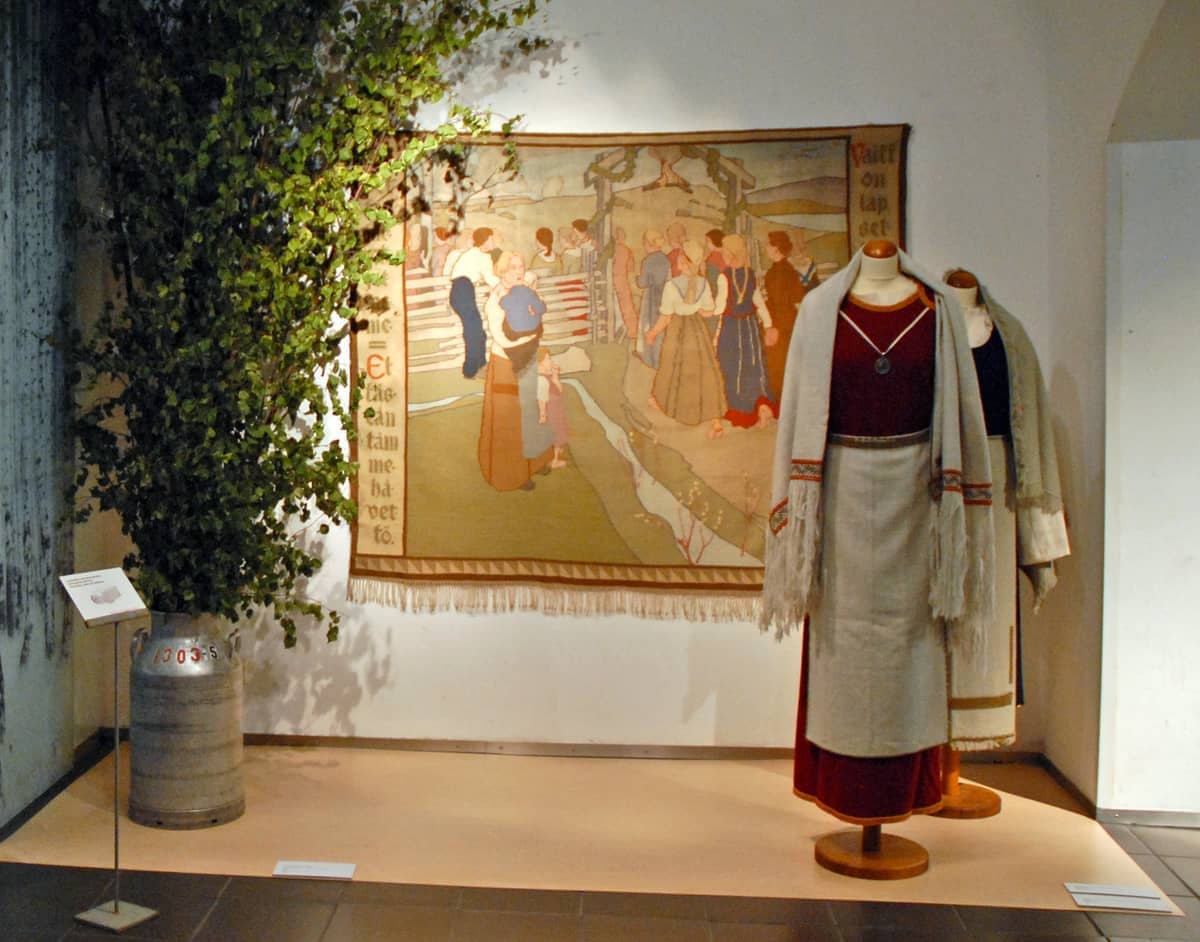
The permanent collection is the anchor. It moves roughly chronologically, connecting Finnish craft traditions of the 19th century to the industrialization of design in the early 20th century, then to the period that brought Finnish design to international prominence: roughly 1950 to 1975. If you know names like Tapio Wirkkala, Timo Sarpaneva, or Kaj Franck, this is where those names become three-dimensional. Glasswork, ceramics, textiles, and furniture appear not as decorative objects but as solutions to particular problems of material, production, and use.
What the permanent collection does well is explain the relationship between Finnish design and Finnish conditions: a climate that demands warmth and practicality, a postwar economy that needed domestic industry to succeed internationally, and a cultural disposition toward honesty of material. Whether or not you find all of this compelling, the objects themselves are consistently worth looking at closely.
Temporary exhibitions vary in ambition and subject. Some focus on individual Finnish designers or studios; others take broader international themes. The museum is worth checking before arrival: the current program is listed on the official site and the exhibitions tend to have distinct characters. If you are building a broader design itinerary across the Design District, pairing a visit here with the nearby Museum of Finnish Architecture makes practical sense, particularly given the current shared ticketing arrangements.
How the Experience Changes by Time of Day
Mornings on weekdays are the quietest. Opening to the public at 11:00, the museum draws a slow trickle through the late morning, with gallery rooms often near-empty until midday. The natural light in the upper galleries is at its clearest earlier in the day, which matters for the textiles and glasswork in particular: both benefit from being seen without the slight flatness that comes with artificial light alone.
On Tuesdays the museum stays open until 20:00, making it the one evening option in the week. The late afternoon and early evening on Tuesdays are noticeably more relaxed: visitors tend to be local rather than touristic, and the light falling through the building's windows as the sun drops produces a noticeably different atmosphere from a midday visit. If you are in Helsinki midweek and have a free evening, this is worth factoring in.
Summer hours extend significantly from June through August, with the museum open daily. In July and August, weekday opening hours generally run until 20:00. This is when visitor numbers are highest and when the Design District as a whole is most active. Weekend afternoons in summer can feel genuinely crowded in the permanent collection rooms, which are not large. Coming before noon or after 17:00 avoids the densest periods.
💡 Local tip
Tuesday evenings are one of Helsinki's better-value museum options. The extended 11:00–20:00 hours give you time to explore the Design District on foot first and arrive at the museum in the late afternoon with daylight still showing through the gallery windows.
The Design District Context
The museum does not exist in isolation. Korkeavuorenkatu and the surrounding streets of Punavuori and the Design District hold several dozen design studios, galleries, and shops within walking distance. A visit to the museum works well as either an anchor for a longer design-focused afternoon or as one stop among several. The neighborhood is compact and walkable, with most of the significant design retail and gallery spaces concentrated within about 500 meters of the museum entrance.
For visitors building a longer Helsinki itinerary, the Design District connects naturally northward to the city center and its larger cultural institutions. Kiasma Museum of Contemporary Art is roughly 20 minutes on foot and represents a different but complementary perspective on Finnish visual culture. The two make a reasonable combination for a full day's cultural programming, though both reward a slower pace rather than a rushed double-header.
Photography and Practical Details
Photography policies in Finnish museums vary by exhibition. The permanent collection generally permits personal photography without flash; temporary exhibitions may restrict this depending on the terms agreed with lenders. Check at the entrance desk on arrival. The building's architectural details, stairwells, and some of the larger display cases photograph well with available light. The glass and ceramic objects in the collection present the usual challenge of reflections; coming at a time when the rooms are less occupied gives more flexibility to find angles without other visitors in frame.
The museum shop is small but curated with the same logic as the collection itself: products are Finnish, and most are design-led rather than tourist-souvenir. It is worth a few minutes on exit regardless of whether you plan to buy anything. The building has a cloakroom where larger bags and coats can be stored, which is useful if you are continuing through the Design District after your visit.
Is It Worth Your Time?
For anyone with a genuine interest in design, material culture, or the particular arc of Finnish modernism, yes, clearly. The permanent collection is one of the better-assembled design histories you will find in a museum of this scale anywhere in northern Europe, and the building adds a layer of architectural interest that a neutral white-box gallery would not.
If your interest in design is casual rather than deep, the experience still holds for an hour or so, particularly if you frame it as part of a broader walk through the Design District rather than a destination in its own right. The museum is not large enough to sustain a half-day visit for someone without prior investment in the subject matter.
Visitors primarily interested in Finnish history or the natural landscape will likely find more to hold their attention at institutions with broader scope. Those looking to understand Helsinki through its architecture specifically would benefit from checking whether the Museum of Finnish Architecture program, now sharing the building, aligns with their visit. And if budget is a concern, the Helsinki Card covers entry and represents reasonable value if you plan to visit several museums during your stay.
Insider Tips
- Tuesday evenings (open until 20:00) are generally the best time for a quieter, more contemplative visit. Locals use the extended hours; the weekend tourist crowd does not.
- The accessible entrance via Ullanlinnankatu and the rear courtyard is not well signed from the street. If you or anyone in your group has mobility considerations, locate this entrance on a map before arriving rather than discovering it at the front door.
- The combined Architecture & Design Museum ticketing introduced in 2026 means you may be paying for both institutions regardless of which you primarily want to visit. If only one interests you, check current ticketing options directly on the official site before purchasing.
- The museum shop stocks Finnish design objects at prices that are often comparable to, or lower than, the design retail shops on the surrounding streets. If you are planning to buy Finnish design items as souvenirs, it is worth checking here first.
- Temporary exhibitions change several times per year and are listed with precise dates on the official website. If there is a specific exhibition drawing you, verify the dates well in advance: Helsinki museums occasionally adjust programming schedules.
Who Is Design Museum For?
- Design and architecture enthusiasts wanting historical context for Finnish modernism
- Travelers building a half-day or full-day walk through the Design District
- Rainy-day visitors looking for a calm, unhurried indoor option in central Helsinki
- Helsinki Card holders maximizing their cultural coverage
- Anyone interested in how a small country built an internationally recognized design identity
Nearby Attractions
Other things to see while in Design District & Punavuori:
- Helsinki Design District
Design District Helsinki is a network of nearly 200 design-forward shops, galleries, studios and museums spread across more than 25 streets in the Punavuori and Ullanlinna neighborhoods. Founded in 2005 during Finland's official Year of Design, it remains the country's most concentrated patch of Finnish design culture. Walking it costs nothing — and rewards slow, curious visitors who take time to look past the obvious storefronts.
- Hietalahti Market Hall
Hietalahti Market Hall (Hietalahden kauppahalli) is a historic indoor market at the end of Bulevardi in Punavuori. Free to enter, it draws a mix of local shoppers, food vendors, and café-goers, making it one of Helsinki's more relaxed and authentic market experiences.
- Museum of Finnish Architecture
The Museum of Finnish Architecture, now part of the Architecture and Design Museum on Korkeavuorenkatu, is one of the few institutions in the world dedicated entirely to the culture of building design. Whether you arrive for a specific exhibition or simply to understand how a small Nordic nation shaped 20th-century architecture globally, it rewards a deliberate visit.
- Old Church (Vanha Kirkko)
Completed in 1826 and designed by Carl Ludvig Engel, the Helsinki Old Church (Vanha Kirkko) is one of the city’s oldest surviving churches. Set inside a tranquil park in the Design District, it offers a rare moment of stillness just minutes from the city centre, with a neoclassical interior that rewards those who step inside.