Helsinki Design District: Finnish Design Culture Concentrated in One Walkable Neighborhood
Design District Helsinki is a network of nearly 200 design-forward shops, galleries, studios and museums spread across more than 25 streets in the Punavuori and Ullanlinna neighborhoods. Founded in 2005 during Finland's official Year of Design, it remains the country's most concentrated patch of Finnish design culture. Walking it costs nothing — and rewards slow, curious visitors who take time to look past the obvious storefronts.
Quick Facts
- Location
- Punavuori & Ullanlinna, central Helsinki. Core streets: Uudenmaankatu, Iso Roobertinkatu, Fredrikinkatu, Annankatu
- Getting There
- Short walk south from Esplanadi and Helsinki city centre; multiple tram and bus routes serve Punavuori from the central railway station
- Time Needed
- 2–4 hours for a focused walk; a full day if you enter galleries and museums
- Cost
- Free to walk. Individual shops, galleries and museums charge their own prices — check each venue
- Best for
- Design lovers, slow shoppers, architecture observers, anyone curious about Finnish creative culture
- Official website
- designdistrict.fi/en
What Design District Helsinki Actually Is
Design District Helsinki is not a mall, not a single building, and not a ticketed attraction. It is a formally designated urban area and membership network, founded in 2005 during Finland's official Year of Design, that spans more than 25 streets and nearly 200 establishments across the Punavuori and Ullanlinna neighborhoods south of Esplanadi. The streets themselves are walkable 24 hours a day. What fills them — independent boutiques, concept stores, ceramics studios, architecture offices, art galleries, vintage dealers and design institutions — is what gives the district its character.
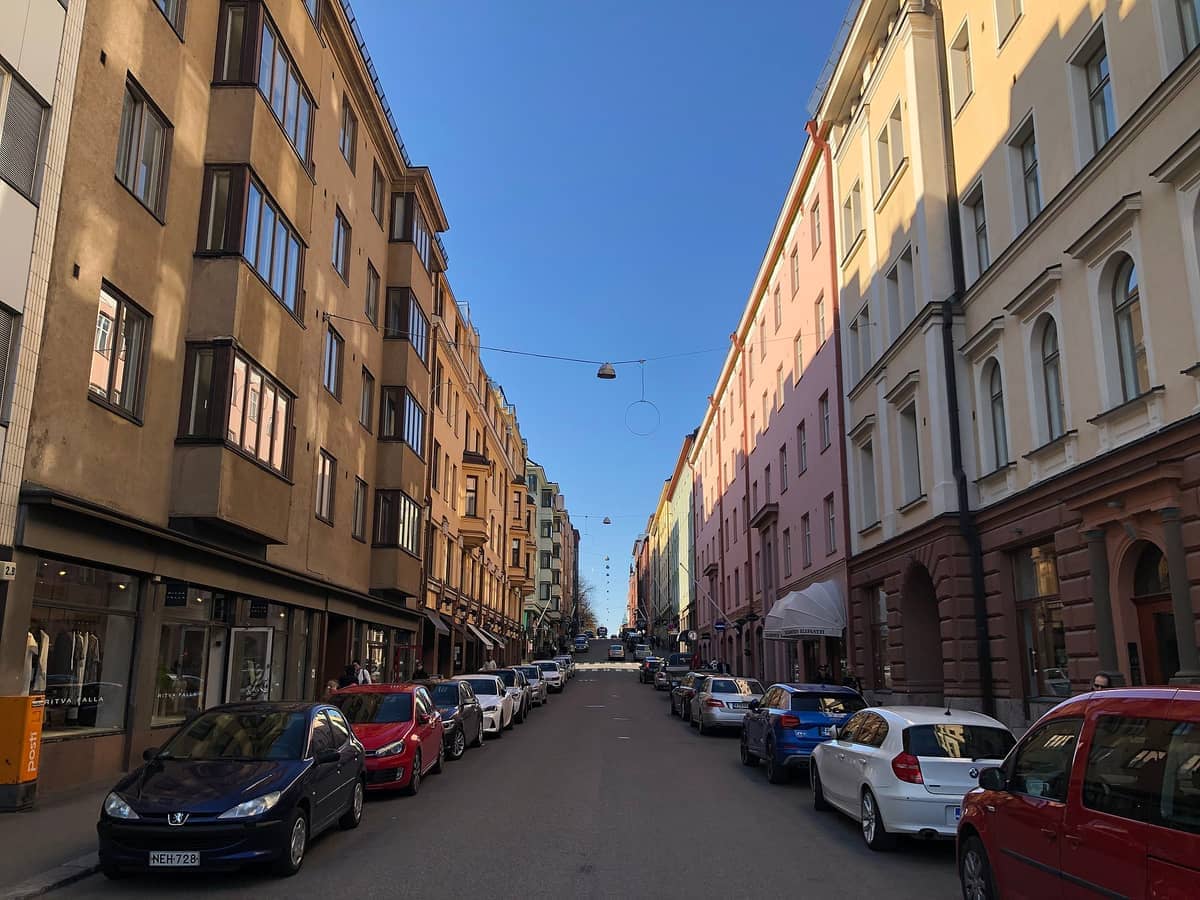
The district is anchored around Diana Park and radiates outward along Uudenmaankatu, Iso Roobertinkatu, Fredrikinkatu and Annankatu. These are not pedestrian-only shopping corridors. They are lived-in city streets with apartment buildings, neighborhood cafes and the kind of low-key, non-touristy atmosphere that makes browsing feel natural rather than forced. The design presence here is genuine rather than decorative — many of the businesses are the actual workshops, studios and primary retail points of Finnish designers, not just brand outposts.
ℹ️ Good to know
The district has no central entrance, no district-wide ticket, and no single map desk. Download the official Design District Helsinki map from designdistrict.fi before you arrive, or pick one up at most member stores. It marks all current member venues by category.
How the District Feels at Different Times of Day
On a weekday morning before 11:00, the district belongs to locals. Dog walkers move along Fredrikinkatu. A few cafe tables on Iso Roobertinkatu hold people with laptops. Shop shutters are still down on many storefronts, and the streets feel quiet in a way that lets you read the architecture without distraction: the pale plaster facades, the wrought-iron courtyard gates, the worn granite kerbs. It is worth arriving early simply to see the neighborhood before the commercial layer fully activates.
From around 11:00 onward, galleries and studios begin opening, typically Tuesday through Saturday. This is the productive window for serious browsing. The light in many of these spaces — high ceilings, tall windows on north-facing facades — is clean and useful for looking at objects properly. Ceramic glazes read differently in natural light than under retail spots; textile weaves show their structure. Midday on weekdays is generally the least crowded time inside shops.
Saturdays bring noticeably more foot traffic, particularly after noon. Couples browse together, families cut through on the way to Hietalahti market, and the cafe terraces fill up in summer. The atmosphere is unhurried but populated. Sunday is the quiet outlier: many smaller studios and galleries close entirely, and even open shops tend to run reduced hours. If your only day in the district is a Sunday, focus on the larger institutions like the Architecture and Design Museum rather than smaller independent venues.
💡 Local tip
Most smaller galleries keep Tuesday–Saturday hours, roughly 11:00–17:00, though this varies by venue. Always check each shop's own hours before planning your day around a specific stop.
Tickets & tours
Hand-picked options from our booking partner. Prices are indicative; availability and final rates are confirmed when you complete your booking.
Helsinki Pasila Street art district tour with a local
From 99 €Instant confirmationFree cancellationHelsinki Beautiful Canal Route, archipelago cruise
From 26 €Instant confirmationFree cancellationHelsinki Panorama Sightseeing Bus Tour With Audio Guide
From 35 €Instant confirmationFree cancellationArchitecture tour of Helsinki
From 60 €Instant confirmationFree cancellation
The Historical and Cultural Context
The formal designation of Design District Helsinki in 2005, during Finland’s official Year of Design, did not create a design culture in Punavuori — it gave formal recognition to something that had been accumulating for decades. The neighborhood's location just southwest of the city center, with relatively affordable older building stock compared to the central blocks around Senate Square, made it attractive to small creative businesses from the 1980s and 1990s onward. Designers, architects and gallerists moved in gradually, and the concentration reached a kind of critical mass by the early 2000s.
Finland's international reputation for design is real and has specific roots: it runs through the work of 20th-century figures like Alvar Aalto and Tapio Wirkkala, through companies like Iittala and Marimekko, and through an educational tradition anchored at institutions like Aalto University. What the Design District does is bring the contemporary end of that tradition into close physical proximity. You can walk from a gallery showing new Finnish ceramics to a shop selling vintage Arabia tableware to the Design Museum Helsinki within ten minutes. The Museum of Finnish Architecture is also located within the district, at Kasarmikatu 24, reinforcing the area's role as a center for serious design engagement rather than just retail.
The neighborhood architecture itself is mostly late-19th and early-20th century Helsinki: four and five-storey apartment blocks in various iterations of National Romantic and Jugendstil styles, with occasional Art Deco corners and post-war infill buildings. These are not the grand neoclassical monuments of Senate Square — they are workday Helsinki, which is precisely why they feel liveable rather than monumental.
Walking the District: A Practical Route
There is no prescribed walking order, but most visitors find it natural to enter from the north, coming down from Esplanadi along Fabianinkatu or Korkeavuorenkatu. This brings you past the Architecture and Design Museum quickly, which is worth noting as an early landmark. From there, cutting west along Korkeavuorenkatu and into the network of smaller parallel streets — Uudenmaankatu, Viides Linja, Annankatu — exposes the denser concentration of independent shops.
Iso Roobertinkatu is the district's most commercially active street and a reasonable backbone for the walk. The strip between Diana Park and the intersection with Fredrikinkatu contains a high density of member businesses in a relatively short stretch. Fredrikinkatu itself runs north-south and connects the design concentration to the Hietalahti end of the district, where the character shifts slightly toward antiques, vintage furniture and second-hand design goods near the flea market.
Allow time for courtyards. Several of the district's more interesting studios and concept spaces are accessed through archways off the main streets, in the interior courtyard buildings typical of Helsinki's older urban blocks. These are easy to miss if you stay strictly on the pavement. The district also borders directly on Hietalahti Market Hall at its western edge, making a combined visit straightforward.
💡 Local tip
Wear comfortable shoes. The streets are paved with granite cobblestones in several sections, which is uneven underfoot and challenging with wheeled luggage or pushchairs.
What You Will Actually Find Inside
The roughly 200 member businesses span a wide range. At one end: studios where working designers sell direct, ceramicists with small workshops behind a retail counter, jewellers who make pieces on-site. At the other end: larger concept stores carrying a curated mix of Finnish and Scandinavian design objects, clothing and homeware. In between there are vintage dealers focused specifically on mid-century Finnish design (Arabia ceramics, Iittala glass, old Marimekko prints), contemporary art galleries, hair salons with serious interior design ambitions, and a handful of design-oriented restaurants and cafes.
The quality is uneven, as it is in any genuinely independent commercial district. Some shops are exceptional; some are coasting on the Design District brand while selling things you could find in any European city. The official member map categorizes businesses by type, which helps filter quickly. If your interest is specifically in Finnish functional design — objects with practical use and careful material consideration — look for the smaller studios and the shops that specialize in Finnish brands rather than the broader Scandinavian lifestyle stores.
Visitors who want more structured context for what they are seeing should prioritize the institutions. The Design Museum Helsinki at Korkeavuorenkatu 23 has a permanent collection covering Finnish design history from the late 19th century to the present, with temporary exhibitions that often feature contemporary Finnish and international designers. The Museum of Finnish Architecture at Kasarmikatu 24 focuses specifically on built work and frequently mounts research-level exhibitions. Both charge their own admission fees; check current prices on their official sites before visiting.
Photography, Weather and Seasonal Considerations
The district photographs well in overcast conditions, which are common in Helsinki for much of the year. Flat northern light removes harsh shadows from the facades and makes architectural details — carved stonework, tiled doorways, painted signage — easier to read in an image. The streets are narrow enough that direct summer sun creates strong contrasts that can be harder to work with. Early morning in June or July, when the light is low and the streets are empty, produces the cleanest exterior shots.
Seasonally, the district is at its most atmospheric in summer when cafe terraces are in use and shop doors stay open onto the street. Winter visits are viable and can be rewarding — the interior quality of the shops becomes more appealing when it is cold outside, and Helsinki's winter light has a particular low-angle quality that is interesting for photography of building surfaces. Snow changes the texture of the cobblestones and the character of the streets considerably. Dress for proper cold from November through March; temperatures regularly reach -5°C and below.
Rain affects the experience only in the sense that browsing shifts more decisively indoors. The district has enough covered retail and gallery space that a wet day is not wasted. Bring a waterproof layer in spring and autumn as the weather changes quickly.
Accessibility and Practical Logistics
Accessibility across the district is inconsistent. The streets themselves are uneven cobblestone in sections, and many of the older buildings have steps at entrances with no ramps. The Architecture and Design Museum has a specifically accessible entrance via Ullanlinnankatu 4, and the Design Museum provides accessibility information on its own website. Newer or recently renovated venues generally offer level access. If accessibility is a priority, it is worth contacting specific venues ahead of your visit to confirm current arrangements, as renovation status changes.
The district is reachable from Helsinki Central Railway Station by tram or bus, with multiple routes serving Punavuori. The walk from the station along Esplanadi and down into the district takes roughly 15 minutes at an unhurried pace. If you are combining this with other central Helsinki sightseeing, the district connects naturally with a walk along Esplanadi Park to the north, or a visit to Kamppi Chapel of Silence nearby. For a longer itinerary, see our Helsinki design guide which covers the full design landscape across the city.
Insider Tips
- The official Design District Helsinki map, available free at member stores or as a download from designdistrict.fi, categorizes venues by type (shops, galleries, museums, restaurants, services). Use it to pre-select categories rather than wandering randomly — the district is large enough that an unplanned walk often misses the most interesting smaller studios.
- Several of the most distinctive shops occupy courtyard buildings accessed through archways on Iso Roobertinkatu and Uudenmaankatu. Look for open archways and wooden courtyard doors — the best spaces are often invisible from the street.
- Vintage Finnish design is well-represented at the Hietalahti end of the district near the flea market. If you are looking for second-hand Arabia ceramics, old Iittala glass or vintage Marimekko fabric, that western edge of the district typically offers better prices than the dedicated concept stores further east.
- Galleries in the district generally have no obligation-to-buy atmosphere and welcome people who are looking rather than purchasing. Treating a gallery visit as part of the walk rather than a commercial transaction is entirely normal here.
- If you are visiting specifically for the Design Museum or Museum of Finnish Architecture, Tuesday through Friday mornings are quieter than weekends. Check each museum's current exhibition schedule before your visit — the temporary shows vary significantly in relevance depending on your interests.
Who Is Helsinki Design District For?
- Design and architecture enthusiasts who want direct contact with Finnish creative output rather than a curated museum experience
- Slow travelers who enjoy browsing independent shops, studios and galleries without a fixed itinerary
- Visitors with a specific interest in Finnish functional design objects — ceramics, glass, textiles, furniture — whether contemporary or vintage
- Anyone combining cultural sightseeing with practical shopping, since the district mixes serious institutions with genuine retail
- Photographers interested in urban street character, building facades and the texture of a lived-in city neighborhood
Nearby Attractions
Other things to see while in Design District & Punavuori:
- Design Museum
Housed in a late 19th-century neogothic building in the heart of Helsinki's Design District, Design Museum Helsinki (Designmuseo) is Finland's national specialist museum for design. It traces the history of Finnish design from craft traditions to contemporary practice, with rotating international exhibitions alongside a permanent collection.
- Hietalahti Market Hall
Hietalahti Market Hall (Hietalahden kauppahalli) is a historic indoor market at the end of Bulevardi in Punavuori. Free to enter, it draws a mix of local shoppers, food vendors, and café-goers, making it one of Helsinki's more relaxed and authentic market experiences.
- Museum of Finnish Architecture
The Museum of Finnish Architecture, now part of the Architecture and Design Museum on Korkeavuorenkatu, is one of the few institutions in the world dedicated entirely to the culture of building design. Whether you arrive for a specific exhibition or simply to understand how a small Nordic nation shaped 20th-century architecture globally, it rewards a deliberate visit.
- Old Church (Vanha Kirkko)
Completed in 1826 and designed by Carl Ludvig Engel, the Helsinki Old Church (Vanha Kirkko) is one of the city’s oldest surviving churches. Set inside a tranquil park in the Design District, it offers a rare moment of stillness just minutes from the city centre, with a neoclassical interior that rewards those who step inside.