Museum of Finnish Architecture: A Deep Dive into Finland's Built World
The Museum of Finnish Architecture, now part of the Architecture and Design Museum on Korkeavuorenkatu, is one of the few institutions in the world dedicated entirely to the culture of building design. Whether you arrive for a specific exhibition or simply to understand how a small Nordic nation shaped 20th-century architecture globally, it rewards a deliberate visit.
Quick Facts
- Location
- Korkeavuorenkatu 23, 00130 Helsinki (accessible entrance: Ullanlinnankatu 4, 00130 Helsinki)
- Getting There
- Multiple tram lines serve the Design District; the museum is a short walk from central Helsinki tram stops in Punavuori and near Esplanadi park
- Time Needed
- 1.5 to 2.5 hours; longer if combining with the Design Museum next door
- Cost
- Adults €23 (covers the merged Architecture & Design Museum); exhibition plus audio guide €25; seniors 70+ €14; ages 18–29 €6; children 2–17 €3; Museum Card free. Prices verified August 2026 on the official museum website.
- Best for
- Architecture enthusiasts, design travelers, students of Nordic modernism, and anyone curious about how Finland built its identity in brick, steel, and glass
- Official website
- admuseo.fi/en
What the Museum of Finnish Architecture Actually Is
The Museum of Finnish Architecture, known in Finnish as Arkkitehtuurimuseo, now operates as part of the broader Architecture and Design Museum (Arkkitehtuuri- ja designmuseo) at the same Korkeavuorenkatu address in Helsinki. The merger brings the architecture and design collections under one institutional umbrella, but the architectural focus remains distinct and serious. This is not a casual pop-up gallery or a tourist-friendly overview; it is a research-grade institution with rotating exhibitions, a significant archive, and a permanent commitment to documenting how Finland has shaped the built environment.
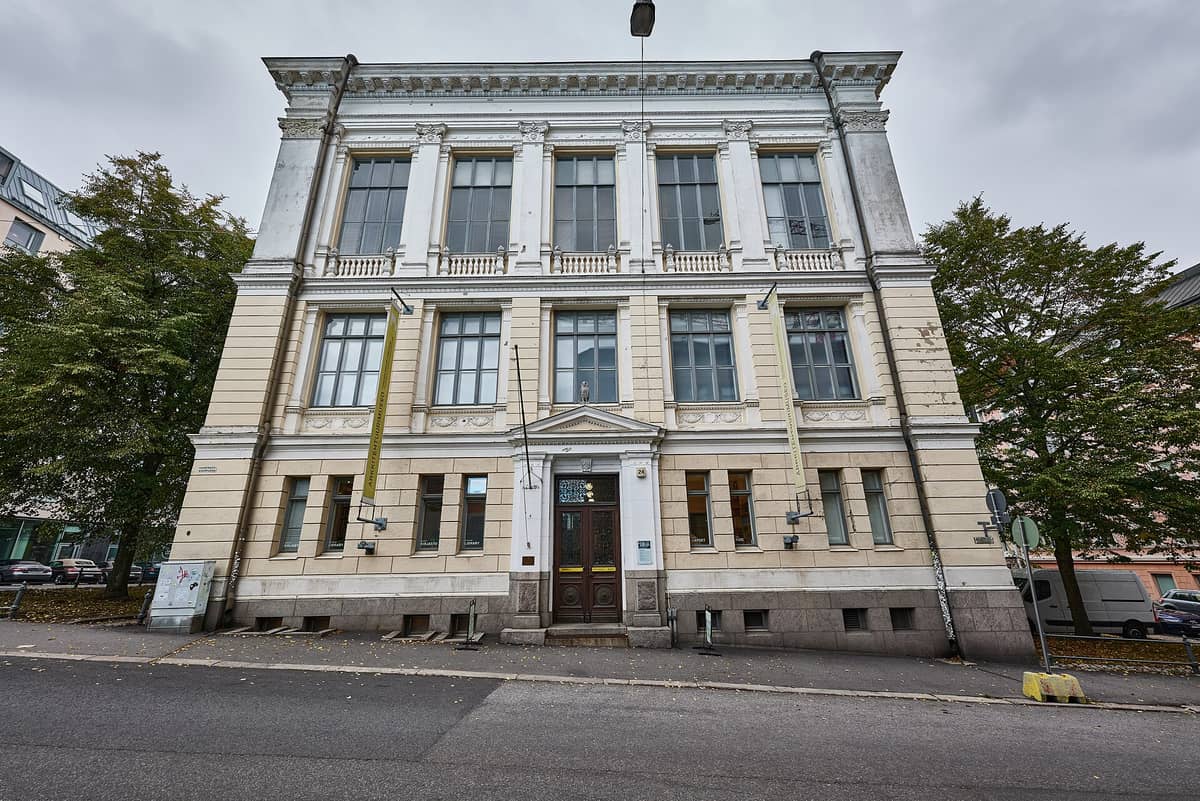
The museum sits in a late 19th-century stone building on a quiet residential street in Punavuori, Helsinki's Design District. The neighborhood itself is worth your attention: low-rise blocks in various shades of rendered plaster, studios and boutiques tucked into street-level units, and very little of the tourist-circuit noise you find closer to the waterfront. Arriving here already puts you in a different register.
💡 Local tip
The Museum Card, widely used by Helsinki residents and frequent museum visitors, grants free entry here. If you plan to visit two or more Helsinki museums, the card typically pays for itself quickly. Check current Museum Card pricing against the €23 adult admission before you buy.
The Physical Experience: Entering and Moving Through the Building
The main entrance faces Korkeavuorenkatu, but visitors requiring step-free access should use the accessible entrance from the inner courtyard at Ullanlinnankatu 4. The courtyard approach is actually worth taking regardless: it offers a pause between the street and the interior, a moment of compression before the exhibitions open up. There is one accessible parking space, a fully accessible elevator serving all floors, and an accessible toilet on the basement level. The museum does not currently have a full induction loop system, which is worth knowing if you rely on hearing loops.
Inside, the scale is deliberately unhurried. Ceilings are high, natural light enters from windows sized for a 19th-century stone building rather than a modern pavilion, and the exhibition design typically lets architectural drawings and models breathe rather than compressing them into dense displays. The smell is what you expect from a building of this age: paper, wood, a faint trace of climate-controlled air. It is quiet in the way that archives are quiet, which suits the material.
Tickets & tours
Hand-picked options from our booking partner. Prices are indicative; availability and final rates are confirmed when you complete your booking.
Architecture tour of Helsinki
From 60 €Instant confirmationFree cancellation2-hour private Helsinki architecture walking tour with local guide
From 325 €Instant confirmationFree cancellationHelsinki Beautiful Canal Route, archipelago cruise
From 26 €Instant confirmationFree cancellationHelsinki Panorama Sightseeing Bus Tour With Audio Guide
From 35 €Instant confirmationFree cancellation
What the Exhibitions Cover
Exhibitions rotate, so the specific content you encounter will differ from what is described in any static guide. What does not change is the institutional focus: Finnish architecture from the National Romantic period of the late 19th century through to contemporary practice. Expect original drawings, architectural models at various scales, photography documenting built and unbuilt projects, and contextual material that places Finnish design within the broader European and Nordic conversation.
The permanent collection and archive hold material on figures central to Finnish architectural history, including work connected to the tradition that produced Eliel Saarinen's National Romantic buildings and, later, the international modernism associated with Alvar Aalto. The museum does not simply celebrate these names; it contextualizes them, shows the competitions they lost as well as won, and includes the social and political conditions that shaped what got built and what did not.
If you want to understand how architecture functions in Finnish culture before visiting, the Helsinki Design District as a whole offers useful preparation. Walking from the museum through Punavuori and into the surrounding streets, you will recognize the building types and urban logic that the exhibitions discuss.
Opening Hours and the Best Time to Visit
The museum operates on a seasonal schedule. From 1 September to 31 May (winter season), it is open Tuesday 11:00 to 20:00, Wednesday through Sunday 11:00 to 18:00, and closed on Monday. During the summer season, 1 June to 31 August, it opens daily: Monday through Friday 11:00 to 20:00, and Saturday through Sunday 11:00 to 18:00. The extended Tuesday and summer weekday evening hours are genuinely useful if you want to visit after spending the daytime on other activities.
Weekday mornings, particularly Tuesday through Thursday between 11:00 and 13:00, are the quietest periods. Weekend afternoons bring more visitors, though this museum rarely feels crowded in the way that the major art galleries do. If you are visiting in winter, the Tuesday evening slot has a particular appeal: the building is warmly lit against the dark street outside, and the combination of architectural drawings and low ambient noise makes for an unusually focused experience.
ℹ️ Good to know
Winter season hours apply from 1 September to 31 May; the museum is closed on Mondays during this period. Summer season runs 1 June to 31 August, when the museum opens daily including Mondays. Always confirm current hours at admuseo.fi before visiting, as schedules can change around public holidays.
Combining the Visit with the Design Museum
The standard €23 adult ticket covers the merged Architecture & Design Museum. A €25 option adds an audio guide rather than buying a second museum ticket. The collections cover Finnish architecture alongside industrial and product design, from furniture and ceramics to graphics and fashion.
Plan for a minimum of three hours if you intend to do both properly, or consider splitting them across two visits. The Design Museum Helsinki is directly connected to the same institutional complex, so moving between them requires no additional transit.
Getting There: Transit and Orientation
The museum is well-served by Helsinki's tram network. Several tram lines run along nearby streets such as Bulevardi and around the Design District, making it reachable from the city centre in under ten minutes. The Design District as a whole is compact and walkable; most visitors arrive on foot from the central railway station area or from nearby accommodation in Punavuori and Kamppi. Cycling is also practical, and the streets around Korkeavuorenkatu have dedicated lanes.
If you are planning a broader day in the area, the museum pairs naturally with a walk through the Design District's commercial streets toward Hietalahti Market Hall to the west, or north toward Esplanadi Park and the waterfront. The neighborhood rewards slow walking more than efficient transit-hopping.
Honest Assessment: Who Should Prioritize This, and Who Might Not
If Finnish architecture is already a reason you are visiting Helsinki, this museum belongs at the top of your list. The collection depth and the seriousness of the curatorial approach are not matched anywhere else in the city. For visitors with a general interest in design or Nordic culture, the combination of this museum with the Design Museum next door makes for a rewarding half-day that covers significant ground.
Travelers who are not particularly interested in architecture or design history are likely to find the experience slow. The exhibitions assume some baseline curiosity about buildings as cultural objects; they do not pitch themselves to casual browsers. Children under ten will likely find the material abstract, though the museum does run some family programming. If your Helsinki itinerary is already full and you are not drawn to architecture specifically, other institutions will probably serve you better.
⚠️ What to skip
The museum does not have a full induction loop system. Visitors who rely on hearing loop technology should contact the museum directly before visiting to confirm current accessibility provisions.
For context on how to fit the museum into a broader Helsinki itinerary, the best museums in Helsinki guide covers how the architecture and design institutions compare with the major art museums across the city.
Insider Tips
- The accessible entrance via the inner courtyard at Ullanlinnankatu 4 is worth using even if you do not need step-free access; the courtyard provides a useful transitional space and a different first impression of the building.
- Tuesday evenings during the winter season (open until 20:00) are consistently among the least crowded times to visit, and the museum's warm interior lighting against a dark Helsinki evening creates a noticeably different atmosphere than a midday visit.
- The museum shop stocks architecture-focused publications, many of them Finnish-language titles unavailable elsewhere, alongside international monographs on Nordic modernism. Allow time here if books are part of your travel habit.
- If you hold a Museum Card, the combined architecture and design visit costs nothing beyond the card fee for standard admission. The card is available at the museum itself and at multiple other Helsinki institutions.
- Check the museum's current exhibition schedule at admuseo.fi before you arrive. The quality of the visit varies significantly depending on whether the current temporary exhibition aligns with your interests; the permanent collection is strong but the temporary shows are often the main draw.
Who Is Museum of Finnish Architecture For?
- Architecture students and professionals looking for serious primary-source material on Finnish modernism and contemporary practice
- Design-focused travelers combining the visit with the adjacent Design Museum and a walk through the Design District
- Visitors interested in how Finnish national identity was constructed through the built environment, from National Romanticism to postwar modernism
- Slow travelers who prefer depth over volume and are happy spending two hours with a focused collection rather than rushing through a larger institution
- Museum Card holders who want to maximize value across Helsinki's design and cultural institutions
Nearby Attractions
Other things to see while in Design District & Punavuori:
- Design Museum
Housed in a late 19th-century neogothic building in the heart of Helsinki's Design District, Design Museum Helsinki (Designmuseo) is Finland's national specialist museum for design. It traces the history of Finnish design from craft traditions to contemporary practice, with rotating international exhibitions alongside a permanent collection.
- Helsinki Design District
Design District Helsinki is a network of nearly 200 design-forward shops, galleries, studios and museums spread across more than 25 streets in the Punavuori and Ullanlinna neighborhoods. Founded in 2005 during Finland's official Year of Design, it remains the country's most concentrated patch of Finnish design culture. Walking it costs nothing — and rewards slow, curious visitors who take time to look past the obvious storefronts.
- Hietalahti Market Hall
Hietalahti Market Hall (Hietalahden kauppahalli) is a historic indoor market at the end of Bulevardi in Punavuori. Free to enter, it draws a mix of local shoppers, food vendors, and café-goers, making it one of Helsinki's more relaxed and authentic market experiences.
- Old Church (Vanha Kirkko)
Completed in 1826 and designed by Carl Ludvig Engel, the Helsinki Old Church (Vanha Kirkko) is one of the city’s oldest surviving churches. Set inside a tranquil park in the Design District, it offers a rare moment of stillness just minutes from the city centre, with a neoclassical interior that rewards those who step inside.