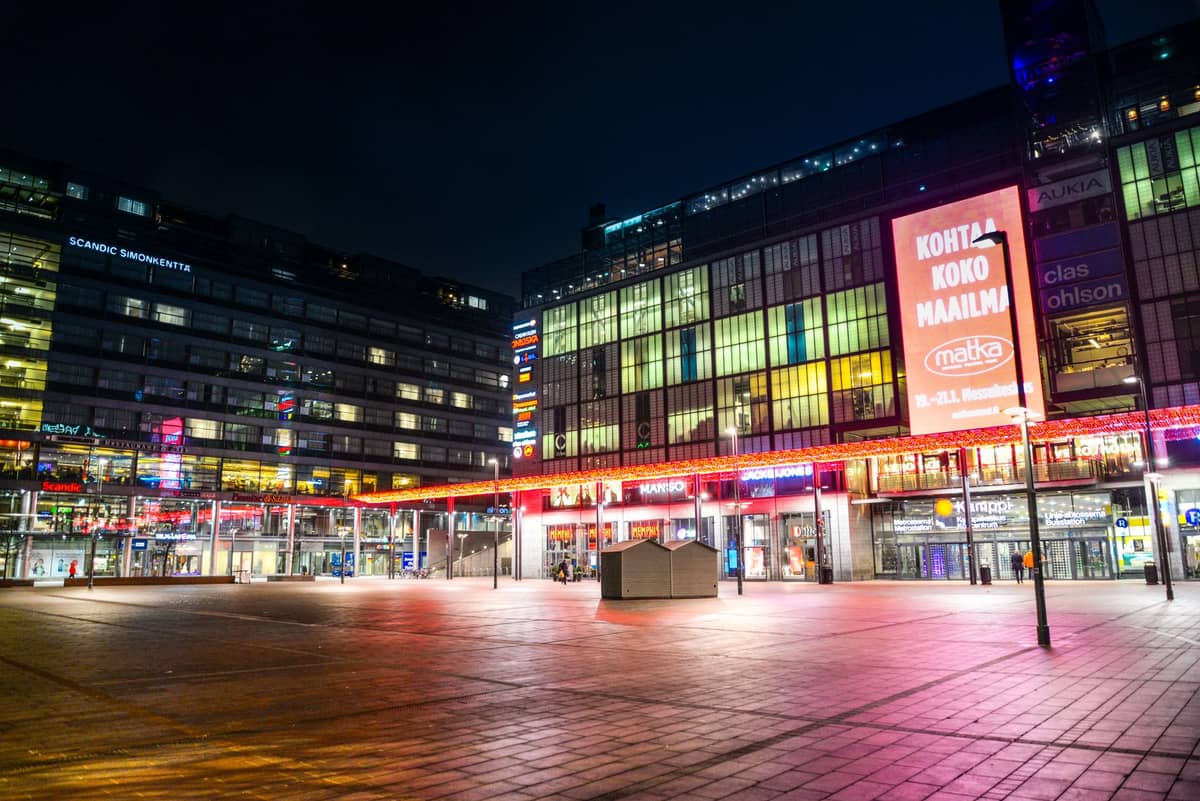
Kamppi sits at the geographic and logistical heart of Helsinki, where the city's main bus terminal, metro station, and shopping center converge. West of Mannerheimintie and just minutes from the waterfront, it blends everyday city life with some of Helsinki's most quietly remarkable architecture. This is the neighborhood where Helsinki actually works.
Kamppi is Helsinki's central engine: a dense, walkable downtown district where tram lines intersect, intercity buses depart, and office workers share pavements with shoppers and students. It lacks the postcard polish of Senate Square but compensates with authenticity, convenience, and a few genuine surprises tucked between the concrete and glass.
Orientation
Kamppi occupies the western side of Helsinki's city centre, separated from the main civic core by Mannerheimintie, the broad avenue that runs north from the waterfront to the Olympic Stadium. To orient yourself quickly: if you're standing at Helsinki Central Railway Station and walking west along Simonkatu or Salomonkatu, you're entering Kamppi within two or three minutes.
The neighborhood's rough boundaries are Mannerheimintie to the east, Bulevardi to the southeast, Runeberginkatu to the west, and the Baana cycling corridor and Hietaniemi cemetery area to the northwest. This is not a large district — you can walk from one edge to the other in under twenty minutes — but it packs in an enormous amount of function for its size.
Immediately to the south, Kamppi bleeds into Punavuori, Helsinki's design and gallery district, while the waterfront neighborhoods of Ruoholahti and Jätkäsaari lie to the southwest. To the north, the streets open toward Töölö and the cultural institutions around Töölönlahti Bay. Understanding these adjacencies matters because most visitors move through Kamppi rather than staying in it — it functions as a hub connecting the city's more residential and scenic quarters.
ℹ️ Good to know
Kamppi metro station is the main interchange point for the western city centre. It connects directly to the Kamppi Center bus terminal, making it Helsinki's primary gateway for both local transit and long-distance coach travel.
Character & Atmosphere
At seven in the morning, Kamppi belongs to commuters. The metro station disgorges office workers who fan out along Urho Kekkosen katu and Fredrikinkatu, coffee cups in hand, before the shops have opened. The streets are quiet enough that you can hear tram bells from Mannerheimintie a block away. There's a functionality to the district at this hour that feels honest — no performance for tourists, just a city getting on with things.
By midday the Kamppi Center shopping complex fills up, the outdoor plaza around the Chapel of Silence sees a steady flow of people cutting through, and the lunch crowd spills out of the office towers onto Fredrikinkatu. The afternoon light in late summer, slanting low across the Baana cycling path and hitting the older stone facades on Bulevardi, is one of those small Helsinki pleasures that doesn't make it into guidebooks.
After dark, Kamppi is calm rather than lively. It's not a nightlife district in the way that Kallio is — there are bars, but the energy is low-key. The bus terminal means there's always some movement, and the area around Tennispalatsi draws cinema-goers into the evening, but the streets largely empty by ten or eleven. For anyone expecting late-night atmosphere, the action is elsewhere.
The overall tone is urban and practical. Kamppi is where Helsinki residents do things — buy groceries, catch buses, work out at a gym — rather than where they go to display themselves. That makes it feel less curated than the Design District to the south or the waterfront to the east, and more like the actual city.
What to See & Do
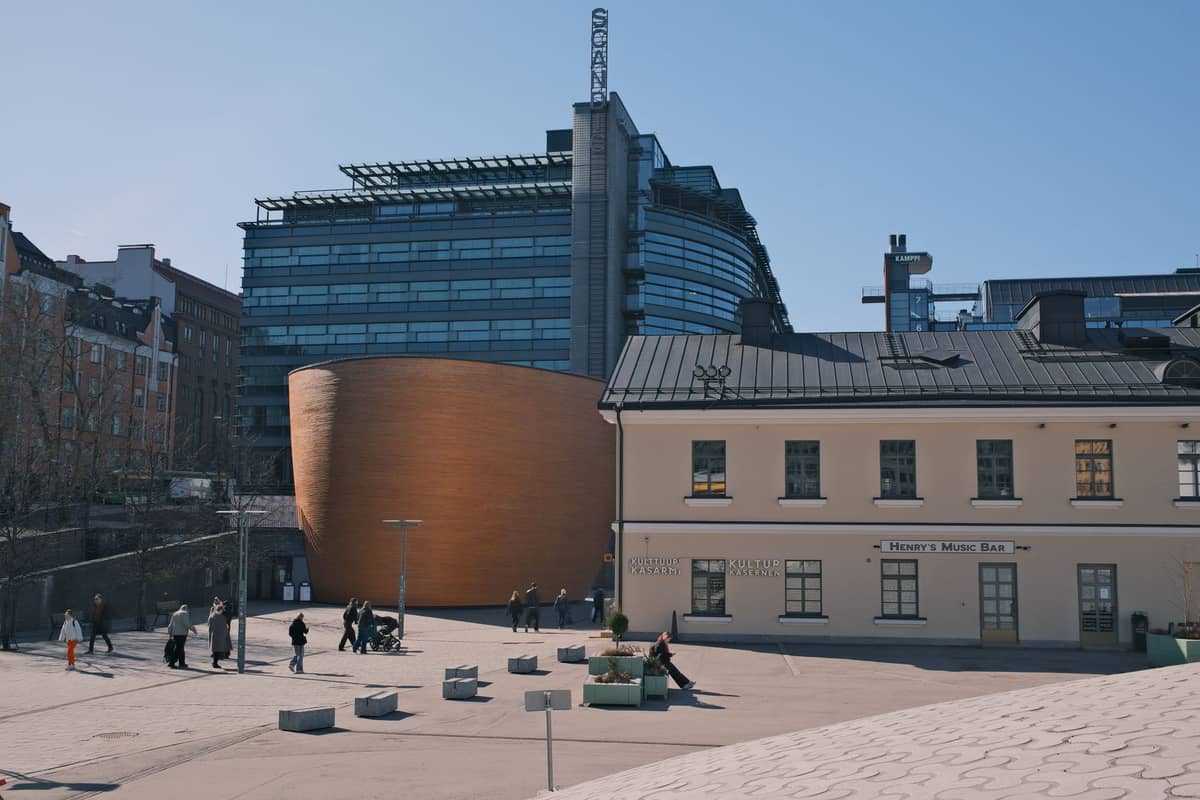
The single most striking thing in Kamppi is architecturally modest in scale but extraordinary in effect: the Kamppi Chapel of Silence. Completed in 2012, this curved wooden structure sits in Narinkkatori square, surrounded by the Kamppi Center's glass facades and the general urban noise of central Helsinki. Step inside and the sound drops away entirely. The interior is lined with spruce, the light comes from a diffused skylight, and the space holds perhaps forty people in contemplative silence. Admission is free. It is not a religious obligation to enter — it's simply a pause the city has built for anyone who needs one.
A short walk east along Mannerheimintie brings you to some of Helsinki's most important cultural institutions. The Kiasma Museum of Contemporary Art occupies a Steven Holl-designed building from 1998 that remains one of Helsinki's most discussed pieces of architecture — its curved white form seems to respond to the surrounding cityscape rather than impose on it. The permanent and rotating collections cover Finnish and international contemporary art, and the building itself is worth a visit even if modern art isn't your primary interest.
Nearby, the Helsinki Central Library Oodi opened in 2018 and has become one of the most visited buildings in Finland. It sits directly across from the Parliament House on Töölönlahdenkatu, its wave-like form deliberately designed to face the seat of Finnish democracy. All three floors are publicly accessible with no ticket required: the ground floor has a café and maker spaces, the middle floor houses workspaces and a cinema, and the top floor is a vast, light-filled reading room with panoramic windows. Oodi is not just a library — it's the most thoughtful piece of public infrastructure Helsinki has built in decades.
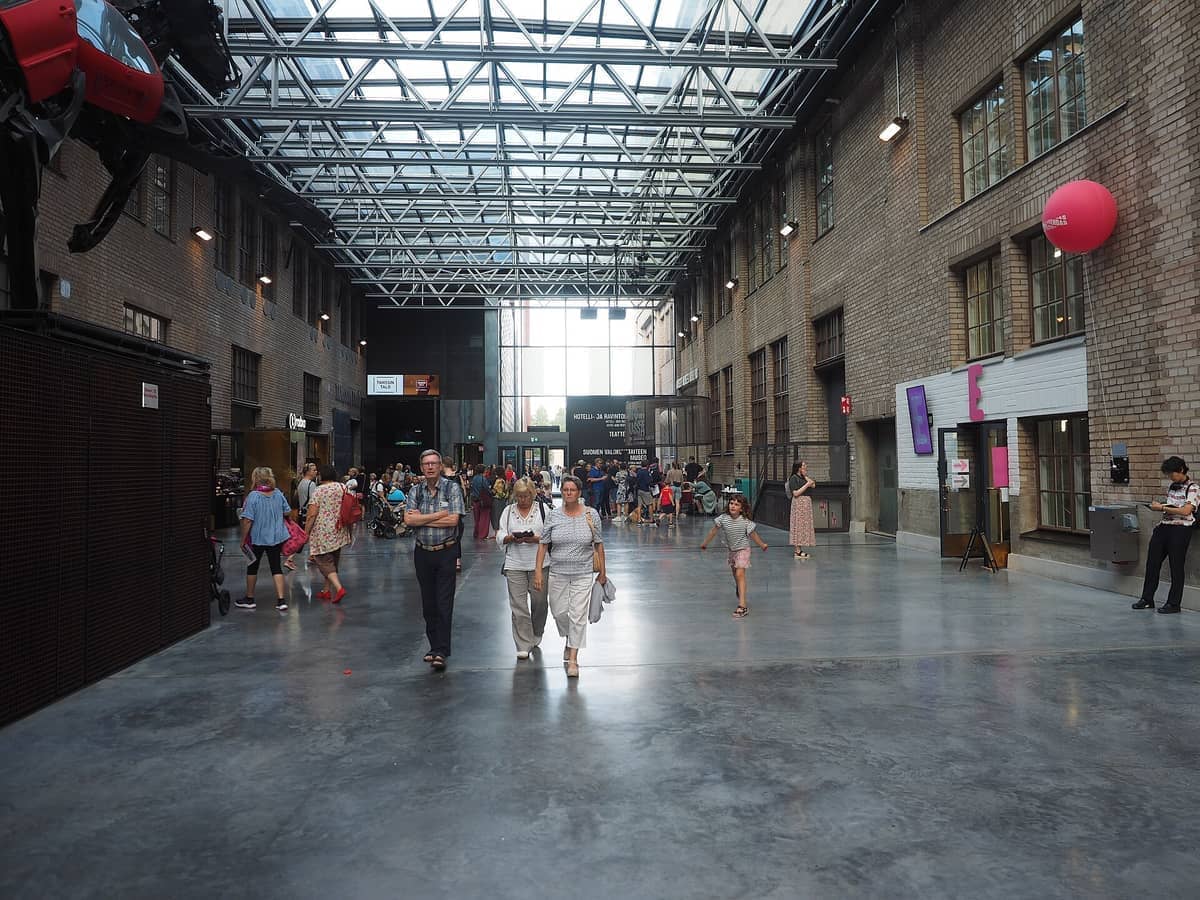
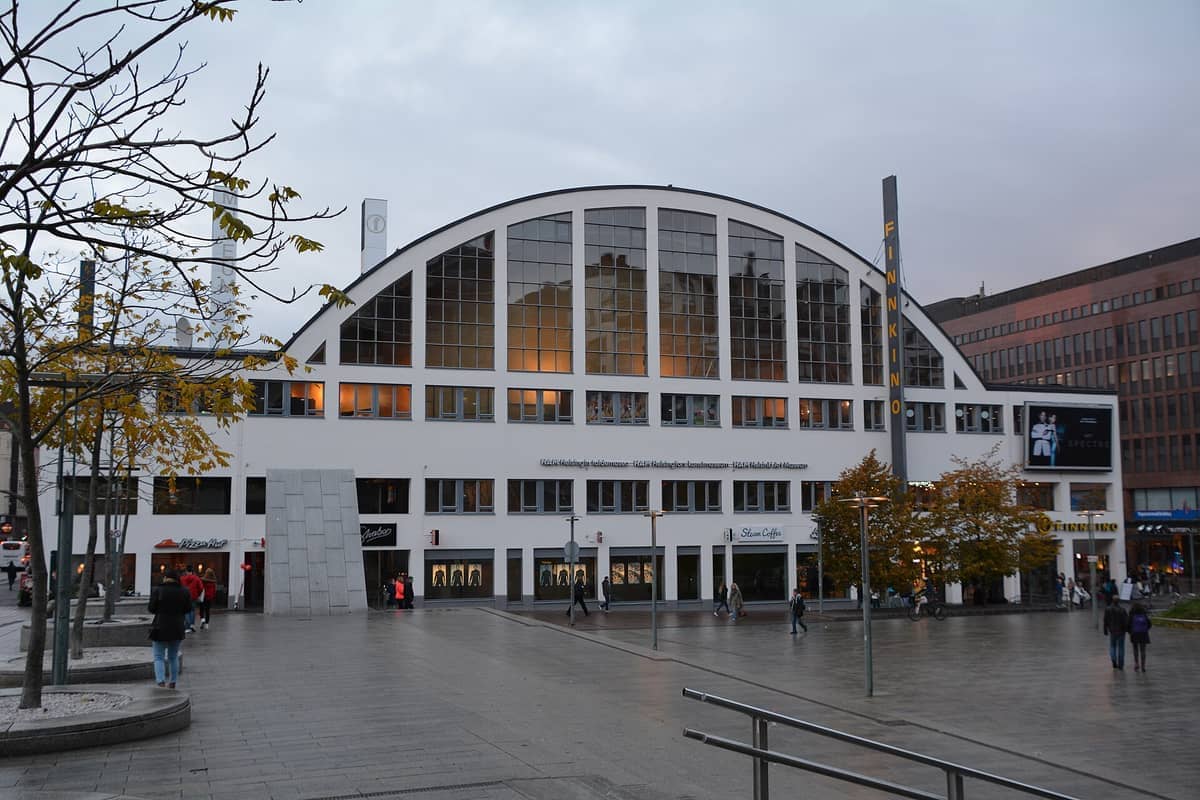
Tennispalatsi, a short walk southwest from Helsinki Art Museum (HAM)metro station, is a 1930s functionalist building that originally housed tennis courts for the 1940 Olympics (which were subsequently cancelled). It now contains a multiplex cinema, the Helsinki Art Museum HAM, and various food outlets. HAM's collection includes Finnish art from the twentieth century onwards and regularly hosts major temporary exhibitions.
Kamppi Chapel of Silence — free entry, open daily (hours vary by season), in Narinkkatori square
Kiasma Museum of Contemporary Art — contemporary Finnish and international art, check current exhibitions before visiting
Helsinki Central Library Oodi — free entry, open daily, rooftop reading room with city views
Helsinki Art Museum HAM — located in Tennispalatsi, permanent and temporary collections
Baana cycling and walking path — converted railway cutting, connects Kamppi to the waterfront
Hietaniemi Cemetery — quieter than it sounds; notable monuments and winter landscape
If you have time to extend your explorations southward, Kamppi connects directly into the Design District and Punavuori where galleries, design shops, and independent cafés cluster along Fredrikinkatu and the surrounding streets. The Hietalahti Market Hall at the southern edge of the district is one of Helsinki's best covered markets, with a food hall on the ground floor and an antique and flea market upstairs.
Eating & Drinking
Kamppi's food scene is more functional than destination-worthy at the northern end, around the bus terminal and shopping complex. The Kamppi Center contains a standard range of chain restaurants and fast-food outlets that serve their purpose well for travellers catching a bus or needing a quick meal between connections. This is honest, convenient eating, not a culinary event.
The character changes significantly as you move south and west along Fredrikinkatu and the streets feeding into Punavuori. Here the cafés become independent, the menus more considered, and the clientele shifts from lunchtime office workers to a more neighbourhood-oriented crowd. Finnish café culture emphasises quality coffee and cardamom buns (korvapuusti) — you will find both in abundance in the blocks between Kamppi metro station and the Hietalahti end of Bulevardi.
For a proper sit-down meal, the area around Fredrikinkatu and Albertinkatu has a range of restaurants spanning Finnish, Japanese, and Mediterranean cooking at mid-range prices. The nearby Hietalahti Market Hall is worth visiting specifically for its lunch options — several vendors operate from the ground floor, and prices are reasonable by Helsinki standards. The market hall dates to 1903 and the building itself, with its brick arches and iron columns, is worth a few minutes of attention.
For a broader overview of where and what to eat across Helsinki, the Finnish food guide for Helsinki covers local specialities, market halls, and seasonal eating in useful depth.
💡 Local tip
Finnish restaurants and cafés generally include service in the bill price. Tipping is not obligatory, though rounding up or leaving a small amount is common at sit-down restaurants. Verify current customs locally if in doubt.
Getting There & Around
Kamppi metro station is the neighbourhood's transit anchor. The Helsinki Metro runs east-west across the city and west into Espoo, making Kamppi a natural interchange point for anyone staying in western or central Helsinki. The station also integrates directly with the Kamppi Center bus terminal, from which long-distance coaches depart to other Finnish cities and to buses serving Tallinn ferry connections at the West Harbour
Tram lines 7 and 9 serve the area, connecting Kamppi to the waterfront, Kallio, and points east and north. From Helsinki Central Railway Station, the walk to Kamppi metro takes roughly ten minutes on foot, passing along Simonkatu or through the pedestrian zone. Check current Helsinki transit options for route maps and ticket information, as fares and schedules are managed by HSL (Helsinki Regional Transport Authority) and subject to change.
From Helsinki-Vantaa Airport, the ring rail line connects to Helsinki Central Railway Station in approximately 30 minutes, from where Kamppi is a short walk or one metro stop west. The Kamppi bus terminal is also served by direct airport coach services — check current HSL and operator timetables before travel, as schedules change seasonally.
Within the neighbourhood and into the adjacent districts, walking is the most practical option. The distances are short and the terrain flat. The Baana path — a former railway cutting converted into a cycling and pedestrian route — runs through the northern edge of Kamppi and connects to the waterfront at Länsisatama in one direction and toward Pasila in the other. It's a useful and pleasant route for anyone moving between Kamppi and the western harbour areas.
ℹ️ Good to know
Night buses in Helsinki use Kamppi as a key hub. If you're out late in other parts of the city, Kamppi is often the connection point for services running into the early hours. HSL's route maps identify specific night bus stops in the area.
Where to Stay
Kamppi is a reasonable base for visitors who prioritise transit convenience above neighbourhood atmosphere. The metro station puts the rest of Helsinki within quick reach: Kallio is two stops east, the waterfront is walkable, and the bus terminal makes day trips to the wider region straightforward. Several mid-range and business-oriented hotels sit within the neighbourhood boundaries, particularly along and near Urho Kekkosen katu and the streets approaching Mannerheimintie.
The neighbourhood is less suited to travellers who want a quieter, more residential feel. The area around the shopping complex and bus terminal generates noise and foot traffic throughout the day and into the evening. If you're sensitive to urban noise, look at accommodation slightly further south toward Punavuori, or east toward Kruununhaka, where the streets are quieter without sacrificing central access.
For a full comparison of Helsinki's accommodation zones and which areas suit different travel styles, the Helsinki neighbourhood guide for accommodation gives a broader overview across the city.
⚠️ What to skip
Hotels directly adjacent to the Kamppi Center bus terminal and Narinkkatori square can be noisy during peak hours, particularly when long-distance coaches are running. Ask about room orientation or upper floors when booking if street noise is a concern.
Practical Notes
Helsinki operates on Eastern European Time (UTC+2 in winter, UTC+3 during daylight saving from late March to late October). The city uses the Euro, and card payments are near-universal — carrying cash is rarely necessary but not a disadvantage. Finland's tap water meets EU drinking standards and is safe to drink directly from the tap.
Kamppi is close to several of Helsinki's most significant attractions beyond the neighbourhood itself. Suomenlinna fortress is reachable by ferry from the Market Square, a fifteen-minute walk from Kamppi's eastern edge. The Old Market Hall and Market Square are similarly walkable, making Kamppi a functional anchor for exploring the city's central and waterfront sights without relying heavily on transit.
If you're planning a broader trip, the two-day Helsinki itinerary uses Kamppi as a natural starting point for covering the city's main areas efficiently.
TL;DR
Kamppi is Helsinki's most central transit hub: the metro station, long-distance bus terminal, and tram connections make it the easiest neighbourhood from which to reach the rest of the city.
The Kamppi Chapel of Silence, Kiasma, Oodi library, and HAM museum give the area genuine cultural weight beyond its commercial function.
The food and café scene improves significantly toward the southern edge of the neighbourhood, where Kamppi meets Punavuori and the Hietalahti Market Hall area.
Best suited for travellers who prioritise central location and transit access; less suited for those seeking a quiet, residential neighbourhood feel.
Honest drawbacks: the area around the shopping complex and bus terminal is urban and functional rather than scenic, and evening atmosphere is low-key compared to Kallio or the waterfront districts.
Helsinki rewards a focused two-day visit better than almost any other Nordic capital. This itinerary covers the essential landmarks, best neighborhoods, and a few genuinely worthwhile detours — with practical transport details, honest cost breakdowns, and seasonal advice built in.
Helsinki offers more than its compact scale suggests when it comes to museums. From the golden-age canvases at the Ateneum to open-air farmhouses on a forested island, the city's collections span Finnish identity, world-class design, and contemporary art. This guide covers the best museums in Helsinki, with practical advice on what to expect at each.
Helsinki rewards visitors in every season, but the experience varies dramatically. This guide breaks down weather, crowd levels, prices, and what actually happens on the ground across all four seasons, so you can pick the timing that matches your priorities.
Helsinki is compact enough to explore in a couple of days, but the surrounding region rewards further exploration. From the medieval streets of Tallinn across the Gulf of Finland to the wooden old town of Porvoo and the wilderness of Nuuksio National Park, these are the day trips worth building time into your itinerary for.
Finnish food is more than fish and potatoes. This guide covers the essential dishes to try in Helsinki, where to find them, what they cost, and which seasonal specialties are worth planning around.
Helsinki punches well above its weight for free experiences. From permanently free museums and UNESCO World Heritage sites to urban beaches, sweeping architecture, and peaceful island walks, this guide covers the best free things to do in Helsinki across every season.
Helsinki has one of the most logical public transport systems in Northern Europe, built around a zone-based ticketing network that covers buses, trams, metro, commuter trains, and ferries. This guide covers every mode of transport, from landing at Helsinki Airport to island-hopping by ferry, with practical advice on what to use and what to skip.
The Helsinki Card promises free entry to 25+ attractions plus sightseeing tours from €51 for 24 hours. But does it actually save you money? This guide runs the real numbers, explains the three card versions, and tells you exactly when it's worth buying and when it isn't.
Helsinki's Christmas market season runs from late November through December, centered on the atmospheric Tuomaan Markkinat at Senate Square. This guide covers dates, opening hours, what to expect, and how to make the most of your visit in the Finnish winter.
Helsinki offers more than its compact scale suggests when it comes to design. From the combined Architecture and Design Museum to the underground wonder of Amos Rex, plus one of Europe's most concentrated design shopping districts, this guide covers everything you need to experience the city's design culture properly.
Summer transforms Helsinki into one of Northern Europe's most rewarding city destinations. Nearly 19 hours of daylight, major arts festivals, waterfront saunas, and island escapes make June through August the city's peak season. This guide covers everything you need to plan a summer trip, from the reality of the midnight sun to navigating Midsummer closures.
Helsinki in winter is a different city entirely. Snow-dusted streets, just six hours of daylight, and a culture built for cold. This guide covers everything from average temperatures and transport to the best seasonal activities, so you can decide if a winter visit is right for you.
Helsinki is defined by its archipelago. With dozens of islands ranging from a UNESCO World Heritage fortress to tiny sauna islands, knowing which to visit and how to reach them makes the difference between a great trip and a missed opportunity. This guide covers the best islands for every type of visitor.
Helsinki's market halls are the city's most reliable year-round food destinations, offering everything from fresh Finnish fish and game to evening dining and weekend flea markets. This guide covers all three halls — Old Market Hall, Hakaniemi, and Hietalahti — with practical details on what to eat, when to go, and how to get there.
Helsinki's nightlife runs later than most visitors expect, with licensed venues legally permitted to serve alcohol until 04:00 and some clubs closing even later. This guide covers the best neighborhoods, key venues, alcohol laws, and how to get home safely after a long night in the Finnish capital.
Helsinki has a reputation for being expensive, and it partly deserves it. But with the right strategy, you can see the best of Finland's capital without hemorrhaging euros. This guide covers transport costs, free attractions, the Helsinki Card, and practical tips for keeping your daily spend under control.
Sauna is not a wellness trend in Helsinki — it is infrastructure. This guide breaks down the best public saunas in the city by type, price, and experience, with practical advice on booking, etiquette, and what each venue actually delivers.
Helsinki is a surprisingly strong shopping destination. This guide covers the city's best shopping districts, indoor market halls, open-air markets, and the Finnish design brands worth seeking out, with practical hours, seasonal tips, and practical advice on what to skip.
The Helsinki to Tallinn ferry is one of the busiest short sea crossings in Europe, with up to 6 daily sailings per direction, crossing times as short as 2 hours, and fares starting around €15. This guide covers every operator, pricing reality, port logistics, and seasonal tips so you can book smart.
Vappu transforms Helsinki into Finland's largest outdoor celebration every 30 April and 1 May. From the iconic Havis Amanda statue capping ceremony to sprawling picnics in Kaivopuisto Park, this guide covers everything you need to know to experience the festivities like a local.
Helsinki is a city defined by water, sky, and open horizon. Whether you're scanning the harbour from a cathedral terrace or watching the sun set from a rooftop bar, these are the best viewpoints in the city, ranked and organised by type.
This guide walks you through the best self-guided route across central Helsinki, covering Senate Square, the waterfront, Esplanadi Park, Oodi Library, and beyond. Get practical stop-by-stop advice, timing tips, and honest notes on what to skip.
Helsinki's climate swings from dark, snowy winters to long-lit summers with near-19 hours of daylight. This guide breaks down Finland weather month by month, covering temperatures, precipitation, daylight, and exactly what to wear and plan for each season.
Helsinki is one of Northern Europe's most practical cities for families, with a compact layout, excellent public transport, and a strong mix of indoor and outdoor attractions that work across all seasons. This guide covers the best kid-friendly experiences, clear pricing, seasonal logistics, and what to skip.
Helsinki divides opinion. Some travelers leave wondering what the fuss was about; others come back every year. This guide cuts through the noise with specific costs, seasonal realities, and an honest take on what the Finnish capital actually delivers — and where it falls short.
Helsinki packs an extraordinary range of experiences into a compact, walkable city on the Baltic coast. This guide covers the best things to do in Helsinki across culture, nature, food, and nightlife, with practical advice on what's worth your time and what to skip.
Helsinki is compact enough that almost any central neighbourhood works as a base, but the right choice depends on your budget, travel style, and priorities. This guide breaks down the best areas to stay, typical hotel prices by category, and what to watch out for before you book.