Helsinki Central Library Oodi: Architecture, Community Space, and the Best Free Stop in Helsinki
Opened on 5 December 2018, Helsinki Central Library Oodi is a landmark public building at Kansalaistori Square, steps from the Central Railway Station. It combines a working library with makerspaces, a cinema, a rooftop terrace, and a cafe, all free to enter. The architecture alone justifies a visit, but the building earns its reputation by being genuinely useful.
Quick Facts
- Location
- Töölönlahdenkatu 4, Kansalaistori Square, Helsinki
- Getting There
- Helsinki Central Railway Station; multiple tram and bus lines stop at Kansalaistori
- Time Needed
- 45 minutes to browse; 2+ hours if you use the makerspaces, cinema, or rooftop cafe
- Cost
- Free entry. Some equipment loans or workshops may carry a fee — check oodihelsinki.fi
- Best for
- Architecture lovers, families with children, remote workers, rainy-day rescues, curious travellers
- Official website
- oodihelsinki.fi/en
What Oodi Actually Is (And Why It Matters)
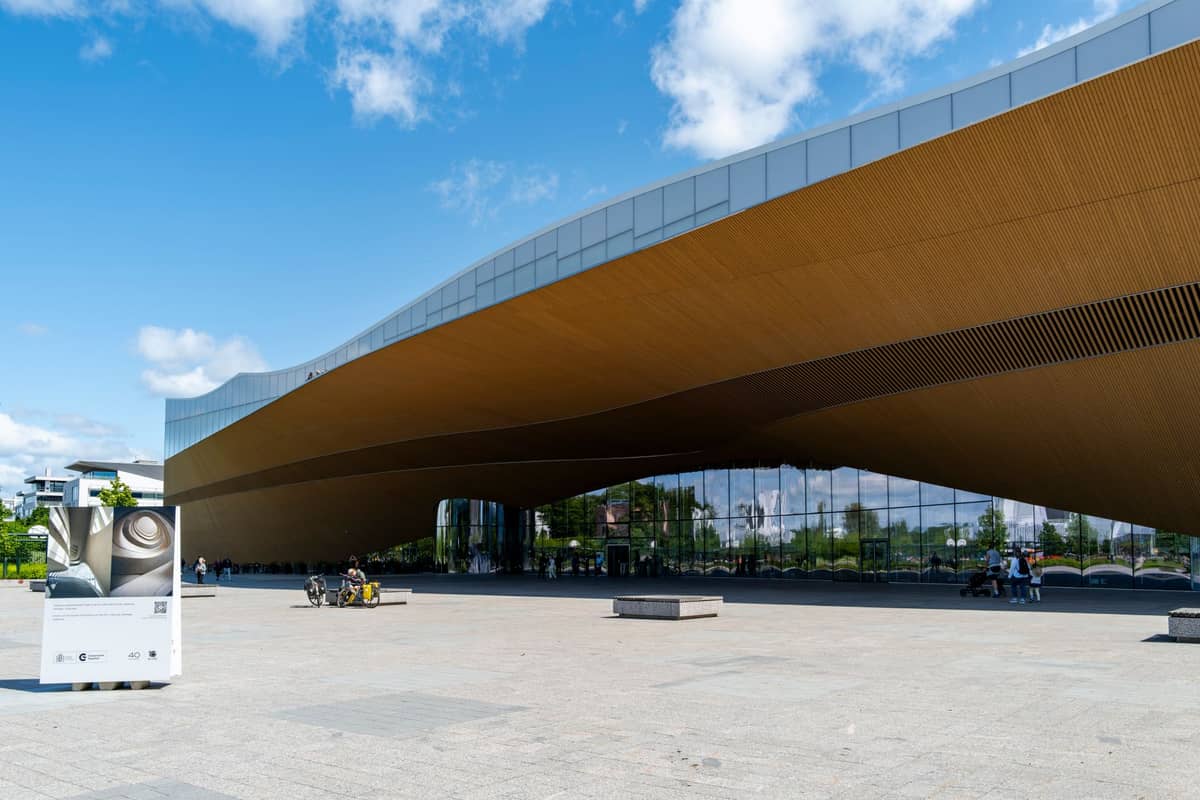
Helsinki Central Library Oodi Helsinki Central Library Oodi opened on 5 December 2018 as a gift from the city to its residents, on the eve of Finnish Independence Day. It sits directly opposite the Finnish Parliament building on Kansalaistori Square, a placement that was deliberate: the library faces the seat of government as a symbol of civic equality. The name 'Oodi' means 'ode' in Finnish, a reference to the building being an ode to the city's residents.
For visitors, the fastest way to understand Oodi is to stop thinking of it as a library in the traditional sense. But it is also a fabrication lab with 3D printers and laser cutters, a recording studio, a cinema, a rooftop terrace with views toward Toolonlahti Bay, a cafe, a gaming area, and a children's play space. All of it is free to enter.
💡 Local tip
Opening hours: Opening hours: Monday to Friday 8:00–21:00, Saturday to Sunday 10:00–20:00. Hours vary on public holidays, so check oodihelsinki.fi before visiting on days like Independence Day or Christmas. Hours vary on public holidays, so check oodihelsinki.fi before visiting on days like Independence Day or Christmas.
The Architecture: What You See Before You Step Inside
The building was designed by Finnish architecture firm ALA Architects and completed after a public competition. From the outside it reads as three distinct horizontal layers. The ground floor is mostly glass and open to the square, drawing the street inside. The middle level curves upward and outward like the hull of a wooden boat, clad in spruce, and visually separates the quieter upper floors from the activity below. The third floor sits above this curved shell, glazed and expansive, with panoramic views in multiple directions.
Approaching from the direction of the Central Railway Station, the building's white structural spine and the billowing wooden underbelly of the second floor are the details that stop people mid-stride. The spruce cladding is not a veneer; it is load-bearing timber on a significant scale, and it gives the interior of that middle floor a warmth you do not expect from a civic building. At night, when the glazed upper floor is lit from inside, the whole structure glows against the Helsinki sky in a way that photographs do not fully capture.
The building sits at the edge of the Töölönlahti Bay park loop, so if you are already doing a walk around the bay from the direction of Finlandia Hall or the National Museum, Oodi is a natural stop at the southern end of that circuit.
Tickets & tours
Hand-picked options from our booking partner. Prices are indicative; availability and final rates are confirmed when you complete your booking.
Helsinki Beautiful Canal Route, archipelago cruise
From 26 €Instant confirmationFree cancellationHelsinki Panorama Sightseeing Bus Tour With Audio Guide
From 35 €Instant confirmationFree cancellationHelsinki Pasila Street art district tour with a local
From 99 €Instant confirmationFree cancellationArchitecture tour of Helsinki
From 60 €Instant confirmationFree cancellation
Floor by Floor: A Practical Walkthrough
Ground Floor: Activity, Noise, and the Makerspace
The ground floor is the loudest and most social part of the building. It contains the main entrance hall, the cafe, a large children's area with generous floor space and toys, and the fabrication lab. The lab includes 3D printers, laser cutters, sewing machines, and embroidery equipment. Equipment is available to Helsinki library card holders; visitors can observe and in some cases join scheduled workshops. The calendar changes regularly and is listed on the Oodi website.
The children's section is well-designed for families: it is separated enough to feel contained but open enough that adults can keep sight of children easily. On weekend mornings this floor is busy with families, and the cafe fills up fast. If you are travelling with children under 10, arriving when the building opens means shorter waits and more space.
Second Floor: The Curved Wooden Interior
Taking the escalator or elevator up to the second floor is where the architectural experience sharpens. The ceiling here follows the curved underside of the spruce shell you saw from outside, and the natural wood overhead combined with warm lighting creates an atmosphere closer to a concert hall than a public building. This floor holds meeting rooms, rehearsal spaces, a recording studio, and co-working areas that can be booked by Helsinki residents. For visitors without a booking, much of this floor is viewable and walkable.
Sound carries differently here. The acoustics are deliberately managed: the wooden surfaces and the irregular ceiling shape absorb and scatter noise in a way that makes the space feel calm despite being occupied. On weekday afternoons you will often see students at laptops, small group meetings taking place in glass-walled rooms, and people simply sitting in the seating areas built into the curves of the floor.
Third Floor: Books, Views, and the Rooftop Terrace
The top floor is where the books are. The collection is organized in a long, light-filled open space with floor-to-ceiling windows on the south and west sides. Views from here take in the Parliament building directly across the square, and on clear days you can see the bay and the park beyond. The reading chairs positioned at the windows are exactly as comfortable as they look, and they are occupied for most of the day.
The rooftop terrace opens when weather allows, typically from spring through early autumn. It is accessible from the third floor and provides an elevated outdoor space above the square with unobstructed views toward the city centre, the bay, and across to Finlandia Hall. In summer the terrace becomes one of the better free viewpoints in central Helsinki, and it is quieter than the tourist crowds at Senate Square or the Cathedral steps.
For context on Helsinki's other elevated vantage points, the Helsinki viewpoints guide covers the full range of outdoor and indoor options across the city.
How the Experience Changes by Time of Day
Early morning on weekdays, from 8:00 until around 10:00, the building is quiet and largely populated by commuters stopping in before work. The cafe is open, the views from the third floor are clear, and the fabrication lab has not yet filled up. This is the best window if you want the architecture without the crowd.
Midday and afternoon on weekdays bring students, remote workers, and a rotating mix of tourists. The ground floor cafe operates at full capacity around 12:00–13:00. The third floor reading room stays calmer throughout the day because most visitors do not make it past the second floor. Weekend mornings are family-heavy; weekend afternoons tend to bring a broader mix of ages and the longest queues for the cafe.
In winter, when Helsinki temperatures drop well below freezing and daylight runs to around six hours, Oodi becomes a genuine refuge. The warmth, the light, and the sense of activity make it a different kind of attraction in January or February than it is in June. It is not overstating things to say that on a dark December afternoon, walking into Oodi's illuminated third floor feels like a deliberate act of civic hospitality.
ℹ️ Good to know
The rooftop terrace is seasonal and weather-dependent. In winter it is typically closed or inaccessible. Check the Oodi website for current status if the terrace is a specific reason for your visit.
Practical Intelligence for Visitors
Oodi is a short walk from Helsinki Central Railway Station: exit toward Elielinaukio, cross Mannerheimintie, and the building is immediately visible across Kansalaistori Square. Multiple tram and bus lines stop in the vicinity; the Kansalaistori stop is served by several routes. Exact route numbers and schedules should be confirmed through the HSL journey planner (reittiopas.hsl.fi) as these change seasonally.
The building is fully accessible. All floors are served by elevators, all entrances are step-free, and accessible toilets are on each floor. Strollers and wheelchairs move through the building without obstruction. Luggage storage is not available, but the lockers at Helsinki Central Railway Station are a short walk away.
Photography is generally permitted throughout the building for personal use. The architecture photographs well from inside in natural light, particularly from the second-floor wooden ceiling and from the third-floor windows looking toward Parliament. Flash photography and tripods in public areas are subject to standard library courtesy rules.
If Oodi is part of a broader itinerary, it pairs well with a walk along Töölönlahti Bay or a visit to Finlandia Hall, both within easy walking distance in the same neighborhood.
Is Oodi Worth Your Time as a Tourist?
Honestly: yes, for most visitors, and not just for the architecture. The building is free, open long hours, and genuinely pleasant to spend time in. It is also a meaningful piece of Finnish public culture: Finland has one of the highest library usage rates in the world, and Oodi represents a national commitment to open public space that goes beyond books. Seeing it in use, on a normal weekday with locals working and children playing and someone testing the 3D printer, gives you a real sense of Helsinki that Senate Square does not.
Visitors who might not find much value here: those with very limited time who want only iconic visual landmarks, and those who find contemporary civic architecture uninteresting. Oodi is not historically layered in the way that the Uspenski Cathedral or Suomenlinna Fortress are. It is a building from 2018, and its significance is cultural and contemporary rather than historical.
If you are building a broader itinerary, the free things to do in Helsinki guide covers Oodi alongside other no-cost attractions, and the 2-day Helsinki itinerary places it in context with the city's other central landmarks.
Insider Tips
- The third-floor window seats facing Parliament are almost always taken by midmorning. If you want one, arrive within the first 30 minutes of opening.
- The cafe on the ground floor is run separately from the library and can have significant queues on weekend afternoons. The nearby Kansalaistori square has outdoor seating in summer if you want to avoid the wait.
- Oodi's fabrication lab equipment is primarily for Helsinki library card holders, but the public workshops listed on the website are open to visitors and are genuinely interesting to observe or join. Check the events calendar at oodihelsinki.fi/en before your visit.
- The rooftop terrace is not widely signed from inside the building. Access is through the third floor, near the western end. Ask staff if you cannot locate it.
- In winter, the building's long Monday-Friday hours (until 21:00) make it one of the few well-lit, warm, free spaces open in the evening. It works well as a base for planning the next day's activities over a coffee.
Who Is Helsinki Central Library Oodi For?
- Architecture and design enthusiasts who want a contemporary Finnish landmark
- Families with young children needing a structured, free indoor space
- Travellers visiting in winter or on rainy days who need a quality indoor option
- Remote workers and digital nomads looking for a comfortable, well-connected space
- Anyone curious about Finnish public culture and why Finland consistently ranks among the world's most literate nations
Nearby Attractions
Other things to see while in Töölö:
- Finlandia Hall
Finlandia Hall is Helsinki's most architecturally significant congress and concert venue, designed by Alvar Aalto and completed on the western shore of Töölönlahti Bay. Whether you come for the permanent Aalto exhibition, a concert evening, or simply to study the building's striking white marble facade up close, the hall sits at the intersection of Finnish cultural identity and modernist design.
- Finnish National Opera and Ballet
The Finnish National Opera and Ballet, known locally as Kansallisooppera ja -baletti, is Finland's foremost performing arts institution, occupying a purpose-built house on the edge of Töölönlahti Bay. Whether you are new to opera or a longtime ballet devotee, the venue delivers a polished, accessible experience at the heart of Helsinki's cultural calendar.
- Helsinki Olympic Stadium
Built for the 1952 Summer Olympics, the Helsinki Olympic Stadium in Töölö is Finland's most storied sports venue. Visitors can climb its landmark tower for sweeping city views, tour the TAHTO Sports Museum, and walk the same track that once hosted the world's greatest athletes.
- Helsinki Swimming Stadium
Helsinki Swimming Stadium — known locally as Uimastadion or Maauimala — is the city's iconic open-air Olympic-style pool complex in Taka-Töölö. Open from May to September, it draws early-morning lap swimmers, families on long summer afternoons, and everyone in between. Here is everything you need to know before visiting.