Finlandia Hall: Alvar Aalto's Landmark on the Bay
Finlandia Hall is Helsinki's most architecturally significant congress and concert venue, designed by Alvar Aalto and completed on the western shore of Töölönlahti Bay. Whether you come for the permanent Aalto exhibition, a concert evening, or simply to study the building's striking white marble facade up close, the hall sits at the intersection of Finnish cultural identity and modernist design.
Quick Facts
- Location
- Mannerheimintie 13 e, 00100 Helsinki (Töölö)
- Getting There
- Trams 4 & 10, stop Kansallismuseo (Mannerheimintie, directly in front)
- Time Needed
- 45–90 minutes for the Finlandia Exhibition; allow extra time if attending an event
- Cost
- Public lobby: free. Finlandia Exhibition: tickets from €18 online (€20 on-site); discounts for students, pensioners, under-25s; children under 7 free
- Best for
- Architecture enthusiasts, design lovers, classical music audiences, rainy-day culture seekers
- Official website
- www.finlandiatalo.fi/en
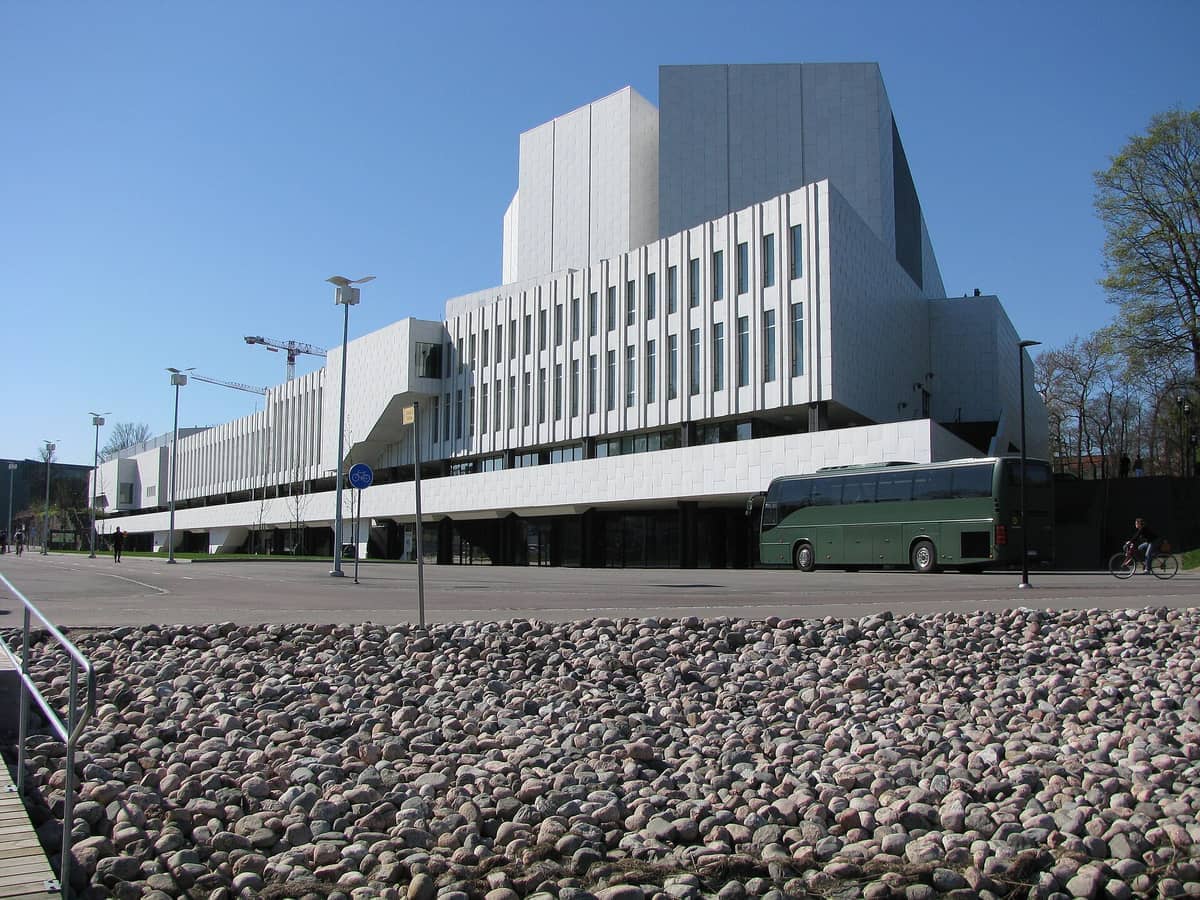
What Is Finlandia Hall?
Finlandia Hall, known in Finnish as Finlandia-talo, is a congress, concert, and event venue on the western shore of Töölönlahti Bay in central Helsinki. It is one of the most studied works of Finnish architect Alvar Aalto, whose influence on 20th-century Nordic design extends well beyond Finland. The building functions as a working conference and performance venue, hosting everything from international summits to chamber concerts, but its architecture draws visitors who have no ticket at all.
The main address is Mannerheimintie 13 e, roughly 700 metres north of Helsinki Central Railway Station. Trams 4 and 10 stop at Kansallismuseo directly in front of the building's Mannerheimintie facade. Several U-line buses also serve the nearby stops at Kansallismuseo (H1907 and H1906). If you are walking from the railway station, follow Töölönlahdenkatu and Karamzininranta along the bay edge — the approach on foot gives you the best first look at the white marble cladding against the water.
ℹ️ Good to know
Opening hours vary by season and event schedule. Approximate general hours for the building are Monday to Friday 09:00–19:00, Saturday 11:00–19:00, Sunday 11:00–16:00. The Finlandia Exhibition is usually open Monday to Friday 10:00–19:00, Saturday 11:00–18:00, Sunday 11:00–16:00. Always confirm on the official site before you visit, especially during public holidays.
The Architecture: What to Look For
Aalto designed Finlandia Hall in a characteristically asymmetric, organic-modernist style. The exterior is clad in white Carrara marble from Italy, a material choice that proved controversial over time. Finnish winters are harsh on natural stone: the marble has required ongoing repairs and replacement panels because the freeze-thaw cycle caused warping and cracking in the original slabs. Far from diminishing the building's status, this long-running maintenance story has become part of its history, illustrating the tension between aesthetic ambition and Nordic climate.
The roofline shifts in elevation across different wings, creating a terraced silhouette when viewed from Töölönlahti Bay. Aalto's interior detailing is equally deliberate: the concert hall ceiling features characteristic undulating panels designed to distribute sound, and the furniture, door handles, and ceiling fixtures were all designed by Aalto or his studio, giving the interior a disciplined coherence that larger multi-architect venues rarely achieve.
The building sits in direct visual dialogue with the bay and the surrounding park. From the waterside promenade along Töölönlahti Bay, the full length of the white facade reflects on the water in calm conditions, particularly in early morning before city traffic picks up. Photographers and architecture students frequently arrive before 9:00 to capture the building in low, raking light without crowds.
Tickets & tours
Hand-picked options from our booking partner. Prices are indicative; availability and final rates are confirmed when you complete your booking.
Helsinki Beautiful Canal Route, archipelago cruise
From 26 €Instant confirmationFree cancellationHelsinki Panorama Sightseeing Bus Tour With Audio Guide
From 35 €Instant confirmationFree cancellationHelsinki Pasila Street art district tour with a local
From 99 €Instant confirmationFree cancellationSurvival suit floating experience
From 125 €Instant confirmationFree cancellation
The Finlandia Exhibition: Visions of Alvar Aalto
The permanent exhibition inside the hall, called the Finlandia Exhibition: Visions of Alvar Aalto, is the main ticketed experience for visitors without event tickets. It explores Aalto's design philosophy through original drawings, scale models, archival photographs, and physical material samples, placing Finlandia Hall within his broader body of work that spans furniture, glassware, urban planning, and civic buildings across Finland and beyond.
Ticket prices as of 2026: standard entry is 18 euros if purchased online through Tiketti, or 20 euros at the door. A reduced rate of 16 euros applies to visitors aged 14 to 25, students, pensioners, conscripts, and those in non-military service or receiving unemployment benefit. Group tickets (minimum 8 people) are also 16 euros per person. Children aged 7 to 14 pay 7 euros; those under 7 enter free. The Helsinki Card offers a discounted exhibition ticket — check current card benefits before visiting.
If you are building a broader design-focused itinerary, the Finlandia Exhibition pairs naturally with a visit to the Design Museum Helsinki or the Museum of Finnish Architecture, both of which provide complementary context for understanding Aalto's place in Finnish cultural history.
How the Experience Changes Through the Day
Mornings on weekdays are the quietest time inside the building. The lobby and public spaces have a calm, slightly institutional atmosphere — staff set up for the day's events, and the marble interiors carry sound in a way that makes footsteps and low conversation audible from some distance. This is when the details are easiest to examine without other visitors in the frame.
Midday on weekdays brings conference delegates, business visitors, and lunch guests to the in-house cafe. The energy is purposeful rather than tourist-oriented, which suits visitors who prefer a working cultural institution to a stage-set attraction. On Saturday afternoons, the building sees more leisure visitors, particularly families and those walking the Töölönlahti circuit who step inside out of curiosity or for coffee.
Evening event nights are a different experience entirely. When the concert hall is in use, the lobby fills with an audience dressed with some formality, the cafe operates at full pace, and the building's lighting design — warm and directional inside, cool white marble outside — creates a striking contrast against the dark sky over the bay. Checking the events calendar before your visit and booking an evening concert gives you the building as Aalto intended it to function.
💡 Local tip
The Karamzininranta entrance (ground floor, entrance K4) opens directly toward the bay and is the better arrival point if you are walking from the waterfront. The Mannerheimintie entrance (first floor, entrance M4) is more convenient if you arrive by tram.
Practical Information: Accessibility, Weather, and What to Bring
Finlandia Hall has been renovated to meet modern accessibility standards. Customer floors are served by elevators, accessible toilets are available throughout the building, and reserved wheelchair seating exists in the main halls including Little Finlandia pavilion. Guide dogs and assistance dogs are welcome. A dedicated Servicepoint assists visitors with disabilities in wayfinding and can be reached at +358 40 144 1511 or servicepoint@finlandiatalo.fi.
Weather affects the outdoor experience significantly. In summer (June to August), temperatures typically reach 18 to 25 degrees Celsius, and the walk around Töölönlahti Bay before or after a hall visit is easy and pleasant. In winter, the bay promenade can be icy, and the marble plaza in front of the building becomes slippery after snowfall. Grip-soled footwear is worth considering between November and March. The indoor exhibition and lobby are climate-controlled year round, making this a reliable rainy-day option in any season.
For a complete picture of Helsinki's design landscape, the hall sits within a larger cultural corridor along Mannerheimintie that includes the National Museum of Finland immediately across the road, and connects south toward the Kiasma Museum of Contemporary Art and north toward the Helsinki Olympic Stadium. A half-day walk linking these sites is practical on foot.
Honest Assessment: Is It Worth Your Time?
For visitors with a genuine interest in modernist architecture or Alvar Aalto's work, Finlandia Hall is among the most rewarding sites in Helsinki. The combination of a working performance venue, a dedicated exhibition, and a setting on Töölönlahti Bay makes it more than a static landmark. You can spend under an hour here on a focused visit or extend your time considerably if you combine it with an event.
However, visitors looking primarily for scenic views or a checklist landmark may find it underwhelming on a quiet weekday without an event. The building's interior, while architecturally coherent, is not a grand spectacle in the way that a cathedral or a palatial museum might be. Its quality is in precision and proportion rather than scale or drama. Those with no particular interest in design or Finnish cultural history may prefer to admire the exterior from the bay promenade — which costs nothing and takes fifteen minutes — and allocate their time elsewhere.
The surrounding Töölö neighborhood rewards exploration beyond the hall itself. The bay circuit, the Sibelius Monument in nearby Sibelius Park, and the Helsinki Swimming Stadium are all within walking distance and add depth to a half-day spent in this part of the city.
Insider Tips
- Walk the full Töölönlahti waterfront path before entering the building. The view of the marble facade from the eastern shore of the bay, looking back across the water, gives you Aalto's intended urban composition in a way you cannot appreciate from street level.
- If you plan to visit the Finlandia Exhibition, buy your ticket online through Tiketti to save 2 euros per person compared to the door price — the process is straightforward and tickets are collected on a phone.
- Check the events calendar on finlandiatalo.fi before your trip. Booking an affordable chamber concert or recital in the main hall costs comparably to the exhibition ticket alone and gives you access to Aalto's acoustic design as a lived experience rather than an architectural theory.
- The building cafe is a practical and underused lunch stop for visitors exploring this part of the city. It operates during building hours and offers a quieter alternative to the more tourist-facing cafes near Senate Square or the market area.
- Early morning on a clear day in winter, the low sun hits the white marble facade at a flat angle and the entire surface seems to glow. The building is also striking against fresh snow, and the bay may partially freeze, creating a completely different visual context from the summer visit most travel photos show.
Who Is Finlandia Hall For?
- Architecture and design enthusiasts with a specific interest in Alvar Aalto or Nordic modernism
- Classical music and concert audiences looking for a quality venue in a landmark setting
- Travelers combining Finlandia Hall with a broader Töölönlahti Bay walk and the adjacent national cultural institutions
- Rainy-day visitors seeking a substantive indoor cultural experience in central Helsinki
- Photographers interested in modernist architecture, particularly in early morning or winter light
Nearby Attractions
Other things to see while in Töölö:
- Finnish National Opera and Ballet
The Finnish National Opera and Ballet, known locally as Kansallisooppera ja -baletti, is Finland's foremost performing arts institution, occupying a purpose-built house on the edge of Töölönlahti Bay. Whether you are new to opera or a longtime ballet devotee, the venue delivers a polished, accessible experience at the heart of Helsinki's cultural calendar.
- Helsinki Central Library Oodi
Opened on 5 December 2018, Helsinki Central Library Oodi is a landmark public building at Kansalaistori Square, steps from the Central Railway Station. It combines a working library with makerspaces, a cinema, a rooftop terrace, and a cafe, all free to enter. The architecture alone justifies a visit, but the building earns its reputation by being genuinely useful.
- Helsinki Olympic Stadium
Built for the 1952 Summer Olympics, the Helsinki Olympic Stadium in Töölö is Finland's most storied sports venue. Visitors can climb its landmark tower for sweeping city views, tour the TAHTO Sports Museum, and walk the same track that once hosted the world's greatest athletes.
- Helsinki Swimming Stadium
Helsinki Swimming Stadium — known locally as Uimastadion or Maauimala — is the city's iconic open-air Olympic-style pool complex in Taka-Töölö. Open from May to September, it draws early-morning lap swimmers, families on long summer afternoons, and everyone in between. Here is everything you need to know before visiting.