Helsinki Olympic Stadium: Finland's Iconic Athletics Arena
Built for the 1952 Summer Olympics, the Helsinki Olympic Stadium in Töölö is Finland's most storied sports venue. Visitors can climb its landmark tower for sweeping city views, tour the TAHTO Sports Museum, and walk the same track that once hosted the world's greatest athletes.
Quick Facts
- Location
- Paavo Nurmen tie 1, 00250 Helsinki (Töölö district)
- Getting There
- Tram lines 2, 4, 7 and 10 stop nearby (e.g. Töölön kisahalli, Töölön kirjasto, Ooppera); short walk from central Helsinki
- Time Needed
- 1–2 hours for tower and museum; allow more for guided tours or events
- Cost
- Tower: €7.50 adults, €4.50 children (7–16), under-7 free. Combined tower + TAHTO museum: €20.50 adults, €14 discount groups and youth, €9 children. General stadium area entry is free.
- Best for
- Sports history enthusiasts, architecture fans, city view seekers, families
- Official website
- www.stadion.fi/en
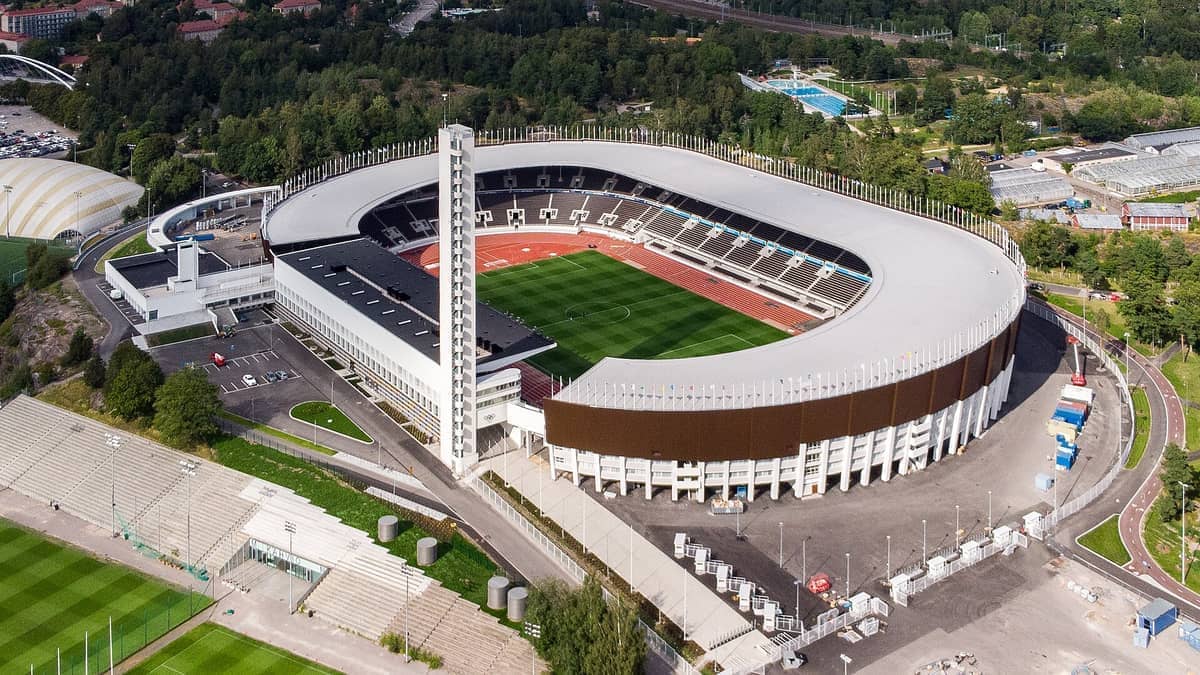
What Is the Helsinki Olympic Stadium?
The Helsinki Olympic Stadium, known in Finnish as Olympiastadion, is Finland's principal athletics arena and one of Northern Europe's most architecturally significant sports venues. Located in the Töölö district about a kilometre north of the city centre, it was originally constructed in the mid-1930s and later designated to host the 1940 Summer Olympics, which were cancelled due to World War II. It found its moment twelve years later when Helsinki hosted the 1952 Summer Olympics, and the stadium became the defining image of post-war Finnish national pride.
Today the stadium operates as an active sports facility, concert venue, and tourist attraction. Its 72-metre tower is a recognizable feature of the Helsinki skyline, and the Visitor Centre provides access to the tower, the TAHTO Sports Museum, guided tours, and a bistro. Even on quiet days without events, the grounds are open to walk around, and the scale of the place, its white functionalist forms gleaming against Finnish sky, gives you an immediate sense of why this building matters.
ℹ️ Good to know
Visitor Centre and tower standard hours: Mon–Fri 08:00–21:00, Sat–Sun 10:00–18:00. Hours may change on event days or due to exceptions. Always check the official website before visiting: stadion.fi/en
The Architecture: Finnish Functionalism in Stone and Steel
The stadium was designed by architects Yrjö Lindegren and Toivo Jäntti and completed in 1938. It is a landmark example of Finnish functionalism, a movement that paired modernist structural logic with local material traditions. The exterior is characterized by smooth white render, sweeping curved stands, and the tower, a tapered concrete column that looks almost aerodynamic even by contemporary standards.
The tower is the element that stops people in their tracks. From the street below, it appears almost impossibly slender, but step inside the Visitor Centre and take the elevator up, and you realize how deliberately it was designed to project height and optimism. The few stairs between the elevator landing and the top platform are original 1930s construction, which means the final ascent has an unpretentious, unvarnished quality that modern observation towers tend to smooth away.
The stadium's design influenced Finnish public architecture for decades, and it sits comfortably alongside other major Töölö institutions like Finlandia Hall and the Helsinki City Museum as part of the city's early twentieth-century architectural legacy. For visitors interested in that lineage, the Museum of Finnish Architecture provides excellent context.
Tickets & tours
Hand-picked options from our booking partner. Prices are indicative; availability and final rates are confirmed when you complete your booking.
Helsinki Beautiful Canal Route, archipelago cruise
From 26 €Instant confirmationFree cancellationHelsinki Panorama Sightseeing Bus Tour With Audio Guide
From 35 €Instant confirmationFree cancellationHelsinki Pasila Street art district tour with a local
From 99 €Instant confirmationFree cancellationArchitecture tour of Helsinki
From 60 €Instant confirmationFree cancellation
The Tower: What You See at the Top
The view from the top of the Olympic Stadium tower is one of the most honest city panoramas in Helsinki. There is no glass enclosure distorting the light, no gift shop crowding the platform. On a clear day, you can see the cathedral domes of the city centre to the south, the open water of Töölönlahti Bay below, and on the best summer days, the archipelago glinting in the distance.
On weekday mornings, the platform is often nearly empty. This is when the experience works best: early light from the east catches the white concrete of the stands below, and you can hear the city starting up without any crowd noise around you. Weekend afternoons draw more visitors, particularly families with children, and the platform can feel crowded given its modest size.
The tower shares the city skyline with the immediately visible Töölönlahti Bay, which wraps around the stadium's eastern side. If you are planning a half-day in this part of the city, combining the tower visit with a walk around the bay and then on to Finlandia Hall makes for a coherent route through some of Helsinki's best civic spaces.
💡 Local tip
Photography tip: The stadium faces roughly west-southwest, so morning visits offer the cleanest light on the exterior facades. For aerial shots from the tower, late afternoon in summer gives warm directional light over the city.
The TAHTO Sports Museum: More Than a Trophy Cabinet
The TAHTO Sports Museum, located within the stadium, covers Finnish sports history with a focus on athletics and the Olympic story. The 1952 Helsinki Games are naturally central to the exhibition, but the scope is broader: Finnish distance running, the legend of Paavo Nurmi (the street outside the stadium is named after him), and the way sport shaped national identity through the twentieth century.
The museum is well designed for visitors who come without specialist knowledge. Displays are bilingual in Finnish and English, and the combination ticket covering both the tower and the museum offers reasonable value for anyone planning to spend more than an hour at the stadium. For sports history enthusiasts, this is the most substantive part of the visit. For casual tourists primarily interested in the view, the tower alone is sufficient.
Visiting Practically: What to Know Before You Go
The stadium is located at Paavo Nurmen tie 1 in Töölö, an easy walk or tram ride from the city centre. Tram lines 2, 4, 7 and 10 all have stops close to the stadium, making it simple to connect from the main railway station area without needing a taxi or metro. The walk from the Kamppi area takes around 20–30 minutes through pleasant residential streets.
Tower admission is priced at €7.50 for adults, €4.50 for children aged 7 to 16, and free for children under 7. Discount tickets at €4.50 apply for students, pensioners, conscripts, and the unemployed. Groups of ten or more receive reduced rates. The combined tower plus TAHTO Sports Museum ticket costs €20 for adults, €14 for discount groups and youth, and €9 for children. General access to the stadium grounds and Visitor Centre lounge is free of charge.
Accessibility is limited at the top of the tower due to the original 1930s structure. An elevator serves most of the ascent, but a short flight of stairs is required to reach the viewing platform, making it inaccessible for those unable to manage steps. Wheelchair-accessible seating is available during events, with designated routes from the eastern entrance.
⚠️ What to skip
On event days (major athletics meetings, concerts), public access to the tower and Visitor Centre may be restricted or adjusted. Check the stadium's official website for event calendar conflicts before your visit.
How the Experience Changes by Season
Summer is the most rewarding season to visit. The long daylight hours mean the tower platform is usable well into the evening, and the surrounding park areas and Töölönlahti Bay are in full use by joggers, cyclists, and picnickers. The contrast between the urban stadium and the green landscape around it is at its sharpest in June and July, when Helsinki receives close to 19 hours of daylight.
Winter visits have their own character. Snow on the stadium's white concrete makes the functionalist geometry even more pronounced, and the tower platform is often completely empty. Dress appropriately for genuine cold: wind at 72 metres in a Helsinki February is not trivial. The Visitor Centre and Bistro Stadion provide a warm base.
Spring and autumn are quieter than summer but perfectly viable. May in particular offers reasonable temperatures and long enough days for a comfortable visit before the peak tourist season begins. For broader seasonal planning, the best time to visit Helsinki guide covers what to expect month by month.
Who Should Skip This, and Why
Visitors primarily interested in contemporary art or Helsinki's restaurant and design scene will not find much here to hold them. The stadium is a sports and heritage attraction, and the tower, while atmospheric, is not the highest or most spectacular viewpoint in the city. Travelers with very limited time in Helsinki might prioritize other viewpoints or central attractions first.
The tower is also not suitable for those who cannot manage stairs, as noted above. And on major event days, the visitor experience can be disrupted significantly. If your schedule is inflexible, verify the event calendar before committing to a visit.
Insider Tips
- Arrive on a weekday morning before 10:00 to have the tower platform almost entirely to yourself. The difference in atmosphere compared to weekend afternoons is significant.
- The Bistro Stadion inside the Visitor Centre is a decent spot for coffee before or after the tower climb, and far cheaper than most city-centre cafes.
- Paavo Nurmi's bronze statue stands just outside the stadium's main entrance. It is one of the most photographed sculptures in Helsinki, and it makes a useful orientation marker when arriving from the tram stop.
- If you hold a Helsinki Card, check the current terms before visiting as inclusions and discounts can change seasonally.
- The stadium's exterior is freely accessible at all hours, making early-morning or late-evening photography of the architecture entirely possible without buying a tower ticket.
Who Is Helsinki Olympic Stadium For?
- Sports history enthusiasts and Olympic heritage travelers
- Architecture fans interested in Finnish functionalism
- Travelers seeking a less crowded city viewpoint alternative
- Families with children who enjoy hands-on museum experiences
- Photographers looking for exterior modernist architecture in good light
Nearby Attractions
Other things to see while in Töölö:
- Finlandia Hall
Finlandia Hall is Helsinki's most architecturally significant congress and concert venue, designed by Alvar Aalto and completed on the western shore of Töölönlahti Bay. Whether you come for the permanent Aalto exhibition, a concert evening, or simply to study the building's striking white marble facade up close, the hall sits at the intersection of Finnish cultural identity and modernist design.
- Finnish National Opera and Ballet
The Finnish National Opera and Ballet, known locally as Kansallisooppera ja -baletti, is Finland's foremost performing arts institution, occupying a purpose-built house on the edge of Töölönlahti Bay. Whether you are new to opera or a longtime ballet devotee, the venue delivers a polished, accessible experience at the heart of Helsinki's cultural calendar.
- Helsinki Central Library Oodi
Opened on 5 December 2018, Helsinki Central Library Oodi is a landmark public building at Kansalaistori Square, steps from the Central Railway Station. It combines a working library with makerspaces, a cinema, a rooftop terrace, and a cafe, all free to enter. The architecture alone justifies a visit, but the building earns its reputation by being genuinely useful.
- Helsinki Swimming Stadium
Helsinki Swimming Stadium — known locally as Uimastadion or Maauimala — is the city's iconic open-air Olympic-style pool complex in Taka-Töölö. Open from May to September, it draws early-morning lap swimmers, families on long summer afternoons, and everyone in between. Here is everything you need to know before visiting.