Kaivopuisto Park: Helsinki's Sea-View Green Space
Kaivopuisto is Helsinki's oldest public park, a roughly 16-hectare coastal green space on a peninsula in the southern city. Free to enter at any hour, it draws locals for morning runs, lunch breaks, and one of the city's best May Day celebrations. The views across the Gulf of Finland are quietly impressive.
Quick Facts
- Location
- Iso Puistotie–Ehrenströmintie–Itäinen Puistotie, 00140 Helsinki
- Getting There
- Several tram lines stop near the park’s northern edge within a short walk of the Kaivopuisto area
- Time Needed
- 1 to 2 hours depending on pace
- Cost
- Free, always
- Best for
- Coastal walks, picnics, sea views, Vappu celebrations
What Kaivopuisto Actually Is
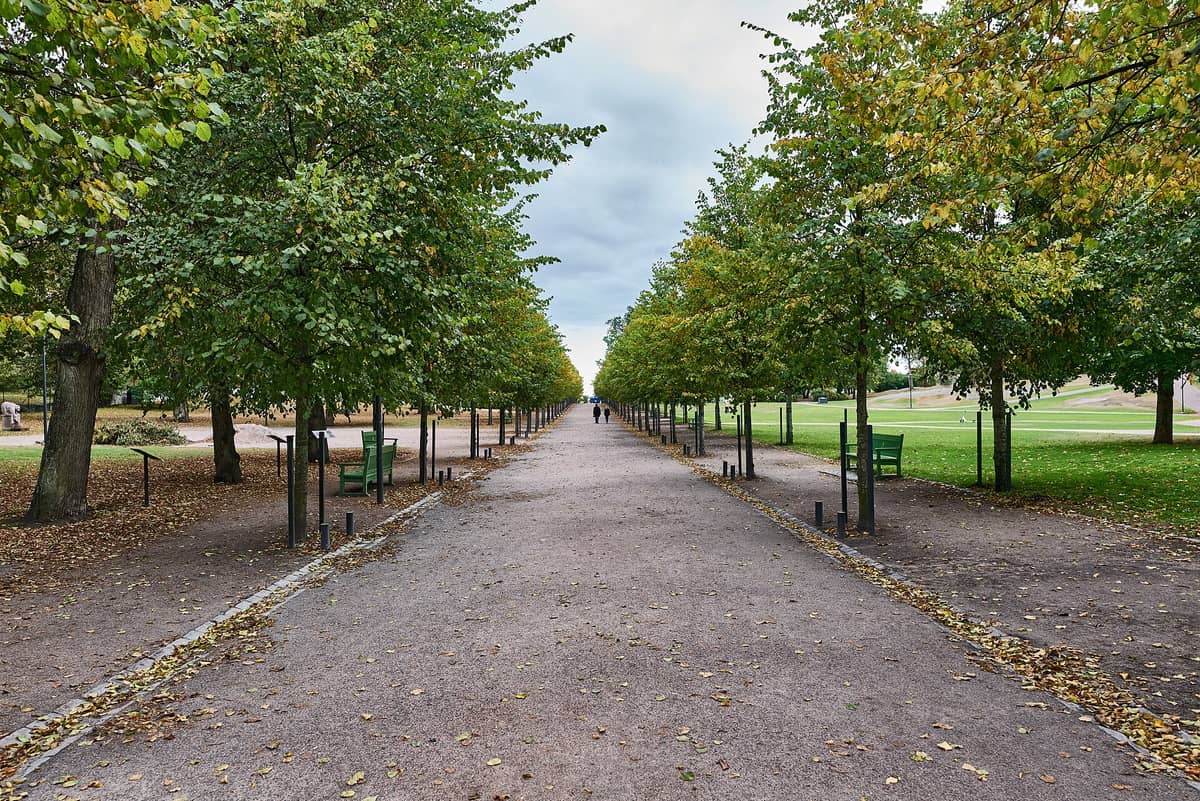
Kaivopuisto is Helsinki's oldest public park, a roughly 16-hectare green space on a low rocky peninsula at the southern tip of the city. It faces the Gulf of Finland directly, and on clear days the horizon stretches far enough that you can watch ferries and cargo ships move through the outer archipelago. The park sits in the Kaivopuisto residential area, one of Helsinki's most established neighborhoods, and the large wooden and stone villas along its edges tell you something about how long this has been desirable ground.
The park is not spectacular in any single dramatic way. There are no waterfalls, no grand monuments, no ticketed attractions inside it. What it offers is a particular quality of urban calm: rolling terrain, old trees, sea air, and enough open grass that you can find your own space even on a summer afternoon. For visitors who have spent their morning ticking through museums and cathedrals, Kaivopuisto is where Helsinki relaxes.
ℹ️ Good to know
The park is open at all hours and is free to enter. Sand-covered paths are partly lit after dark, making evening walks practical outside the depths of winter.
History: From Spa Town to Public Park
The area's transformation from forest to formal public space began in the 1830s, when a spa resort was developed here to attract visitors from across the Russian Empire. Helsinki was at that point a relatively new capital, and the spa gave the city a fashionable draw. The name Kaivopuisto translates roughly as 'well park' or 'spa park', a direct reference to those mineral-water wells and the culture around them.
The spa era faded by the late 19th century, but the landscaped grounds remained. The City of Helsinki eventually took over management of the area and developed it as a public park, one of the first in the city intended for ordinary residents rather than only the wealthy. That democratic impulse has stuck. Today the park is genuinely used across the social spectrum: joggers in the early morning, elderly residents on benches, families with children in the afternoon, and groups of friends who bring food and stay for hours.
Tickets & tours
Hand-picked options from our booking partner. Prices are indicative; availability and final rates are confirmed when you complete your booking.
Helsinki Beautiful Canal Route, archipelago cruise
From 26 €Instant confirmationFree cancellationHelsinki Panorama Sightseeing Bus Tour With Audio Guide
From 35 €Instant confirmationFree cancellationHelsinki Pasila Street art district tour with a local
From 99 €Instant confirmationFree cancellationSurvival suit floating experience
From 125 €Instant confirmationFree cancellation
The Landscape: What You'll Actually See
The terrain rolls gently, with a few modest ridges that give slightly elevated views toward the sea. The oldest trees, mostly linden and oak, form corridors that block out the surrounding streets in summer and give the park a more enclosed, sheltered feeling than its coastal position might suggest. In spring, before the leaves come in fully, the sea is visible through the branches from almost anywhere.
Toward the southern and western edges, rocky outcrops drop toward the shoreline. These low cliffs and rocky platforms are where people sit in summer, feet sometimes dangling over the water. The smell here is salt and seaweed at low tide, clean and cold even in July. Boats pass at a distance. The light off the water in late afternoon turns the sea silver.
The park's northeastern corner brings you close to the Embassy district, where several foreign missions occupy the large 19th-century buildings that back onto the park. The Russian Embassy is among the most prominently sited. It is an oddly quiet stretch of the park, more formal in its atmosphere. If you continue northeast out of the park, you reach the broader southern waterfront area that connects to Market Square within a 20-minute walk along the shore.
How the Park Changes Through the Day and Year
Early mornings, particularly on weekdays, belong almost entirely to runners and dog walkers. The sand-covered paths make for a softer surface than pavement, and the circular loop around the park's perimeter is a reliable training route for local residents. At this hour the park is quiet enough that you notice birdsong clearly, mostly common urban species but occasionally something more interesting during spring migration. The air tends to carry a slight sea chill even on warm days.
By midday in summer, the grass fills with people eating lunch or lying in the sun. The park has a modest café open seasonally, so there is usually somewhere to get a coffee. Weekend afternoons in June and July can get genuinely crowded near the best rocky overlooks, but the park is large enough that you can almost always find a quieter spot by walking further west or down toward the lesser-visited shoreline sections.
Winter changes the experience completely. Snow on the paths muffles everything. The sea may partially freeze in February, and the grey light lasts only a few hours at its peak. The park does not lose its character in winter, but it becomes a different place: stark, quiet, occasionally beautiful in a way that requires some tolerance for cold and low contrast. Dress properly and it is a worthwhile winter walk, especially on days when fresh snow is on the ground.
💡 Local tip
For the best light photography, visit in the late afternoon from May through August. The sun tracks low across the southwestern horizon and lights the sea from a shallow angle for a surprisingly long stretch of the evening.
Vappu: The Park's Most Famous Day
On the evening of April 30th, Kaivopuisto hosts one of the largest outdoor Vappu celebrations in Helsinki. Vappu is the Finnish May Day festival, a combination of workers' rights holiday and spring carnival with a strong student tradition. Tens of thousands of people gather in the park on this single evening and the following day, many in student overalls (haalarit) or fancy dress, carrying balloons and bottles of sparkling wine. The park is so densely packed that walking freely becomes difficult. It is chaotic, loud, and genuinely unlike anything you will see in the park on any other day of the year. For more context on the celebration, the Helsinki Vappu guide covers what to expect in detail.
If you are not interested in a large outdoor crowd with alcohol, Vappu eve and Vappu day are the two occasions when you should specifically avoid Kaivopuisto. The park takes a few days to recover. If you are interested, it is one of the most authentically local events you can witness in Helsinki as a visitor.
Getting There and Getting Around
Tram lines 3 and 9 both stop near the park's northern boundary. From the city centre, the tram ride takes around 10 minutes from the central railway station area. The park is also walkable from the southern waterfront: allow about 20 minutes on foot from Kauppatori along the coastal path, which passes the Presidential Palace and the shoreline embassies.
Inside the park, paths are sand-covered and mostly flat with some gentle inclines over the rocky ridges. Navigation is straightforward; the park is compact enough that you will not get lost. For visitors combining this with a broader southern Helsinki walk, the Löyly sauna is located roughly 15 minutes west on foot along the waterfront, making a natural pairing for a half-day itinerary.
If you are planning a longer day in the area, the Helsinki walking tour guide maps out a route that includes Kaivopuisto as part of the southern waterfront circuit.
Honest Assessment: Who Should Visit and Who Should Not
Kaivopuisto rewards visitors who are comfortable with undramatic beauty. If you are specifically looking for a striking viewpoint, the rocky shore on the park's southern edge delivers a genuine sea panorama and is worth the walk. But if your priority is iconic sights and efficient sightseeing, the park is an easy stop to skip. It will not leave a gap in your Helsinki experience.
For visitors who want to understand how Helsinki actually functions as a city, the park is instructive. This is where residents spend their free time in a way that museums and tourist attractions do not show. Combine it with a visit to the Old Market Hall for provisions, and you have the raw material for a genuinely local afternoon.
Visitors with mobility limitations should know that the main paths are sand rather than paved and may be uneven in places, particularly near the rockier southern edges. The flatter central areas of the park are more accessible, but the official city information does not make a comprehensive accessibility guarantee beyond noting that sand-covered routes are mainly lit.
Insider Tips
- The park's southwestern rocky shore, away from the main central lawn, is the least crowded section even on busy summer days. Walk past the tree line toward the water and you will usually find a flat granite ledge to sit on with unobstructed sea views.
- The seasonal café inside the park is useful for a coffee stop, but if you want a proper meal nearby, the restaurant options along the waterfront between Kaivopuisto and Hietaniemi are more varied. Check what is open before you go, as hours vary by season.
- Morning visits on weekdays in early June, before school holidays end, offer the park at its greenest and most peaceful. The light is good from around 5am, and you are unlikely to share the southern rocky outcrops with more than a handful of people.
- The park's tram stop is shared with the approach to the Embassy district. If you arrive by tram and walk south through the park toward the shore, you get a good diagonal cross-section of the terrain rather than arriving at the main entrance and then retracing your steps.
- Vappu eve (April 30th) transforms the park entirely. If you want to see Finnish student culture at its most concentrated and are comfortable in large outdoor crowds, this is genuinely worth planning around. If not, add a buffer day on either side to your visit.
Who Is Kaivopuisto Park For?
- Travelers who want to see how Helsinki residents use their city on a normal day
- Anyone on a free-things itinerary looking for a coastal walk with genuine sea views
- Visitors in late April who can time a trip around the Vappu celebrations
- Photographers working in soft evening light during the long summer days
- Families looking for open grass space without entrance fees or structured programming
Nearby Attractions
Other things to see while in Kamppi & Southern Helsinki:
- Cable Factory (Kaapelitehdas)
Once the largest cable manufacturer in the Nordic countries, the Cable Factory (Kaapelitehdas) in Helsinki's Ruoholahti district is now one of Finland's biggest cultural centers. Multiple museums, galleries, studios, and event spaces occupy the sprawling brick complex — entry to the building itself is free, making it easy to explore at your own pace.
- Helsinki Art Museum (HAM)
Housed in a converted 1930s sports arena next to Kamppi, Helsinki Art Museum (HAM) is the city's dedicated venue for modern and contemporary art, plus the official custodian of Helsinki's public art collection. It rewards unhurried visits and surprises people who write it off as a secondary stop.
- Kamppi Chapel of Silence
The Kamppi Chapel of Silence sits on Narinkka Square in central Helsinki, a curved wooden capsule designed for quiet reflection directly beside one of the city's busiest transport hubs. Admission is €5 for adults, and the experience of stepping inside is distinctive among places in the Finnish capital.
- Löyly Seaside Sauna
Löyly is a contemporary wooden sauna and restaurant complex on Helsinki's Hernesaari waterfront, where traditional Finnish sauna culture meets award-winning architecture. Whether you're after a two-hour steam session with a Baltic Sea plunge or a waterfront meal at sunset, this is one of the most distinctive experiences in the city.