Helsinki University Main Building: Senate Square's Neoclassical Centerpiece
The University of Helsinki Main Building anchors the city's most ceremonial square with two centuries of neoclassical architecture. Free to enter during university hours, it offers a rare chance to step inside one of Finland's most significant academic institutions and explore a building that shaped the country's intellectual identity.
Quick Facts
- Location
- Fabianinkatu 33 / Unioninkatu 34, Senate Square, Kruununhaka, Helsinki
- Getting There
- Trams 2, 4, 5, 7 (Senaatintori / Aleksanterinkatu stop); University of Helsinki metro station
- Time Needed
- 30–60 minutes for the building and courtyard; add time for the Museum Flame
- Cost
- Free to enter the building; Museum Flame admission currently €10 for adults, €7 reduced, free for under-18s, University of Helsinki community and Museum Card holders (verify current price).
- Best for
- Architecture enthusiasts, history travelers, and visitors combining Senate Square sights
- Official website
- www.helsinki.fi/en/about-us/university-helsinki/contact-details
What You're Looking At and Why It Matters
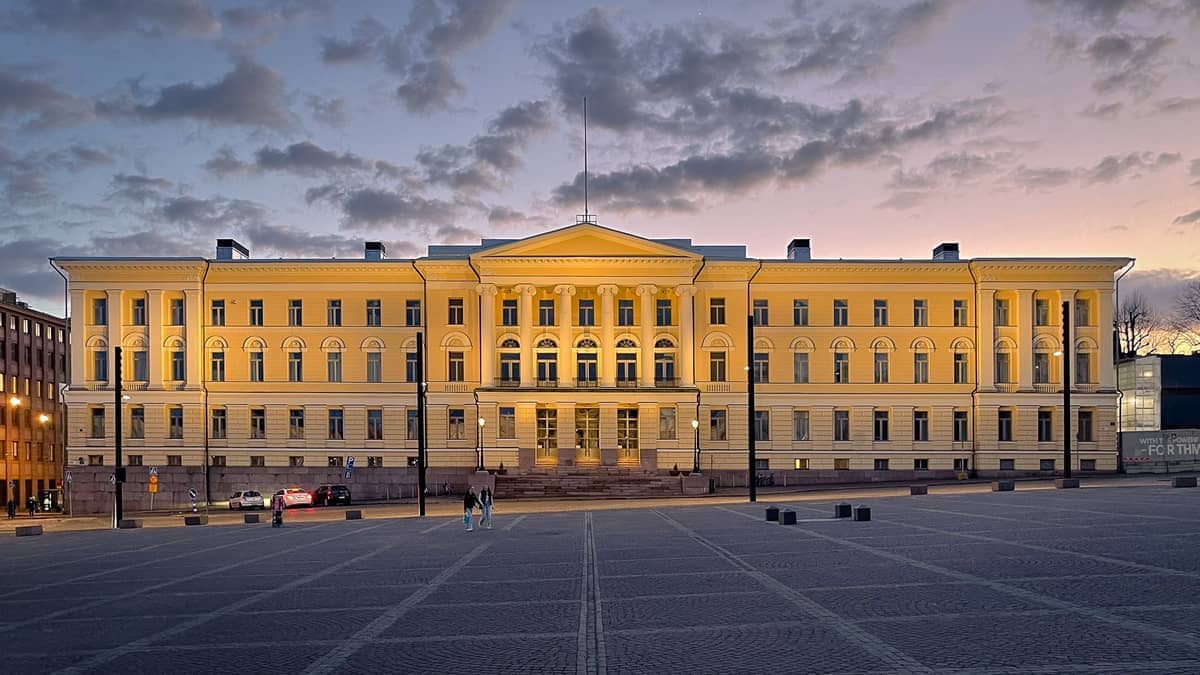
The University of Helsinki Main Building, known in Finnish as Helsingin yliopiston päärakennus, occupies the western edge of Senate Square opposite the cathedral steps alongside the Helsinki Cathedral and the Government Palace. Together these three buildings form one of the most coherent neoclassical ensembles in Northern Europe, all designed by the German-born architect Carl Ludwig Engel in the early nineteenth century. If you are standing in the square and wondering which building is which, the Main Building is the one to your left as you face the cathedral steps, its pale facade running along both Unioninkatu and Fabianinkatu.
The university itself was founded in Turku in 1640 as the Royal Academy of Turku, making it one of the oldest universities in the Nordic countries. It relocated to Helsinki in 1828 after the Great Fire of Turku destroyed much of Turku, and the Main Building on Senate Square was constructed as the centerpiece of the new imperial capital's academic quarter. At that moment in history, Finland was an autonomous grand duchy within the Russian Empire, and the architectural ambitions of Senate Square were a deliberate statement of civic dignity. The university has been central to Finnish intellectual and cultural life ever since, producing Nobel laureates and generations of public figures.
ℹ️ Good to know
The Main Building has two distinct sides: the older Unioninkatu 34 wing and the newer Fabianinkatu 33 side, connected through the Agora courtyard following a major renovation completed in 2023. If you are looking for the main public entrance or lobby services, head to the accessible entrance at Fabianinkatu 33.
The Architecture: Engel's Senate Square Vision
Carl Ludwig Engel designed the Main Building as part of his comprehensive redesign of Helsinki's city centre, commissioned by the Russian imperial administration to transform the small coastal town into a capital worthy of its new status. The building's exterior follows strict neoclassical principles: a symmetrical facade, Corinthian columns framing the central portal on the Unioninkatu side, and pale yellow render that catches the light of Senate Square differently depending on the time of day and season.
In winter, when the square is often dusted with snow and the light is low and golden even at midday, the building's proportions feel especially deliberate. The columns cast long shadows across the stone steps. In summer, the same facade reads as almost weightless, the yellow plaster bright against a clear sky, students sitting on the steps of the cathedral across the square. Neither version is more authentic. Both are worth seeing.
The 2019–2023 renovation connected the old and new wings through an interior Agora courtyard and added a new lift reaching the fifth floor on the Fabianinkatu side, making more of the building accessible than at any point in its history. The work also addressed thresholds, door widths, and stair lifts across multiple teaching facilities. For visitors interested in how historic academic buildings adapt to modern access requirements, it is a thoughtful example. More information on the broader architectural context of the square can be found on the Senate Square attraction page.
Tickets & tours
Hand-picked options from our booking partner. Prices are indicative; availability and final rates are confirmed when you complete your booking.
Helsinki Beautiful Canal Route, archipelago cruise
From 26 €Instant confirmationFree cancellationHelsinki Panorama Sightseeing Bus Tour With Audio Guide
From 35 €Instant confirmationFree cancellationHelsinki Pasila Street art district tour with a local
From 99 €Instant confirmationFree cancellationArchitecture tour of Helsinki
From 60 €Instant confirmationFree cancellation
Visiting the Interior: What to Expect Inside
The Main Building is a working university facility, not a dedicated visitor attraction. This is worth stating plainly. You will not find guided tours of the lecture halls operating on a schedule, and there is no visitor centre with orientation displays. What you will find is a functioning academic building where, during term time, students are moving between classes, staff are working in offices, and the corridors have the particular quiet energy of a place that takes its purpose seriously.
The building is generally accessible to the public during weekday daytime hours, typically Monday to Friday, though hours can vary by academic term, events, and which part of the building you are trying to enter. The grand ceremonial hall on the upper floors is used for formal occasions and is not routinely open for casual visits. The Agora courtyard, accessible from Fabianinkatu, gives a sense of the interior scale and the junction between the old and new construction phases.
💡 Local tip
If you want to see the interior at its most atmospheric, visit on a weekday morning in autumn or spring when the academic term is in full swing. The building is quiet enough to appreciate the architecture but alive enough to feel like you are inside a genuinely active institution rather than a preserved monument.
The Helsinki University Museum Flame is located within the Main Building and offers a more structured visitor experience, with exhibitions on the history of the university and its collections. It has its own admission fee, separate from the free building access. Check the museum's official website for current exhibition details and ticket prices before visiting, as these change seasonally.
Senate Square: The Building in Its Surroundings
The Main Building cannot really be separated from the square it faces. Senate Square and Kruununhaka form the historic core of Helsinki, and spending an hour in and around the square covers more architectural history per square metre than anywhere else in Finland. The Helsinki Cathedral dominates the north side. The Government Palace, also by Engel, occupies the east. The City Hall closes the south. The university closes the west. It is a complete neoclassical composition, and the Main Building is one quarter of that composition.
Visitors combining the square with the surrounding neighbourhood will find the Helsinki Cathedral directly opposite, worth entering for the austere Lutheran interior that contrasts sharply with the civic grandeur outside. The Uspenski Cathedral, Helsinki's Russian Orthodox cathedral with its red brick and gilded onion domes, sits a short walk northeast on the Katajanokka peninsula and is architecturally striking in a completely different way.
Morning is the most photogenic time on the square. The low northern light comes from the east, catching the facades of the university and the cathedral simultaneously. By midday in summer the square fills with tourists and locals eating lunch on the cathedral steps. Evenings are quieter and often more rewarding for photography, especially in winter when the yellow facades are lit against a dark sky.
Getting There and Practical Logistics
The Main Building sits in the centre of Helsinki and is straightforward to reach by public transport. Trams 2, 4, 5, and 7 stop at the Senaatintori stop on Aleksanterinkatu, placing you at the south end of the square within a two-minute walk of the building entrance on Fabianinkatu. The University of Helsinki metro station is also nearby, though the walk from there takes slightly longer. From Helsinki Central Railway Station, the square is about a 7–10-minute walk southeast along Aleksanterinkatu, past the main shopping streets.
The area around Senate Square is almost entirely flat and the pedestrian routes are well maintained. The Fabianinkatu entrance to the Main Building includes accessible access, and the post-2023 renovation improved internal accessibility significantly with new lifts and level access routes. Accessible parking spaces are available outdoors near the entrance on Fabianinkatu 33. Visitors with specific access requirements are advised to contact the university's lobby services at Fabianinkatu 33 directly before arriving.
⚠️ What to skip
The Main Building is a working university facility. During exams, graduation ceremonies, or major events, parts of the building or the courtyard may be restricted. If you have a specific visit in mind, check the university's current calendar before going.
Seasonal Considerations and Weather
Helsinki's climate is continental, with cold winters and warm summers. For visiting Senate Square and the Main Building, the season matters more for the outdoor experience than the interior. In summer, June through August, the square is at its most socially active, with long daylight hours and temperatures typically between about 18 and 25°C. The university building itself is cooler inside, which is welcome on warmer days. In winter, the square takes on a completely different quality: snow on the cobblestones, few tourists, and the pale facades glowing against short days. It is one of the better-looking winter scenes in the city. For a broader view of when to plan your trip, the best time to visit Helsinki guide covers seasonal trade-offs in detail.
Rain is distributed fairly evenly across the year in Helsinki, with late summer and autumn slightly wetter. The building itself provides a natural shelter, and the covered entrance on Fabianinkatu means you are never far from being dry. Wear practical shoes for the cobblestones of the square, which can be slippery when wet or icy.
Insider Tips
- The Unioninkatu side of the building, facing the square directly, has the more ceremonial exterior. Walk around to the Fabianinkatu side for the main functional entrance and the Agora courtyard, which shows the architectural join between the old and new construction phases clearly.
- If you visit during Finnish academic graduation season in late May and early June, you may see graduates in traditional white caps gathered on the cathedral steps and around the square. The Main Building is central to these ceremonies and the atmosphere is markedly different from a standard weekday.
- The Helsinki University Museum Flame inside the building is easy to miss because the building is not signposted as a tourist site. If you want a structured visit with exhibition content, check the museum's website for current shows before arriving rather than turning up unannounced.
- For the best exterior photograph of the full Senate Square ensemble, including the Main Building, climb the cathedral steps and face west. The Main Building fills the left side of the frame with the Government Palace on your right, and the square's geometry becomes immediately apparent.
- Kruununhaka, the neighbourhood surrounding Senate Square, has some of Helsinki's oldest surviving residential architecture. A 20-minute walk through the streets north and east of the square adds considerable historical depth to a visit and costs nothing.
Who Is Helsinki University Main Building For?
- Architecture and urban history enthusiasts who want to understand how Helsinki was designed as a capital city
- Travelers combining multiple Senate Square sights in a single morning or afternoon
- Visitors interested in Nordic academic history and institutional heritage
- Photographers looking for neoclassical facades in Nordic winter or summer light
- Travelers on a budget, as the building itself is free to enter during university hours
Nearby Attractions
Other things to see while in Senate Square & Kruununhaka:
- Ateneum Art Museum
The Ateneum Art Museum holds Finland's largest collection of classical art, from 19th-century Finnish masters to early 20th-century modernism. Located directly opposite Helsinki Central Railway Station, it is one of the most accessible and rewarding museums in the Nordic countries.
- Helsinki Cathedral
Helsinki Cathedral (*Helsingin tuomiokirkko*) is the defining landmark of the Finnish capital, rising above Senate Square on a steep granite staircase that doubles as one of the city's most photographed gathering spots. The neoclassical Lutheran cathedral charges a modest fee for the main hall in summer, while the crypt has free admission when open. Here is everything you need to decide whether it deserves time on your itinerary.
- Helsinki Central Railway Station
Helsinki Central Railway Station is more than a place to catch a train. Designed by Eliel Saarinen and completed in 1919, it is one of Finland's most recognizable buildings and the beating heart of the city's transport network. Whether you are arriving in Helsinki for the first time or simply passing through, the station repays a slow, deliberate look.
- Helsinki City Hall
Helsinki City Hall (Helsingin kaupungintalo) stands on Pohjoisesplanadi facing Market Square, its neoclassical facade one of the defining sights of the city's historic waterfront. Entry to the lobby is free, and the building's location makes it a natural stop on any walk through the Senate Square district.