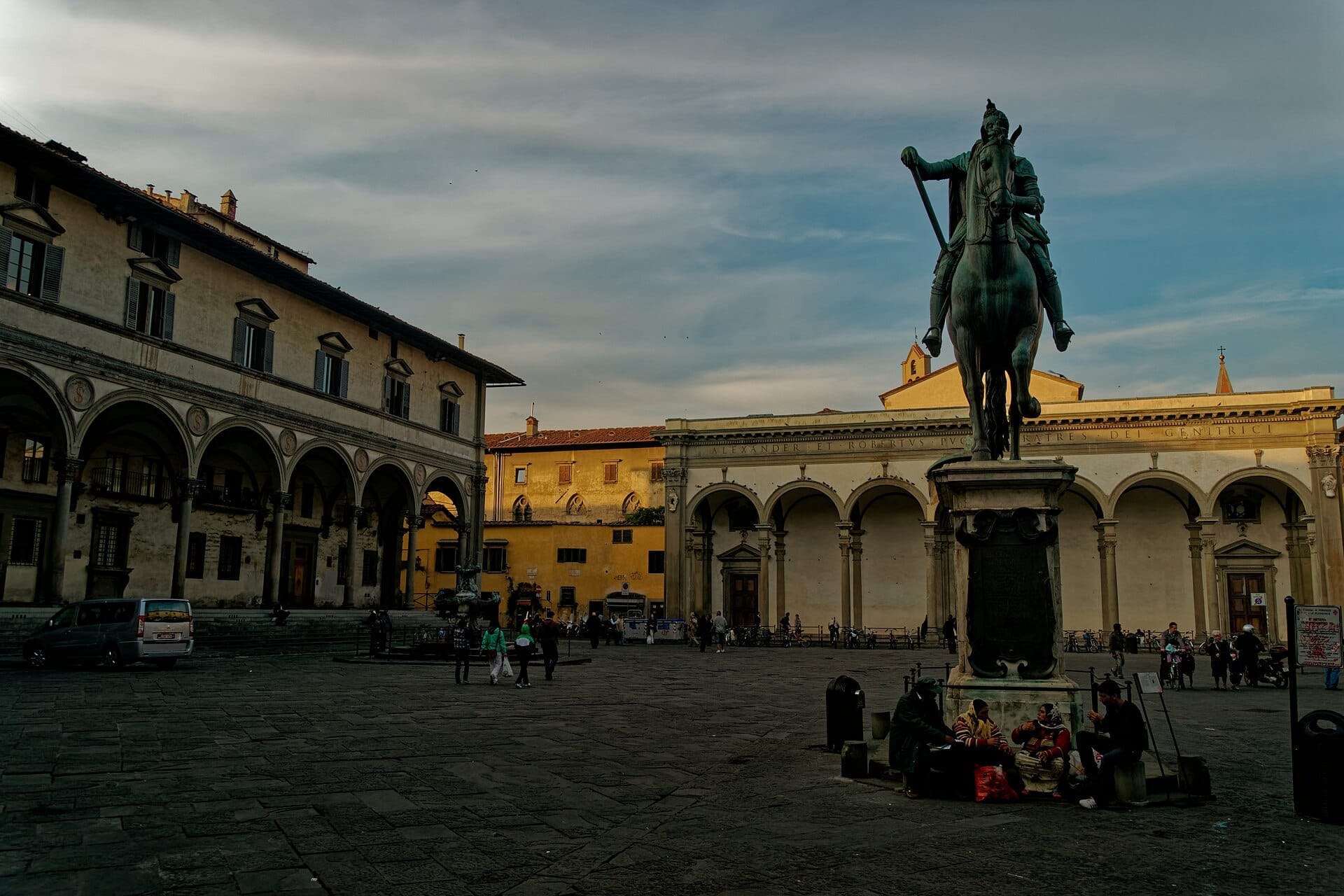
San Marco is Florence's academic and artistic quarter, positioned just north of the Duomo between the university campus and some of the city's most significant museums. It moves at a different pace than the tourist-saturated centro storico, shaped by students, locals on errands, and serious art seekers rather than souvenir hunters.
San Marco occupies the northern edge of Florence's historic center, where the footprint of a Dominican convent, a world-famous sculpture gallery, and a working university campus share the same few blocks. It is the part of Florence where Fra Angelico painted angels on cell walls, where Michelangelo's David draws hour-long queues, and where locals still cut through Piazza San Marco on their way to work.
Orientation
San Marco sits in the northern quadrant of Florence's historic center, immediately above the Duomo and the San Giovanni district. Think of it as the upper tier of a zone that begins at the Baptistery and climbs northward to the open square of Piazza San Marco. The neighborhood is often grouped administratively with San Lorenzo to the west, but the two feel quite different at street level: San Lorenzo belongs to the market, San Marco belongs to the university and the museums.
The rough boundaries are Via dei Cerretani and Via dei Pucci to the south, Piazza San Marco to the north, Via dei Servi to the east, and Via Faenza to the west. Within those limits, the streets are mostly quiet residential and institutional corridors rather than commercial strips. Via Cavour is the main artery connecting the neighborhood southward to the Duomo and northward toward the city walls.
Neighboring areas are easy to reach on foot: thecentro storicois a ten-minute walk south,San Lorenzoand the Mercato Centrale are five minutes to the west, and the Piazza Santissima Annunziata — one of Florence's most graceful Renaissance squares — is just around the corner to the east. The Arno is about fifteen minutes away on foot, which matters if you are planning to cross toOltrarno for the afternoon.
Character & Atmosphere
Early morning in San Marco has a particular quality that other Florence neighborhoods lack. Around eight o'clock, students on bicycles cross Piazza San Marco, bars along the square fill with people ordering espresso standing at the counter, and the first museum queues begin to form outside the Accademia on Via Ricasoli. The square itself is large and slightly asymmetric, anchored by a bronze statue of General Manfredo Fanti at its center and ringed by porticoed buildings. It functions as a genuine transit hub, with buses pulling in from multiple directions, so it is never quite peaceful, but it is also never claustrophobic.
By mid-morning, the Accademia queue stretches back considerably, and the streets feeding toward the museum fill with guided groups. This is when the neighborhood most resembles a tourist corridor. But step one block off Via Ricasoli in either direction and the texture changes immediately: laundry overhead, a pharmacy, a bar with no English menu. The university presence keeps the area grounded in daily Florentine life in a way that the streets around the Uffizi simply are not.
Afternoons are quieter. The midday heat in summer drives people off the streets, and the light falls at a low angle on the pale stone of the convent facade, turning it from grey to amber. In the early evening, Piazza San Marco revives with students and commuters, and the bars around the square do a brisk aperitivo trade. It is not a nightlife neighborhood in the way that Santa Croce is; it quiets down early, which makes it genuinely restful as a base.
ℹ️ Good to know
San Marco has a dual identity: mornings belong to museum visitors, evenings to students and local residents. The streets between the two museums (Museo di San Marco and the Accademia) are busiest between 9am and 1pm.
What to See & Do
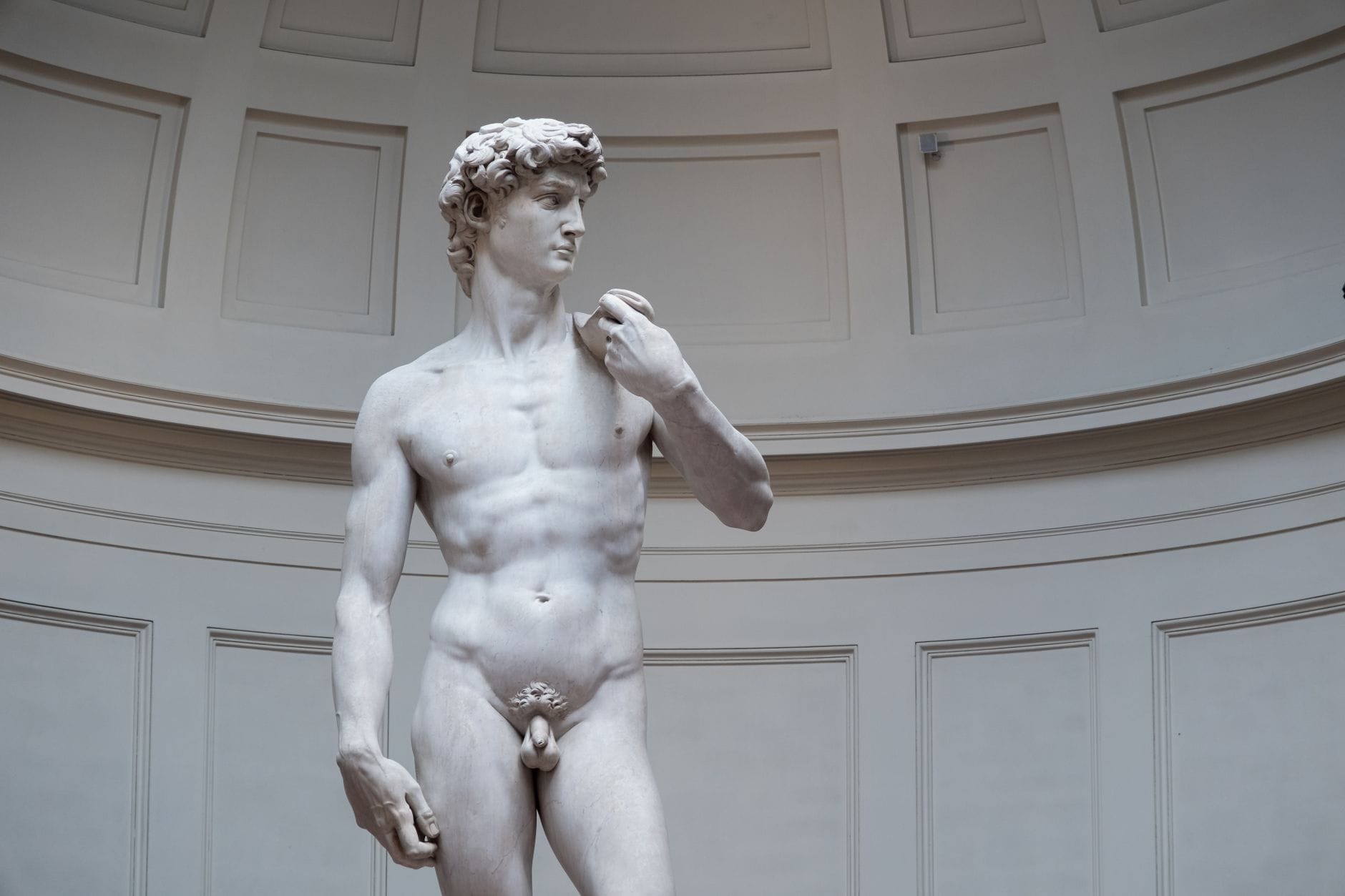
The neighborhood's two headline institutions are theGalleria dell'Accademiaand the Museo Nazionale di San Marco, and they reward being visited on the same day. The Accademia is famous above all for Michelangelo's David, the five-meter marble sculpture that has stood here since 1873. The gallery also holds Michelangelo's unfinished Prisoners series, which in some ways tells a more interesting story about the sculptor's process than the finished David does. Book tickets in advance — walk-up queues can run to two hours in high season.
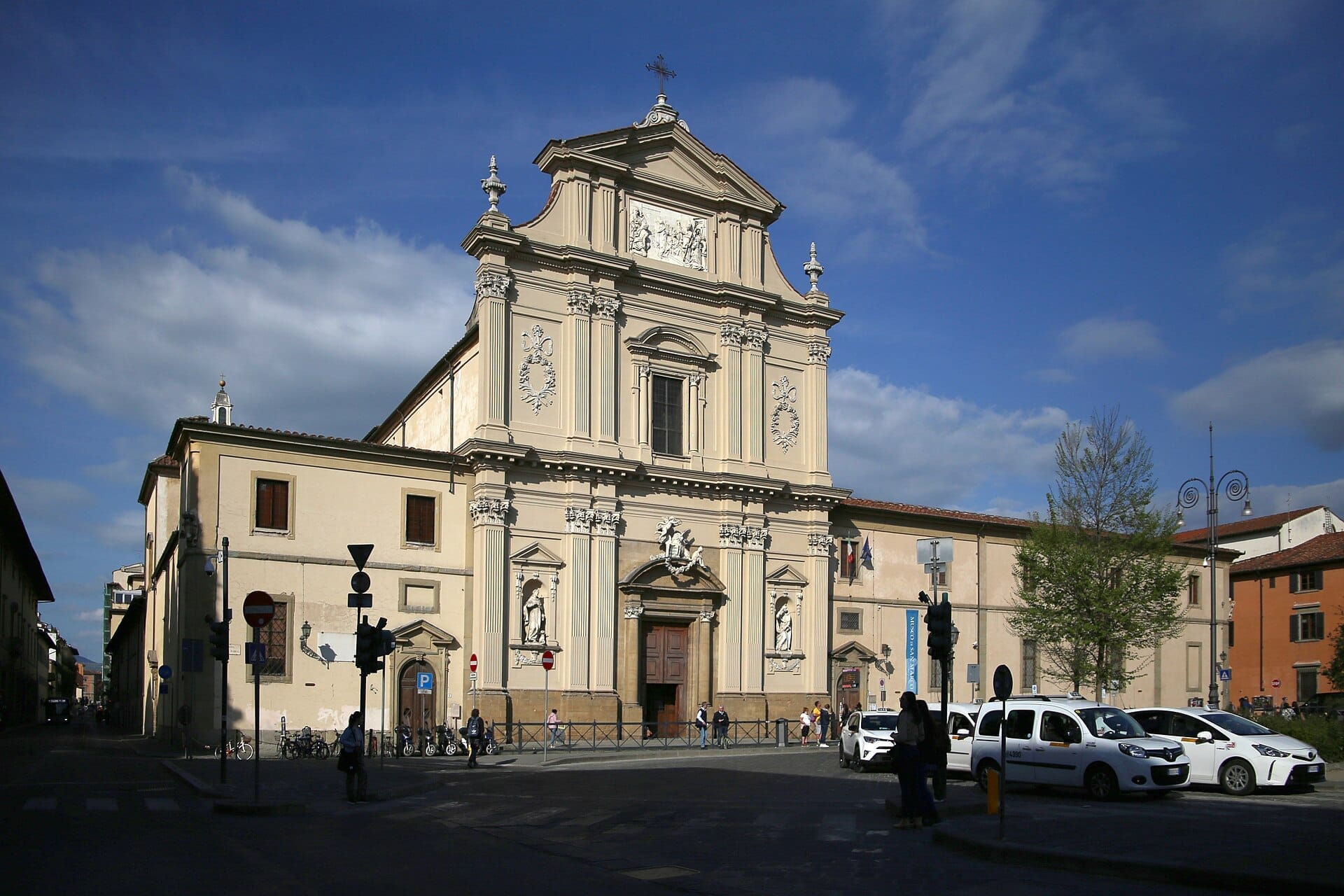
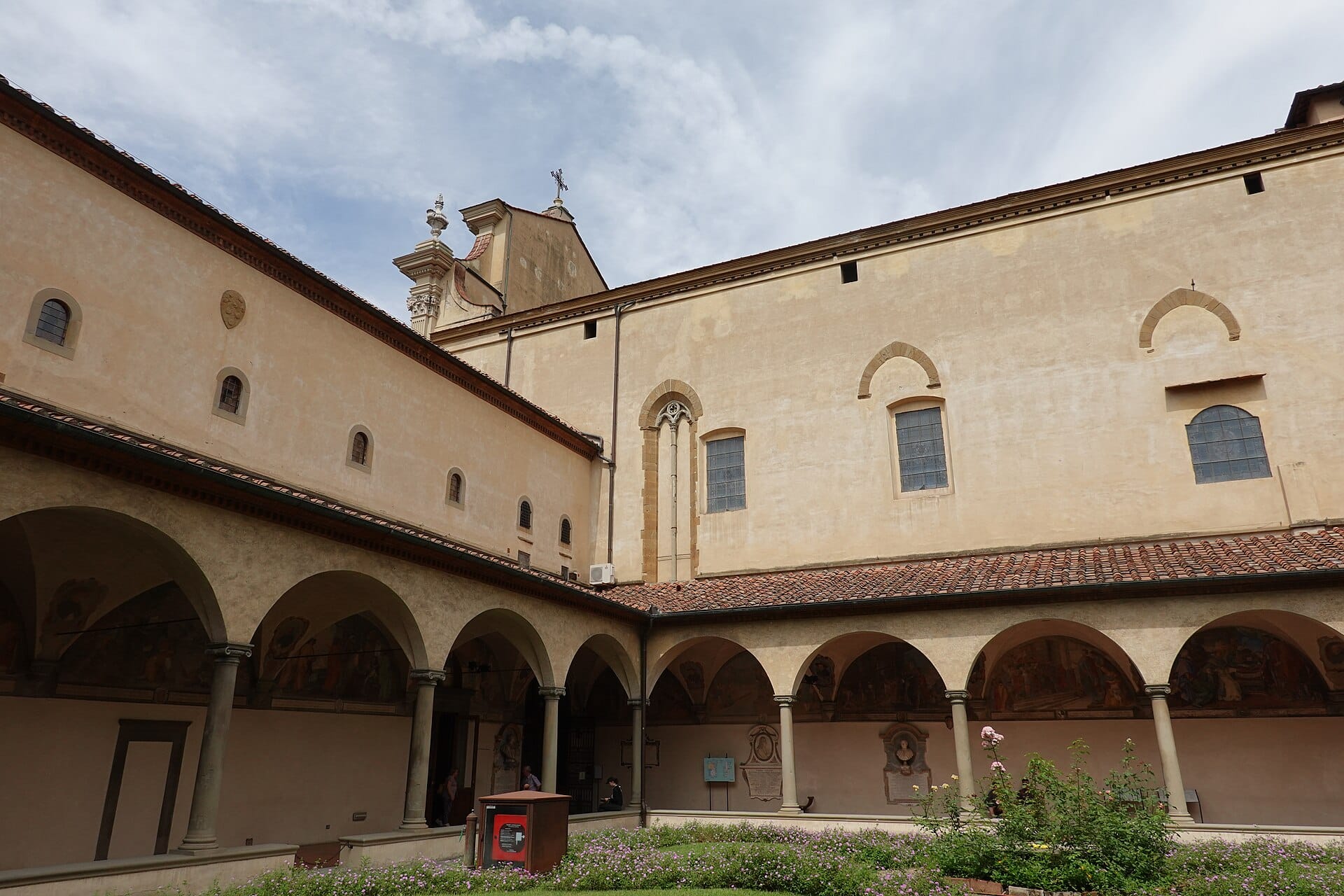
The Museo Nazionale di San Marco is the quieter and, for many visitors, more moving of the two. It occupies the former Dominican convent on Piazza San Marco and holds the world's most comprehensive collection of works by Fra Angelico, the 15th-century friar and painter who lived here. The Annunciation fresco at the top of the dormitory stairs is one of the most reproduced images in Italian art, but it is the individual frescoes painted in each monk's cell — small, contemplative, meant for private prayer rather than public display — that make this place unusual. The convent also has a documented connection to Girolamo Savonarola, the firebrand Dominican prior who held Florence in his sway during the 1490s and was burned at the stake in Piazza della Signoria in 1498.
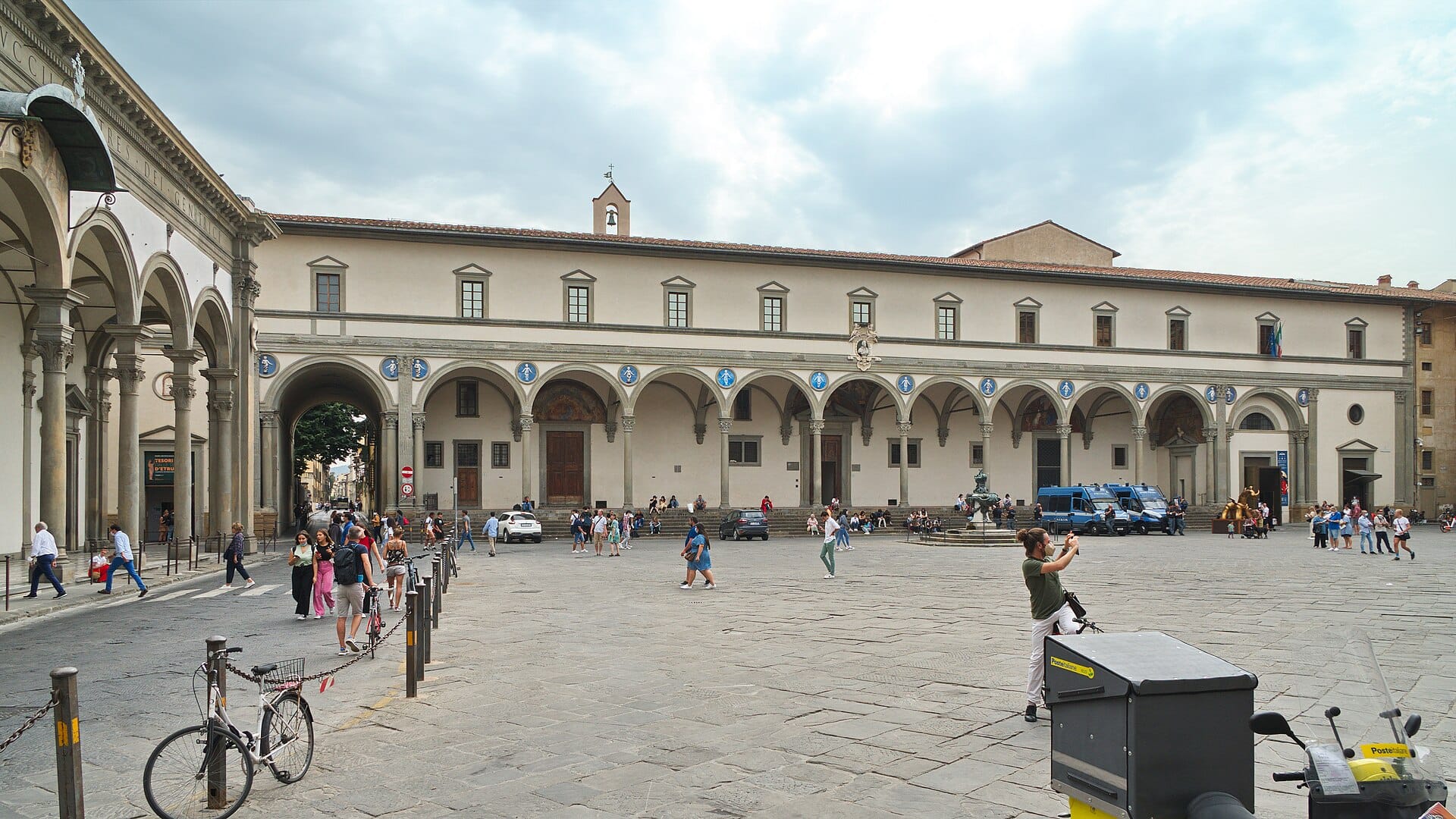
A short walk east along Via degli Alfani brings you to thePiazza della Santissima Annunziata, arguably the most coherent Renaissance square in Florence. Three sides are arcaded in matching style, and theOspedale degli Innocenti— Brunelleschi's foundling hospital, completed in the 1440s — closes the eastern side. The building now functions as a museum with exhibitions on the history of the institution and Florentine childhood, and the loggia is a good place to pause and take in the square's proportions without feeling rushed.
Galleria dell'Accademia: Michelangelo's David and the Prisoners series — book ahead
Museo Nazionale di San Marco: Fra Angelico frescoes in a working convent setting
Piazza della Santissima Annunziata: Brunelleschi's arcade and the Ospedale degli Innocenti
Palazzo Medici-Riccardi: Medici family palace on Via Cavour, with the Gozzoli frescoed chapel
Convent of San Marco garden: small, overlooked, and worth a pause
Walking south on Via Cavour takes you to thePalazzo Medici-Riccardi, the original Medici family palace commissioned by Cosimo the Elder in the 1440s. The Cappella dei Magi inside contains Benozzo Gozzoli's detailed frescoes of the journey of the Magi, painted with portraits of the Medici family embedded into the procession. It is one of the more accessible Medici sites and rarely as crowded as the major galleries.
💡 Local tip
If you are visiting both the Accademia and Museo di San Marco on the same day, start with San Marco when it opens. It is quieter in the morning, the frescoes require time and attention, and you will arrive at the Accademia refreshed rather than fatigued.
Eating & Drinking
San Marco is not a restaurant destination in its own right, but the streets around Piazza San Marco and Via Cavour have a solid mix of cafes, sandwich bars, and mid-range trattorie that cater largely to students and local workers rather than tourists on expense accounts. Prices are noticeably lower here than in the streets directly around the Duomo.
The bars around Piazza San Marco serve the kind of quick, standing espresso that is Florence at its most functional. Morning cornetti are fresh until about ten, after which the offer shifts to tramezzini and panini. For a proper lunch, the side streets between Piazza San Marco and Via degli Alfani have a number of small trattorie doing fixed-price lunch menus popular with university staff — ribollita, pasta al ragù, grilled secondi. These places rarely have English menus, which is either an attraction or a deterrent depending on your outlook.
For a more deliberate food experience, theMercato Centraleis a ten-minute walk southwest in San Lorenzo. The ground floor is a traditional food market with cheese, meat, pasta, and produce vendors; the upper floor is a covered food hall with a range of street food stalls. It draws a mixed crowd of tourists and locals and works well for a self-assembled lunch.
Aperitivo in the early evening around Piazza San Marco is low-key and genuine. The student population keeps prices reasonable and the atmosphere unpretentious. If you want the more self-conscious spritz scene, Santa Croce is a short walk southeast and offers more variety after dark.
Getting There & Around
Piazza San Marco functions as one of Florence's main urban bus hubs, with multiple lines connecting it to the train station at Santa Maria Novella, the Duomo district, and the outlying neighborhoods. From Santa Maria Novella station, the Accademia and Piazza San Marco are approximately a twenty-minute walk northeast, passing through the historic center via Via dei Cerretani and then Via Cavour. It is a pleasant walk and requires no transit.
If you are arriving from the train station and want to use public transport, buses from the Santa Maria Novella forecourt reach Piazza San Marco in around ten minutes. Check current routes and ticketing with the local transport operator before travel, as lines and fares are subject to periodic revision. For guidance on moving around the city more broadly, thegetting around Florenceguide covers your options in detail.
Within the neighborhood, everything is walkable. The Accademia, Museo di San Marco, Palazzo Medici-Riccardi, and Piazza Santissima Annunziata are all within five minutes of each other. The streets are mostly flat, without the steep gradients you encounter heading toward Oltrarno or the hillside viewpoints. Cycling is possible but the narrow streets and heavy pedestrian traffic around the museums make it awkward during peak hours.
⚠️ What to skip
Piazza San Marco has significant bus traffic running through it at all hours. When crossing the square on foot, stay alert, particularly along the eastern and western edges where buses pull in and out of stops. It is not a pedestrian-only square.
Where to Stay
San Marco is a reasonable base for visitors who prioritize proximity to the major art museums and prefer slightly quieter streets than those immediately around the Duomo. Hotels here tend to be mid-range three- and four-star properties in historic buildings, with fewer of the luxury boutique options found in thecentro storicoproper. Rates are generally lower than the streets around the Uffizi and Ponte Vecchio.
The best position within the neighborhood for a hotel is along or near Via Cavour, which gives you direct walking access both south toward the Duomo and north toward Piazza San Marco. Streets running off Via dei Servi toward Piazza Santissima Annunziata are also well-located and tend to be quieter at night. Avoid rooms directly on Piazza San Marco if you are a light sleeper; the bus traffic starts early and the square is active until late.
San Marco suits independent travelers, art-focused visitors, and anyone doing a longer Florence stay who wants to live in a neighborhood that also functions as a neighborhood. It is less suited to visitors who want nightlife on their doorstep or the immediate walkability to the Uffizi and Ponte Vecchio that the centro storico provides. For a broader comparison of where to base yourself, thewhere to stay in Florenceguide covers all major neighborhoods.
Practical Tips
Museum queues at the Accademia are among the longest in Florence during spring and summer. Pre-booking is strongly recommended, particularly between April and October. The same applies if you plan to combine a visit with theFlorence Cathedral complex or the Brunelleschi Dome climb, both of which have timed entry systems.
If you are putting together a broader itinerary, thebest museums in Florenceguide will help you prioritize. San Marco's two main museums — the Accademia and the Museo di San Marco — are different enough in pace and content that visiting both on consecutive days rather than the same day gives each institution its proper weight.
Dress codes apply at Museo di San Marco because it occupies a consecrated religious building. Covered shoulders and knees are required, and the rule is enforced at the entrance. Keep a light layer or scarf in your bag regardless of the season.
TL;DR
San Marco is the neighborhood for serious museum-going: the Accademia holds Michelangelo's David, and the Museo di San Marco has Fra Angelico's extraordinary fresco cycles in their original convent setting.
The area is quieter and more residential than the centro storico, with a genuine university presence that keeps prices lower and the atmosphere less purely touristic.
Piazza San Marco is a major bus hub, making it easy to reach from the train station and other neighborhoods without needing a taxi.
Best suited to art-focused visitors, independent travelers, and anyone wanting central access without the noise and crowds of the streets around the Uffizi.
Pre-book Accademia tickets well in advance during spring and summer — the walk-up queue is one of the longest in Florence.
Three days in Florence is enough to cover the iconic Duomo complex, the Uffizi Gallery, Michelangelo's David, and the atmospheric Oltrarno district south of the Arno. This itinerary is built around realistic timing, advance booking requirements, and genuine local insight — not just a list of landmarks.
Florence's churches are not mere places of worship — they are the greatest concentration of Renaissance art and architecture on earth. This guide covers the essential basilicas, chapels, and hilltop sanctuaries, with practical details on tickets, timing, and what makes each one worth your time.
Florence holds more masterpieces per square kilometer than almost anywhere on earth. This ranked guide covers the city's finest museums, from blockbuster galleries to intimate palaces, with practical advice on what each one is worth and how to book smart.
Florence rewards visitors differently depending on when you arrive. This guide breaks down every season by weather, crowd levels, and value so you can choose the right time for your trip, whether you're chasing quiet museums, grape harvest season, or budget flights in January.
Florence rewards those who look up, climb up, and cross the river. This guide covers the city's finest viewpoints, from the famous terraces of Piazzale Michelangelo to the quieter hilltop gardens and climbable towers that frame the Duomo from every angle.
The Chianti wine region sits less than an hour south of Florence, but reaching the best estates requires planning. This guide covers the SR222 route, the top wineries worth booking, guided tour prices, and the seasonal realities that most itineraries gloss over.
Florence sits at the heart of Tuscany, which makes it one of the best bases in all of Italy for exploring the surrounding region. This guide covers the top day trips from Florence, with real travel times, price ranges, and the practical take about which destinations deserve a full day and which are better as a quick half-day escape.
Cinque Terre is one of the most rewarding day trips from Florence, but the logistics trip up a surprising number of visitors. This guide covers every step: which trains to take, how much to budget, which villages to prioritize, and whether a day trip is actually worth the travel time.
The Florence to Venice train is a major intercity route, with direct high-speed services departing roughly every 10 minutes at peak times. This guide covers journey times, ticket prices, how to book, and whether a day trip from Florence is worth it.
Florence is one of the world's most walkable cities, with nearly every major landmark within a compact historic centre. This guide covers the best walking routes, clear pricing breakdowns, seasonal tips, and how to avoid the most common tour mistakes.
Florence rewards families who plan smart. From free museum entry for children under 18 to gelato-making classes and rooftop climbs, this guide covers everything you need: timing, logistics, money-saving tips, and practical advice on what actually works with kids in tow.
Florence is one of the most art-rich cities in the world, and a surprising amount of it costs nothing. From Renaissance churches and open-air sculpture to rooftop panoramas and local markets, this guide covers the best genuinely free experiences in the city.
Florence is one of Europe's most walkable cities, but knowing how its bus network, tram lines, ZTL restrictions, and airport connections work will save you time, money, and frustration. This guide covers everything from the €1.70 airport tram to navigating the historic center on foot.
Florence rewards those who look past the obvious. From Masaccio's revolutionary frescoes in a quiet Oltrarno chapel to a 14th-century merchant's house frozen in time, these are the experiences that make the city feel genuinely yours. This guide covers the art, gardens, markets, and viewpoints that most visitors never find.
Florence holds more Michelangelo originals than any other city on earth. This guide covers every sculpture, painting, and architectural work you can see in person — with exact locations, current ticket prices, booking advice, and the common mistakes that trip up first-time visitors.
Florence packs more world-class art and architecture into a single square mile than almost anywhere on earth. This guide gives you a realistic, expertly sequenced 24-hour itinerary with current prices, booking advice, seasonal tips, and honest trade-offs so you spend your time wisely.
The journey from Rome to Florence is one of Italy's most traveled routes, and getting it right saves you hours and money. This guide breaks down every realistic option — high-speed train, budget bus, and why flying rarely makes sense — with practical advice on booking, timing, and what to expect when you arrive.
Florence has been producing world-class leather and fashion for centuries. This guide covers every major shopping area, from artisan workshops near Santa Croce to the weekly Cascine market, with clear price breakdowns and practical advice on spotting quality goods.
Florence packs more world-class art, architecture, and history into a walkable city center than almost anywhere on earth. This guide cuts through the noise to tell you exactly what to do, when to do it, and what to skip, with practical advice on crowds, costs, and logistics.
Florence takes its food seriously, and the gap between eating well and eating badly is surprisingly wide. This guide covers the essential dishes, the best markets, realistic prices, and which neighborhoods to seek out for an honest Florentine meal.
Choosing where to stay in Florence shapes your entire trip. This guide breaks down every major neighborhood by location, price, atmosphere, and convenience so you can book with confidence, whether you're visiting for three days or two weeks.