3 Days in Florence: The Perfect Itinerary (2026 Guide)
Three days in Florence is enough to cover the iconic Duomo complex, the Uffizi Gallery, Michelangelo's David, and the atmospheric Oltrarno district south of the Arno. This itinerary is built around realistic timing, advance booking requirements, and genuine local insight — not just a list of landmarks.
Tickets & tours
Live prices and dates from our booking partner. If you book, we may earn a commission at no extra cost to you.
TL;DR
- Book the Uffizi, Galleria dell'Accademia, and Duomo dome climb weeks in advance — they sell out, especially from April through October.
- Florence is compact and walkable: most sights in the Centro Storico are within 15 minutes on foot of each other.
- Budget around €110–120 per person per day for a mid-range experience covering entry fees, meals, and transport.
- Dedicate Day 3 to the Oltrarno — Pitti Palace, Boboli Gardens, and Piazzale Michelangelo — to escape the tourist density of the north bank.
- Spring (April to June) and early autumn (September to October) offer the best balance of weather and manageable crowds.
Before You Arrive: Booking Strategy and Practical Setup
The single biggest mistake first-time visitors make in Florence is arriving without pre-booked tickets. Unlike many European cities where you can queue on the day, Florence's top attractions operate on timed-entry systems that fill weeks — sometimes months — ahead during high season. The Galleria dell'Accademia, home to Michelangelo's David, and the Uffizi Gallery are the two most critical bookings. The Brunelleschi dome climb at the Florence Cathedral also requires advance reservation and operates on strict time slots.
Book directly through official channels where possible: theUffizi Gallery and Galleria dell'Accademiaboth have official ticketing portals (uffizi.it). For the Duomo complex — which covers the Cathedral, dome climb, Baptistery, Giotto's Bell Tower, and the Museo dell'Opera — book through the Opera di Santa Maria del Fiore website (duomo.firenze.it). Third-party platforms work too, but add a booking fee.
⚠️ What to skip
The Duomo dome climb (Brunelleschi's Cupola) is one of the most in-demand timed tickets in Florence. In summer and on weekends, slots vanish 3–4 weeks out. If the dome is a priority for you, book it the moment your travel dates are confirmed — then build the rest of your itinerary around it.
- Galleria dell'Accademia (David) Around €20 per person. Timed entry, 15-minute windows. Book at galleriaaccademiafirenze.it.
- Uffizi Gallery Around €25–30 including booking fee. Timed entry. Book at uffizi.it well in advance for peak season.
- Duomo Complex (Brunelleschi Pass) Covers Cathedral, dome, Baptistery, Bell Tower, and museum. Book at duomo.firenze.it. Essential to pre-book the dome slot.
- Pitti Palace Around €16 for the main collections. Boboli Gardens is €10 separately, or €22 combined with Pitti. Managed by the Uffizi Galleries group.
- Basilica di Santa Croce Around €10 including the monumental complex. Less advance booking pressure than the big three, but still worth pre-purchasing in peak season.
A mid-range 3-day budget typically runs around €400–500 per person, covering a 3-star or boutique hotel, casual restaurant dinners, one paid guided tour, and entry fees for the main attractions. That figure rises significantly if you add fine dining or private tours. Florence is not a cheap city, and the historic centre has very few genuinely affordable options for sit-down meals.
Day 1: The Duomo, Piazza della Signoria, and the Uffizi
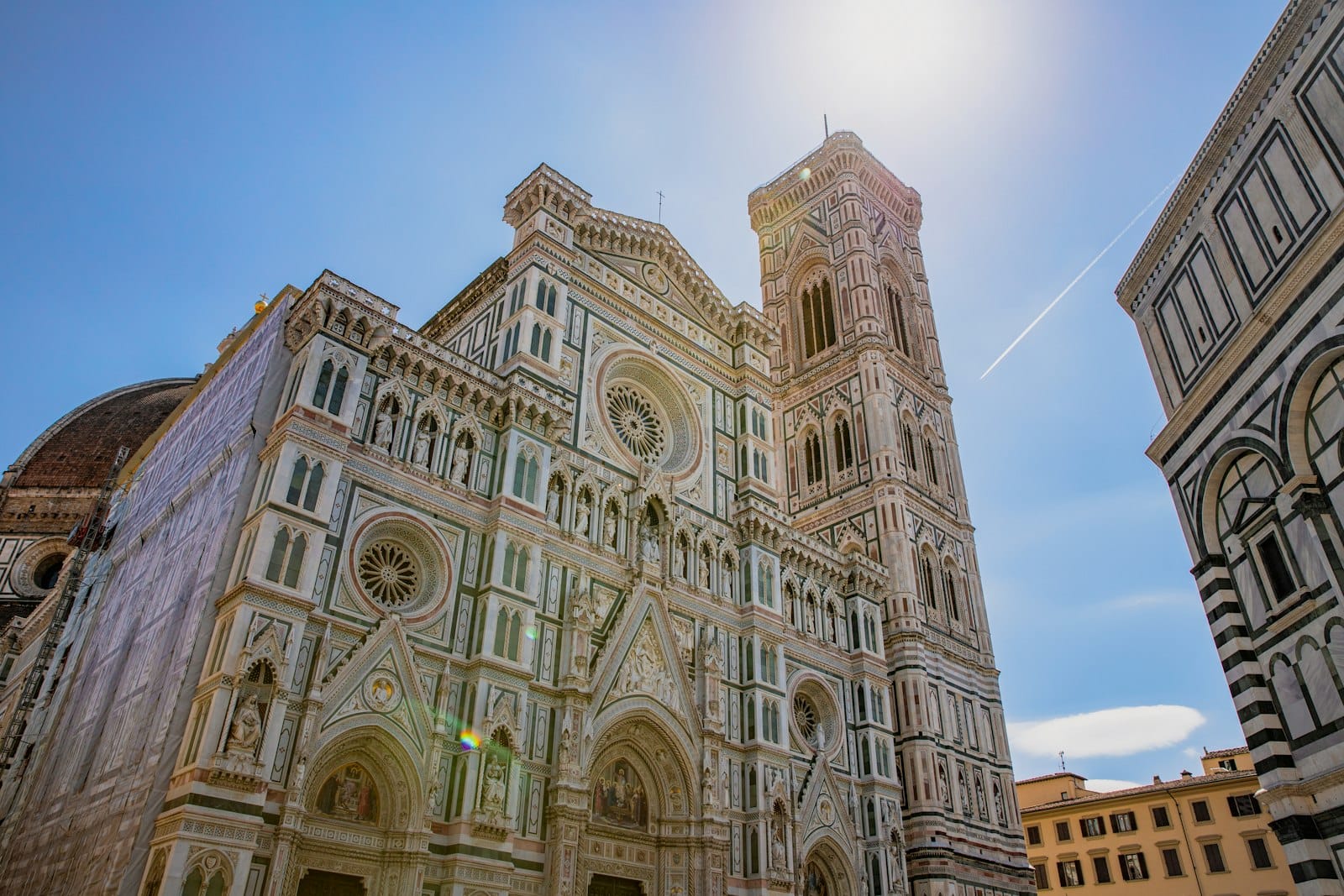
Start at the Florence Cathedral(Cattedrale di Santa Maria del Fiore) first thing in the morning, ideally before 9:00. The Cathedral itself is free to enter, but queues form fast. Your timed slot for the dome climb should be scheduled for mid-morning — the interior is cool and less crowded at that hour, and the views from the top of Brunelleschi's cupola across the Arno valley are genuinely worth the 463-step climb. Allow 45–60 minutes for the dome alone.
After the dome, spend 30 minutes at theFlorence Baptistery— the octagonal building directly in front of the Cathedral. Lorenzo Ghiberti's bronze doors on the east face (the famous 'Gates of Paradise') are among the finest examples of early Renaissance relief sculpture anywhere. The originals are in the Museo dell'Opera del Duomo; what you see on the exterior are high-quality replicas. Then walk south about 10 minutes toPiazza della Signoria, Florence's civic heart, where you can see a copy of Michelangelo's David and a collection of outdoor sculptures before lunch.
💡 Local tip
Lunch near Piazza della Signoria will be overpriced and mediocre. Walk 5–10 minutes north toward the San Lorenzo area for trattorie with better value. Alternatively, pick up a lampredotto sandwich (a Florentine street food staple made from tripe) from one of the street carts near the market — it costs around €4–5 and is the most authentic quick lunch you can have in the city.
The Uffizi Gallery deserves a minimum of 2–3 hours, ideally with a timed entry around 2:00–3:00 pm when morning rush groups have cleared. The collection covers Botticelli's 'Birth of Venus' and 'Primavera', works by Leonardo, Raphael, Titian, Caravaggio, and Michelangelo. The sheer scale is overwhelming: the Uffizi holds over 20,000 works, of which about 2,000 are on display. Be selective — trying to see everything in one visit is exhausting and counterproductive. Prioritise the Botticelli rooms (rooms 10–14) and the Raphael and Michelangelo room (room 41).
Day 2: Michelangelo's David, San Lorenzo, and Santa Croce
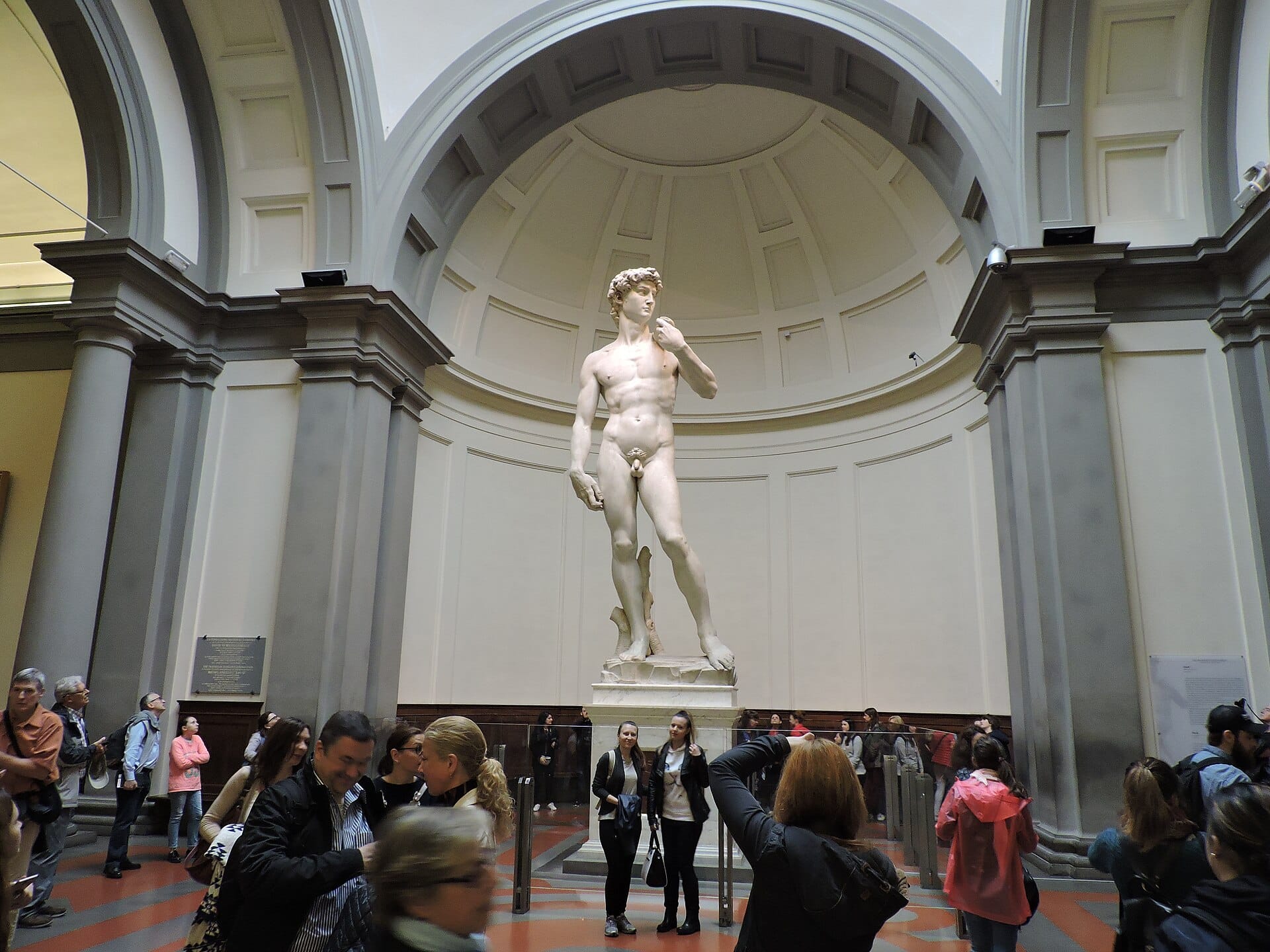
The Galleria dell'Accademiashould be your first stop on Day 2, ideally at opening time (usually 8:15 am on most days, though hours vary seasonally — verify before visiting). The original David stands 5.17 metres tall and is far more affecting in person than any photograph suggests. Michelangelo carved it between 1501 and 1504 from a single block of Carrara marble that had been partially worked and abandoned by an earlier sculptor. Beyond the David, the Accademia also holds Michelangelo's unfinished 'Prisoners' series — roughed-out figures that seem to be struggling free from the stone, which many visitors find as compelling as the David itself.
From the Accademia, walk south to theSan Lorenzo area. The Basilica di San Lorenzois the parish church of the Medici family and one of Florence's oldest churches. Attached to it are theMedici Chapels(Cappelle Medicee), which include the magnificent New Sacristy designed by Michelangelo and containing his sculptural tombs of Lorenzo and Giuliano de' Medici. Entry to the chapels is separate from the basilica and costs around €11 — worth it for anyone interested in Renaissance sculpture or Medici history.
Spend the afternoon in theSanta Croce district. The Basilica di Santa Croceis the largest Franciscan church in the world and serves as the burial place of Michelangelo, Galileo, Machiavelli, and Rossini, among others. The frescoes by Giotto in the Bardi and Peruzzi chapels are among the most important pre-Renaissance paintings in Italy. The surrounding neighbourhood is less touristy than the area around the Duomo and has better options for an early evening aperitivo.
✨ Pro tip
The Leather School of Florence (Scuola del Cuoio) is located inside the Santa Croce complex, accessible through the church or a separate entrance on Via San Giuseppe. It's one of the few places in the city where you can watch craftspeople work leather in traditional techniques and buy directly from the workshop. Quality is genuine — this is not a tourist trinket shop.
Day 3: Oltrarno, Pitti Palace, and the Sunset from Piazzale Michelangelo
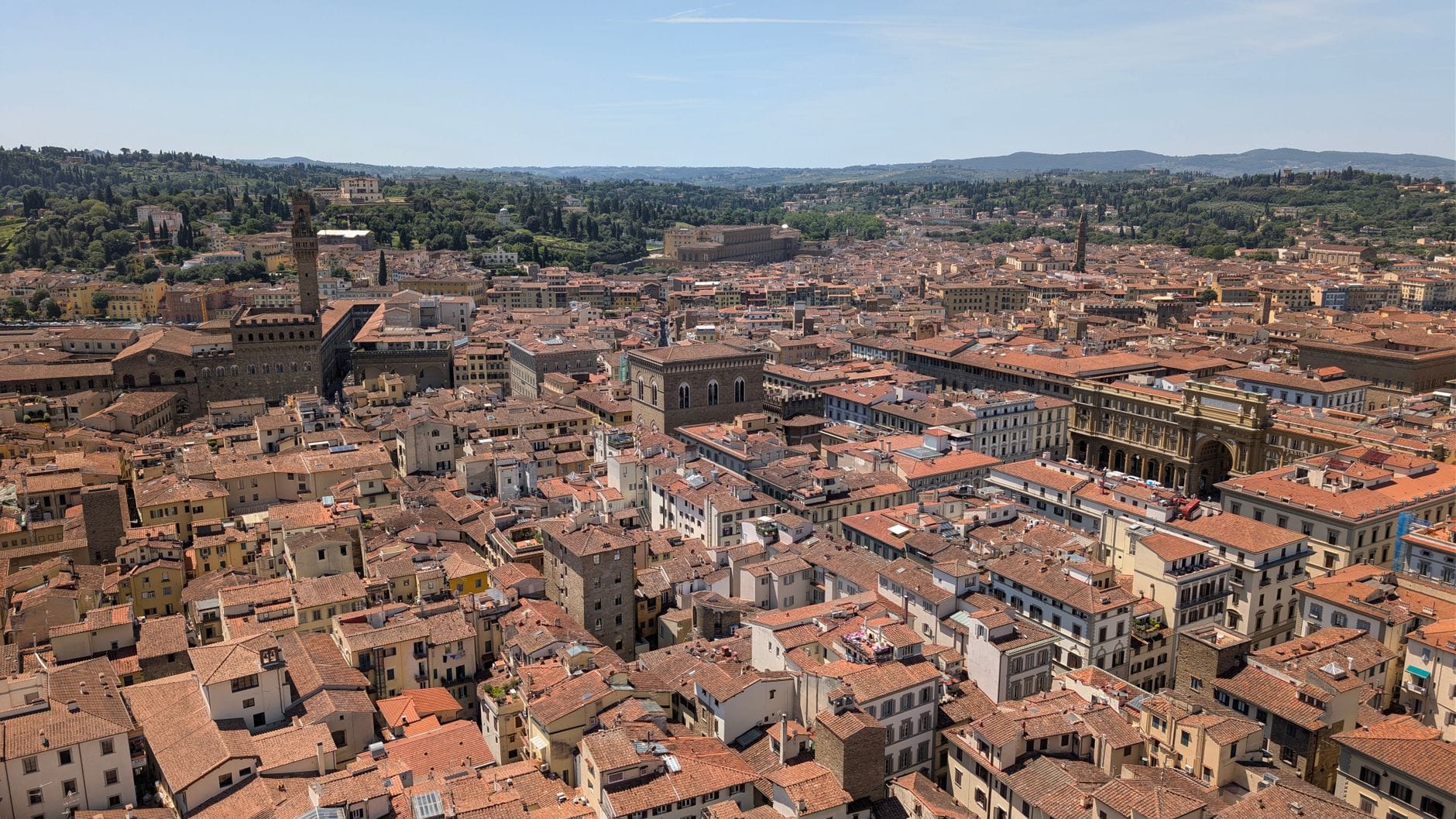
Cross the Arno to theOltrarnodistrict, Florence's south bank neighbourhood, which has a noticeably different character from the tourist-heavy north side. Start at thePitti Palace, the vast Medici palace that houses several museums including the Palatine Gallery (one of the finest collections of Raphael and Titian in existence) and the royal apartments. If museums are feeling heavy by Day 3, you can skip the interiors and go straight to theBoboli Gardensbehind the palace — 45,000 square metres of Renaissance gardens with fountains, grottos, and city views.
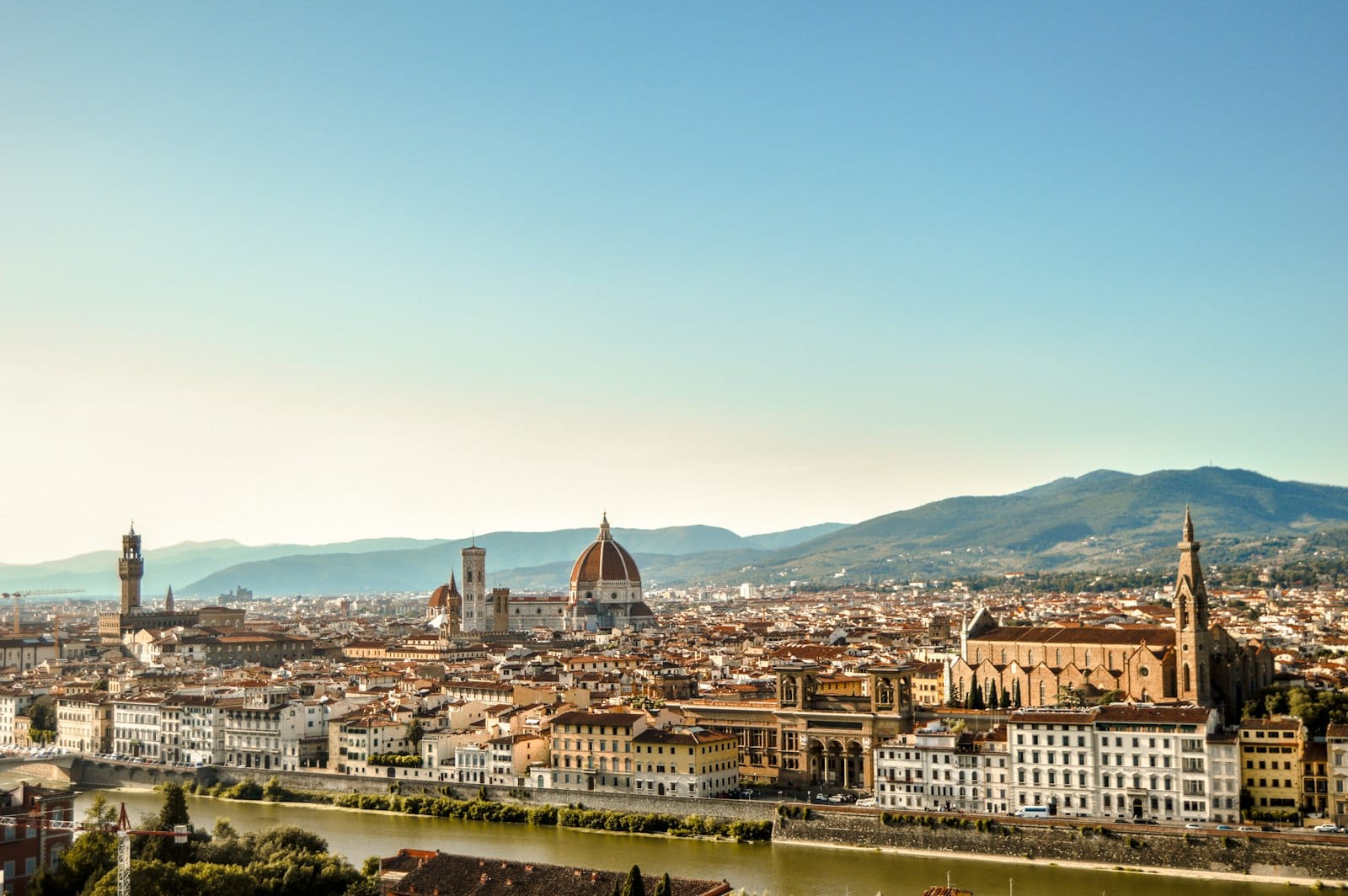
From the Boboli Gardens, it's about a 20-minute walk uphill (or a short taxi ride) toPiazzale Michelangelo, the terrace on the hill above the Arno with Florence's most famous panoramic view. The entire skyline — Duomo, Palazzo Vecchio tower, Santa Croce, and the surrounding hills — spreads out before you. In peak season, sunset here means sharing the terrace with hundreds of other visitors. If you want a quieter version of the same view, arrive at 7:00 am instead. For an even less-visited alternative, continue uphill another 10 minutes toSan Miniato al Monte, a Romanesque church from the 11th century with equally good views and almost no crowds by comparison.
On the way back down, walk along the Arno and cross via thePonte Vecchio— the medieval bridge lined with goldsmiths and jewellers. It's worth knowing that this bridge has been a market for gold and precious stones since the 16th century (jewellers replaced butchers after a Medici decree). Don't expect to browse casually at low prices: these are serious jewellery shops, not souvenir stalls. The bridge itself is free to walk across at any time.
Getting Around Florence: Practical Transport Notes
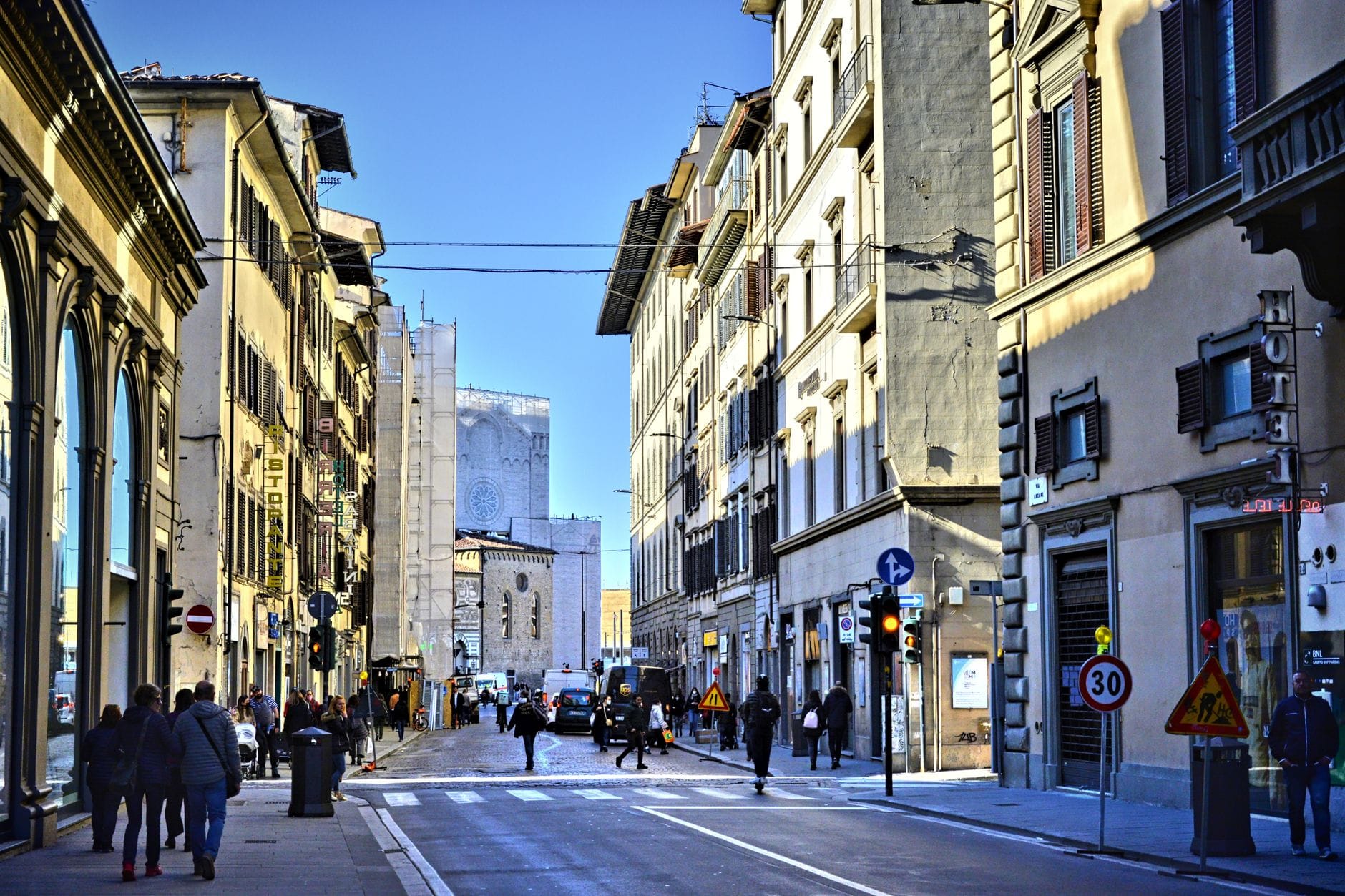
Florence's historic centre (Centro Storico) is a UNESCO World Heritage Site and is largely pedestrianised. The core sights on this itinerary are all within comfortable walking distance of each other — the Duomo to the Uffizi is about 500 metres, and the Accademia to San Lorenzo is under 10 minutes on foot. There is genuinely no need for taxis or buses within the historic centre during most of your stay.
From Florence Airport (Amerigo Vespucci, IATA: FLR), the T2 tram line connects directly to Firenze Santa Maria Novella station in the city centre — a clean, inexpensive, and frequent option. If you're arriving by train from Rome, you'll arrive at Santa Maria Novella, which is about a 15-minute walk from the Duomo. For detailed logistics on reaching Florence from elsewhere, see our guide ongetting around Florence, and for train travel from the capital, ourRome to Florenceguide covers all options including Frecciarossa high-speed trains.
- Wear comfortable shoes with grip — cobblestones are everywhere and slippery when wet.
- Carry a refillable water bottle: Florence's public drinking fountains (nasoni) provide safe, free drinking water throughout the city.
- Churches require covered shoulders and knees — carry a light scarf or layer, especially in summer.
- The ZTL (Zona a Traffico Limitato) restricts private vehicle access to much of the historic centre. If you're renting a car, park at the city edge and walk or take public transport in.
- Tipping is not obligatory in Italy. A small amount (€1–2) for good service is appreciated but never expected.
Seasonal Considerations: When to Visit and What Changes
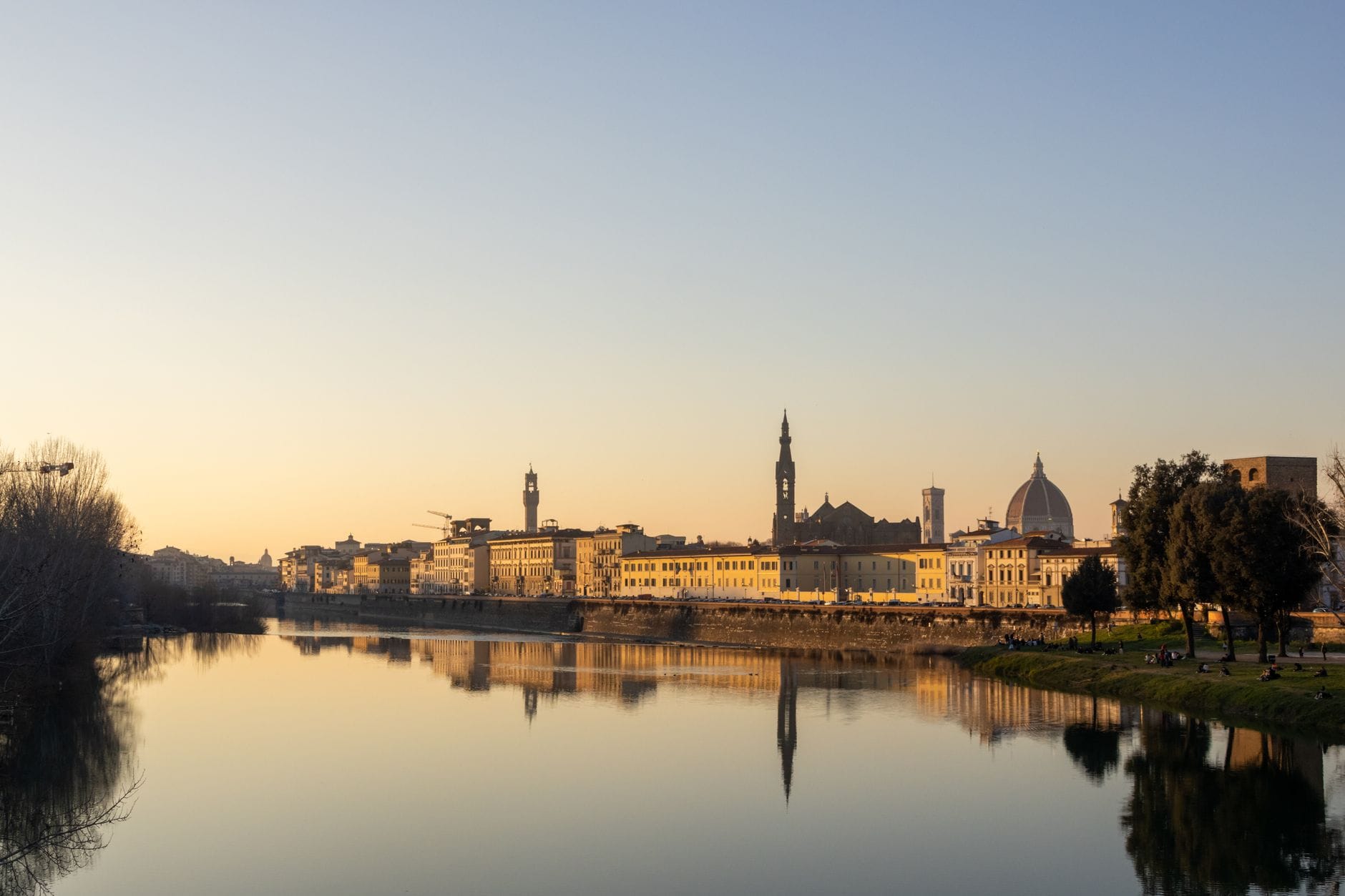
Florence attracts millions of visitors each year and is genuinely busy in every season. April through June and September through October are widely considered the optimal windows, with temperatures in the comfortable 15–25°C range and manageable (though never low) tourist volumes. For a deeper look at the full year breakdown, thebest time to visit Florenceguide covers crowd patterns, pricing fluctuations, and event calendars by month.
Summer (June through August) brings intense heat, often reaching 32–35°C, combined with the largest tourist crowds of the year. Museums are air-conditioned refuges, which partly explains the long queues at peak hours. If you're visiting in summer, schedule outdoor activities (Boboli Gardens, Piazzale Michelangelo, Arno riverside walks) for early morning or after 6:00 pm. Winter is genuinely cold and sometimes foggy, but hotel rates drop significantly and queues at most attractions are minimal — the Uffizi in January feels like a completely different experience to the Uffizi in August.
ℹ️ Good to know
Many Florence churches and museums close on Mondays (including the Uffizi and Accademia). A few close on different days or have reduced hours on Sundays. Always verify current opening hours on the official website before finalising your Day 1 schedule — building your itinerary around an attraction that's closed is a common and avoidable problem.
FAQ
Is 3 days enough to see Florence?
Three days covers the essential highlights comfortably if you plan ahead. You can see the Duomo complex, Uffizi, Accademia, Pitti Palace, Ponte Vecchio, and the Oltrarno district without feeling rushed. That said, Florence rewards slower travel — if you have four or five days, you can add the Convent of San Marco, Museo del Bargello, or a half-day trip to Fiesole without sacrificing depth. Three days is a realistic minimum for first-time visitors.
Do I need to book Florence museum tickets in advance?
Yes, for the main attractions. The Galleria dell'Accademia (David), the Uffizi Gallery, and the Brunelleschi dome climb all operate on timed-entry systems and sell out days to weeks in advance during spring and summer. Book directly through official sites (uffizi.it for Uffizi and Accademia; duomo.firenze.it for the Duomo complex) as early as possible. Smaller attractions like the Medici Chapels and Santa Croce have less booking pressure but still benefit from advance tickets.
What is the best area to stay in Florence for a 3-day visit?
The Centro Storico puts you within walking distance of every major sight on this itinerary. The Santa Maria Novella neighbourhood is slightly less dense with tourists and has good transport links. The Oltrarno is a quieter base with a more local atmosphere, though you'll spend time crossing the river each day. Avoid hotels that describe themselves as being in 'central Florence' without specifying the neighbourhood — check the map against the Duomo as your reference point.
How do I get from Rome to Florence?
The Frecciarossa high-speed train between Roma Termini and Firenze Santa Maria Novella is the best option: journey time is around 1.5 hours and trains run frequently throughout the day. Flying is slower when you factor in airport transfers and check-in. Driving is possible but the ZTL restrictions in Florence's centre make it inconvenient. Book train tickets through Trenitalia or Italo well in advance for the best fares.
Can I do a day trip from Florence to Cinque Terre or Venice in 3 days?
Technically possible but not advisable if this is your first visit to Florence. Both destinations are around 2.5–3 hours away by train, meaning a full day trip leaves you only 4–5 hours on-site and significantly depletes your Florence time. Cinque Terre is better as a separate 2-night trip, and Venice deserves at least 2 days. If you're determined to combine them, build your base itinerary first and see what time remains.
Tickets & tours
Live prices and dates from our booking partner. If you book, we may earn a commission at no extra cost to you.
Planning a trip? Discover personalized activities with the Nomado app.