Medici Chapels (Cappelle Medicee): Michelangelo's Final Masterpiece
The Medici Chapels are the official mausoleum of the Medici dynasty, housing Michelangelo's most powerful funerary sculptures inside one of Florence's most underestimated museum spaces. Two distinct chapels, two entirely different moods, and one of the most concentrated displays of Renaissance genius in Europe.
Quick Facts
- Location
- Piazza Madonna degli Aldobrandini 6, San Lorenzo, Florence (entrance at the rear of Basilica di San Lorenzo)
- Getting There
- 10-minute walk from Santa Maria Novella train station; 15 minutes from Piazza della Signoria
- Time Needed
- 1 to 1.5 hours
- Cost
- Full price €11 (verify on the official site before visiting); reservation fee €3 online
- Best for
- Renaissance art lovers, Michelangelo enthusiasts, history-focused travelers, architecture students
- Official website
- bargellomusei.it/en/museum/cappelle-medicee
What Are the Medici Chapels?
The Medici Chapels, known in Italian as the Cappelle Medicee or officially as the Museo delle Cappelle Medicee, are the dynastic mausoleum of the Medici family, the banking clan that ruled Florence for much of the 15th through 18th centuries and bankrolled a significant portion of the Renaissance. The complex sits attached to the rear of the Basilica di San Lorenzo and has been a state museum since 1869, when unified Italy recognized it as a national monument.
The chapels divide into two architecturally and emotionally distinct spaces: the Chapel of the Princes (Cappella dei Principi), a baroque behemoth covered in semi-precious stone, and the New Sacristy (Sagrestia Nuova), a compact, white-walled space designed by Michelangelo and containing four of his most studied sculptures. Most visitors, even repeat travelers to Florence, are surprised by how different these two rooms feel from each other.
The museum is part of the Bargello Museums group, the same network that manages theMuseo del Bargelloand the Palazzo Davanzati. A 72-hour pass covering all Bargello Museums costs €38 and is worth considering if you plan to see more than one.
💡 Local tip
The museum entrance is NOT through the Basilica di San Lorenzo itself. Head to Piazza Madonna degli Aldobrandini, around the back of the church. First-timers frequently queue at the wrong door and lose time.
The Chapel of the Princes: Baroque Ambition in Stone
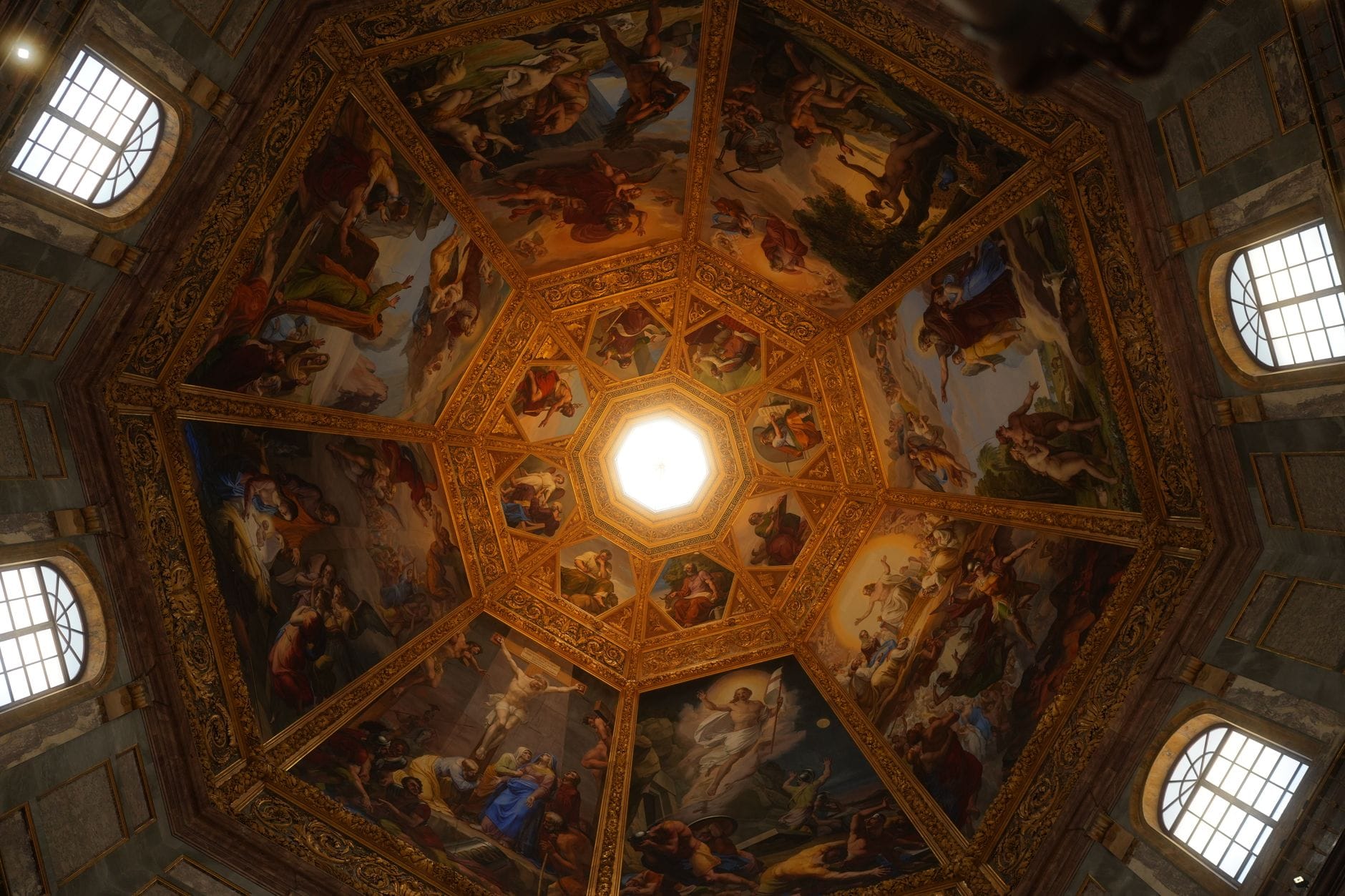
You enter the Crypt first, a low-ceilinged space housing Medici family tombs, before ascending into the Chapel of the Princes. Nothing prepares you for the scale. The room is an octagon approximately 58 metres tall, and every surface from floor to cornice is covered in pietra dura, the Florentine art of inlaying coloured marbles, porphyry, jasper, lapis lazuli, and mother-of-pearl into geometric and figurative patterns. It took craftsmen over three centuries to complete the decoration, and it still was not fully finished when the last Grand Duke died in 1743.
The mood here is triumphalist and slightly oppressive in the best way. Six Medici Grand Dukes are buried in the massive sarcophagi set into the walls, each tomb surmounted by a gilded bronze portrait statue. The coats of arms of sixteen Tuscan towns, executed in semi-precious stone on the lower walls, demonstrate both the technical virtuosity of Florentine craftsmen and the Medici's territorial ambitions. The dome above was frescoed in the early 19th century by Pietro Benvenuti, depicting scenes from the Old and New Testaments.
In the morning light, when the tour groups have not yet arrived, the pietra dura floor catches the illumination from the upper windows in a way that makes the stone appear almost liquid. By midday the room fills with visitors and the acoustic effect of that tall dome turns multiple languages into a continuous murmur. Come early, ideally within the first hour of opening, if you want to stand in the room in relative quiet.
Tickets & tours
Live prices and dates from our booking partner. If you book, we may earn a commission at no extra cost to you.
Medici series tour in Palazzo Medici Riccardi
From 90 €Instant confirmationFree cancellationPitti Palace tour: the magnificence of the Medici dynasty
From 59 €Instant confirmationFree cancellationFlorence self-guided tour: Medici Conspiracy exploration game
From 10 €Instant confirmationFree cancellationMedicis walking tour in Florence
From 29 €Instant confirmationFree cancellation
The New Sacristy: Michelangelo's Room
Pass through a narrow corridor and the atmosphere shifts completely. The New Sacristy (Sagrestia Nuova) is Michelangelo's architectural and sculptural space, begun around 1520 under a commission from Pope Leo X and Cardinal Giulio de' Medici. The walls are white pietra serena and white plaster, the geometry is cool and rational, and the light from the lantern above the dome falls in a single focused shaft. After the colour overload of the Chapel of the Princes, it feels like stepping into silence.
Two wall tombs dominate the room. On the left is the tomb of Giuliano de' Medici, Duke of Nemours, with the reclining figures of Night and Day flanking his idealized portrait statue. On the right is the tomb of Lorenzo de' Medici, Duke of Urbino, with Dawn and Dusk in the same configuration. These four allegorical figures are among the most analysed sculptures in Western art history. Michelangelo left all four technically unfinished: the surfaces shift between smooth polish and raw stone, a quality that makes them feel alive in ways that more finished Renaissance sculptures often do not.
A third group, the Madonna and Child with Saints Cosmas and Damian, stands against the entrance wall and marks the burial site of Lorenzo the Magnificent and his brother Giuliano, the two most celebrated Medici of the 15th century. Their tomb is notably simpler than those of the later Dukes, which many art historians read as an intentional statement by Michelangelo about genuine greatness versus dynastic performance.
ℹ️ Good to know
Michelangelo also designed the architecture of the New Sacristy, making it one of the rare spaces in the world where a single artist controlled both the structure and all the sculptural content. Compare it mentally with the Sistine Chapel, where he had no architectural role.
When to Visit and How Crowds Behave
The Medici Chapels are open Tuesday through Sunday, 08:15 to 18:50, with the last entry 40 minutes before closing. Monday closures are firm.
The first 90 minutes after opening are noticeably calmer than the midday period. Tour groups tend to arrive between 10:00 and 12:30, and again in the early afternoon. Visiting after 16:00 on weekdays gives you a second quiet window, with the additional advantage that the afternoon light through the New Sacristy's dome lantern falls at a lower angle, which many photographers prefer for capturing the texture of Michelangelo's marble surfaces.
Free admission days (the first Sunday of each month, plus April 25 and June 2) draw significantly larger crowds and remove the option for reservations. If you plan to visit on a free day, arrive at opening time. The optional €3 booking fee is worth paying on any other day, particularly in peak season between April and October.
⚠️ What to skip
Dress respectfully: while this is a historic mausoleum rather than an active church and no strict dress code is formally enforced, covering shoulders and knees is advisable.
Historical Context: Why the Medici Built Here
The Medici family's relationship with the church of San Lorenzo goes back to the early 15th century, when Cosimo de' Medici the Elder funded its reconstruction by Brunelleschi. TheBasilica di San Lorenzobecame the family's parish church and the Old Sacristy inside it already contained early Medici tombs. The chapels that came later were a deliberate escalation: as the Medici transformed from bankers into Grand Dukes of Tuscany, they required a mausoleum that would communicate permanence and sovereign authority.
Construction on the Chapel of the Princes began in 1604 under Grand Duke Ferdinando I and was driven by a competition with the papal monuments in Rome. The ambition was explicit: this was to be one of the grandest funerary chapels in Christendom. The dome, completed in the early 18th century by Ferdinando Ruggeri, is a prominent Baroque structure, though it is rarely mentioned in the same breath as Brunelleschi's dome simply because it is not visible from most of the city.
The New Sacristy, begun over a century earlier by Michelangelo, reflects a different political moment: the Medici had been expelled and restored, and the commission was partly about re-establishing legitimacy through art. Michelangelo left Florence permanently in 1534 before the sacristy was complete, and several elements were finished by his assistants. Understanding this history reframes what you see when you stand in front of the tombs. For more on Michelangelo's presence across the city, see this guide toMichelangelo in Florence.
Practical Walkthrough and Photography
The visit follows a set route: Crypt, Chapel of the Princes, corridor, New Sacristy. The total floor area is compact, and 60 to 90 minutes is sufficient for most visitors who want to read the wall panels and spend genuine time with the sculptures. Rushing through in 30 minutes is possible but defeats the purpose.
Photography is permitted without flash in most areas. Tripods are not allowed, as is common across Florentine museums. For the New Sacristy, the best angles for the tomb figures are slightly off-centre: standing directly in front of the tombs compresses the reclining figures. Positioning yourself at roughly a 30-degree angle allows the full three-dimensionality of Night, Day, Dawn, and Dusk to read properly. The pietra dura floor of the Chapel of the Princes photographs well in the early morning with natural light from the upper windows.
Disabled visitors and their helpers are entitled to free admission. The museum's historic structure presents some accessibility limitations; visitors with mobility requirements are advised to contact the museum directly before visiting at +39 055 0649430 to confirm current access arrangements.
Combining the Chapels with the San Lorenzo Neighborhood
The Medici Chapels sit inside theSan Lorenzo neighborhood, one of the most layered quarters in central Florence. TheSan Lorenzo marketspreads through the streets immediately outside, a mix of leather goods, clothing, and souvenir stalls that can feel chaotic after the museum's quiet interior. TheMercato Centraleis two minutes on foot and worth a stop for lunch after your visit.
The Basilica di San Lorenzo itself requires a separate ticket and contains the Old Sacristy, Brunelleschi's original design for the family, as well as important works by Donatello. The Laurentian Library, designed by Michelangelo and accessible through the basilica's cloister, is a remarkable space in its own right. Budget at least half a day if you want to cover the entire San Lorenzo complex properly.
If you have a second day in Florence, thePalazzo Medici Riccardiis a short walk east and provides essential context for the earlier, more intimate phase of Medici patronage, before the dynasty became a ruling house.
Insider Tips
- The entrance door in Piazza Madonna degli Aldobrandini is easy to miss if you walk from the market side of San Lorenzo. Look for the museum signage on the far side of the piazza, not adjacent to the church facade.
- The Bargello cumulative pass at €25 covers the Medici Chapels, the Bargello Museum, Palazzo Davanzati, and other sites. If you plan to visit two or more Bargello Museums properties, it undercuts buying individual tickets.
- Michelangelo's four allegorical figures (Night, Day, Dawn, Dusk) are intentionally unfinished, not damaged. The raw stone passages are deliberate. Understanding this changes how you read the sculptures.
- The Chapel of the Princes has a separate, smaller room off the main octagon that displays original cartoons and pietra dura workshop samples. Most visitors walk past it. It gives real insight into how the floor and wall inlays were designed and executed.
- If you visit on a free Sunday, the museum removes its reservation system entirely. The queue can extend significantly in peak months. An 08:15 arrival is the only reliable strategy for a relaxed visit on free days.
Who Is Medici Chapels For?
- Travelers with a specific interest in Michelangelo who want to see major sculptural works beyond the Accademia's David
- Architecture enthusiasts studying the transition from Renaissance to Baroque spatial design in a single building
- History-focused visitors tracing the political ambitions of the Medici dynasty across Florence
- Visitors who prefer quieter, smaller museums over the crowds of the Uffizi or Accademia
- Photographers seeking dramatic stone textures and complex interior light in a relatively uncrowded space
Nearby Attractions
Other things to see while in San Lorenzo:
- Basilica di San Lorenzo
The Basilica di San Lorenzo is Florence's oldest major church and the burial ground of the Medici dynasty. Built to Brunelleschi's design in the 15th century, it holds some of the finest Renaissance architecture and art in Italy, plus the separate Medici Chapels complex. This guide covers what to expect inside, how long to spend, and how to visit without wasting time.
- Mercato Centrale
Mercato Centrale is Florence's largest and most celebrated covered market, housed in a cast-iron and glass hall dating to 1874. The ground floor runs as a traditional food market Monday through Saturday mornings, while the upper level operates as a modern food hall open daily until midnight. Entry is free.
- Palazzo Medici Riccardi
Built for Cosimo de' Medici in 1444, Palazzo Medici Riccardi is where the Renaissance was quietly administered. The chapel frescoes alone justify the visit. Here is what to know before you go.
- San Lorenzo Market
San Lorenzo Market combines a working 19th-century iron-and-glass food hall, a buzzing upper-floor food court open until midnight, and a sprawling street market selling leather goods and textiles. Free to enter, central to navigate, and genuinely useful whether you're buying lunch or a wallet.
Planning a trip? Discover personalized activities with the Nomado app.