Mercato Centrale Florence: What to Know Before You Go
Mercato Centrale is Florence's largest and most celebrated covered market, housed in a cast-iron and glass hall dating to 1874. The ground floor runs as a traditional food market Monday through Saturday mornings, while the upper level operates as a modern food hall open daily until midnight. Entry is free.
Quick Facts
- Location
- Piazza del Mercato Centrale / Via dell'Ariento, San Lorenzo, Florence
- Getting There
- About 900 m on foot from Santa Maria Novella station; tram lines T1 and T2 stop nearby
- Time Needed
- 30–45 min for the market; 1–2 hours if eating at the upstairs food hall
- Cost
- Free entry; you pay only for what you buy
- Best for
- Food lovers, solo travelers, rainy-day itineraries, late-night dining
- Official website
- www.mercatocentrale.com/florence
What Mercato Centrale Actually Is
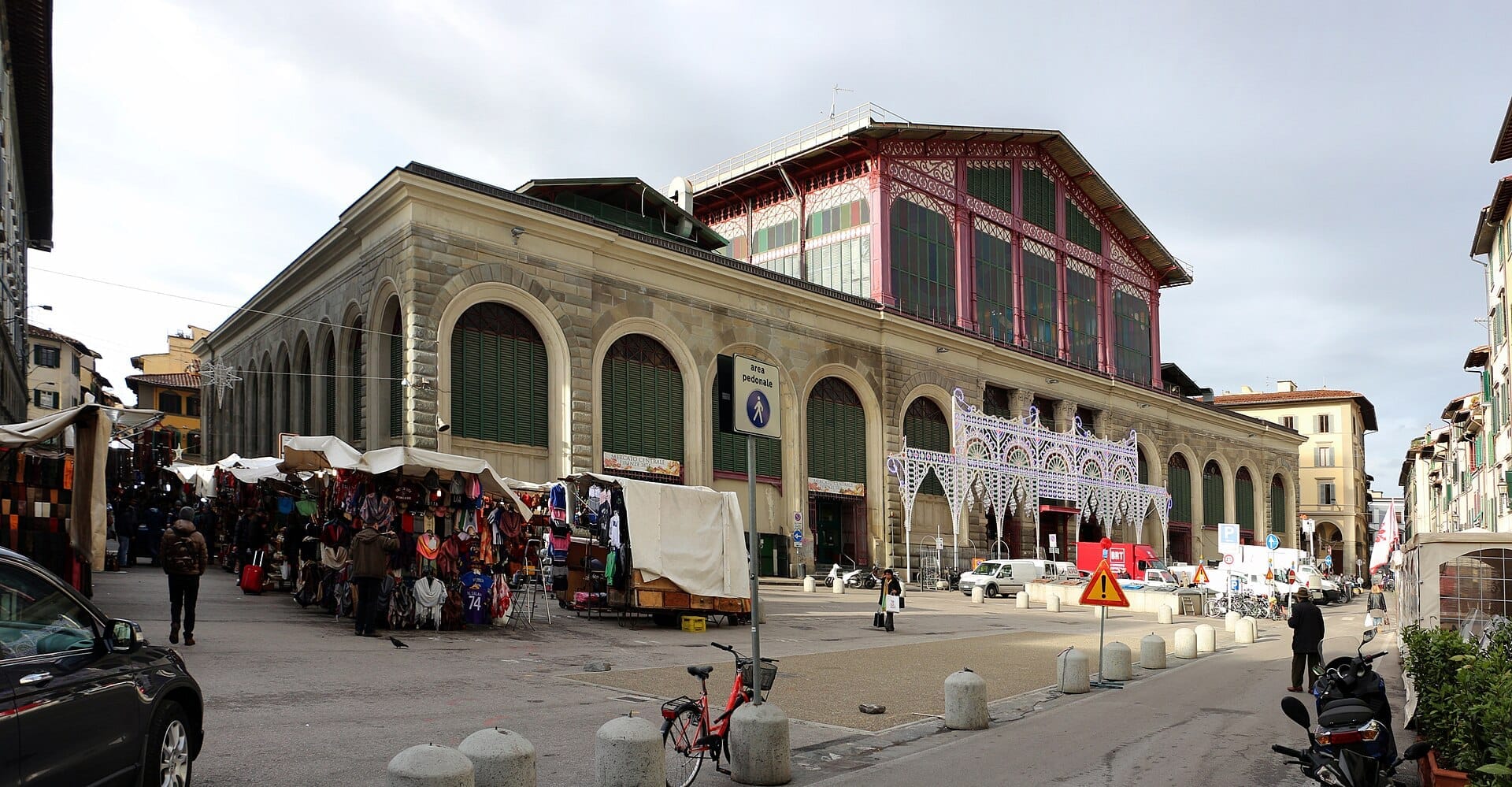
Mercato Centrale is a two-story cast-iron and glass market hall that occupies an entire city block in the San Lorenzo neighborhood, roughly equidistant between the Duomo and Florence's main train station. The structure was designed by architect Giuseppe Mengoni, the same architect behind Milan's Galleria Vittorio Emanuele II, and it opened in 1874 during an International Agricultural Exhibition at a moment when Florence was recently finished its short spell as the capital of Italy (1865–1871). The building itself is worth a moment of attention before you even step inside: the exterior is solid and a little austere, but once you pass through the iron doors, the interior opens into a high, airy nave of light filtered through glass.
The two floors serve entirely different purposes and run on different schedules. The ground floor is a working produce market, open Monday through Saturday from approximately 09:00 to 15:00 and closed on Sundays. The upper level, a modern food hall, is open daily from 08:00 until midnight. Understanding this split is essential before you visit, because the experience on each floor is quite different.
ℹ️ Good to know
Ground floor (traditional market): Monday–Saturday, approximately 09:00–15:00. Upper food hall: daily, 08:00–midnight. Entry to both floors is free. Check the official site before visiting on public holidays.
The Ground Floor: A Working Food Market
Arrive before 09:00 on a weekday and the ground floor operates as Florentine food markets have for generations. Butchers arrange tripe and lampredotto alongside more familiar cuts. Fishmongers lay out whole fish on crushed ice. Cheese vendors stack wedges of aged Parmigiano and younger pecorino. The smell changes within a few steps: briny at the fish stands, sharp and grassy near the cheeses, then sweet and slightly ferrant around the cured meat counters. The noise level is moderate, with vendors calling in Italian and the low hum of refrigeration units running beneath stone-floored stalls.
The vendors here are not performing for tourists. They are supplying local restaurants, households in the neighborhood, and the occasional chef doing early morning rounds. That is precisely what makes the ground floor worth visiting at opening time. By 11:00, foot traffic increases noticeably and the mix shifts toward visitors. By 13:00, vendors are wrapping up and the energy begins to wind down. If you want to see the market as a functional institution rather than a tourist attraction, plan for the first two hours after opening.
Photography is generally tolerated, but pointing a long lens directly at vendors without acknowledgment rarely earns goodwill. A nod or a simple 'posso fare una foto?' tends to open things up considerably. Natural light is good throughout the morning as it filters down from the clerestory windows above, making a tripod unnecessary.
💡 Local tip
The ground floor closes in the afternoon and is shut on Sundays and holidays. If you are only available on a Sunday or arrive after closing time on a weekday, you will only have access to the upper food hall.
Tickets & tours
Live prices and dates from our booking partner. If you book, we may earn a commission at no extra cost to you.
Private food tour of the Central Market in Florence
From 0 €Instant confirmationFree cancellationPrivate food tour of the Central Market in Florence
From 0 €Instant confirmationFree cancellationPrivate food tour of the Central Market in Florence
From 0 €Instant confirmationFree cancellationPerfume masterclass: a sensory experience in Florence
From 70 €Instant confirmationFree cancellation
The Upper Food Hall: Architecture, Vendors, and Evenings
The renovation converted the first floor into a curated food hall with individual stalls run by independent producers and specialty vendors. You will find stands dedicated to fresh pasta, pizza by the slice, Florentine steaks, gelato, craft beer, espresso, and Tuscan wines. The ceiling above is the original iron and glass structure, and sitting at a communal table with the vaulted roof overhead is genuinely pleasant in a way that more polished food courts rarely manage
The upstairs hall works differently at different hours. At lunchtime, it fills quickly and finding a seat at the communal tables requires some patience. Between 15:00 and 18:00, the crowd thins and the pace slows, which is a good window for a relaxed snack and a glass of wine without competing for space. In the evening, particularly after 20:00, the hall takes on a different character: lower light, more lingering conversations, groups settling in for full meals
Quality across the stalls varies, as it does in any food hall format. The pasta and the Florentine-style beef are generally reliable starting points. Avoid the impulse to order everything at once from multiple vendors; the communal seating means your food arrives at different times from different counters, which can make sharing meals awkward logistically.
💡 Local tip
On weekend evenings, the upper food hall gets genuinely crowded. Arrive by 19:00 if you want to eat at the tables without a long wait for a seat.
Historical and Architectural Context
Mercato Centrale was built during a period when Florence was reshaping itself as a modern city. Its opening in 1874 placed it among a generation of iron-framed market halls appearing across Europe in the latter half of the 19th century, a building type that used industrial materials to create large, ventilated, light-filled public spaces. Mengoni's design for Florence shares structural DNA with Les Halles in Paris (since demolished) and with his more celebrated Galleria in Milan, but it reads as quieter and more purely functional than either.
The surrounding San Lorenzo neighborhood reinforces the market's historical weight. Just outside the doors, the street stalls ofSan Lorenzo marketstretch along Via dell'Ariento and the surrounding streets, selling leather goods, clothing, and souvenirs. The contrast between the outdoor stalls and the indoor hall is sharp: one is tourist-facing and commercially aggressive, the other still largely oriented toward food and everyday life.
The neighborhood itself, theSan Lorenzo district, also contains theBasilica di San Lorenzo and the Medici Chapels, which means that combining a morning at the market with an afternoon in the Medici buildings makes logical geographic and thematic sense.
Getting There and Getting Around Inside
From Firenze Santa Maria Novella train station, Mercato Centrale is approximately 900 meters on foot, a direct ten-minute walk northeast along Via Nazionale or Via Faenza. Tram lines T1 (Leonardo) and T2 (Vespucci) stop near the Unità/Santa Maria Novella area. Multiple ATAF bus lines (including 1, 6, 11, 14, and C2) also serve stops within easy walking distance. Driving is impractical given the limited traffic zones in central Florence; the market is best reached on foot or by public transit.
Inside, the ground floor is a single open space with stalls arranged in rows under the iron columns. It is fully flat and navigable with strollers or wheelchairs, though it can be tight between stalls at peak hours. The upper food hall is accessed by internal stairs or an elevator. Visitors with mobility concerns should confirm current lift access with the venue directly before visiting.
⚠️ What to skip
The San Lorenzo outdoor market stalls surrounding the building can feel overwhelming and sales-aggressive if you are not expecting them. They are separate from the indoor Mercato Centrale. Walk through them to reach the main entrance without obligation to engage with vendors.
Who This Attracts and Who Might Be Disappointed
Mercato Centrale works well for travelers who care about food as a form of cultural experience, for those traveling solo who want a convivial space to eat without booking a full restaurant, and for families who need flexible dining where different people can pick different things. The free entry and no-reservation format of the food hall makes it accessible for spontaneous visits.
Travelers seeking a quiet, reflective experience should be aware that the market, especially the upper floor at peak hours, is noisy and energetic. Those looking for the most authentic Florentine dining will find more neighborhood character in the Oltrarno across the river. The market is also located in one of the most heavily visited parts of the city center, so if you are trying to step away from tourist density, this is not the place to start. For a different pace, theSant'Ambrogio marketin the Santa Croce neighborhood is smaller, less visited, and similarly authentic on the ground floor.
In wet or very cold weather, both floors of the market make for a genuinely comfortable stop: the building is covered and heated, and the upper food hall provides a warm, sociable environment that holds up better in poor conditions than most outdoor alternatives in the city center.
Insider Tips
- The tripe sandwiches (lampredotto) sold at the ground-floor butcher counters are a Florentine institution. If you want to try offal in a low-stakes setting without committing to a full restaurant meal, this is an ideal first step.
- The upper food hall's communal seating is shared across all vendors. Order from any stall, then claim a table. You do not need to sit near the stall you ordered from.
- Weekday mornings between 07:30 and 09:00 are when the ground floor operates most like a real working market rather than a tourist attraction. Chefs from nearby restaurants do their buying during this window.
- The building's exterior, especially the iron facade along Via dell'Ariento, photographs well in morning light before the outdoor stall vendors set up and crowd the surrounding streets.
- If you are self-catering or assembling a picnic, the ground floor has some of the best cheese and cured meat prices in the city center. Bring a small bag, as not all vendors supply packaging for small purchases.
Who Is Mercato Centrale For?
- Food-focused travelers who want to engage with local produce and Florentine culinary traditions
- Solo travelers looking for a no-reservation, flexible meal in a social setting
- Families with varied tastes who need multiple food options under one roof
- Rainy-day visitors who need a covered, interesting destination in the city center
- Evening diners who want a good meal after 21:00 without booking ahead
Nearby Attractions
Other things to see while in San Lorenzo:
- Basilica di San Lorenzo
The Basilica di San Lorenzo is Florence's oldest major church and the burial ground of the Medici dynasty. Built to Brunelleschi's design in the 15th century, it holds some of the finest Renaissance architecture and art in Italy, plus the separate Medici Chapels complex. This guide covers what to expect inside, how long to spend, and how to visit without wasting time.
- Medici Chapels
The Medici Chapels are the official mausoleum of the Medici dynasty, housing Michelangelo's most powerful funerary sculptures inside one of Florence's most underestimated museum spaces. Two distinct chapels, two entirely different moods, and one of the most concentrated displays of Renaissance genius in Europe.
- Palazzo Medici Riccardi
Built for Cosimo de' Medici in 1444, Palazzo Medici Riccardi is where the Renaissance was quietly administered. The chapel frescoes alone justify the visit. Here is what to know before you go.
- San Lorenzo Market
San Lorenzo Market combines a working 19th-century iron-and-glass food hall, a buzzing upper-floor food court open until midnight, and a sprawling street market selling leather goods and textiles. Free to enter, central to navigate, and genuinely useful whether you're buying lunch or a wallet.
Planning a trip? Discover personalized activities with the Nomado app.