Sant'Ambrogio Market: Florence's Oldest Market
The Mercato di Sant'Ambrogio has been feeding Florence's eastern neighborhoods since its cast-iron hall opened in 1873. Open Monday through Saturday mornings, it draws local shoppers, chefs, and a handful of savvy visitors for fresh produce, cheese, meat, and cheap hot lunches. Entry is free.
Quick Facts
- Location
- Piazza Lorenzo Ghiberti, Sant'Ambrogio area near Santa Croce, Florence
- Getting There
- Bus lines 14, 23, or C3 to Via dell'Agnolo / Piazza Annigoni; ~10–15-min walk from Santa Croce
- Time Needed
- 45 minutes to browse; up to 2 hours if you eat lunch at the market
- Cost
- Free entry; vendor prices vary
- Best for
- Food lovers, self-caterers, early risers, anyone wanting an authentic Florentine morning
- Official website
- mercatosantambrogio.it
What Sant'Ambrogio Market Actually Is
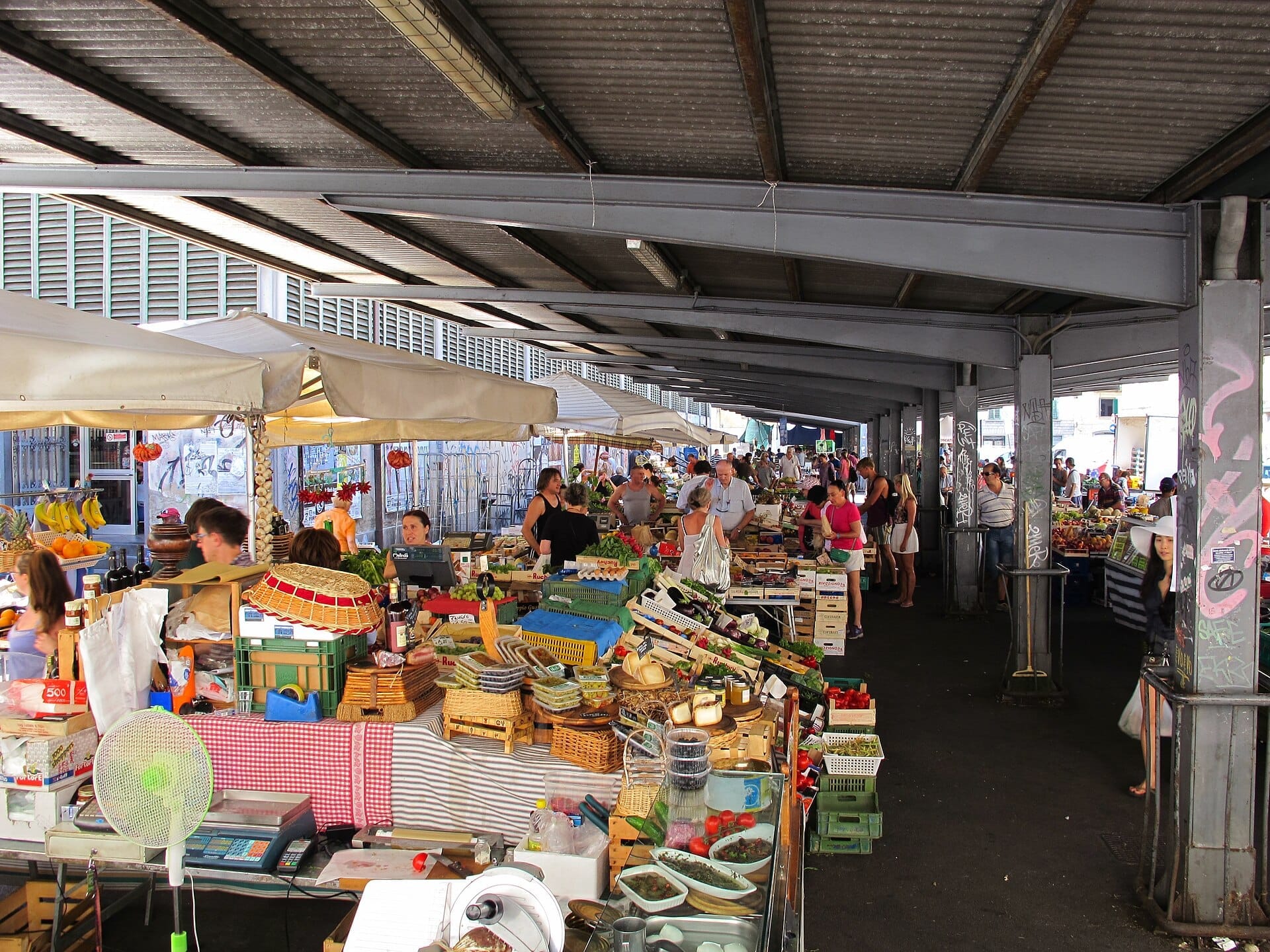
The Mercato di Sant'Ambrogio is Florence's oldest covered food market, housed in a cast-iron and brick hall that opened in 1873 during the large-scale urban reorganization of the city's historic center. It occupies Piazza Lorenzo Ghiberti in the Sant'Ambrogio neighborhood, roughly ten minutes on foot east of the Basilica di Santa Croce, well outside the main tourist circuit. That distance matters: this is not a market that caters to visitors. It caters to Florentines, which is precisely what makes it worth the walk. For more on the broader neighborhood context, see our guide to theSanta Croce district.
The market operates on a simple structure: a covered inner hall for fresh produce, meat, fish, cheese, and charcuterie, with a ring of outdoor stalls around the perimeter selling vegetables, fruit, flowers, and secondhand goods including clothing and small household items. It is open Monday through Saturday from 07:00 to 14:00, closed Sundays and some holidays, and entry is free.
💡 Local tip
Arrive before 9:00 if you want the full selection. By 12:30, many vendors are packing up and the best cuts of meat and fresh fish will be gone. The tripe and lampredotto sandwiches from the outdoor cart are typically sold out before early afternoon.
The Architecture: Cast Iron and Morning Light
The covered hall is a fine example of late 19th-century market architecture, built on a site that was formerly an orchard adjacent to the church of Sant'Ambrogio. The cast-iron structure, functional rather than grand, allows diffused natural light to filter in through high windows and a partially open roof. In the morning, the light hits the stalls at a low angle, catching the colors of stacked tomatoes, bundles of fresh herbs, and the silver skin of whole fish laid out on ice.
The building has not been preserved as a museum piece — it has simply continued to be used. The ironwork shows age and paint layers, the floor tiles are worn smooth in the main aisles, and the signage above stalls is a combination of hand-lettered boards and printed sheets taped to refrigerated cases. It looks exactly like what it is: a working market, maintained but not prettified. Photographers will find the interior more rewarding than the exterior.
Tickets & tours
Live prices and dates from our booking partner. If you book, we may earn a commission at no extra cost to you.
Florence food tour Sant'Ambrogio grocery market with a local chef
From 67 €Instant confirmationFree cancellationFlorence local food tour in Santo Spirito with tastings and dinner
From 80 €Instant confirmationFree cancellationSanta Croce guided experience
From 40 €Instant confirmationFree cancellationItalian opera concert in the Church of Santa Monaca in Florence
From 30 €Instant confirmationFree cancellation
What You'll Find Inside
The inner hall is divided between produce vendors, butchers, fishmongers, and a central area for dairy, eggs, and preserved foods. The cheese and charcuterie counters are the most likely to slow you down: whole forms of Parmigiano, pecorino from across Tuscany and Sardinia, fresh ricotta sold by the scoop, cured lard, finocchiona salami, and lardo di Colonnata among others. Prices at most stalls are clearly posted and generally lower than comparable specialty shops in the center.
The fish section, smaller than in some larger markets, carries the day's catch from the Ligurian and Adriatic coasts, along with farmed sea bass, bream, and mussels. The meat counters include the offal cuts central to Florentine cooking: trippa, lampredotto (the fourth stomach of the cow), and other parts that rarely appear in tourist-facing restaurants. If you want to understand what Florentines actually eat, the butchers here are more informative than any museum exhibit on local cuisine.
The outdoor perimeter stalls vary in quality. Some sell excellent seasonal vegetables at competitive prices; others offer cheap clothing and secondhand kitchenware. The flea-market element is modest compared to larger European markets, but worth a slow circuit. If you are interested in Florence's broader food culture, theMercato Centrale near San Lorenzooffers a comparison point: it is larger, more architecturally imposing, and significantly more visited by tourists.
Lunch at the Market
One of the most practical reasons to visit Sant'Ambrogio Market is the cheap, fast, and genuinely good food available for eating on the spot. Several options compete for attention. Inside the hall, a small trattoria-style counter serves a rotating selection of Florentine home cooking: ribollita, pasta e fagioli, braised meat, roasted vegetables, and daily specials written on a chalkboard. Seating is communal and tight. Locals fill it from noon, so arriving at 11:45 is advisable if you want a seat rather than a wait.
Outside, a lampredotto cart (the exact vendor should be confirmed on arrival, as outdoor positions can change) serves the iconic Florentine street sandwich: slow-braised tripe or lampredotto on a soft semelle roll, doused in green sauce and optionally dunked in the cooking broth. This is not a dish that lends itself to half-measures. Eat it standing at the cart with a paper napkin and a small plastic cup of rough wine if offered.
ℹ️ Good to know
The sit-down lunch counter inside the hall is cash-preferred and very popular with local workers and students from the nearby university buildings. It is not a tourist trap; it is also not a slow meal. Expect to order quickly, share tables, and be on your way within 45 minutes.
When to Go and How the Experience Changes
Between 07:00 and 09:00, the market is at its liveliest from a vendor perspective. Crates are being restocked, conversations happen in rapid Florentine dialect, and the smell of fresh bread from nearby bakeries mixes with coffee from the small bar at the edge of the piazza. At this hour, the clientele is almost entirely local: elderly residents doing the daily shop, restaurant buyers selecting the day's fish, and workers grabbing breakfast at the bar.
From 09:30 to 11:00 is arguably the best window for visitors. The crowd is still predominantly local, the stalls are fully stocked, and there is enough ambient energy to make the experience feel alive without the pressure of peak morning rush. After 12:00, the market shifts into its closing rhythm: prices sometimes drop on perishables, vendors begin covering their goods, and the energy winds down. The lunch counter fills up through 13:00.
Weekday mornings are recommended over Saturdays. On Saturdays, the market draws a slightly larger crowd including some visitors who have heard about it, and the piazza becomes more congested. If you are planning a morning in this part of Florence, consider pairing Sant'Ambrogio Market with a visit to theBasilica di Santa Croce, which is a short walk west. The two make a logical and unhurried half-day.
Practical Details for Visitors
Getting to Sant'Ambrogio Market from the center of Florence takes around ten minutes on foot from Piazza Santa Croce, or around 15–20 minutes from the Duomo. Bus lines 14, 23, and C3 stop at or near Via dell'Agnolo and Piazza Annigoni, putting you within a short walk of Piazza Lorenzo Ghiberti. There is no parking specific to the market; the surrounding streets are a ZTL (restricted traffic zone) during much of the morning, so arriving by bus or on foot is the practical approach.
The market is listed as accessible, with step-free access throughout the single-storey covered hall and the surrounding outdoor stalls. Bring a small bag or basket if you intend to shop; the vendors sell produce in practical quantities and plastic bags are not always available. Cash remains the dominant payment method at most stalls, though some vendors now accept cards. Bring euros.
For those planning a wider Florence itinerary, this market fits naturally into a morning focused on the less-visited eastern neighborhoods. For a broader sense of where it sits in the city, see ourcomplete guide to things to do in Florence.
Honest Assessment: Who Should Skip This
Sant'Ambrogio Market is not a sightseeing attraction in the conventional sense. There is no single spectacular thing to see, no landmark to photograph for Instagram, and no audio guide to explain the significance of what you are walking through. If your Florence itinerary is focused on major museums and monuments and you have limited time, this market does not compete with the Uffizi Gallery or the Duomo complex for your hours.
It also has a narrower scope than the Mercato Centrale, which combines a large food hall with an upper-floor street food level designed specifically for casual eating and browsing. If you are looking for a single market experience with maximum variety and a dedicated visitor experience, theMercato Centraleis the more produced option. Sant'Ambrogio is the more authentic one, with all the tradeoffs that implies: fewer English speakers, less hand-holding, and a pace that assumes you know why you are there.
⚠️ What to skip
The market closes at 14:00 sharp and is closed entirely on Sundays and some holidays. Do not arrive after 13:30 expecting full stalls. There is no evening market here.
Insider Tips
- The lampredotto sandwich from the outdoor cart is one of the cheapest and most authentic street food experiences in Florence. Ask for it 'bagnato' (dipped in broth) if you want it in the traditional local style.
- The cheese and salumi vendors inside the hall will let you taste before buying. A few phrases of Italian — 'posso assaggiare?' (can I taste?) — go a long way in getting generous samples and better prices.
- The outdoor stalls on the north side of the piazza occasionally include elderly vendors selling small quantities of homemade preserves, dried herbs, and foraged mushrooms in season. These are not labeled or marketed — just look for the mismatched jars.
- If you are shopping for self-catering, Wednesday and Thursday mornings tend to have the best fish selection before weekend demand picks it down.
- Combine the market with the nearby Piazza Ghiberti cafe bars for a proper Florentine breakfast: espresso and a cornetto at the bar while the market fills up around 07:30.
Who Is Sant'Ambrogio Market For?
- Food-focused travelers who want to shop or eat like a Florentine rather than a tourist
- Self-caterers staying in apartments in the Santa Croce or eastern neighborhoods
- Early risers who want a purposeful morning activity before major museums open
- Photographers interested in documentary-style interior light and market life
- Families with older children who enjoy food exploration and street eating
Nearby Attractions
Other things to see while in Santa Croce:
- Basilica di Santa Croce
The Basilica di Santa Croce is one of the largest Franciscan churches in the world and the final resting place of Michelangelo, Galileo, and Machiavelli. Set on one of Florence's most atmospheric piazzas, it combines monumental Gothic architecture with extraordinary Renaissance art and nearly eight centuries of Italian history.
- Leather School of Florence
Founded in 1950 inside the monastery of the Basilica di Santa Croce, the Scuola del Cuoio is one of the few places in Florence where visitors can watch skilled artisans craft leather goods by hand, browse the workshop, and shop directly from the makers, all without paying an entrance fee.
- Museo del Bargello
Housed in Florence's oldest public building, the Bargello National Museum contains one of the world's finest collections of Renaissance sculpture, including landmark works by Donatello, Michelangelo, and Verrocchio. It draws far fewer crowds than the Uffizi, making it one of the most rewarding museum visits in the city.
Planning a trip? Discover personalized activities with the Nomado app.