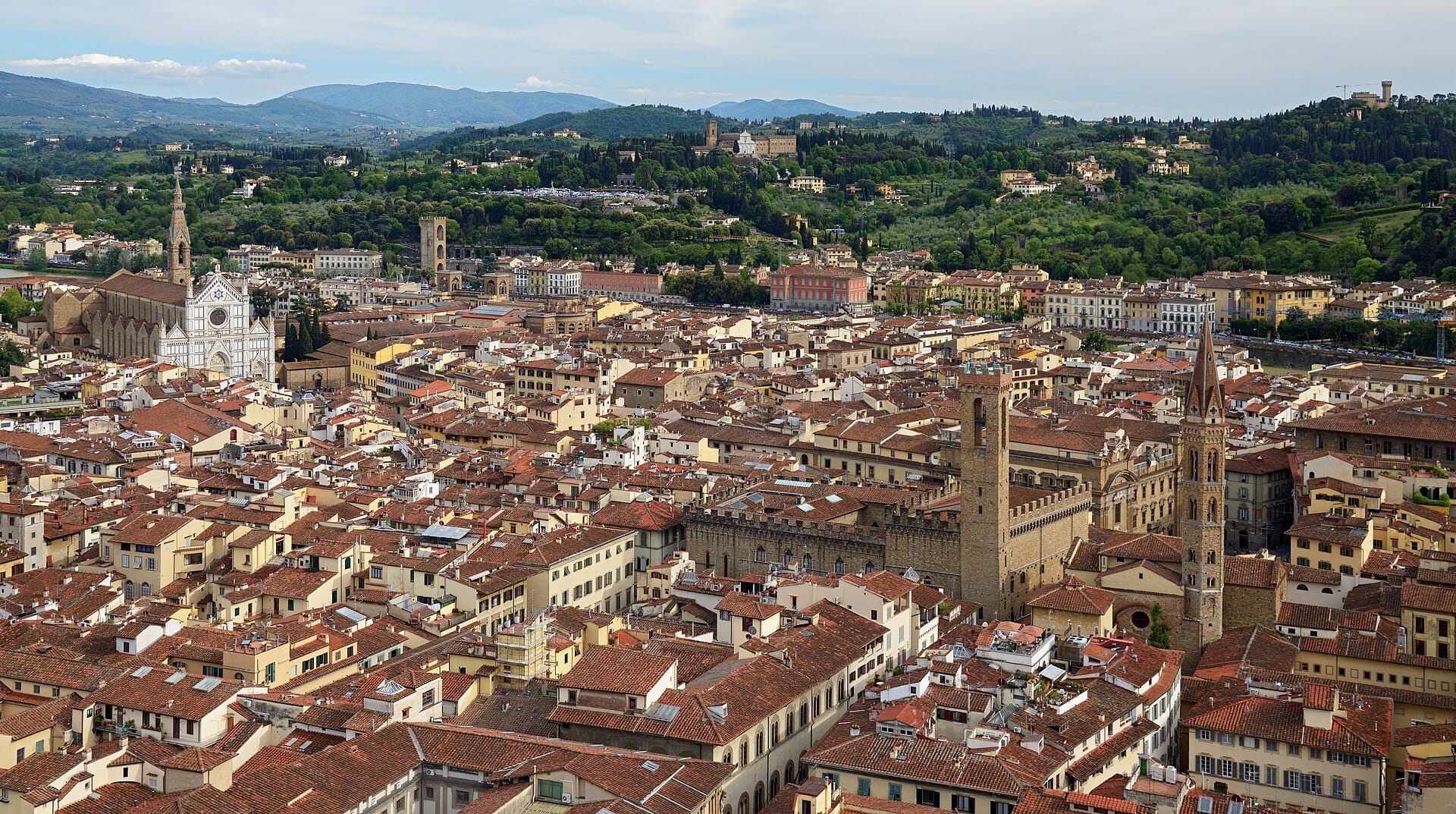
Santa Croce is the southeast corner of Florence's historic center, built around one of Italy's most important churches and one of the city's liveliest main squares. It mixes serious cultural weight with a neighborhood feel that survives the tourist trade, thanks to its local markets, independent restaurants, and student-heavy nightlife east of the basilica.
Santa Croce anchors the southeast edge of Florence's historic center with a combination that few neighborhoods anywhere can match: a Gothic basilica containing the tombs of Michelangelo and Galileo, a wide medieval piazza that still hosts fistfights in period costume every June, and a market quarter to the east that feels like it belongs to the city rather than to its visitors. It is demanding and rewarding in equal measure.
Orientation: Where Santa Croce Sits in Florence
Santa Croce occupies the southeastern wedge of Florence's historic center, between the Arno River to the south and the broad arc of streets that mark the edge of the medieval city to the north and east. Its western boundary runs roughly along Via del Proconsolo, the old Roman road that connected the Bargello to the river. From there the quarter extends east toward the Sant'Ambrogio market area and Piazza dei Ciompi, taking in a dense grid of streets that shift gradually from high-tourist to genuinely local as you move away from the basilica.
Distances here are short. TheDuomois roughly 800 meters northwest, an easy ten-minute walk along Via dei Benci or Via del Proconsolo.Ponte Vecchiosits about eight minutes to the west along the Lungarno. The Bargello, Florence's great sculpture museum, is a five-minute walk from Piazza Santa Croce. In practical terms, Santa Croce is close to almost everything in the historic center without sitting directly on top of the main tourist corridor, which gives it a different daily rhythm than, say, the streets immediately around the Duomo.
Administratively, Santa Croce is one of Florence's four historic quartieri, alongside San Giovanni, Santa Maria Novella, and Santo Spirito. These are not just tourist labels — they correspond to ancient civic divisions, each with its own colors, emblems, and sporting allegiances going back centuries. To the west across Via del Proconsolo lies thecentro storico, and directly across the Arno to the south is theOltrarno, reachable via the Ponte alle Grazie or the Ponte Vecchio.
Character and Atmosphere
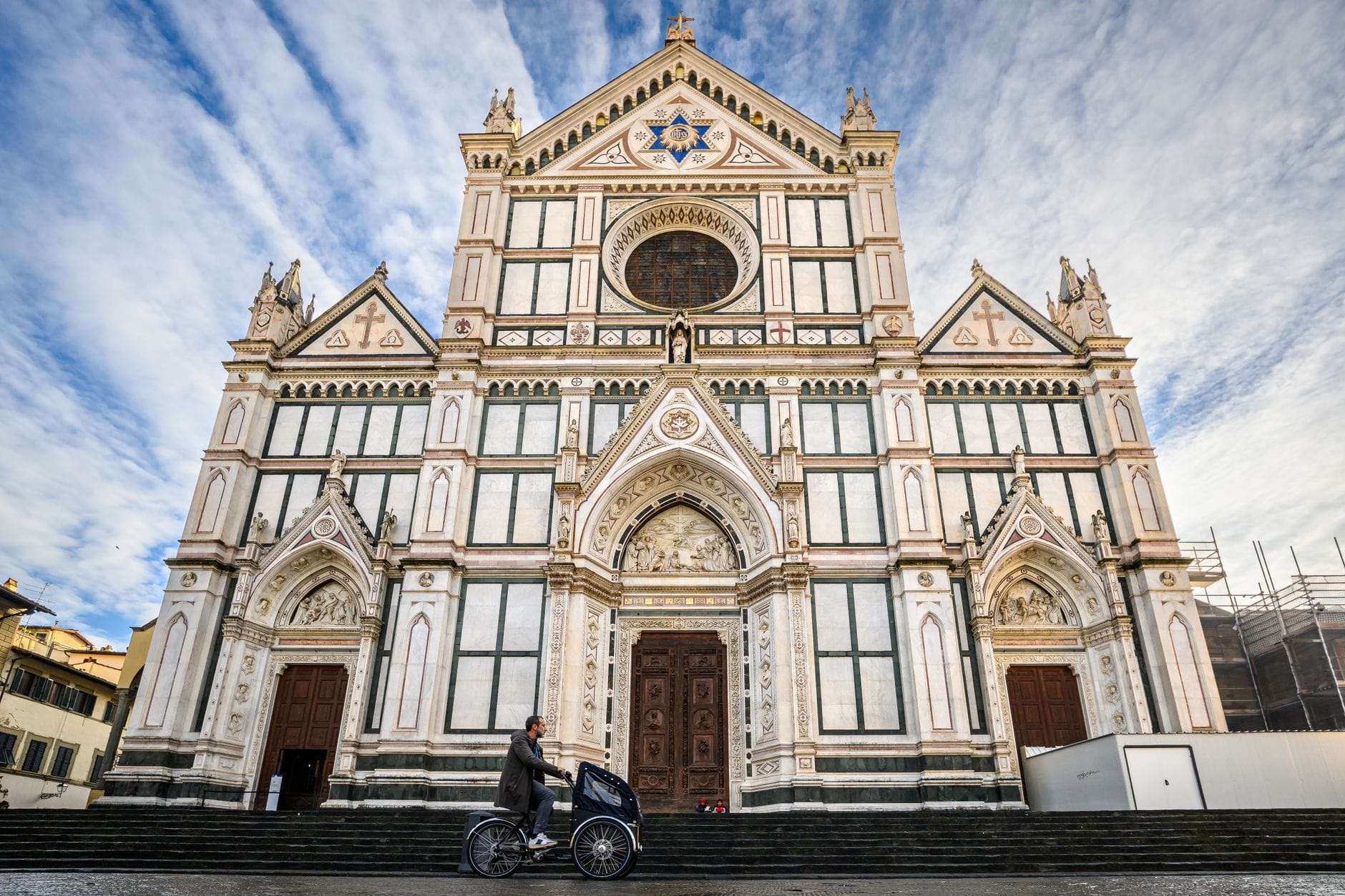
The experience of Santa Croce changes significantly depending on which part of it you're in and what time of day it is. Around Piazza Santa Croce itself, particularly in the morning and early afternoon between spring and autumn, the crowd is dense and tourist-oriented. Gelato shops and souvenir stalls line the streets approaching the piazza from the north and west. The square itself is large enough to absorb visitors without feeling entirely overwhelmed, and the white-and-green marble facade of the basilica provides a focal point that keeps people looking up rather than shuffling around aimlessly.
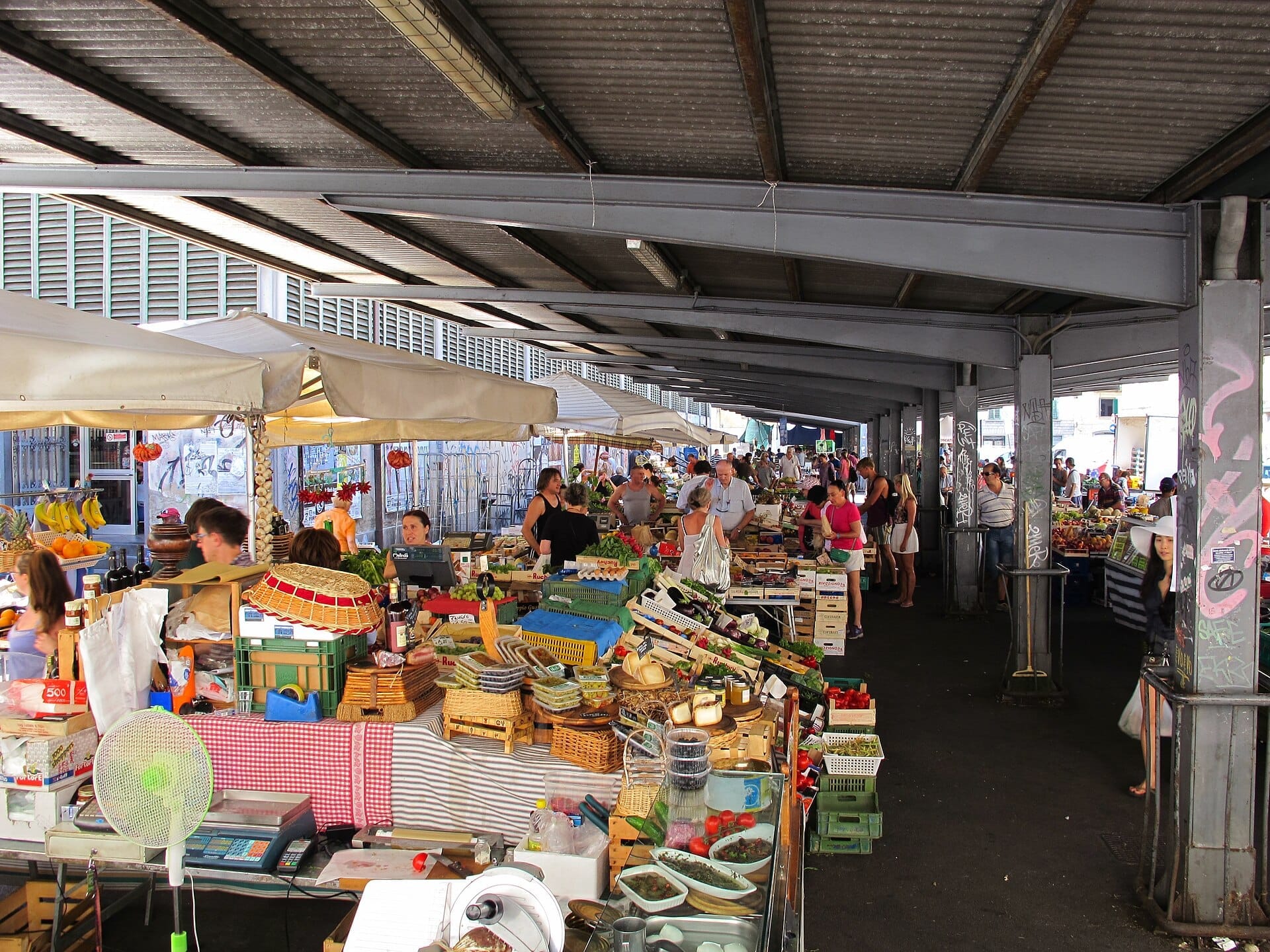
Walk east from the piazza along Via dei Macci or Via dell'Agnolo and the atmosphere shifts within two or three blocks. The streets narrow, the marble gives way to rough plaster walls, and the foot traffic thins considerably. This is where you find neighborhood alimentari, hardware shops, and the kind of bar where the morning cornetto costs a euro and the television is tuned to cycling. The Sant'Ambrogio market area, anchored by its covered hall on Piazza Ghiberti, represents some of the most functional, un-staged daily life available to visitors anywhere in the historic center.
Afternoons in late summer are when the stone streets of Santa Croce retain heat in a way that becomes genuinely uncomfortable. The light is harsh and flat between noon and three, and many shops pull their shutters. By contrast, October and November afternoons — when the angle of the sun drops and the crowds thin — produce a quality of light on the basilica facade and the long sides of the piazza that is worth planning around. The early evening, as bars fill for aperitivo and the restaurant district east of the basilica comes to life, is when the neighborhood is at its most appealing. It is genuinely lively after dark, particularly around Borgo Allegri and the side streets north of the piazza, where a student and young-professional crowd mixes with visitors in a way that feels organic rather than manufactured.
ℹ️ Good to know
Every June, Piazza Santa Croce hosts the Calcio Storico Fiorentino, a medieval football tournament that is part sporting contest, part ritualized combat. The stands are temporary, the matches are brutal, and the atmosphere is unlike anything else in the city. If your visit overlaps, it is worth seeing at least once.
What to See and Do
The Basilica di Santa Croceis the reason most people come to this neighborhood and it earns its reputation without much effort. The church is the principal Franciscan basilica in Florence and one of the largest Gothic churches in Italy. Its interior contains the tombs of Michelangelo, Galileo Galilei, Niccolò Machiavelli, Gioachino Rossini, and the poet Ugo Foscolo, among dozens of other significant figures, which is why it carries the epithet 'Temple of the Italian Glories.' The Peruzzi and Bardi chapels at the east end contain frescoes by Giotto that rank among the most important surviving examples of 14th-century painting in Europe. A ticket also includes access to the monastic complex behind the church, with its Pazzi Chapel — designed by Brunelleschi and one of the finest examples of early Renaissance architecture in the city — and the refectory museum housing Cimabue's large painted crucifix.
A short walk north from the basilica brings you to Casa Buonarroti on Via Ghibellina, a museum occupying a house owned by Michelangelo's family that displays early works including two marble reliefs he made as a teenager. East of the basilica and a few blocks north,the Sant'Ambrogio marketis one of the city's working food markets, operating mornings on Piazza Ghiberti. It sells produce, meat, cheese, and prepared food to residents rather than tourists, and the surrounding streets contain some of the neighborhood's most interesting small restaurants.
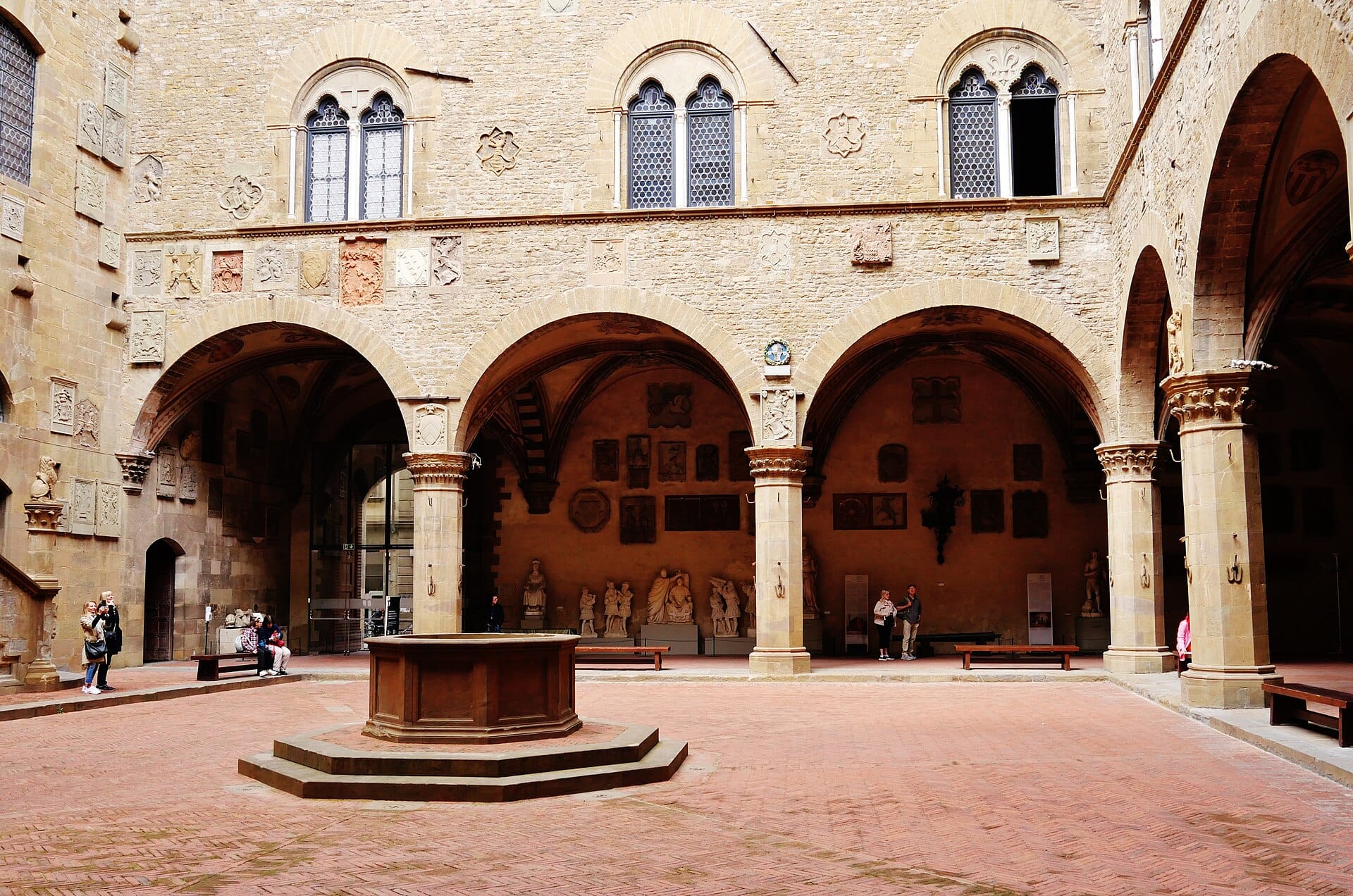
The Museo del Bargellosits at the western edge of the Santa Croce quarter on Via del Proconsolo. It contains the finest collection of Renaissance sculpture in the world — Donatello's bronze David, Michelangelo's Bacchus, Verrocchio's David, and works by Cellini and Della Robbia, among many others. It is consistently less crowded than the Uffizi or the Accademia while containing material of equivalent importance. If you are making a serious effort to understand Florentine art, the Bargello is not optional.
Basilica di Santa Croce: tombs, Giotto frescoes, Pazzi Chapel — allow at least 90 minutes
Museo del Bargello: the definitive collection of Florentine Renaissance sculpture
Casa Buonarroti: early Michelangelo works, rarely crowded
Piazza dei Ciompi: outdoor antiques and flea market, liveliest on the last Sunday of the month
National Central Library of Florence: adjacent to the basilica, accessible reading rooms for registered users and researchers
Teatro Verdi: main venue for theater and music on Via Ghibellina
💡 Local tip
Book the Basilica di Santa Croce online in advance during spring and summer. Entry is ticketed and queues at the door can be long mid-morning. The Bargello, by contrast, rarely requires booking and is almost always less busy than comparable museums in the center.
Eating and Drinking
The Santa Croce quarter contains some of Florence's most serious eating, ranging from market-stall lampredotto sandwiches to one of Italy's most decorated restaurants. The neighborhood's food scene is layered: a ring of tourist-facing trattorie immediately around the piazza, a broader zone of mid-range restaurants in the streets between the basilica and Sant'Ambrogio, and a concentration of genuinely local bars and enotece in the east toward Borgo la Croce. For an overview of what to eat across the city, theguide to Florentine foodcovers the full range of local specialties worth seeking out.
Street food in this quarter tends toward Florentine classics: the trippa (tripe) and lampredotto (fourth stomach of the cow) stands that operate near the Sant'Ambrogio market represent a category of food that Florence does better than anywhere else in Italy. They are inexpensive, quick, and require no reservation. The market hall itself contains a lunch counter where working Florentines eat daily specials at shared tables — the kind of setting that is essentially impossible to replicate for tourists and yet is entirely open to anyone who shows up around 1pm with euros.
The restaurant density east of the basilica, along streets like Via dei Macci, Borgo la Croce, and Via dell'Agnolo, offers a realistic range of options at mid-range prices. These are not the dressed-up, white-tablecloth versions of Tuscan food found in some other parts of the center; most are small, often crowded, and focused on a short menu of local dishes. Wine is taken seriously in this part of the city — this is Chianti country, and the enotece around Sant'Ambrogio have extensive lists by the glass. Enoteca Pinchiorri on Via Ghibellina holds three Michelin stars and is one of the most formal dining experiences available in Tuscany, requiring advance reservation and representing a significant financial commitment.
For morning coffee, the bars around Piazza Ghiberti and along Via Pietrapiana serve locals heading to or from the market and are priced accordingly. Aperitivo in Santa Croce runs roughly from 6 to 9pm, with most bars offering snacks alongside spritz and negroni orders. The student bar culture concentrated around Piazza dei Ciompi and the northern part of the quarter keeps things going late on weekends, which is worth knowing if noise is a factor in your accommodation choice.
Getting There and Around
Santa Croce is within comfortable walking distance of most of the historic center. From Firenze Santa Maria Novella, the main train station, the walk takes roughly 20 to 25 minutes through the center of the old city — a route that passes the Duomo and Piazza della Signoria. From the Duomo itself it is ten minutes on foot. From Ponte Vecchio, following the north bank of the Arno east along the Lungarno, it is about eight minutes. The neighborhood is best explored on foot; the streets in the core are narrow and largely pedestrianized around the basilica. For a full picture of how to navigate Florence, thegetting around Florence guidecovers all transport options in detail.
City buses serve the perimeter of the Santa Croce quarter along the Lungarno to the south and along Via Pietrapiana to the north, with stops near the National Central Library and on Via Verdi. These connect to the main station and to other city districts. Florence does not have a metro system. Taxis can be found at stands near Piazza Santa Croce, or called by phone or app. Cycling is possible in this part of the city but the narrow medieval streets require care, and bike-sharing docks are available at several points around the neighborhood perimeter.
⚠️ What to skip
Traffic Limited Zone (ZTL) restrictions apply throughout the historic center, including Santa Croce. Private cars without authorization cannot enter during restriction hours. If you are arriving by car, check the current ZTL schedule and use a car park outside the restricted zone. Fines for unauthorized entry are automatic, triggered by camera, and followed up by post to the vehicle's registered address.
Where to Stay
Santa Croce offers a reasonable range of accommodation, from small boutique hotels and B&Bs to apartment rentals in historic buildings. It is a good base for visitors prioritizing cultural depth over convenience to the train station — if your main focus is the Uffizi, the Accademia, or day trips out of Florence, a location closer to Santa Maria Novella is probably more practical. For those focused on the basilica, the Bargello, and the food scene around Sant'Ambrogio, staying in Santa Croce puts everything within ten minutes on foot. The broader question of where to base yourself in Florence is covered in theFlorence accommodation guide.
The blocks immediately around Piazza Santa Croce offer the most concentrated supply of hotels but also the most noise, particularly in summer evenings when the piazza and surrounding streets are at their liveliest. Staying one or two blocks north or east of the piazza, toward Via Ghibellina or the Sant'Ambrogio area, generally means quieter streets while remaining within easy walking distance of the main sights. Apartment rentals are common throughout the quarter and tend to offer better value per square meter than equivalent hotel rooms in the center.
The neighborhood suits independent travelers with some familiarity with Italian cities, couples on a cultural trip, and anyone who wants a serious Florentine food experience alongside the museums. It is less obviously practical for families with very young children or travelers with significant mobility considerations, given the stone streets and absence of a direct transit link to the train station. Budget travelers can find options here, but the best-value accommodation tends to be in properties slightly removed from the piazza.
Honest Assessment: Who Santa Croce Is For
Santa Croce rewards visitors who come with some preparation and stay long enough to move past the basilica and into the surrounding streets. As a single half-day destination it delivers one of Florence's most important churches and one of its best sculpture museums within a ten-minute walk of each other. As a neighborhood to stay in or spend multiple days exploring, it offers the most functional daily-life texture of any part of the historic center — real markets, serious restaurants, and a street culture that doesn't entirely fold itself around the tourist trade. Read thefull Florence guideto understand how it fits into a longer itinerary.
The drawbacks are real. The area immediately around the basilica is heavily trafficked from mid-morning to early evening between April and October. Some restaurants near the piazza are priced for visitors and not for value. The nightlife around the northern part of the quarter, while lively and authentic, means noise on weekend nights that can carry into sleeping hours. None of these are disqualifying, but travelers expecting the quiet of a residential backstreet or the frictionless convenience of a hotel district near the station will find Santa Croce requires some adjustment.
TL;DR
Santa Croce is the southeast quadrant of Florence's historic center, a ten-minute walk from the Duomo and eight minutes from Ponte Vecchio.
The Basilica di Santa Croce contains the tombs of Michelangelo, Galileo, and Machiavelli alongside Giotto frescoes; the adjacent Bargello holds the finest Renaissance sculpture collection in the world.
The Sant'Ambrogio market area east of the basilica provides some of the most authentic daily-life eating and shopping in the historic center, including tripe stands, a working covered market, and serious local enotece.
Best suited to cultural travelers, food-focused visitors, and those who want a neighborhood base with genuine local texture — less ideal for those prioritizing transit convenience or very quiet accommodation.
Book the basilica in advance during peak season; the Bargello rarely requires it and is consistently less crowded than its importance warrants.
Three days in Florence is enough to cover the iconic Duomo complex, the Uffizi Gallery, Michelangelo's David, and the atmospheric Oltrarno district south of the Arno. This itinerary is built around realistic timing, advance booking requirements, and genuine local insight — not just a list of landmarks.
Florence's churches are not mere places of worship — they are the greatest concentration of Renaissance art and architecture on earth. This guide covers the essential basilicas, chapels, and hilltop sanctuaries, with practical details on tickets, timing, and what makes each one worth your time.
Florence holds more masterpieces per square kilometer than almost anywhere on earth. This ranked guide covers the city's finest museums, from blockbuster galleries to intimate palaces, with practical advice on what each one is worth and how to book smart.
Florence rewards visitors differently depending on when you arrive. This guide breaks down every season by weather, crowd levels, and value so you can choose the right time for your trip, whether you're chasing quiet museums, grape harvest season, or budget flights in January.
Florence rewards those who look up, climb up, and cross the river. This guide covers the city's finest viewpoints, from the famous terraces of Piazzale Michelangelo to the quieter hilltop gardens and climbable towers that frame the Duomo from every angle.
The Chianti wine region sits less than an hour south of Florence, but reaching the best estates requires planning. This guide covers the SR222 route, the top wineries worth booking, guided tour prices, and the seasonal realities that most itineraries gloss over.
Florence sits at the heart of Tuscany, which makes it one of the best bases in all of Italy for exploring the surrounding region. This guide covers the top day trips from Florence, with real travel times, price ranges, and the practical take about which destinations deserve a full day and which are better as a quick half-day escape.
Cinque Terre is one of the most rewarding day trips from Florence, but the logistics trip up a surprising number of visitors. This guide covers every step: which trains to take, how much to budget, which villages to prioritize, and whether a day trip is actually worth the travel time.
The Florence to Venice train is a major intercity route, with direct high-speed services departing roughly every 10 minutes at peak times. This guide covers journey times, ticket prices, how to book, and whether a day trip from Florence is worth it.
Florence is one of the world's most walkable cities, with nearly every major landmark within a compact historic centre. This guide covers the best walking routes, clear pricing breakdowns, seasonal tips, and how to avoid the most common tour mistakes.
Florence rewards families who plan smart. From free museum entry for children under 18 to gelato-making classes and rooftop climbs, this guide covers everything you need: timing, logistics, money-saving tips, and practical advice on what actually works with kids in tow.
Florence is one of the most art-rich cities in the world, and a surprising amount of it costs nothing. From Renaissance churches and open-air sculpture to rooftop panoramas and local markets, this guide covers the best genuinely free experiences in the city.
Florence is one of Europe's most walkable cities, but knowing how its bus network, tram lines, ZTL restrictions, and airport connections work will save you time, money, and frustration. This guide covers everything from the €1.70 airport tram to navigating the historic center on foot.
Florence rewards those who look past the obvious. From Masaccio's revolutionary frescoes in a quiet Oltrarno chapel to a 14th-century merchant's house frozen in time, these are the experiences that make the city feel genuinely yours. This guide covers the art, gardens, markets, and viewpoints that most visitors never find.
Florence holds more Michelangelo originals than any other city on earth. This guide covers every sculpture, painting, and architectural work you can see in person — with exact locations, current ticket prices, booking advice, and the common mistakes that trip up first-time visitors.
Florence packs more world-class art and architecture into a single square mile than almost anywhere on earth. This guide gives you a realistic, expertly sequenced 24-hour itinerary with current prices, booking advice, seasonal tips, and honest trade-offs so you spend your time wisely.
The journey from Rome to Florence is one of Italy's most traveled routes, and getting it right saves you hours and money. This guide breaks down every realistic option — high-speed train, budget bus, and why flying rarely makes sense — with practical advice on booking, timing, and what to expect when you arrive.
Florence has been producing world-class leather and fashion for centuries. This guide covers every major shopping area, from artisan workshops near Santa Croce to the weekly Cascine market, with clear price breakdowns and practical advice on spotting quality goods.
Florence packs more world-class art, architecture, and history into a walkable city center than almost anywhere on earth. This guide cuts through the noise to tell you exactly what to do, when to do it, and what to skip, with practical advice on crowds, costs, and logistics.
Florence takes its food seriously, and the gap between eating well and eating badly is surprisingly wide. This guide covers the essential dishes, the best markets, realistic prices, and which neighborhoods to seek out for an honest Florentine meal.
Choosing where to stay in Florence shapes your entire trip. This guide breaks down every major neighborhood by location, price, atmosphere, and convenience so you can book with confidence, whether you're visiting for three days or two weeks.