Michelangelo in Florence: Every Work You Can See
Florence holds more Michelangelo originals than any other city on earth. This guide covers every sculpture, painting, and architectural work you can see in person — with exact locations, current ticket prices, booking advice, and the common mistakes that trip up first-time visitors.
Tickets & tours
Live prices and dates from our booking partner. If you book, we may earn a commission at no extra cost to you.
TL;DR
- The Galleria dell'Accademia holds David and the unfinished Prisoners; the Bargello holds Bacchus, Brutus, and more — together they form the world's largest collection of Michelangelo's work.
- A merged 72-hour ticket covering the Accademia, Bargello, Medici Chapels, Palazzo Davanzati, Orsanmichele, and Casa Martelli costs €38 — book in advance, especially for the Accademia.
- Most merged-network museums keep similar hours (often 08:15–18:50), but not all share identical schedules or closure days, so check each museum’s listing when planning your itinerary.
- The Prisoners you see in the Boboli Gardens grotto are replicas. The originals are at the Accademia.
- Not everything is in Florence — the Sistine Chapel, St. Peter's Pietà, and Moses are in Rome. See our full Florence itinerary guide to fit Michelangelo sites into a broader trip.
Why Florence Is the World Capital of Michelangelo
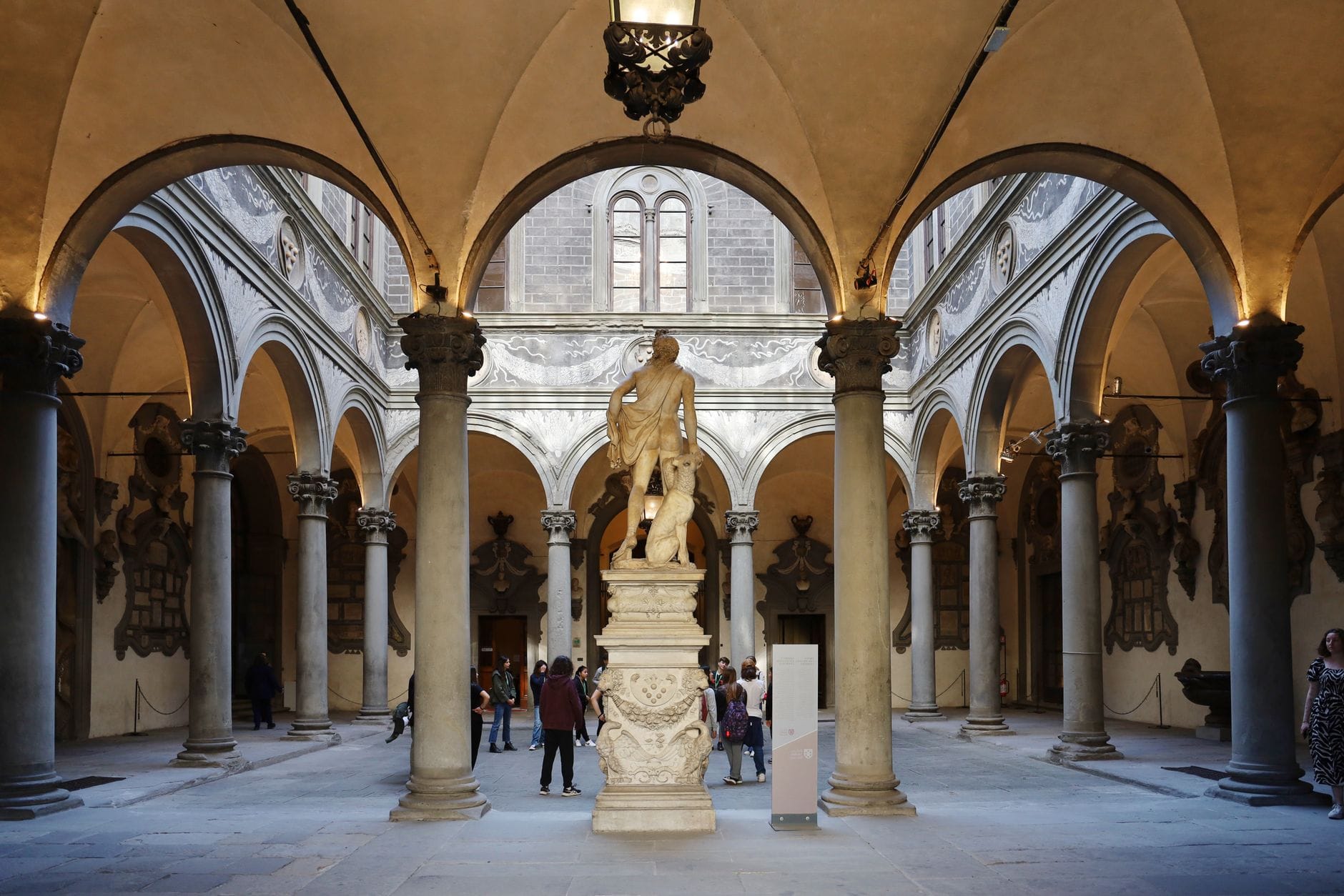
Michelangelo Buonarroti was born near Arezzo in 1475 but grew up in Florence, trained in the Medici gardens under Lorenzo de' Medici, and developed the foundational ideas of his career in the city's workshops and churches. Even after he left for Rome, Bologna, and later Rome again permanently, Florence remained the custodian of his earliest and most emotionally raw works. No city on earth holds more Michelangelo originals in one walkable area.
The recent creation of the unified system "Galleria dell’Accademia di Firenze e Musei del Bargello" has formalized what art historians already knew: Florence's Michelangelo holdings are unrivaled. The new combined institution holds the world's largest collection of his sculptures. If you're building a trip around his work, Florence is the starting point — but understand that major pieces like the Sistine Chapel ceiling, the Vatican Pietà, and the statue of Moses are in Rome, not here. Ourguide to Florence's best museumscovers the broader context if you want to see how Michelangelo fits into the city's wider art landscape.
The Galleria dell'Accademia: David and the Prisoners
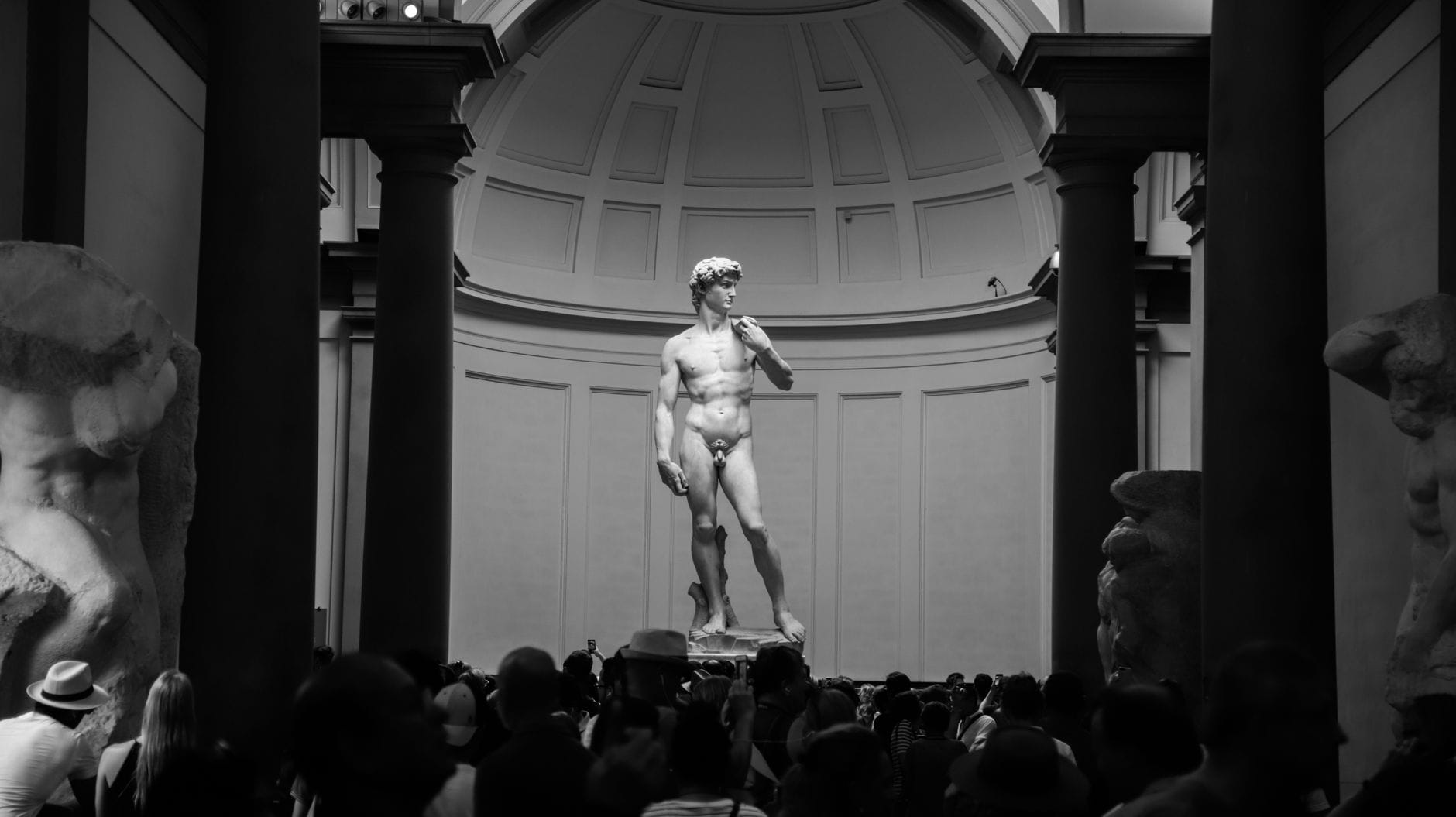
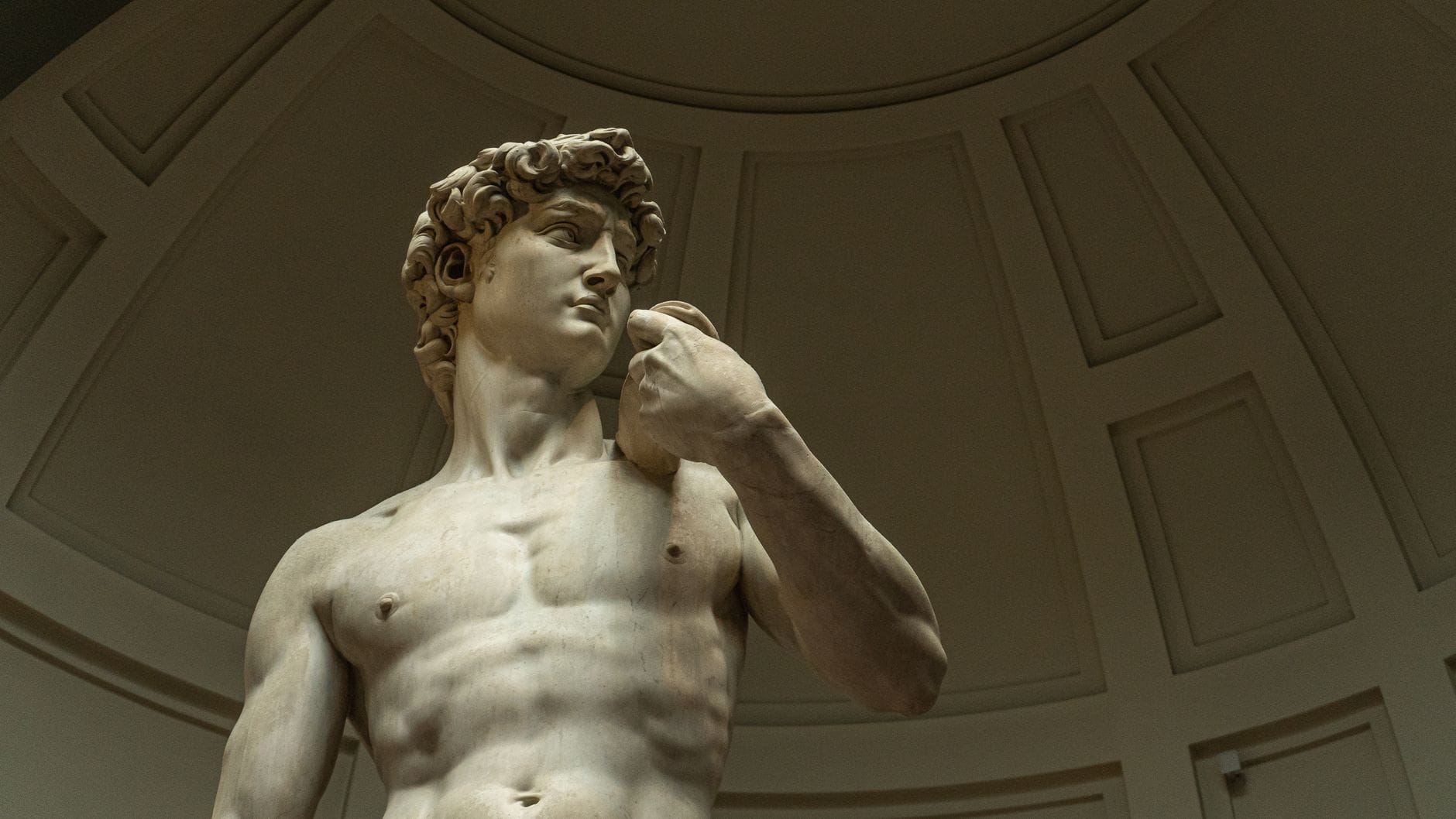
The Accademia is where most visitors start, and for good reason. The museum was specifically redesigned in the 19th century to house David after the statue was moved from Piazza della Signoria in 1873 to protect it from weather damage. Standing 5.17 metres tall and carved from a single block of Carrara marble, David is larger and more physically imposing in person than photographs suggest. The tribune built to house it was designed to let natural light fall from above, and the effect on the marble's surface — particularly on the face and hands — is worth the visit on its own.
The four Prisoners (also called the Captives) line the corridor leading to David. These are among the most psychologically compelling works in the museum precisely because they are unfinished. Michelangelo left the figures half-emerged from their blocks, and what looks like incompleteness is now understood as a deliberate statement about figures struggling to free themselves from matter. The contrast between their raw, rough surfaces and the polish of David at the end of the hall is striking and intentional. A fifth work in the Accademia — the Saint Matthew — follows similar principles of non-finito.
⚠️ What to skip
The Accademia is one of the most heavily visited museums in Italy. Walk-up tickets frequently sell out, especially from March through October. Book timed-entry tickets at least 2–3 weeks in advance via the official Galleria dell'Accademia website (galleriaaccademiafirenze.it). Individual entry costs €20; the combined network ticket (€38 for 72 hours) also covers the Bargello, Medici Chapels, Palazzo Davanzati, Orsanmichele, and Casa Martelli.
The Bargello: Where the Early Michelangelo Lives
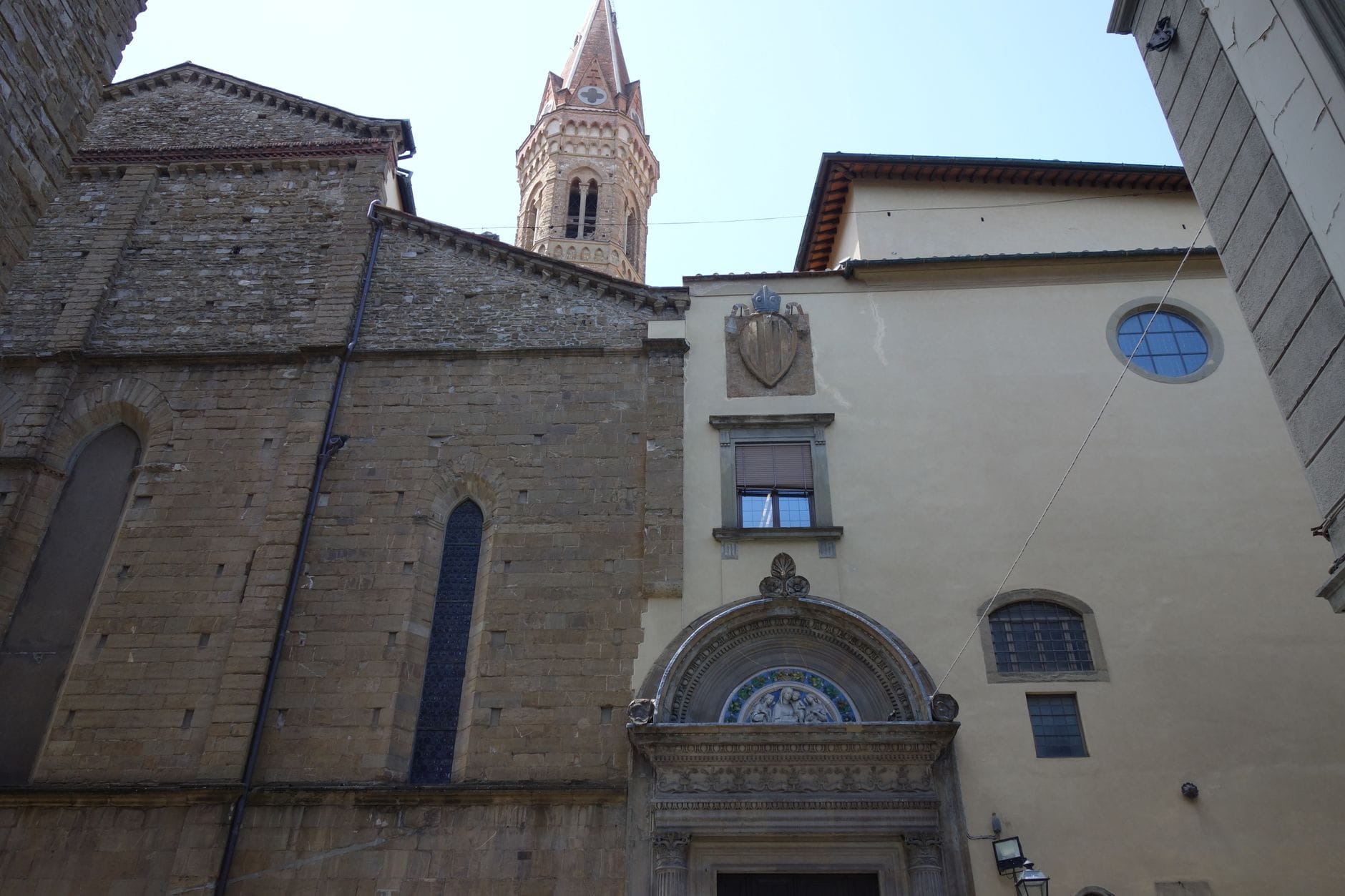
The Museo Nazionale del Bargellois the place to understand Michelangelo before David. The building itself — a medieval fortress and former prison — is worth the visit, but the Michelangelo room on the ground floor is exceptional. Bacchus (carved around 1496–1497) is the key work here: an early commission that shows a drunk, slightly off-balance god of wine, remarkably fluid and sensuous for a sculptor in his early twenties. The figure's slightly unfocused gaze and the small satyr gnawing grapes behind him reward close inspection.
The Bargello also holds Brutus, Michelangelo's only portrait bust — a politically loaded work made around 1539 in response to the assassination of the tyrannical Duke Alessandro de' Medici. The Tondo Pitti, a marble relief of the Madonna and Child, gives a rare view of his work in low-relief form. The David-Apollo is smaller and less famous than its Accademia counterpart but arguably more enigmatic: scholars still debate whether the figure is meant to be David with Goliath's head at his feet, or Apollo reaching for an arrow. Individual admission runs around €12; the 48-hour Accademia-Bargello combo costs €26, while the separate 72-hour pass covers all six museums including the Medici Chapels.
✨ Pro tip
The Bargello is far less crowded than the Accademia and receives a fraction of the foot traffic despite housing genuinely important work. If you can only do one museum without a reservation, this is it — though booking is still recommended in peak season. The Accademia is closed Monday; check current schedules for Bargello and other museums when planning.
The Medici Chapels, Casa Buonarroti, and Other Key Sites
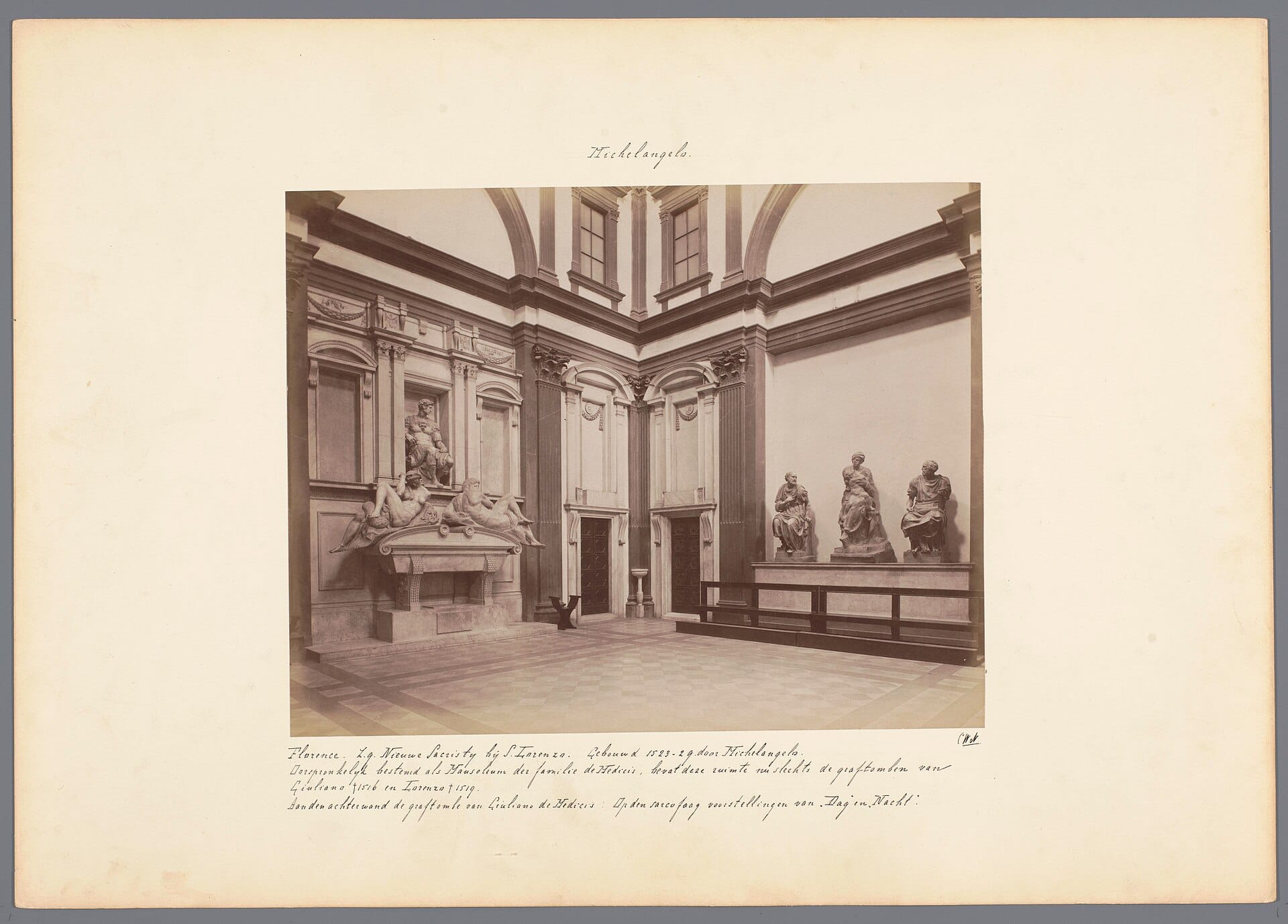
The Medici Chapels(Cappelle Medicee) at San Lorenzo represent Michelangelo at his most architectural. The New Sacristy, which he designed and decorated from 1520 to 1534, contains the tombs of Giuliano de' Medici and Lorenzo de' Medici the Younger, each topped with reclining allegorical figures: Day, Night, Dawn, and Dusk. These are among the most reproduced sculptures in Western art, but experiencing the space as architecture — the proportions, the play of dark pietra serena against white marble, the dome Michelangelo designed — makes the visit feel different from simply seeing statues. Individual admission is around €11; the network ticket covers it.
Casa Buonarroti, on Via Ghibellina, is a small museum in a house Michelangelo owned but rarely lived in. His descendants converted it into a memorial museum in the 17th century. The two key early works here are Madonna della Scala (a marble relief carved when Michelangelo was around 15 or 16) and Battle of the Centaurs (carved shortly after, showing figures in dynamic combat). Both are youthful works that already suggest the muscular energy that defined his mature style. Admission runs around €8 and crowds are light — this is one of the few Michelangelo sites in Florence where you can stand quietly in front of his work for as long as you like.
The Basilica di Santo Spiritoin Oltrarno holds a wooden Crucifix that Michelangelo carved as a teenager, reportedly in exchange for being allowed to study cadavers in the monastery's hospital — an arrangement that helped him understand human anatomy in ways that changed his sculpture. The Crucifix was lost for centuries and only definitively reattributed to Michelangelo in 1962. It hangs in the sacristy; the church itself is free to enter, though the sacristy may require a small admission.
- Galleria dell'Accademia David, four Prisoners/Captives, Saint Matthew. Ticket: ~€20 individual, or €26 (48h combo with Bargello) or €38 (72h network). Hours: 08:15–18:50, closed Monday. Book in advance.
- Museo Nazionale del Bargello Bacchus, Brutus, Tondo Pitti, David-Apollo. Ticket: ~€12 individual. Same hours and closure day as Accademia. Less crowded — a genuine priority for serious art visitors.
- Medici Chapels (Cappelle Medicee) New Sacristy with Day, Night, Dawn, Dusk; Michelangelo's architectural design throughout. Ticket: ~€11 individual. Covered by the 72h network ticket.
- Uffizi Gallery Doni Tondo (Holy Family), Michelangelo's only fully attributed panel painting. Separate from the merged network — book tickets independently at uffizi.it.
- Museo dell'Opera del Duomo Florentine Pietà (Pietà Bandini), a late work Michelangelo began for his own tomb. Combined ticket with the Duomo complex around €18.
- Casa Buonarroti Madonna della Scala and Battle of the Centaurs, his earliest surviving reliefs. Ticket: ~€8. Low crowds, high quality — underrated.
- Palazzo Vecchio (Salone dei Cinquecento) Genius of Victory, a large marble figure originally intended for the tomb of Pope Julius II. Entry to the Palazzo Vecchio museum is separate.
- Basilica di Santo Spirito Wooden Crucifix in the sacristy, attributed to the teenage Michelangelo. Church entry often free; small fee may apply for sacristy.
The Uffizi and Museo dell'Opera del Duomo: Two Works Worth Separate Trips
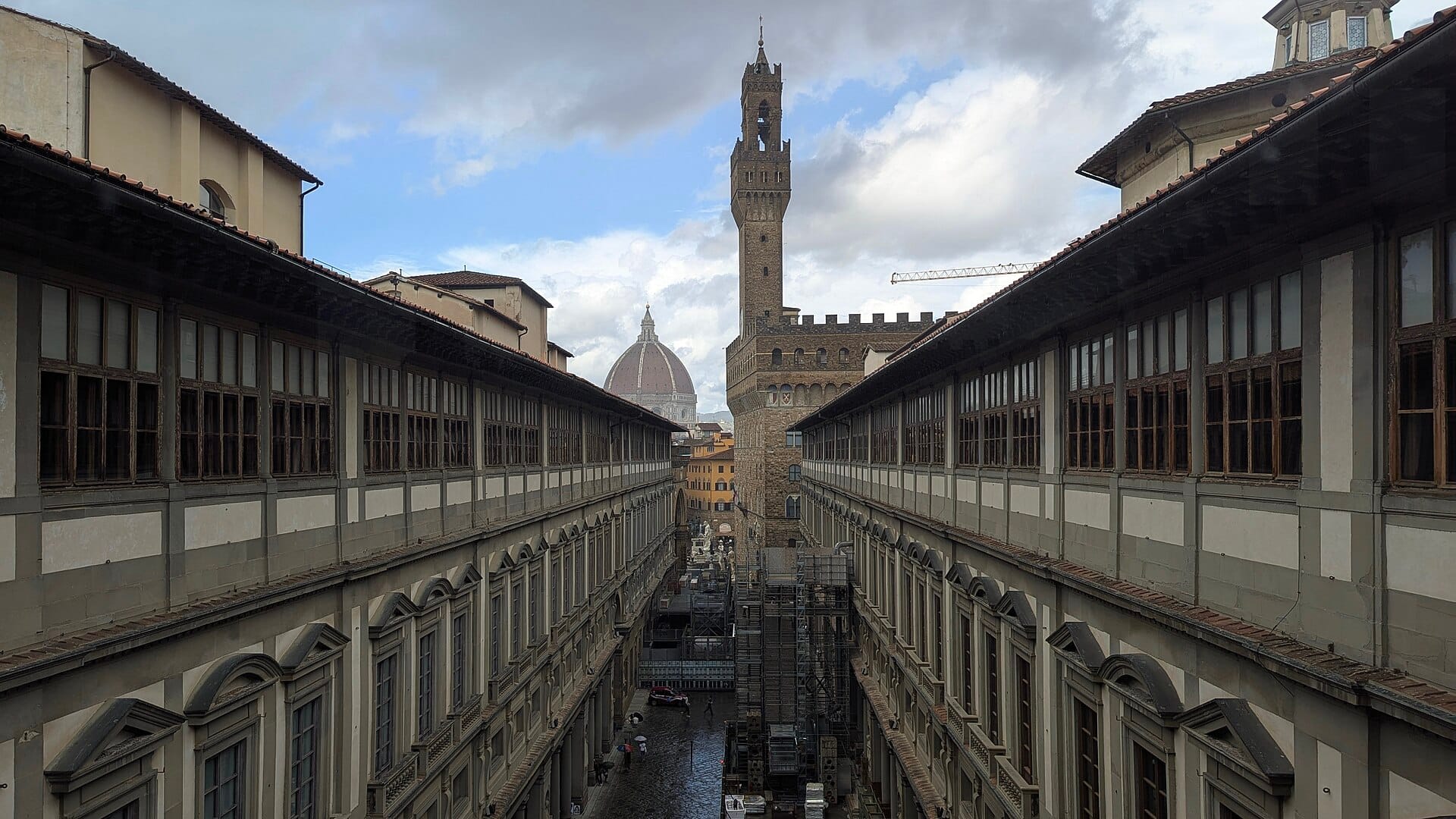
The Uffizi Galleryis not part of the merged Accademia-Bargello network, so it requires a separate ticket. Within its vast collection, Michelangelo is represented by a single work: the Doni Tondo, painted around 1506–1508. It is his only panel painting fully attributed to him and the composition is deliberately unconventional — the Holy Family is shown in a tight spiral, with the figures of the foreground twisting against a background of nude youths whose meaning remains debated. The original frame, also attributed to Michelangelo, is itself remarkable. Book Uffizi tickets separately at uffizi.it.
The Museo dell'Opera del Duomohouses the Florentine Pietà (sometimes called the Pietà Bandini), a late work Michelangelo began carving around 1547–1555, reportedly for his own tomb. He left it unfinished and mutilated it in frustration — a student later completed the figure of Mary Magdalene. The Nicodemus figure supporting Christ is widely believed to be a self-portrait. This is one of Michelangelo's most emotionally raw works and receives far less attention than it deserves, partly because the Opera del Duomo is often skipped in favor of climbing the dome. The combined Duomo complex ticket runs around €18 and covers the museum, the Baptistery, and the dome climb.
ℹ️ Good to know
A note on the 'Stanza Segreta': the merged museum network offers access to a hidden room beneath the Medici Chapels where Michelangelo reportedly hid in 1530 during a political crisis. The walls contain charcoal drawings attributed to him. Access is limited and currently costs around €32 as an add-on — worth it for dedicated Michelangelo enthusiasts, but verify current availability when booking.
Planning Your Michelangelo Itinerary: Practical Strategy
The most common mistake visitors make is treating the Accademia as the only Michelangelo destination in Florence. A focused two-day itinerary works well: Day one covers the Accademia (morning, timed entry) and the Bargello (afternoon, less crowded). Day two covers the Medici Chapels (morning) and either Casa Buonarroti or the Opera del Duomo (afternoon). The Uffizi and Palazzo Vecchio can be folded into a third day or combined with other highlights.
Geographically, the Accademia, Bargello, and Medici Chapels cluster in theCentro Storico and the San Lorenzoarea, all within easy walking distance. The Basilica di Santo Spirito and Casa Buonarroti are slightly further afield but still reachable on foot. Santo Spirito is inOltrarno, across the Arno — easy to combine with a visit to the Pitti Palace or the Boboli Gardens.
- Book the Accademia at least 2–3 weeks ahead from March through October; same-day entry is rarely available.
- The 72-hour network ticket (€38) is good value if you plan to visit the Accademia, Bargello, and Medici Chapels — it covers all three plus other Bargello network museums (Palazzo Davanzati, Orsanmichele, Casa Martelli).
- The Accademia closes Monday, and other merged-network museums have varying closure days; check each museum’s schedule rather than assuming all are closed the same day. Schedule non-network sites (Uffizi, Opera del Duomo, Casa Buonarroti) around those closures.
- Wear comfortable shoes — the Accademia involves significant standing time; there are limited seating areas near the David tribune.
- The Opera del Duomo museum is often quieter in the first hour after opening (08:15) and in the late afternoon.
- Avoid the replica Prisoners in the Boboli Gardens grotto if you're short on time — visit the originals at the Accademia instead.
If you're arriving from Rome and planning your Michelangelo tour, note that the journey between cities takes roughly 1.5 hours by high-speed train (Frecciarossa or Italo). OurRome to Florence travel guidecovers all the transport options. For context on what else to see while in the city, the3-day Florence itineraryintegrates Michelangelo sites with the rest of the city's highlights.
💡 Local tip
Crowd patterns matter. The Accademia is at its worst between 10:00 and 14:00, especially on weekends and in summer. An 08:15 opening slot is consistently the least crowded entry and gives you David in something close to peace before the tour groups arrive.
FAQ
Where is the David statue in Florence?
The original David is housed in the Galleria dell'Accademia on Via Ricasoli, in the San Marco area of central Florence. A bronze replica stands at Piazzale Michelangelo on the hill south of the city, and a marble replica stands in Piazza della Signoria where the original was located until 1873.
Do I need to book tickets for the Accademia in advance?
Yes — strongly recommended. Walk-up tickets frequently sell out during spring and summer. Book via the official Galleria dell'Accademia website (galleriaaccademiafirenze.it) at least 2–3 weeks ahead during peak season. The €38 72-hour six-museum network ticket must also be pre-booked online.
What is the best combined ticket for seeing Michelangelo works in Florence?
The 72-hour network ticket (€38) covers the Accademia, Bargello, and Medici Chapels — the three sites with the largest concentration of Michelangelo sculptures — plus Palazzo Davanzati, Orsanmichele, and Casa Martelli. If you only have time for two, the 48-hour Accademia and Bargello combo at €26 is good value. The Uffizi and Opera del Duomo require separate tickets.
Which Michelangelo works are NOT in Florence?
Several of his most famous works are in Rome: the Sistine Chapel ceiling and Last Judgment (Vatican), the Pietà in St. Peter's Basilica, and the statue of Moses in San Pietro in Vincoli. The Rondanini Pietà, his very last work, is in the Castello Sforzesco in Milan.
Is Casa Buonarroti worth visiting?
Yes, especially for visitors who want to see Michelangelo's earliest surviving sculptures. The Madonna della Scala and Battle of the Centaurs are remarkable for works made by a teenager, and the museum is small enough to visit in about an hour without feeling rushed. Admission around €8 and crowds are minimal compared to the Accademia.
Tickets & tours
Live prices and dates from our booking partner. If you book, we may earn a commission at no extra cost to you.
Planning a trip? Discover personalized activities with the Nomado app.