San Lorenzo is Florence's market district, sitting immediately north of the Duomo between the train station and the Accademia. It combines some of the city's most significant Medici-era monuments with the chaotic energy of its main food market and a sprawling outdoor leather bazaar.
San Lorenzo is where Florence's daily life and its grandest Renaissance ambitions collide on the same block. The neighbourhood is anchored by the Basilica di San Lorenzo and the magnificent Mercato Centrale, and it carries a raw, working character that sets it apart from the more polished streets closer to the Duomo.
Orientation
San Lorenzo sits in the heart of central Florence, immediately north of the cathedral complex and west of the Galleria dell'Accademia. Its rough boundaries are Via dei Cerretani and Via dei Pucci to the south, Piazza San Marco to the north, Via dei Servi to the east, and Via Faenza to the west. That gives it a compact footprint, maybe a ten-minute walk from one edge to the other, but the density of what's packed inside is considerable.
To the west, San Lorenzo blends almost seamlessly into theSanta Maria Novella districtand the area around Firenze Santa Maria Novella station. To the south, a five-minute walk brings you into thecentro storico, where the streets tighten around the Duomo and Piazza della Signoria. To the north, the neighbourhood transitions gradually into the quieter, more residential San Marco area, with its museum, university buildings, and the Ospedale degli Innocenti just beyond.
This central position means San Lorenzo functions as a natural crossroads. Visitors staying near the train station walk through it every time they head toward the Duomo. Visitors staying in the historic centre cross its southern edge on the way to the Accademia. Even if you don't plan to linger, you will almost certainly pass through.
Character and Atmosphere
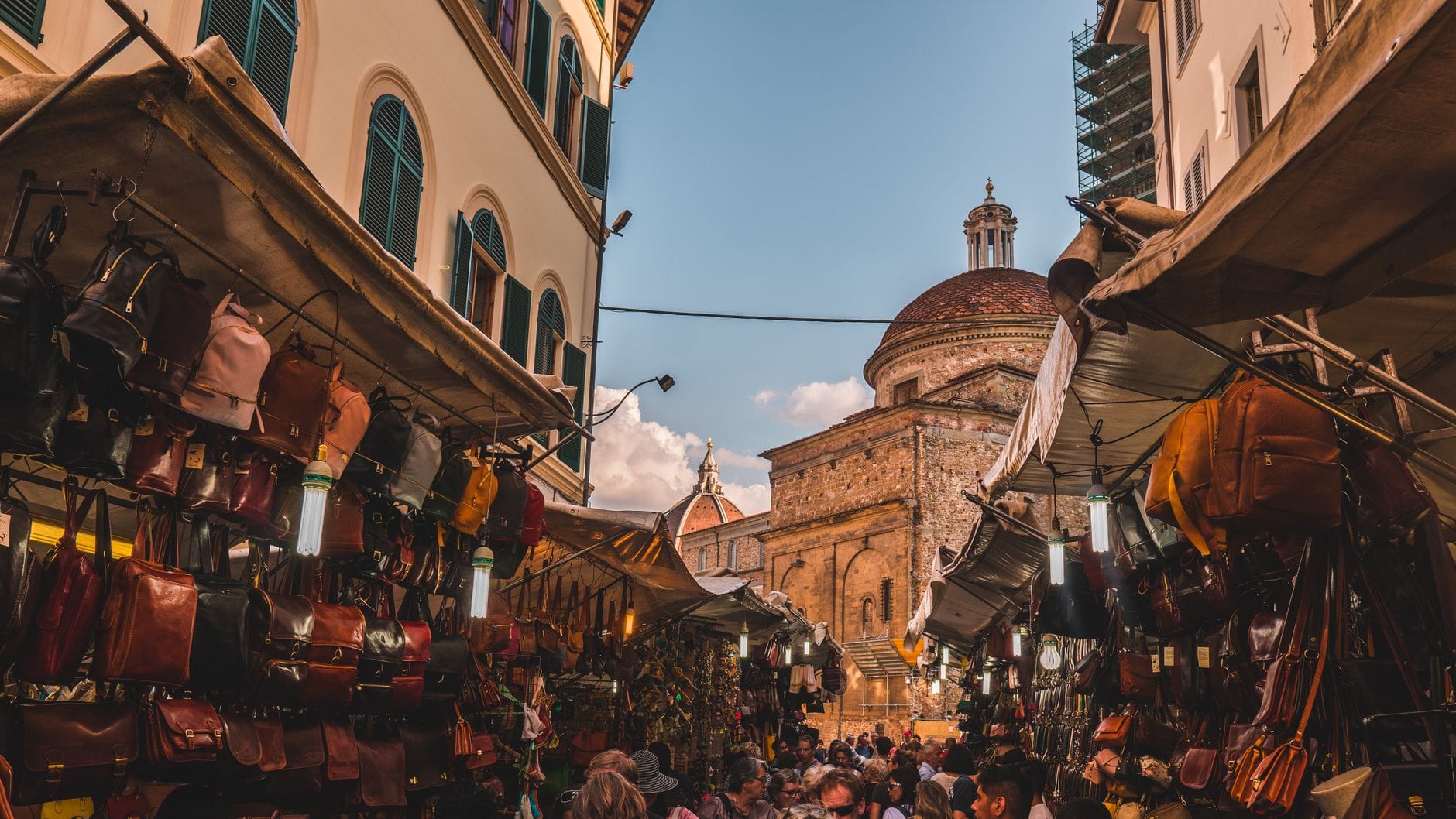
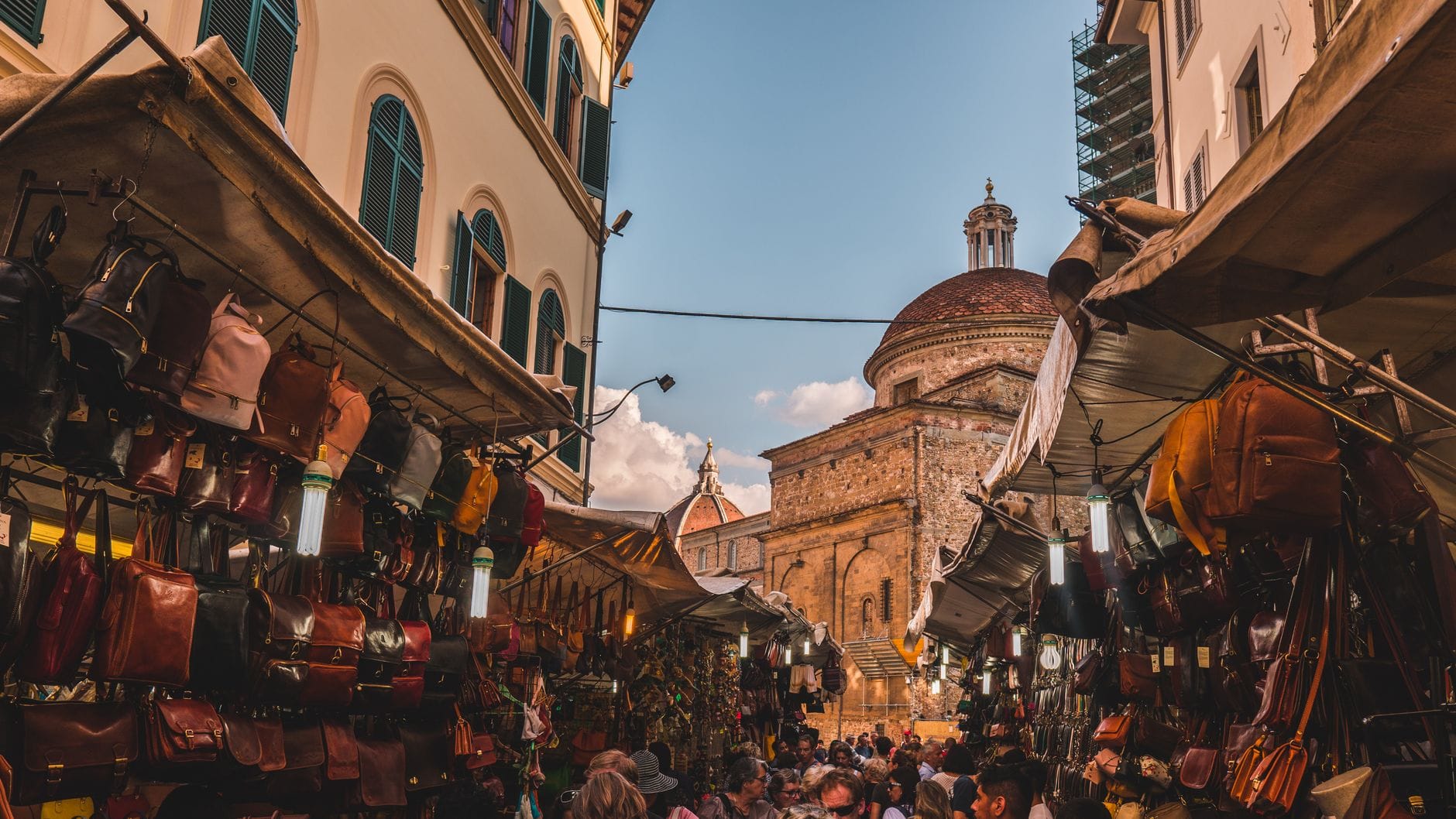
San Lorenzo is not a neighbourhood that softens itself for tourists, even though tourists fill it by mid-morning. The outdoor market around Piazza San Lorenzo starts setting up before eight in the morning, and by nine the stalls of leather jackets, scarves, bags, and belts are jammed end to end across the piazza and up the surrounding streets. The smell of canvas tarpaulins and synthetic leather mingles with coffee drifting out of the bars on Via dell'Ariento. It is loud, transactional, and genuinely commercial in a way that the more curated streets near the Uffizi are not.
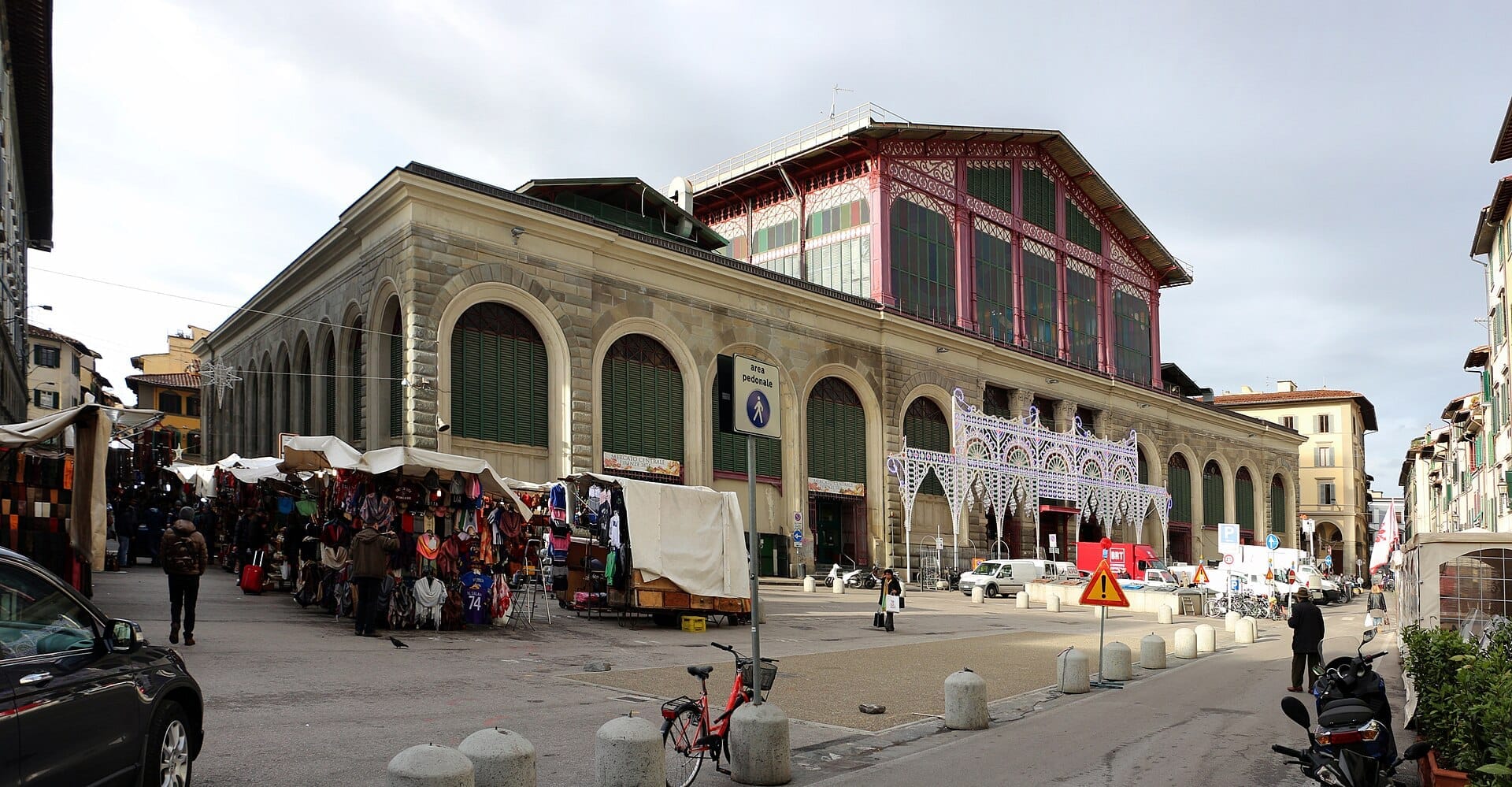
The Mercato Centrale itself operates on a different register. Inside the 19th-century iron-and-glass structure on Via dell'Ariento, the ground floor is a proper food market where Florentine households buy meat, fish, tripe, vegetables, and cheese. The upstairs food hall, added in 2014, caters more directly to visitors, but the ground floor remains working infrastructure for the neighbourhood. Arrive before ten on a weekday and you'll find butchers hosing down their counters, cheese vendors arguing prices, and almost no one taking photographs.
By afternoon the piazza thins slightly as market sellers pack early, but the streets around Via Nazionale and Via Faenza stay busy into the early evening with the constant flow of people between the train station and the sights. After dark, San Lorenzo quietens faster than the centro storico. A handful of restaurants and bars stay open, but the market energy dissipates once the stalls come down, leaving the neighbourhood with a more ordinary, neighbourhood feel.
⚠️ What to skip
The outdoor leather market around Piazza San Lorenzo is largely stocked with imported goods, not locally made Florentine leather. If you are looking for genuine Florentine craftsmanship, seek out specialist leather shops or studios rather than the market stalls. Prices are often negotiable at the market but quality varies significantly.
What to See and Do
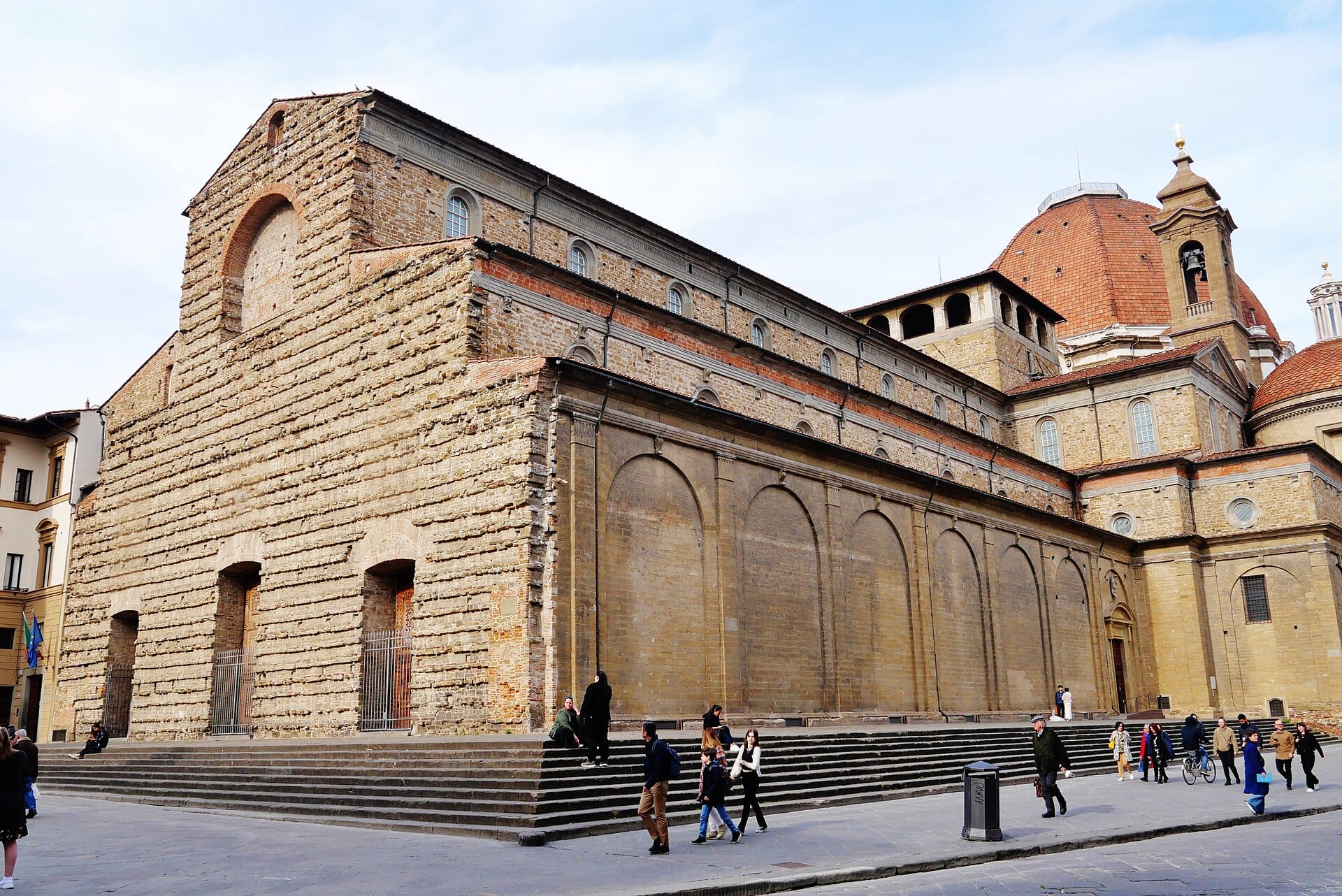
The Basilica di San Lorenzois the neighbourhood's anchor monument, and one of the most important Renaissance churches in Italy. Commissioned by the Medici and partly designed by Brunelleschi, the interior is austere in its grey stone and white plaster, with a mathematical clarity that feels more intellectual than devotional. Unlike the Duomo, it charges a modest entrance fee but draws far fewer crowds, which means you can actually stand quietly inside and look at things properly.
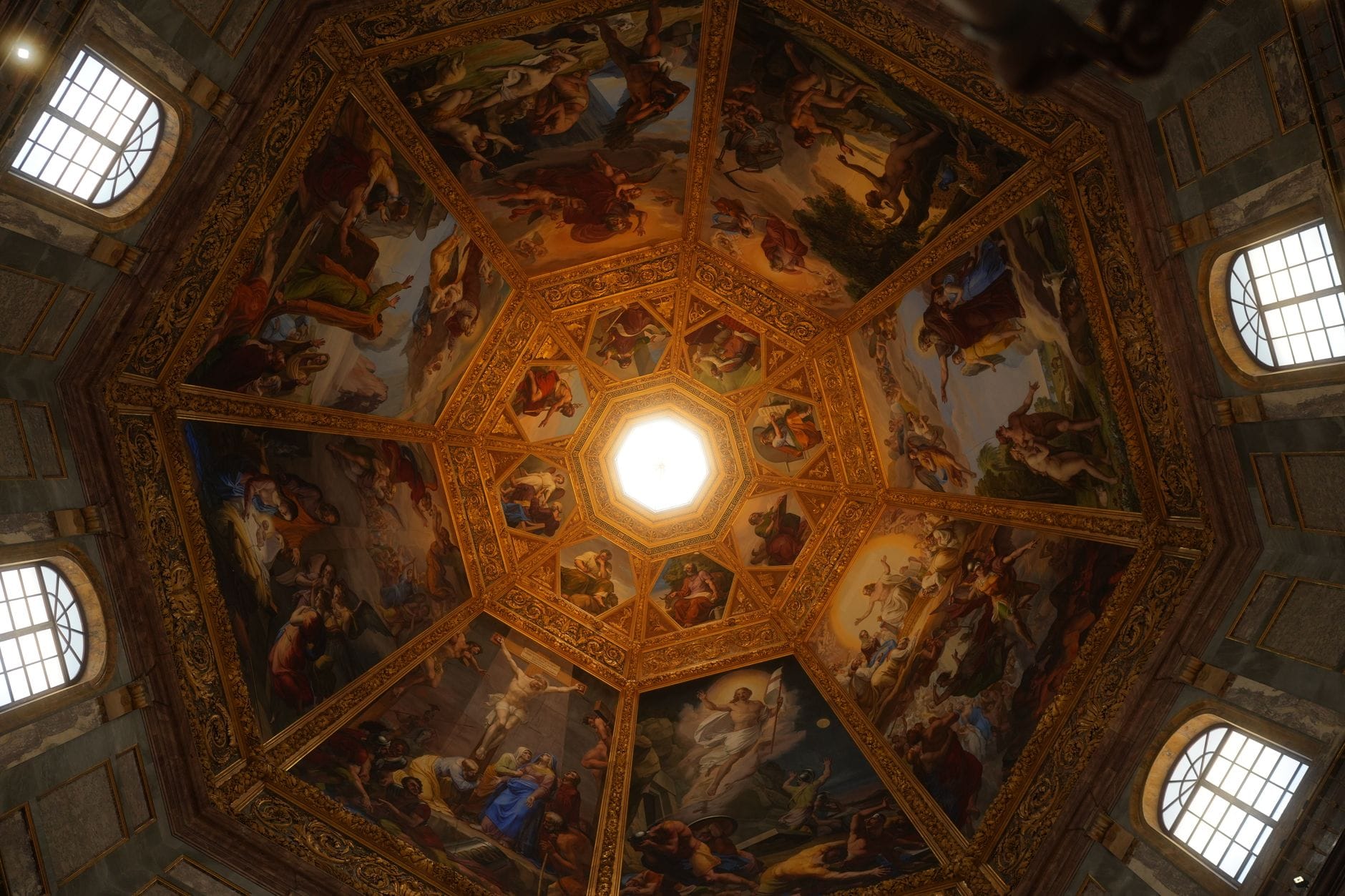
Attached to the basilica complex, theMedici Chapelscontain Michelangelo's most ambitious sculptural program, including the figures of Dawn, Dusk, Day, and Night in the New Sacristy. The Cappella dei Principi, with its extraordinary inlaid stone floor and walls, is often overshadowed by Michelangelo's work but deserves equal attention. Attached to the basilica complex, the Medici Chapels contain Michelangelo's most ambitious sculptural program, including the figures of Dawn, Dusk, Day, and Night in the New Sacristy. The Cappella dei Principi, with its extraordinary inlaid stone floor and walls, is often overshadowed by Michelangelo's work but deserves equal attention. The chapels have a separate entrance on Piazza Madonna degli Aldobrandini and require a separate ticket.
The Mercato Centralewarrants time even if you do not intend to eat there. The ground floor structure, designed by Giuseppe Mengoni and completed in 1874, is a beautiful piece of 19th-century market architecture and one of the few working food markets in central Florence where the primary customers are still locals. The Mercato Centrale warrants time even if you do not intend to eat there. The ground floor structure, designed by Giuseppe Mengoni and completed in 1874, is a beautiful piece of 19th-century market architecture and one of the few working food markets in central Florence where the primary customers are still locals. The upstairs food hall, open late into the evening, is a practical and reasonably priced place to eat surrounded by Florentine produce
The San Lorenzo Marketitself, the outdoor stalls that fill the piazza and surrounding streets, is primarily a shopping experience. Worth walking through once, but approach it with clear expectations: it is a tourist-facing bazaar, not a local artisan market. For serious leather goods, theLeather School of Florencenear Santa Croce is a better destination.
Basilica di San Lorenzo: Renaissance interior, Brunelleschi's Old Sacristy, unfinished facade
Medici Chapels: Michelangelo's New Sacristy and the opulent Cappella dei Principi
Biblioteca Medicea Laurenziana: a Michelangelo-designed library above the basilica cloister, holding one of the world's great manuscript collections
Mercato Centrale: ground-floor food market and upstairs food hall
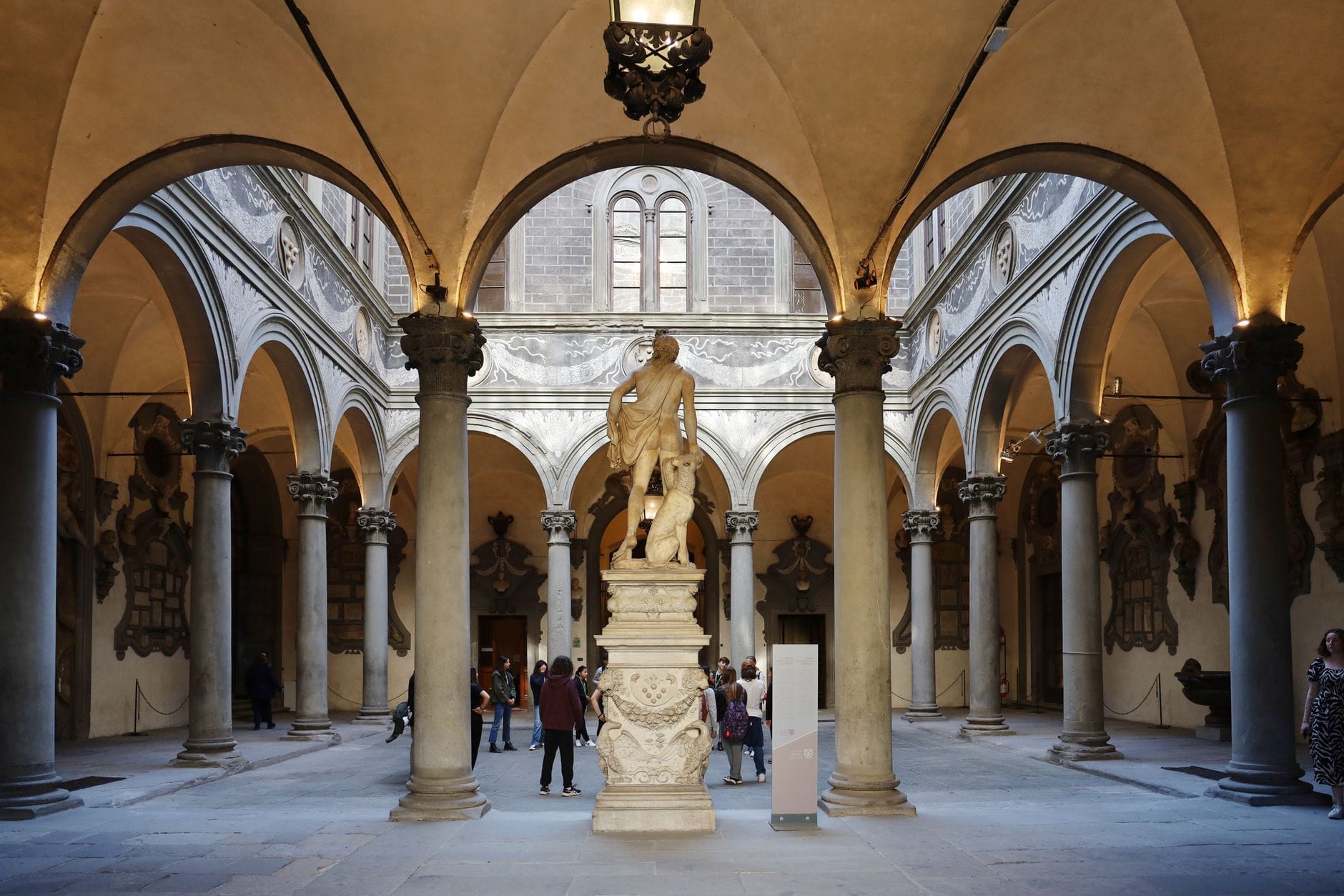
Palazzo Medici Riccardi on Via Cavour: the original Medici palace with Benozzo Gozzoli's famous fresco chapel
Just beyond the neighbourhood's northern edge, theConvent of San Marcocontains Fra Angelico's entire output of frescoes painted in the monks' cells, and is among the most genuinely moving museum experiences in Florence. It is five minutes on foot from Piazza San Lorenzo.
Eating and Drinking
The food options in San Lorenzo range from exceptional to thoroughly mediocre, sometimes on the same street. The proximity to the train station and the outdoor market means there is no shortage of tourist-facing trattorie with laminated menus and aggressive hosts standing at the door. These are easy to spot and worth avoiding.
The Mercato Centrale's upstairs hall is a genuinely good option for a casual lunch. Individual stalls specialise in lampredotto (the Florentine tripe sandwich, not for the faint-hearted), pasta, pizza, wine, and pastries. Prices are reasonable by central Florence standards and the quality of ingredients is higher than you would expect at the price point.
The streets between Piazza San Lorenzo and Via Faenza have a concentration of small restaurants catering to the neighbourhood's many budget hotels. These are mixed in quality but the density means it is worth walking one block beyond the obvious tourist circuit to find places where the clientele is less exclusively foreign. Via Nazionale and the side streets off Via dell'Ariento have a number of bars and small restaurants that operate at prices calibrated for the area's student and backpacker accommodation rather than for visitors on expense accounts.
💡 Local tip
For a fast, cheap, and authentically Florentine eating experience, look for a lampredotto cart near the Mercato Centrale. Lampredotto, made from the fourth stomach of a cow, is a distinctly Florentine street food that you will not find in the same form anywhere else. Order it bagnato (dipped in broth) and with salsa verde.
If you want to understand Florence's full food culture beyond this neighbourhood, the guide towhat to eat in Florencecovers the full range from market food to fine dining.
Getting There and Around
Florence does not have a metro system. San Lorenzo is walkable from most central areas and the walk itself is part of how you orient yourself in the city.
From Firenze Santa Maria Novella station, Piazza San Lorenzo is roughly a ten-minute walknorth on Via dei Servi or Via dei Martelli. From the Galleria dell'Accademia, it is about eight minutes west on foot. From the Duomo complex, it is a five-minute walk north on Via dei Servi or Via dei Martelli. From the Galleria dell'Accademia, it is about eight minutes west on foot.
Urban buses serve the areaale and Via Cavour are the most useful. Tickets must be purchased before boarding, from tabacchi shops or vending machines, and validated immediately on the bus. Fares and exact routes are set by Autolinee Toscane and should be confirmed before travel as they are subject to periodic revision. Bus stops along Via Nazionale and Via Cavour are the most useful. Tickets must be purchased before boarding, from tabacchi shops or vending machines, and validated immediately on the bus. Fares and exact routes are set by Autolinee Toscane and should be confirmed before travel as they are subject to periodic revision.
For a broader overview of moving around the city, thegetting around Florenceguide covers all transport options including the tram network that connects the airport to Santa Maria Novella station.
ℹ️ Good to know
Most of the major sights in San Lorenzo and the adjacent centro storico are within fifteen minutes of each other on foot. Florence rewards walking far more than it rewards waiting for buses. Comfortable shoes matter more here than in almost any other major Italian city, given the cobblestones and the distances involved in a full day of sightseeing.
Where to Stay
San Lorenzo has a high concentration of small hotels, B&Bs, and budget accommodation, particularly along Via Nazionale, Via Faenza, and the streets immediately surrounding the market. The neighbourhood's central position makes it a practical base: the Duomo is five minutes south, the Accademia is ten minutes east, and
The trade-off is the market noise. The outdoor stalls begin setting up early in the morning and the streets around Piazza San Lorenzo are genuinely loud from around eight until late afternoon. If you are a light sleeper or plan to sleep past seven, ask specifically about the room's orientation before booking and look for properties on the quieter streets toward Via Cavour or the northern edge of the neighbourhood near Piazza San Marco.
San Lorenzo suits independent travellers, repeat visitors to Florence who already know the main sights and want a practical base, and anyone prioritising location and value over atmosphere. It is less suited to visitors seeking a romantic or refined setting: the neighbourhood's appeal is functional and historically significant rather than pretty.
For a full comparison of Florence's neighbourhoods and accommodation zones, thewhere to stay in Florenceguide weighs up San Lorenzo against the centro storico, Oltrarno, and Santa Croce.
Practical Tips for Visiting San Lorenzo
The Medici Chapels and the Basilica di San Lorenzo both require tickets. The chapels in particular benefit from advance booking during spring and summer. Both are significantly less crowded than the Uffizi or theGalleria dell'Accademiaand can often be visited with minimal queuing if you arrive when they open.
The outdoor market operates daily except Sundays and is most active Monday through SaturdayMercato Centrale's ground-floor food market follows similar hours but the upstairs food hall stays open much later into the evening., though some stalls stay later. The Mercato Centrale's ground-floor food market follows similar hours but the upstairs food hall stays open much later into the evening.
Pickpocketing is a consistent issue in and around the market area, particularly in the dense crowd of stalls around Piazza San Lorenzo. Keep bags in front of you and phones out of back pockets. This is standard advice for any crowded tourist area in Florence, but the market crowd is particularly dense. For broader safety and planning considerations, thethings to do in Florenceguide has orientation notes on navigating the city as a whole.
TL;DR
San Lorenzo is Florence's market district, centred on Piazza San Lorenzo and the Mercato Centrale, immediately north of the Duomo and
The neighbourhood holds two of Florence's most important Medici monuments: the Basilica di San Lorenzo and the Medici Chapels with Michelangelo's sculpture.
The atmosphere is working and commercial rather than refined: morning markets, dense tourist crowds around the stalls, and a broad range of eating options from excellent street food to forgettable trattorie.
It is a strong base for budget-conscious and independent travellers who prioritise central location, but expect market noise in the morning and ask about room orientation before booking.
The outdoor leather market is primarily stocked with imported goods: verify quality carefully, and for genuine Florentine craftsmanship look beyond the stalls.
Three days in Florence is enough to cover the iconic Duomo complex, the Uffizi Gallery, Michelangelo's David, and the atmospheric Oltrarno district south of the Arno. This itinerary is built around realistic timing, advance booking requirements, and genuine local insight — not just a list of landmarks.
Florence's churches are not mere places of worship — they are the greatest concentration of Renaissance art and architecture on earth. This guide covers the essential basilicas, chapels, and hilltop sanctuaries, with practical details on tickets, timing, and what makes each one worth your time.
Florence holds more masterpieces per square kilometer than almost anywhere on earth. This ranked guide covers the city's finest museums, from blockbuster galleries to intimate palaces, with practical advice on what each one is worth and how to book smart.
Florence rewards visitors differently depending on when you arrive. This guide breaks down every season by weather, crowd levels, and value so you can choose the right time for your trip, whether you're chasing quiet museums, grape harvest season, or budget flights in January.
Florence rewards those who look up, climb up, and cross the river. This guide covers the city's finest viewpoints, from the famous terraces of Piazzale Michelangelo to the quieter hilltop gardens and climbable towers that frame the Duomo from every angle.
The Chianti wine region sits less than an hour south of Florence, but reaching the best estates requires planning. This guide covers the SR222 route, the top wineries worth booking, guided tour prices, and the seasonal realities that most itineraries gloss over.
Florence sits at the heart of Tuscany, which makes it one of the best bases in all of Italy for exploring the surrounding region. This guide covers the top day trips from Florence, with real travel times, price ranges, and the practical take about which destinations deserve a full day and which are better as a quick half-day escape.
Cinque Terre is one of the most rewarding day trips from Florence, but the logistics trip up a surprising number of visitors. This guide covers every step: which trains to take, how much to budget, which villages to prioritize, and whether a day trip is actually worth the travel time.
The Florence to Venice train is a major intercity route, with direct high-speed services departing roughly every 10 minutes at peak times. This guide covers journey times, ticket prices, how to book, and whether a day trip from Florence is worth it.
Florence is one of the world's most walkable cities, with nearly every major landmark within a compact historic centre. This guide covers the best walking routes, clear pricing breakdowns, seasonal tips, and how to avoid the most common tour mistakes.
Florence rewards families who plan smart. From free museum entry for children under 18 to gelato-making classes and rooftop climbs, this guide covers everything you need: timing, logistics, money-saving tips, and practical advice on what actually works with kids in tow.
Florence is one of the most art-rich cities in the world, and a surprising amount of it costs nothing. From Renaissance churches and open-air sculpture to rooftop panoramas and local markets, this guide covers the best genuinely free experiences in the city.
Florence is one of Europe's most walkable cities, but knowing how its bus network, tram lines, ZTL restrictions, and airport connections work will save you time, money, and frustration. This guide covers everything from the €1.70 airport tram to navigating the historic center on foot.
Florence rewards those who look past the obvious. From Masaccio's revolutionary frescoes in a quiet Oltrarno chapel to a 14th-century merchant's house frozen in time, these are the experiences that make the city feel genuinely yours. This guide covers the art, gardens, markets, and viewpoints that most visitors never find.
Florence holds more Michelangelo originals than any other city on earth. This guide covers every sculpture, painting, and architectural work you can see in person — with exact locations, current ticket prices, booking advice, and the common mistakes that trip up first-time visitors.
Florence packs more world-class art and architecture into a single square mile than almost anywhere on earth. This guide gives you a realistic, expertly sequenced 24-hour itinerary with current prices, booking advice, seasonal tips, and honest trade-offs so you spend your time wisely.
The journey from Rome to Florence is one of Italy's most traveled routes, and getting it right saves you hours and money. This guide breaks down every realistic option — high-speed train, budget bus, and why flying rarely makes sense — with practical advice on booking, timing, and what to expect when you arrive.
Florence has been producing world-class leather and fashion for centuries. This guide covers every major shopping area, from artisan workshops near Santa Croce to the weekly Cascine market, with clear price breakdowns and practical advice on spotting quality goods.
Florence packs more world-class art, architecture, and history into a walkable city center than almost anywhere on earth. This guide cuts through the noise to tell you exactly what to do, when to do it, and what to skip, with practical advice on crowds, costs, and logistics.
Florence takes its food seriously, and the gap between eating well and eating badly is surprisingly wide. This guide covers the essential dishes, the best markets, realistic prices, and which neighborhoods to seek out for an honest Florentine meal.
Choosing where to stay in Florence shapes your entire trip. This guide breaks down every major neighborhood by location, price, atmosphere, and convenience so you can book with confidence, whether you're visiting for three days or two weeks.