Santa Maria Novella is where most visitors enter Florence, stepping off the train into a neighborhood that balances Renaissance grandeur with the practical energy of a transit hub. From the marble-faced basilica on its square to the designer storefronts of Via de' Tornabuoni, the area covers a wider range of experience than its reputation as a 'station district' suggests. It is well-connected, walkable to the historic centre, and holds genuine architectural and cultural weight of its own.
Santa Maria Novella is Florence's main gateway, built around the city's central railway station and the magnificent Gothic basilica that gives the district its name. It stretches from the busy rail corridor south toward the Arno, encompassing elegant shopping streets, a dense concentration of hotels, and some of the city's most significant Renaissance facades. The mix of transit noise near the station and dignified calm near the basilica square captures the neighborhood's dual personality better than any single label can.
Orientation
The Santa Maria Novella neighborhood occupies the northwestern quadrant of Florence's historic centre. Its northern edge is defined by Firenze Santa Maria Novella station, the city's main rail terminus. From there, the district runs south toward the Arno River, and east-to-west between the San Lorenzo market area and the more residential streets approaching the city's western walls.
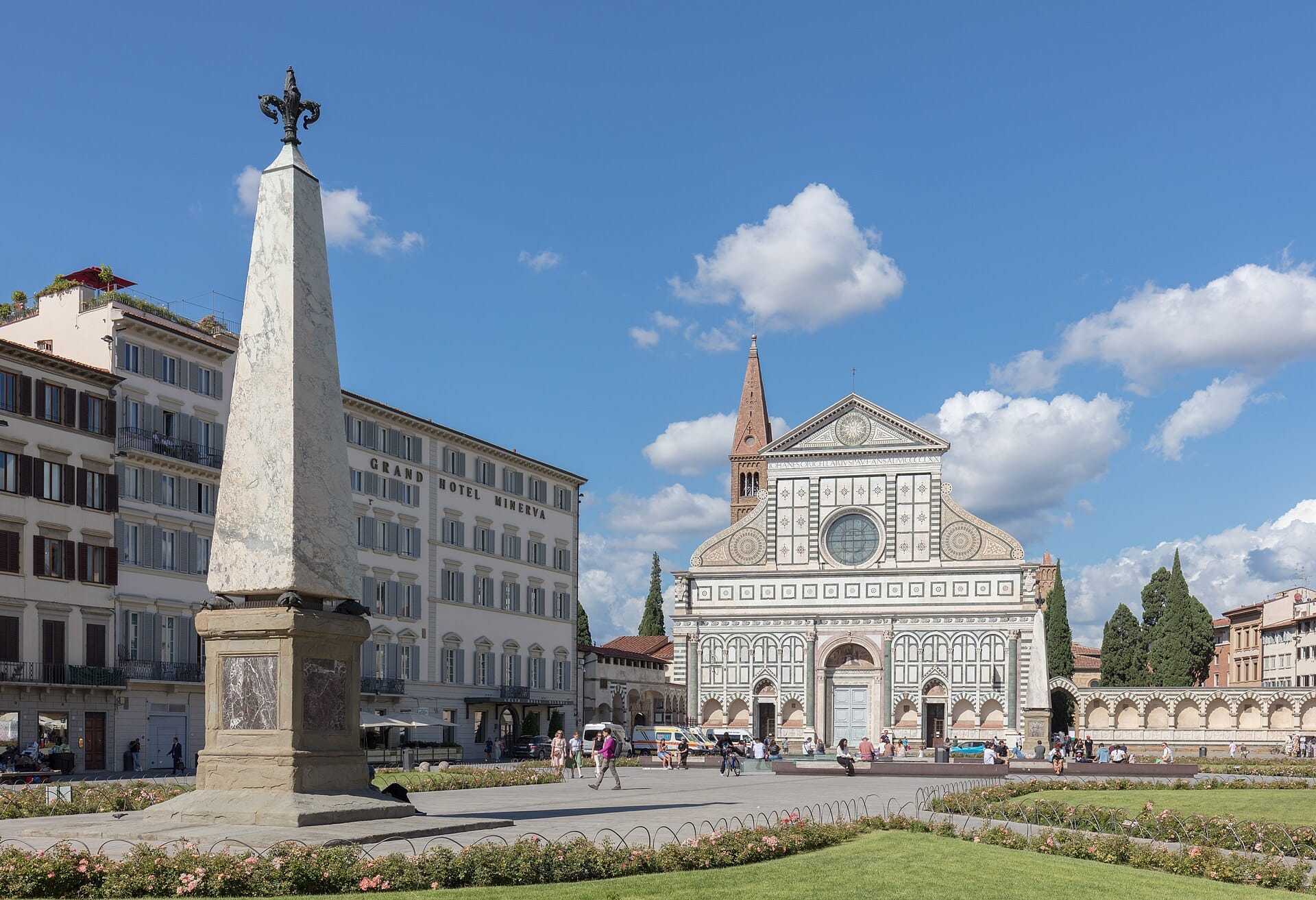
The key axes are straightforward to memorize. Via de' Tornabuoni runs south from near the station toward the Arno, forming the neighborhood's eastern boundary and its most prestigious shopping corridor. Parallel to it, Via della Vigna Nuova and Via dei Fossi carry local foot traffic through a slightly quieter residential and gallery-lined zone. The basilica itself sits onPiazza di Santa Maria Novella, a long rectangular square that opens just east of the station forecourt. To the east, the neighborhood blurs into theCentro Storico around the Duomo, roughly a 10-minute walk from the basilica steps.
North of the station, beyond the rail lines, lies the Fortezza da Basso and Florence's main congress and exhibition complex, including the Palazzo dei Congressi and Palazzo degli Affari. These venues pull professional travelers to the area but have little to offer the typical visitor. Most travelers will stay south of the tracks, in the zone between the station and the river.
Neighboring districts are close enough to walk to in under 15 minutes.San Lorenzo sits immediately to the northeast, with the Mercato Centrale and its leather stalls just beyond the station's eastern exits. TheOltrarno lies south across the Arno, reached via the Santa Trinita bridge or the Ponte Vecchio a few minutes further east.
Character and Atmosphere
The neighborhood shifts character depending on how far you are from the station. The blocks immediately adjacent to the rail terminus are dense with fast-food outlets, souvenir shops, exchange bureaux, and mid-range hotels catering to transit travelers. It is busy, urban, and not especially atmospheric. Walk two or three blocks south, though, and the streets quiet. The stone facades grow older and more imposing, the shop windows start selling leather goods and gold, and the pace drops.
Mornings in Piazza Santa Maria Novella have a particular quality. Before the tour groups arrive, the square is used by Florentines cutting across to work, by students from the language schools nearby, and by guests from the surrounding hotels heading to a coffee bar before the city properly wakes up. The pale green-and-white marble of the basilica facade catches the early light cleanly. By mid-morning, the square fills with visitors photographing the church, and the perimeter bars begin charging for table service.
Afternoons bring a different crowd to Via de' Tornabuoni. This is one of the few streets in Florence where the luxury retail economy has not retreated: Ferragamo, Gucci, Pucci, and other Italian houses maintain flagship stores along its length, and window-shopping locals mix with international buyers. The light on Tornabuoni in late afternoon is warm and raking, catching the pale stone of the older palazzo facades above the modern shopfronts.
After dark, the neighborhood has two distinct zones. The Piazza Santa Maria Novella end stays lively well into the evening, with aperitivo bars drawing a young and international crowd to the square's perimeter. The streets toward the Arno, around Santa Trinita, are quieter and more residential-feeling, better suited to an evening stroll toward a dinner reservation than a bar crawl.
⚠️ What to skip
Pickpocketing is a known issue around the station forecourt and in Piazza Santa Maria Novella, particularly during peak tourist months. Keep bags zipped and avoid stopping to look at maps or phones in the middle of the main pedestrian flows near the station exits.
What to See and Do
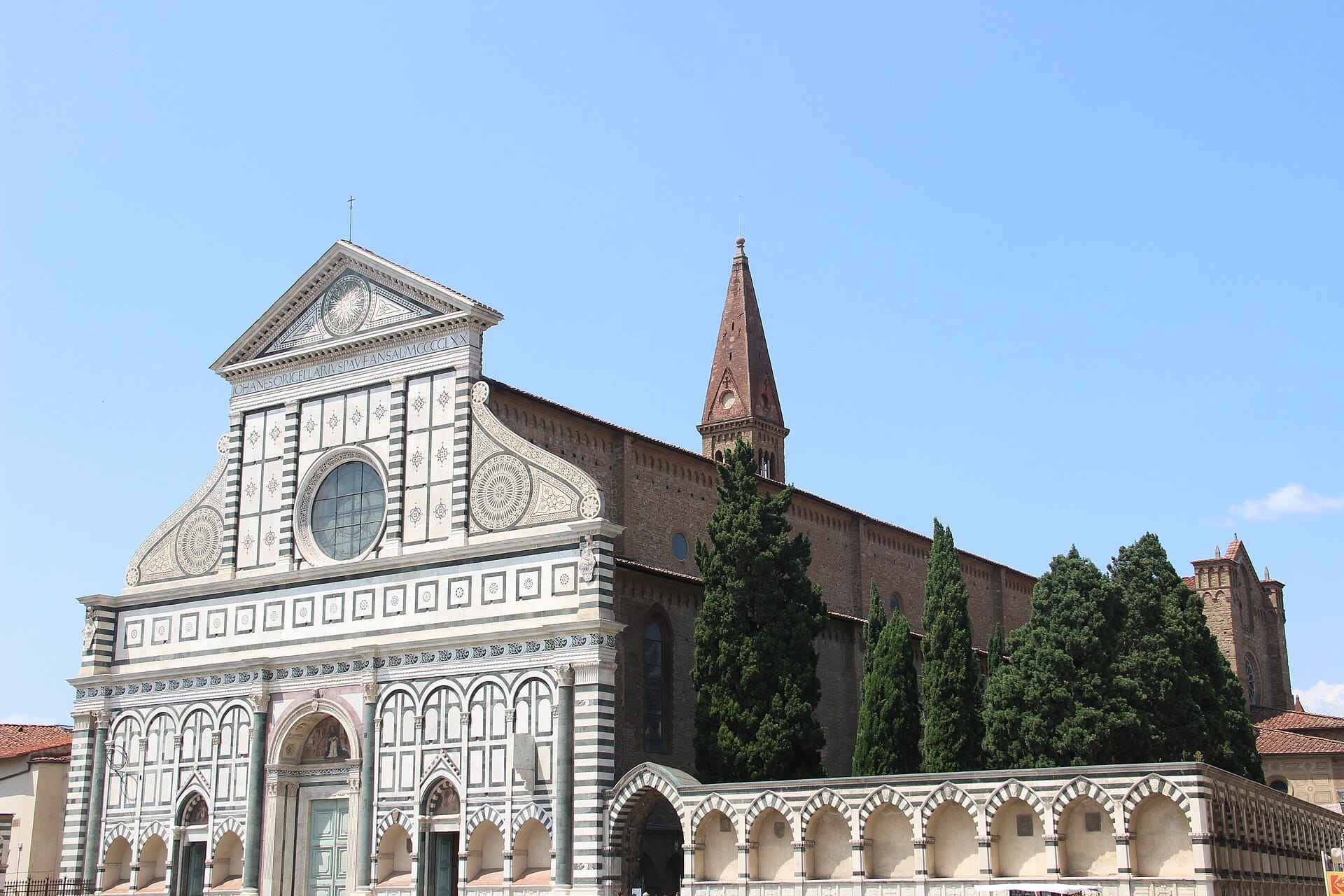
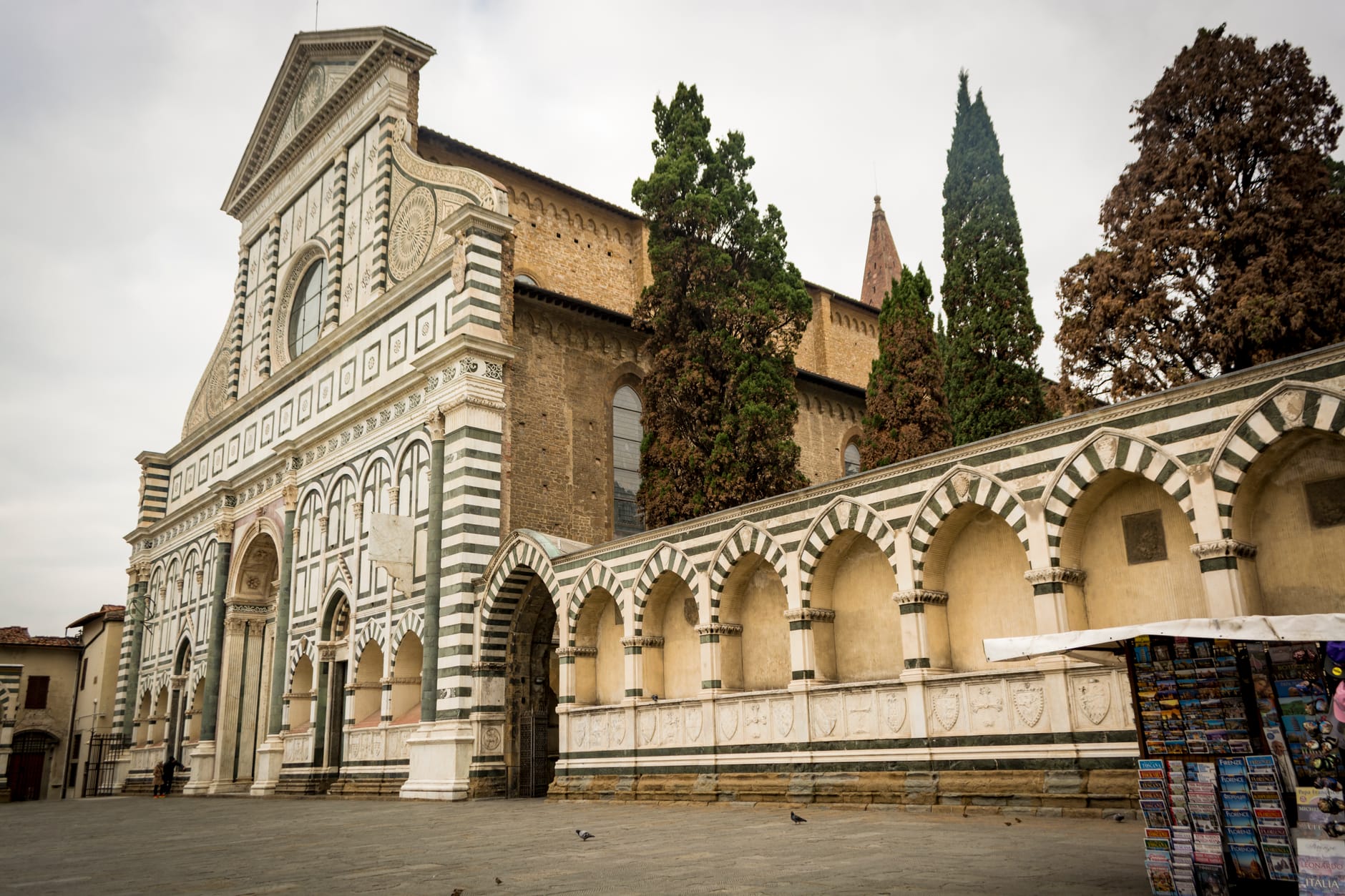
The Basilica di Santa Maria Novella is the neighborhood's central monument and one of the most significant Gothic churches in Italy. The marble facade, completed in the 15th century to a design by Leon Battista Alberti, is a landmark of early Renaissance architecture. Inside, the church holds frescoes by Masaccio, Ghirlandaio, and Filippino Lippi, as well as Brunelleschi's painted crucifix. The adjoining cloisters, including the Spanish Chapel with its detailed medieval frescoes, are included on the basilica complex ticket. Allow at least 90 minutes to do the complex properly.
A short walk south on Via della Vigna Nuova brings you toPalazzo Strozzi, one of Florence's grandest Renaissance private palaces, now used as the city's main contemporary exhibition venue. The courtyard is free to enter and worth seeing regardless of what show is on. Check the program before you visit, as the major temporary exhibitions here are often excellent and draw significant crowds.
The Officina Profumo Farmaceutica di Santa Maria Novella on Via della Scala is one of the oldest pharmacies in the world, founded by Dominican friars in the 13th century. The interior, with its frescoed ceilings and carved cabinets, is worth visiting even if you don't intend to buy anything. The shop sells perfumes, soaps, and herbal preparations made to historic recipes, at prices that reflect the setting.
Basilica di Santa Maria Novella: Gothic church with Renaissance facade and major fresco cycles
Palazzo Strozzi: grand Renaissance palace hosting Florence's best temporary art exhibitions
Officina Profumo Farmaceutica di Santa Maria Novella: centuries-old apothecary in a frescoed interior
Palazzo Rucellai: another Alberti-designed Renaissance facade on Via della Vigna Nuova, viewable from the street
Santa Trinita church: fine Ghirlandaio fresco cycle in a quiet church near the Arno
Via de' Tornabuoni: Florence's main luxury shopping street, lined with historic palazzo facades above modern boutiques
💡 Local tip
The Basilica di Santa Maria Novella is included on the Firenzecard if you are visiting multiple museums in a short trip. Check current ticket prices and booking requirements before visiting, as access policies are updated regularly.
Eating and Drinking
The immediate vicinity of the station is best avoided for eating. The cafes and restaurants on the piazza facing the station forecourt cater primarily to transit passengers and price accordingly, with quality that rarely justifies the markup. Walk south past the basilica and the picture changes considerably.
The area around Via della Vigna Nuova and the side streets west of Tornabuoni has a solid range of mid-range trattorias and wine bars that draw a local lunchtime crowd. The neighborhood is not the first place Florentines would point you toward for a revelatory meal, but it holds enough honest osterie and wine-forward spots to eat well without traveling far. Look for places with handwritten menus in Italian as well as English, and a clientele that is not exclusively tourists.
For a quick, standing coffee or a tramezzino at counter prices, the bars on the side streets off the piazza serve better value than anything facing the square itself. The aperitivo culture is strong in this neighborhood, and several bars around Piazza Santa Maria Novella offer a buffet spread with early-evening drinks. For a broader sense of what to eat across Florence, theFlorence food guide covers the city's key dishes and where to find them by neighborhood.
The Officina Profumo Farmaceutica also sells its own range of herbal teas and digestives, which make an unusual and locally specific purchase for food-oriented travelers. The neighborhood's proximity to the luxury retail strip on Tornabuoni means there are several upscale restaurant options aimed at shopping visitors, though these tend toward international menus and hotel-level pricing.
Getting There and Around
Firenze Santa Maria Novella station is the city's primary rail hub, connected to the national high-speed network via Trenitalia and Italo services. Direct trains run fromRome (approximately 1.5 hours on high-speed services),Milan, Venice, and Bologna, making the station the most practical arrival point for the majority of visitors to Florence. Regional trains serve Pisa, Siena (via connection), Arezzo, and other Tuscan destinations from the same station.
Tram line T1 stops at Santa Maria Novella station and connects the neighborhood westward toward the Cascine park and the suburb of Scandicci. Tram line T2 connects the station with Florence Airport (Amerigo Vespucci, IATA: FLR), making the rail station the central interchange point for arrivals from the airport. The journey on the T2 tram takes around 20–25 minutes; verify current ticket prices before travel as fares are subject to change.
City buses also stop extensively around the station, serving destinations across the broader city including the Oltrarno and the hillside neighborhoods. For most sightseeing within Santa Maria Novella itself, and for reaching the Duomo, Piazza della Signoria, and the Ponte Vecchio, walking is faster and more practical than any transit option. The basilica is about a 10-minute walk from the Duomo, and the Ponte Vecchio is reachable on foot in around 15 minutes via Via de' Tornabuoni and the Santa Trinita bridge.
Taxis queue outside the main station exits. The city centre is a Limited Traffic Zone (ZTL), so private cars are restricted during certain hours in much of the neighborhood's southern section. For broader guidance on moving around Florence, theguide to getting around Florence covers transit options, walking routes, and ZTL zones in detail.
ℹ️ Good to know
The tourist information office at Piazza della Stazione 4, near the main station exit, can provide maps, transport passes, and current museum booking information. Hours change seasonally, so check the official Florence tourism website before relying on it for same-day queries.
Where to Stay
Santa Maria Novella has the highest concentration of hotels in Florence, spanning every price category. The area immediately around the station is dominated by three and four-star hotels that prioritize convenience over character, catering to business travelers and visitors on package itineraries. These are practical but often impersonal. For a better balance of location and atmosphere, look for accommodation on the streets south of the basilica, toward the Santa Trinita bridge, where smaller hotels and boutique properties occupy historic palazzo buildings. For a broader comparison of Florence's neighborhoods as bases, theFlorence accommodation guide covers the tradeoffs across all major areas.
The neighborhood suits visitors who are arriving by train, want a central location without paying the premium of a Duomo-adjacent address, and prefer to have major transport connections within easy reach. It is less suited to travelers seeking a quiet, residential experience: the streets closest to the station are urban and noisy until late, and the flow of suitcase-hauling tourists does not thin out much before mid-evening.
Families with children benefit from the flat, wide streets and the walkability to major sights. The Piazza Santa Maria Novella itself, with its open space and accessible cafes, is more manageable with strollers than the narrower lanes of the Centro Storico. Solo travelers and couples who want to be able to walk to dinner, drinks, and major museums without planning a transit trip will find the location genuinely convenient.
Practical Tips and Honest Assessment
Santa Maria Novella is not Florence's most evocative neighborhood to base yourself in, but it is one of the most functional. If your priority is minimizing travel time between your hotel and the city's major sights, it delivers. TheFlorence Cathedral, the Uffizi Gallery, and the Ponte Vecchio are all within a 15-minute walk.
The neighborhood's drawbacks are real. The blocks immediately around the station feel generic in the way that station districts in many European cities do: convenience shops, chains, and transient energy. The piazza itself, despite its beauty, has a pickpocketing problem and can feel more like a transit waiting room than a neighborhood square in high season. Noise from the station and the tram lines carries into nearby hotels.
The genuine rewards of the neighborhood come from slowing down and looking above street level. The architecture on streets like Via della Vigna Nuova and Via dei Fossi is extraordinary, and the combination of the basilica, the Officina Profumo Farmaceutica, and Palazzo Strozzi gives the area a cultural density that goes well beyond its transit-hub reputation. Pair a visit here with theguide to Florence's best churches to understand where the Basilica di Santa Maria Novella sits within the city's broader ecclesiastical heritage.
TL;DR
Best for: travelers arriving by train who want maximum sightseeing range within walking distance of their hotel
Key landmarks: Basilica di Santa Maria Novella, Palazzo Strozzi, Officina Profumo Farmaceutica, Via de' Tornabuoni
Transit: Florence's main rail hub (SMN station), tram lines T1 and T2 including direct airport connection
Honest drawback: the blocks nearest the station are noisy, generic, and prone to pickpocketing; the neighborhood improves significantly south of the basilica
Worth visiting even if staying elsewhere: the basilica and its cloisters, the Officina Profumo Farmaceutica interior, and the Palazzo Strozzi exhibition program are all genuinely worth a dedicated half-day
Three days in Florence is enough to cover the iconic Duomo complex, the Uffizi Gallery, Michelangelo's David, and the atmospheric Oltrarno district south of the Arno. This itinerary is built around realistic timing, advance booking requirements, and genuine local insight — not just a list of landmarks.
Florence's churches are not mere places of worship — they are the greatest concentration of Renaissance art and architecture on earth. This guide covers the essential basilicas, chapels, and hilltop sanctuaries, with practical details on tickets, timing, and what makes each one worth your time.
Florence holds more masterpieces per square kilometer than almost anywhere on earth. This ranked guide covers the city's finest museums, from blockbuster galleries to intimate palaces, with practical advice on what each one is worth and how to book smart.
Florence rewards visitors differently depending on when you arrive. This guide breaks down every season by weather, crowd levels, and value so you can choose the right time for your trip, whether you're chasing quiet museums, grape harvest season, or budget flights in January.
Florence rewards those who look up, climb up, and cross the river. This guide covers the city's finest viewpoints, from the famous terraces of Piazzale Michelangelo to the quieter hilltop gardens and climbable towers that frame the Duomo from every angle.
The Chianti wine region sits less than an hour south of Florence, but reaching the best estates requires planning. This guide covers the SR222 route, the top wineries worth booking, guided tour prices, and the seasonal realities that most itineraries gloss over.
Florence sits at the heart of Tuscany, which makes it one of the best bases in all of Italy for exploring the surrounding region. This guide covers the top day trips from Florence, with real travel times, price ranges, and the practical take about which destinations deserve a full day and which are better as a quick half-day escape.
Cinque Terre is one of the most rewarding day trips from Florence, but the logistics trip up a surprising number of visitors. This guide covers every step: which trains to take, how much to budget, which villages to prioritize, and whether a day trip is actually worth the travel time.
The Florence to Venice train is a major intercity route, with direct high-speed services departing roughly every 10 minutes at peak times. This guide covers journey times, ticket prices, how to book, and whether a day trip from Florence is worth it.
Florence is one of the world's most walkable cities, with nearly every major landmark within a compact historic centre. This guide covers the best walking routes, clear pricing breakdowns, seasonal tips, and how to avoid the most common tour mistakes.
Florence rewards families who plan smart. From free museum entry for children under 18 to gelato-making classes and rooftop climbs, this guide covers everything you need: timing, logistics, money-saving tips, and practical advice on what actually works with kids in tow.
Florence is one of the most art-rich cities in the world, and a surprising amount of it costs nothing. From Renaissance churches and open-air sculpture to rooftop panoramas and local markets, this guide covers the best genuinely free experiences in the city.
Florence is one of Europe's most walkable cities, but knowing how its bus network, tram lines, ZTL restrictions, and airport connections work will save you time, money, and frustration. This guide covers everything from the €1.70 airport tram to navigating the historic center on foot.
Florence rewards those who look past the obvious. From Masaccio's revolutionary frescoes in a quiet Oltrarno chapel to a 14th-century merchant's house frozen in time, these are the experiences that make the city feel genuinely yours. This guide covers the art, gardens, markets, and viewpoints that most visitors never find.
Florence holds more Michelangelo originals than any other city on earth. This guide covers every sculpture, painting, and architectural work you can see in person — with exact locations, current ticket prices, booking advice, and the common mistakes that trip up first-time visitors.
Florence packs more world-class art and architecture into a single square mile than almost anywhere on earth. This guide gives you a realistic, expertly sequenced 24-hour itinerary with current prices, booking advice, seasonal tips, and honest trade-offs so you spend your time wisely.
The journey from Rome to Florence is one of Italy's most traveled routes, and getting it right saves you hours and money. This guide breaks down every realistic option — high-speed train, budget bus, and why flying rarely makes sense — with practical advice on booking, timing, and what to expect when you arrive.
Florence has been producing world-class leather and fashion for centuries. This guide covers every major shopping area, from artisan workshops near Santa Croce to the weekly Cascine market, with clear price breakdowns and practical advice on spotting quality goods.
Florence packs more world-class art, architecture, and history into a walkable city center than almost anywhere on earth. This guide cuts through the noise to tell you exactly what to do, when to do it, and what to skip, with practical advice on crowds, costs, and logistics.
Florence takes its food seriously, and the gap between eating well and eating badly is surprisingly wide. This guide covers the essential dishes, the best markets, realistic prices, and which neighborhoods to seek out for an honest Florentine meal.
Choosing where to stay in Florence shapes your entire trip. This guide breaks down every major neighborhood by location, price, atmosphere, and convenience so you can book with confidence, whether you're visiting for three days or two weeks.