Officina Profumo-Farmaceutica di Santa Maria Novella: Florence's Ancient Apothecary
Founded by Dominican friars in 1221 and open to the public since 1612, the Officina Profumo-Farmaceutica di Santa Maria Novella is one of the oldest operating pharmacies in the world. Today it functions as both a boutique museum and a working perfumery, set inside a sequence of frescoed historic rooms steps from Florence's main railway station.
Quick Facts
- Location
- Via della Scala 16, 50123 Florence (Santa Maria Novella neighborhood)
- Getting There
- Firenze Santa Maria Novella railway station, approx. 5-minute walk
- Time Needed
- 45–90 minutes
- Cost
- Free to enter; purchases optional
- Best for
- History lovers, slow travelers, fragrance enthusiasts, gift shoppers
- Official website
- www.smnovella.com
What Is the Officina Profumo-Farmaceutica di Santa Maria Novella?
The Officina Profumo-Farmaceutica di Santa Maria Novella is, by most accounts, one of the oldest continuously operating pharmacies in the world. Its roots reach back to 1221, when Dominican friars settled in Florence and began cultivating medicinal herbs in the convent's gardens. By 1612, the apothecary had opened its doors to the general public, selling herbal remedies, waters, and preparations that drew clients from across Tuscany and beyond.
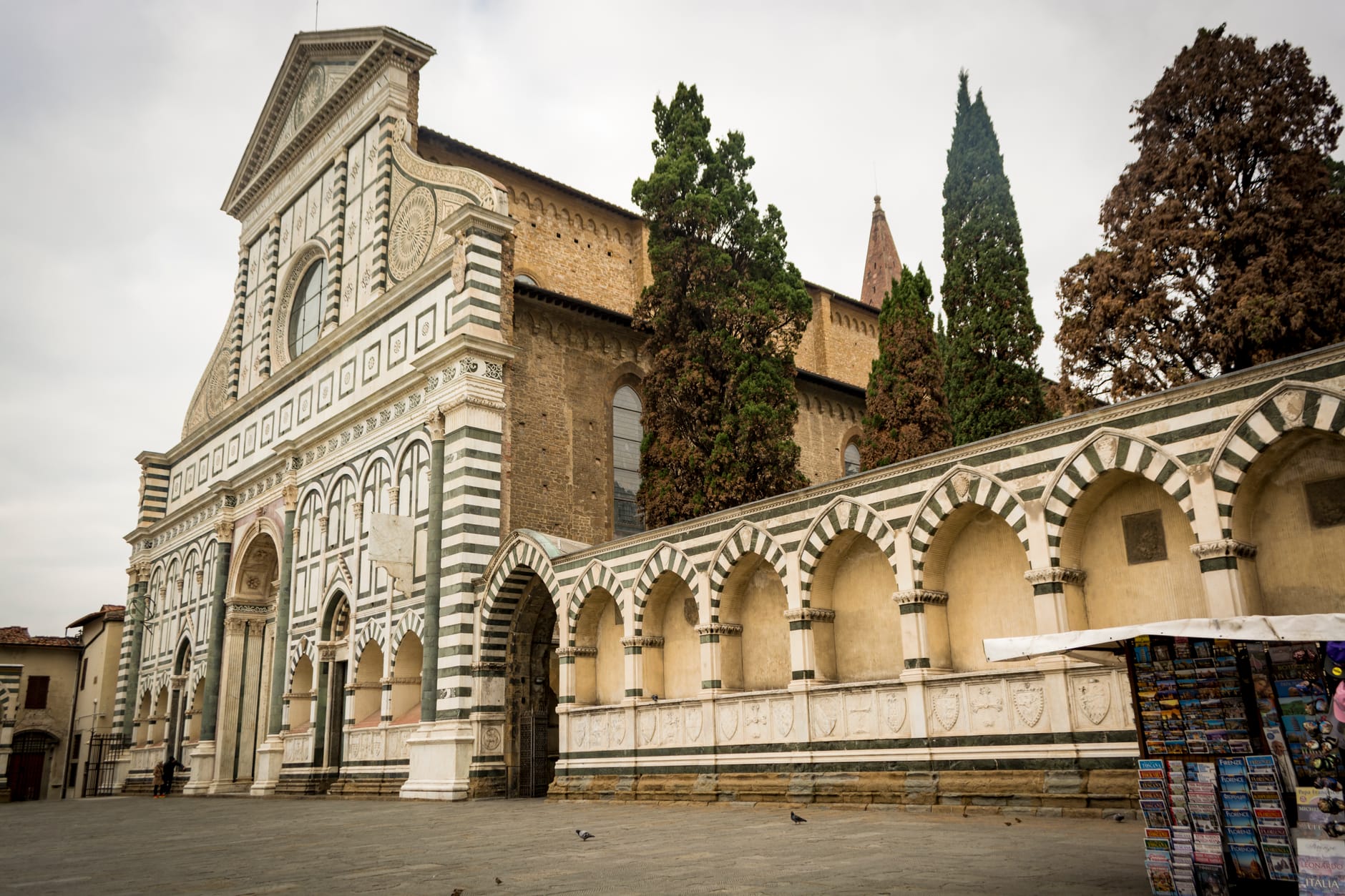
Today the Officina occupies a series of rooms inside the historic convent complex attached to the Basilica di Santa Maria Novella, just a few minutes on foot from Florence's main railway station. The building itself is an attraction: frescoed ceilings, gilded cabinets, stone-flagged floors, and the lingering density of hundreds of perfumes and botanicals create an atmosphere you won't find replicated anywhere in the city.
💡 Local tip
Entry to browse the historic rooms is free. You are under no obligation to buy anything, though most visitors leave with at least a small purchase. Budget at least 45 minutes to move through the rooms without rushing.
The Historic Rooms: What You Actually See Inside
Stepping through the arched entrance on Via della Scala, the first thing that registers is the smell: rose water, iris root, cedarwood, and something older and darker underneath — the scent of centuries of dried herbs and wax polish on wooden floors. It is immediately distinct from any modern perfume shop.
The premises unfold across several interconnected rooms. The Sala Verde (Green Room) and adjacent frescoed chapel spaces serve as the main retail areas, lined floor to ceiling with apothecary jars, wooden drawers, and glass display cases. The painted decoration dates from different periods, and the contrast between the ecclesiastical architecture and the commercial function of the space is one of the more interesting things to observe. Overhead, pale frescoes depicting allegorical and botanical subjects survive in varying states of preservation.
Look for the original wooden furniture, some of which dates to the 17th century, and the illustrated ledgers and antique pharmacy equipment displayed in locked cases. These details reward slow looking. The Officina operates the space as what it calls a boutique museum, meaning the objects, the architecture, and the products are all part of the same experience.
Tickets & tours
Live prices and dates from our booking partner. If you book, we may earn a commission at no extra cost to you.
Santa Maria Novella entry ticket with video tablet guide
From 11 €Instant confirmationSanta Croce guided experience
From 40 €Instant confirmationFree cancellationItalian opera concert in the Church of Santa Monaca in Florence
From 30 €Instant confirmationFree cancellationFour Seasons concert at Auditorium Santa Croce al Tempio in Florence
From 30 €Instant confirmationFree cancellation
Historical Context: Eight Centuries of Continuity
The Dominican Order arrived in Florence in 1221 and established themselves at the convent of Santa Maria Novella. Their apothecary activities grew from the practical need to produce medicines and preparations for the friars and, over time, for the surrounding community. The gardens behind the convent, which survive in modified form, were the source of the plant materials that drove the whole enterprise.
The year 1612 marks the formal opening to the public, though the Officina's products had circulated among Florentine society long before that. The institution weathered suppression of the religious orders, changes in ownership, and the upheavals of Italian unification. In the 20th century, the Via della Scala premises were relaunched as a cultural destination, and the brand expanded internationally while keeping its production methods rooted in traditional Florentine craft. It sits in the sameSanta Maria Novella neighborhoodthat gave it its name, and that continuity of place is part of what makes a visit feel different from simply shopping.
The Officina's longevity also places it in context with Florence's wider intellectual and scientific history. The city was a centre of botanical study during the Renaissance, and the convent apothecaries were early participants in the exchange of plant knowledge that eventually produced modern pharmacology. That tradition is visible in the product range today, which still includes preparations based on recipes formalised centuries ago.
The Products: What's Worth Buying
The Officina's catalogue runs to hundreds of products: eau de cologne, perfumes, soaps, face creams, herbal liqueurs, room fragrances, and preparations sold in the original apothecary style. The range is broad enough that it can feel slightly overwhelming on a first visit. A few product categories stand out either for historical pedigree or for being genuinely difficult to find elsewhere.
The Acqua di Santa Maria Novella, a rose-based cologne with origins in the 17th century, is probably the most historically significant product. The Pot Pourri and the Acqua di Melissa (lemon balm water) also appear in the historical records. Prices are not low by Italian standards, but the products are manufactured in Italy and the quality is consistent. Staff in most of the rooms speak English and can explain ingredients and provenance without pressure to buy.
ℹ️ Good to know
The Officina's products are sold in branded packaging that travels well and is compact enough for carry-on luggage. Soaps and small cologne bottles make practical gifts and are among the more affordable items in the range.
When to Visit and How Crowds Behave
The Officina opens at 09:30 daily and closes at 20:00. The first hour after opening is reliably quieter: the rooms feel more like a museum at that hour, and you can move slowly and study the details without navigating other visitors. By mid-morning, particularly between April and October, organised tour groups begin arriving and the experience becomes more crowded and louder.
The late afternoon window, roughly 17:00 to 19:00, tends to offer a second quieter period as tour groups have typically moved on and independent visitors are fewer. The evening light that comes through the high windows in the main rooms at this hour is worth experiencing if you have the flexibility. Midday on weekends in summer is the most congested period and the least conducive to the contemplative atmosphere the space is capable of offering.
Weather has minimal effect on the visit itself, since the experience is entirely indoors. However, Florence's hottest summer days, typically July and August, make the walk fromBasilica di Santa Maria Novellaor the station uncomfortable. If you are planning a broader day in the neighborhood, spring and early autumn remain the most pleasant seasons for combining an Officina visit with time outdoors.
Getting There and Practical Logistics
The address is Via della Scala 16. From Firenze Santa Maria Novella railway station, walk south along Via della Scala for approximately five minutes. The entrance is set back slightly from the street behind a courtyard gate and is easy to miss if you are walking quickly — look for the pharmacy sign and the arched entrance rather than an obvious shopfront.
If you are arriving by tram, the T1 and T2 lines both serve the Santa Maria Novella area. For broader orientation in the neighborhood and practical transport advice, thegetting around Florenceguide covers current options in detail. The Officina is well placed for combining with the Basilica di Santa Maria Novella next door, or for continuing into the centro storico on foot.
Accessibility information is not published on the official website. The historic building involves stone floors and may include steps between rooms. Visitors with mobility requirements should contact the Officina directly via their official website before visiting to confirm current access conditions.
Photography and What to Notice
Photography for personal use is generally permitted in the public rooms, though policies can change and it is worth checking with staff on arrival. The best photographic subjects are the painted ceilings in the frescoed rooms, the rows of apothecary jars against dark wooden shelving, and the light falling through the arched windows in the chapel space. A wide lens is more useful than a telephoto given the confined dimensions of the rooms.
For those building a broader itinerary around Florentine historic interiors and craft, the Officina fits naturally alongside thePalazzo Davanzati and the Leather School of Florenceas examples of historic craftsmanship operating continuously in original premises.
Who Might Not Enjoy This Visit
Visitors looking for an immersive, curated museum experience with extensive interpretive signage in multiple languages will find the Officina only partially delivers on that front. The historic context is present in the objects and the architecture, but explanatory panels are limited. The space functions primarily as a retail environment with museum qualities, not the reverse.
Travelers on tight schedules who have not yet visited the major institutions, such as theUffizi Gallery or the Galleria dell'Accademia, may find it difficult to justify 45–90 minutes here over those alternatives. The Officina rewards visitors who are already interested in the material culture of Florence and are not primarily focused on painting and sculpture.
Those with strong fragrance sensitivities should be aware that the concentration of scents in a relatively enclosed historic building can be intense, particularly in the inner rooms near the main product displays.
Insider Tips
- Arrive within the first 30 minutes of opening at 09:30 to experience the rooms at their quietest. The atmosphere at that hour, before tour groups arrive, is markedly different from midday.
- Ask staff about the Acqua di Santa Maria Novella specifically. It is one of the oldest documented products in the range and the backstory behind it adds considerable depth to the purchase.
- The Officina sells a small selection of herbal liqueurs and digestivi, which are less well known than the perfumes and colognes. These are unusual gifts that are difficult to source outside Florence.
- The courtyard entrance on Via della Scala has a small area where you can pause before entering. Use a moment there to let your nose adjust before going into the scented interior — it makes the individual fragrances easier to distinguish once inside.
- If you are buying gifts, the Officina's own packaging is elegant and the staff wrap purchases carefully. There is no need to buy additional gift wrapping elsewhere.
Who Is Officina Profumo-Farmaceutica di Santa Maria Novella For?
- Travelers interested in Florentine craft history and material culture
- Fragrance enthusiasts looking for products with genuine historical provenance
- Gift shoppers wanting something more distinctive than typical tourist items
- Slow travelers who want to spend time in a historic interior without a ticketed admission
- Anyone combining a visit to the Basilica di Santa Maria Novella with time in the surrounding neighborhood
Nearby Attractions
Other things to see while in Santa Maria Novella:
- Basilica di Santa Maria Novella
Standing directly opposite Florence's main railway station, the Basilica di Santa Maria Novella is one of the most important Gothic churches in Italy. Its marble façade, designed by Leon Battista Alberti, and its interior packed with frescoes by Ghirlandaio and Masaccio make it a genuine rival to the more famous churches further into the historic centre.
Planning a trip? Discover personalized activities with the Nomado app.