San Lorenzo Market (Mercato Centrale): Florence's Most Layered Market
San Lorenzo Market combines a working 19th-century iron-and-glass food hall, a buzzing upper-floor food court open until midnight, and a sprawling street market selling leather goods and textiles. Free to enter, central to navigate, and genuinely useful whether you're buying lunch or a wallet.
Quick Facts
- Location
- Piazza del Mercato Centrale / Via dell'Ariento, San Lorenzo, Florence
- Getting There
- 7-min walk from Santa Maria Novella station; Tram T2 Unità stop
- Time Needed
- 30–60 min for the food hall; add 30 min if browsing outdoor stalls
- Cost
- Free entry. Food and goods priced individually.
- Best for
- Food lovers, self-caterers, leather shoppers, architecture admirers
- Official website
- www.mercatocentrale.it/firenze
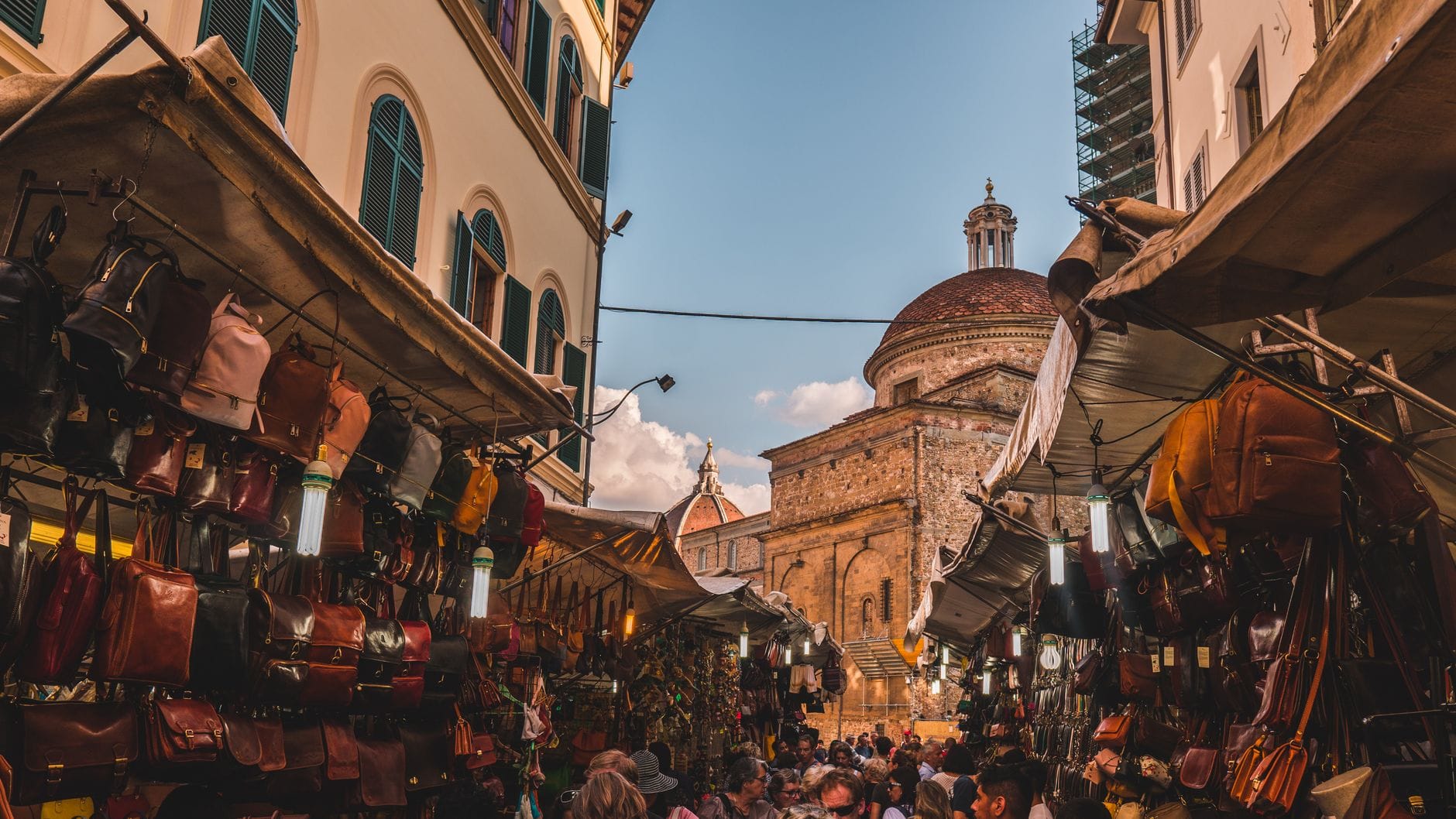
What San Lorenzo Market Actually Is (and Why the Distinction Matters)
Visitors often arrive at San Lorenzo Market expecting one thing and find three. The name refers to two overlapping but distinct experiences: the Mercato Centrale, a grand covered food market inside a landmark iron-and-glass hall at Piazza del Mercato Centrale, and the outdoor San Lorenzo street market, which fans out across the surrounding blocks along Via dell'Ariento and the streets around the Basilica di San Lorenzo. They share a neighborhood, a name in common usage, and very little else in atmosphere.
The indoor Mercato Centrale splits across two floors with different purposes. The ground floor is a traditional food market: fishmongers, butchers, cheese sellers, produce vendors, and deli counters where locals shop for their households. The upper floor, renovated into a modern food hall, operates more like a curated street-food destination, open every day from 10:00 until midnight. Understanding which part you want before you arrive saves confusion at the entrance.
ℹ️ Good to know
Opening hours: Ground floor food market runs Mon–Fri 09:00–15:00, Sat 09:00–17:00, closed Sunday. Upper-floor food hall is open daily 08:00–24:00. Note that ground floor hours may vary mid-June through September — confirm locally before planning an early visit in summer.
The Building: Giuseppe Mengoni's Iron Cathedral
The Mercato Centrale building is worth a moment of attention before you walk in. Designed by architect Giuseppe Mengoni, who is better known for creating Milan's Galleria Vittorio Emanuele II, the structure opened in 1874 following an International Agricultural Exhibition. The facade is restrained from the street, but step inside and the scale opens up: high barrel-vaulted iron ceilings, large glass panels flooding the interior with diffuse light, and the ambient noise of a working market contained within a space that feels simultaneously industrial and elegant.
In morning light, the ground floor has a particular quality. The pale green ironwork catches the sun through the upper windows, and the smell of fresh fish and cut herbs mixes with coffee from the bar near the entrance. It is one of the few places in central Florence where the architecture serves a completely functional purpose and is better for it. No velvet ropes, no timed entry, no audio guide required.
Mengoni's Florence market predates the Milan Galleria by a few years in construction timeline, and the family resemblance between the two buildings is clear to anyone who has seen both. For context on Florence's wider architectural legacy, the guide toFlorence's best museumscovers institutions that document the city's design history in more depth.
Tickets & tours
Live prices and dates from our booking partner. If you book, we may earn a commission at no extra cost to you.
Perfume masterclass: a sensory experience in Florence
From 70 €Instant confirmationFree cancellationFlorence cathedral complex and Brunelleschi's dome tickets
From 59 €Instant confirmationMedici series tour in Palazzo Medici Riccardi
From 90 €Instant confirmationFree cancellationPalazzo Vecchio secret passages tour with lunch or gelato tasting
From 47 €Instant confirmationFree cancellation
The Ground Floor: Where Florence Actually Shops
Arrive before 09:00 on a weekday and the ground floor is predominantly a local market. Vendors unload crates, stallholders arrange displays, and the ratio of Florentines to tourists tilts noticeably in favour of residents. This is the hour to watch the market work rather than consume it. Fishmongers at the back of the hall lay out silver-skinned sea bream and tuna steaks on ice. Cheese counters display wheels of aged Parmigiano-Reggiano alongside locally made pecorino from the surrounding Tuscan countryside. Butchers handle full cuts in the old way, with cleaver and bone saw rather than pre-packaged portions.
By 10:00, the tourist presence increases, but the market retains its working character. The vendors are not performing for cameras. Prices are marked clearly, and most stall holders speak enough English to complete a transaction without difficulty. If you are self-catering or assembling a picnic, this is where to source it: salumi, hard cheeses, seasonal fruit, and fresh bread from nearby bakers make up a reliable combination.
💡 Local tip
For the best selection on the ground floor, visit on a Saturday morning between 09:00 and 11:00. Saturday hours run until 17:00, giving you more time, but the choicest produce and a livelier atmosphere peak in the first two hours of trading.
The Upper Floor: A Food Hall Worth Taking Seriously
The renovated upper floor operates on a different logic from the market below. It functions as a permanent food court with a sizeable seating area and a curated selection of Tuscan and Italian specialities: fresh pasta, lampredotto (the tripe-based Florentine street food that many visitors approach cautiously but nearly always find worthwhile), pizza, grilled meats, fresh mozzarella, and a wine and cocktail bar. There is also a cooking school on-site.
The scale of the upper floor means it absorbs crowds better than you might expect. At lunchtime on a busy Saturday it fills considerably, but the high ceiling and good ventilation prevent the claustrophobia that hits smaller Florentine restaurants at peak hours. By early evening, the crowd shifts toward a younger, more local demographic. The midnight closing time makes it one of the few places in the immediate centre where you can eat a full meal late without booking in advance.
Quality varies by stall, as it does in any food hall. The pasta counters and the lampredotto station consistently receive good word of mouth among regular visitors. The wine bar is a reasonable stop for a glass of Tuscan red before moving on elsewhere in the neighbourhood.
The Outdoor San Lorenzo Street Market
The outdoor market spreading across the blocks around the Basilica di San Lorenzo is a different proposition entirely. The stalls sell leather goods, scarves, belts, bags, hats, printed aprons, and tourist-facing merchandise in large quantities. The quality ranges considerably. Some vendors offer genuine leather goods at competitive prices; others stock items made with bonded leather or synthetic materials at prices that imply otherwise. Learning to tell the difference matters if you are spending meaningfully.
A basic check: genuine leather has an irregular grain up close, a distinctive smell, and edges that are cut and burnished rather than molded. Bonded leather edges often look perfectly uniform. If a stall holder is reluctant to confirm what the item is made from, treat that as an answer. Bargaining is accepted and expected in the outdoor market, though vendors near the Basilica entrance tend to open higher in anticipation.
If leather quality matters to you, consider also visiting theLeather School of Florenceinside Santa Croce, which produces handmade goods at higher price points but with traceable provenance and quality guarantees.
⚠️ What to skip
Outdoor market hours are inconsistent across sources. Official city information currently lists Tue–Sun 09:00–18:30 with Monday closure and additional closed Mondays or holidays at certain times of year, while some guides still report different daily schedules. Hours may also vary seasonally. Check locally before making a special trip on a day when you suspect closures.
The Neighborhood: San Lorenzo as a Base
The San Lorenzo district sits directly north of the Duomo complex, which places it at the heart of Florence’s historic centre. This is both its advantage and its limitation. The streets between the market and the Duomo are among the highest-footfall corridors in the city, particularly in summer, when groups on walking tours thread between the stalls and the queue for the Medici Chapels.
The neighbourhood rewards slower exploration. TheBasilica di San Lorenzostands a few minutes' walk from the market entrance, and theMedici Chapels, containing Michelangelo's New Sacristy sculptures, are attached to its rear. Neither requires more than 90 minutes to visit properly, and combining them with the market makes for a coherent half-day in one compact area.
For a broader overview of the neighbourhood's character and what it connects to across the city, theSan Lorenzo neighborhood guidecovers the surrounding streets in more detail.
Practical Notes: Getting There, Photography, and What to Bring
The Mercato Centrale is about a 7-minute walk from Firenze Santa Maria Novella railway station. The Tram T2 Unità stop puts you within a similar walking distance. Several city bus routes serve the surrounding streets. For most visitors staying in central Florence, the market is walkable from almost any base in the historic centre.
Photography inside the Mercato Centrale is generally unobstructed. The upper-floor food hall, with its ironwork ceiling and warm pendant lighting, photographs well in the late afternoon when natural light from the windows intersects with the interior lighting. On the ground floor, be considerate around stallholders during busy trading periods. On the outdoor market, vendors are accustomed to cameras but vary in their willingness to pose. A small purchase alongside a photograph is a straightforward way to show good faith.
Bring cash for the outdoor leather stalls. Card payments are increasingly accepted at indoor food stalls but are not universal. The market is free to enter in all sections. No booking is required for the food hall. Wear comfortable shoes, particularly if you intend to spend time on the outdoor market's cobblestones, which are uneven in several sections near Via dell'Ariento.
Accessibility: the Mercato Centrale building spans multiple floors. While the interior is large and open on each level, verified details on elevators and step-free access between floors are not consistently published. Visitors with specific mobility needs should contact the market directly or consult the Florence city tourist office before visiting.
Insider Tips
- The lampredotto sandwich on the upper floor is a Florentine institution. If you are going to eat one tripe-based dish in Tuscany, this is the logical place to try it, where preparation standards are consistent and the setting is forgiving for first-timers.
- The ground floor bar near the main entrance serves espresso and cornetti at standard local prices rather than tourist-adjacent rates. It opens early with the market and is a practical stop before continuing toward the Duomo.
- Outdoor leather stall vendors near the back streets along Via Panicale and Via Sant'Antonino tend to price more reasonably than those on the stalls immediately facing the Basilica, where tourist foot traffic is highest.
- If you want the ground floor at its most active and genuine, arrive on a Saturday between 08:00 and 09:30. The combination of longer Saturday hours and peak produce delivery creates the most photogenic and atmospheric version of the market.
- The upper-floor food hall's midnight closing time makes it one of the most practical late-dinner options in the centro storico without a reservation. Aim for after 21:00 to find it noticeably quieter than at the lunchtime peak.
Who Is San Lorenzo Market For?
- Self-caterers and picnic assemblers looking for quality Tuscan produce at market prices
- Visitors wanting a genuine working food market rather than a staged culinary experience
- Architecture enthusiasts interested in 19th-century iron-and-glass market halls
- Late arrivals or evening visitors who need a reliable, no-reservation meal option
- Shoppers looking for leather goods in a concentrated area, with the awareness to evaluate quality independently
Nearby Attractions
Other things to see while in San Lorenzo:
- Basilica di San Lorenzo
The Basilica di San Lorenzo is Florence's oldest major church and the burial ground of the Medici dynasty. Built to Brunelleschi's design in the 15th century, it holds some of the finest Renaissance architecture and art in Italy, plus the separate Medici Chapels complex. This guide covers what to expect inside, how long to spend, and how to visit without wasting time.
- Medici Chapels
The Medici Chapels are the official mausoleum of the Medici dynasty, housing Michelangelo's most powerful funerary sculptures inside one of Florence's most underestimated museum spaces. Two distinct chapels, two entirely different moods, and one of the most concentrated displays of Renaissance genius in Europe.
- Mercato Centrale
Mercato Centrale is Florence's largest and most celebrated covered market, housed in a cast-iron and glass hall dating to 1874. The ground floor runs as a traditional food market Monday through Saturday mornings, while the upper level operates as a modern food hall open daily until midnight. Entry is free.
- Palazzo Medici Riccardi
Built for Cosimo de' Medici in 1444, Palazzo Medici Riccardi is where the Renaissance was quietly administered. The chapel frescoes alone justify the visit. Here is what to know before you go.
Planning a trip? Discover personalized activities with the Nomado app.