Basilica di Santo Spirito: Brunelleschi's Quiet Masterpiece Across the Arno
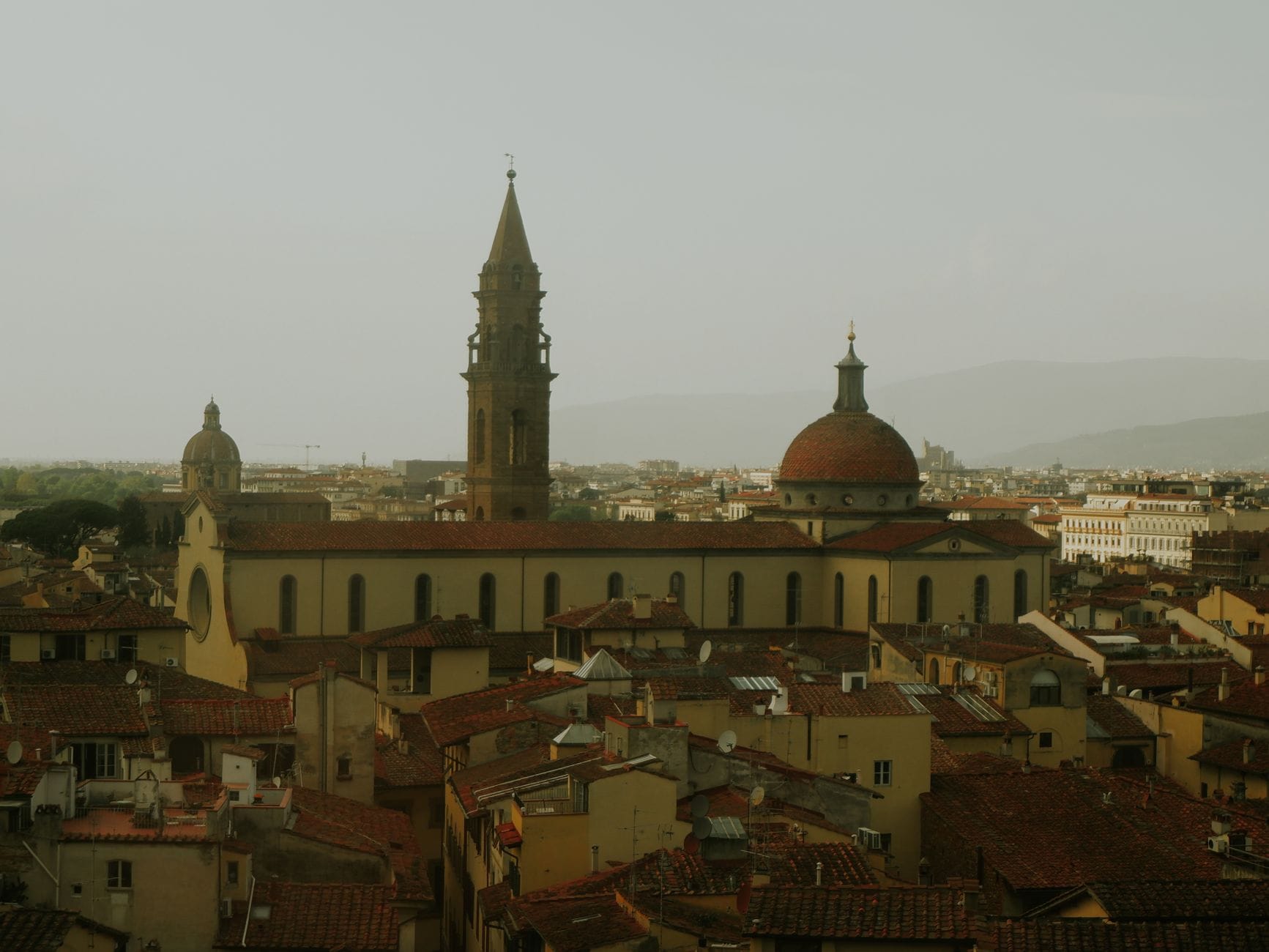
On the south side of the Arno, away from the crowds of the Duomo district, the Basilica di Santo Spirito stands as one of Florence's most complete Renaissance interiors. Designed by Filippo Brunelleschi in the late 1430s, it offers serene architecture, a Michelangelo crucifix, and a surrounding piazza that feels more Florentine than touristic.
Quick Facts
- Location
- Piazza Santo Spirito 30, Oltrarno, Florence
- Getting There
- Short walk from Ponte Vecchio or Ponte Santa Trìnita; several city bus lines stop near Piazza Santo Spirito
- Time Needed
- 45–90 minutes for the basilica and museum route
- Cost
- Basilica: free. Visit itinerary (Sacristy, cloister, refectory): €2 individual contribution
- Best for
- Architecture lovers, Renaissance art, travelers who want fewer crowds
- Official website
- http://www.basilicasantospirito.it
Why Santo Spirito Stands Apart
The Basilica di Santo Spirito sits at the heart of the Oltrarno, Florence's south-bank neighborhood, facing one of the city's most lived-in piazzas. While the Duomo and Santa Croce absorb the bulk of tourist traffic, Santo Spirito draws a quieter, more purposeful crowd: architecture students with sketchbooks, residents cutting through on their way to the market, and travelers who have done enough research to know that this church contains one of the most rigorous Renaissance interiors in Italy.
That reputation rests almost entirely on Brunelleschi. The same architect behind theDuomo's famous domebegan work on Santo Spirito in 1444, about two years before his death. The building was completed by other architects over the following decades, with the current unadorned façade added only in 1792. What you enter today is largely the interior Brunelleschi conceived: a 97-meter-long nave, 38 side chapels arranged in a continuous colonnade, and a geometry so consistent it almost feels mathematical rather than devotional.
💡 Local tip
The basilica is closed all day on Wednesdays. Plan accordingly, especially if you're combining it with a morning walk through the Oltrarno.
The Interior: What You're Actually Looking At
Walking through the main entrance, the first thing you notice is the light. Santo Spirito's nave faces west, which means afternoon visits fill the interior with a warm, diffused glow through the side chapels. Morning visits are cooler in feel, the grey pietra serena columns casting sharper shadows, the geometry of the space more exposed. Both are worth experiencing, but afternoon light shows the church at its most atmospheric.
The 38 semicircular chapels line the entire perimeter of the church, including around the transept and apse, a configuration Brunelleschi originally intended to wrap around all four walls. Each chapel holds altarpieces by significant Florentine artists from the 15th and 16th centuries, including works by Filippino Lippi and Domenico Ghirlandaio. None of these paintings draw individual queues or require separate tickets. You walk the full circuit at your own pace, in near silence.
The nave itself measures 32 meters wide, expanding to 58 meters at the transept crossing. The colonnade of grey pietra serena columns creates a rhythmic perspective that draws the eye toward the altar with unusual clarity. Compared to Gothic churches where height dominates, this space feels horizontal and human in scale, which is precisely the Renaissance shift Brunelleschi was engineering.
Tickets & tours
Live prices and dates from our booking partner. If you book, we may earn a commission at no extra cost to you.
Florence local food tour in Santo Spirito with tastings and dinner
From 80 €Instant confirmationFree cancellationSanta Croce guided experience
From 40 €Instant confirmationFree cancellationPrivate walking tour in Florence
From 0 €Instant confirmationPrivate walking tour in Florence
From 0 €Instant confirmation
The Museum Route: Michelangelo's Hidden Crucifix
The €2 individual contribution unlocks three spaces most visitors to Santo Spirito never reach: the sacristy, the cloister, and the refectory. The sacristy, designed by Giuliano da Sangallo in the late 15th century, has an octagonal vestibule that shows Brunelleschi's influence translated through a different hand. It is precise, a little cool, and very beautiful.
The refectory houses a polychrome wooden crucifix attributed to the young Michelangelo, likely carved around 1492 when he was living in the adjacent Augustinian monastery. The prior of the monastery gave Michelangelo access to cadavers for anatomical study in exchange for the work, a transaction that says something about the pragmatic intellectual culture of late 15th-century Florence. The crucifix is small, raw in feeling, and unlike almost anything Michelangelo made after his career took off. At €2, it is among the most undervalued works in the city.
ℹ️ Good to know
Museum ticket hours may differ slightly from the main basilica. Verify current museum opening times on-site or via the official website before planning a tight itinerary around the refectory visit.
Piazza Santo Spirito: Before and After Your Visit
The square in front of the basilica is worth factoring into your visit as a destination in itself. It is one of the few major piazzas in central Florence that still functions as a genuine neighborhood gathering point. There is a small daily market in the mornings, a farmers market on select weekends, and in the evenings, the steps of the church become an informal seating area for locals and students. For the Oltrarno's atmosphere more broadly, a walk along these streets gives you access to artisan workshops, independent wine bars, and the quieter pace that the north bank of the Arno rarely offers. TheOltrarno neighborhoodrewards slow exploration, and Piazza Santo Spirito is a natural anchor point.
Early morning, the piazza smells of espresso from the bars along its edges and fresh produce from the market stalls. By midday, the light is strong and the shade of the surrounding palazzi offers some relief. By late afternoon, the square shifts again: lower sun, longer shadows, the sound of pigeons and distant Vespas. The façade of the church, plain and undecorated, turns a warm amber in that light.
Getting There and Practical Details
Santo Spirito is a 10-15 minute walk from thePonte Vecchio. Cross the bridge, turn right along the river briefly, then cut south into the Oltrarno via Via dei Serragli or any of the parallel streets. Alternatively, cross at Ponte Santa Trìnita for a more direct approach. Several city bus lines serve the area around Piazza Santo Spirito. Do not attempt to drive to the door: most of the Oltrarno has restricted traffic access for non-residents.
Opening hours run Monday, Tuesday, Thursday, Friday, and Saturday from 10:00 to 13:00 and 15:00 to 18:00. On Sunday, the church opens at 11:30 and closes at 13:30, then reopens from 15:00 to 18:00. The basilica is closed all day Wednesday. Special closures apply on certain holidays; December 24 is closed entirely, while December 25 and 26 follow Sunday hours.
Wheelchair access is available via a ramp on the right-hand side of the church, on Via del Presto San Martino. The interior, once accessed, is largely flat and navigable. The museum route involves additional steps in some sections; confirm accessibility details with staff on arrival.
💡 Local tip
Photography is generally permitted inside the basilica, but tripods and large equipment are typically not allowed in Florentine churches. Use a steady hand or a small tabletop support. The colonnade perspective from the nave entrance makes for a strong shot in either morning or afternoon light.
Dress Code and Visitor Etiquette
Like all active churches in Florence, Santo Spirito enforces a dress code. Shoulders and knees must be covered. Staff at the entrance will stop visitors who are not appropriately dressed. If you arrive in summer clothing, carry a scarf or a light layer. The interior is cool even in summer, which can come as a relief after walking the Oltrarno streets in July heat, but it means the dress code also serves a practical function.
The church remains an active place of worship. Religious services take place regularly, particularly on Sunday mornings, which affects both access times and atmosphere. If you are combining Santo Spirito with theCappella Brancacci(a 10-minute walk northwest in the same neighborhood), visit Santo Spirito first to avoid the small but consistent queue that forms at Brancacci after 10:30.
What the Church Does Not Offer
Santo Spirito is not a spectacle. There is no soaring ceiling fresco, no dramatic gold altarpiece, no single painting that draws a crowd. If you are hoping for the kind of overwhelming visual density you find in the Uffizi or the emotional charge of Santa Croce's tombs, this is a different experience. The reward here is architectural proportion, quiet, and the particular pleasure of a great work of art that most visitors to Florence simply walk past.
Travelers with very limited time and a list of Florence's canonical highlights may reasonably prioritize other sites. If you have one day in Florence and have not yet seen theUffizi Galleryor the Duomo complex, those come first. But if you have even half a morning to spare, or if you are already on the Oltrarno side for Pitti Palace or the Boboli Gardens, Santo Spirito is a natural complement.
Insider Tips
- The €2 individual contribution for the visit itinerary is one of the best-value transactions in Florence. Most visitors who enter the basilica for free never pay it, which means the refectory with Michelangelo's crucifix is almost always quiet.
- Visit on a weekday morning between 10:00 and 11:30 for the best combination of light, quiet, and access to both the basilica and the museum route before tour groups arrive from the north bank.
- The piazza hosts an organic farmers market on the second and fourth Sunday of each month. Combining this with a Sunday visit to the church is a good way to see the neighborhood at its most local.
- If you stand at the nave entrance and look toward the altar, the colonnade creates a receding perspective that Brunelleschi calibrated carefully. Move a few meters left or right and the geometry shifts noticeably. It is worth pausing to notice this rather than walking straight to the altar.
- The Oltrarno has several wine bars and small restaurants on and around Piazza Santo Spirito. A visit in late afternoon, followed by an aperitivo on the square, is a particularly good use of an evening.
Who Is Basilica di Santo Spirito For?
- Architecture enthusiasts who want to understand Renaissance spatial design beyond the Duomo
- Travelers on a second or third visit to Florence who have already covered the main circuit
- Budget-conscious visitors: between the free nave and the €2 individual contribution for the visit itinerary, it is one of Florence's most accessible cultural sites
- Anyone staying in or exploring the Oltrarno who wants the neighborhood's anchor monument
- Quiet-seekers who find the north bank's main attractions overwhelming in peak season
Nearby Attractions
Other things to see while in Oltrarno:
- Bardini Garden
Tucked into the hillside above the Oltrarno neighborhood, the Giardino Bardini is a 4-hectare historic garden offering panoramic views over Florence, a famous wisteria pergola, and a far more intimate atmosphere than its famous neighbor, the Boboli Gardens. Open daily (except the first and last Monday of each month) from April 1 through September 30, it rewards visitors who time their arrival carefully.
- Boboli Gardens
Spread across 30 hectares behind Palazzo Pitti in the Oltrarno, the Boboli Gardens are one of Italy's finest examples of Italian Renaissance and Baroque garden design. Laid out from the mid-16th century as a private Medici retreat, the grounds combine terraced lawns, shaded groves, monumental fountains, and open-air sculpture across a hillside with sweeping views over Florence.
- Cappella Brancacci
The Brancacci Chapel inside Santa Maria del Carmine holds one of the most significant fresco cycles in Western art. Painted by Masolino, Masaccio, and Filippino Lippi between 1424 and 1481, these images of St Peter's life transformed how painters understood light, space, and the human figure. Visits are intimate by design, capped at 30 people for 30 minutes, making advance booking essential.
- Forte di Belvedere
Perched on the Boboli hill above Palazzo Pitti, Forte di Belvedere is a 16th-century Medici fortress offering some of the most expansive views over Florence's rooftops and hills. Open seasonally for outdoor exhibitions and panoramic walks, it rewards the uphill effort with a perspective on the city that few tourists bother to find.
Planning a trip? Discover personalized activities with the Nomado app.