Rheinauhafen is Cologne's most architecturally striking waterfront district, a former working harbour transformed into a showcase of modern design, cultural institutions, and Rhine-side dining. Anchored by the unmistakable Kranhäuser towers, it sits just south of the Altstadt and offers a calmer, more polished alternative to the crowded old town.
Rheinauhafen is what happens when a working port gets a serious reinvention. Stretched along 1.5 kilometres of the Rhine's left bank just south of the Altstadt, this former harbour district now combines bold contemporary architecture with preserved industrial structures, world-class museums, and one of the best waterfront promenades in any German city.
Orientation
Rheinauhafen occupies a long, narrow strip of land on the Rhine's left bank, running roughly between the Südbrücke to the south and the Severinsbrücke to the north. In total the regeneration zone covers about 15.4 hectares, but because it is shaped like a peninsula jutting into the river, it feels more expansive than the numbers suggest. The district sits within Cologne's Altstadt-Süd borough, which means the southern edge of the historic old town is only a short walk away.
To the north, Rheinauhafen flows naturally into the Altstadt-Süd neighbourhood around Bayenstraße and the old city walls. Walk five minutes inland and you cross into the quieter residential streets of the southern inner city. The Severinsbrücke connects the area visually and physically to Deutz on the right bank. Looking upstream, the Südbrücke frames the southern boundary, beyond which the Rhine becomes more industrial again.
For visitors already oriented around the Cathedral and the northern Altstadt, Rheinauhafen is about 20 minutes on foot heading south along the Rhine promenade. It does not feel like a detour from the Cologne Altstadt so much as a natural continuation of the riverfront walk, especially if you are already heading toward the Chocolate Museum.
Character & Atmosphere
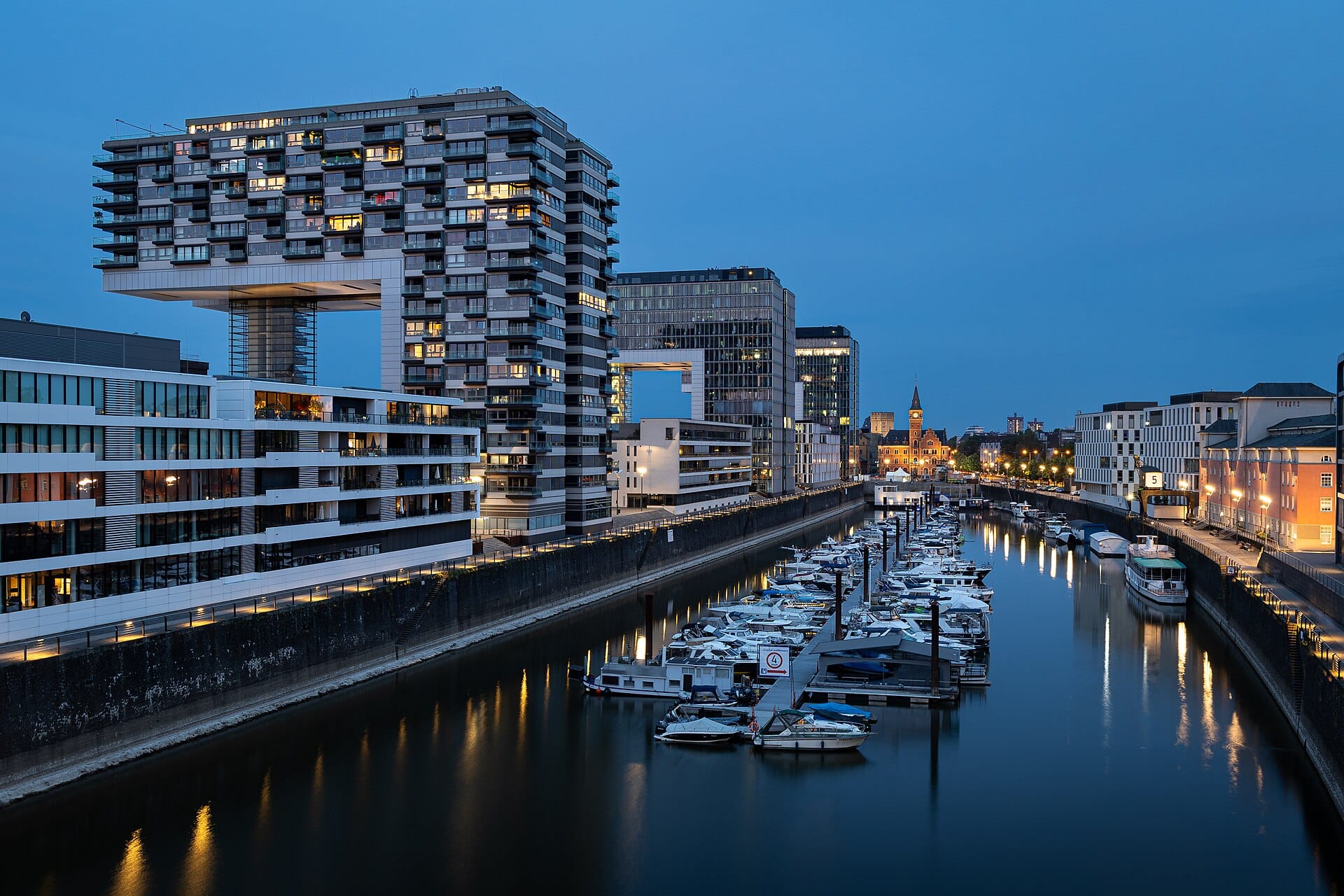
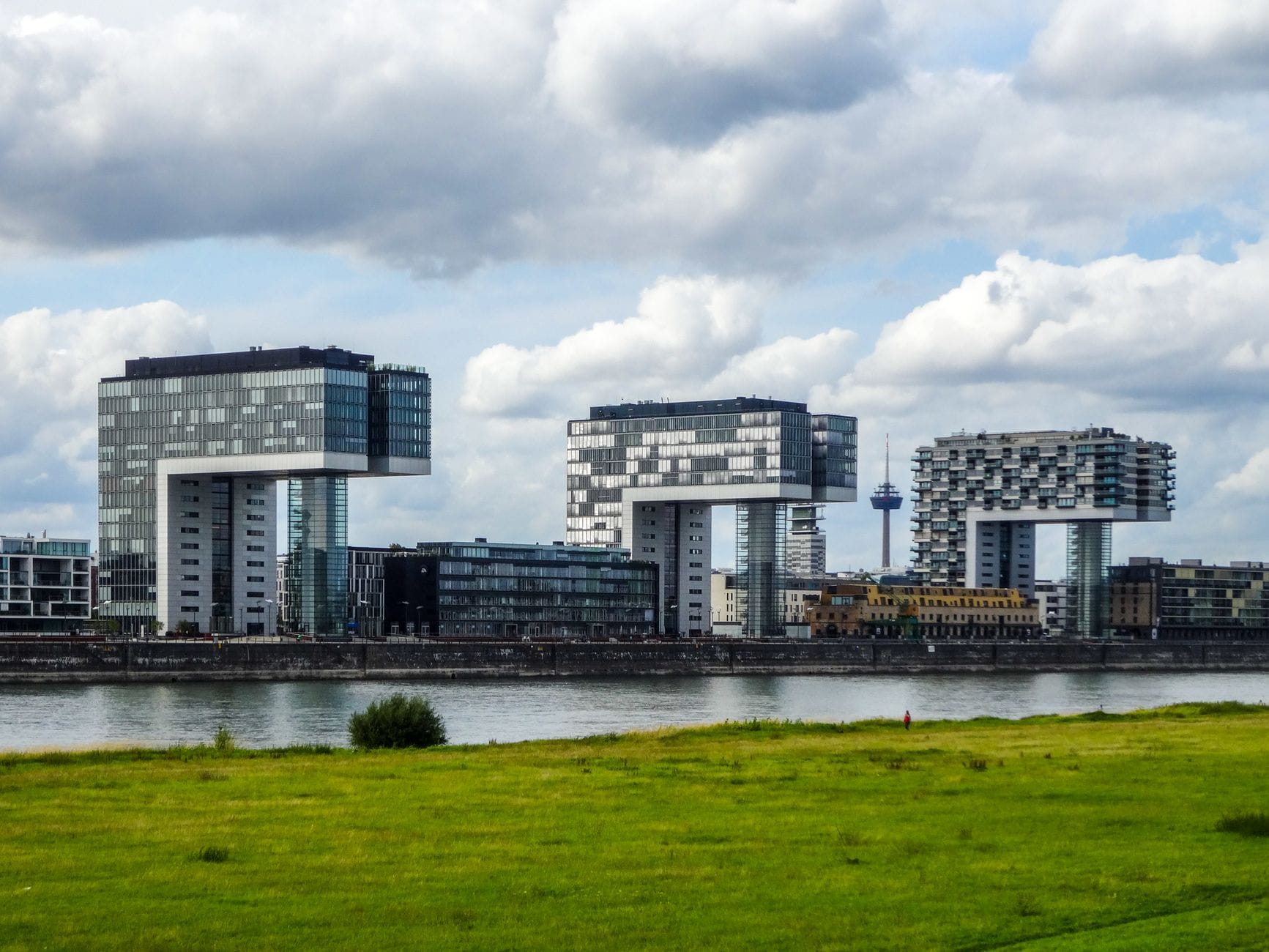
The first thing most visitors notice is the architecture. Three massive L-shaped residential and office towers, the Kranhäuser, rise directly from the water's edge, their cantilevered upper floors evoking the old harbour cranes they were designed to reference. Standing on the promenade and looking back at them, particularly in early morning light when the Rhine reflects the steel and glass above, it is one of the more genuinely striking urban scenes in western Germany.
The pace here is noticeably slower than the Altstadt. On weekday mornings, the area hums with people who actually work here: architects, media companies, and consulting firms occupy many of the harbour buildings. The promenade in those hours is quiet enough to hear the current moving. By late morning, the first visitors arrive at the Chocolate Museum, and the café terraces start filling up. Afternoons bring a pleasant mix of workers taking lunch outside, tourists walking the waterfront, and locals cycling the riverside path.
After dark the area shifts again. The restaurants along the harbour basin stay busy well into the evening, with the illuminated Kranhäuser reflecting off the water. It is not a nightlife destination in the way that Ehrenfeld or the northern Altstadt are, but the restaurants are lively and the atmosphere on the promenade at dusk, especially in summer, is genuinely pleasant rather than performative.
💡 Local tip
The promenade is best experienced early morning or around sunset. Midday in summer can feel overexposed with little shade along the waterfront itself, so plan accordingly or carry sunscreen.
What makes Rheinauhafen feel distinct from other regenerated urban waterfronts is the coexistence of eras. Alongside the Kranhäuser, original harbour cranes have been preserved in place as sculpture. The Malakoff-Turm, a 19th-century Prussian fortified gate tower dating from the 1850s, survives at the northern tip of the basin as a remnant of the city's Prussian-era river defences. The combination of 19th-century Prussian stonework, industrial harbour infrastructure, and 21st-century architecture is not accidental: it was planned that way, and it works.
What to See & Do
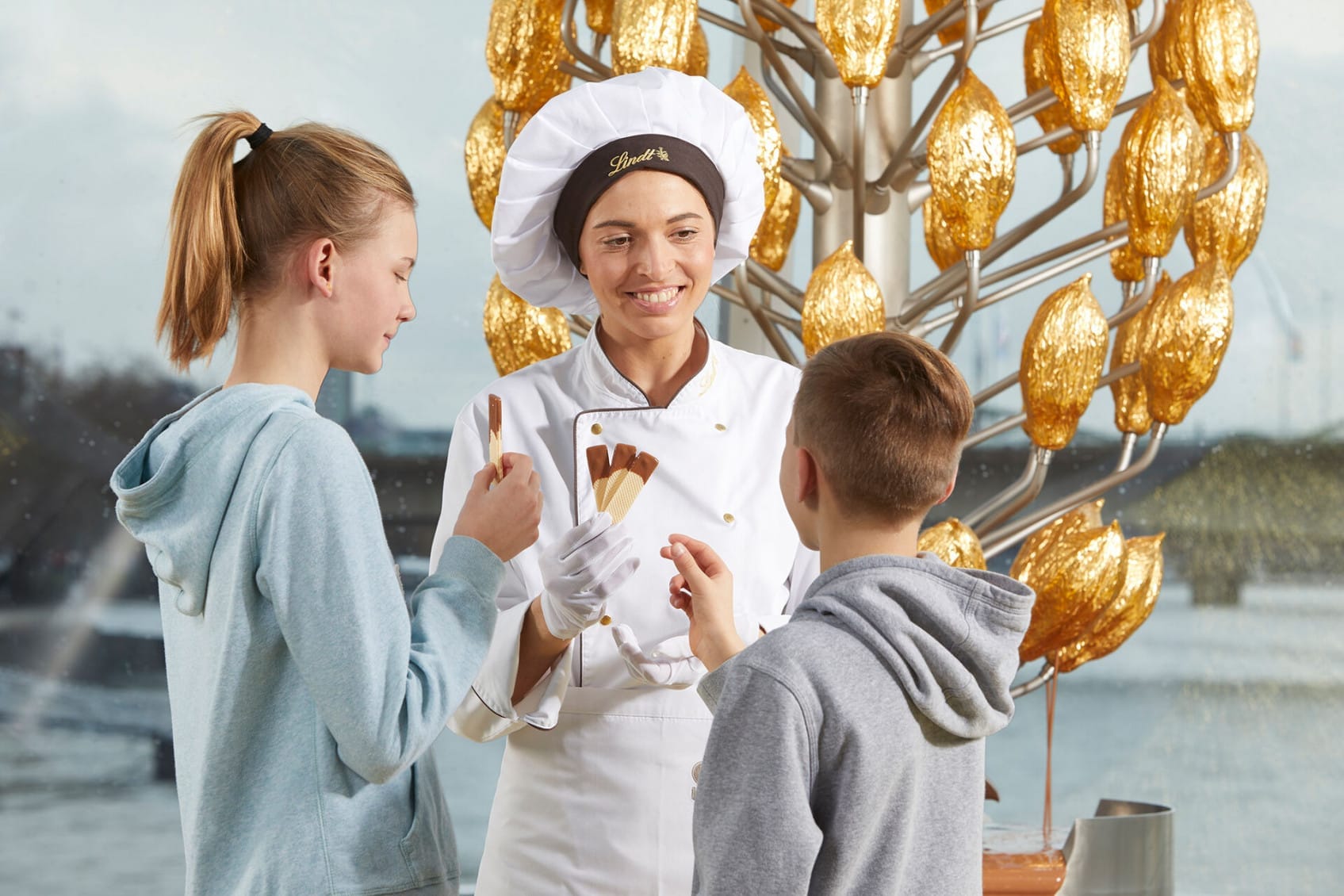
The Chocolate Museum Cologne at the northern tip of the Rheinauhafen peninsula is the area's most-visited attraction and one of the most visited museums in Germany. The building itself, a boat-shaped structure jutting into the Rhine, is recognisable from across the river. Inside, the museum traces the history of cocoa from Mesoamerica through colonial trade routes to industrial chocolate production, with a famous fountain of flowing chocolate at its centre. If you are visiting with children, plan at least two hours here.
The Kranhäuser are the defining image of modern Cologne's skyline along this stretch of the Rhine. The three crane-shaped towers were completed between 2008 and 2010 and are not open for general visitor access inside, but they reward close inspection from the promenade level. The engineering achievement of the cantilevered upper floors becomes more impressive the closer you stand.
Walk the full harbour promenade from the Chocolate Museum south to the Südbrücke, a route that takes roughly 25 minutes at a leisurely pace.
The preserved harbour cranes at intervals along the basin are worth pausing at: information boards explain their original function in loading and unloading river cargo.
The Malakoff-Turm at the northern edge of the district is a 19th-century fortified gate tower and one of the last remaining structures from Cologne's Prussian-era river fortifications.
The German Sport and Olympia Museum occupies a historic warehouse near the Chocolate Museum and covers the history of sport from antiquity through the modern Olympics.
The harbour basin itself is used for leisure craft, and in warmer months small boat tours sometimes operate from here.
The broader waterfront walk connects naturally to the Hohenzollern Bridge and Cathedral area to the north. If you want a full day on the Rhine, consider combining Rheinauhafen with a Rheinpark visit on the opposite bank, accessible via a short journey across one of the bridges.
ℹ️ Good to know
The Chocolate Museum charges an entry fee. Book tickets in advance during school holidays and summer weekends as queues at the door can be significant. Opening hours vary seasonally, so verify before visiting.
Eating & Drinking
The food scene in Rheinauhafen skews upmarket relative to the rest of Cologne. The proximity of design studios, law firms, and architecture offices means the lunch trade supports a range of cafés and restaurants catering to people who eat out regularly and expect reasonable quality. This cuts both ways: the standard is higher than tourist-area average, but so are the prices.
Several restaurants occupy the ground floors of the harbour warehouses and converted industrial buildings along the basin. Terraces facing the water are predictably popular in good weather, and on summer evenings reservations are advisable at the more established spots. The cuisine ranges from modern European and Mediterranean to straightforward German bistro cooking. Kölsch, the local top-fermented beer, is available everywhere, though this is not the place to find the traditional Brauhaus experience.
For a more traditional Cologne Brauhaus atmosphere, you are better served heading north into the Altstadt. The classic Früh am Dom near the Cathedral is the benchmark for old-school Kölsch service culture.
Casual daytime options cluster near the Chocolate Museum and along the promenade: there are cafés, snack kiosks, and takeaway options that work well for a lunch break during a waterfront walk. In summer, ice cream sellers and food trucks occasionally set up near the basin. Budget travellers will find Rheinauhafen a reasonable place to pick up a coffee or a snack, but if you want a full sit-down meal at moderate prices, the streets immediately behind the waterfront in Altstadt-Süd offer more options.
💡 Local tip
Waterfront terrace tables fill quickly on warm evenings. If you plan to eat dinner at one of the harbour-facing restaurants in summer, call ahead or use the restaurant's online booking option earlier in the day.
Getting There & Around
Rheinauhafen is not directly served by a U-Bahn or S-Bahn station, but it is well connected by tram and bus. Tram lines 15 and 16 stop at Ubierring and at Schönhauser Straße, both within a few minutes' walk of the northern part of the district. Bus line 133 has stops at Rheinauhafen and at Schokoladen Museum (the Chocolate Museum), making it the most direct public transport option if you are heading specifically to that end of the waterfront.
From Cologne's main station, Köln Hauptbahnhof, the walk south along the Rhine promenade takes around 20 to 25 minutes and is flat the entire way. This is genuinely one of the better approaches: you pass the Hohenzollern Bridge, the Altstadt waterfront, the Rathaus area, and arrive at Rheinauhafen via the continuous riverside path. If you are already on the waterfront, you barely need to consult a map.
Cycling is practical and popular here. The Rhine riverside cycle path runs continuously through Rheinauhafen and connects to broader routes both north and south of the city. Bike rental stations from the KVB Rad scheme (Cologne's public bike hire system) are available in the surrounding streets. The promenade itself is shared between pedestrians and cyclists, so be aware of that when walking.
For general navigation around Cologne's public transport network, the getting around Cologne guide covers KVB tram and bus ticketing, day passes, and how the VRS zone system works.
Where to Stay
Rheinauhafen itself has limited traditional hotel accommodation. The residential and office-heavy development model that drove the regeneration here left little room for large hotels within the district boundary. A small number of boutique and design hotels exist in the immediate area and in the adjacent Altstadt-Süd streets, but most visitors choose to stay in the central Altstadt or near the main station and visit Rheinauhafen as a half-day excursion.
Staying in Altstadt-Süd more broadly, in the streets between Rheinauhafen and the inner ring road, gives you the advantage of Rhine access without being in the thick of tourist infrastructure. It is a genuinely residential area with local bakeries, small supermarkets, and a neighbourhood feel that the immediate waterfront strip lacks. For a full overview of where to base yourself in Cologne, the where to stay in Cologne guide covers all the main options across different budgets and travel styles.
Rheinauhafen suits couples or architecture-focused travellers who want somewhere quieter than the Altstadt but still central. It is less well-suited to budget travellers or those who prioritise nightlife proximity, since the area is relatively quiet after 10pm and mid-range accommodation options within walking distance are sparse.
Practical Notes
Rheinauhafen connects well with a broader day in southern Cologne. From here you can walk north into the Altstadt to visit the Wallraf-Richartz Museum or the Museum Ludwig, both within 25 minutes on foot. The full waterfront walk from Rheinauhafen to the Cathedral and back makes an excellent orientation route on a first day in Cologne.
If you are planning a longer exploration of Cologne's riverside, the Cologne walking tour guide suggests routes that incorporate Rheinauhafen alongside the Cathedral district and the Altstadt. The flat terrain and continuous riverside path make this district genuinely easy to include without adding significant time to any itinerary.
Rheinauhafen is not an area with documented safety concerns. It is a well-lit, actively used mixed-use district. The promenade is open 24 hours and used by runners and cyclists even late in the evening. As with any urban waterfront, standard awareness of your surroundings at night applies, but this is not a part of Cologne that warrants special caution.
⚠️ What to skip
The promenade path is shared by pedestrians and cyclists, and the cycling traffic can be fast. Stay aware of your surroundings when walking, especially with children, and stick to the marked pedestrian side of the path where it is divided.
TL;DR
Rheinauhafen is Cologne's most architecturally ambitious waterfront development, defined by the iconic L-shaped Kranhäuser towers and a continuous Rhine promenade worth walking for its own sake.
The Chocolate Museum is the area's headline visitor attraction, best visited with advance booking during busy periods.
The food scene skews toward modern European and slightly upmarket; it is a good evening dining destination but not the place for budget meals or traditional Kölsch Brauhaus culture.
Getting here is easy on foot from the Altstadt (20-25 minutes) or by tram and bus; the riverside cycle path also runs directly through the district.
Best suited to travellers interested in architecture, design, and waterfront walks; those seeking nightlife, budget accommodation, or old-town atmosphere will find more of what they want in the Altstadt or Ehrenfeld.
Two days is enough time to see the best of Cologne if you plan well. This itinerary covers the Gothic cathedral, world-class museums, the Rhine waterfront, historic brewhouses, and the city's most interesting neighborhoods — structured so you can walk between most stops without backtracking.
Cologne offers an unusually rich museum landscape, with over 100 collections spanning Roman archaeology, medieval religious art, modern masterpieces, ethnology, and even chocolate. This guide covers the best museums in Cologne, organized by theme, so you can plan your visits efficiently.
Cologne rewards visitors year-round, but the experience varies dramatically depending on when you arrive. This guide breaks down every season, from Carnival chaos in February to peaceful autumn walks along the Rhine, so you can match your trip to your priorities.
Cologne rewards those who look up, across, and down from the right spot. This guide covers the city's best viewpoints, from paid observation decks to free riverbank promenades, with practical tips on timing, access, and exactly what you'll see from each vantage point.
Cologne Bonn Airport is one of Germany's most convenient city break entry points, with direct trains to Cologne city centre in under 20 minutes. This guide covers every transport option, real fare ranges, and what to watch out for at different times of day.
Cologne is an unexpectedly strong art city. With more than 30 museums and hundreds of galleries, it rivals much larger European capitals for depth and range. This guide covers the essential art museums, from world-class modern art to medieval religious masterpieces and East Asian treasures.
Cologne (Köln) hosts one of Germany's most impressive concentrations of Christmas markets, with seven or eight major markets spread across a compact city centre, all free to enter and most within a 10- to 20-minute walk of each other. This guide covers every main market, practical logistics, pricing, crowd patterns, and clear guidance on what to skip.
Cologne is an underrated romantic destination. This guide covers the best experiences for couples: riverside walks, Gothic cathedral views, perfume heritage, candlelit Brauhaus dinners, and where to stay for a memorable trip to Köln.
Cologne Karneval is one of Europe's largest street festivals, drawing over a million people to the city in the days before Lent. This guide covers the full season timeline, Rose Monday parade logistics, costume traditions, crowd realities, and practical advice for first-timers and returning visitors alike.
Cologne's nightlife is one of the most underrated in Germany, spread across distinct neighborhoods rather than a single strip. This guide breaks down every major area, what to drink, what to spend, and how to get home at 5 AM.
Cologne (Köln) is one of western Germany's most rewarding cities, and it doesn't have to be expensive. This guide breaks down realistic daily costs, the best free and low-cost attractions, smart transport choices, and the seasonal timing that keeps your spending in check.
The Cologne to Amsterdam train is a direct ICE high-speed service covering roughly 214 km in as little as 2 hours 37 minutes. This guide breaks down fares, booking strategy, schedules, and everything you need to know before you board.
The Cologne to Frankfurt train is one of Germany's most efficient intercity connections. ICE services cover the roughly 152 km route in around one hour, with dozens of daily departures and fares starting around €10–15 if you book smart. This guide covers schedules, pricing, booking platforms, and practical tips for getting the most out of the journey.
Cologne's historic core is compact enough to cover on foot in a single morning or afternoon. This guide maps out a 6.6 km self-guided walking tour through the Cathedral, Old Town, Romanesque churches, and Rhine riverfront, with clear guidance on what to skip, what costs money, and how to time it right.
Cologne (Köln) delivers more for families than most travellers expect. With a world-class zoo, an interactive chocolate museum, a climbable cathedral tower, and free riverside parks, the city offers a full week of family activities without straining your budget. This guide covers what to do, what to skip, and how to plan smart.
Cologne's location in western Germany puts you within two hours of medieval castles, Roman ruins, Dutch canals, and some of the Rhine Valley's finest scenery. This guide covers the most rewarding day trips from Köln, with train times, realistic costs, and honest notes on what works and what doesn't.
Cologne rewards budget travellers generously. The botanical garden, riverside promenades, Romanesque churches, and entire neighbourhoods of street art all cost nothing to enjoy (cathedral tourist entry is ticketed from July 2026). This guide covers the best free experiences across the city.
Cologne's public transport network is efficient, affordable, and covers the entire city. This guide breaks down every option for getting around Köln, from the KVB Stadtbahn to airport trains, taxis, cycling, and walking, with current fares, route tips, and clear guidance on what to skip.
Cologne's Kölner Dom draws millions of visitors, but the city's real character lives elsewhere. From a medieval ossuary church to a free botanical garden, a rooftop panorama across the Rhine, and one of Europe's best ethnological museums, these are the places locals love and tourists too often miss.
Cologne (Köln) is Germany's fourth-largest city, a 2,000-year-old Rhine river city with a Gothic cathedral, 40-plus museums, and one of Europe's wildest festivals. This guide cuts through the hype to tell you exactly what makes it worth the trip, what to skip, and how to get the most out of your time there.
Kölsch is more than a beer style. It's a legally protected product, a serving ritual, and a point of local pride in Cologne. This guide covers the brewing rules, brauhaus etiquette, the best places to drink, and what to know before your first Stange.
From one-hour panorama loops past the Cologne Cathedral to full-day excursions toward the UNESCO-listed Rhine Gorge, this guide covers every cruise option available from Cologne, including prices, operators, seasonal schedules, and clear guidance on what's worth your time.
Cologne's 12 Romanesque churches form one of the most remarkable medieval ensembles in Europe, arranged in a rough semicircle around the city center and predating the famous Gothic cathedral by centuries. This guide covers all 12 churches, practical visiting tips, and how to see them in a single day.
Cologne (Köln) offers one of Germany's most diverse retail landscapes, from the country's busiest pedestrian shopping mile to weekend flea markets and design-forward boutiques. This guide breaks down exactly where to shop, when to go, and what to avoid.
Cologne (Köln) packs an extraordinary range of experiences into a compact, walkable city on the Rhine. This guide covers the essential sights, the best neighbourhoods to explore, seasonal events worth planning around, and clear guidance on what to skip.
Cologne's food culture is deeply rooted in Rhineland tradition: hearty, honest, and built around a handful of dishes that locals have been eating for centuries. This guide covers the essential foods to try, the best places to eat them, and a few traps worth avoiding.
Cologne (Köln) offers genuinely distinct neighborhoods to base yourself in, each with different trade-offs between location, price, and atmosphere. This guide breaks down the best areas to stay, who each one suits, and what to watch out for when booking.