Wallraf-Richartz Museum: Cologne's Medieval Masterpiece Collection
The Wallraf-Richartz Museum & Fondation Corboud is Cologne's oldest museum and home to one of the world's most important collections of medieval painting. Housed in a striking 2001 building by architect Oswald Mathias Ungers, it traces Western art from the 14th century through the 19th, with particular depth in the Cologne School and Impressionism.
Quick Facts
- Location
- Obenmarspforten 40, Altstadt-Nord, 50667 Köln (next to Cologne Town Hall)
- Getting There
- U-Bahn/S-Bahn: Dom/Hauptbahnhof (5–10 min walk); Tram: Heumarkt or Rathaus
- Time Needed
- 2–3 hours for permanent collection; 3–4 hours with special exhibitions
- Cost
- Adults €11; Concessions €8; check website for combined exhibition pricing
- Best for
- Art history enthusiasts, medieval painting, Impressionism, rainy-day culture
- Official website
- www.wallraf.museum
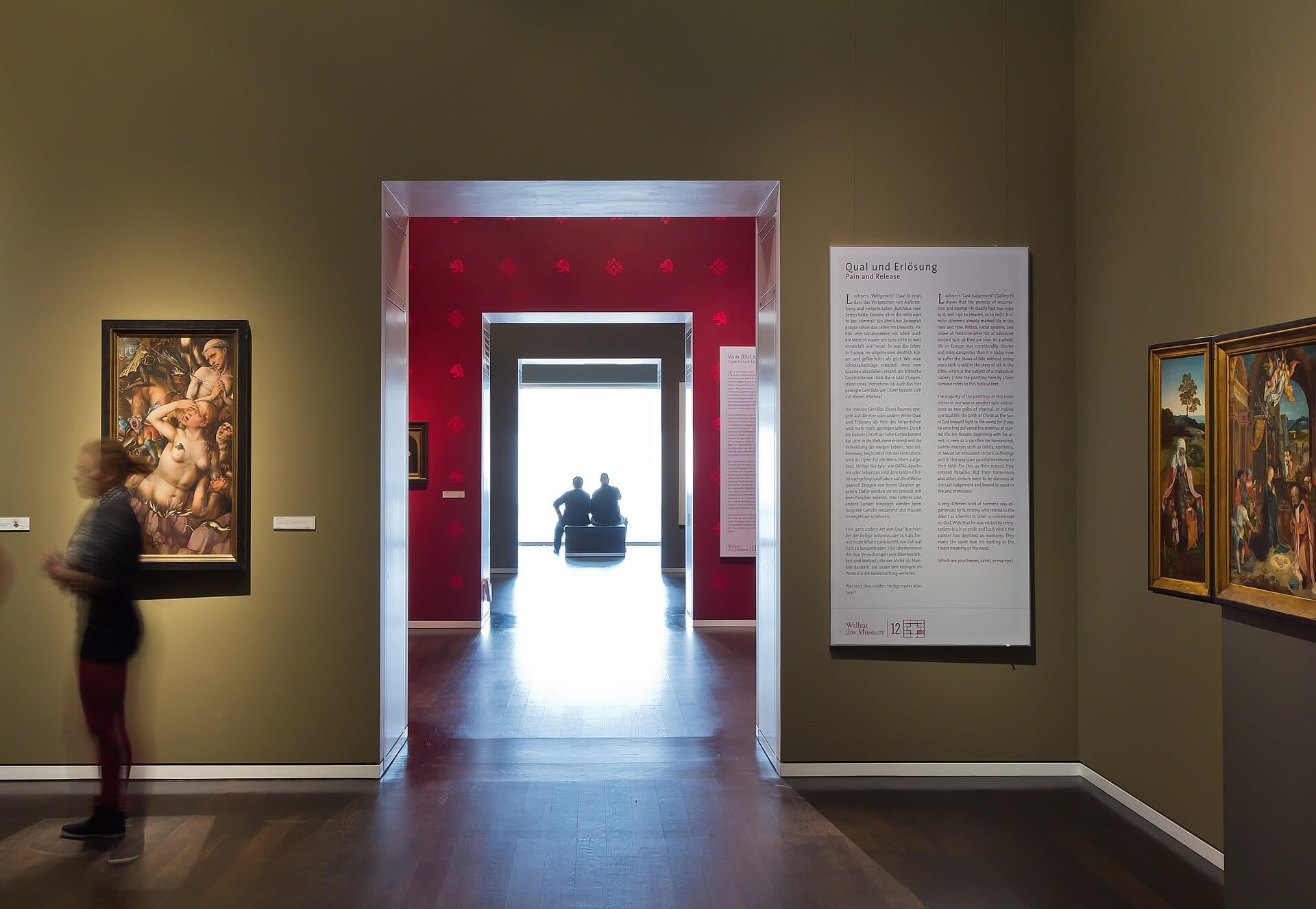
What the Wallraf-Richartz Museum Actually Is
The Wallraf-Richartz Museum & Fondation Corboud is Cologne's oldest museum, and by any serious measure one of the most important art repositories in Germany. Its permanent collection spans roughly five centuries of European painting, from the gilded altarpiece panels of the 14th century to the sun-drenched canvases of late 19th-century Impressionism. The sheer depth of the medieval holdings sets it apart: no other museum in the world holds as comprehensive a collection of medieval painting, with particular strength in the Cologne School, a local tradition of panel painting that flourished between roughly 1300 and 1550.
The museum sits in the heart of Cologne's Altstadt, immediately beside the Cologne Town Hall and a short walk south of the cathedral. Its building, completed in 2001 and designed by the late German architect Oswald Mathias Ungers, is unapologetically geometric: a cube of pale travertine and glass that makes no attempt to mimic its medieval surroundings. From the outside it reads as cool and austere. Inside, the natural-light galleries and rational floor plan create ideal conditions for looking at pictures without distraction.
⚠️ What to skip
The museum is scheduled to close for extensive renovation work on 3 August 2026. If your visit falls close to that date, check the official website at wallraf.museum before finalising plans.
The Collection: What You Will Actually See
Medieval Painting and the Cologne School
The medieval galleries occupy a central place in the museum's identity, and rightly so. The Cologne School painters, working across the 14th and 15th centuries, produced devotional panel paintings of unusual refinement: soft gold backgrounds, delicate facial expressions, and a palette that still reads as luminous after 600 years. The most celebrated name associated with this tradition is Stefan Lochner, and the museum holds several of his works, including the tender Madonna in the Rose Bower, one of the most reproduced images in Cologne's cultural life. Standing close to these panels, you notice the physical texture of the gold leaf and the almost miniaturist precision of the painted faces. It is a different register of art-making from the expansive canvases upstairs, and it rewards slow looking.
Beyond the Cologne School, the medieval section broadens to include Flemish and Dutch panels, German altarpieces, and Italian devotional works. The curation is academic without being dry. Labels provide enough context to understand what you are seeing without overwhelming visitors who are not specialists.
16th to 18th Century: Rubens, Rembrandt, and the Northern Tradition
Moving through the upper floors, the collection shifts into the Baroque and Dutch Golden Age. The museum holds works by Peter Paul Rubens, Rembrandt van Rijn, and their contemporaries, displayed in rooms with enough space between canvases to let each work breathe. The Rubens holdings are particularly relevant given Cologne's historical ties to the Flemish-speaking Netherlands, and several of the paintings carry obvious religious commissions that link back to the city's Catholic identity. The 17th-century Dutch still-life and landscape sections are less famous but genuinely strong, with works that reward the kind of close attention that only uncrowded galleries can provide.
Impressionism and the Fondation Corboud
The Fondation Corboud collection, a major long-term loan from Swiss collectors Gerard and Eveline Corboud, transformed the museum's upper floors when it arrived. It comprises over 170 Impressionist and Post-Impressionist works, including pieces by Monet, Renoir, Pissarro, Sisley, and Cézanne. The Impressionist rooms tend to be the most visually immediate for general visitors: familiar subjects, warm colour, the satisfying legibility of a Monet river scene or a Renoir portrait. They also draw the largest crowds, so expect more company here than in the medieval rooms below.
The Corboud collection is not a minor supplement. It is genuinely one of the stronger Impressionist holdings in Germany outside of Berlin and Munich, and it gives the museum a second identity alongside its medieval specialism. Visitors with limited time who want to see both the medieval highlights and the Impressionists should allocate a full three hours.
Tickets & tours
Live prices and dates from our booking partner. If you book, we may earn a commission at no extra cost to you.
Cologne haunted places and ghost stories: interactive city game
From 8 €Instant confirmationFree cancellationFood Tour Cologne Sudstadt
From 44 €Instant confirmationFree cancellationCologne brewery tour including 3 Kolsch beer
From 28 €Instant confirmation2-hour afternoon cruise in Cologne at Christmastime
From 25 €Instant confirmationFree cancellation
How the Experience Changes by Time of Day
The museum opens at 10:00 Tuesday through Sunday and closes at 18:00. If you want a quieter visit, arriving soon after opening is usually the best option.
On selected Thursdays, the museum may stay open later than usual. Note that extended hours do not apply on public holidays.
💡 Local tip
Weekday mornings are the quietest visiting window. If you want the medieval galleries largely to yourself, arrive at 10:00 on a Tuesday or Wednesday and work upward through the floors as the day fills in.
Getting There and Practical Entry
The museum address is Obenmarspforten, beside the Cologne Town Hall in the Altstadt. The most straightforward approach is from Dom/Hauptbahnhof, which puts you about five minutes on foot from the entrance. The Heumarkt tram and bus stop is also nearby. The museum is walkable from Cologne Central Station in about five minutes.
The museum sits within easy reach of several other significant Altstadt attractions. The Cologne City Hall is directly adjacent, and the Cologne Cathedral is less than ten minutes on foot to the north. For visitors building a full day in the Altstadt, the Romano-Germanic Museum and Museum Ludwig are also within comfortable walking distance, though covering all four in a single day is ambitious.
Standard adult admission to the permanent collection is €11, with concessions at €8. Group tickets for parties of ten or more are priced at €9 per person. Children and young people up to 18 who live in Cologne, and school classes with up to two accompanying adults, enter the permanent collection free. Visitors with severe disabilities receive a 50% discount; one accompanying person enters free if the disability card shows a 'B' designation. Admission for special exhibitions is priced separately and may result in a combined ticket at a different rate. Verify current pricing on the official website before your visit.
The Building Itself
Oswald Mathias Ungers designed the current building, which opened in 2001. Ungers was one of the key figures in late 20th-century German rationalist architecture, and the Wallraf-Richartz building reflects his signature approach: strict geometry, modular repetition, and an almost aggressive clarity of form. The exterior cube sits in deliberate contrast to the organic medieval street plan around it. Critics were divided when it opened; regular visitors tend to find the interior more persuasive than the facade.
Inside, the galleries are organized on multiple levels connected by open staircases that give occasional sightlines across different periods of the collection. Natural light enters through skylights in several of the upper-floor rooms. The acoustics are hard, which means the space carries sound, so the difference between a quiet Tuesday morning and a busy Saturday afternoon is immediately perceptible. The building is functional as a museum space in the best sense: it prioritizes the work on the walls over architectural spectacle.
Who This Museum Suits and Who It Does Not
Visitors with a genuine interest in the history of Western painting, particularly the medieval period and Impressionism, will find the Wallraf-Richartz Museum one of the strongest stops on any Cologne museum itinerary. The collection is deep rather than encyclopedic, which means it rewards focused attention over a few hours rather than a rapid walk-through.
Visitors who find pre-20th-century art difficult to engage with may feel the museum front-loads its strongest material in periods that require some historical context to appreciate. There are no interactive installations, no immersive rooms, and limited concessions to casual browsing. The museum makes no apology for being a serious art museum, which is precisely its strength for the right visitor.
Families with young children face a trade-off. The space is manageable in scale and the Impressionist works are accessible to younger viewers, but the medieval galleries are not designed for children and offer little by way of programming for that age group. Families visiting Cologne with children might find the Chocolate Museum or the Cologne Zoo better anchors for a family day, with the Wallraf-Richartz saved for a separate adult visit.
For context on how the museum fits into Cologne's broader cultural landscape, the Cologne art museums guide covers how the major collections differ and how to sequence them across a multi-day visit.
Photography and Practical Considerations
Photography for personal use is generally permitted in the permanent collection galleries without flash. Tripods and selfie sticks are typically not allowed. Special exhibitions may have separate photography rules, often prohibiting cameras entirely due to licensing restrictions. Check at the ticket desk on arrival if photography matters to your visit.
The museum has a cloakroom for larger bags and a small museum shop near the entrance. There is a cafe on site, though the Altstadt offers better food options at comparable prices within a few minutes' walk. Comfortable flat shoes are advisable: the building involves multiple floor levels and a full visit covers meaningful ground.
Insider Tips
- The late-opening Thursdays (first and third of the month, until 22:00) transform the experience in the medieval galleries. Gold-leaf panels read differently under warm artificial light, and the visitor numbers drop sharply after 19:00. Worth restructuring your day around if you are visiting mid-week.
- The Cologne School rooms on the lower floors are almost always quieter than the Impressionist galleries above. If you work bottom-to-top through the building, you get the medieval highlights in relative solitude before the crowds concentrate upstairs.
- The Cologne MuseumCard bundles admission to several municipal museums and is worth calculating if you plan more than two or three museum visits during your stay. (Note: the KölnPass is a resident social card, not a tourist pass.)
- The museum sits directly beside Cologne Town Hall, which has a Gothic loggia worth examining before or after your visit. The short detour costs nothing and adds context to the medieval period you have just seen inside.
- The scheduled two-year renovation closure begins 3 August 2026. If your trip falls close to that date, confirm current status at wallraf.museum before building your itinerary around it.
Who Is Wallraf-Richartz Museum For?
- Art history enthusiasts, particularly those with interest in Northern European medieval or 19th-century painting
- Travellers on a rainy day looking for a substantive, unhurried indoor experience
- Couples seeking a quieter cultural alternative to the cathedral and museum crowds
- Independent visitors who prefer deep collections over broad survey museums
- Anyone combining a full Altstadt cultural day with the Cathedral, Museum Ludwig, and the Romano-Germanic Museum
Nearby Attractions
Other things to see while in Altstadt (Old Town):
- 4711 House (Dufthaus 4711 / Haus Mülhens)
The 4711 House on Glockengasse is the home of the 4711 Original Eau de Cologne, the famous citrus fragrance developed by Wilhelm Mülhens from 1792 (the earlier Farina fragrance from 1709 is generally considered the original 'eau de Cologne'). Part flagship store, part fragrance museum, and part architectural curiosity, it offers a compact but interesting stop in Cologne's Altstadt-Nord for anyone curious about the city's most famous exports.
- Cologne City Museum (Kölnisches Stadtmuseum)
The Kölnisches Stadtmuseum traces Cologne's extraordinary 2,000-year arc from Roman outpost to Rhine metropolis. Reopened in a striking new home on Minoritenstraße in March 2024, it offers an affordable and intellectually rewarding afternoon in the city's Altstadt.
- Cologne Cathedral (Kölner Dom)
Cologne Cathedral, officially the Hohe Domkirche Sankt Petrus, is Germany's most visited landmark and one of the great Gothic structures on earth. This guide covers tourist ticketing, tower access, the Treasury, and how to make the most of your time there.
- Cologne City Hall (Kölner Rathaus)
The Kölner Rathaus is Germany's oldest city hall, a layered architectural landmark in Cologne's Old Town that spans Gothic, Renaissance, and modern styles.
Planning a trip? Discover personalized activities with the Nomado app.