Cologne Cathedral (Kölner Dom): What to Know Before You Visit
Cologne Cathedral, officially the Hohe Domkirche Sankt Petrus, is Germany's most visited landmark and one of the great Gothic structures on earth. This guide covers tourist ticketing, tower access, the Treasury, and how to make the most of your time there.
Quick Facts
- Location
- Domkloster 4, 50667 Köln, directly beside Cologne Central Station (Altstadt-Nord)
- Getting There
- Köln Hauptbahnhof (all S-Bahn, regional, and ICE trains); tram/U-Bahn stop Dom/Hauptbahnhof (multiple KVB lines)
- Time Needed
- 1.5–3 hours for interior + Treasury; add 45–60 min for the tower climb
- Cost
- Tourist entry to the cathedral interior: €12 (reduced €6) from 1 July 2026; Tower: €8 (reduced €4); Treasury: €8 (reduced €4). Children 13 and under free. Prayer and church services remain free via the north entrance. Verify current prices before visiting.
- Best for
- Architecture enthusiasts, first-time visitors to Cologne, history seekers, photography
- Official website
- www.koelner-dom.de/en
Why the Kölner Dom Still Earns Your Attention
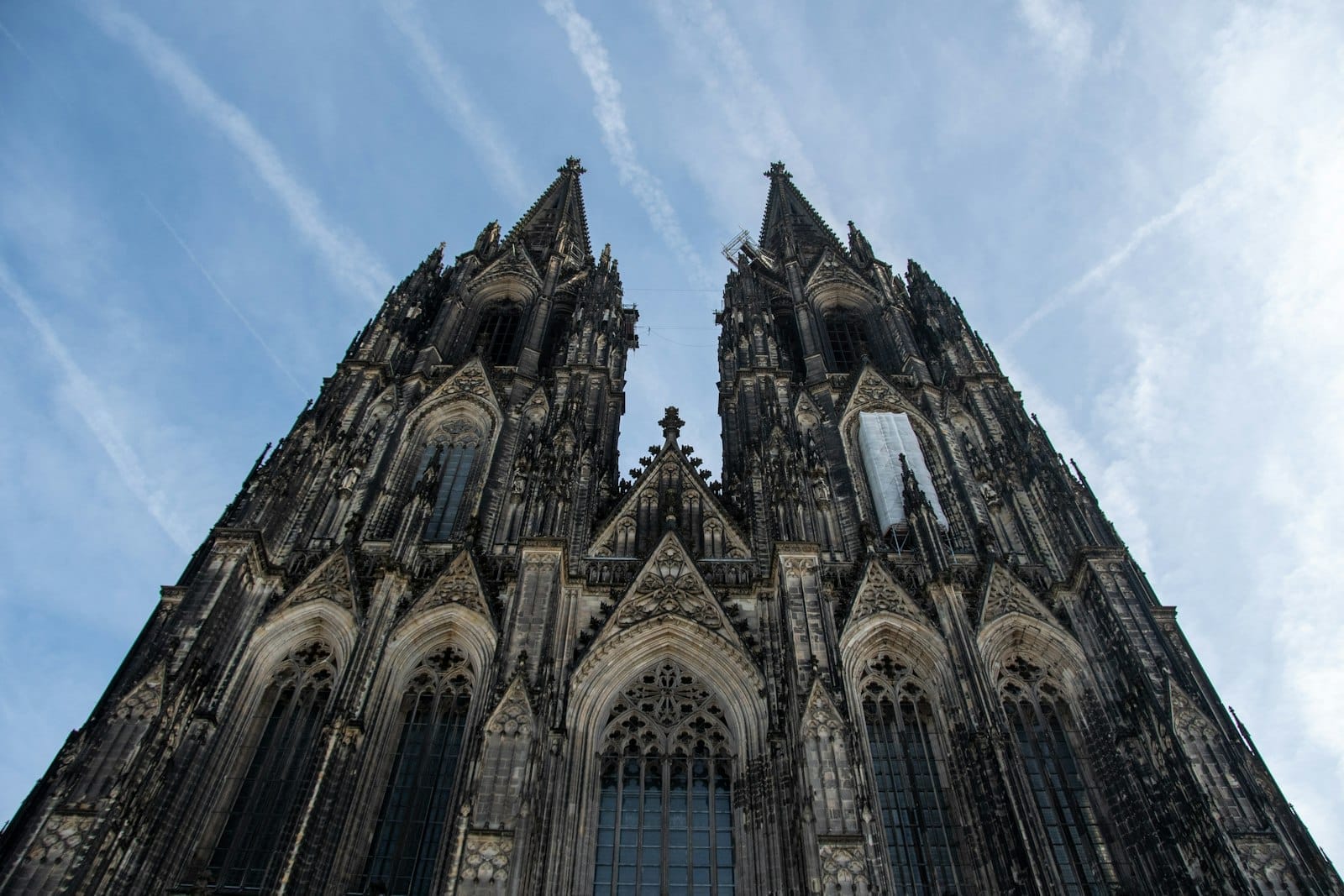
Standing at 157 metres, Cologne Cathedral held the title of the world's tallest structure for four years after its completion in 1880 — a distinction it claimed after more than six centuries of interrupted construction. The foundation stone was laid on 15 August 1248, making the building a project that outlasted dozens of generations of architects, clergy, and patrons. What finally rose was the largest Gothic cathedral in northern Europe, a twin-spired mass of dark Drachenfels trachyte that utterly dominates the skyline of Cologne's old town.
The sheer scale is the first thing visitors register, and it tends to reset expectations. Even people who have seen photographs are unprepared for the physical experience of standing at the base of the west facade. The spires narrow into a charcoal haze on overcast days, and on clear mornings the stone catches a pale grey-gold light that makes the whole structure look almost otherworldly. It is not subtle architecture. It was designed to overwhelm.
The cathedral sits immediately beside Köln Hauptbahnhof, the central railway station, which means most visitors encounter it within seconds of arriving in the city. This proximity is both a feature and a crowd management problem. For a calmer introduction, consider the Cologne walking tour that approaches from the south along the Rhine, giving you time to see the building build itself into view rather than landing in front of it all at once.
ℹ️ Good to know
From 1 July 2026, tourist visits to the cathedral interior cost €12 (reduced €6 for eligible groups). Prayer and services remain free of charge via the north entrance. Tourist hours are roughly Mon–Sat 10:00–17:45 and Sun 13:30–16:30. Always verify the current ticket prices and hours on the official site (koelner-dom.de/en) before your visit.
Inside the Cathedral: What You're Actually Looking At
The interior is 144 metres long and 86 metres wide, with a nave vault rising 43 metres above the floor. That height creates an almost uncomfortable stillness — sounds travel strangely, footsteps echo in ways that make you instinctively slow down. The light quality shifts dramatically depending on the hour and the season. Morning light enters from the south transept windows in long diagonal bars, casting coloured pools on the stone floor. Afternoon brings a flatter, cooler tone as the sun moves behind the twin spires.
The most significant object inside is the Shrine of the Three Kings (Dreikönigenschrein), a 12th-century gilded reliquary housed behind the high altar. It is, by conventional assessment, the largest medieval reliquary in the western world, and it is the reason the Gothic cathedral was begun in the first place: the relics required a building worthy of them. The shrine is intricate enough that you need to be close to it to appreciate the detail — small figures, narrative panels, and goldsmithing of extraordinary precision.
The stained glass windows deserve separate attention. The medieval windows on the south side of the choir represent one of the most complete collections of 13th-century glass remaining in Germany. The Bavarian windows along the nave were installed in the 19th century. In the north aisle, the Richter Window — a 2007 work by Gerhard Richter — fills a 113-square-metre surface with roughly 11,500 hand-blown glass squares in 72 colours arranged by a computer-generated random pattern. The effect is closer to abstract painting than traditional religious iconography, and it remains quietly controversial among both art critics and the local Catholic community.
Tickets & tours
Live prices and dates from our booking partner. If you book, we may earn a commission at no extra cost to you.
Cologne haunted places and ghost stories: interactive city game
From 8 €Instant confirmationFree cancellationSelf-guided Discovery Walk in Cologne with beers, charming alleys and dwarfs
From 32 €Free cancellationCologne Christmas Market tour with a local
From 99 €Instant confirmationFree cancellationCologne City and Cathedral Tour with Audio Guide App
From 7 €Instant confirmation
When to Visit: How the Experience Changes by Time of Day
The cathedral opens daily at 06:00, and the hours before tourist visiting begins at 10:00 are reserved for worshippers (free entry via the north portal for prayer). If you attend a morning mass, you can be inside the building with a very small group of people in near-complete silence. This is genuinely different from the daytime visitor experience, when the nave fills with guided tour groups moving in clusters, audio guides buzzing with commentary, and the ambient noise of several hundred people navigating the same space.
Peak crowding typically hits between 11:00 and 14:00, especially from late spring through early autumn. If your priority is photography without people in the frame, arrive at 10:00 when the tourist section opens and work toward the choir area before the tour groups rotate in from the nave. Weekdays are notably less pressured than weekends. Sundays and church holidays can restrict tourist access, so plan accordingly.
💡 Local tip
Access is paused during church services. Check the current service schedule on the official website before planning an early or late visit. During services, you may wait outside for 20–45 minutes before being admitted.
In winter, the reduced daylight means the interior is notably darker and more atmospheric. The stained glass loses some of its radiance, but the building feels more private. The Christmas market that spreads across the cathedral square in late November and December transforms the exterior approach entirely — the smell of Glühwein and roasted almonds fills the plaza, and the cathedral is lit from below at night in a way that makes the stonework look almost theatrical.
For a broader picture of when to plan your trip around Cologne's seasonal character, the best time to visit Cologne guide breaks down weather, crowds, and local events by month.
The Tower Climb: 533 Steps and What You Get for Them
The south tower climb is one of the more physically demanding things you can do in central Cologne. The 533 steps are on a narrow spiral staircase of worn stone that tightens and steepens toward the top. It is completely enclosed for much of the route, and the stone is cool and slightly damp regardless of the weather outside. If you are at all claustrophobic, assess this honestly before committing — there is no good place to change your mind partway up.
The reward is a 360-degree view from a bell cage at roughly 97 metres. To the west, you can see across the Rhine plain and on clear days spot the Siebengebirge hills. To the east, the Hohenzollern Bridge with its thousands of padlocks spreads below you, and Deutz sits across the river. Directly below, the cathedral plaza looks surprisingly small. This is one of the better elevated views in the city, though the triangle panorama from across the river offers a more composed photograph of the full skyline.
Tower hours vary by season: March–October 09:00–18:00, November–February 09:00–16:00. The ticket costs €8 (reduced €4). The Treasury is ticketed separately. For other high-altitude perspectives on the city, the Cologne Triangle panorama on the east bank offers a lift-access alternative with arguably cleaner views of the cathedral itself.
The Treasury (Domschatzkammer): Worth Adding to Your Visit
The Domschatzkammer is a separate admission and is consistently undervisited relative to the cathedral itself. It holds around 100 objects spanning roughly 1,700 years of ecclesiastical art: Carolingian reliquaries, medieval goldsmithing, liturgical vestments, and an ivory cross from the early medieval period. The space is below-ground level, modern in its presentation, and takes 45–60 minutes to move through properly.
The quality of objects here is exceptional by any standard. The Gero Cross in the cathedral itself dates from around 970 CE and is considered the oldest surviving large-scale figure of the crucified Christ north of the Alps. The Treasury's objects are no less significant as historical artifacts, and it is accessible from the north side of the cathedral.
Getting There, Practicalities, and Limitations
The cathedral's location beside Köln Hauptbahnhof makes it perhaps the most transit-accessible major attraction in Germany. The cathedral is just a short walk from the station. KVB tram and Stadtbahn lines stop at Dom/Hauptbahnhof, covering most of the city's districts. If you are arriving from Cologne Bonn Airport (CGN), the S-Bahn runs directly to Hauptbahnhof in approximately 15 minutes.
Accessibility within the main cathedral floor is good. The floor is level stone and navigable by wheelchair via the main entrance. The tower climb and some choir areas are not accessible to those with limited mobility. Children 13 and under enter free, and members of the Zentral-Dombau-Verein also have free access. Participation in church services and use of the personal prayer area (north entrance) remains free regardless of the tourist ticket.
Photography is permitted in the interior with a handheld camera. Tripods are generally not allowed during visitor hours. The light inside varies considerably — the nave is often darker than expected, so a camera that handles low-light conditions reasonably well makes a significant difference. Flash photography is prohibited.
One caveat: the exterior of the cathedral is almost always surrounded by a large crowd and by the visual noise of the railway station behind it. The plaza setting is not particularly elegant. For a cleaner visual experience of the building's proportions, walk to the Hohenzollern Bridge and view the cathedral from the far side of the Rhine, or cross to the Deutz bank where the full twin-spire profile reads against the sky without obstruction.
The surrounding Altstadt has several nearby attractions that pair naturally with a cathedral visit. The Wallraf-Richartz Museum is five minutes on foot and holds one of Germany's finest collections of medieval Cologne paintings, many of which depict the cathedral's construction era. The Romano-Germanic Museum is even closer, directly adjacent to the cathedral square, and covers the Roman city that preceded the medieval one.
Who Should Temper Their Expectations
Travelers who dislike crowds in sacred spaces will find the cathedral frustrating between late May and September. The combination of tour groups, audio guide traffic, and general tourist volume can make it feel less like a working cathedral and more like a managed visitor experience. If you are primarily interested in the religious and contemplative dimension, a weekday early morning visit during the 06:00–10:00 window is the only version of the cathedral that fully delivers that.
Visitors who have already spent significant time in Gothic cathedrals across France, England, or Spain may find the interior less surprising than the exterior suggests. The Kölner Dom's power is primarily architectural and historical rather than based on a single transcendent interior moment. It is grand, but not intimate. Those who find that trade-off unsatisfying might find Cologne's Romanesque churches — smaller, older in parts, and far less visited — more rewarding.
For an introduction to those alternatives, the guide to Romanesque churches in Cologne covers the twelve great Romanesque basilicas within walking distance of the old town.
Insider Tips
- The cathedral exterior is floodlit after dark and the plaza empties significantly after 21:00, making it one of the better times to photograph the west facade without crowds. No admission required for the exterior at any hour.
- If you want to attend a service rather than a tourist visit, the daily 08:00 mass in the side chapel is short (around 30 minutes) and gives you quiet access to the interior atmosphere. Check the current service schedule on the official site as times vary.
- The combination of tower and Treasury access is the logical choice if you plan to do both. Buy tickets at the Treasury entrance on the north side to avoid the main ticket queue.
- Bring a layer — the stone interior holds cold even in summer, and the tower stairwell is noticeably cooler than outside. This is especially relevant if you visit in spring or autumn.
- The view from the top of the tower includes the outline of the 12 Romanesque churches scattered across the old town. If you have a map open, you can identify St. Aposteln, Great St. Martin, and St. Gereon from the bell cage platform.
Who Is Cologne Cathedral (Kölner Dom) For?
- First-time visitors to Cologne for whom the cathedral is an orientation point and major reference for the city's scale and history
- Architecture and medieval history enthusiasts who want to understand the full Gothic construction program from 1248 to 1880
- Photographers working in either natural light interiors or wide exterior compositions
- Families with children (13 and under enter free) who want to experience the scale of the building
- Travelers combining a cathedral visit with the surrounding Altstadt, Hohenzollern Bridge, and nearby museums in a single day
Nearby Attractions
Other things to see while in Altstadt (Old Town):
- 4711 House (Dufthaus 4711 / Haus Mülhens)
The 4711 House on Glockengasse is the home of the 4711 Original Eau de Cologne, the famous citrus fragrance developed by Wilhelm Mülhens from 1792 (the earlier Farina fragrance from 1709 is generally considered the original 'eau de Cologne'). Part flagship store, part fragrance museum, and part architectural curiosity, it offers a compact but interesting stop in Cologne's Altstadt-Nord for anyone curious about the city's most famous exports.
- Cologne City Museum (Kölnisches Stadtmuseum)
The Kölnisches Stadtmuseum traces Cologne's extraordinary 2,000-year arc from Roman outpost to Rhine metropolis. Reopened in a striking new home on Minoritenstraße in March 2024, it offers an affordable and intellectually rewarding afternoon in the city's Altstadt.
- Cologne City Hall (Kölner Rathaus)
The Kölner Rathaus is Germany's oldest city hall, a layered architectural landmark in Cologne's Old Town that spans Gothic, Renaissance, and modern styles.
- Cologne Philharmonie
The Kölner Philharmonie is Cologne's premier concert venue, hosting around 400 performances a year beneath Heinrich-Böll-Platz. With seating for up to 2,000 and a column-free auditorium designed for acoustic precision, it draws world-class orchestras and soloists to the heart of the Altstadt.
Planning a trip? Discover personalized activities with the Nomado app.