Cologne's 12 Romanesque Churches: A Complete Guide
Cologne's 12 Romanesque churches form one of the most remarkable medieval ensembles in Europe, arranged in a rough semicircle around the city center and predating the famous Gothic cathedral by centuries. This guide covers all 12 churches, practical visiting tips, and how to see them in a single day.
Tickets & tours
Live prices and dates from our booking partner. If you book, we may earn a commission at no extra cost to you.
TL;DR
- Cologne has 12 Romanesque churches built roughly between 1000 and 1250, forming a unique medieval ensemble Cologne has 12 Romanesque churches built roughly between 1000 and 1250, forming a unique medieval ensemble around the city center.
- These are distinct from the Gothic Cologne Cathedral — they predate it and represent a different architectural tradition entirely.
- Most can be visited on a single walking day; longer daylight hours between May and September make this significantly easier.
- St. Cäcilien now houses the Museum Schnütgen, making it the only one of the 12 with a dedicated museum admission fee.
- For broader context on Cologne's historic core, pair this with a Cologne walking tour that connects the churches with other landmarks.
Why the Romanesque Churches Matter
Most visitors arrive in Cologne and immediately head to the Gothic cathedral near the central station. That instinct is understandable — the Kölner Dom is one of the most impressive buildings in Germany. But the city's deeper architectural story is told by the 12 Romanesque churches that surround it in a semicircle, built during the height of Cologne's medieval power between roughly 1000 and 1250. At that time, Cologne was one of the largest and wealthiest cities north of the Alps, and its ruling archbishops commissioned churches on a scale that rivaled anything in Europe.
The 12 churches are not a modern tourist concept invented to sell walking tours. They represent a genuine architectural cluster that historians and architects have long recognized as exceptional. No other city in the German-speaking world retained so many Romanesque churches in its historic core — though it bears noting that much of what visitors see today is post-World War II restoration. Heavy Allied bombing in the 1940s damaged nearly all of them, and reconstruction continued well into the second half of the 20th century. Understanding this history adds rather than detracts from a visit: the effort to restore these buildings speaks to how seriously Cologne takes its pre-Gothic identity. For more on what makes the city's history so layered, the best museums in Cologne offer additional context, particularly the Romano-Germanic Museum.
ℹ️ Good to know
Romanesque vs. Gothic: The Cologne Cathedral is Gothic, begun in 1248 and completed in 1880. The 12 Romanesque churches all predate it. Romanesque architecture is characterized by thick walls, rounded arches, and sturdy piers — quite different from the soaring pointed arches and flying buttresses of Gothic style. Knowing this distinction helps orient your visit considerably.
The 12 Churches: What Each One Is Known For
The official group comprises St. Andreas, St. Aposteln, St. Cäcilien, St. Georg, St. Gereon, St. Kunibert, St. Maria im Kapitol, St. Maria Lyskirchen, Groß St. Martin, St. Pantaleon, St. Severin, and St. Ursula. They are not evenly distributed: several cluster near the Rhine waterfront, others sit deeper in the Old Town, and a few are in quieter residential streets where foot traffic is sparse. Here is what distinguishes each one.
- St. Maria im Kapitol The largest of the 12 Romanesque churches in Cologne. Built on the site of a Roman temple to the Capitoline triad, it is known for its trefoil choir — a clover-leaf shaped east end that influenced later Rhenish Romanesque design. The carved wooden doors from around 1050 are among the most significant surviving examples of early medieval woodcarving in Germany.
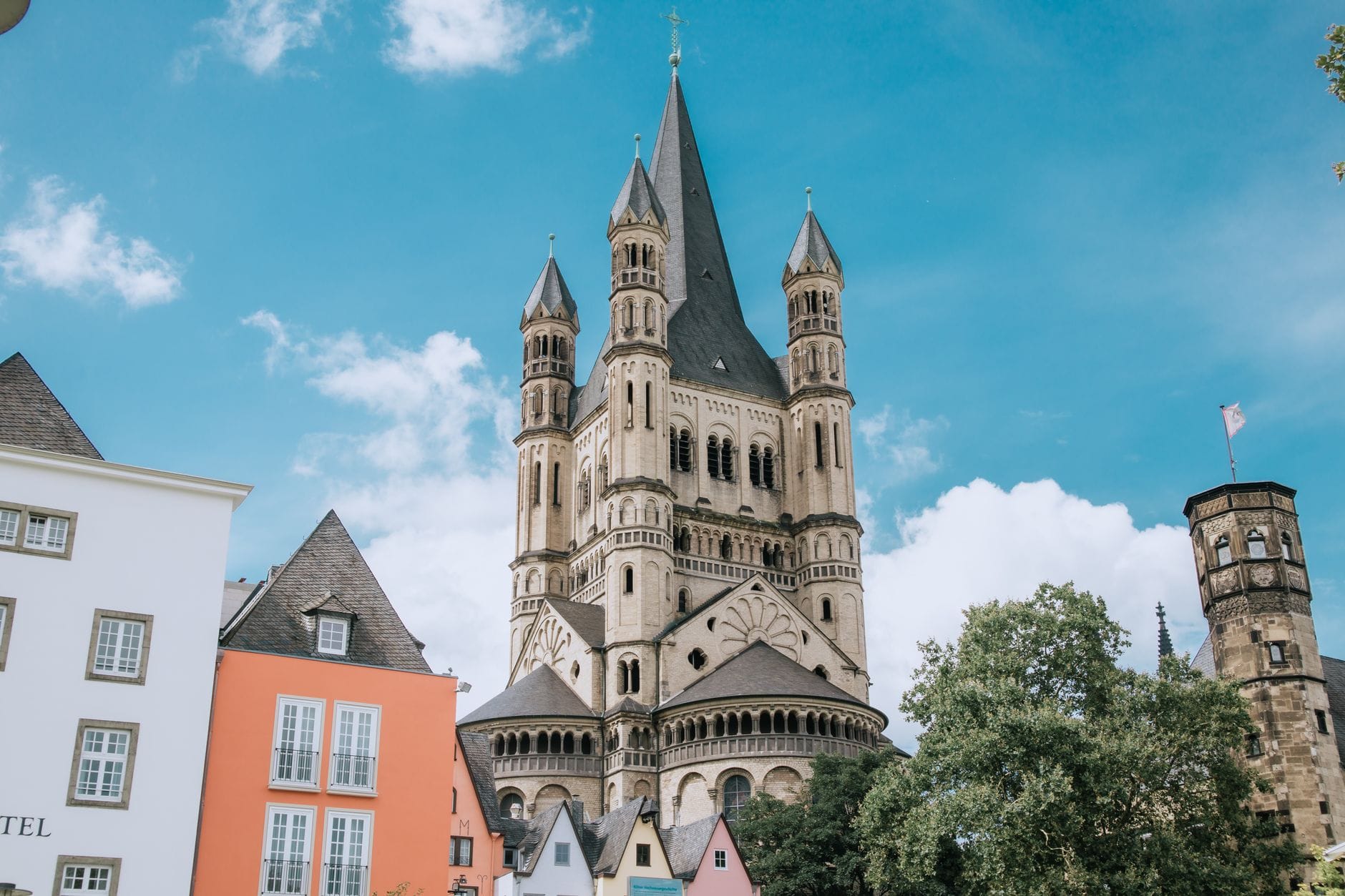
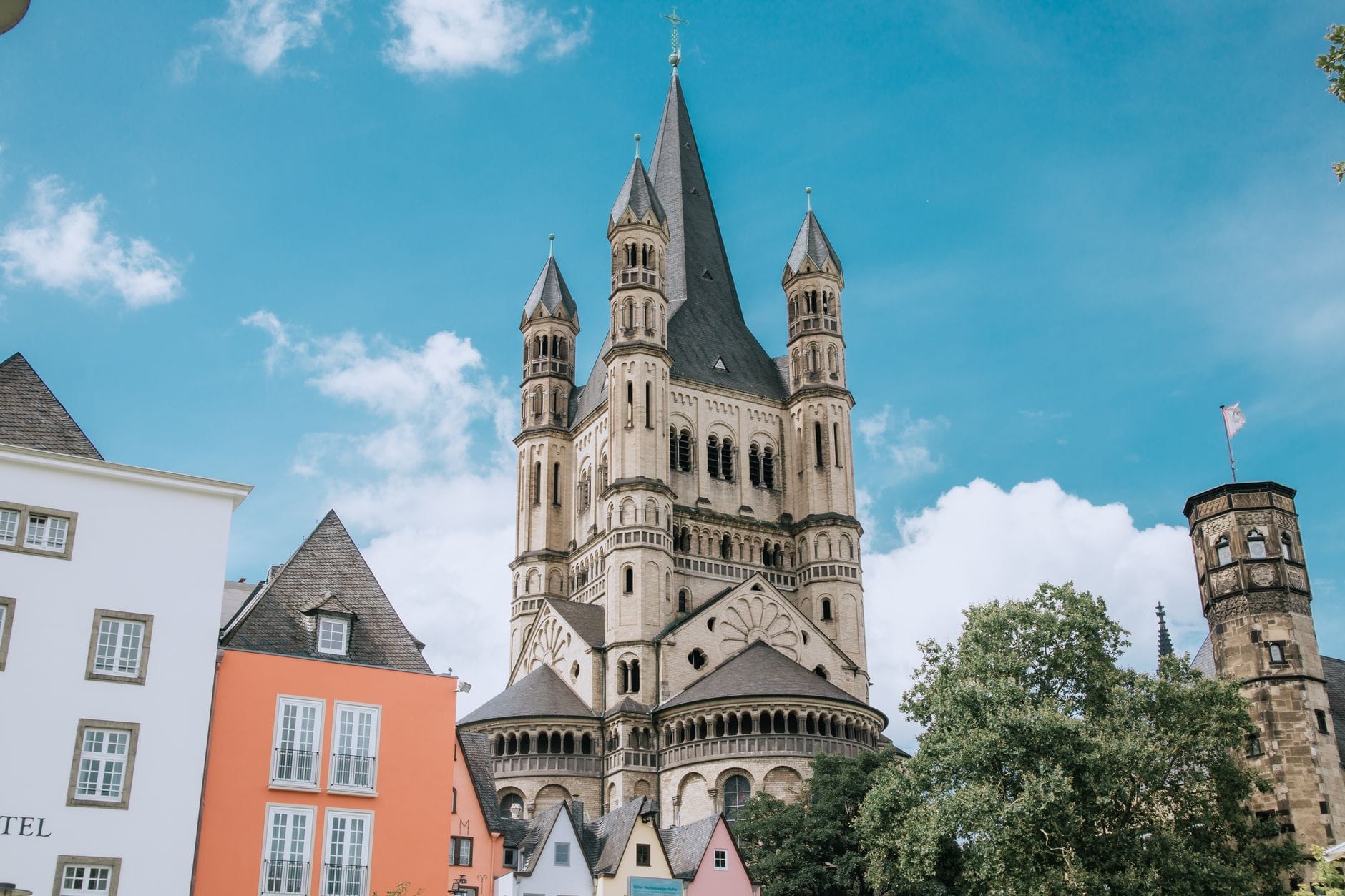
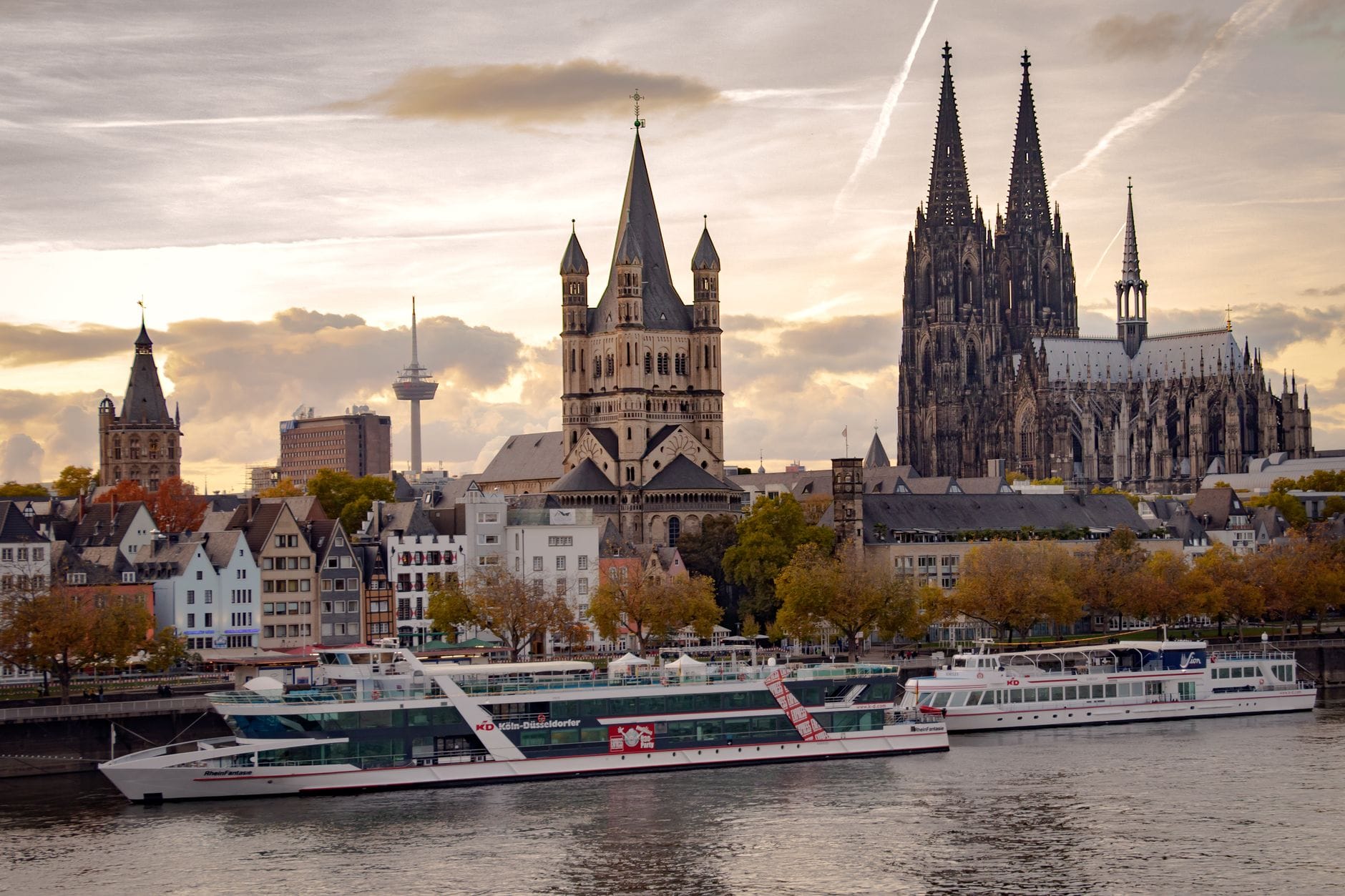
- Groß St. Martin The most visually prominent of the group, with its distinctive crossing tower rising above the Old Town roofline near the Rhine. It became a symbol of Cologne's postwar reconstruction after being almost entirely destroyed in 1943 and rebuilt through the 1980s. Best viewed from the Hohenzollern Bridge or the east bank of the Rhine.
- St. Gereon Architecturally the most unusual of the 12 — its core is a late Roman oval structure from around the 4th century that was expanded into a decagonal nave in the 13th century. The result is unlike any other Romanesque church in Europe. The mosaic floor fragments and the crypt are highlights. A genuine standout for anyone with an interest in architectural history.
- St. Pantaleon Among the oldest, with its origins in the 10th century under Archbishop Bruno I. The westwork — the massive western facade block — is considered one of the finest examples of Ottonian architecture in Germany. The church sits slightly south of the main tourist flow, which means it is often quieter than the others.
- St. Aposteln Located at the western end of the Neumarkt shopping square, it is one of the more accessible churches to stumble across during a day in the city. Its trefoil choir mirrors that of St. Maria im Kapitol, and the interior has been well restored. The square outside is a practical orientation point for planning your route.
- St. Cäcilien Since 1956 this church has housed the Museum Schnütgen, Cologne's collection of medieval sacred art including reliquaries, ivories, and textiles. It is the one church in the group where you pay a museum entry fee. The combination of the Romanesque architecture and the medieval objects displayed within it makes this a high-priority stop for anyone interested in the period.
- St. Maria Lyskirchen The smallest of the 12, located close to the Rhine near the Rheinauhafen district. Its interior preserves medieval frescoes that are among the best-surviving examples in Cologne. The intimate scale makes the frescoes feel immediate in a way that larger churches do not.
- St. Ursula Associated with the legend of St. Ursula and the 11,000 virgins, this church contains the Goldene Kammer (Golden Chamber), a baroque-era side chamber filled floor-to-ceiling with human bones arranged decoratively — an unsettling but historically significant sight. Not for everyone, but genuinely unlike anything else in the city.
- St. Kunibert Sits at the northern end of the Old Town near the Rhine. It is one of the later examples in the group, completed in the early 13th century, and the stained glass in the apse is original medieval work — rare for a church that survived the war in partial form.
- St. Andreas Located close to the cathedral and the Roman-Germanic Museum, making it a natural addition to a morning in the northern Old Town. The crypt houses the relics of Albertus Magnus, the 13th-century philosopher and theologian who was Bishop of Cologne.
- St. Georg A quieter church in the southern Old Town, less visited than the Rhine-facing landmarks. The interior retains a strong sense of unrestored medieval atmosphere. Worth the short detour for those who want to avoid the crowds near the waterfront.
- St. Severin The southernmost of the 12, in the Severinsviertel neighborhood. Built on an early Christian burial site, it has a crypt with significant archaeological remains. The surrounding neighborhood gives a sense of everyday Cologne life away from the tourist center.
Planning Your Route: How to See All 12 in a Day
Visiting all 12 churches in one day is possible on foot, but it requires realistic expectations. The churches are spread across the Old Town and inner districts in a rough semicircle, and Visiting all 12 churches in one day is possible on foot, but it requires realistic expectations. The churches are spread across the Old Town and inner districts in a rough semicircle, and the total walking distance between all of them, without detours, is around 6 to 8 kilometers. Factor in time inside each church, and you are looking at a full day if you want more than a cursory glance at each interior.
A practical approach is to divide the route into two halves: A practical approach is to divide the route into two halves: a northern cluster and a southern cluster. Starting from Cologne Central Station, you can work through the city center toward the Neumarkt, then loop back toward the Rhine. St. Cäcilien, which requires the most time due to the Museum Schnütgen, fits naturally into the midpoint of the day. Starting from Cologne Central Station, the northern group takes you through the Old Town toward the Neumarkt, then the southern group loops back toward the Rhine. St. Cäcilien, which requires the most time due to the Museum Schnütgen, fits naturally into the midpoint of the day.
💡 Local tip
Visit between May and September when daylight lasts longest. In winter, shorter days make covering all 12 on foot more difficult. Midweek mornings are quieter than weekends, particularly near Groß St. Martin and St. Maria im Kapitol, which attract more visitors. Midweek mornings are quieter than weekends, particularly near Groß St. Martin and St. Maria im Kapitol, which attract more visitors.
If a full 12-church day feels excessive, prioritize St. Gereon, St. Maria im Kapitol, St. Maria Lyskirchen, and St. Cäcilien as the four with the most distinctive interiors and historical significance. Groß St. Martin is worth adding for its exterior alone — it is one of the defining silhouettes of Cologne's Old Town and is hard to miss regardless of your route.
Practical Information: Admission, Hours, and Access
There is no unified ticket for the 12 Romanesque churches. Most are active Catholic parishes that welcome visitors free of charge during opening hours, though donations are expected and appreciated. The exception is St. Cäcilien, which charges museum admission as home to the Museum Schnütgen — check current prices directly with the museum before visiting, as they are subject to change.
Opening hours vary by church and are not standardized. Most open in the morning, though this pattern is not universal. Some churches close entirely during religious services, so checking individual church websites before visiting is strongly recommended, particularly for St. Gereon and St. Maria im Kapitol, which have more structured visitor access.
- Dress respectfully — bare shoulders and shorts are discouraged inside active churches. This applies year-round but is enforced more strictly during services.
- Photography rules differ by church. Most permit photos without flash in the main nave; some restrict photography in chapels or near altarpieces.
- Accessibility varies significantly. Several churches have steps to entrances and uneven medieval floors. St. Aposteln and Groß St. Martin have better ground-level access than some of the older structures.
- Audio guides are not available at all 12 sites. Consider a printed map from Cologne Tourism or the Romanesque Churches Association (Audio guides are not available at all 12 sites. Consider a printed map from Cologne Tourism or the Romanische Kirchen Köln e.V. association, which produces visitor materials in multiple languages.
- Sunday morning is the worst time to visit if you want quiet interior access — most churches hold services and restrict tourist entry. Saturday afternoon is a better alternative for most sites.
⚠️ What to skip
Do not assume all 12 churches are open on any given day. Several have limited weekday hours and some undergo periodic restoration work that restricts interior access. Groß St. Martin, despite being one of the most prominent landmarks, has had extended closure periods for restoration. Check current status before building your itinerary around any single church.
Historical Context: Why Cologne Has So Many
The concentration of Romanesque churches in Cologne is not accidental. Between the 10th and 13th centuries, The concentration of Romanesque churches in Cologne is not accidental. Between the 10th and 13th centuries, Cologne was one of the most important ecclesiastical centers in the German-speaking world. The Archbishop of Cologne was one of the most powerful political figures in the Holy Roman Empire, with the wealth and ambition to commission major building projects on a continuous basis. Each church represented a statement of religious authority and civic prestige, often built by competing religious communities: Benedictine monasteries, collegiate chapters, and parish communities all contributed to the skyline. The Archbishop of Cologne was one of the most powerful political figures in the Holy Roman Empire, with the wealth and ambition to commission major building projects on a continuous basis. Each church represented a statement of religious authority and civic prestige, often built by competing religious communities: Benedictine monasteries, collegiate chapters, and parish communities all contributed to the skyline.
The Roman heritage of the city also played a role. Cologne (Roman Colonia Claudia Ara Agrippinensium, founded around 50 AD) had significant late Roman religious architecture, and several of the Romanesque churches were built directly on earlier Roman or early Christian foundations. St. Gereon incorporates a 4th-century Roman structure; St. Maria im Kapitol stands on a former Roman temple precinct; St. Severin sits above an early Christian burial ground. For a deeper look at Cologne's Roman and early medieval layers, the Romano-Germanic Museum provides essential context before tackling the church circuit.
The construction of the Gothic cathedral from 1248 onward marked the end of the Romanesque era in Cologne, not a replacement of it. The 12 churches continued as active parishes throughout the Gothic and Baroque periods, accumulating layers of later additions while retaining their Romanesque cores. What visitors see today is therefore never a pure 11th-century interior — it is always a palimpsest of centuries, with the Romanesque structure visible beneath later modifications and postwar restorations.
Combining the Churches with the Rest of Cologne
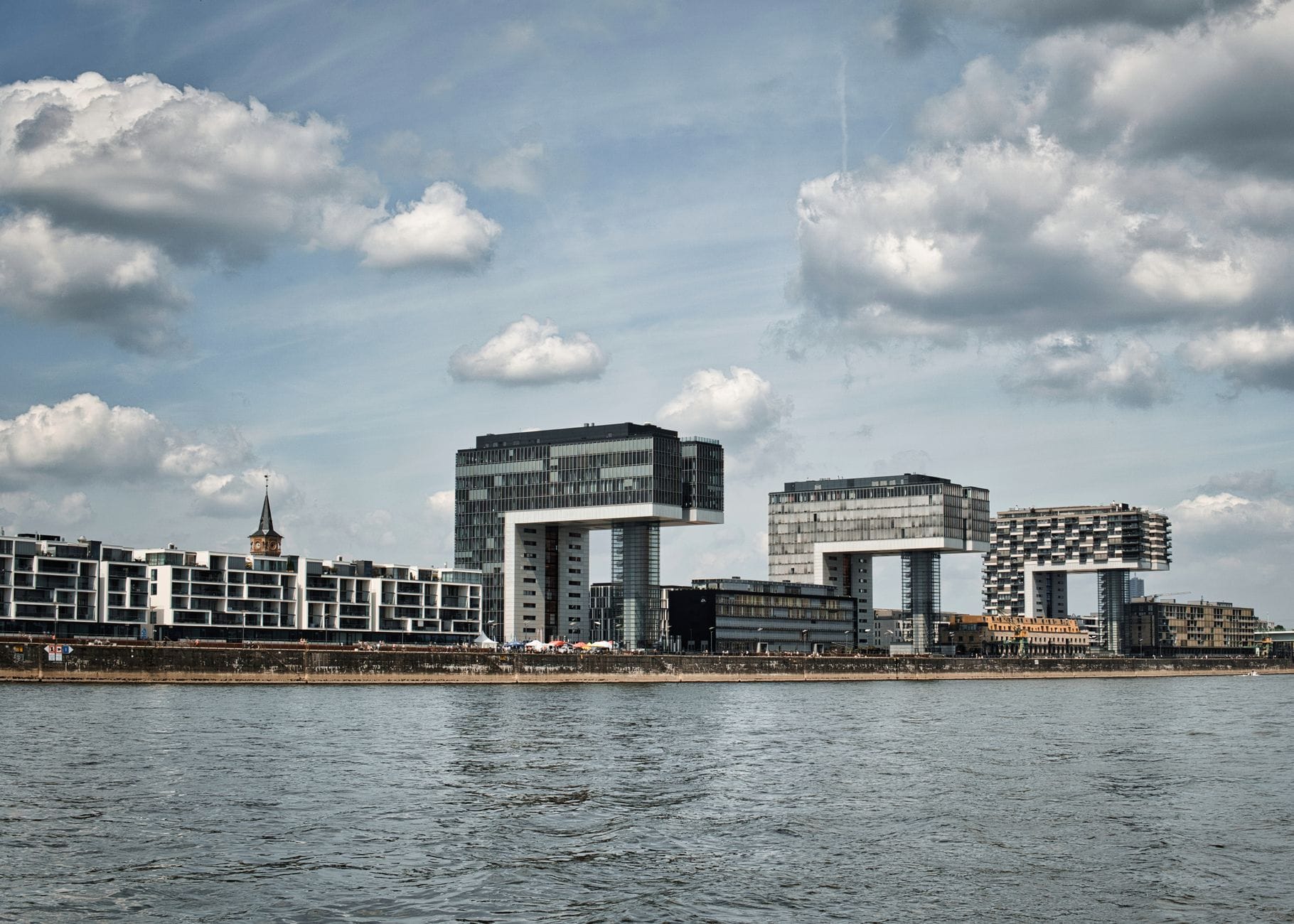
The church route passes through or near several of Cologne's most rewarding neighborhoods and attractions. Near the northern churches, the Cologne Cathedral and the Hohenzollern Bridge are obvious additions. The southern loop takes you close to the Rheinauhafen waterfront district with its distinctive crane houses, and St. Maria Lyskirchen sits practically on the riverbank.
For visitors planning a full itinerary around Cologne's art and architecture, the Cologne art museums guide connects naturally with the church route. The Museum Ludwig, Wallraf-Richartz Museum, and Kolumba art museum are all within easy walking distance of the northern church cluster. Kolumba in particular occupies a site where a Romanesque church once stood, and its contemporary architecture incorporates the medieval ruins directly into the building.
If you are visiting during December, several of the churches serve as atmospheric backdrops for the Cologne Christmas markets. The market at Neumarkt, directly adjacent to St. Aposteln, is one of the largest. The combination of a lit Romanesque church tower and a traditional market below it is a genuinely striking scene — though crowds in December are substantial.
FAQ
Are Cologne's Romanesque churches free to enter?
Most of the 12 are active Catholic parishes and admit visitors free of charge, though donations are customary. The main exception is St. Cäcilien, which houses the Museum Schnütgen and charges a museum admission fee. Always check current information before visiting, as hours and access conditions change.
How long does it take to visit all 12 Romanesque churches in Cologne?
Visiting all 12 in a single day requires a full 7 to 8 hours of walking and sightseeing. The total route covers roughly 6 to 8 kilometers on foot. This is most practical between May and September when daylight hours are longest. If your time is limited, prioritize St. Gereon, St. Maria im Kapitol, St. Maria Lyskirchen, and St. Cäcilien for the most architecturally and historically distinctive interiors.
What is the difference between the Romanesque churches and Cologne Cathedral?
Cologne Cathedral is Gothic, begun in 1248, and represents a completely different architectural style characterized by pointed arches, ribbed vaults, and large stained glass windows. The 12 Romanesque churches all predate the cathedral and are built in the earlier Romanesque style, with thick walls, rounded arches, and heavier masonry. They were constructed roughly between 1000 and 1250.
Which of the 12 Romanesque churches is the most impressive to visit?
St. Gereon is arguably the most architecturally unusual — its Roman oval core expanded into a unique decagonal nave St. Gereon is arguably the most architecturally unusual — its Roman oval core expanded into a unique decagonal nave has very few close parallels in Europe. St. Maria im Kapitol is the largest and historically the most significant. St. Ursula's Goldene Kammer (Golden Chamber) is the most viscerally memorable. For accessible atmosphere and preserved medieval frescoes, St. Maria Lyskirchen is outstanding despite its small size. St. Maria im Kapitol is the largest and historically the most significant. St. Ursula's Goldene Kammer (Golden Chamber) is the most viscerally memorable. For accessible atmosphere and preserved medieval frescoes, St. Maria Lyskirchen is outstanding despite its small size.
Can I visit the Romanesque churches independently, or do I need a guided tour?
Independent visits are entirely practical. Cologne Tourism produces printed materials and maps for the route, and the Romanische Kirchen Köln e.V. association offers visitor resources in multiple languages. Guided tours do exist and add historical depth, but the churches are well-signed and accessible without a guide. A good map and a basic understanding of Romanesque architecture is sufficient preparation for most visitors.
Tickets & tours
Live prices and dates from our booking partner. If you book, we may earn a commission at no extra cost to you.
Planning a trip? Discover personalized activities with the Nomado app.