Self-Guided Walking Tour of Cologne: The Complete Route Guide
Cologne's historic core is compact enough to cover on foot in a single morning or afternoon. This guide maps out a 6.6 km self-guided walking tour through the Cathedral, Old Town, Romanesque churches, and Rhine riverfront, with clear guidance on what to skip, what costs money, and how to time it right.
Tickets & tours
Live prices and dates from our booking partner. If you book, we may earn a commission at no extra cost to you.
TL;DR
- The classic self-guided walking loop covers roughly 6.6 km and takes 2–3 hours at a relaxed pace, starting and ending near Cologne Cathedral.
- From 1 July 2026, tourist entry to the Cathedral interior costs €12 (reduced €6; children 13 and under free); prayer and services remain free via the north entrance. The South Tower climb (around 533 steps) is a separate ticket of about €8, with hours that vary by season. Check the Cologne Cathedral page for current timings.
- Most Old Town sights can be viewed for free from the outside, but Museum Ludwig, the Romano-Germanic Museum, and the Cathedral Treasury all charge separate admission.
- Spring and early autumn (May, September) offer the best combination of mild weather and manageable crowds. See the best time to visit Cologne guide for a full seasonal breakdown.
- App-based audio routes from platforms like Questo add structure to the loop but charge a fee — the route itself is free to walk.
Why Walk Cologne Rather Than Take a Tour
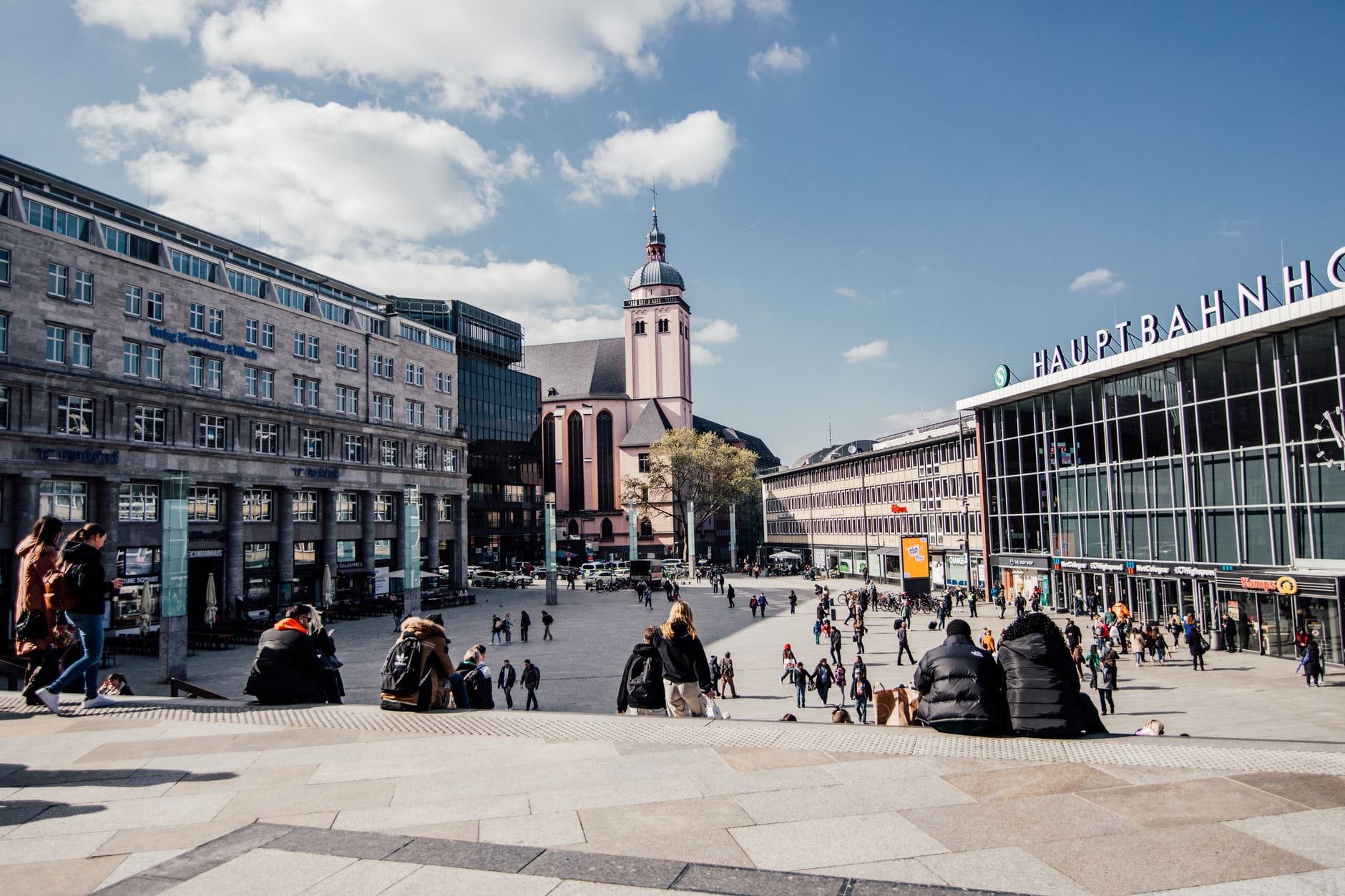
Cologne (Köln) is one of Germany's most walkable city centres. The historic core sits on a tight grid along the Rhine's left bank, meaning that nearly every major landmark between the Kölner Dom and the Hohenzollernbrücke falls within a 1.5 km radius. A guided walking tour gives you a narrator but locks you into someone else's pace and priorities. A self-guided walking tour of Cologne gives you the same geography with full control over where you stop, how long you linger, and whether you duck into a Kölsch bar at 11am. (You should. It is legal and culturally expected.)
The city rebuilt its central districts substantially after World War II bombing, so some of what looks medieval is a careful postwar reconstruction. That context matters when reading the Old Town: the half-timbered facades around Alter Markt are charming but not always ancient. The Romanesque churches that survived, however, are genuinely 1,000 years old and are among the best examples in Europe.
ℹ️ Good to know
Cologne has 12 Romanesque churches within the old city ring road, several of which fall directly on or near this route. Entry to most is free, and they are dramatically undervisited compared to the Cathedral. Do not walk past them.
The Route: A 6.6 km Loop Through Cologne's Core
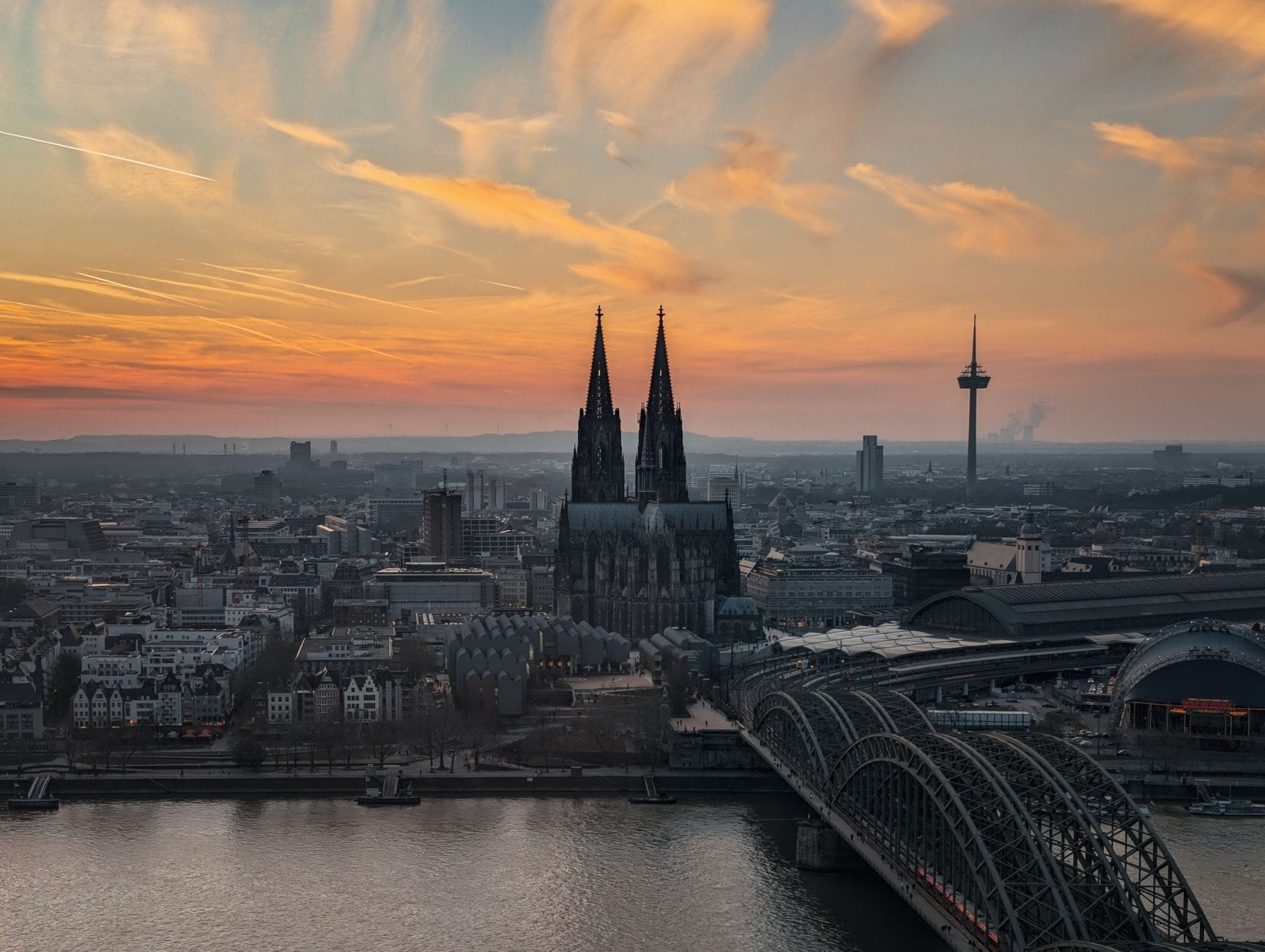
The recommended starting point is Domplatte, the cathedral forecourt on the city's northern edge. From there the route moves southwest into the Roman and medieval layers of the city before looping back north along the Rhine. The full circuit is 6.6 km with negligible elevation change, except for the optional tower climb. Allow 2–3 hours for the walk itself; add 1–2 hours if you plan to enter museums.
- 1. Cologne Cathedral (Kölner Dom) Start here. The nave is free to enter and the interior scale is genuinely arresting, not just photographically. The South Tower climb (around €6, approximately 533 steps to 100 m) rewards you with unobstructed views across the Rhine plain. Tower hours shorten significantly in winter, sometimes closing by 16:00, so go early if this is a priority.
- 2. Romano-Germanic Museum (Römisch-Germanisches Museum) Directly adjacent to the Cathedral, this museum sits above the original Roman road into Colonia Agrippinensium, the city the Romans founded in 50 AD. Admission is charged. If you only want the Roman context without paying, the mosaic visible through the ground-floor window is a reasonable preview.
- 3. Hohe Straße and Altstadt Head south along Cologne's main pedestrian shopping street, then into the Old Town around Alter Markt and Heumarkt. These squares are best on weekday mornings before the tour groups arrive. The architecture here is mostly postwar reconstruction, but the street layout follows medieval lines.
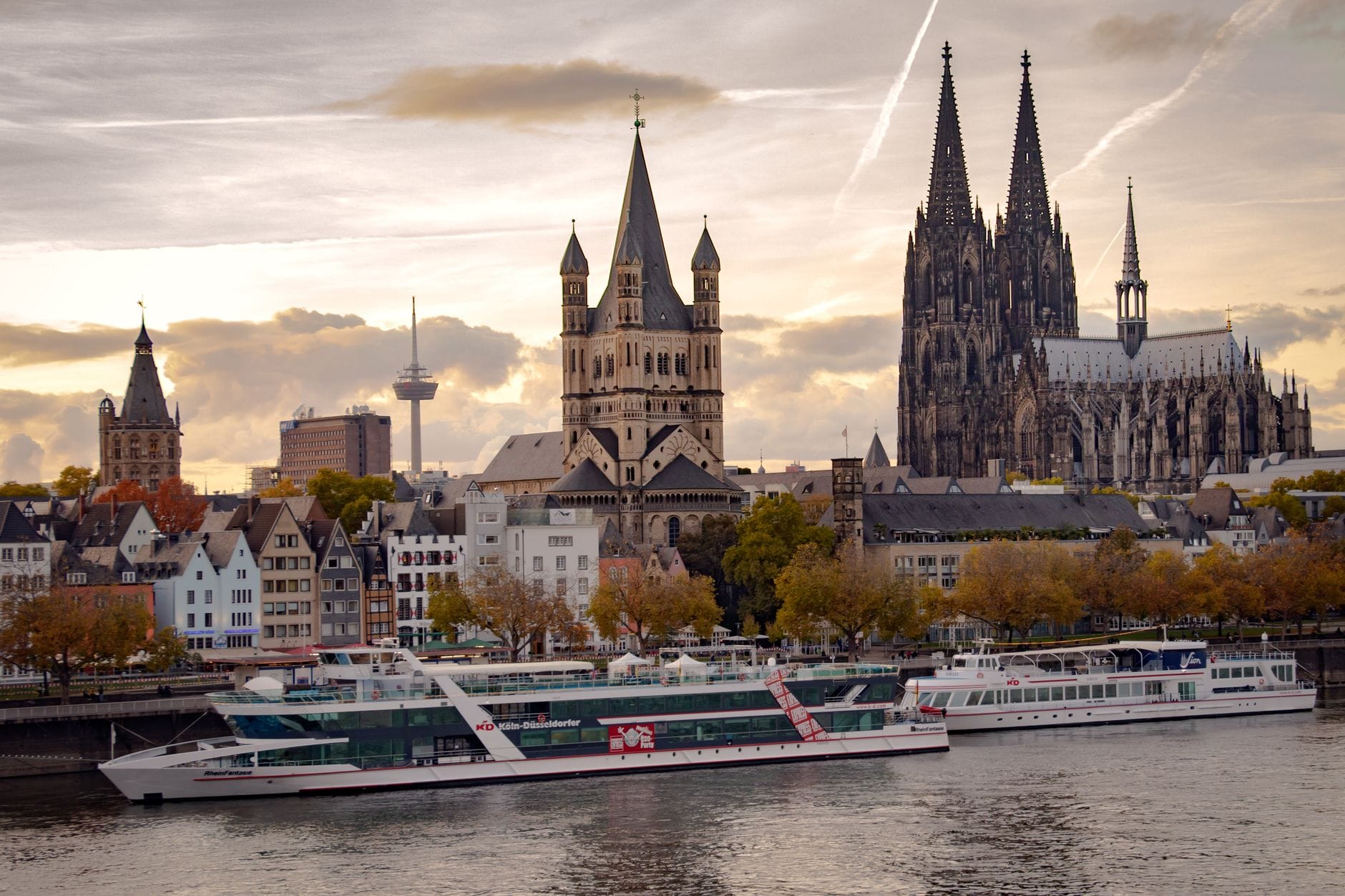
- 4. Groß St. Martin Church The four-towered Romanesque church that defines the Old Town skyline. Entry is free. The interior is quieter than it looks from outside and considerably older than the surrounding streets.
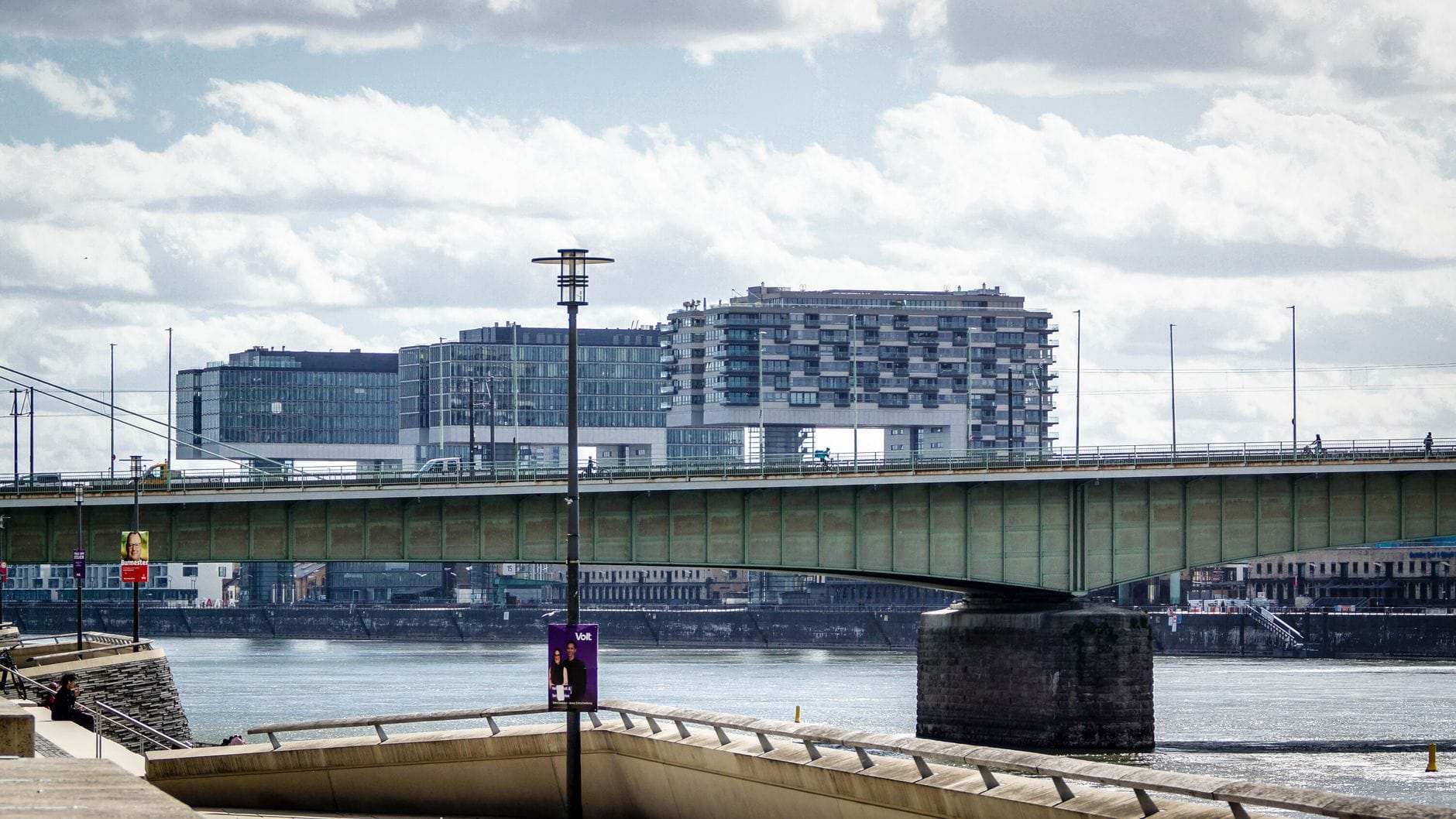
- 5. Rheinpromenade and Hohenzollernbrücke Walk north along the riverfront to the bridge, Cologne's most photographed landmark and the world's busiest rail bridge. The padlock phenomenon here is real and somewhat overwhelming in scale. From the bridge deck, both the Cathedral and the crane-houses (Kranhäuser) in Rheinauhafen are visible.
- 6. Museum Ludwig and Return to Domplatte The route loops back past Museum Ludwig, one of the most significant modern art collections in Germany, anchoring the north end of the Rhine promenade. Admission is charged. Even non-museum visitors should note the plaza between it and the Cathedral: the spatial relationship between the Dom's Gothic towers and the museum's curved postmodern roof is one of Cologne's better architectural moments.
Two additional stops extend the route meaningfully without adding much distance. St. Gereon's Basilica, about 600 m west of the Cathedral, is arguably the most architecturally extraordinary church in Cologne: a 4th-century Roman mausoleum expanded into a 10-sided Gothic nave. Entry is free and hours are typically 10:00–18:00, though these should be verified before visiting. The NS Documentation Centre (EL-DE Haus), housed in the former Gestapo headquarters nearby, provides essential historical grounding. Admission is charged.
What Things Actually Cost
One of the more persistent myths about Cologne is that a self-guided walking tour is entirely free. The walk itself is free. The city's outdoor sights, riverfront, and Romanesque church interiors cost nothing. But several stops that feature prominently in every route description require paid admission, and the costs add up if you plan to enter all of them.
- Cathedral Nave Free entry. Opens early (usually from around 6:00 for prayer, tourist hours from approximately 10:00). The interior alone justifies the walk.
- Cathedral South Tower Climb Around €6 per adult. Shorter opening hours in winter (closes as early as 16:00); summer hours extend to approximately 18:00. Verify current hours before visiting.
- Cathedral Treasury Around €6 per adult, separate from the tower. Open approximately 10:00–18:00. Houses medieval religious art and goldsmithing. Genuinely impressive if medieval ecclesiastical craft interests you; easy to skip if it does not.
- Romano-Germanic Museum Admission charged, varies — verify current pricing. Main building at Roncalliplatz is closed for renovation; interim exhibition at the Belgian House on Cäcilienstraße (the Dionysus Mosaic is not currently on display).
- Museum Ludwig Admission charged. One of Europe's major Picasso collections plus strong holdings in Pop Art and photography. Not on every visitor's priority list but serious if art is a focus.
- NS Documentation Centre / EL-DE Haus Admission charged. Not a feel-good stop, but an honest and important one. The preserved prison cells in the basement are the most affecting part.
- Romanesque Churches (St. Gereon, St. Aposteln, Groß St. Martin, and others) Free entry during opening hours. These are the best free indoor stops on the route.
⚠️ What to skip
Several app-based 'self-guided tours' on platforms like Viator or The Abroad Guide charge €5–15 for audio content and GPS navigation. These are legitimate products, but they do not include physical admission to any attraction. The route they guide you through is walkable for free using any standard map app.
Timing, Crowds, and Seasonal Variations
The area around Domplatte is genuinely crowded from mid-morning to late afternoon during peak season (June through August and again in December for the Christmas markets). Arriving before 9:30 makes a significant difference: the Cathedral interior before the tour groups arrive is a different experience from the Cathedral at noon.
May and September are the practical sweet spots. Temperatures typically sit between 14–18°C, daylight runs until 19:00–20:00, and the Cathedral tower is accessible for a full day. Cologne's famous Christmas markets (late November through December) turn the Altstadt into a very different place: atmospheric but densely crowded, and the route between Alter Markt and Domplatte becomes slow going on weekends. Karneval (February or early March) effectively closes the Old Town to normal sightseeing for several days.
Winter walking is possible but comes with practical trade-offs. The Cathedral tower closes earlier, the riverfront paths can be slippery after frost, and daylight is gone by 16:30 in December. The upside: the Cathedral interior and the Romanesque churches are nearly empty on weekday mornings, which is a genuinely rare experience.
💡 Local tip
Start at the Cathedral tower first thing in the morning (when it opens, typically around 9:00). You beat the queues, the light over the Rhine is best before 10:00, and you have a clear view of the route you are about to walk laid out below you.
Extending the Walk: Beyond the Central Loop
The 6.6 km loop covers Cologne's Roman and medieval core. If you have more time or want a different angle, two extensions are worth considering. The Rheinauhafen district, about 1 km south of Groß St. Martin along the riverfront, offers the Kranhäuser (crane-shaped apartment buildings) and the Chocolate Museum. It adds roughly 2 km to the total route and requires no backtracking if you approach from the southern end of the Altstadt.
For something completely different, the Belgian Quarter (Belgisches Viertel) sits about 1.5 km west of the Cathedral and offers an afternoon's worth of independent shops, cafes, and street-level architecture that feels nothing like the tourist-facing Altstadt. It does not connect naturally to the main walking tour loop, so treat it as a separate half-day rather than a bolt-on.
If a boat trip on the Rhine appeals as a complement to the walking tour, several companies operate along the waterfront between the Hohenzollernbrücke and Rheinauhafen. A short Rhine river cruise from the central landing stages gives a perspective on Cologne's skyline that the walk cannot replicate and takes 50–75 minutes for the standard circuit.
✨ Pro tip
The Kolumba Art Museum, about 400 m southwest of the Cathedral, occupies a building designed by Peter Zumthor on the ruins of a bombed church. It is one of the most architecturally significant small museums in Germany and almost never mentioned in walking tour routes aimed at first-time visitors. Admission is charged and it is closed on Tuesdays.
Practical Logistics
Cologne's central loop is entirely flat and fully accessible by paved paths. The only physical challenge is the Cathedral tower, which is 533 steps of narrow spiral staircase and not suitable for those with limited mobility or claustrophobia. The riverfront promenade section is broad and smooth. For getting around the wider city before or after the walk, the KVB tram and U-Bahn network is efficient; see the guide to getting around Cologne for route and ticketing details.
- Wear comfortable shoes: cobblestones in the Altstadt are decorative but uneven, particularly around Alter Markt.
- There are public toilets near the Cathedral (small charge applies), at Heumarkt, and at several points along the Rhine promenade.
- Most cafes and restaurants accept card payment, but smaller church gift shops and some street vendors are cash-only. Keep a few euros available.
- The Cathedral's main entrance faces north onto Domplatte. The tourist entrance during busy periods may be directed to the south side. Follow the signage.
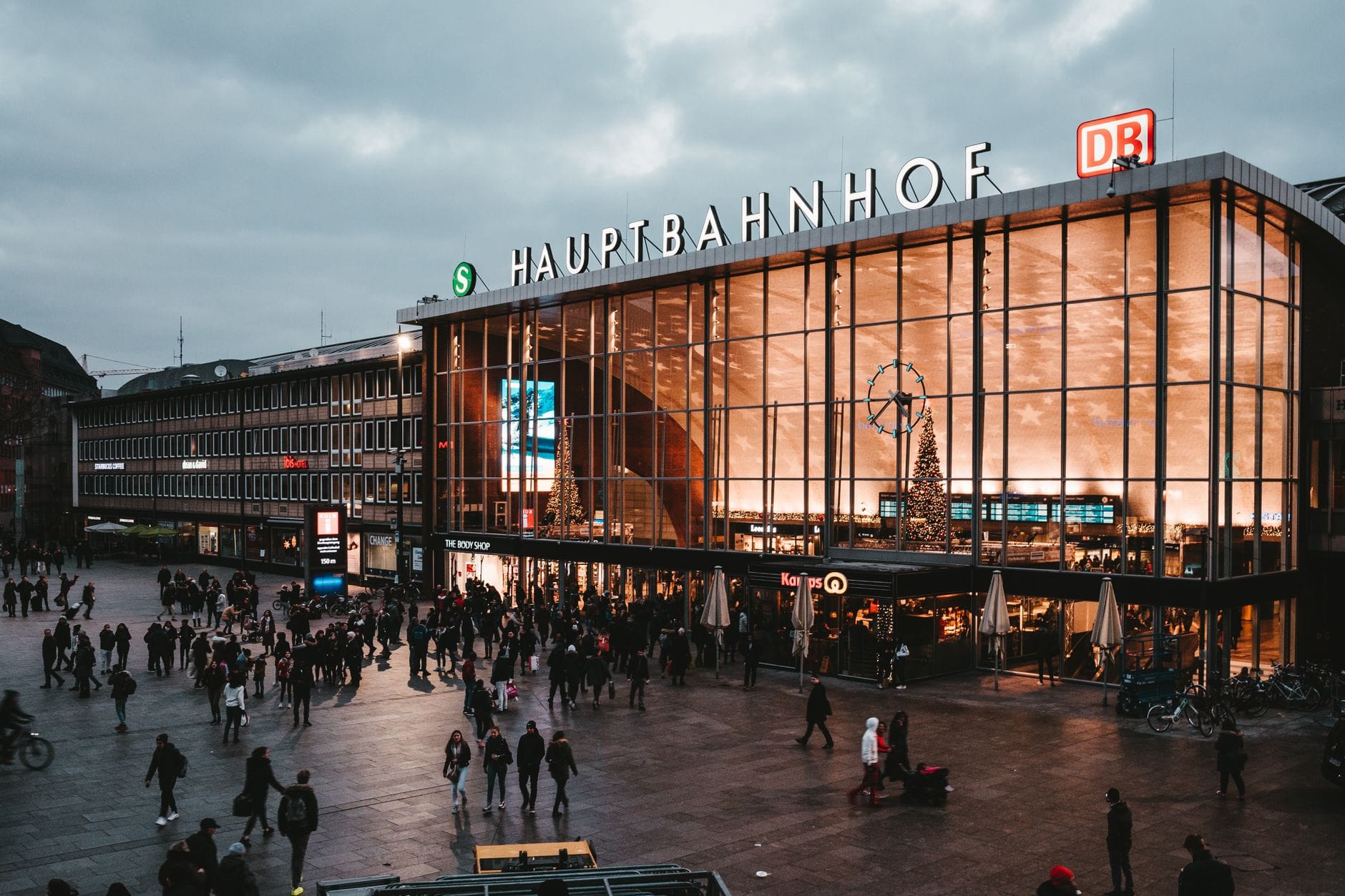
- Cologne Bonn Airport (CGN) connects to Köln Hauptbahnhof by S-Bahn in around 15 minutes. The station exits directly onto Domplatte, making it one of Europe's more dramatic airport-to-city-centre arrivals.
FAQ
How long does a self-guided walking tour of Cologne take?
The core 6.6 km loop through the Cathedral, Altstadt, and Rhine promenade takes 2–3 hours at a comfortable pace without entering any paid attractions. Add 1–2 hours if you plan to visit Museum Ludwig, the Romano-Germanic Museum, or climb the Cathedral tower.
Is a self-guided walking tour of Cologne free?
The walk itself costs nothing. The Romanesque churches and all outdoor sights are free. From 1 July 2026, tourist entry to the Cathedral interior costs €12 (reduced €6). The Cathedral South Tower (around €8), Cathedral Treasury (around €8), Museum Ludwig, Romano-Germanic Museum, and NS Documentation Centre all charge separate admission. App-based audio guides from commercial platforms also charge a fee, typically €5–15.
What is the best time of day to walk Cologne's city centre?
Early morning, ideally starting between 9:00 and 10:00. The Cathedral is quietest before tour groups arrive, the light over the Rhine is best in the morning, and the Cathedral tower queue is shortest first thing. By noon in summer, Domplatte and the Altstadt become crowded.
Do I need a guided walking tour or can I do it alone?
The route is navigable with any standard map app and does not require a human guide. If historical context matters to you, a downloadable audio guide (available through several commercial platforms) adds narration without the group format. Organised guided walking tours typically run 2–3 hours and include a knowledgeable local, which is worth considering if this is your only day in Cologne.
What should I not miss on a Cologne walking tour?
The Cathedral interior and the view from Hohenzollernbrücke are genuinely irreplaceable. St. Gereon's Basilica is the most architecturally singular stop on the route and is almost always less crowded than the Cathedral. The Rheinpromenade between the bridge and the Chocolate Museum is worth walking in full even if you skip the museums.
Tickets & tours
Live prices and dates from our booking partner. If you book, we may earn a commission at no extra cost to you.
Planning a trip? Discover personalized activities with the Nomado app.