NS Documentation Centre (EL-DE Haus): Cologne's Most Important Memorial Site
Housed in the building that served as Gestapo headquarters from 1935 to 1945, the NS Documentation Centre confronts the history of National Socialism in Cologne through survivor testimonies, preserved prison cells, and meticulous historical research. It is the largest local memorial site in Germany dedicated to the victims of National Socialism.
Quick Facts
- Location
- Appellhofplatz 23–25, 50667 Cologne (Altstadt-Nord)
- Getting There
- Tram/Stadtbahn stop Appellhofplatz (lines 3, 4, 5, 16, 18); 5–10 min walk from Cologne Hauptbahnhof
- Time Needed
- 1.5 to 2.5 hours
- Cost
- Adults €4.50 / Reduced €2.00 / Free for under-18s, pupils, and KölnPass holders
- Best for
- History-focused travelers, students, those seeking context beyond the cathedral and museums
- Official website
- www.nsdok.de
What the EL-DE Haus Actually Is
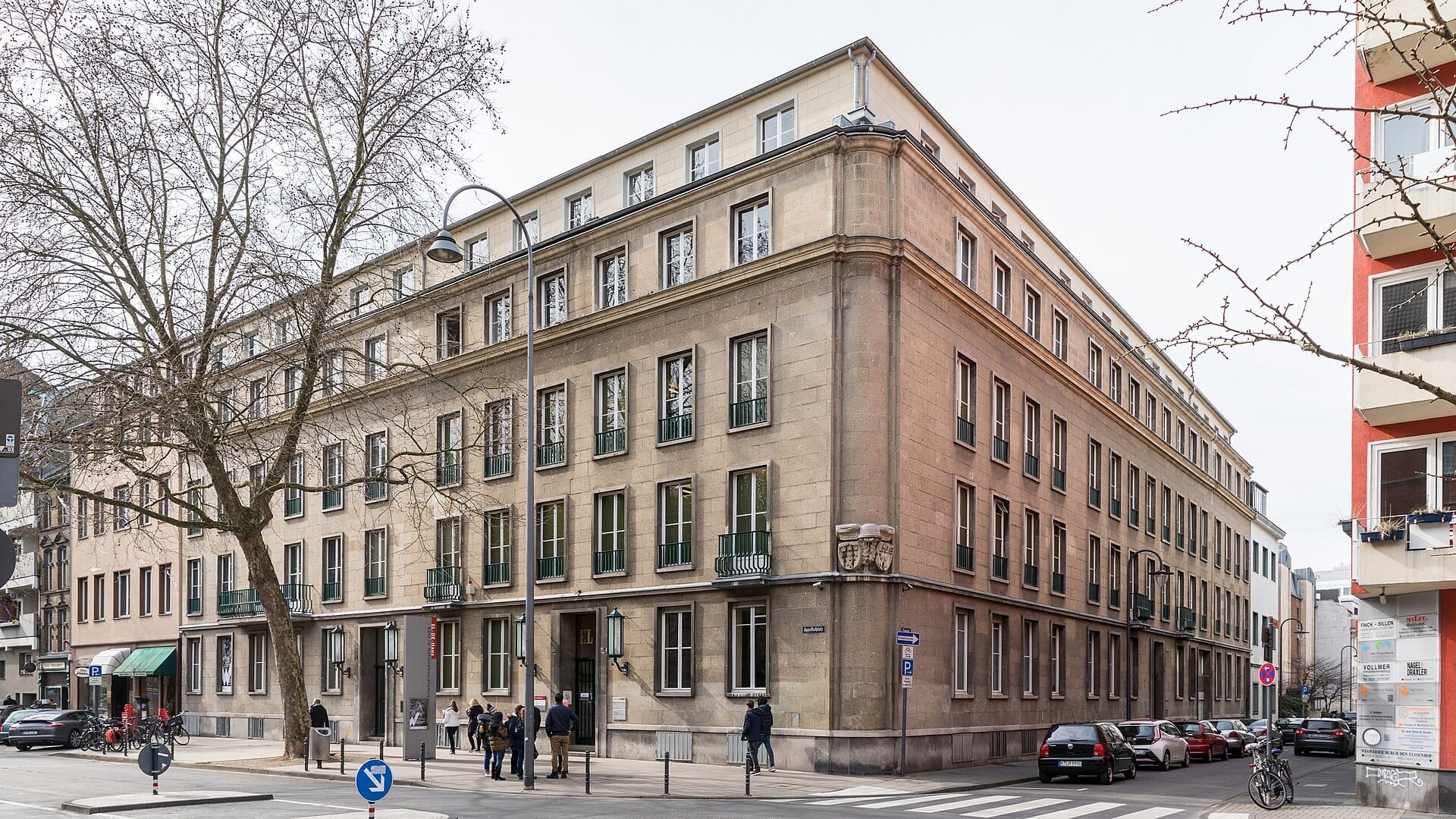
The NS Documentation Centre of the City of Cologne occupies a five-story building at Appellhofplatz 23–25, just a few minutes' walk from Cologne Cathedral. The building was constructed in the early 1930s and takes its name from the initials of its original owner, Leopold Dahmen. In December 1935, the Gestapo seized the building and established their Cologne regional headquarters here, a function it held until 1945. The basement was converted into a prison. Hundreds of people passed through those cells.
The NS Documentation Centre has been housed in the EL-DE Haus since 1988 and has since grown into one of the most significant local memorial sites in Germany. The distinction matters: this is not a national Holocaust memorial built at a remove from the events it documents. It is the actual building where orders were given, where prisoners were held, and where inscriptions scratched into the walls by the condemned can still be read today.
ℹ️ Good to know
Opening hours: Tuesday–Friday 10:00–18:00, Saturday–Sunday and public holidays 11:00–18:00. On the first Thursday of each month (except public holidays) the centre stays open until 22:00. Closed on Mondays, Christmas Eve, Christmas Day, New Year's Eve, and New Year's Day.
The Prison Cells: Where History Becomes Physical
The most affecting part of the EL-DE Haus is beneath your feet before you even reach the stairs. The basement prison has been preserved largely as it was: low ceilings, narrow corridors, and small cells with rough plaster walls. What makes the cells remarkable is what is on those walls. Prisoners carved, scratched, and wrote inscriptions in multiple languages, German, Russian, French, Dutch, Polish, English. Some are prayers. Some are names. Some are countdowns to an execution date. Looking at them is an intimate and disorienting experience; you are reading a message left by someone who expected to die.
The inscriptions have been carefully preserved and documented. Many have been translated and contextualized by the museum's research staff, so you can read not just the words but something of the person who wrote them. The cells are not dramatized or lit theatrically. They are presented plainly, which makes them more, not less, difficult to stand in.
⚠️ What to skip
Accessibility note: The basement prison cells involve stairs. Visitors with mobility impairments should contact the centre directly before visiting to confirm current access arrangements, as the building is a historic structure from the 1930s.
Tickets & tours
Live prices and dates from our booking partner. If you book, we may earn a commission at no extra cost to you.
Cologne haunted places and ghost stories: interactive city game
From 8 €Instant confirmationFree cancellationFood Tour Cologne Sudstadt
From 44 €Instant confirmationFree cancellationCologne brewery tour including 3 Kolsch beer
From 28 €Instant confirmation2-hour afternoon cruise in Cologne at Christmastime
From 25 €Instant confirmationFree cancellation
The Permanent Exhibition: Cologne Under National Socialism
The floors above the prison hold a permanent exhibition spanning the full period of National Socialist rule in Cologne, from 1933 to 1945. The exhibition is organized chronologically and thematically, covering the political seizure of power, the persecution of Jewish residents, Roma and Sinti communities, political opponents, and others targeted by the regime. It documents the specific mechanics of how Gestapo surveillance worked, how informers operated, and how ordinary city life was restructured around fear.
What distinguishes this exhibition from more generalized Holocaust museums is its local granularity. Photographs, documents, and testimonies are tied to specific streets, buildings, workplaces, and individuals in Cologne. You will recognize addresses. You may walk past some of them on the way back to your hotel. That specificity is precisely the point.
The museum also runs temporary exhibitions that examine particular aspects of the Nazi period or connect that history to contemporary issues. If you are planning a broader museum visit to Cologne, check the best museums in Cologne guide for current programming across the city's major institutions.
Visiting in Practice: Time of Day and Crowd Patterns
The EL-DE Haus draws a different crowd than most of Cologne's tourist circuit. School groups visit on weekday mornings, often arriving in organized cohorts between 10:00 and 12:00. If you prefer to move through the cells at your own pace without managing around groups of teenagers, aim for a weekday afternoon, particularly Tuesday through Thursday after 13:00, or a Saturday morning just after opening at 11:00.
The evening opening on the first Thursday of each month (until 22:00) has a quieter, more contemplative atmosphere. The lower light levels outside and the reduced foot traffic inside make it a particularly appropriate time to visit a site of this nature. It also pairs naturally with the surrounding Altstadt area, where you can find a meal or drink before or after.
Budget between 90 minutes and two and a half hours. Visitors who read carefully, particularly those who engage with the multilingual cell inscriptions and the detailed exhibition panels, consistently need closer to two hours. The entry fee is low: €4.50 for adults, €2.00 reduced. Pupils and students enter free, as do Cologne residents under 18, KölnPass holders, and birthday children.
Getting There and the Surrounding Area
The building sits on Appellhofplatz in the Altstadt-Nord district. The most direct public transport option is the Stadtbahn stop also called Appellhofplatz, served by lines 3, 4, 5, 16, and 18. From the stop it is approximately two minutes on foot. From Cologne Hauptbahnhof, the walk takes around eight minutes through the pedestrian zone.
The EL-DE Haus is geographically close to several of Cologne's major religious and cultural landmarks. The Cologne Cathedral is barely ten minutes' walk to the east. The contrast between visiting one and then the other in the same morning is not incidental: the cathedral survived the war largely intact while the city around it was destroyed, and the EL-DE Haus provides a direct account of what that war meant at street level.
For those combining multiple history-focused sites in a single day, the Romano-Germanic Museum and the Wallraf-Richartz Museum are also within comfortable walking distance, though they cover very different periods and themes.
Who Should Visit, and Who Might Not
The NS Documentation Centre rewards visitors who come with some prior knowledge of the Nazi period and an appetite for detailed historical material. The exhibition texts are thorough and at times dense. This is not a place that has been simplified for passive consumption. If you engage with it fully, it is one of the most significant things you can do in Cologne.
Visitors looking for lighter sightseeing should be aware of what they are walking into. The basement cells in particular are genuinely disturbing spaces, not because of anything the museum has done to them, but because of what happened there. Families with young children should consider whether their children are ready for that kind of direct encounter with atrocity. Older children, particularly teenagers, often respond thoughtfully and the museum is a regular destination for school groups for that reason.
Travelers with only a day in Cologne and a primarily architectural or culinary focus may want to prioritize other stops on their itinerary. For broader guidance on how to structure a short trip, the 2 days in Cologne guide offers a practical framework that includes both the major landmarks and a few less-visited sites.
Photography and Practical Notes
Photography is generally permitted in the permanent exhibition, but visitors should check current rules with staff on arrival, particularly in the basement prison area where restrictions may apply out of respect for the site's nature. Natural light is limited inside the building; a phone camera will manage adequately in the upper exhibition floors, but the cells themselves are dimly lit by design.
The museum has a small bookshop with publications on the history of National Socialism in Cologne and the wider Rhineland region, some available in English. If you are doing serious research or teaching on this period, it is worth spending a few minutes there. Audio guides and guided tours are available; check the official website at nsdok.de for current availability and booking requirements, as these can change seasonally.
Insider Tips
- The first Thursday of each month (except public holidays) the centre stays open until 22:00. The quieter evening atmosphere makes it easier to spend time with individual cell inscriptions without other visitors nearby.
- Pick up the printed floor plan at the entrance and read the introductory texts on the ground floor before descending to the basement. Visiting the cells without any context first can make the experience harder to process.
- The multilingual inscriptions in the cells include texts in Russian, Polish, French, Dutch, and English as well as German. If you read any of these languages, you will catch nuances that translations do not fully convey.
- Combine this visit with a walk through the Appellhofplatz area and the old town streets immediately surrounding it. Several buildings nearby have information plaques marking their wartime histories.
- If you are visiting with a student group or as an educator, the centre offers specialized guided programs. Contact the museum directly in advance via the official website, as booking lead times can be several weeks.
Who Is NS Documentation Centre (EL-DE Haus) For?
- History-focused travelers who want to understand what the Nazi period meant at the level of a specific city
- Students and educators looking for a well-documented memorial site with primary source material
- Visitors who have already seen the major tourist landmarks in Cologne and want to go deeper
- Travelers interested in memorial architecture and the design of historical memory
- Anyone spending more than one day in Cologne who wants to see the city beyond its postcard image
Nearby Attractions
Other things to see while in Altstadt (Old Town):
- 4711 House (Dufthaus 4711 / Haus Mülhens)
The 4711 House on Glockengasse is the home of the 4711 Original Eau de Cologne, the famous citrus fragrance developed by Wilhelm Mülhens from 1792 (the earlier Farina fragrance from 1709 is generally considered the original 'eau de Cologne'). Part flagship store, part fragrance museum, and part architectural curiosity, it offers a compact but interesting stop in Cologne's Altstadt-Nord for anyone curious about the city's most famous exports.
- Cologne City Museum (Kölnisches Stadtmuseum)
The Kölnisches Stadtmuseum traces Cologne's extraordinary 2,000-year arc from Roman outpost to Rhine metropolis. Reopened in a striking new home on Minoritenstraße in March 2024, it offers an affordable and intellectually rewarding afternoon in the city's Altstadt.
- Cologne Cathedral (Kölner Dom)
Cologne Cathedral, officially the Hohe Domkirche Sankt Petrus, is Germany's most visited landmark and one of the great Gothic structures on earth. This guide covers tourist ticketing, tower access, the Treasury, and how to make the most of your time there.
- Cologne City Hall (Kölner Rathaus)
The Kölner Rathaus is Germany's oldest city hall, a layered architectural landmark in Cologne's Old Town that spans Gothic, Renaissance, and modern styles.
Planning a trip? Discover personalized activities with the Nomado app.