Cologne Philharmonie (Kölner Philharmonie): What to Expect at One of Germany's Great Concert Halls
The Kölner Philharmonie is Cologne's premier concert venue, hosting around 400 performances a year beneath Heinrich-Böll-Platz. With seating for up to 2,000 and a column-free auditorium designed for acoustic precision, it draws world-class orchestras and soloists to the heart of the Altstadt.
Quick Facts
- Location
- Bischofsgartenstraße 1, 50667 Cologne (Altstadt-Nord), directly adjacent to Museum Ludwig
- Getting There
- Cologne Hauptbahnhof (Köln Hbf), 5 minutes on foot; also served by KVB trams at Dom/Hbf stop
- Time Needed
- 1–2 hours for a concert; 15–20 minutes to explore the foyer freely
- Cost
- Foyer entry is free; concert tickets are priced per event via KölnMusik / koelnticket
- Best for
- Classical music lovers, architecture enthusiasts, evening cultural experiences
- Official website
- http://www.koelner-philharmonie.de
What the Kölner Philharmonie Actually Is
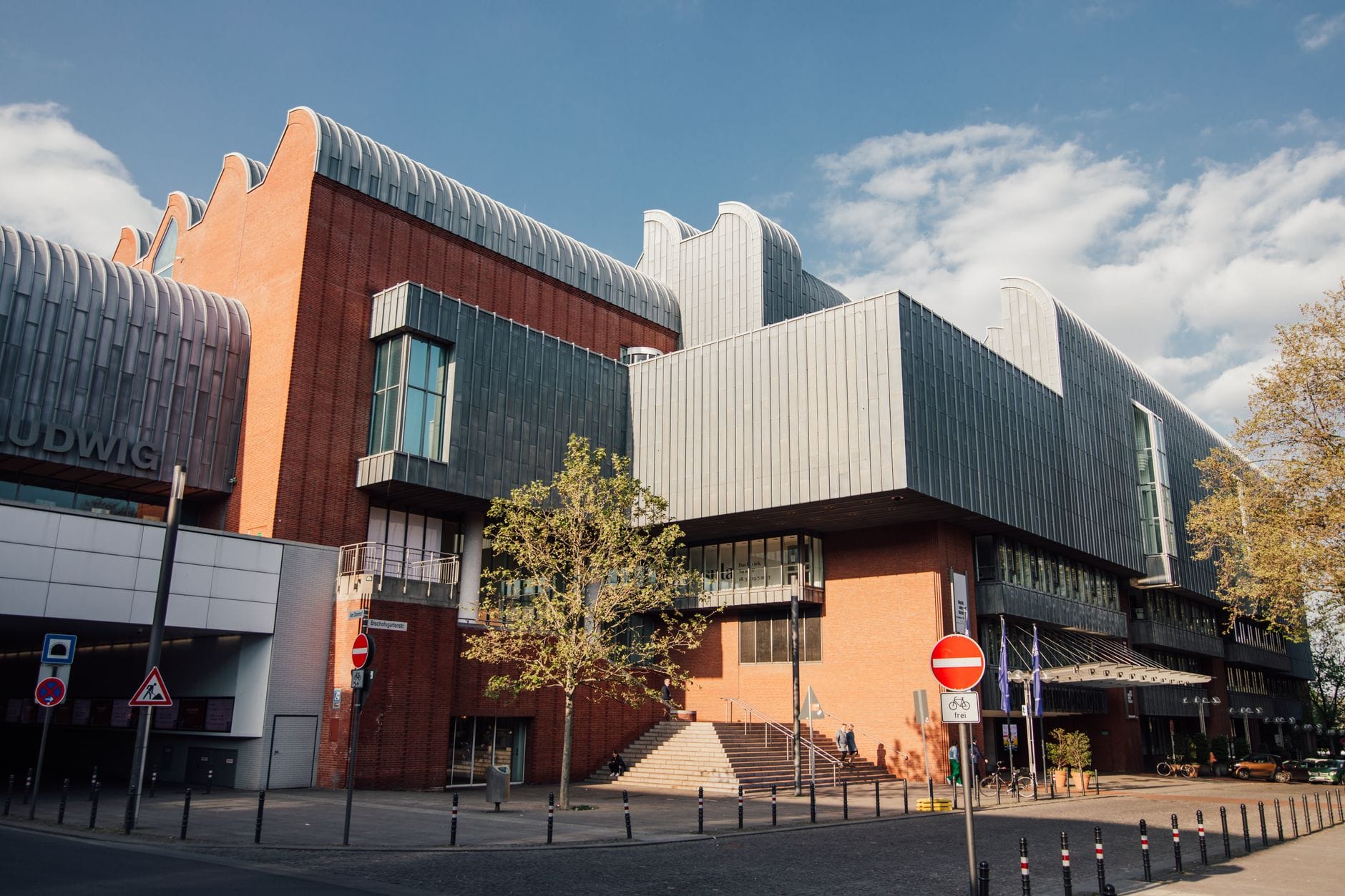
The Cologne Philharmonie, or Kölner Philharmonie, is the city's main concert hall, opened in 1986 as part of the same architectural complex as Museum Ludwig. It sits underground beneath Heinrich-Böll-Platz, a public square directly in front of Cologne Cathedral. From street level, there is almost nothing to indicate that one of Germany's most acoustically admired concert halls lies directly below your feet. That understatement is part of its character.
The venue hosts approximately 400 concerts per year and draws close to 650,000 visitors annually, making it one of the most frequented concert halls in the German-speaking world. Performances span classical orchestral programs, chamber music, jazz, world music, and occasional pop and crossover events, so it is worth checking the schedule rather than assuming the calendar is limited to symphony concerts.
ℹ️ Good to know
Concert tickets from KölnMusik / koelnticket double as a return ticket on the VRS regional transport network on the day of the event. No need to buy a separate U-Bahn or S-Bahn ticket to get home after the performance.
Architecture: Buried Under a Plaza
The Philharmonie was designed as part of a joint complex with Museum Ludwig by architects Busmann and Haberer. The decision to place the concert hall underground was driven by the proximity to Cologne Cathedral, whose UNESCO World Heritage status and visual dominance over the surrounding square made any tall above-ground structure inappropriate. The result is a building that subordinates itself to its context while functioning at the highest international level internally.
Inside, the auditorium is entirely column-free, with amphitheatre-style tiered seating that wraps around the central stage in a vineyard configuration. This design, similar in concept to Berlin's Philharmonie and Paris's Salle Pleyel, places audiences on all sides of the performers rather than only in front. No seat is more than 30 meters from the stage. The absence of columns and the careful geometry of the space produce sightlines that are consistently good from almost any position.
The acoustic treatment is precise and deliberate. Convex wooden panels line the walls and ceiling, scattering sound evenly and preventing the echo problems that affect many large halls. The result is warm rather than clinical: string sections carry clearly, and softer passages retain presence even in the higher rear tiers. Concert halls are easy to get wrong at this scale; this one largely gets it right.
If architecture is your primary interest in Cologne, note that the Philharmonie sits within a dense cluster of cultural buildings. Museum Ludwig shares the same complex above, and the Romano-Germanic Museum is a few steps away. The Cathedral square itself is one of the most architecturally layered public spaces in Germany.
Tickets & tours
Live prices and dates from our booking partner. If you book, we may earn a commission at no extra cost to you.
Cologne haunted places and ghost stories: interactive city game
From 8 €Instant confirmationFree cancellationFood Tour Cologne Sudstadt
From 44 €Instant confirmationFree cancellationCologne brewery tour including 3 Kolsch beer
From 28 €Instant confirmation2-hour afternoon cruise in Cologne at Christmastime
From 25 €Instant confirmationFree cancellation
The Experience at Different Times of Day
During the day, the foyer is freely accessible without a ticket. It is a calm, well-lit space with a bar and a box office, and it receives a steady trickle of visitors who wander in from the square above, often unaware they have entered a functioning concert venue. The atmosphere in the morning hours is practical: staff setting up, the smell of fresh coffee from the cafe area, distant sound-check noise if a rehearsal is underway. It is a working building, not a monument.
On concert evenings, the tone changes completely. The foyer fills with an audience that skews older but is more mixed than the stereotypes suggest. On popular evenings, especially weekend performances with well-known soloists or orchestras, the crowd is dense enough that the bar gets congested in the 30 minutes before curtain. Arriving 45 minutes early gives you space to find your seat, read the program notes, and avoid the bottleneck. The lighting shifts to a warmer tone and the acoustic isolation from street noise becomes noticeable: outside, the Cathedral square is windy and loud; inside, it is another world.
Sundays are particularly busy. The Philharmonie often schedules two or three performances on Sundays and public holidays, and morning concerts attract a noticeably different audience, including families with older children and retirees who prefer afternoon timeslots. Evening weekday concerts tend to draw a more mixed crowd of regulars and visitors.
💡 Local tip
Arrive at least 30 to 45 minutes before a concert to collect tickets, find your seat, and avoid the bar queue. Latecomers are typically held in the foyer until a suitable break, which can mean missing the opening movement entirely.
History and Cultural Context
The Philharmonie opened in 1986, giving Cologne a dedicated large-scale concert venue for the first time. Before that, the city's orchestral life relied on the Opera House and other venues not designed primarily for acoustic performance. The opening coincided with a period when Cologne was repositioning itself as a cultural capital, investing in the Museum Ludwig collection and establishing infrastructure to attract international touring acts.
The resident ensemble associated with the hall is the Gürzenich Orchestra Cologne (Gürzenich-Orchester Köln), one of Germany's oldest civic orchestras with a history stretching back to the 15th century. The WDR Symphony Orchestra, the broadcasting orchestra of Westdeutscher Rundfunk, also performs here regularly. International orchestras, from the Berlin Philharmonic to visiting ensembles from North America and Asia, appear throughout the season.
The Philharmonie's programming sits within a broader cultural ecosystem worth exploring if you have more than a day in the city. For an overview of what Cologne offers across its museums and performance spaces, the best museums in Cologne guide covers the surrounding complex in detail.
Practical Walkthrough: Getting In and Getting Around
The main entrance to the Philharmonie is on Bischofsgartenstraße 1, on the north side of the Museum Ludwig building, facing the river. It is easy to miss if you approach from the Cathedral side; look for the entrance ramp leading down from street level. The foyer is immediately below.
The box office is open Monday to Saturday from 12:00 to 20:00, and additionally from 120 minutes before the concert start on performance days; concert start times themselves vary by event. Tickets for concerts are sold through KölnMusik via the official koelnticket platform, either online in advance or at the box office during opening hours. Booking in advance is strongly recommended for high-demand performances, particularly with internationally known soloists or holiday weekend dates.
Getting there is straightforward. Cologne Hauptbahnhof is a five-minute walk, making the Philharmonie one of the most transit-accessible major concert halls in Germany. By car, nearby parking garages are available in the city center, and bike racks are provided near the entrance for cyclists.
⚠️ What to skip
Cloakroom facilities are available but the queue can be slow on busy evenings. If you are attending in winter, factor in extra time to check heavy coats before the performance.
The Philharmonie's location near the Rhine puts it within easy reach of several other landmarks worth combining on the same visit. The Hohenzollern Bridge is a short walk south, and the Cologne Cathedral is practically adjacent. If you are planning a full day in this part of the city, the Cologne walking tour guide covers the logical sequence for seeing these sites together.
Is It Worth Attending If You Are Not a Classical Music Regular?
The honest answer is: it depends on the program. The Philharmonie's schedule includes genre-crossing events, jazz evenings, and world music nights that require no prior familiarity with classical music. A 70-minute orchestral concert with a well-known symphony can be a genuinely accessible experience, especially in a venue with good acoustics where you can hear the music clearly regardless of where you sit.
If you have no interest in live music whatsoever, the foyer visit is pleasant but brief. There is no permanent exhibition, no architectural spectacle visible from the street, and the auditorium itself is only accessible during performances. Treating the Philharmonie as a sight to tick off without attending a concert is not really the point of the place.
For visitors with children, the programming includes family concerts and educational events, though the standard evening repertoire assumes an adult audience prepared to sit quietly for extended periods. Younger children may find this challenging unless a specific family-oriented performance has been selected.
Photography and Practical Notes
Photography inside the auditorium during performances is not permitted, which is standard policy at professional concert venues worldwide. The foyer is photographable during open hours. Exterior shots of the building from Heinrich-Böll-Platz are unobstructed, though the building's low-profile integration with the square makes it a difficult subject to photograph meaningfully. Most visitors photograph the Cathedral from this location rather than the Philharmonie itself.
For those interested in the acoustic engineering of the space, the formal program notes distributed at performances often include technical information about the hall's design. These are worth keeping if that aspect interests you.
Insider Tips
- Check the KölnMusik schedule for 'Lunchtime Concerts' (Mittagskonzerte) and shorter format events, which are typically less expensive and run under an hour, making them accessible if your schedule is tight.
- If you are collecting a ticket at the box office on the day of a performance, go during the afternoon rather than immediately before the concert. Box office queues in the 20 minutes before curtain are predictably long.
- The upper rear tiers offer some of the best acoustics in the hall at lower price points. Do not assume that the most expensive floor-level seats deliver the best listening experience; in a vineyard-configuration hall, higher positions often provide better sound distribution.
- Concert tickets serve as free public transport on the VRS network on the day of the event, covering U-Bahn, S-Bahn, trams, and regional trains. Plan your return journey using this benefit rather than paying separately.
- If you are visiting Cologne in December, check whether the Philharmonie has any special Christmas or New Year programming. These performances sell out far in advance and are among the most popular events on the annual calendar.
Who Is Cologne Philharmonie For?
- Travelers who want a substantive cultural evening rather than bar-hopping
- Architecture and acoustics enthusiasts interested in post-war German concert hall design
- Visitors with at least two days in Cologne looking to go beyond the Cathedral and the Altstadt
- Music students or professionals who want to hear how the Gürzenich Orchestra or WDR Symphony performs in their home venue
- Couples or adults seeking a high-quality evening program in a central, easy-to-reach location
Nearby Attractions
Other things to see while in Altstadt (Old Town):
- 4711 House (Dufthaus 4711 / Haus Mülhens)
The 4711 House on Glockengasse is the home of the 4711 Original Eau de Cologne, the famous citrus fragrance developed by Wilhelm Mülhens from 1792 (the earlier Farina fragrance from 1709 is generally considered the original 'eau de Cologne'). Part flagship store, part fragrance museum, and part architectural curiosity, it offers a compact but interesting stop in Cologne's Altstadt-Nord for anyone curious about the city's most famous exports.
- Cologne City Museum (Kölnisches Stadtmuseum)
The Kölnisches Stadtmuseum traces Cologne's extraordinary 2,000-year arc from Roman outpost to Rhine metropolis. Reopened in a striking new home on Minoritenstraße in March 2024, it offers an affordable and intellectually rewarding afternoon in the city's Altstadt.
- Cologne Cathedral (Kölner Dom)
Cologne Cathedral, officially the Hohe Domkirche Sankt Petrus, is Germany's most visited landmark and one of the great Gothic structures on earth. This guide covers tourist ticketing, tower access, the Treasury, and how to make the most of your time there.
- Cologne City Hall (Kölner Rathaus)
The Kölner Rathaus is Germany's oldest city hall, a layered architectural landmark in Cologne's Old Town that spans Gothic, Renaissance, and modern styles.
Planning a trip? Discover personalized activities with the Nomado app.