Früh am Dom: Cologne's Cathedral Brewpub, Honestly Reviewed
Open since 1904, Früh am Dom is one of Cologne's largest and most recognizable traditional brewpubs, sitting just steps from the Cathedral. It serves Kölsch beer and hearty Rhenish food across multiple halls that fill fast on weekends. Here is what to expect before you walk through the door.
Quick Facts
- Location
- Am Hof 12–18, 50667 Köln (Altstadt-Nord)
- Getting There
- Cologne Hauptbahnhof, approx. 400 m on foot; Dom/Hbf tram stop (lines 5, 16, 18)
- Time Needed
- 1–2 hours for a full meal; 30–45 minutes for a quick Kölsch at the bar
- Cost
- No admission fee. Expect roughly €15–25 per person for food and beer (verify current menu prices)
- Best for
- First-time visitors to Cologne wanting an authentic Kölsch experience in historic surroundings
- Official website
- www.frueh.de
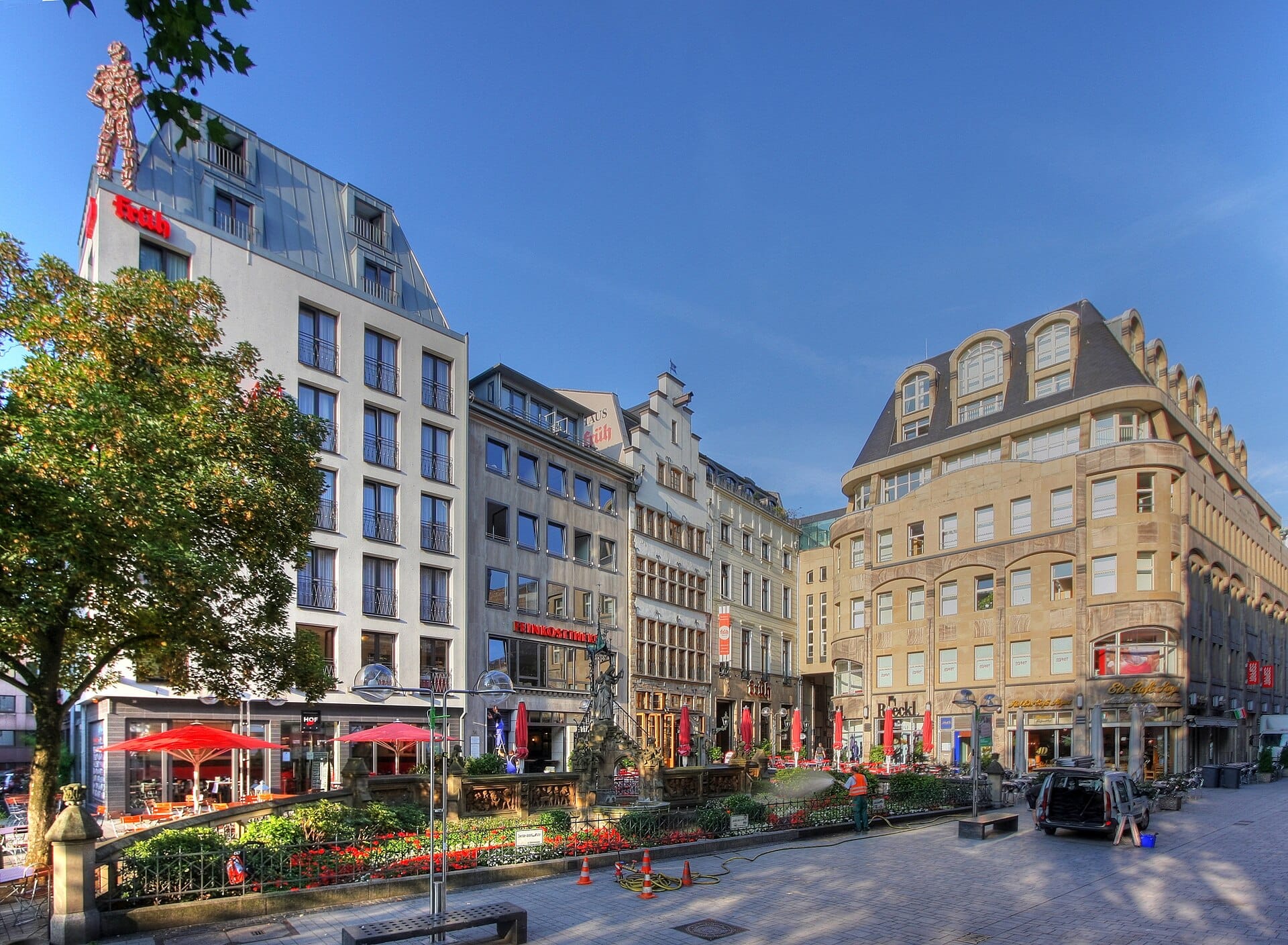
What Früh am Dom Actually Is
Früh am Dom is a traditional Brauhaus, the Cologne term for a brewpub tied to a specific brewery. The FRÜH Brewery has been serving its Kölsch at this address since 1904, and over the subsequent decades the establishment expanded into a cluster of interconnected buildings at Am Hof 12–18, creating a multi-room complex that can accommodate around 1,500 guests at once. It is the second-largest traditional Brauhaus in Germany, after Munich's Hofbräuhaus.
That scale matters for how you experience the place. Früh am Dom is not an intimate local tavern. It is a well-run institution that manages tourist volumes alongside a loyal regular clientele. If you arrive expecting a quiet corner table and a long conversation with a Cologne native, you may be disappointed. If you arrive ready to share a long wooden table, drink cold Kölsch from 0.2-litre cylindrical glasses, and eat a plate of Himmel un Ääd or Sauerbraten, you will leave satisfied. It fits naturally into any two-day Cologne itinerary as an evening anchor.
ℹ️ Good to know
Kölsch is served by the Köbes, the traditional Cologne waiter, who carries glasses in a circular tray called a Kranz. Rounds arrive continuously until you place your beer mat on top of your glass to signal you are done. If you leave the mat flat, another glass will appear automatically.
The Building and Its Atmosphere
The exterior of Früh am Dom reflects the solid, slightly ornate civic architecture typical of early twentieth-century Cologne. Stone facades, arched windows, and carved lettering above the entrance give the building a permanence that most modern bars cannot replicate. The interiors are divided into distinct rooms with heavy wooden panelling, vaulted ceilings in some sections, and decorative tilework. The smell that greets you at the door is a specific combination of brewing yeast, roasting meat, and aged wood, and it is the same smell visitors would have encountered a century ago.
Lighting is warm and relatively dim in the dining rooms, which makes the space feel less like a tourist trap than the Cathedral-adjacent location might suggest. In summer, outdoor seating opens on the street side, where you can watch the flow of visitors heading to and from the Cathedral while a cold Kölsch sweats gently on the table in front of you.
The Cathedral itself is about 200 metres away. If you are combining a visit to both, note that the Cologne Cathedral is open early in the morning, while Früh am Dom opens at 10:00 on Saturdays and 11:00 on weekdays. A practical sequence is to tour the Cathedral first, then walk directly to Früh am Dom for lunch before the midday crowds arrive.
Tickets & tours
Live prices and dates from our booking partner. If you book, we may earn a commission at no extra cost to you.
Cologne haunted places and ghost stories: interactive city game
From 8 €Instant confirmationFree cancellationFood Tour Cologne Sudstadt
From 44 €Instant confirmationFree cancellationCologne brewery tour including 3 Kolsch beer
From 28 €Instant confirmation2-hour afternoon cruise in Cologne at Christmastime
From 25 €Instant confirmationFree cancellation
How the Experience Changes by Time of Day
Weekday mornings, from opening until around 12:30, are the calmest window. Tables fill slowly, the Köbes are less rushed, and the kitchen is at its most attentive. This is when you are most likely to share a table with Cologne locals rather than tour groups.
Lunch, from roughly 12:00 to 14:30, brings the first real wave of visitors. The noise level rises noticeably as all rooms fill. Service remains organized but becomes faster and less personal. Weekend lunches, particularly on Saturdays, are the busiest period in the entire week. If you visit during this window on a Saturday, expect to wait for a table or to be seated communally immediately.
Evenings from around 18:00 onward take on a different character. The tour-group traffic thins, replaced by Cologne residents coming after work or before a show at the nearby Philharmonie. The atmosphere is louder and more convivial. Friday evenings especially push toward the maximum capacity of the venue, and the standing area near the bar fills with people who arrived after the dining rooms were full.
💡 Local tip
Arrive at 11:00 on a weekday or 10:00 on a Saturday, order before the lunch rush hits, and you will have the best of both worlds: attentive service and the full atmosphere of the room warming up around you.
The Food and the Beer
FRÜH Kölsch is the only beer served, which is as it should be. It is a pale, top-fermented lager-like ale brewed to Kölsch Konvention standards, characterised by a mild bitterness, a slight fruitiness, and a clean finish. It is served at about 7–8 degrees Celsius, which is warmer than industrial lager but cold enough to refresh. The 0.2-litre serving size means you drink it while it is still cold, and the Köbes restocks your Kranz so the supply is continuous.
The food menu is classic Rhineland. Sauerbraten, slow-marinated beef served with potato dumplings and red cabbage, is the representative main course. Himmel un Ääd, a dish of black pudding with mashed potato and apple sauce whose name translates roughly as Heaven and Earth, is the local speciality you will not find outside this region. Reibekuchen, potato fritters served with apple sauce, are a reliable light option. Bread rolls with dripping (Schmalzbrot) are often brought automatically and added to your bill; it is fine to decline them if you do not want them. For a broader look at what to eat in the city, the Cologne food guide covers regional dishes well beyond the Brauhaus setting.
Portion sizes are generous and prices are in line with central Cologne dining rather than tourist-trap territory, though the location means they are not the cheapest in the city. Vegetarian options exist but are limited. The menu has an English version available.
Practical Details for Your Visit
Früh am Dom is at Am Hof 12–18, 50667 Köln. From Cologne Hauptbahnhof it is approximately a 400-metre walk south along the Cathedral forecourt and then left into the pedestrian zone. The Dom/Hbf tram stop serves lines 5, 16, and 18. No admission fee is charged; you pay only for what you consume.
Opening hours as listed on the official Früh am Dom site and tourism sources: Monday to Thursday 11:00 to 23:00; Friday 11:00 to midnight; Saturday 10:00 to midnight; Sunday and public holidays 10:00 to 23:00. Verify these directly with the official website before visiting, as hours can change around public holidays or special events.
Reservations are accepted and are strongly advisable for groups of six or more, especially on Friday and Saturday evenings. Walk-ins are generally absorbed into the communal seating system, but you may wait during peak times. The venue does not require smart dress; casual clothing is the norm throughout the day. Photography inside is unobtrusive and generally unrestricted, though the interior lighting makes flash-free shots challenging. If you want to photograph the building facade, the best light is in the late afternoon when the sun is lower and the stone picks up a warm tone. Früh am Dom is also located within easy reach of the Hohenzollern Bridge and the Rhine waterfront, making it a natural stop on any walking tour of the Altstadt.
⚠️ What to skip
Accessibility information for wheelchairs and step-free access is not confirmed on official sources. Contact the venue directly before visiting if step-free access is a requirement.
Who Should Reconsider This Stop
Früh am Dom is a well-managed venue doing exactly what it sets out to do, but it is not for everyone. Travellers looking for an off-the-beaten-path experience will find it unavoidably central and popular. Its proximity to the Cathedral means it draws significant tourist volumes, and on summer weekends especially, you may feel you are in a very large, very efficient machine rather than a spontaneous local experience.
Those who want to drink Kölsch in a quieter, more neighbourhood setting should consider exploring smaller Brauhauses in the Altstadt or the streets around the Belgian Quarter, where a different side of Cologne's food and drink culture is more visible. Visitors who do not drink alcohol will find the food menu serviceable but not exceptional.
Anyone with young children should know that the evening atmosphere from about 19:00 onward is loud and increasingly adult-oriented as the night progresses. The daytime hours are considerably more family-friendly, and the kitchen produces child-appropriate dishes during lunch service.
Insider Tips
- The side entrance on the narrower alley often has a shorter queue than the main Am Hof entrance during peak lunch hours.
- Ask for a table in the back dining room, which is slightly quieter and has more of the original wood-panelled character than the rooms nearest the street.
- The bread rolls with dripping (Schmalzbrot) are brought automatically in some rooms and billed per piece. Tell the Köbes at the start if you do not want them.
- The FRÜH brewery itself is at a separate location in Cologne-Ehrenfeld; Früh am Dom is the brewpub, not the production site, so do not expect a brewery tour here.
- If you are visiting during Karneval in February or early March, the venue operates with themed decorations and extended sittings, but also at its most crowded. Book well in advance or arrive at opening time.
Who Is Früh am Dom For?
- First-time visitors to Cologne who want a reliable introduction to Kölsch culture in a historically grounded setting
- Groups who need a large venue with communal seating and a menu that covers a range of tastes
- Travellers combining a Cathedral visit with a sit-down lunch in one logical loop around the Altstadt
- Anyone wanting to understand the Köbes-and-Kranz service ritual that defines Cologne brewpub culture
- Cold-weather visitors who want a warm, wood-panelled interior and substantial Rhineland food
Nearby Attractions
Other things to see while in Altstadt (Old Town):
- 4711 House (Dufthaus 4711 / Haus Mülhens)
The 4711 House on Glockengasse is the home of the 4711 Original Eau de Cologne, the famous citrus fragrance developed by Wilhelm Mülhens from 1792 (the earlier Farina fragrance from 1709 is generally considered the original 'eau de Cologne'). Part flagship store, part fragrance museum, and part architectural curiosity, it offers a compact but interesting stop in Cologne's Altstadt-Nord for anyone curious about the city's most famous exports.
- Cologne City Museum (Kölnisches Stadtmuseum)
The Kölnisches Stadtmuseum traces Cologne's extraordinary 2,000-year arc from Roman outpost to Rhine metropolis. Reopened in a striking new home on Minoritenstraße in March 2024, it offers an affordable and intellectually rewarding afternoon in the city's Altstadt.
- Cologne Cathedral (Kölner Dom)
Cologne Cathedral, officially the Hohe Domkirche Sankt Petrus, is Germany's most visited landmark and one of the great Gothic structures on earth. This guide covers tourist ticketing, tower access, the Treasury, and how to make the most of your time there.
- Cologne City Hall (Kölner Rathaus)
The Kölner Rathaus is Germany's oldest city hall, a layered architectural landmark in Cologne's Old Town that spans Gothic, Renaissance, and modern styles.
Planning a trip? Discover personalized activities with the Nomado app.