Panyu sits at the southern edge of Guangzhou, stretching across the Pearl River Delta with a character that shifts from suburban residential blocks to world-class theme parks and preserved ancient towns. It is where Guangzhou families come to unwind, and where visitors arrive specifically for the Chimelong resort complex. Getting here is straightforward by metro, and the rewards are genuine.
Panyu is the southern district where Guangzhou lets its hair down. Best known internationally for the Chimelong resort complex, it also holds ancient port history, a sprawling university town, and the kind of wide, tree-lined boulevards that feel nothing like the compressed lanes of the old city centre. It is not where you go for imperial history or colonial architecture, but it is exactly where you go when you want scale, spectacle, and a completely different pace.
Orientation
Panyu covers roughly 530 square kilometres in the southern part of Guangzhou, making it one of the city's larger districts. Its northern edge meets Haizhu District, the riverside district directly south of the Pearl River's main channel, which places Panyu about 20 to 25 kilometres from Guangzhou's historic core in Yuexiu. To the west, the district borders the cities of Zhongshan and the Foshan sub-districts of Nanhai and Shunde, situating it firmly within the Pearl River Delta urban sprawl. Across the water to the east lies Dongguan.
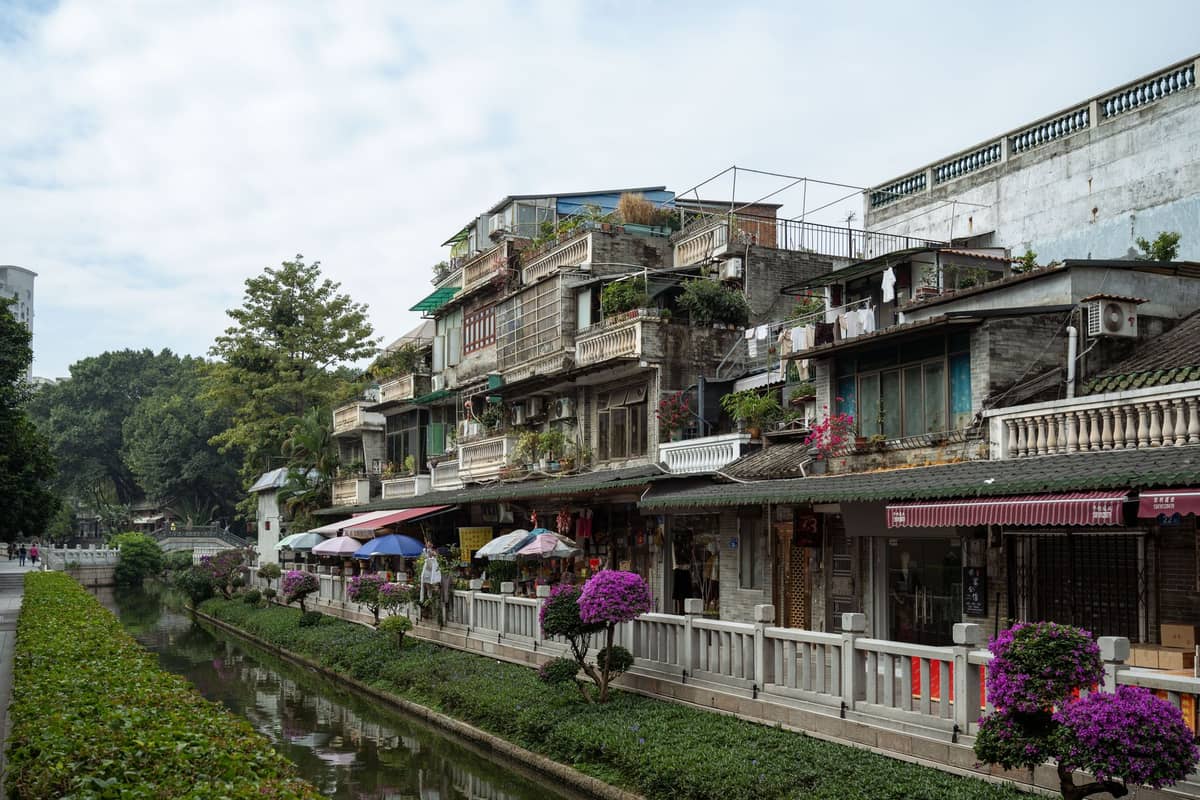
In terms of mental geography, think of Panyu as three overlapping zones. The district centre around Panyu Square functions as a conventional urban hub with residential towers, shopping malls, and administrative offices. Further south and east, the Chimelong cluster anchors the district's tourist identity around Hanxi Changlong Station. Then scattered across the broader landscape are pockets of older character: the Shawan Ancient Town area to the southwest, the university town island on Xiaoguwei in the southeast, and traces of Guangzhou's pre-modern trading history near Huangpu.
Panyu connects northward toward Haizhu District and the inner Pearl River. Visitors combining Panyu with a wider Guangzhou itinerary will typically approach from Haizhu or from the metro interchange at Nancun Wanbo Station, which sits near the Chimelong complex and has connections that reach back into the city centre in under 30 minutes.
Character & Atmosphere
Panyu does not have a single street-level identity the way that older districts like Liwan or Yuexiu do. It is a large, modernising district where different pockets feel completely disconnected from one another. Around Panyu Square in the morning, the district centre feels like any prosperous Chinese suburb: older residents doing slow exercises in the plaza, breakfast stalls selling congee and rice noodles alongside corporate coffee chains, and the general hum of a neighbourhood that runs on school schedules and commuter rhythms.
As you travel south toward the Chimelong area, the scale shifts dramatically. By mid-morning on a weekend, the approach roads and metro exits near Hanxi Changlong Station are thick with families, tour groups in matching caps, and street vendors selling sunscreen and inflatable toys. This is unambiguously theme-park territory, and the infrastructure, wide pedestrian roads, signage in multiple languages, shuttle buses, reflects that. After dark, the glow of Chimelong's night shows is visible from a considerable distance, and the area around the park gates stays active well into the evening.
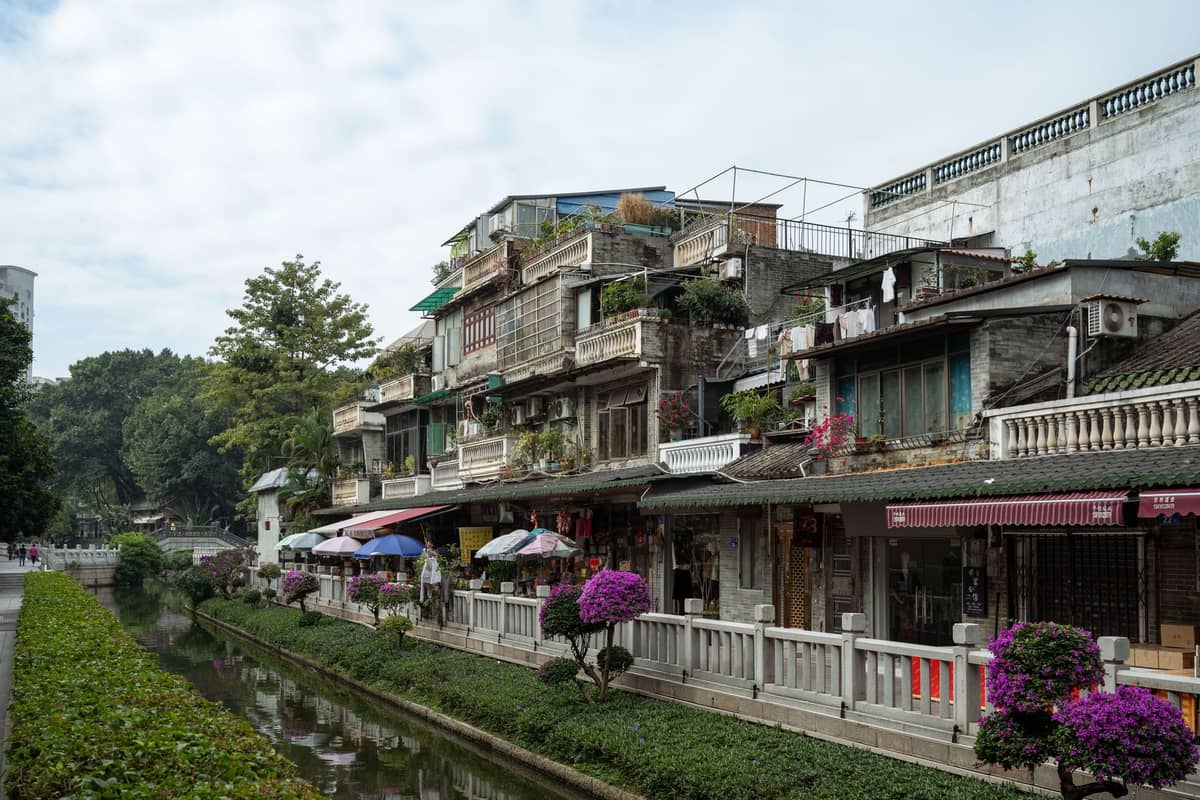
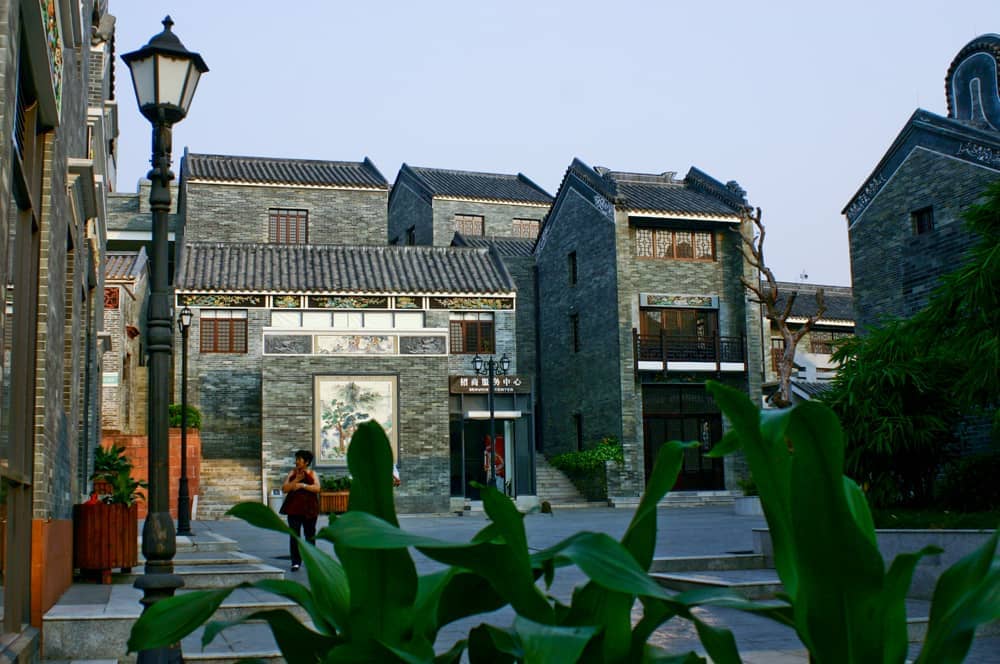
Shawan Ancient Town, southwest of the district centre, offers the sharpest contrast. On a weekday afternoon, its restored Qing dynasty lanes are quiet enough that you can hear your own footsteps on old stone paving. The ancestral halls and guild buildings here feel genuinely old, and the surrounding countryside, low agricultural land and river channels, grounds the visit in something closer to the Pearl River Delta's pre-industrial past. Weekend crowds arrive here too, but nothing approaching the Chimelong scale.
ℹ️ Good to know
Panyu's character varies enormously by location. If you are expecting the layered street life of Guangzhou's older districts, the Chimelong zone will feel like a different city entirely. Plan your itinerary around specific areas rather than treating Panyu as a single walkable neighbourhood.
What to See & Do
The Chimelong resort complex is the dominant draw and warrants at minimum a full day if you are visiting with any seriousness. The complex contains multiple distinct parks, each requiring separate tickets and occupying enough space that most visitors focus on one per visit.
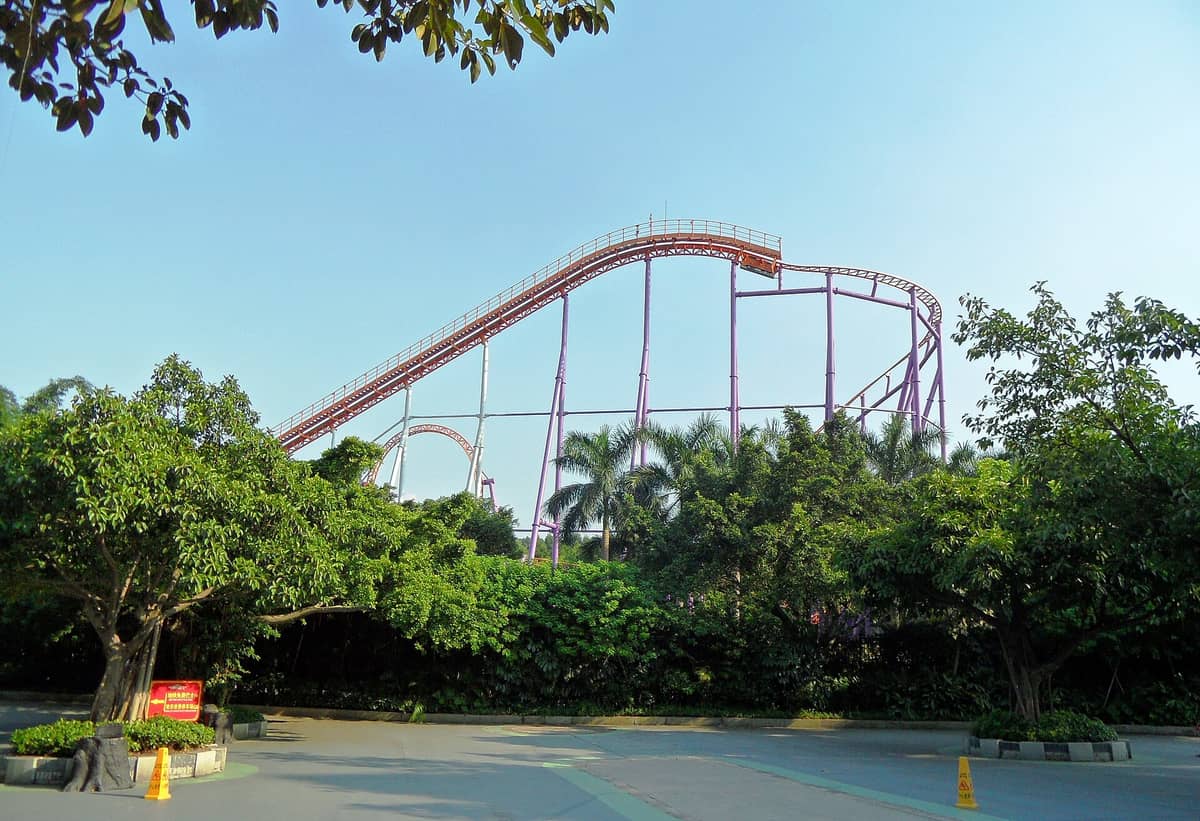
Chimelong Paradise: the flagship amusement park with major roller coasters and live shows, best suited for older children and adults who want high-intensity rides
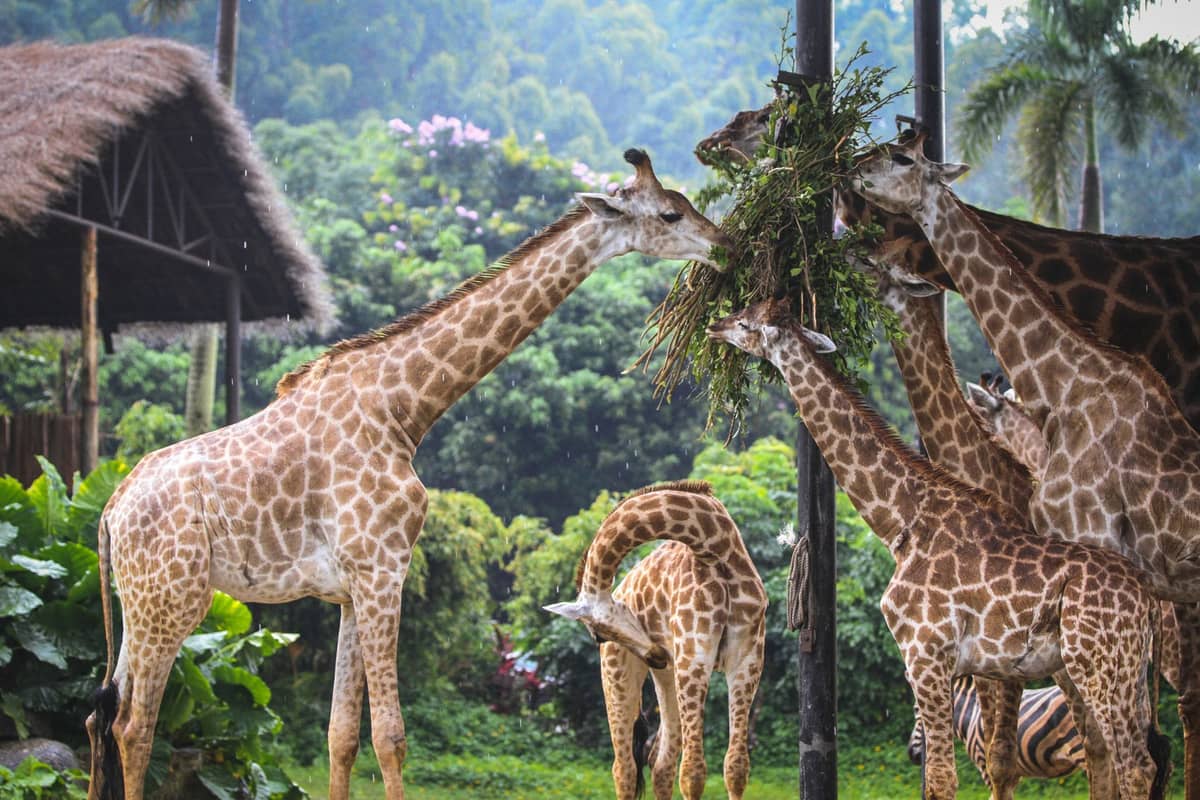
Chimelong Safari Park: a large zoological park with drive-through and walk-through sections, one of the largest safari parks in China, strong with families with younger children
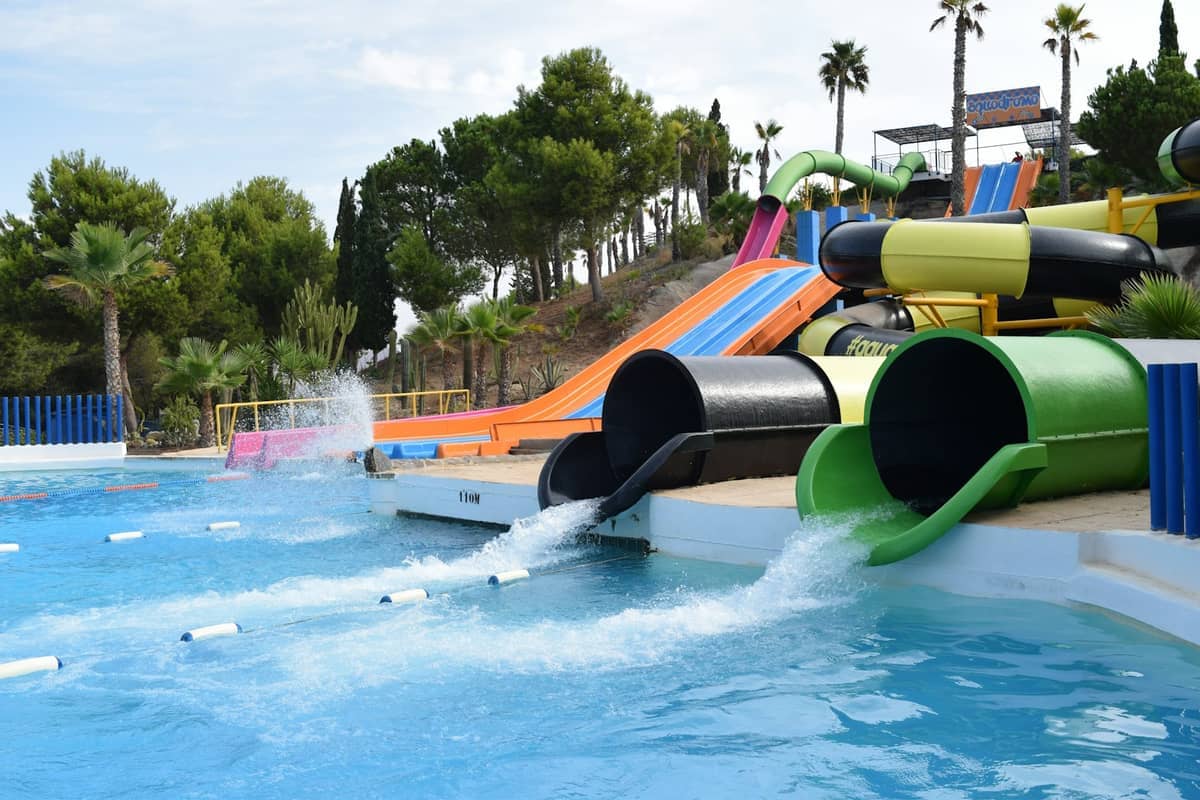
Chimelong Water Park: one of the larger water parks in South China, extremely popular in summer from June to August and prone to very long queues on weekends
Shawan Ancient Town: a preserved Cantonese market town roughly 20 kilometres southwest of central Panyu, with ancestral halls, traditional architecture, and local food
Guangzhou University Town: the artificial island of Xiaoguwei housing multiple universities, with pleasant cycling paths along the riverfront and a young, relaxed atmosphere
For visitors interested in Guangzhou's deeper maritime history, the Huangpu Ancient Port site lies in the eastern part of Guangzhou's metro area and is often grouped with Panyu in itineraries exploring the city's southern and eastern heritage zones. It documents Guangzhou's role as the origin point of the ancient Maritime Silk Road.
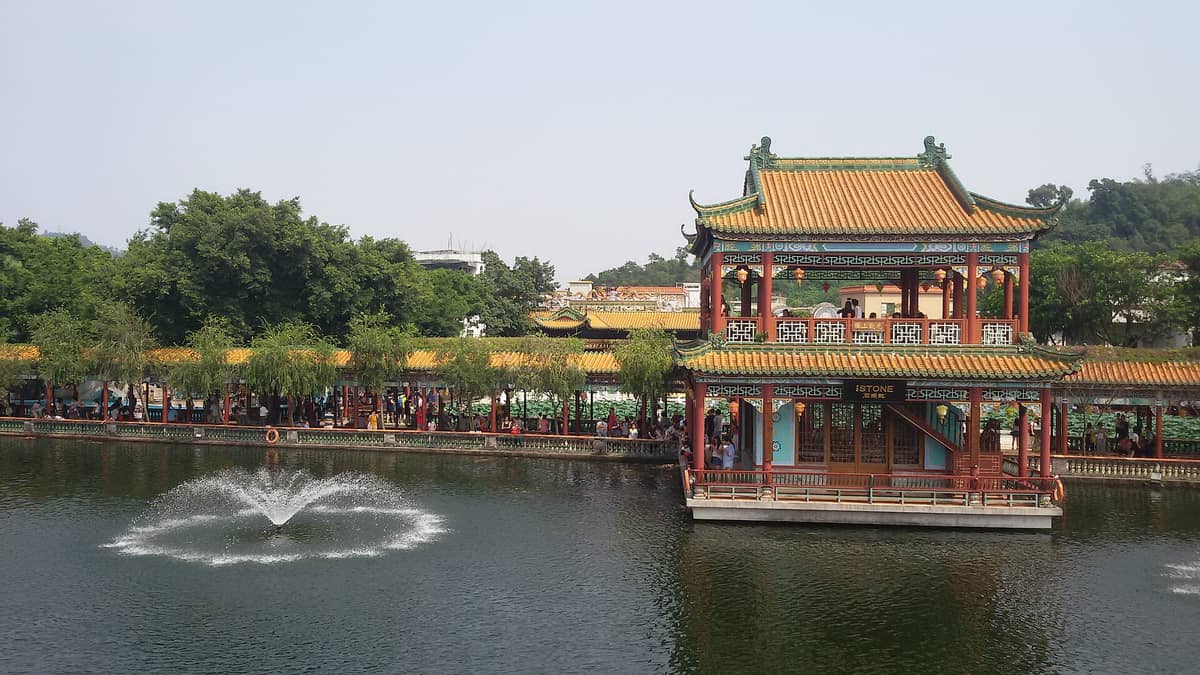
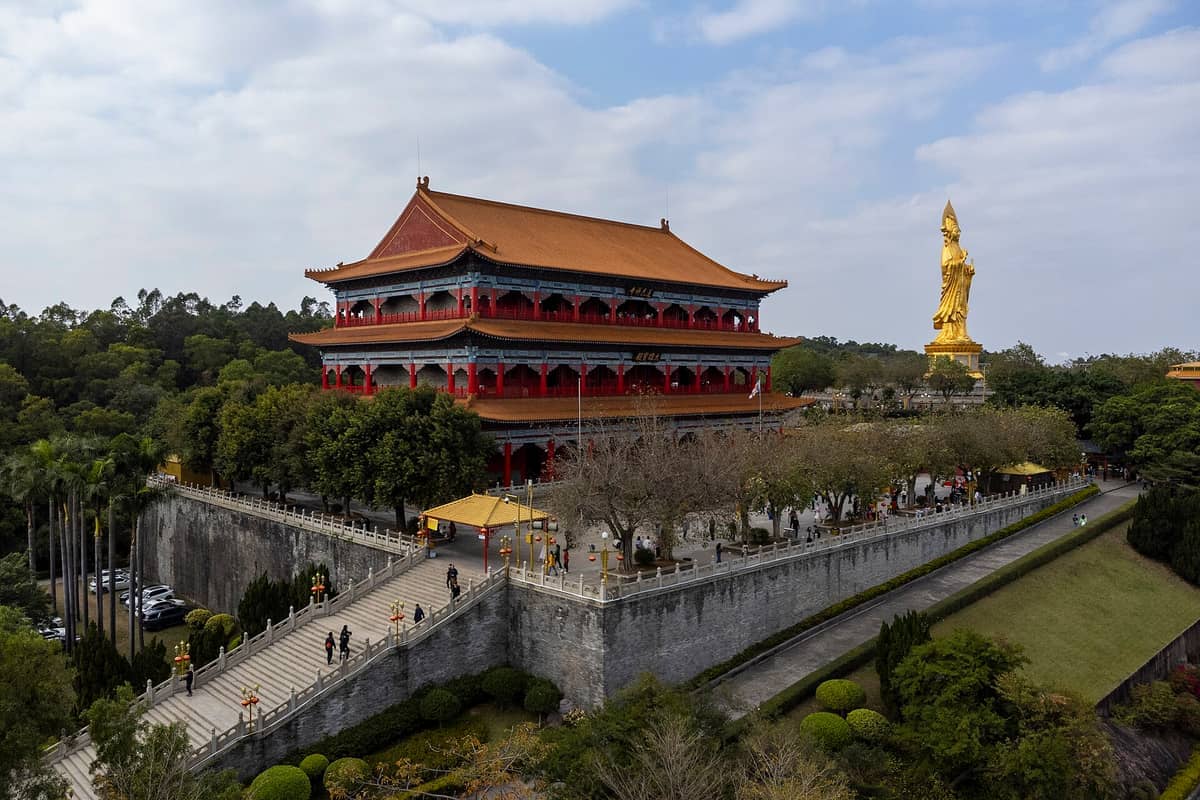
Panyu also puts you within reasonable reach of day trips further south. The Lotus Mountain Scenic Area sits in the eastern part of the district, a former quarry turned heritage landscape with a large golden Guanyin statue and views across the Pearl River Delta. It is an easy half-day from the district centre.
For those using Panyu as a base and considering further excursions, the district's southerly position makes it a reasonable departure point for reaching Shawan Ancient Town or connecting toward Nansha and the wider Pearl River estuary. See the day trips from Guangzhou guide for logistics on reaching destinations beyond the city.
💡 Local tip
Book Chimelong tickets online in advance, especially for weekends and public holidays. Walk-up queues at the gates can add 45 minutes to an hour during peak periods, and online prices are often lower than gate prices.
Eating & Drinking
Panyu's food scene is genuinely Cantonese and largely untouched by the tourist-facing restaurant formulas that inflate prices in central Guangzhou. The district centre around Panyu Square has the densest concentration of restaurants, with a mix of traditional Cantonese roast meat shops, hotpot restaurants, and the sort of seafood-focused places that fill up with large family groups on weekend lunchtimes. Dim sum culture is strong here: look for older teahouses that open early, around 6 or 7 in the morning, and fill up with locals before 9am.
Shawan Ancient Town is worth eating in as much as visiting. The town is historically associated with a traditional Cantonese sweet made from glutinous rice, and the main pedestrian street has vendors selling this alongside other local specialties. Small restaurants in the side lanes offer slow-cooked Cantonese dishes at prices that undercut anything comparable in the city centre.
Inside the Chimelong parks, food options are plentiful but priced for captive audiences. There are multiple restaurants and fast-food outlets within each park, catering heavily to Chinese families with familiar rice dishes, noodles, and snacks. Quality is adequate rather than exceptional. If you are spending a full day at Chimelong, eating inside the park is convenient, but budget accordingly. The streets surrounding Hanxi Changlong Station have a broader range of affordable options for meals outside the park gates.
For a broader understanding of what Cantonese cuisine looks like at its best in Guangzhou, the what to eat in Guangzhou guide covers the full range from yum cha to clay pot rice, with context on where each dish fits in the city's culinary geography.
Getting There & Around
The Guangzhou Metro is the most practical way to reach Panyu from the city centre. The district is served by multiple metro lines, with the key stations for visitors being Panyu Square Station for the district centre and Hanxi Changlong Station for the Chimelong resort complex. Journey times from central Guangzhou interchange stations run approximately 25 to 40 minutes depending on your starting point and line transfers. The metro runs from early morning until around 11pm, though last departure times vary by line and station, so check the current schedule if you are planning an evening return from Chimelong's night shows.
Nancun Wanbo Station, on Line 3, is another useful access point for the Chimelong area and is one of the metro stops closest to the resort complex from the northern end. Line 3 runs directly into Tianhe District and connects to major interchange points including Guangzhou East Station and Tianhe Sports Centre, making it the most commonly used line for visitors travelling from the eastern or central city.
Within Panyu, the distances between attractions make walking impractical for anything beyond a single zone. Buses serve the district extensively and are inexpensive, but route legibility for non-Mandarin or non-Cantonese speakers is limited. Ride-hailing via DiDi is the most flexible option for getting between the district centre, Shawan, the university town, and Lotus Mountain. Fares within the district are modest given the distances involved.
⚠️ What to skip
Traffic around the Chimelong resort gates can become severely congested on national holidays and long weekends. If you are arriving or departing by taxi or ride-hailing during Golden Week or Spring Festival, allow significant extra time. The metro avoids this problem entirely.
Panyu makes the most sense as a base if your primary reason for visiting Guangzhou is the Chimelong complex. Multiple large hotels sit within walking distance or a short shuttle ride of the resort, including options that are directly affiliated with or adjacent to the parks. These hotels cater heavily to families on multi-day theme park visits and are priced accordingly, with rates rising sharply during school holidays.
For visitors who want to experience Guangzhou's urban districts, historic sites, and food culture alongside a single day at Chimelong, staying in central Guangzhou and making a day trip to Panyu by metro is almost always the better approach. The metro journey is short enough that there is no practical advantage to basing yourself in Panyu unless the Chimelong experience specifically justifies it.
The where to stay in Guangzhou guide covers accommodation across all major districts, with context on which areas suit different travel styles and budgets.
Visitors on a family trip who want to maximise time at the Chimelong parks should consult the dedicated ticket guide for ticket strategy, park comparisons, and practical logistics.Guangzhou Chimelong guide for ticket strategy, park comparisons, and practical logistics.
Practical Assessment
Panyu is not the Guangzhou most first-time visitors come to see. It has no ancient temples, no colonial waterfront, no old city lanes filled with the smell of roasted meats and incense. Its urban fabric is largely the product of the last 30 years: wide roads, residential towers, shopping malls, and the enormous footprint of a resort complex that could as easily be in Florida as in Guangdong Province.
That is not a criticism so much as a description. For families with children, Panyu delivers experiences that nowhere else in Guangzhou can match. For travellers interested in the Pearl River Delta's older character, Shawan Ancient Town and Lotus Mountain offer genuine texture. And for anyone spending a week or more in Guangzhou, the district makes a logical half-day or full-day excursion that rounds out a picture of a city that has grown in directions that few visitors fully anticipate.
If you are still deciding how to structure a Guangzhou trip that includes Panyu alongside the city's historic districts, the 3-day Guangzhou itinerary offers a practical framework for balancing old and new.
TL;DR
Panyu is Guangzhou's large southern district, best known for the Chimelong resort complex: Asia's leading theme park destination for families, with separate parks for rides, wildlife, and water attractions.
The district also contains Shawan Ancient Town for Cantonese heritage, Lotus Mountain Scenic Area for half-day nature visits, and a university town island popular with younger travellers.
Metro access is reliable and fast: Hanxi Changlong Station and Nancun Wanbo Station place the Chimelong complex within 30 to 40 minutes of central Guangzhou.
Staying in Panyu makes sense only if Chimelong is your primary reason for visiting; for general Guangzhou tourism, a day trip from the city centre is the more flexible approach.
Best for: families with children, theme park visitors, travellers on extended stays looking to add a day of something completely different to their Guangzhou itinerary.
Three days is the ideal amount of time to experience Guangzhou's full range: ancient temples and colonial backstreets, futuristic skylines and river cruises, and one of the world's great food cities. This day-by-day itinerary covers the essential attractions without turning the trip into a rushed checklist.
Guangzhou's humid subtropical climate means the difference between a comfortable trip and a sweaty, storm-interrupted one often comes down to timing. This guide breaks down every season, flags the Canton Fair impact on prices, and tells you which months are genuinely worth prioritizing.
Guangzhou rewards those who look up, climb high, and linger by the river after dark. This guide covers the city's best viewpoints, from the 488-meter observation deck of Canton Tower to the forested summit of Moxing Ridge, plus hilltop temples, riverside promenades, and terraced gardens with sweeping city panoramas.
The Canton Fair is the world's largest trade fair, held twice a year in Guangzhou, China. This guide covers registration, badge requirements, phase schedules, venue logistics, and practical tips for first-time foreign buyers.
Guangzhou sits at the center of one of the most destination-rich regions in China. Whether you want ancient watchtowers, serious Cantonese food, or a Hong Kong skyline, the best day trips from Guangzhou are faster and cheaper to reach than most travelers expect. This guide ranks your options by practicality, not just scenery.
Guangzhou is the undisputed home of dim sum, where yum cha is less a meal and more a daily ritual. This guide covers the best restaurants across the city, the dishes worth ordering, the timing tricks locals rely on, and the common mistakes first-timers make.
Guangzhou rewards budget travelers generously. From ancient temples and colonial island walks to world-class museums and urban wetlands, these 20 free attractions cover the city's history, culture, and nature without spending a yuan on entry.
Guangzhou is a sprawling city of nearly 19 million people across 7,434 km², but its transport network is one of the most efficient in China. This guide covers the metro system, taxis, ride-hailing, airport connections, and everything else you need to move around the city confidently.
Guangzhou's built environment spans two thousand years of history, from climate-adapted Lingnan courtyards to some of the boldest contemporary structures in Asia. This guide walks you through the key styles, the best places to see them, and how to plan a serious architectural itinerary across the city.
Baiyun Mountain is Guangzhou's best-known hiking destination, with marked trails, a cable car to the summit area, and panoramic views over the Pearl River Delta. This guide covers every trail option, gate access, transport logistics, and the best times to go.
Cantonese opera is one of southern China's most distinctive art forms, and Guangzhou is the best city in the world to experience it. This guide covers the top venues, the essential museum visit, seasonal advice, and practical tips for first-timers and returning visitors alike.
Chimelong Tourist Resort in Guangzhou's Panyu District is one of China's largest theme park complexes, but each park inside it runs on its own schedule, pricing, and vibe. This guide breaks down every option so you can pick the right park and plan your day without wasted time.
Chinese New Year in Guangzhou is not a single night of fireworks. It is a rolling season of flower fairs, lantern exhibitions, temple activities, and district-level events that stretches from late January through early March. This guide covers what happens, when, where, and how to navigate it without getting caught out.
Guangzhou is southern China's Cantonese capital: a city of 18.7 million people, 2,200 years of history, and some of the best food in the country. This guide covers everything a first-time visitor needs, from arrival logistics and district breakdowns to the best time to visit and frank guidance on what the city actually delivers.
Guangzhou Baiyun International Airport (CAN) is southern China's primary aviation hub, serving a city of nearly 19 million people. This guide covers everything from booking flights and understanding the airport layout to getting into the city quickly and affordably.
Autumn is the most comfortable season to visit Guangzhou, with cooler temperatures, low rainfall, and clear skies from October through December. This guide breaks down the weather month by month, what to do, what to watch out for, and how to get the most from a fall visit to Guangdong's capital.
Guangzhou punches well above its weight as a luxury destination. This guide breaks down the best 5-star hotels by district, the fine dining worth your money, and the high-end cultural experiences that separate a premium Guangzhou trip from a basic one.
Guangzhou has one of the richest museum scenes in southern China, spanning 2,000 years of trade, art, and revolutionary history. This guide covers the best museums across every category, from ancient archaeology to Cantonese opera, with practical tips on booking, admission, and where to go first.
Guangzhou nightlife spans rooftop lounges with skyline views, a dedicated riverside bar strip, speakeasy cocktail bars, live music venues, and Pearl River night cruises. This guide breaks down where to go, what to spend, and when to go out across the city's main after-dark districts.
Guangzhou is one of China's most rewarding cities for budget travelers. From 2 CNY metro rides to free museums and 10 CNY street food, this guide breaks down exactly where your money goes and how to stretch it further across every category of spend.
The Pearl River (Zhujiang) is Guangzhou's geographic and cultural backbone, stretching through the city's historic core and modern skyline. This guide covers night cruises, waterfront walks, pier logistics, and the best spots along the riverbank for first-timers and returning visitors alike.
Guangzhou has been a trading city for over 2,000 years, and that commercial DNA runs through everything from its flagship luxury malls in Tianhe to its chaotic wholesale garment markets near the train station. This guide breaks down every major shopping zone by what you actually buy there, how much to budget, and when to go.
Guangzhou has been a city of traders, pilgrims, and believers for over two thousand years, and its temples reflect every strand of that history. This guide covers the finest Buddhist, Taoist, Islamic, and colonial Christian sites in the city, from ancient pagodas in Yuexiu to a spectacular Mazu complex on the Pearl River Delta.
The journey from Guangzhou to Hong Kong takes as little as 47 minutes by high-speed train or up to 4 hours by road.. This guide breaks down every realistic option, including which ferry routes actually exist, what each costs, and when to book in advance.
Guangzhou's best neighborhoods are surprisingly walkable once you know which districts to target. This guide breaks down the top self-guided walking routes, what each area offers, how to connect them by metro, and the practical details that make a walking day actually work.
Guangzhou is the wholesale capital of southern China, with over 1,000 specialized markets covering everything from clothing and electronics to toys and fabrics. This guide cuts through the noise with district-by-district breakdowns, real pricing expectations, payment logistics, and the timing intel that separates experienced buyers from first-timers.
Guangzhou is a genuinely underrated family destination, with world-class theme parks, interactive museums, free parks, and riverfront evenings that work for all ages. This guide covers the best activities for kids, honest pricing, seasonal advice, and how to structure your visit without burning out.
Guangzhou rarely tops bucket lists, but that's exactly what makes it interesting. This guide cuts through the business-city stereotype to show what the city actually offers travelers: world-class Cantonese food, genuine history, serious shopping, and a pace of life that Beijing and Shanghai simply don't have.
Guangzhou rewards visitors with one of China's richest mixes of history, food culture, river life, and modern architecture. This guide covers the top things to do in Guangzhou across every district, with practical assessments, practical logistics, and seasonal advice.
Guangzhou is the birthplace of Cantonese cuisine, a cooking tradition built on freshness, precision, and restraint. This guide covers the essential dishes, where to eat them, what to pay, and how to eat like a local from sunrise to sunset.
Guangzhou has several distinct hotel zones, and choosing the wrong one can cost you hours of commuting per day. This guide breaks down the five main areas by trip type, with practical assessments of who each zone actually suits.